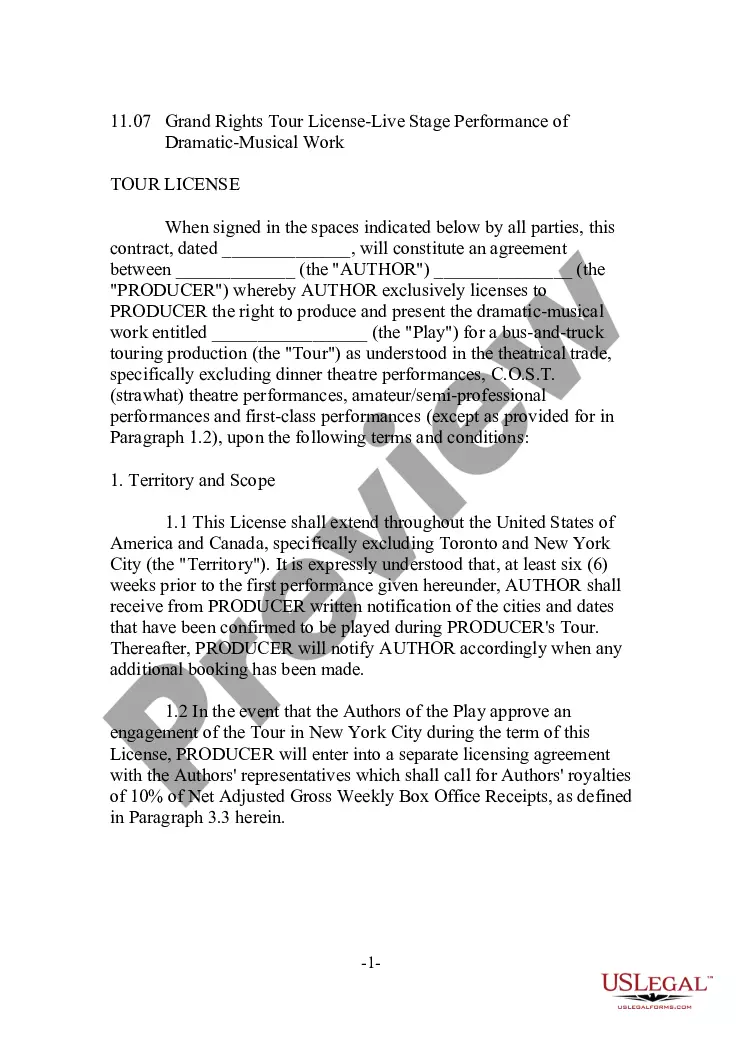
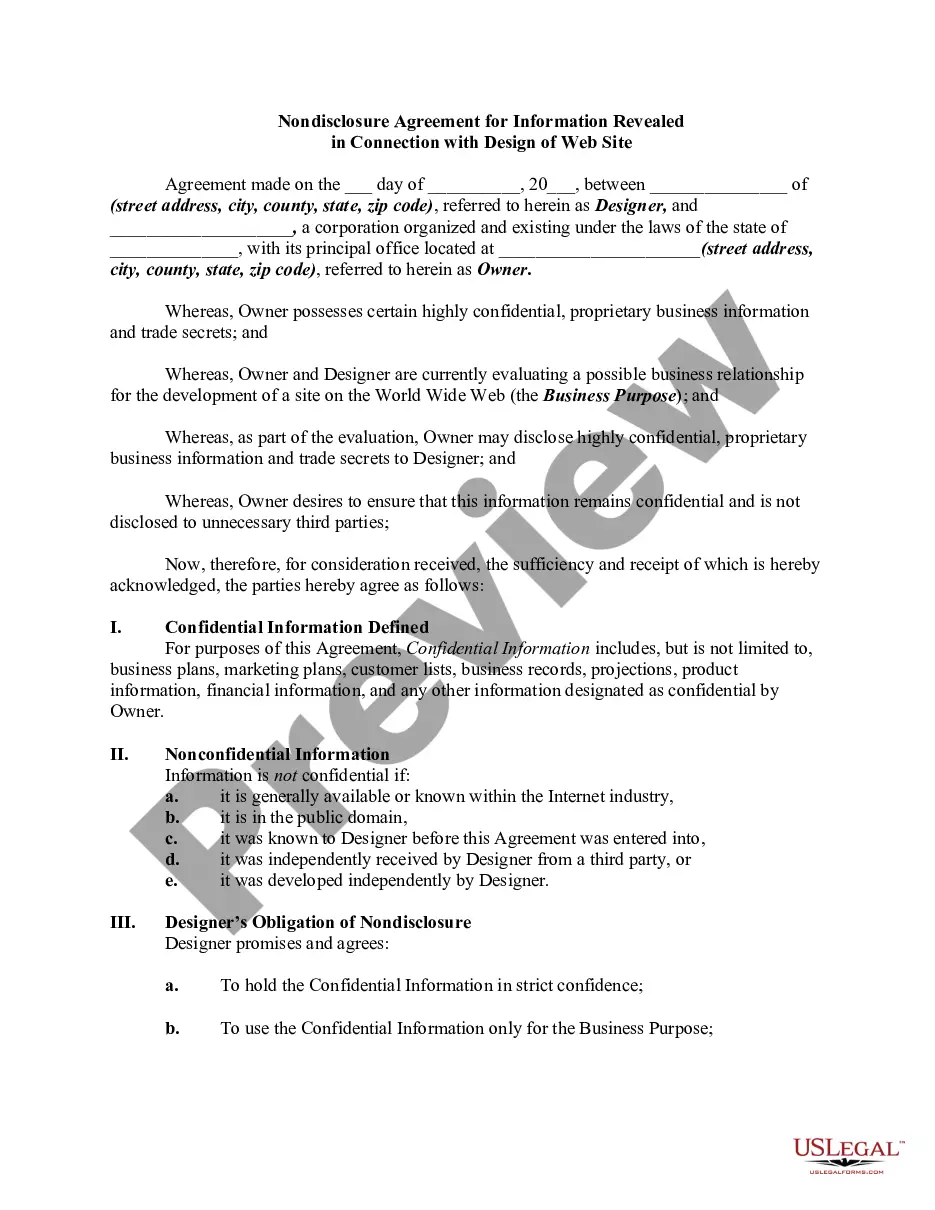
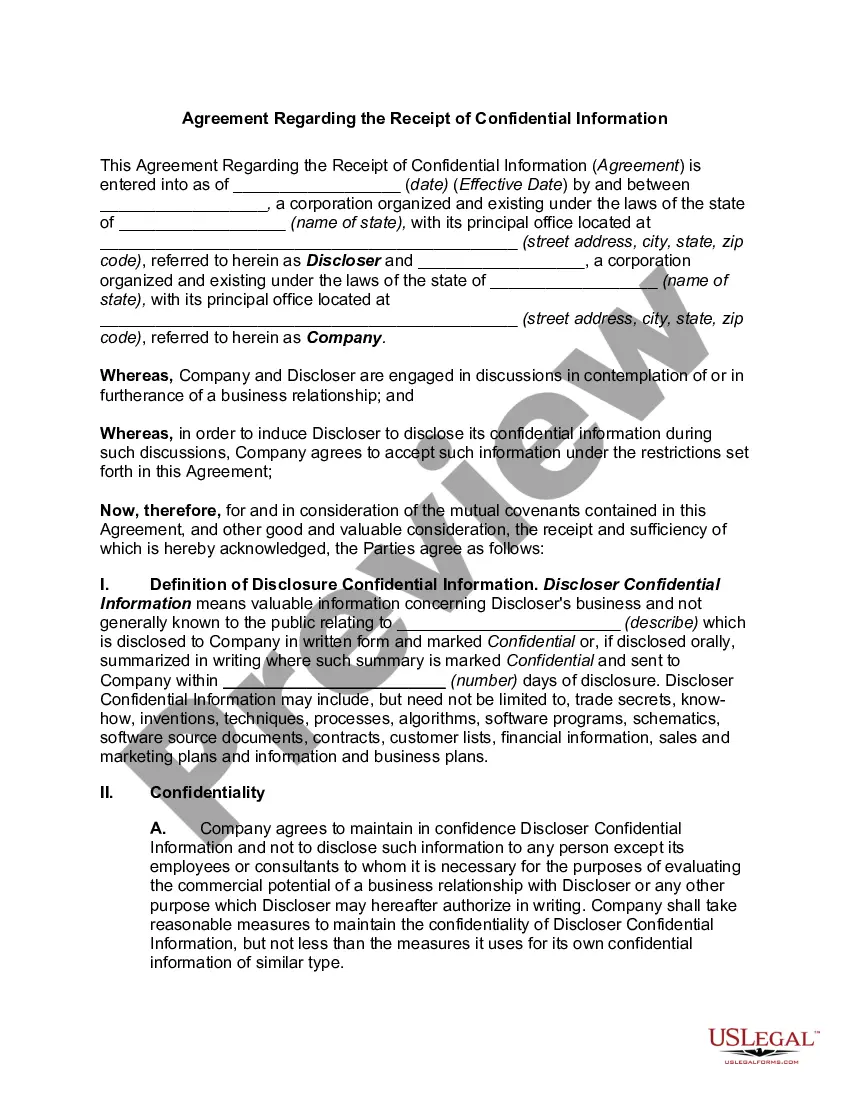
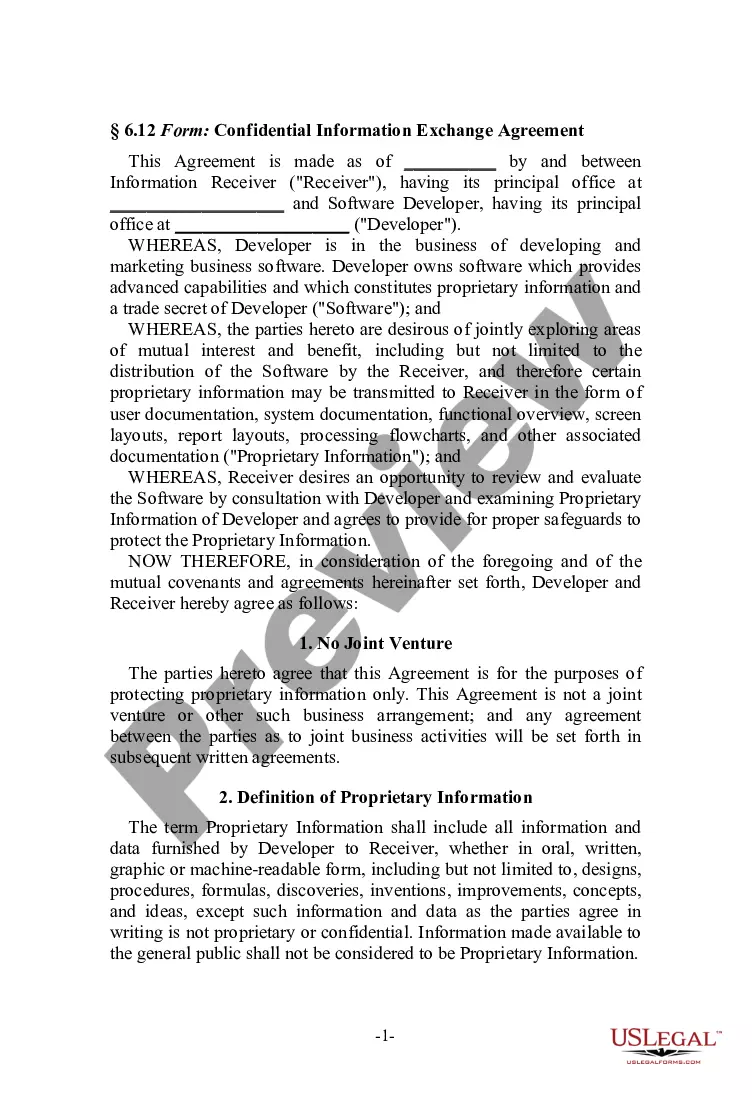
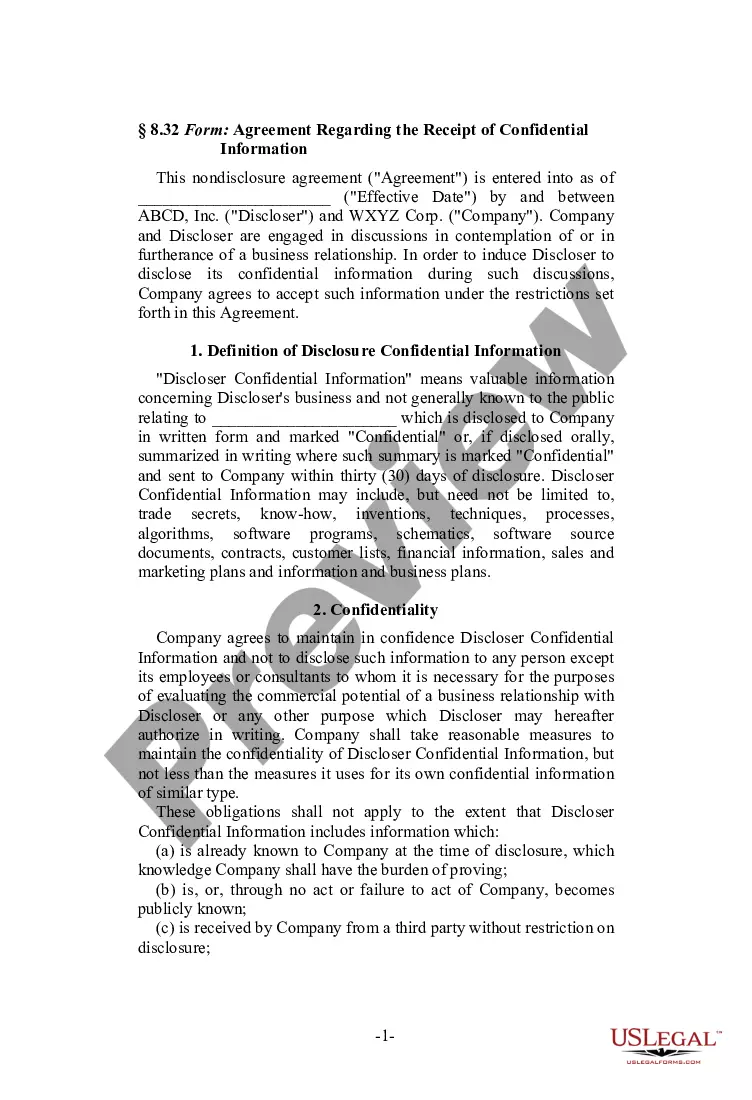
This form is a Confidential Information Exchange Agreement. The information receiver is interested in the possibility of investing in a corporation's business venture. The agreement provides that the information receiver will hold all documentation in confidence and will not disclose the information to any third parties.
Connecticut Confidential Information Exchange Agreement between Website Service Provider and Receiver of Trade Secrets
Instant download
Description
Free preview

Get your form ready online
Our built-in tools help you complete, sign, share, and store your documents in one place.
Built-in online Word editor
Make edits, fill in missing information, and update formatting in US Legal Forms—just like you would in MS Word.
Export easily
Download a copy, print it, send it by email, or mail it via USPS—whatever works best for your next step.
E-sign your document
Sign and collect signatures with our SignNow integration. Send to multiple recipients, set reminders, and more. Go Premium to unlock E-Sign.
Notarize online 24/7
If this form requires notarization, complete it online through a secure video call—no need to meet a notary in person or wait for an appointment.
Store your document securely
We protect your documents and personal data by following strict security and privacy standards.

Make edits, fill in missing information, and update formatting in US Legal Forms—just like you would in MS Word.

Download a copy, print it, send it by email, or mail it via USPS—whatever works best for your next step.

Sign and collect signatures with our SignNow integration. Send to multiple recipients, set reminders, and more. Go Premium to unlock E-Sign.

If this form requires notarization, complete it online through a secure video call—no need to meet a notary in person or wait for an appointment.

We protect your documents and personal data by following strict security and privacy standards.
Looking for another form?
How to fill out Confidential Information Exchange Agreement Between Website Service Provider And Receiver Of Trade Secrets?
If you need to complete, acquire, or print valid document templates, utilize US Legal Forms, the largest collection of legal forms available online.
Take advantage of the site’s simple and effective search to find the documents you need.
Numerous templates for corporate and personal purposes are organized by categories and regions, or keywords. Use US Legal Forms to obtain the Connecticut Confidential Information Exchange Agreement between Website Service Provider and Receiver of Trade Secrets with just a few clicks.
Every legal document template you purchase is your property indefinitely. You will have access to every form you downloaded in your account. Select the My documents section and choose a form to print or download again.
Stay competitive and acquire, and print the Connecticut Confidential Information Exchange Agreement between Website Service Provider and Receiver of Trade Secrets with US Legal Forms. There are millions of professional and state-specific forms available for your business or personal needs.
- If you are already a US Legal Forms customer, Log In to your account and click on the Acquire option to obtain the Connecticut Confidential Information Exchange Agreement between Website Service Provider and Receiver of Trade Secrets.
- You can also access forms you have previously downloaded from the My documents tab of your account.
- If you are using US Legal Forms for the first time, follow the instructions below.
- Step 1. Ensure you have selected the form for the correct city/state.
- Step 2. Use the Review feature to examine the form’s content. Remember to read the description.
- Step 3. If you are not satisfied with the form, use the Search field at the top of the screen to find alternative versions of the legal form template.
- Step 4. Once you have found the form you need, select the Acquire now option. Choose the pricing plan you prefer and enter your details to register for an account.
- Step 5. Complete the transaction. You can use your credit card or PayPal account to finalize the purchase.
- Step 6. Select the format of your legal form and download it to your device.
- Step 7. Fill out, modify, and print or sign the Connecticut Confidential Information Exchange Agreement between Website Service Provider and Receiver of Trade Secrets.
Form popularity
FAQ
A trade secret refers to valuable, proprietary information that gives a business a competitive edge. This can include formulas, practices, or processes that are not widely known. In contrast, confidential information encompasses a broader range of sensitive data that must be protected from unauthorized access. To safeguard both types of information, a Connecticut Confidential Information Exchange Agreement between Website Service Provider and Receiver of Trade Secrets is vital; it outlines the responsibilities of each party in maintaining confidentiality.
Yes, employer trade secrets are typically kept confidential through various agreements, including NDAs and CDAs. Employers often implement strict policies and training to protect sensitive information from unauthorized access. This not only secures their competitive edge but also aligns with the standards set forth in a Connecticut Confidential Information Exchange Agreement between Website Service Provider and Receiver of Trade Secrets.
An example of a confidentiality clause could be, 'The Receiving Party agrees to hold all Confidential Information received from the Disclosing Party in strict confidence and will not disclose it to any third parties without written consent.' This kind of clause helps set clear expectations for confidentiality and can be vital in a Connecticut Confidential Information Exchange Agreement between Website Service Provider and Receiver of Trade Secrets.
The confidentiality clause of trade secrets stipulates the type of information that is protected and mandates that parties maintain confidentiality. This clause also specifies the duration of the confidentiality obligation, and any exclusions from what is considered confidential. Properly drafting this clause in a Connecticut Confidential Information Exchange Agreement between Website Service Provider and Receiver of Trade Secrets ensures that your vital information remains secure.
To create a confidentiality agreement, start by outlining the purpose of the agreement and the parties involved. Clearly define what constitutes confidential information and outline the rights and obligations of both parties. Finally, ensure that the document is signed and includes any necessary legal elements specific to your jurisdiction, such as in a Connecticut Confidential Information Exchange Agreement between Website Service Provider and Receiver of Trade Secrets.
A confidentiality clause for trade secrets specifically outlines the nature of the information deemed confidential and prohibits unauthorized disclosure. This clause provides protection for trade secrets by detailing the responsibilities of parties involved and the consequences of breaches. Including this in your Connecticut Confidential Information Exchange Agreement between Website Service Provider and Receiver of Trade Secrets effectively safeguards your essential business information.
Confidentiality agreements, or CDAs, are generally enforceable in court if they meet specific legal criteria. For them to hold up legally, they must clearly define what constitutes confidential information and specify the obligations of each party. A well-structured Connecticut Confidential Information Exchange Agreement between Website Service Provider and Receiver of Trade Secrets enhances enforceability, making it crucial for protecting sensitive data.
There are three primary types of non-disclosure agreements (NDAs): unilateral, bilateral, and multilateral. A unilateral NDA protects the disclosing party's information when only one party shares confidential information. In contrast, a bilateral NDA involves mutual confidentiality where both parties exchange sensitive information. Lastly, a multilateral NDA involves multiple parties, ensuring all share and protect trade secrets, important when drafting a Connecticut Confidential Information Exchange Agreement between Website Service Provider and Receiver of Trade Secrets.