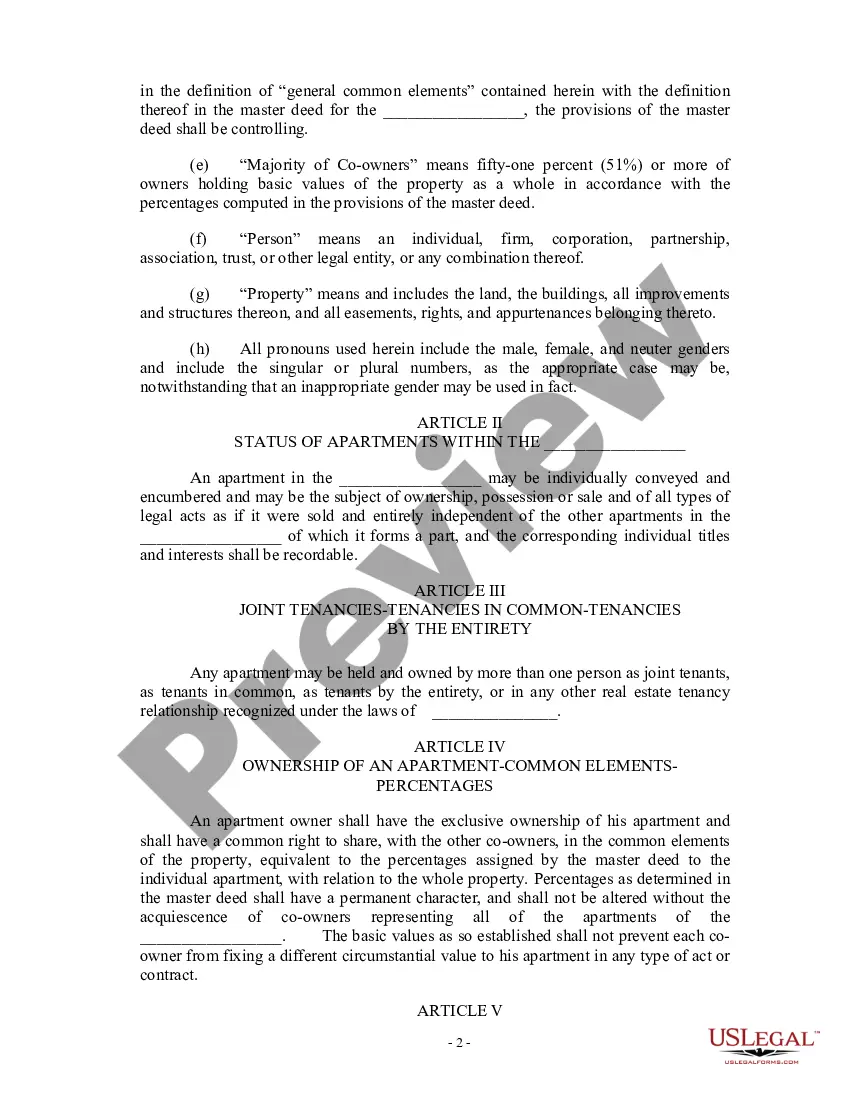
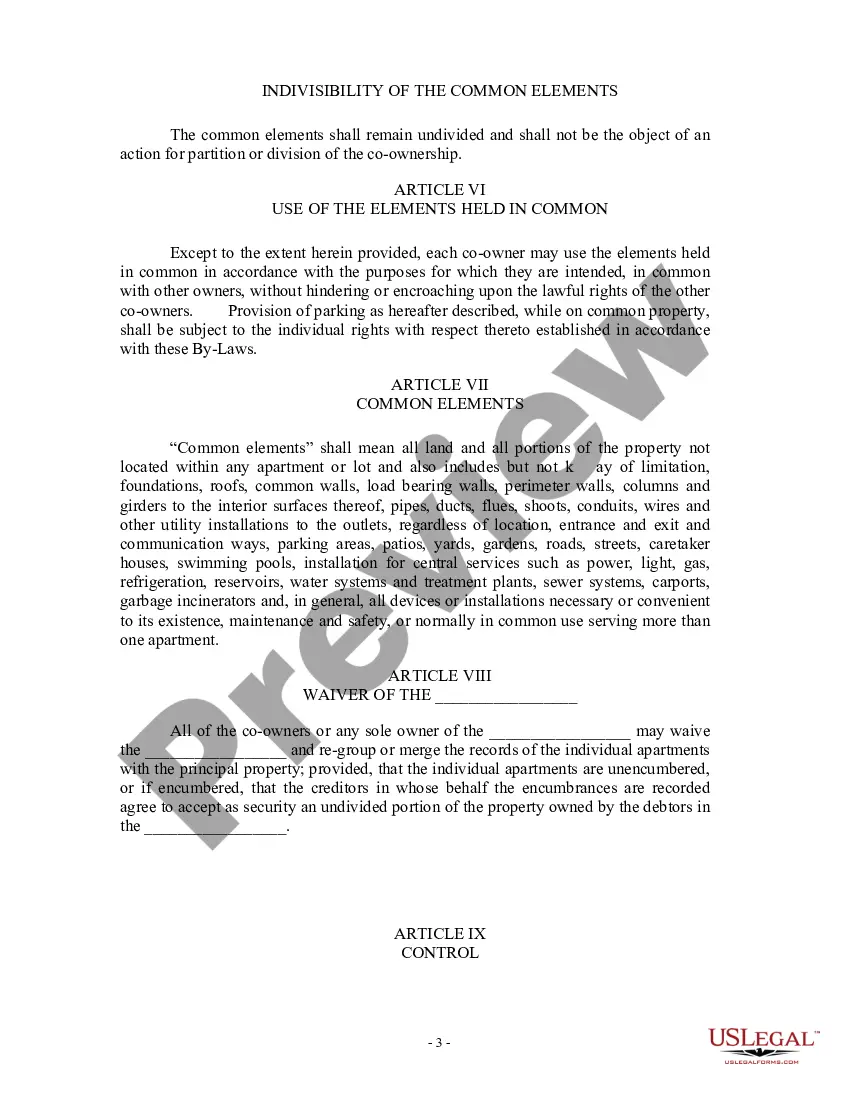
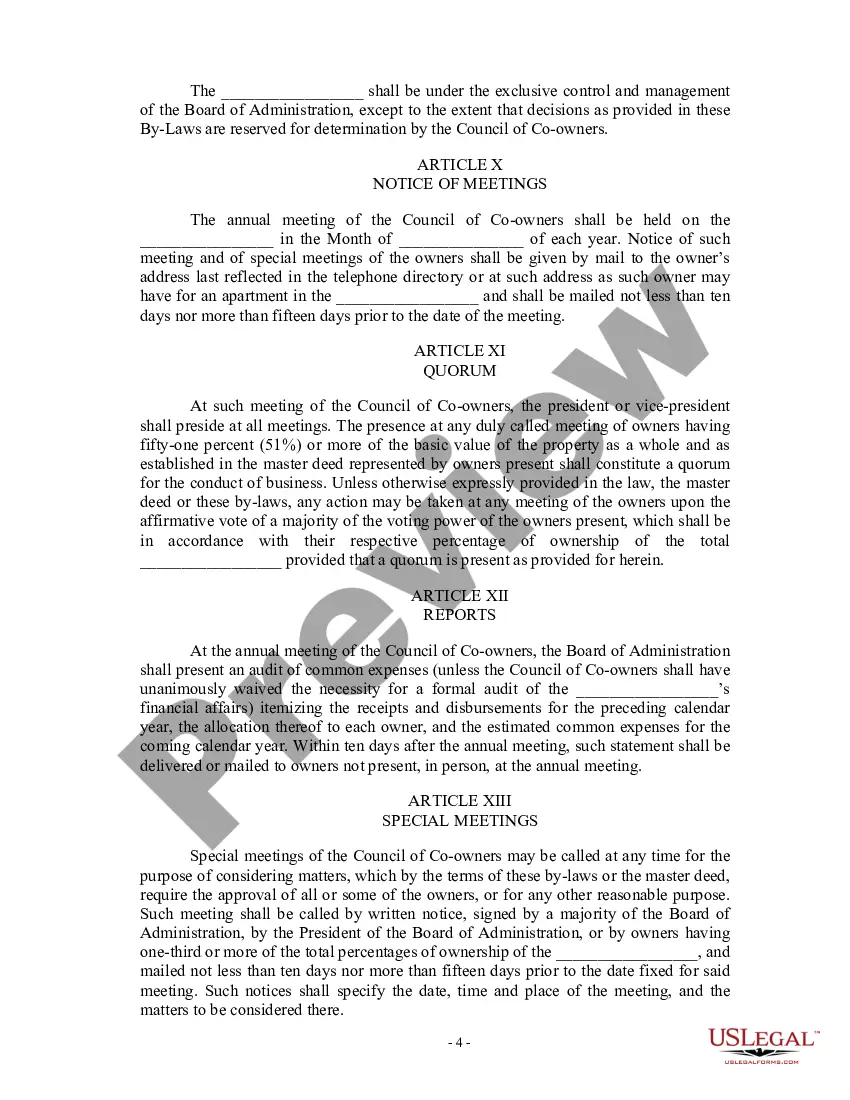
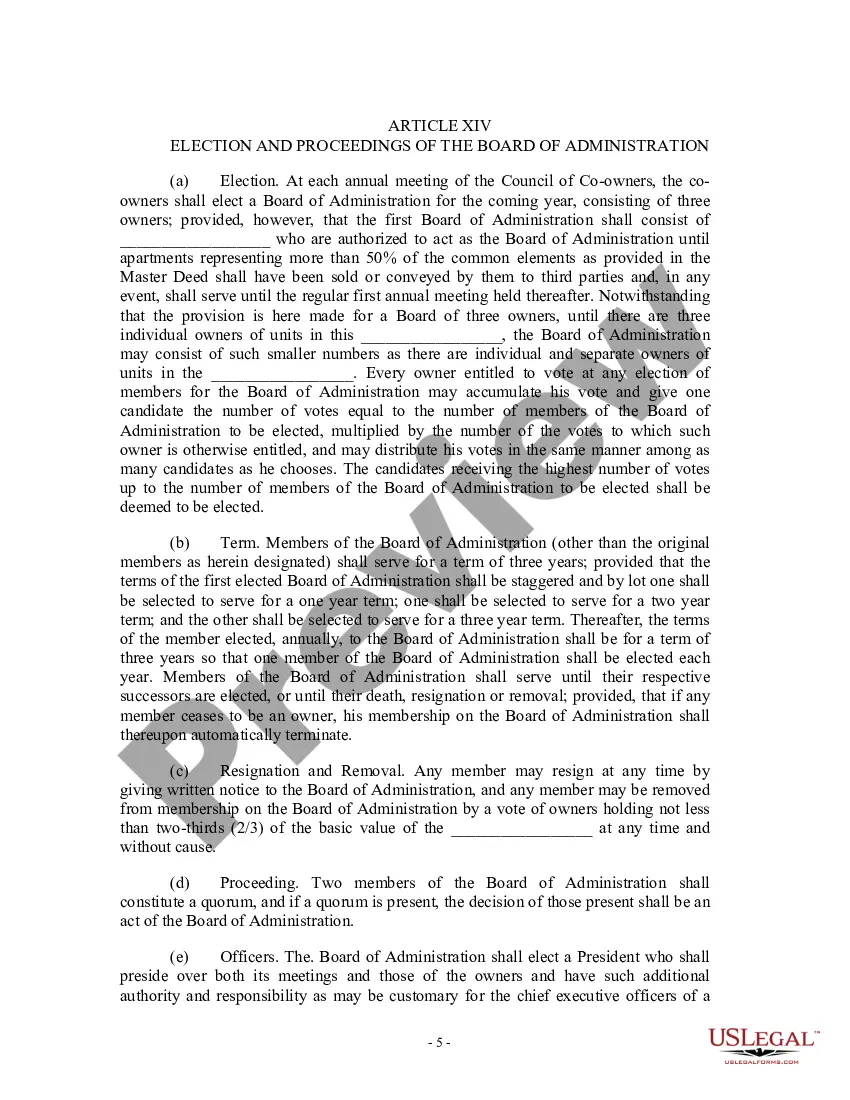
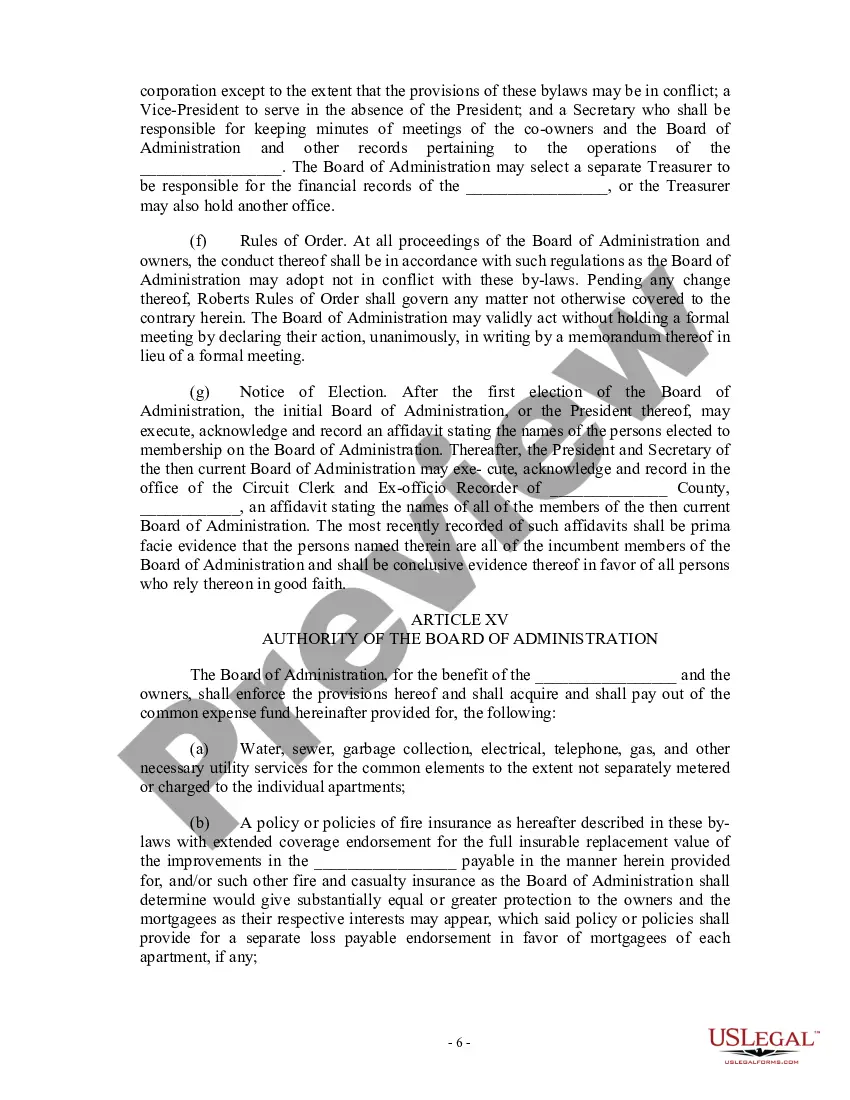
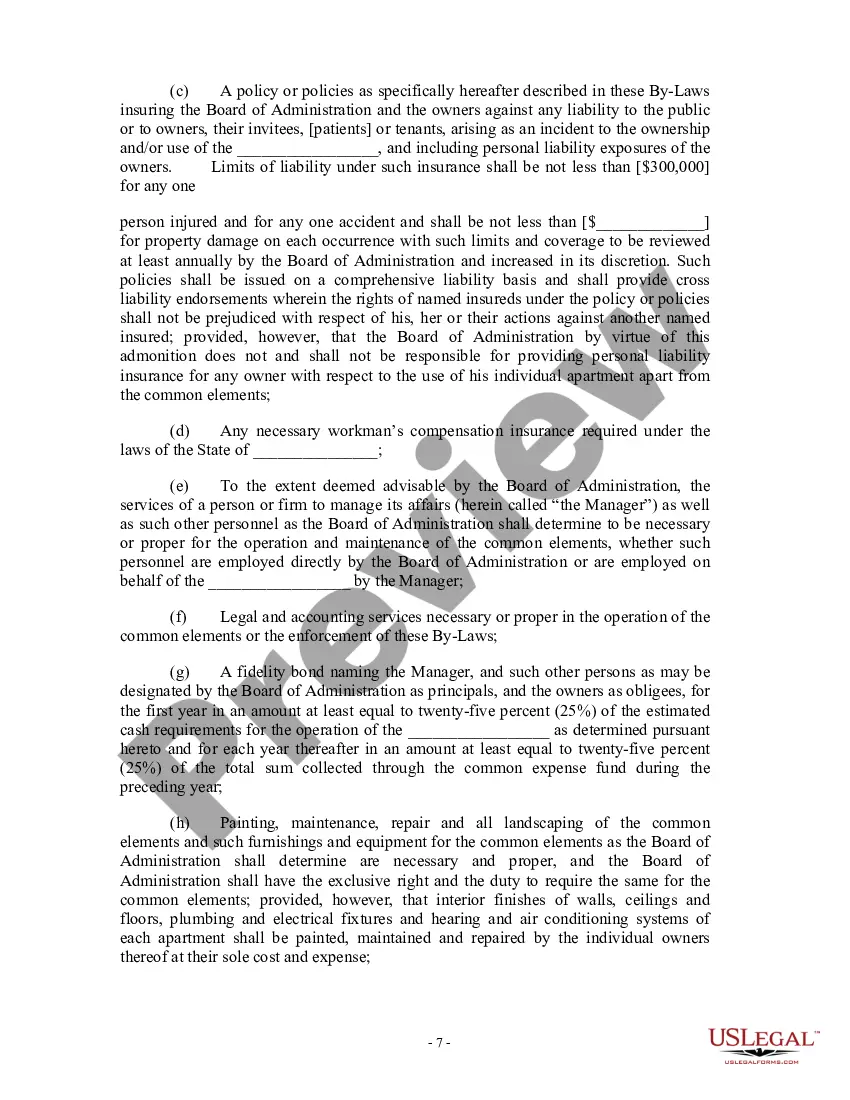
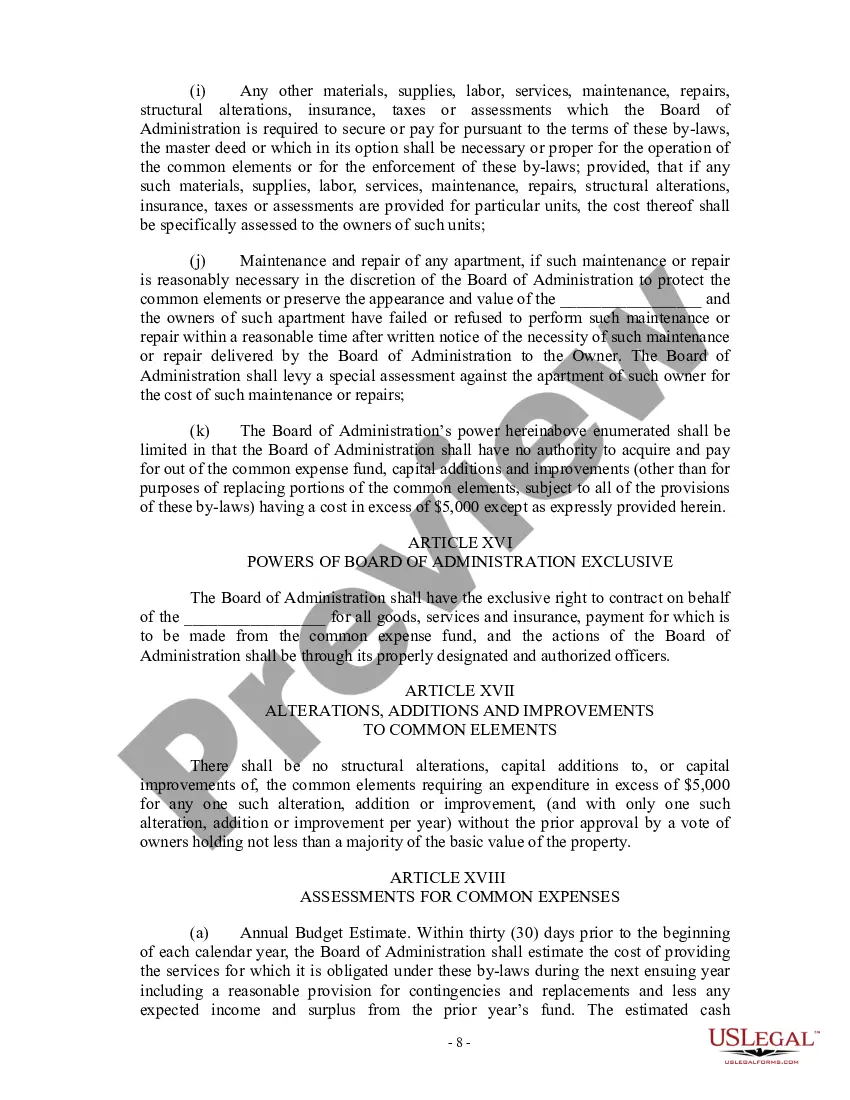
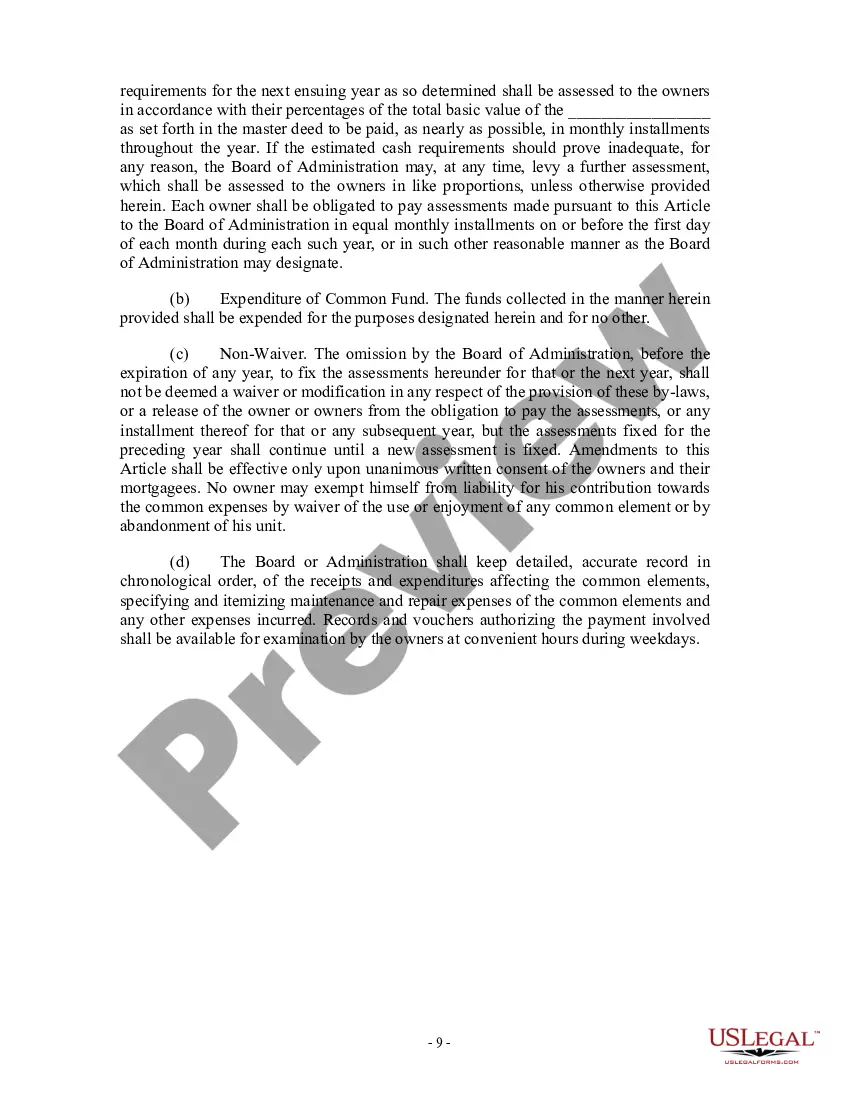
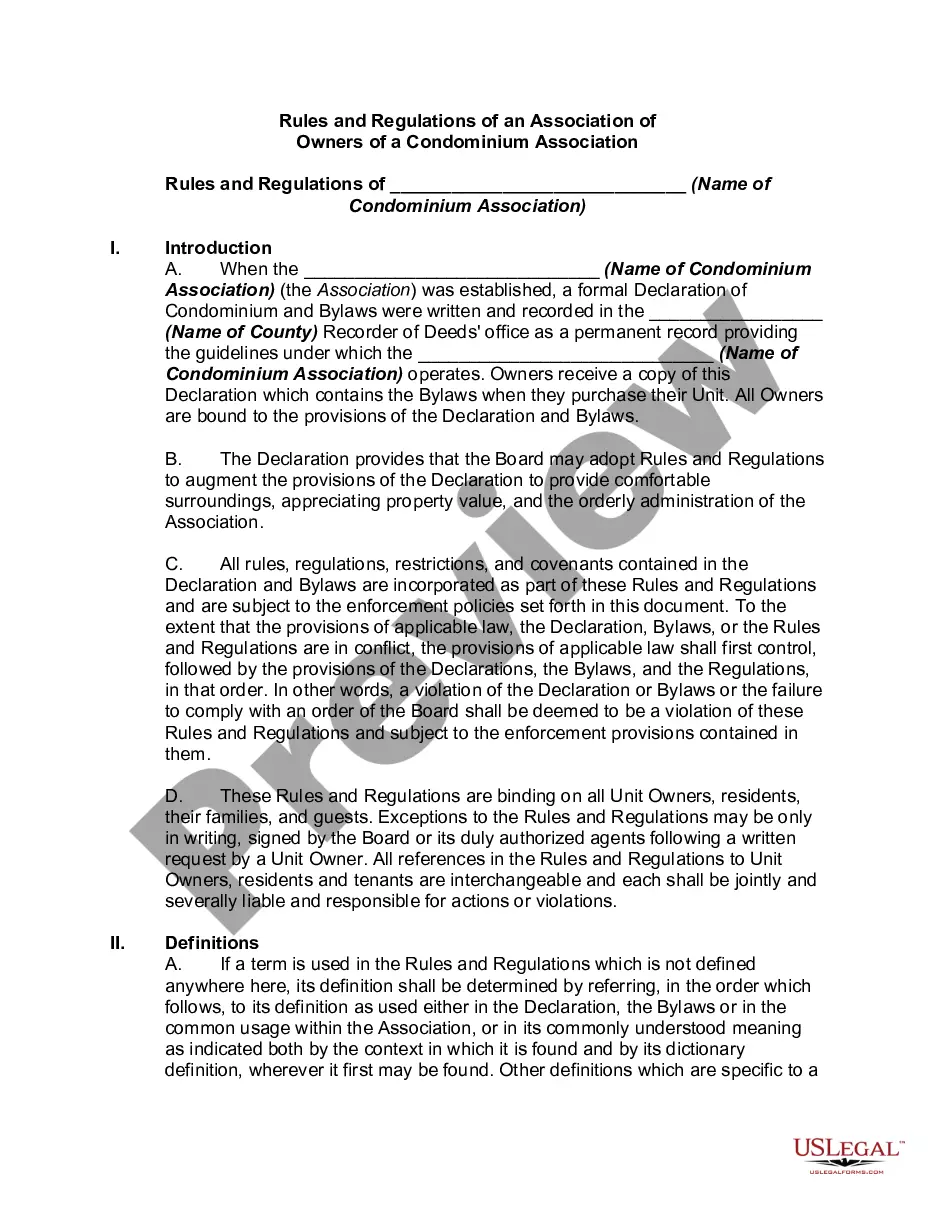
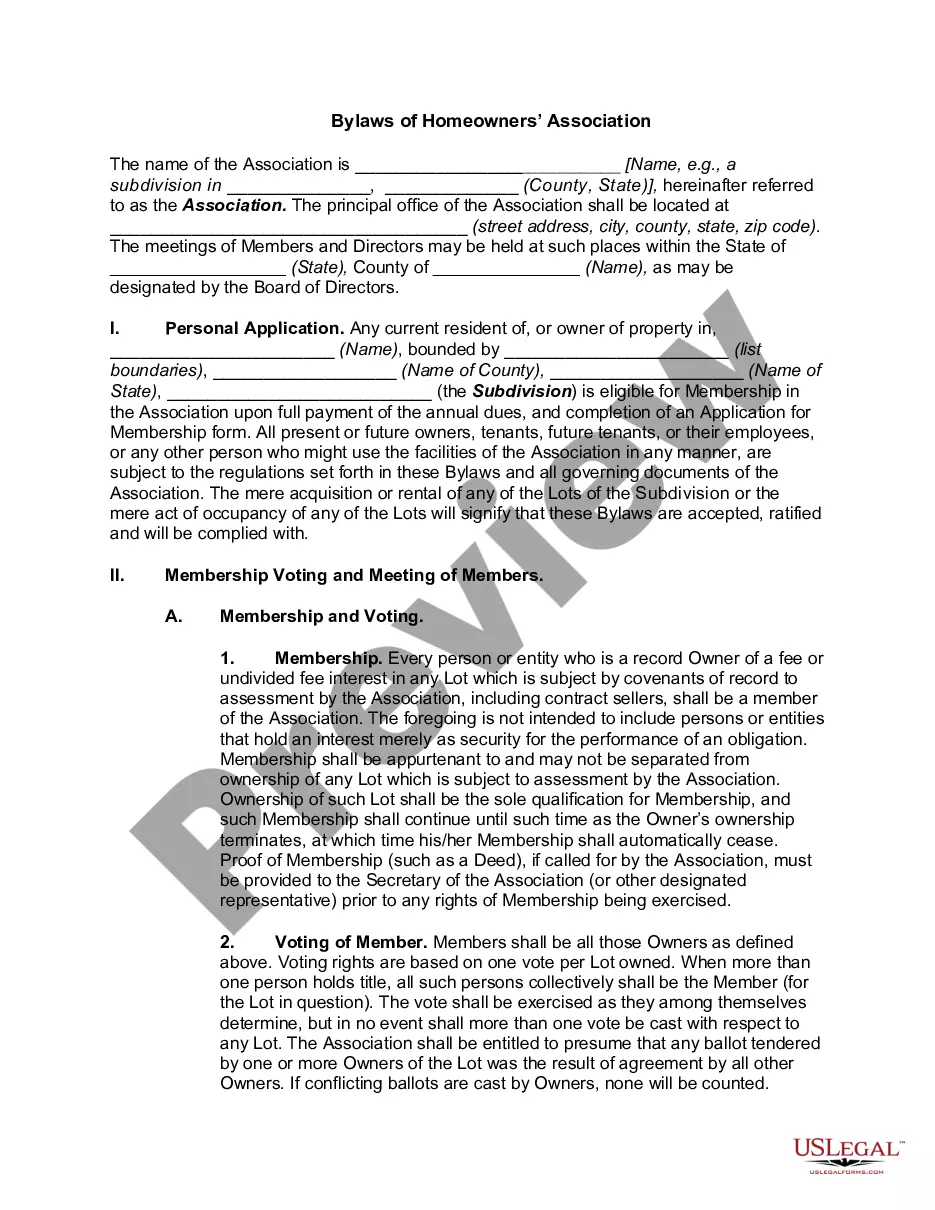
The following By-Laws have been adopted to govern the affairs of the project described in the master deed of the owners. The form also contains defintions of the words and terms used in the document.
Connecticut Bylaws of Condominium
State:
Multi-State
Category:
Control #:
US-AR-B1039
Format:
Word;
Rich Text
170 downloads
Description
Free preview



Get your form ready online
Our built-in tools help you complete, sign, share, and store your documents in one place.
Built-in online Word editor
Make edits, fill in missing information, and update formatting in US Legal Forms—just like you would in MS Word.
Export easily
Download a copy, print it, send it by email, or mail it via USPS—whatever works best for your next step.
E-sign your document
Sign and collect signatures with our SignNow integration. Send to multiple recipients, set reminders, and more. Go Premium to unlock E-Sign.
Notarize online 24/7
If this form requires notarization, complete it online through a secure video call—no need to meet a notary in person or wait for an appointment.
Store your document securely
We protect your documents and personal data by following strict security and privacy standards.

Make edits, fill in missing information, and update formatting in US Legal Forms—just like you would in MS Word.

Download a copy, print it, send it by email, or mail it via USPS—whatever works best for your next step.

Sign and collect signatures with our SignNow integration. Send to multiple recipients, set reminders, and more. Go Premium to unlock E-Sign.

If this form requires notarization, complete it online through a secure video call—no need to meet a notary in person or wait for an appointment.

We protect your documents and personal data by following strict security and privacy standards.
Looking for another form?

How to fill out Bylaws Of Condominium?
Are you facing a circumstance where you need to have documents for potential business or personal purposes almost every day.
There are numerous reliable document templates available online, but finding ones you can trust isn’t straightforward.
US Legal Forms offers thousands of form templates, including the Connecticut Bylaws of Condominium, which are designed to comply with federal and state regulations.
Choose a convenient document format and download your copy.
Find all the document templates you have purchased in the My documents menu. You can download another copy of the Connecticut Bylaws of Condominium at any time if necessary. Click the required form to download or print the document template. Use US Legal Forms, the most extensive collection of legitimate forms, to save time and avoid errors. The service provides professionally crafted legal form templates for various purposes. Create an account on US Legal Forms and start making your life a little easier.
- If you are already familiar with the US Legal Forms website and have an account, simply Log In.
- Then, you can download the Connecticut Bylaws of Condominium template.
- If you do not have an account and wish to start using US Legal Forms, follow these steps.
- Obtain the form you need and verify that it corresponds to your specific city/region.
- Utilize the Preview button to review the form.
- Check the summary to ensure you’ve selected the correct document.
- If the form isn’t what you need, use the Search feature to find the form that meets your requirements.
- Once you have the correct form, click on Buy now.
- Select the pricing plan you need, fill in the necessary information to create your account, and purchase your order using PayPal or a credit card.
Form popularity
FAQ
To sum up, the rights of a condominium unit owner are the following: Right of absolute ownership over his unit. Right of exclusive easement of the space of his unit. Right to repair, paint, decorate the interior of his unit.
Pay condominium dues and other assessments. Share in the insurance of common areas. Comply with the restrictions of the condominium project. Give right of first refusal to the condominium corporation or unit owners in case of sale (if it is required in the master deed)
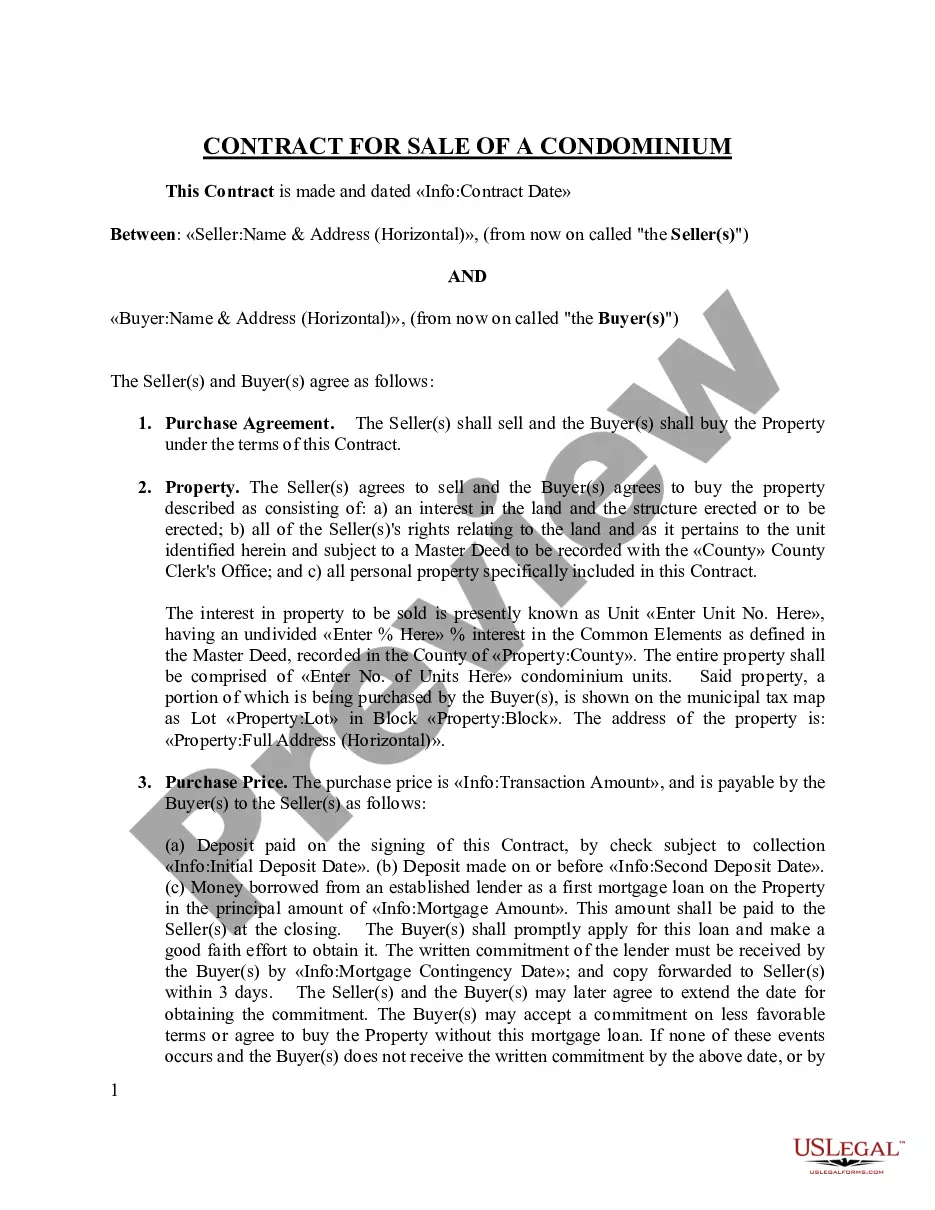
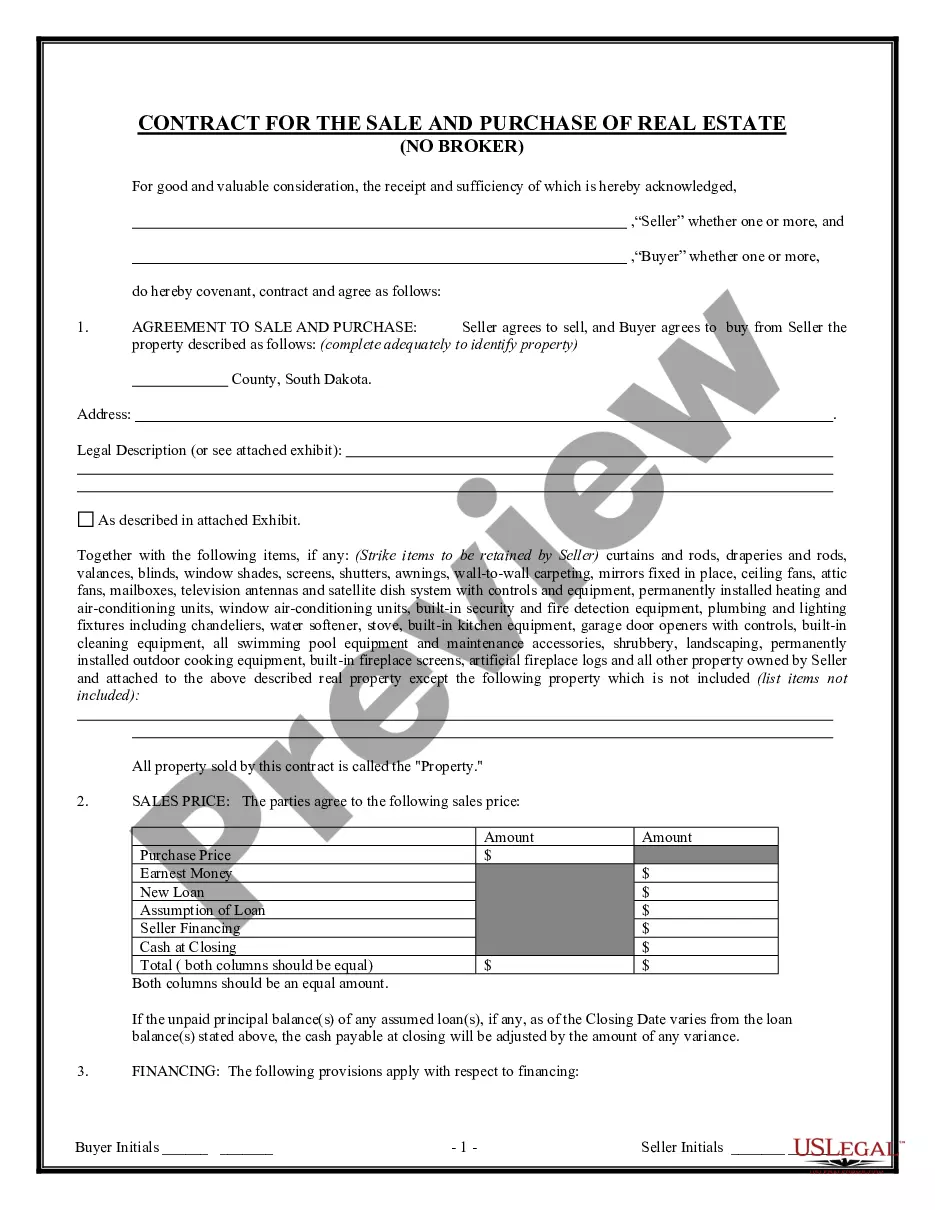
Seller must provide Public Offering Statement that includes: Condominium Declaration. Articles of Incorporation (or other document that creates the association). Bylaws.
The registration and regulation of a condominium corporation shall be vested with the Housing And Land Use Regulatory Board (HLURB) and the term of the said corporation shall be coterminous with the duration of the subdivision projects, the provision of the corporation law to the contrary notwithstanding. Sec. 12.
A condominium is inside a residential building or community but the unit is privately managed by the individual or landlord of the property. This landlord has no say in the functioning of the larger building or even the plot of land in which his/her property is built upon.
An Alberta court has upheld the right of a condominium corporation to evict a bylaw-breaching homeowner.
The Philippine Condominium Act allows foreigners to own condo units, as long as 60% of the building is owned by Filipinos. If you want to buy a house, consider a long-term lease agreement with a Filipino landowner.
The Rights You Are Entitled to as a Condo OwnerEnjoy your condo space quietly; that is, without creating a nuisance for the others living in the same condominium community. Right to get notified in case any individual from the condo's committee needs to gain acc. ess to your suite for repairs and inspection purposes.
Passed by the Connecticut legislature on June 3, 1983, became the first state law in the United States to unify and modernize the law of common interest communities. This Act covers in a uniform manner the law of condominiums, real estate cooperatives, planned unit developments, and reciprocal easement regimes.