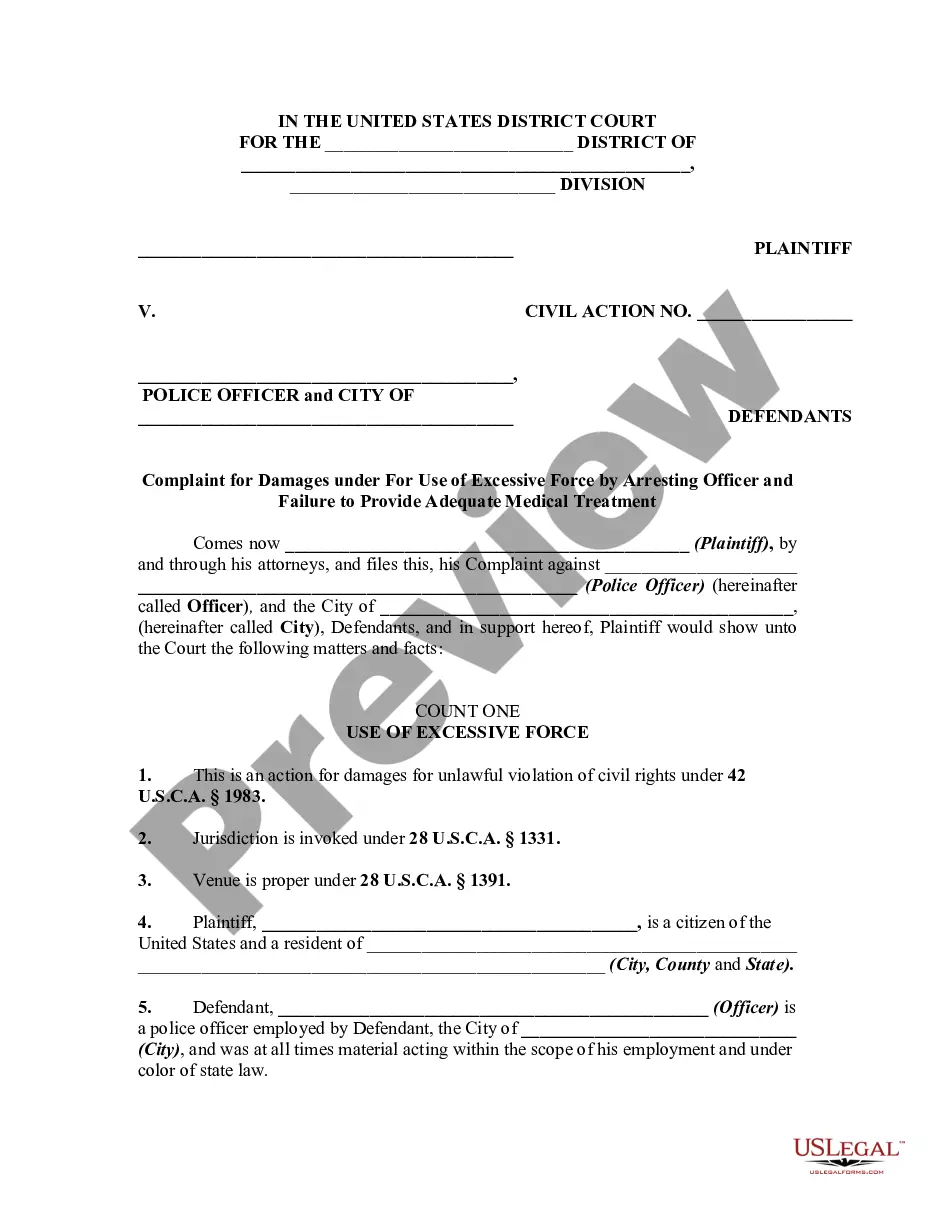
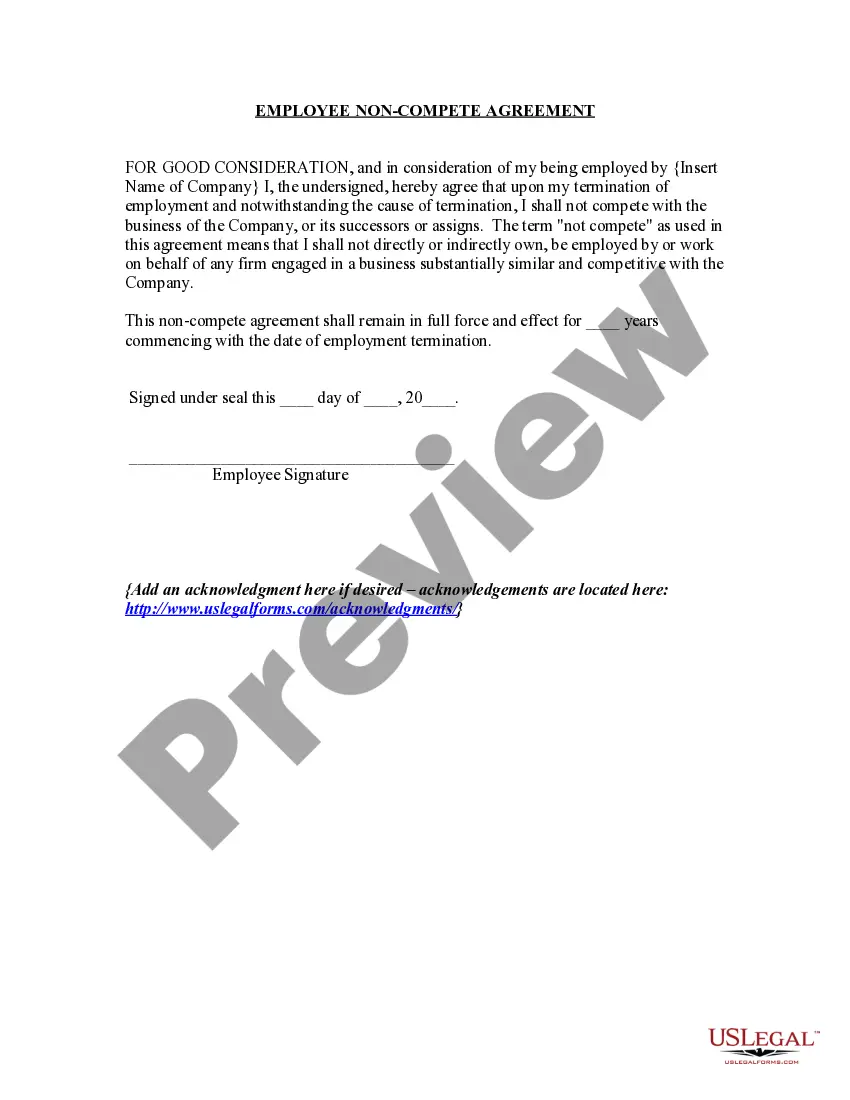
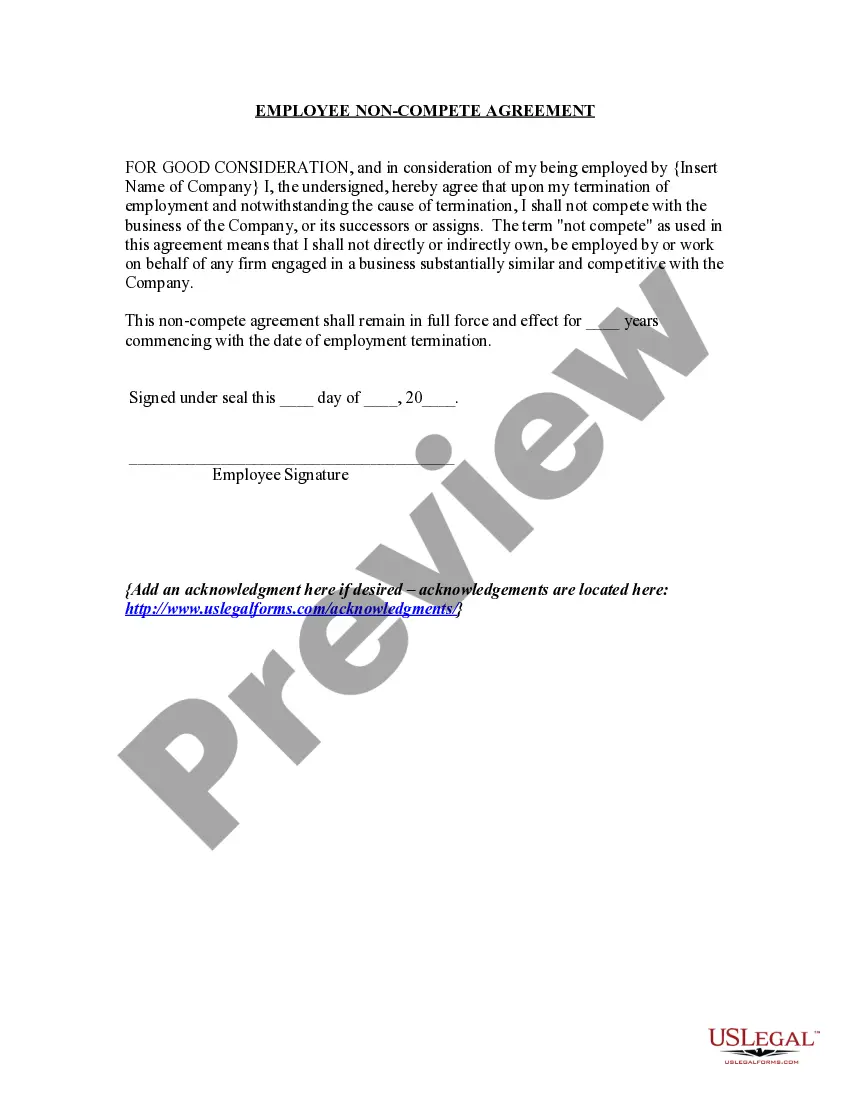
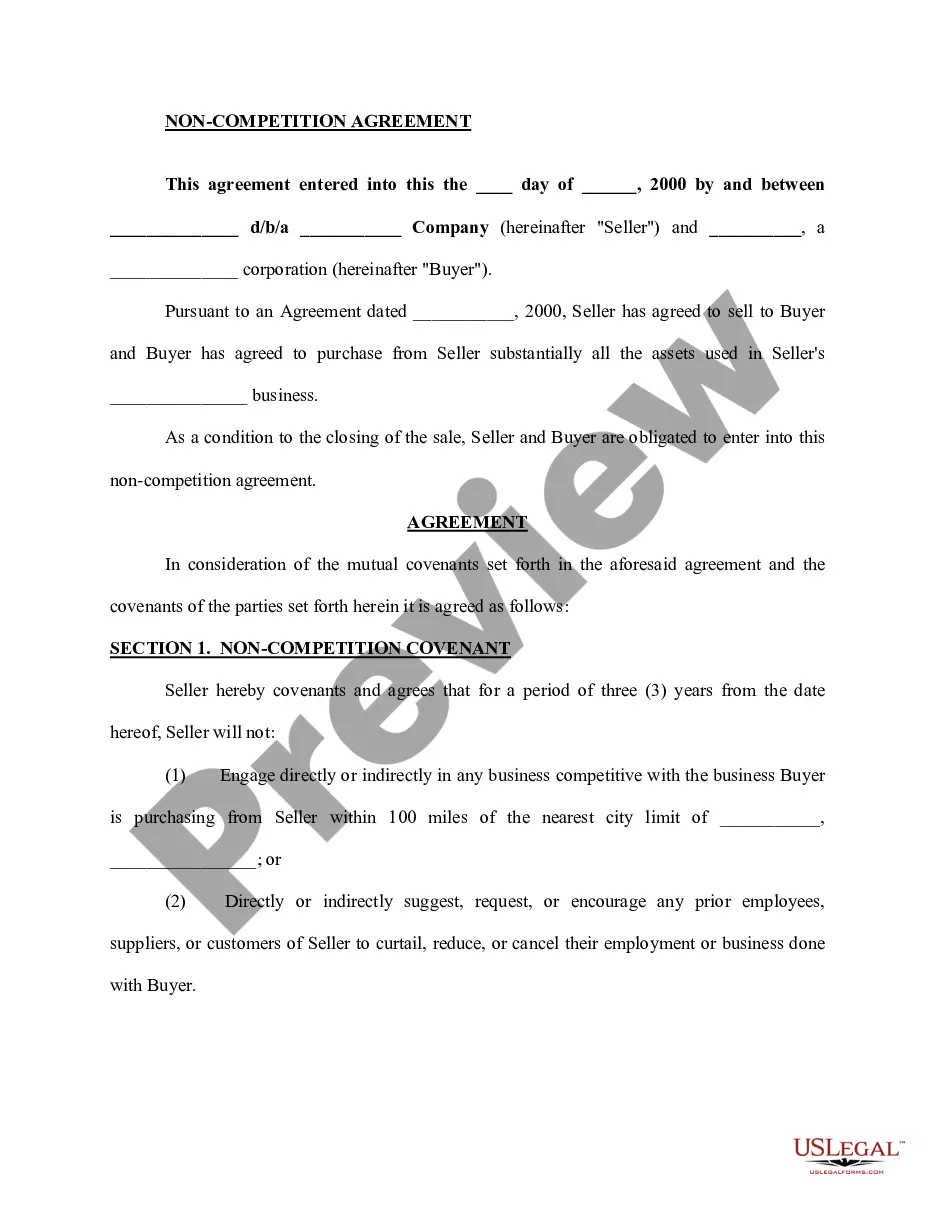
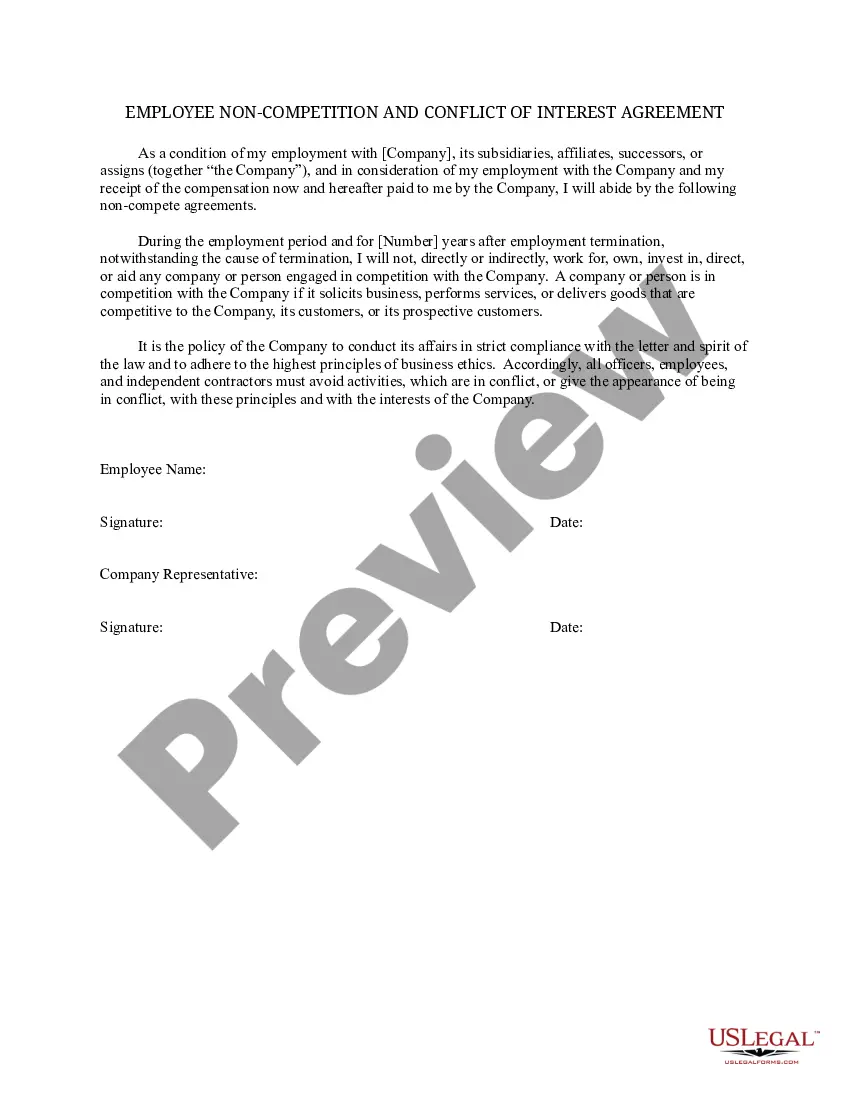
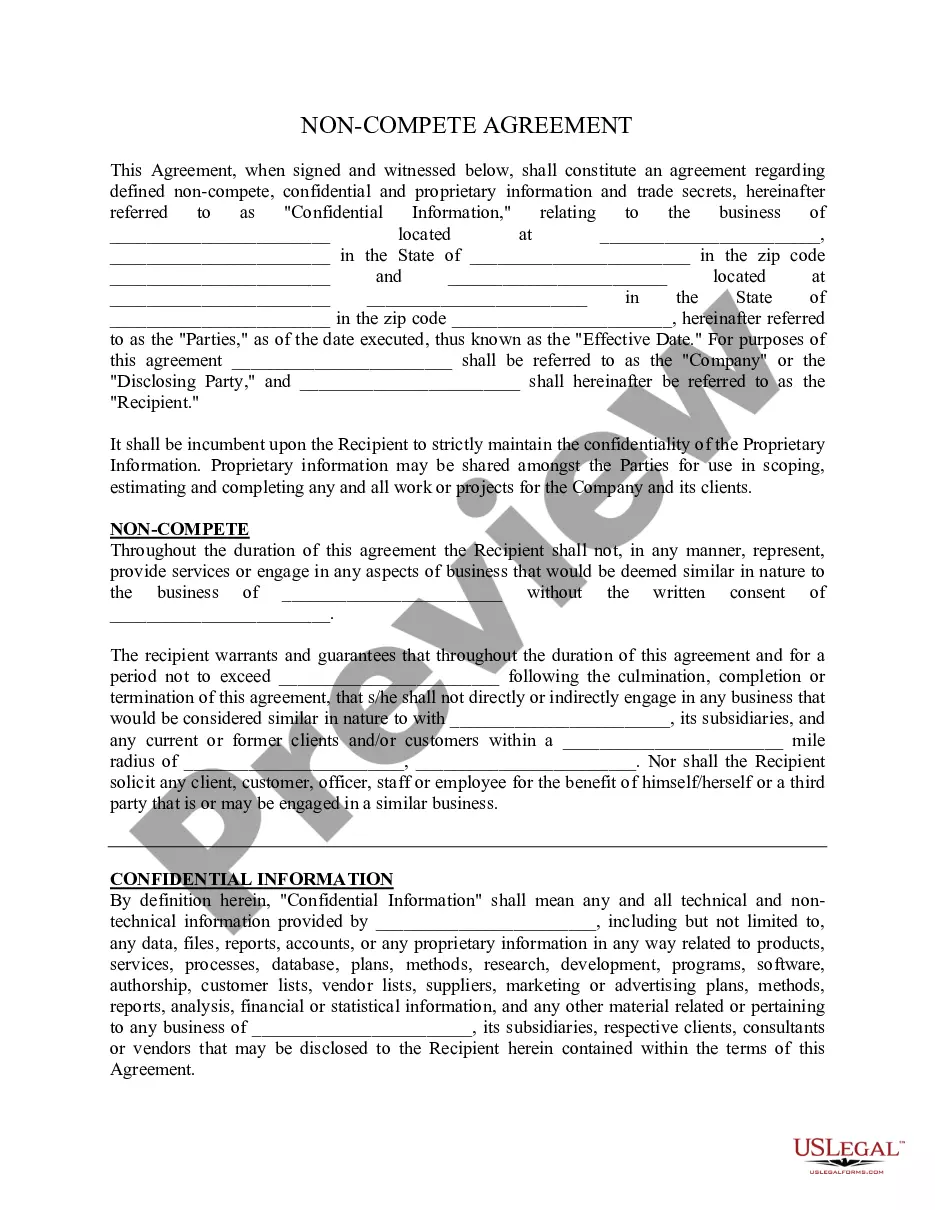
Connecticut Employee Noncompete (Noncompetition) Agreement
Description
Get your form ready online
Our built-in tools help you complete, sign, share, and store your documents in one place.
Make edits, fill in missing information, and update formatting in US Legal Forms—just like you would in MS Word.
Download a copy, print it, send it by email, or mail it via USPS—whatever works best for your next step.
Sign and collect signatures with our SignNow integration. Send to multiple recipients, set reminders, and more. Go Premium to unlock E-Sign.
If this form requires notarization, complete it online through a secure video call—no need to meet a notary in person or wait for an appointment.
We protect your documents and personal data by following strict security and privacy standards.

Make edits, fill in missing information, and update formatting in US Legal Forms—just like you would in MS Word.

Download a copy, print it, send it by email, or mail it via USPS—whatever works best for your next step.

Sign and collect signatures with our SignNow integration. Send to multiple recipients, set reminders, and more. Go Premium to unlock E-Sign.

If this form requires notarization, complete it online through a secure video call—no need to meet a notary in person or wait for an appointment.

We protect your documents and personal data by following strict security and privacy standards.
Looking for another form?
How to fill out Employee Noncompete (Noncompetition) Agreement?
If you wish to be thorough, acquire, or produce authentic document templates, utilize US Legal Forms, the premier selection of legal forms available online.
Take advantage of the website's straightforward and user-friendly search feature to locate the documents you require.
Various templates for business and personal applications are organized by categories and states, or keywords.
Step 4. Once you have located the form you need, select the Get now option. Choose the pricing plan you prefer and provide your credentials to register for an account.
Step 5. Complete the payment process. You can use your credit card or PayPal account to finalize the purchase.
- Utilize US Legal Forms to locate the Connecticut Employee Noncompete (Noncompetition) Agreement in just a few clicks.
- If you are already a US Legal Forms customer, sign in to your account and click on the Download option to retrieve the Connecticut Employee Noncompete (Noncompetition) Agreement.
- You can also access forms you have downloaded previously from the My documents section of your account.
- If this is your first experience with US Legal Forms, follow the instructions provided below.
- Step 1. Ensure you have chosen the form for the correct area/region.
- Step 2. Utilize the Preview option to review the contents of the form. Be sure to read the details carefully.
- Step 3. If you are not satisfied with the form, use the Search field at the top of the screen to discover other versions of the legal form design.
Form popularity
FAQ
Non-compete agreements are typically considered enforceable if they: Have reasonable time restrictions (generally less than one year) Are limited to a certain geographic area (specific cities or counties, rather than entire states)
Most non-compete contracts prohibit competitive activity by the ex-employee within a certain number of miles of the employer's business. The typical language prohibits competitive activity within a 15 to 25 mile radius of the employer's business.
Connecticut does not have any statute or regulation governing non- competes generally. Employers cannot require certain security guards to enter into an agreement preventing them from engaging in the same or similar job: 220e At the same location where they were employed.
It also provides that a restrictive covenant is unenforceable where the employment relationship is terminated by the employer without cause. Connecticut has recently taken steps towards imposing further limitations on non-compete provisions.
You Can Void a Non-Compete by Proving Its Terms Go Too Far or Last Too Long. Whether a non-compete is unenforceable because it covers too large of a geographical area or it lasts too long can depend on many factors. Enforceability can depend on your industry, skills, location, etc.
Fortunately for you, courts have recently limited the power of non-compete agreements to protect employees' rights, making it possible (though not guaranteed) for you to get out of your non-compete. For a non-compete agreement to be enforceable, it must first be reasonable.
According to Connecticut law, a non-compete is only enforceable against a former employee if it is reasonable. What is reasonable for a non-compete is determined through a five-part test. The parts are: The duration of the restriction. Generally speaking, longer restrictions are harder to enforce.
Typically, the only way to fight a non-compete agreement is to go to court. If you are an employee (or former employee) who signed such an agreement, this means you must violate the agreement and wait to be sued. It may be that your former employer has never sued another employee to enforce the non-compete agreement.