Connecticut Land Trust Agreement

State:
Multi-State
Control #:
US-02093BG
Format:
Word; 
Rich Text
Instant download

Description

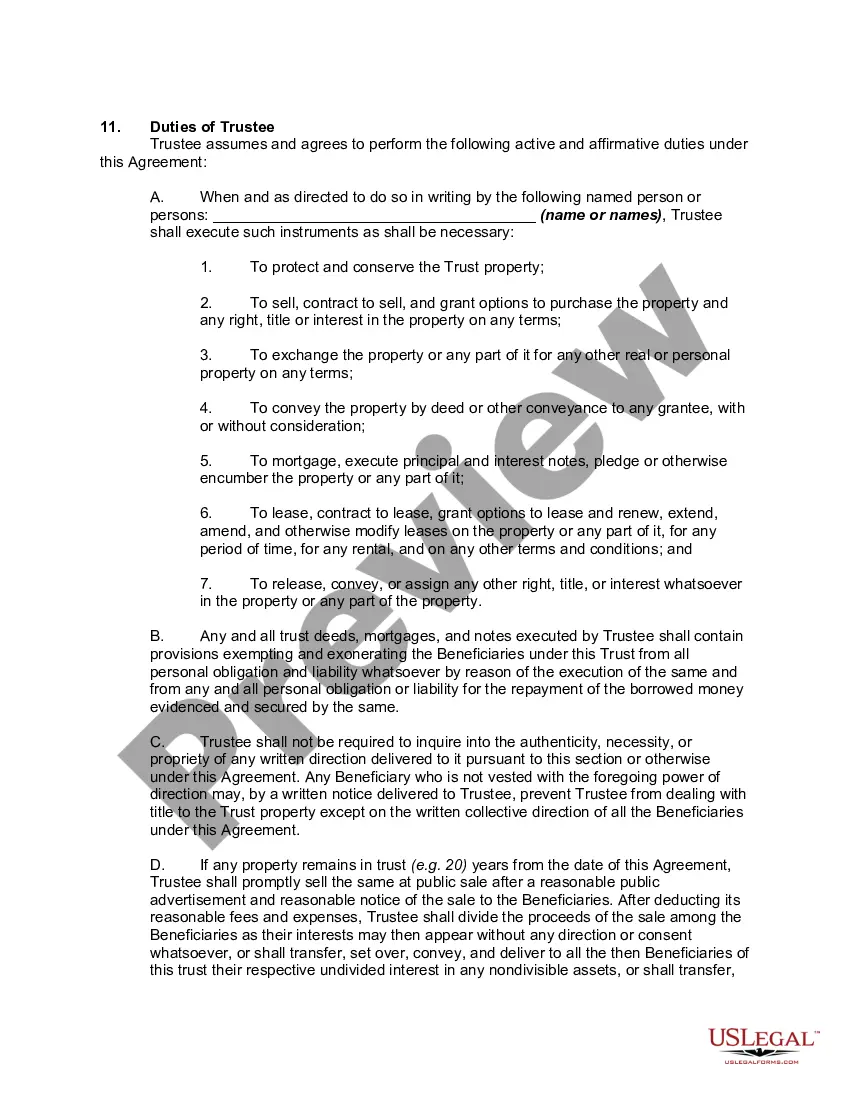
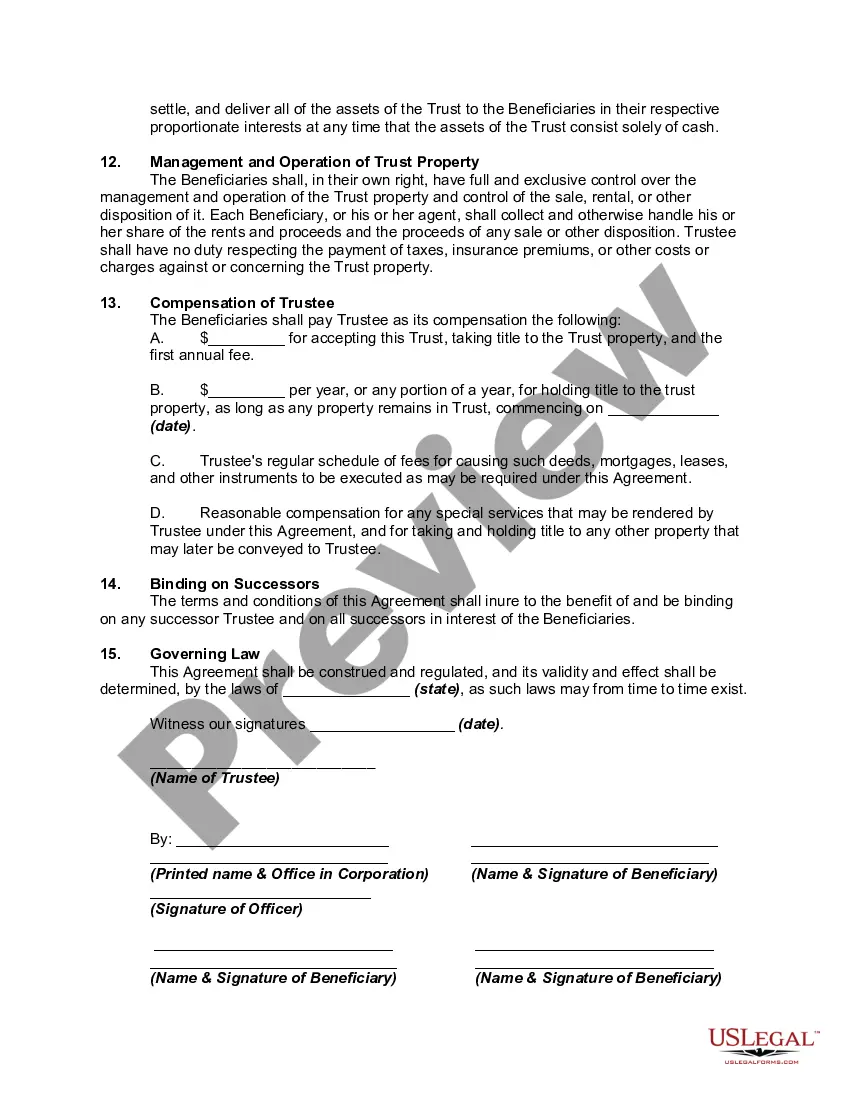
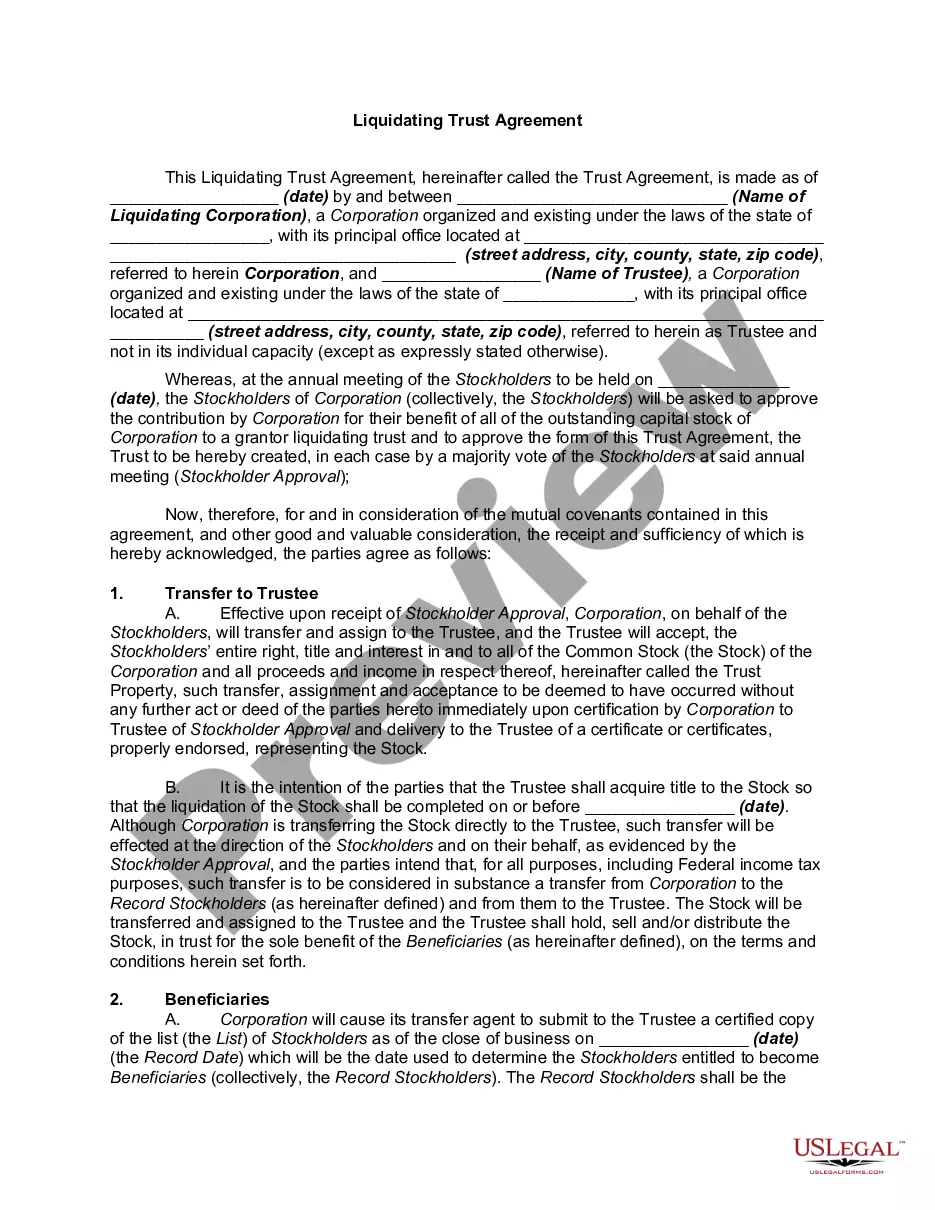
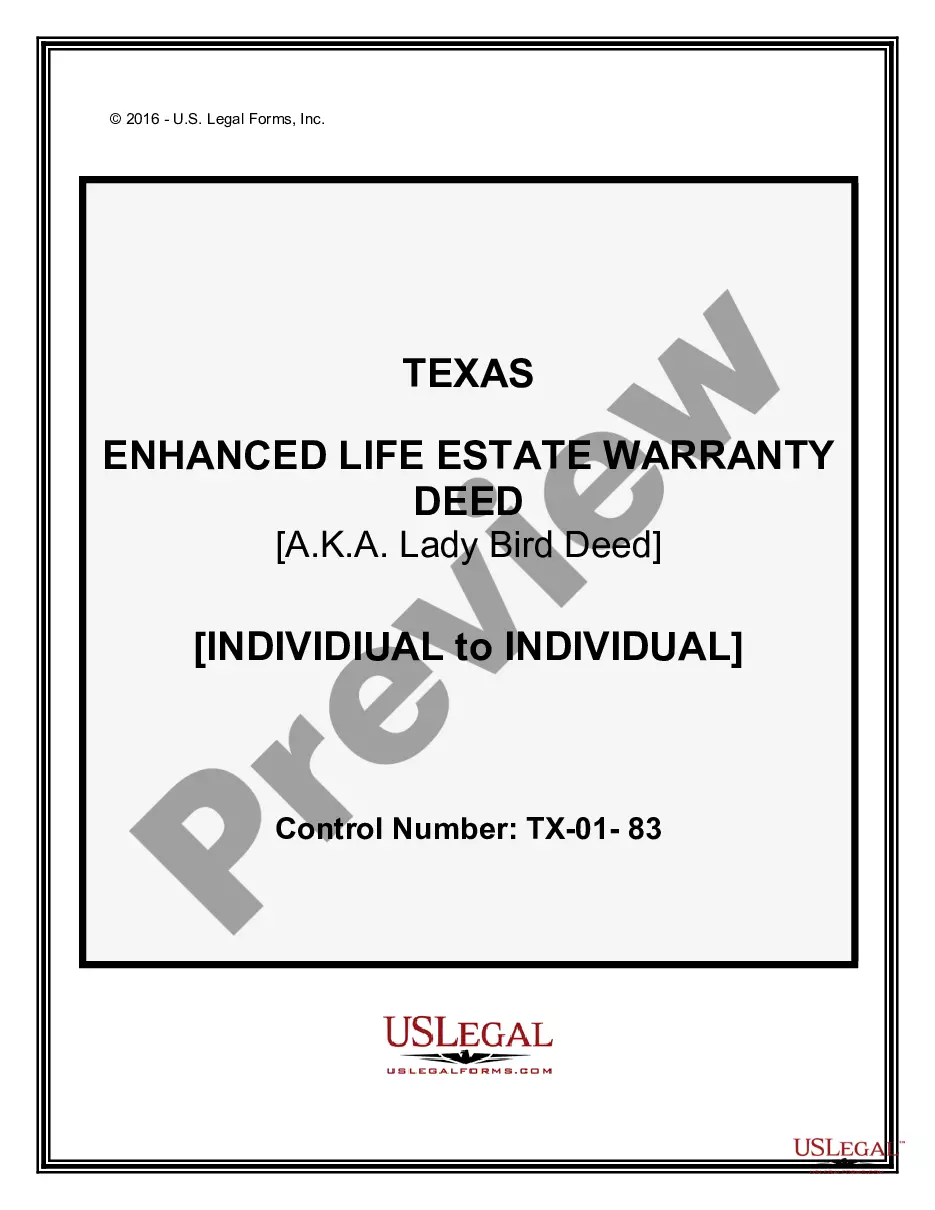
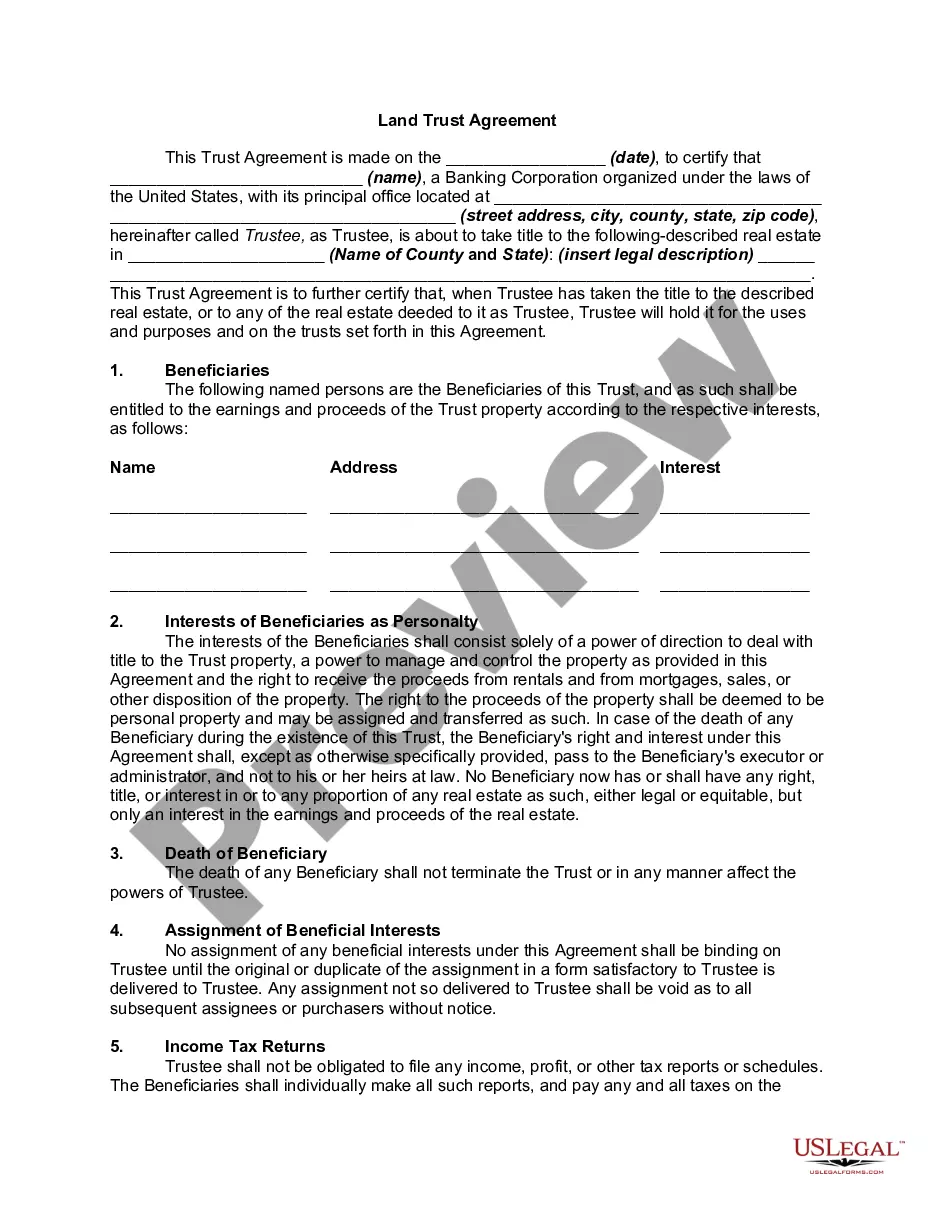
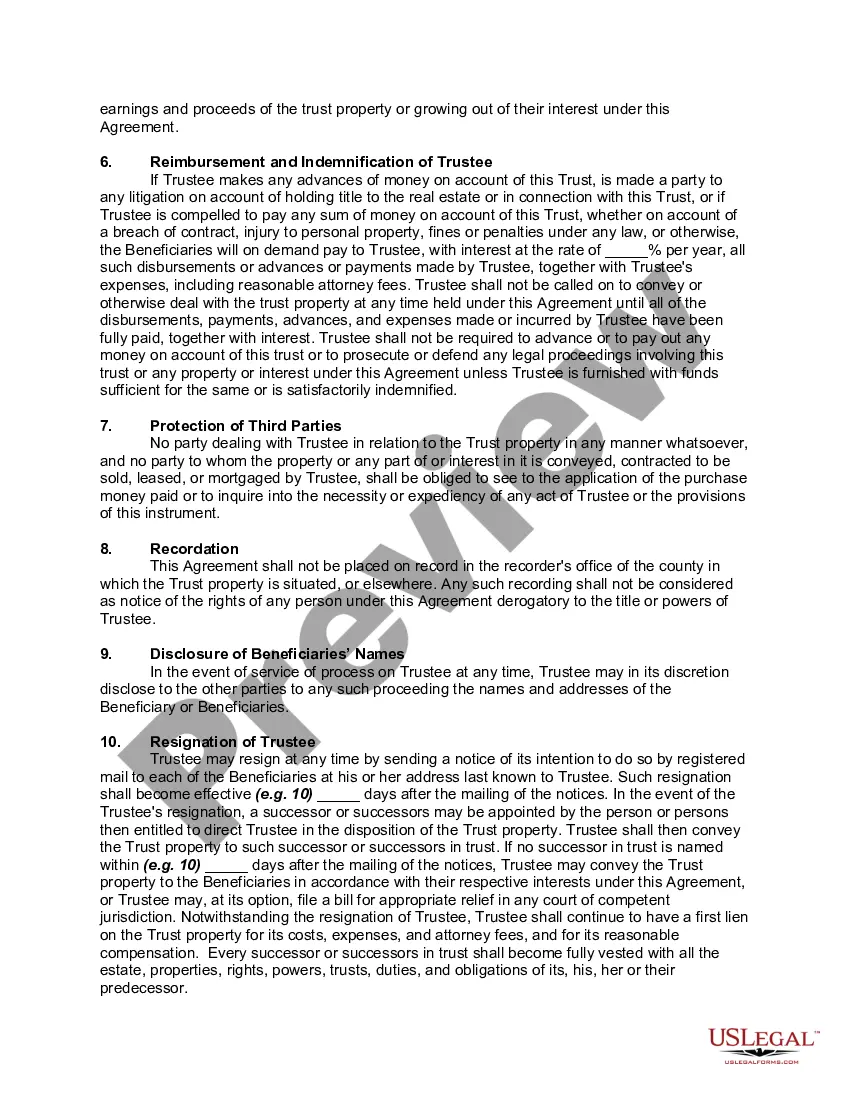
There are two basic instruments required to establish a land trust. One is a deed in trust conveying the real estate to a trustee. The other is a trust agreement defining the rights and duties of the trustee and the beneficiaries, which is mentioned in the deed of trust but is not recorded. The deed in trust should convey title to real property to a trustee and confer complete trust powers on the trustee so that the trustee can deal with third parties without reference to the trust agreement. Restrictions on the trustee's powers should be set forth in the trust agreement.


This form is a generic example that may be referred to when preparing such a form for your particular state. It is for illustrative purposes only. Local laws should be consulted to determine any specific requirements for such a form in a particular jurisdiction.
Free preview
  • Preview Land Trust Agreement
  • Preview Land Trust Agreement
  • Preview Land Trust Agreement
  • Preview Land Trust Agreement
  • Preview Land Trust Agreement

How to fill out Land Trust Agreement?

If you desire to finalize, obtain, or print authentic document templates, utilize US Legal Forms, the primary collection of legal forms available online.

Take advantage of the site's user-friendly search feature to locate the documents you require.

An assortment of templates for business and personal purposes is categorized by type and state, or keywords.

Every legal document template you purchase is yours permanently. You will have access to each form you downloaded within your account. Click the My documents section and select a form to print or download again.

Compete and obtain, and print the Connecticut Land Trust Agreement with US Legal Forms. There are millions of professional and state-specific forms available for your business or personal requirements.

  1. Employ US Legal Forms to locate the Connecticut Land Trust Agreement in just a few clicks.
  2. If you are already a US Legal Forms customer, Log In to your account and click the Download button to obtain the Connecticut Land Trust Agreement.
  3. You can also access forms you previously downloaded in the My documents section of your account.
  4. If this is your first time using US Legal Forms, follow the instructions below.
  5. Step 1. Ensure you have selected the form for your specific city/land.
  6. Step 2. Use the Preview option to review the form's details. Don't forget to check the information.
  7. Step 3. If you are unsatisfied with the form, use the Search field at the top of the screen to find other variations in the legal form format.
  8. Step 4. Once you have found the form you need, click the Buy now button. Choose the pricing plan you prefer and enter your details to register for an account.
  9. Step 5. Process the payment. You can use your credit card or PayPal account to complete the purchase.
  10. Step 6. Select the format of the legal form and download it to your device.
  11. Step 7. Complete, edit, print, or sign the Connecticut Land Trust Agreement.

Form popularity

FAQ

A land trust can hold various types of property, including real estate, financial accounts, and even business interests. The primary purpose is to protect the privacy of the owner while managing assets effectively. With a Connecticut Land Trust Agreement, you can also set specific instructions on how the property should be maintained or developed, allowing for strategic planning and long-term benefits.

In Connecticut, a trust document does not necessarily need to be notarized to be valid. However, having the document notarized can add an extra layer of verification and may be required by banks or other institutions when dealing with the trust. Always consider consulting with a legal professional when creating a Connecticut Land Trust Agreement to ensure all necessary steps are followed.

The three main types of trust are revocable trusts, irrevocable trusts, and testamentary trusts. Revocable trusts allow you to retain control over your assets during your lifetime, while irrevocable trusts generally cannot be altered once established. Testamentary trusts take effect upon your death, allowing for management of assets for beneficiaries according to specified terms, such as those set forth in a Connecticut Land Trust Agreement.

To set up a trust in Connecticut, you start by defining your goals and gathering necessary information. You will need to draft a trust document, which outlines the terms of the trust and the responsibilities of the trustee. It's often beneficial to consult with a legal expert experienced in Connecticut Land Trust Agreement to ensure compliance with state laws and to properly execute the trust.

One major disadvantage of a trust, including a Connecticut Land Trust Agreement, is the potential for high setup and maintenance costs. Establishing a trust may require legal fees and ongoing administrative expenses, which can add up over time. Additionally, if not managed correctly, a trust can lead to misunderstandings among beneficiaries, which may create conflict.

In Connecticut, trusts are subject to taxation based on their income. A Connecticut Land Trust Agreement typically establishes the trust's assets and distributions, which factor into determining taxable income. The trust may be taxed at both the federal and state level, depending on the source of the income. It's essential to consult with a tax professional to navigate these regulations and ensure compliance.

Putting land in a Connecticut Land Trust Agreement can have several disadvantages. First, you may lose some control over the land, as the trust controls how it's used and managed. Additionally, establishing a trust often involves upfront costs, such as legal fees, that can be a burden. Finally, if the trust doesn’t align with your long-term goals, you may face difficulties in modifying trust terms.

Some downsides of a land trust include potential complexity in management and limited access to certain tax benefits. Additionally, once assets are placed in a trust, you may relinquish some direct control over their use and disposition. It's important to weigh these factors carefully when considering a Connecticut Land Trust Agreement.

Any individual or entity that owns property can set up a land trust. This includes homeowners aiming for privacy in their property dealings or developers looking for streamlined project management. A well-prepared Connecticut Land Trust Agreement can serve as an effective tool for a diverse range of property owners.

A land trust in Connecticut is a legal entity that holds title to real estate for the benefit of its beneficiaries. It provides a structure that can enhance privacy and improve the management of land assets. Essentially, it simplifies ownership and can help with development or conservation efforts in line with the Connecticut Land Trust Agreement.

Trusted and secure by over 3 million people of the world’s leading companies

Connecticut Land Trust Agreement