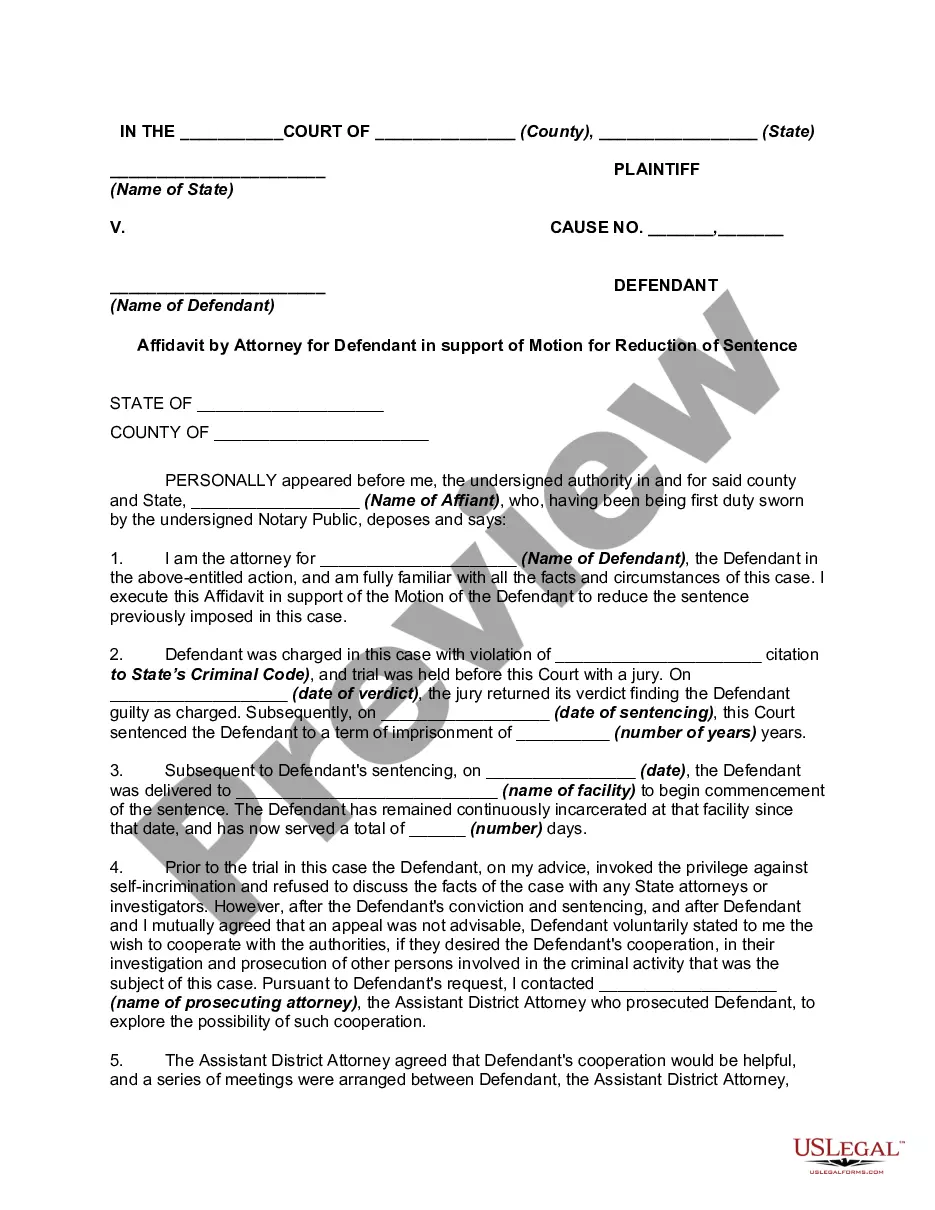
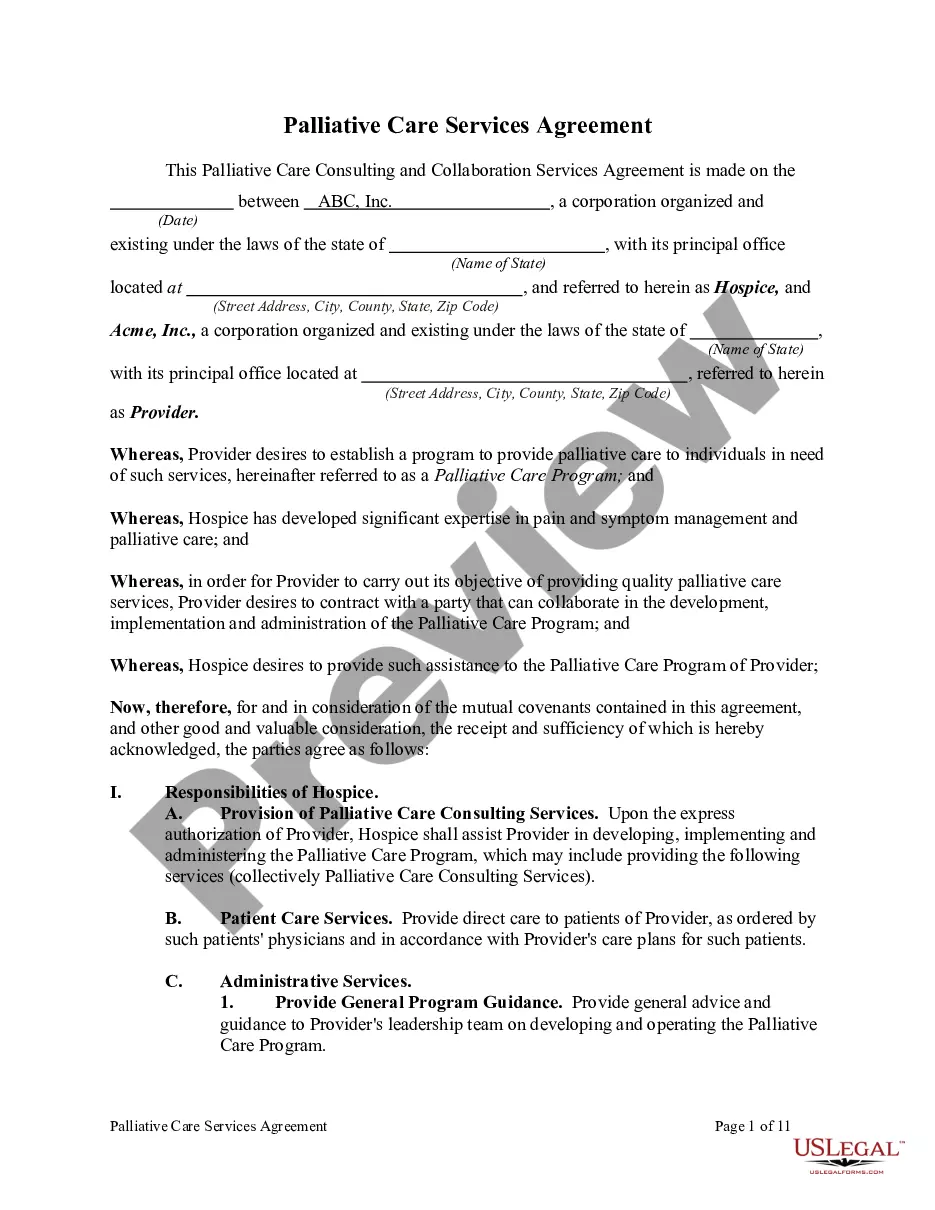
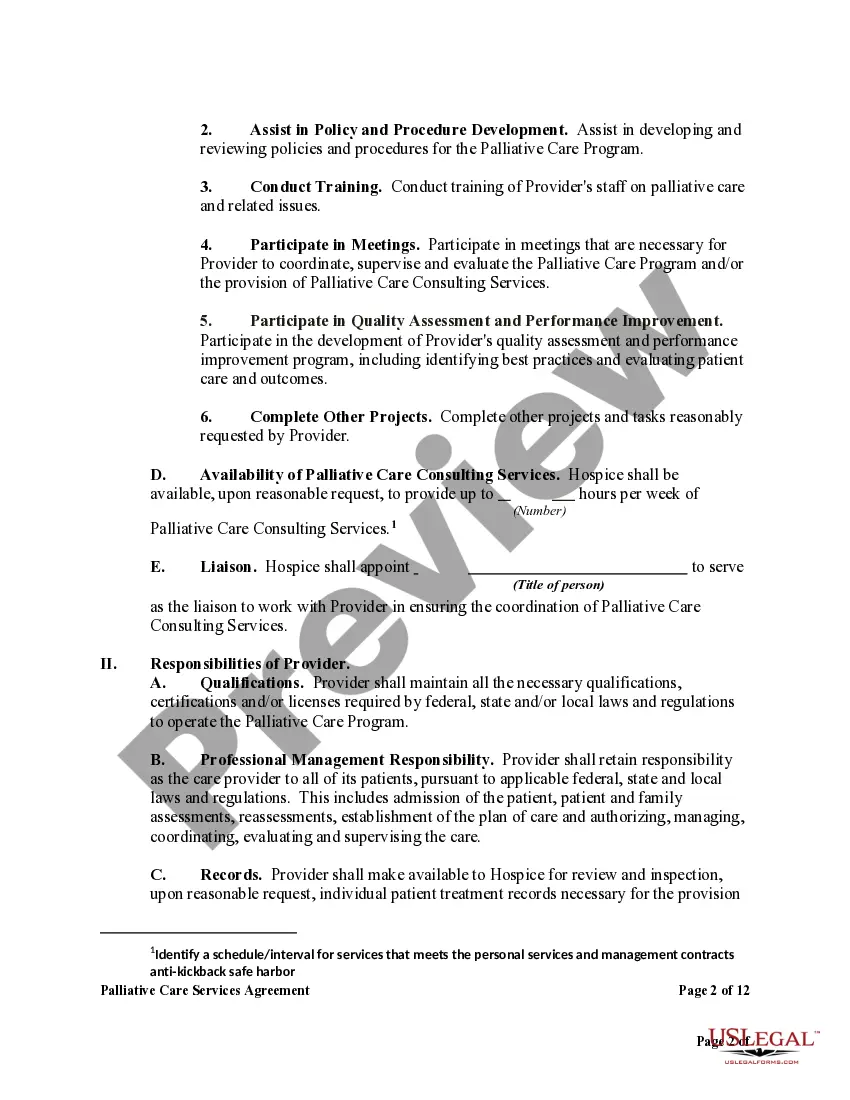
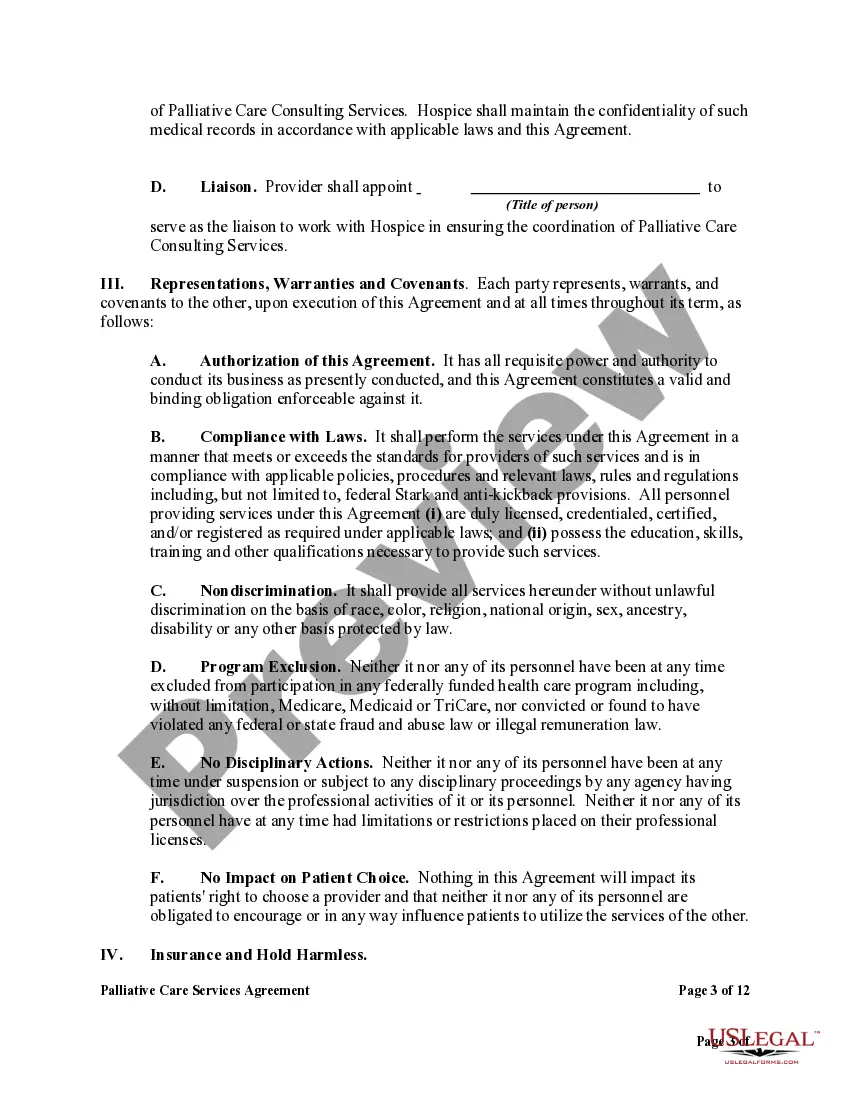
Connecticut Palliative Care Services Agreement
Description
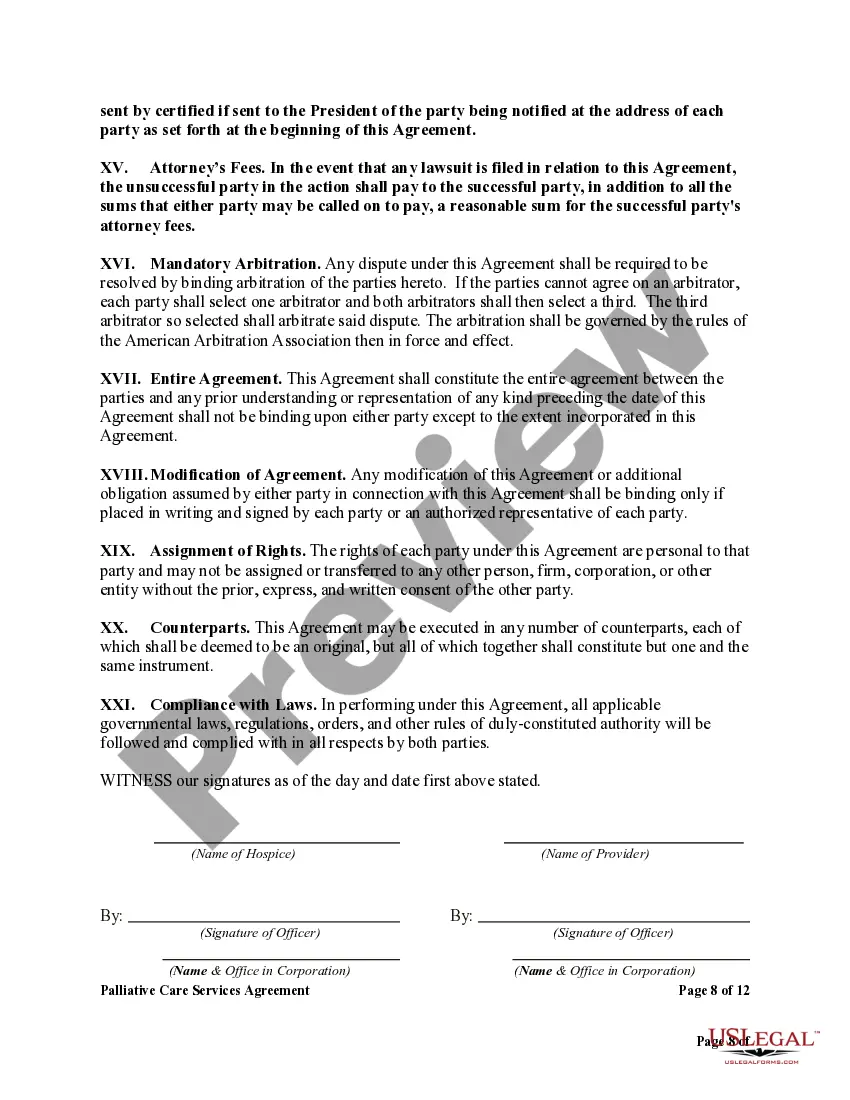

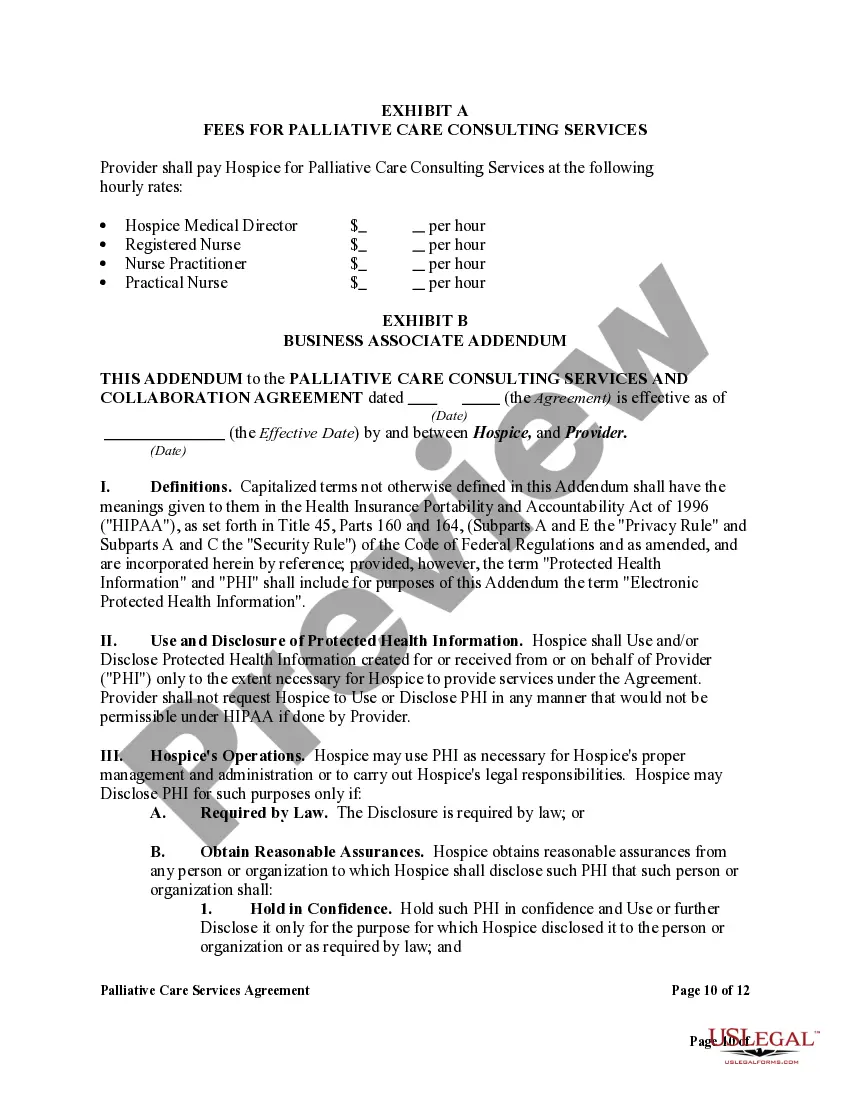



Get your form ready online
Our built-in tools help you complete, sign, share, and store your documents in one place.
Make edits, fill in missing information, and update formatting in US Legal Forms—just like you would in MS Word.
Download a copy, print it, send it by email, or mail it via USPS—whatever works best for your next step.
Sign and collect signatures with our SignNow integration. Send to multiple recipients, set reminders, and more. Go Premium to unlock E-Sign.
If this form requires notarization, complete it online through a secure video call—no need to meet a notary in person or wait for an appointment.
We protect your documents and personal data by following strict security and privacy standards.

Make edits, fill in missing information, and update formatting in US Legal Forms—just like you would in MS Word.

Download a copy, print it, send it by email, or mail it via USPS—whatever works best for your next step.

Sign and collect signatures with our SignNow integration. Send to multiple recipients, set reminders, and more. Go Premium to unlock E-Sign.

If this form requires notarization, complete it online through a secure video call—no need to meet a notary in person or wait for an appointment.

We protect your documents and personal data by following strict security and privacy standards.
Looking for another form?


How to fill out Palliative Care Services Agreement?
Have you found yourself in the situation where you need documents for both business or personal needs almost every day.
There are numerous legal document templates accessible online, but finding reliable ones isn’t straightforward.
US Legal Forms offers thousands of form templates, such as the Connecticut Palliative Care Services Agreement, designed to comply with state and federal regulations.
Once you find the appropriate form, click Get now.
Select the pricing plan you want, provide the necessary information to create your account, and pay for your order with PayPal or credit card.
- If you are already familiar with the US Legal Forms website and have an account, simply Log In.
- Once logged in, you can download the Connecticut Palliative Care Services Agreement template.
- If you do not have an account and wish to start using US Legal Forms, follow these steps.
- Find the form you need and confirm it is for the correct city/region.
- Use the Preview button to review the document.
- Check the description to ensure you have selected the correct form.
- If the form is not what you are looking for, use the Search field to locate the form that meets your needs.
Form popularity
FAQ
The three forms of palliative care include outpatient care, inpatient care, and hospice care. Each type aligns with the needs outlined in a Connecticut Palliative Care Services Agreement, allowing for tailored approaches to patient support. By understanding these forms, healthcare providers can effectively address the unique requirements of their patients.
Yes, palliative care services can be reimbursed by Medicare, provided they meet specific eligibility criteria. Understanding the details of the Connecticut Palliative Care Services Agreement can help ensure that all services provided fall within Medicare coverage. It is essential to confirm the necessary documentation and coding requirements to facilitate reimbursement.
Coding for palliative care involves selecting the appropriate CPT codes based on the specific services provided. Providers should understand the codes that align with their Connecticut Palliative Care Services Agreement. This approach not only ensures accurate billing but also supports quality care through clear documentation of patient services.
Various CPT codes can be used for palliative care services, including 99497 for advanced care planning. Selecting the correct code relates closely to the Connecticut Palliative Care Services Agreement, as it reflects the level and nature of care provided. It is essential to refer to the latest coding guidelines to ensure compliance and accuracy.
To bill for palliative care, healthcare providers must use designated CPT codes that represent the services rendered. Each component of the care provided relates back to the Connecticut Palliative Care Services Agreement, which outlines the specific needs of the patient. Accurate documentation and coding are vital to receiving appropriate reimbursement.
The 7 C's of palliative care include Compassion, Communication, Coordination, Continuity, Comfort, Community, and Care planning. These elements are essential for providing comprehensive support to patients and families under a Connecticut Palliative Care Services Agreement. Ensuring that these principles are followed can significantly enhance the quality of care.
Billing for palliative care typically involves understanding the services provided and using appropriate codes. Providers usually use specific codes that reflect the care delivered under a Connecticut Palliative Care Services Agreement. It's also important to document the level of service and patient needs accurately to ensure appropriate reimbursement.
To request palliative care, it is best to approach your physician or healthcare team openly. Share your concerns and discuss how your illness affects your daily life. They can help you explore options, including the Connecticut Palliative Care Services Agreement, which can facilitate access to the services you need.
Palliative care can begin at any stage of a serious illness, not just at the end of life. Early intervention improves the overall experience and quality of life for patients. Familiarizing yourself with the Connecticut Palliative Care Services Agreement can help you understand when to seek these vital services.
Applying for palliative care involves contacting a healthcare provider or a specialized palliative care service. You may need to provide details about your medical condition and any ongoing treatments. Explore the Connecticut Palliative Care Services Agreement, as it can guide you through the application process to access essential services.