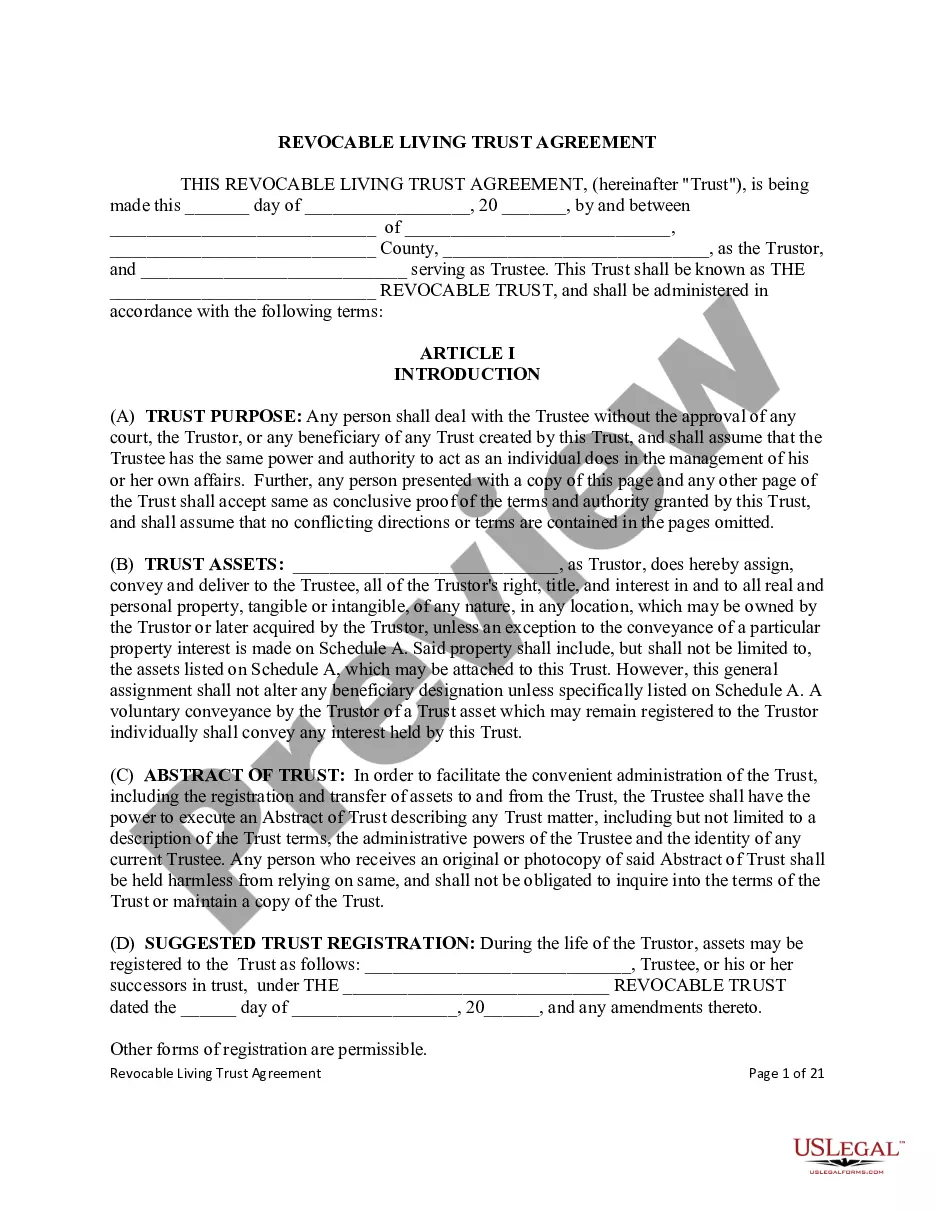
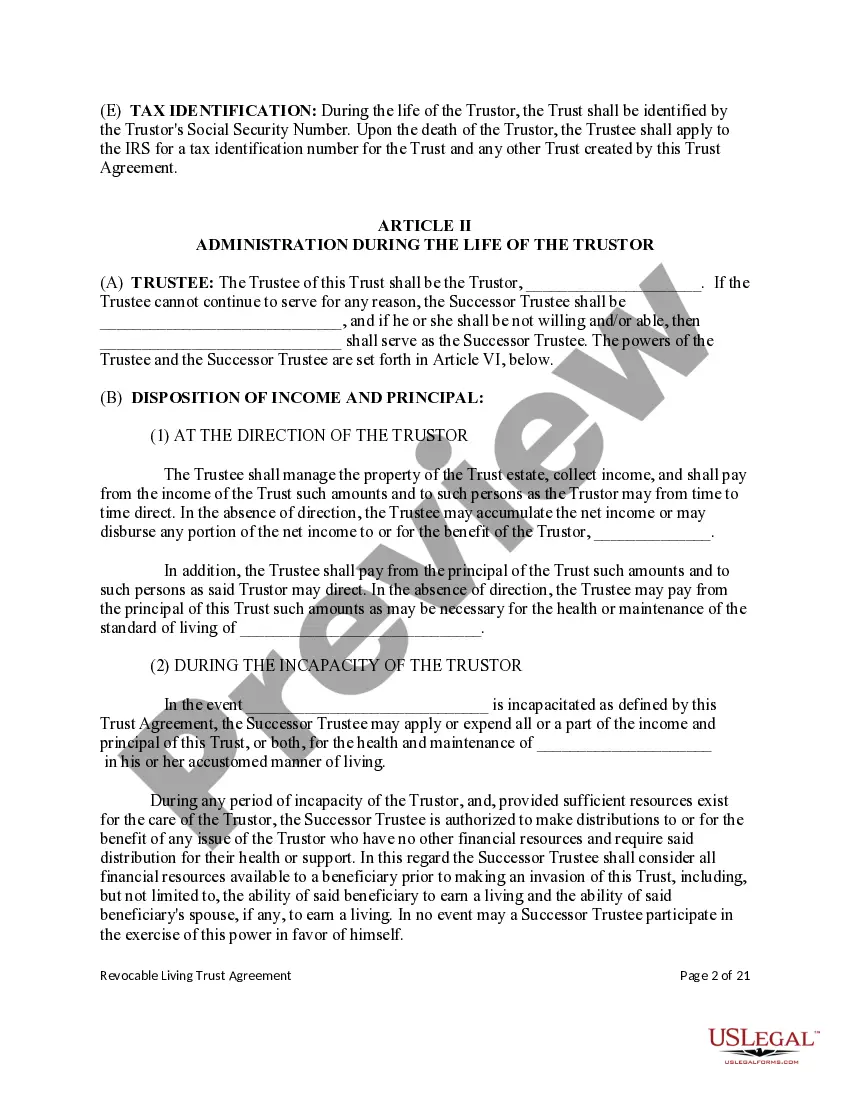
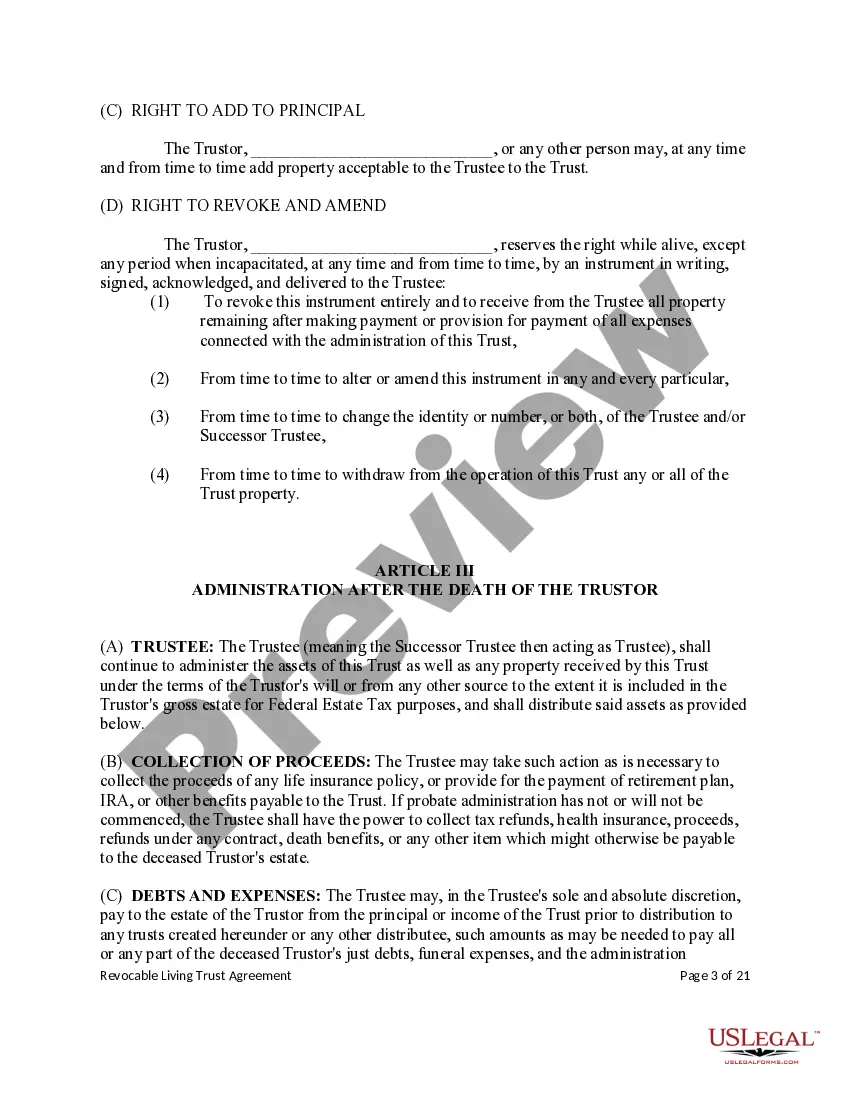
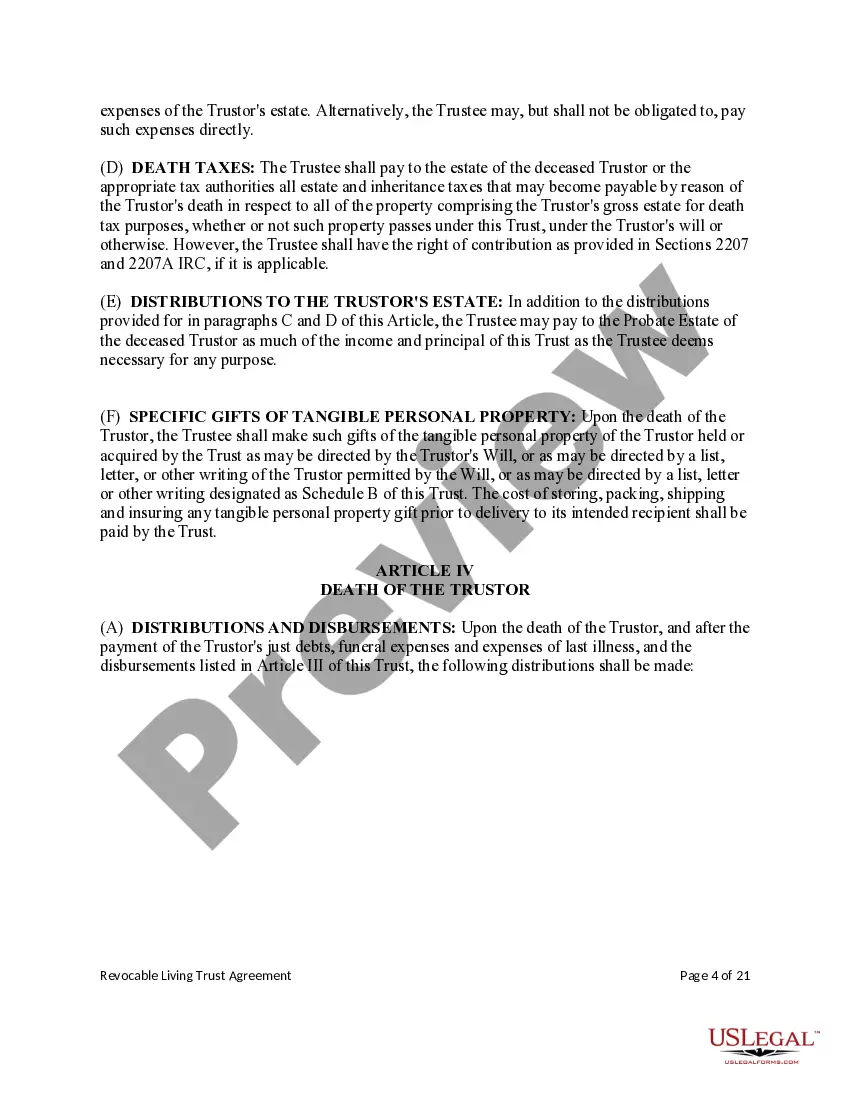
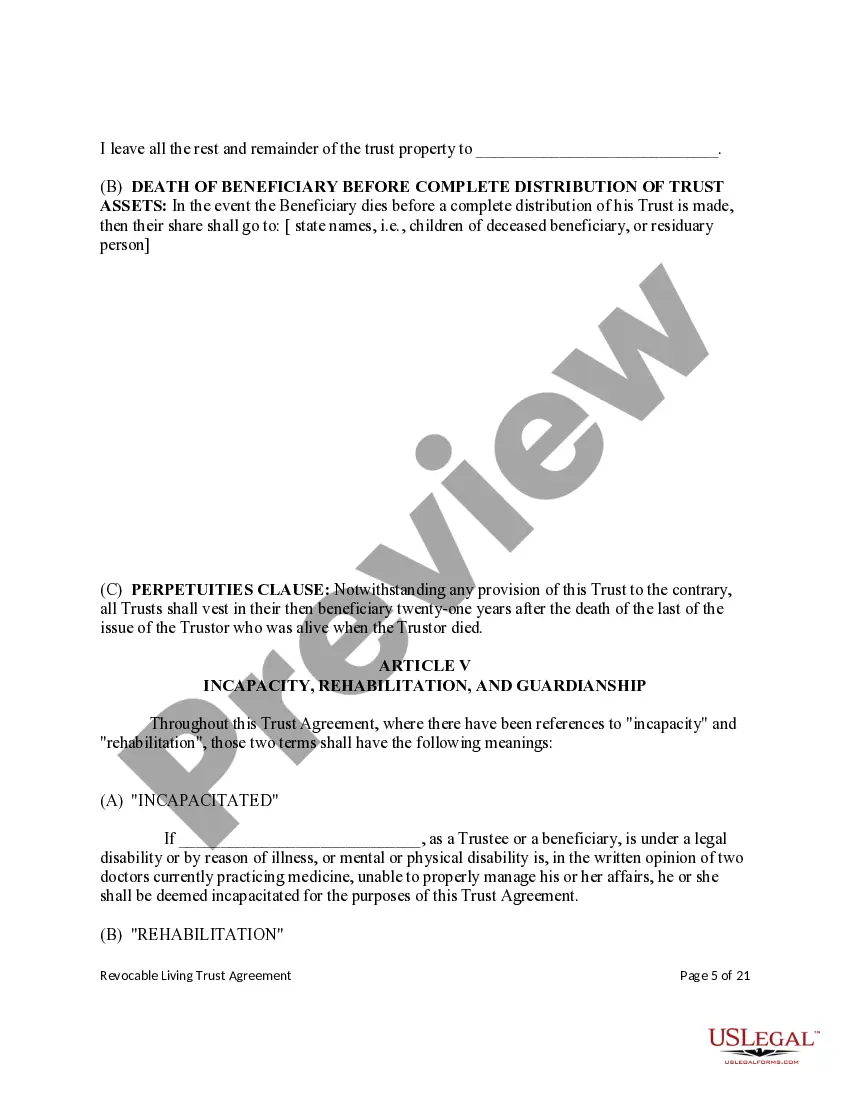
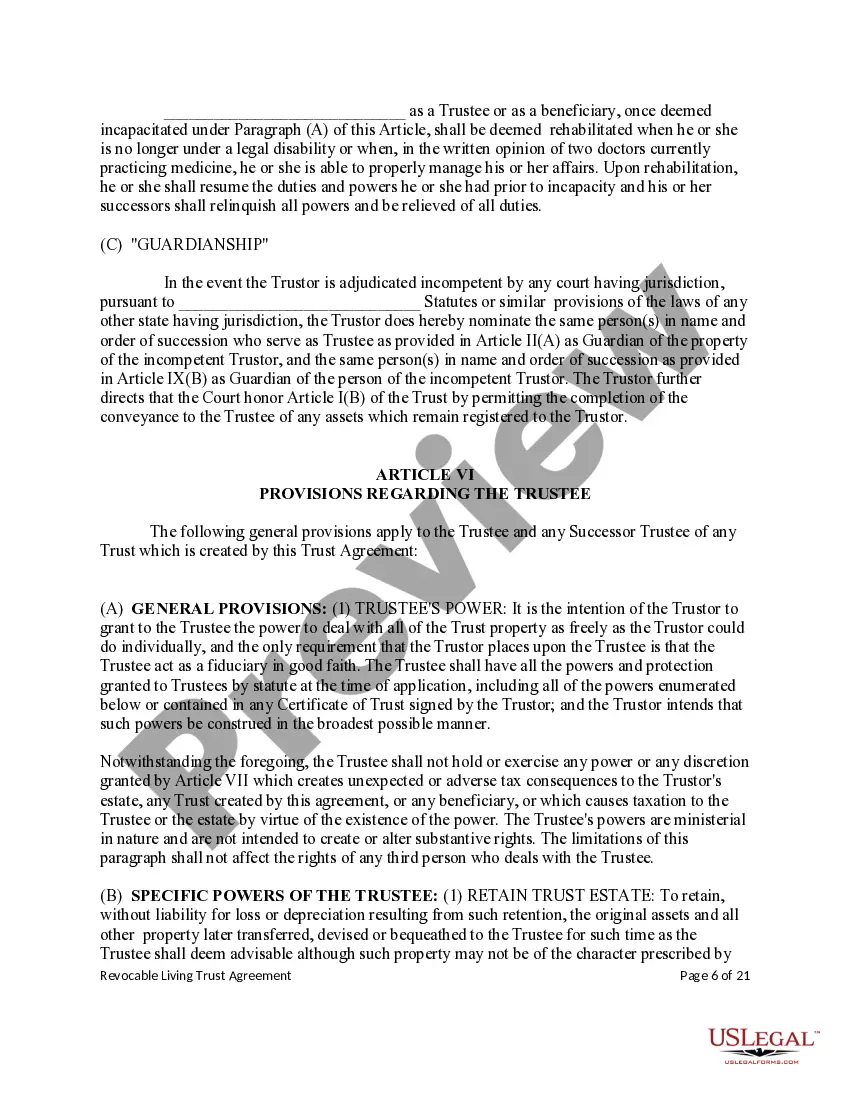
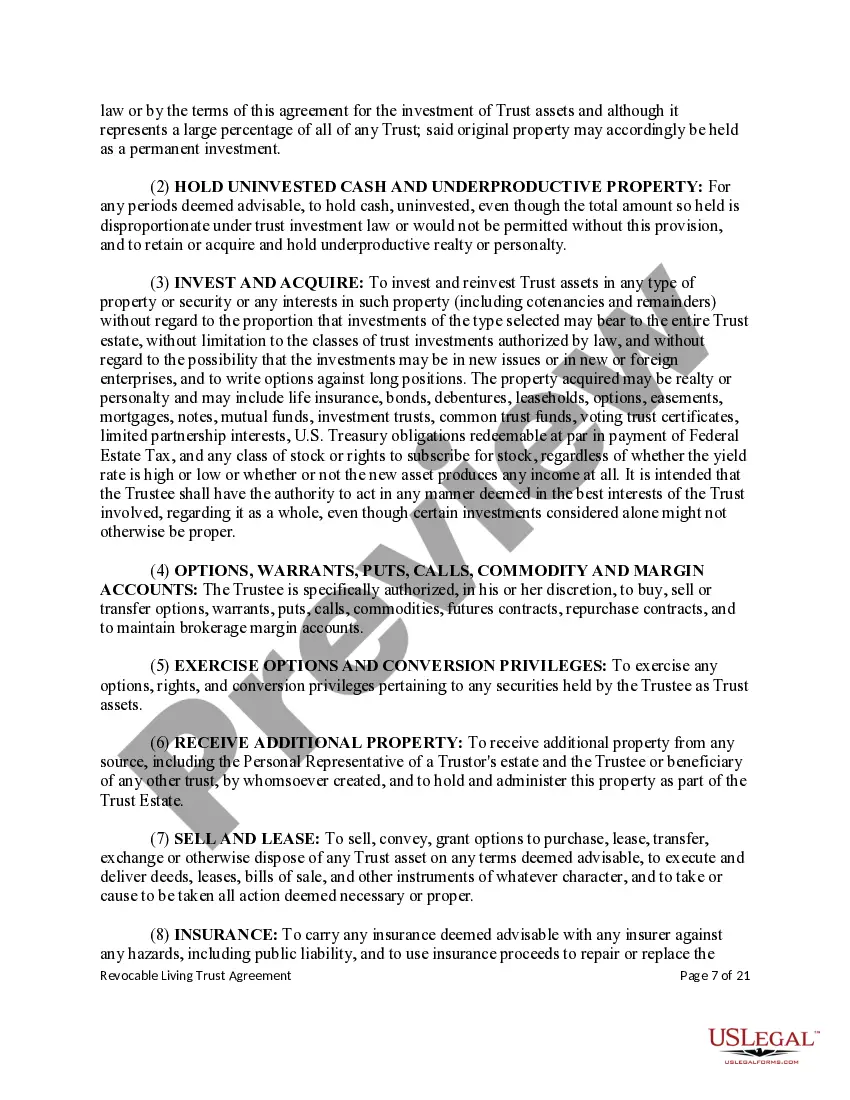
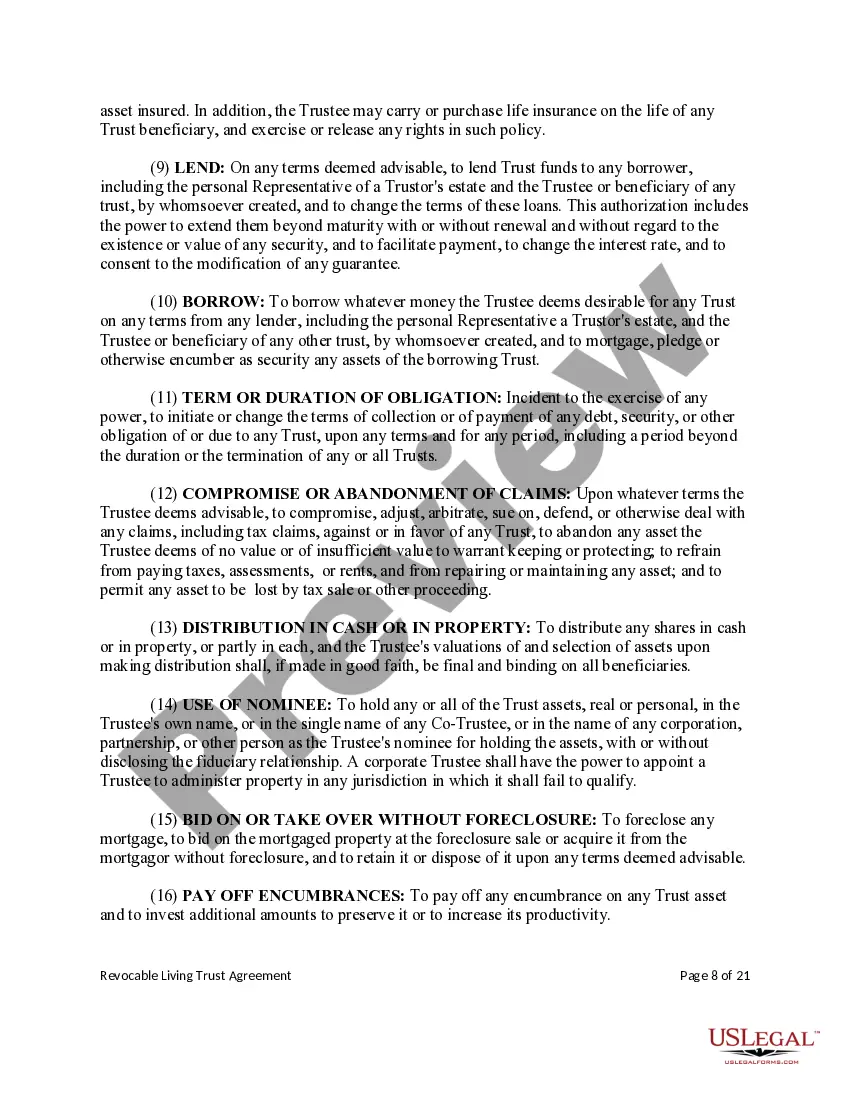
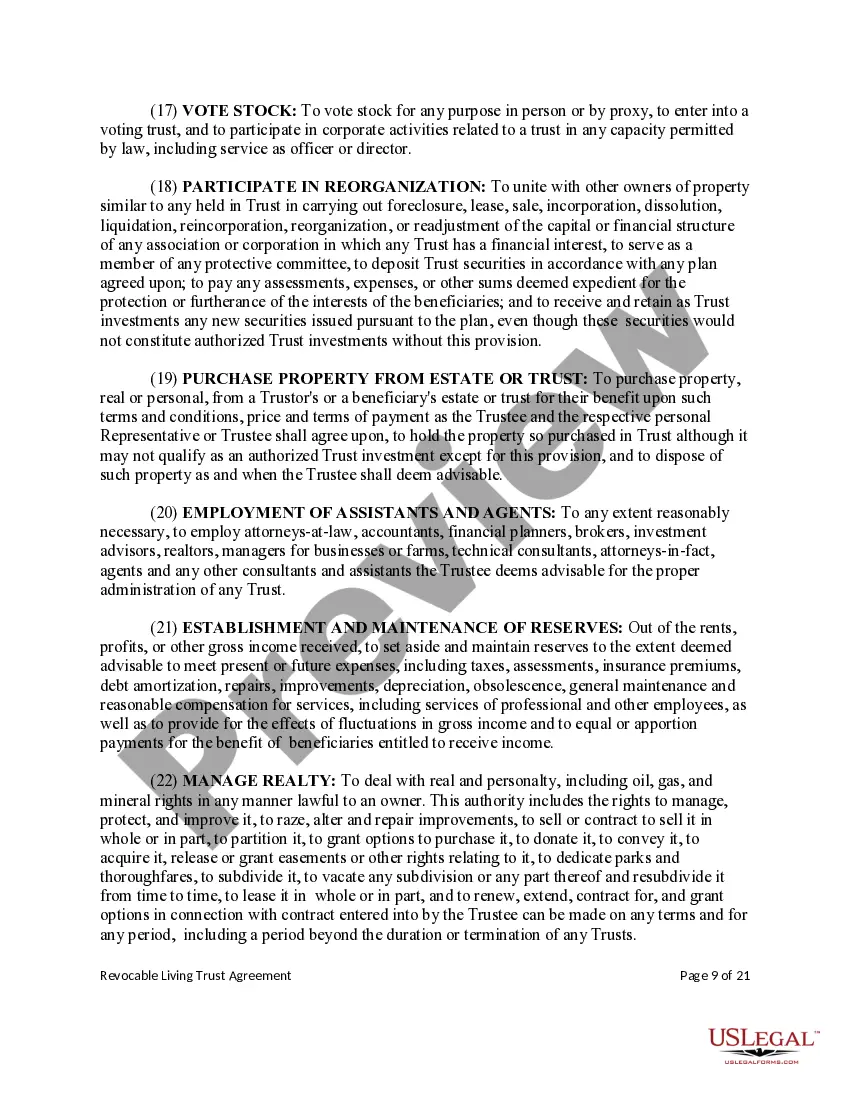
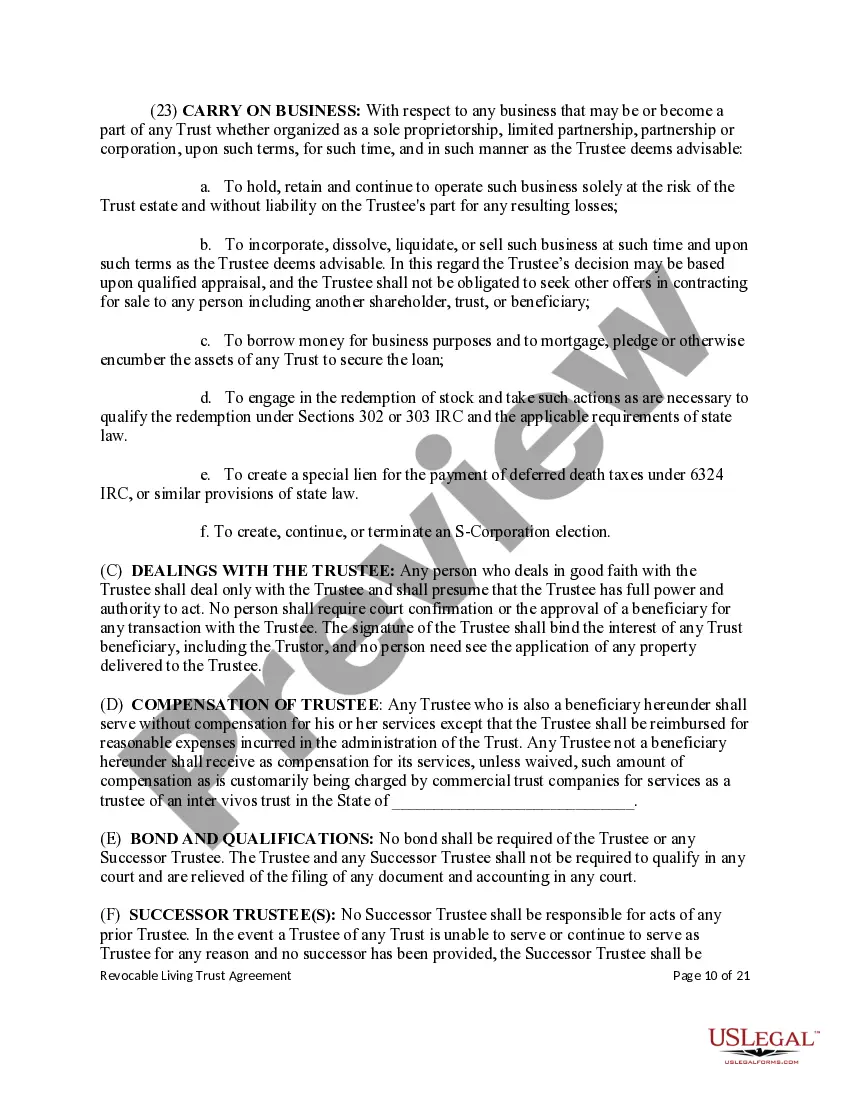
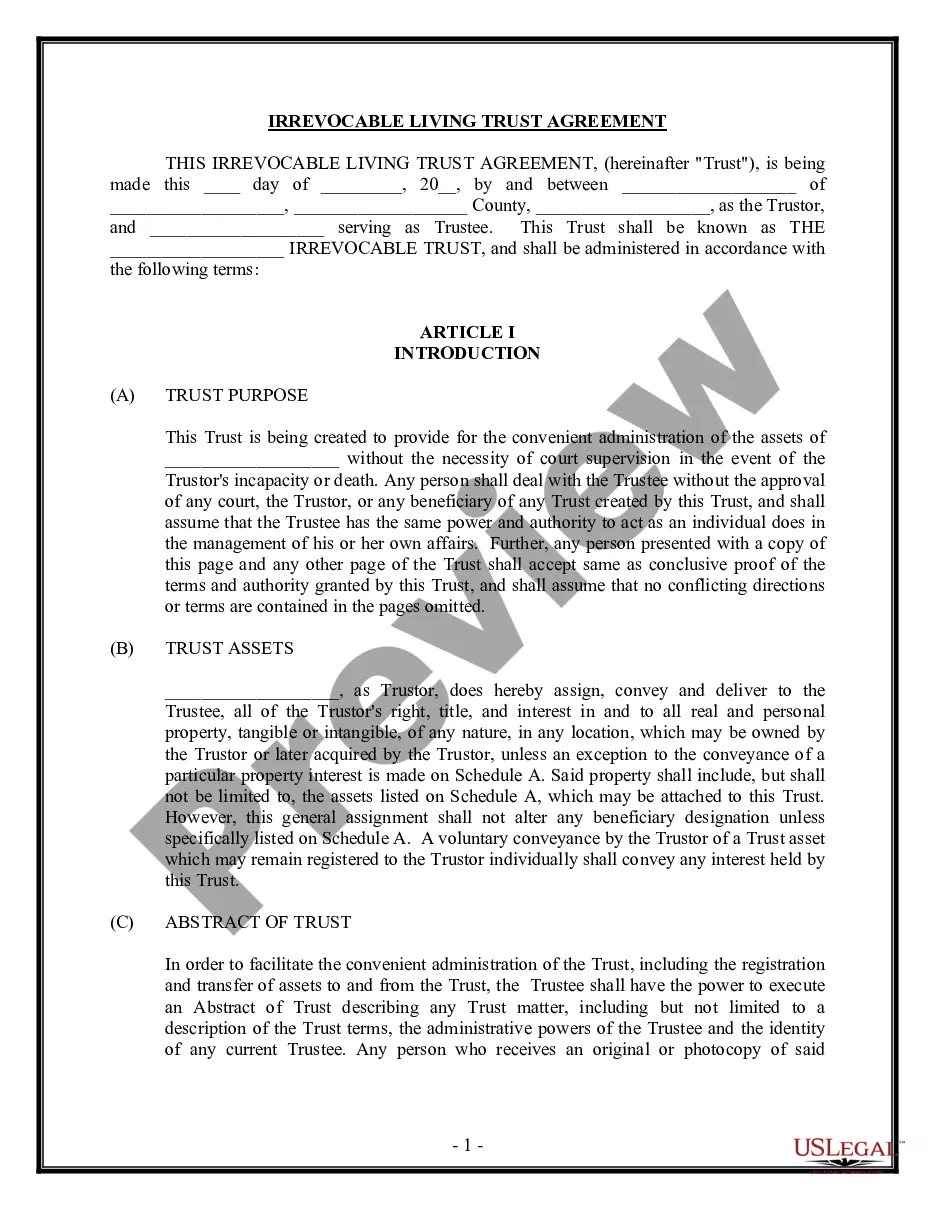
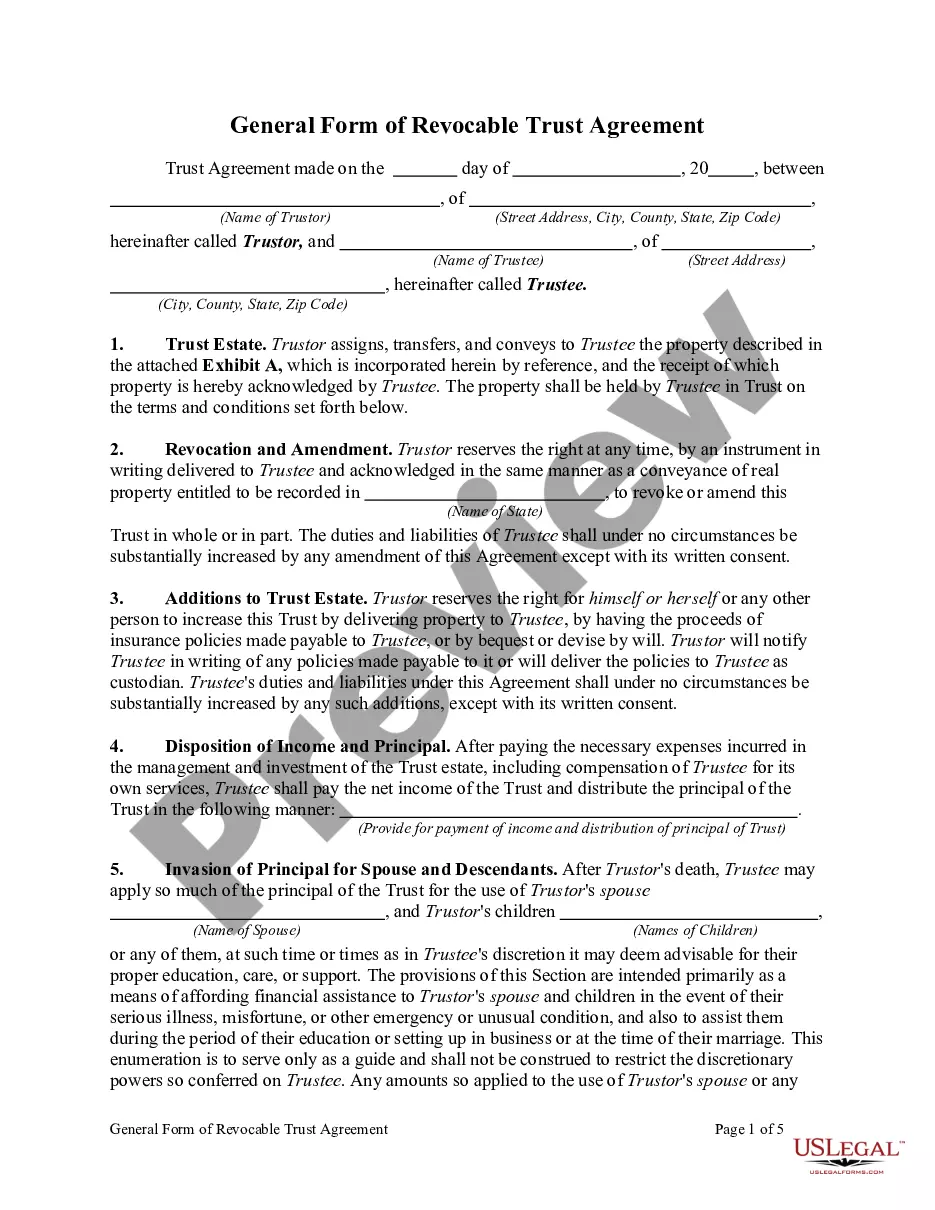
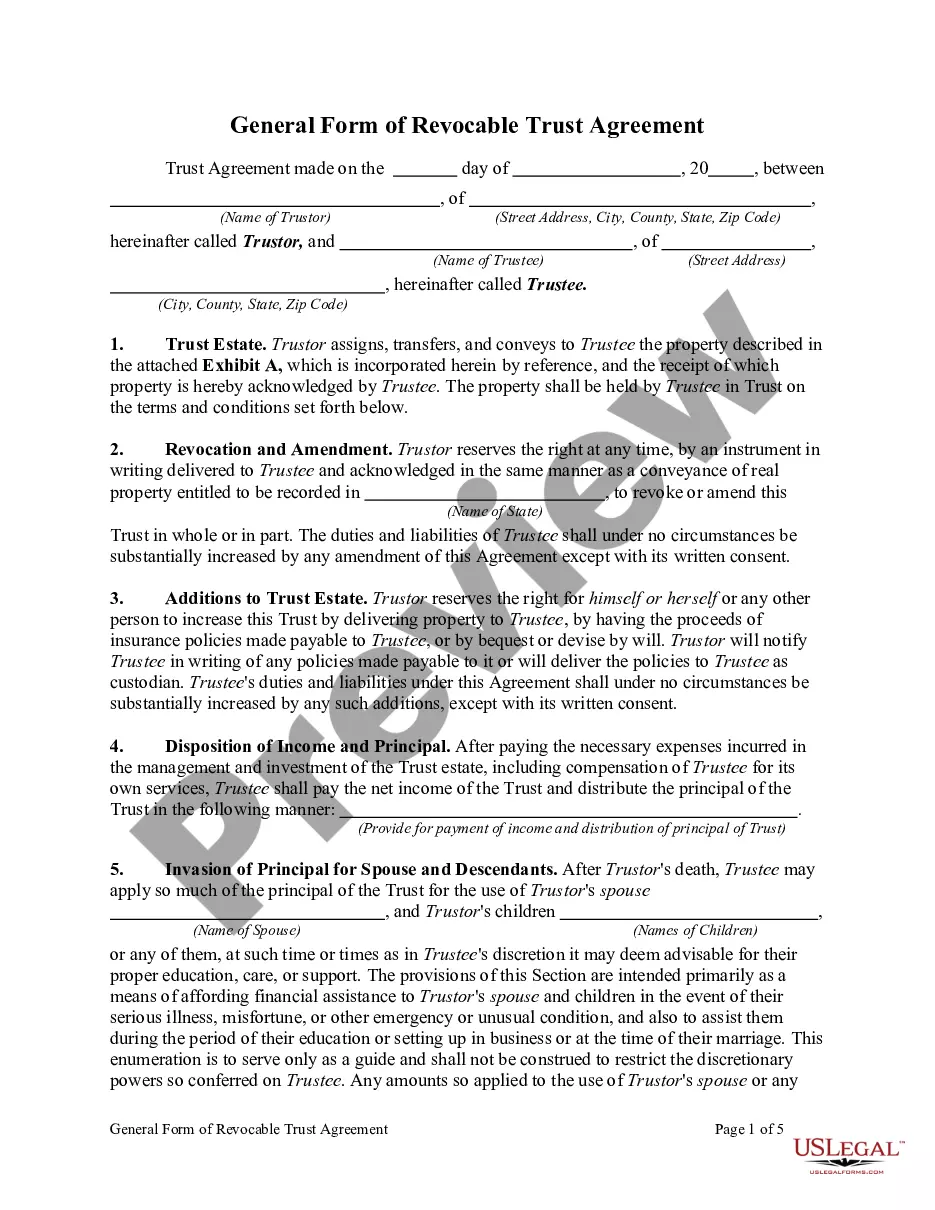
Trustor and trustee enter into an agreement to create a revocable living trust. The purpose of the creation of the trust is to provide for the convenient administration of the assets of the trust without the necessity of court supervision in the event of the trustor's incapacity or death. Other provisions of the trust document include: trust assets, disposition of income and principal, and administration of the trust assets after the death of the trustor.
Connecticut Living Trust - Revocable
State:
Multi-StatePlease select your state
Select state
Category:
Control #:
US-00556
Format:
Word;
Rich Text
2,500 downloads

Reviewed by
Description
Free preview

Get your form ready online
Our built-in tools help you complete, sign, share, and store your documents in one place.
Built-in online Word editor
Make edits, fill in missing information, and update formatting in US Legal Forms—just like you would in MS Word.
Export easily
Download a copy, print it, send it by email, or mail it via USPS—whatever works best for your next step.
E-sign your document
Sign and collect signatures with our SignNow integration. Send to multiple recipients, set reminders, and more. Go Premium to unlock E-Sign.
Notarize online 24/7
If this form requires notarization, complete it online through a secure video call—no need to meet a notary in person or wait for an appointment.
Store your document securely
We protect your documents and personal data by following strict security and privacy standards.

Make edits, fill in missing information, and update formatting in US Legal Forms—just like you would in MS Word.

Download a copy, print it, send it by email, or mail it via USPS—whatever works best for your next step.

Sign and collect signatures with our SignNow integration. Send to multiple recipients, set reminders, and more. Go Premium to unlock E-Sign.

If this form requires notarization, complete it online through a secure video call—no need to meet a notary in person or wait for an appointment.

We protect your documents and personal data by following strict security and privacy standards.
Looking for another form?




How to fill out Living Trust - Revocable?
If you require thorough, obtain, or create legal document templates, utilize US Legal Forms, the most extensive selection of legal forms that are available online.
Take advantage of the site's user-friendly and efficient search to find the documents you need.
Various templates for business and personal purposes are organized by categories and jurisdictions, or keywords. Use US Legal Forms to find the Connecticut Living Trust - Revocable in just a few clicks.
Step 6. Select the format of the legal form and download it to your device.
Step 7. Complete, edit, and print or sign the Connecticut Living Trust - Revocable.
- If you are already a US Legal Forms user, Log In to your account and click the Download option to retrieve the Connecticut Living Trust - Revocable.
- You can also access forms you previously downloaded from the My documents tab of your account.
- If you are using US Legal Forms for the first time, refer to the instructions below.
- Step 1. Ensure you have selected the form for the correct city/state.
- Step 2. Use the Review option to inspect the form's content. Remember to read through the summary.
- Step 3. If you are dissatisfied with the document, use the Search field at the top of the screen to find alternative versions of the legal form template.
- Step 4. Once you have located the form you need, click the Get now option. Choose your preferred payment plan and provide your credentials to register for an account.
- Step 5. Process the transaction. You can use your credit card or PayPal account to complete the purchase.
Form popularity
FAQ
A revocable trust offers a moderate level of security for your assets. It safeguards your property from the probate process, which can be lengthy and public. However, since the grantor retains control over the assets, they are still subject to creditor claims and cannot provide complete protection. When establishing a Connecticut Living Trust - Revocable, it's essential to understand these factors to ensure it meets your security needs.
The primary difference between a revocable trust and an irrevocable trust lies in control. A revocable trust allows the grantor to make changes or revoke it entirely during their lifetime, whereas an irrevocable trust cannot be altered once established. This distinction affects how assets are treated for tax purposes and asset protection. Understanding these nuances is crucial when deciding on a Connecticut Living Trust - Revocable that aligns with your estate planning goals.
Yes, a revocable trust typically becomes irrevocable upon the death of the grantor. Once the grantor passes away, the trust cannot be changed and will continue to operate according to the terms set forth during its creation. This transition ensures that the assets are distributed according to your wishes, reinforcing the value of establishing a Connecticut Living Trust - Revocable.
One major disadvantage of revocable living trusts is that they do not provide asset protection from creditors. Also, since the trust can be altered or revoked at any time, it may not be perceived as a solid commitment to beneficiaries, potentially leading to disputes. Additionally, a revocable trust requires careful management and may incur ongoing maintenance costs, which is vital to consider when establishing a Connecticut Living Trust - Revocable.
The best trust to put your house in is often a Connecticut Living Trust - Revocable. This type of trust allows for flexibility during your lifetime, including the ability to make changes as your circumstances evolve. Additionally, it helps avoid probate, paving the way for a smoother transfer of your assets to your beneficiaries after your passing. Remember to consult with a professional to tailor the trust to your unique situation.
To place your home into a Connecticut Living Trust - Revocable, you must execute a new deed that transfers ownership from you to the trust. It's advisable to work with a real estate attorney to ensure the process adheres to state laws. Using platforms like UsLegalForms can streamline the creation of the necessary documentation, making it easier for you.
While many states have favorable laws for creating a Connecticut Living Trust - Revocable, it is essential to choose a state that aligns with your needs. Connecticut is particularly beneficial due to its comprehensive legal framework surrounding trusts. Working with experts can help you identify the best options based on your specific situation.
The greatest advantage of a Connecticut Living Trust - Revocable is the control it grants you over your assets while you are alive. You can change the terms anytime, adapting to your needs or wishes. This type of trust also simplifies the management of your affairs, making the transition smoother for your loved ones in the event of your passing.
When planning a Connecticut Living Trust - Revocable, it's essential to know what not to include. For instance, assets like retirement accounts or life insurance policies should remain outside the trust due to their specific beneficiary designations. Moreover, personal belongings may not necessarily need to be included, as the trust's main focus is on significant assets. By knowing what to exclude, you can streamline the trust to better reflect your estate planning goals.
A Connecticut Living Trust - Revocable does have some drawbacks to keep in mind. One significant disadvantage is that it does not offer protection against creditors. Additionally, establishing a revocable trust can require time and effort to maintain, as you need to transfer assets into the trust properly. However, understanding these challenges can help you decide if this option is right for you.