The decree of the bankruptcy court which terminates the bankruptcy proceedings is generally a discharge that releases the debtor from most debts. A bankruptcy court may refuse to grant a discharge under certain conditions.
Colorado Complaint Objecting to Discharge by Bankruptcy Court on the Grounds that Transaction was Induced by Fraud Regarding Debtor's Financial Condition
State:
Multi-State
Control #:
US-01070BG
Format:
Word;
Rich Text
Instant download
Description
Free preview
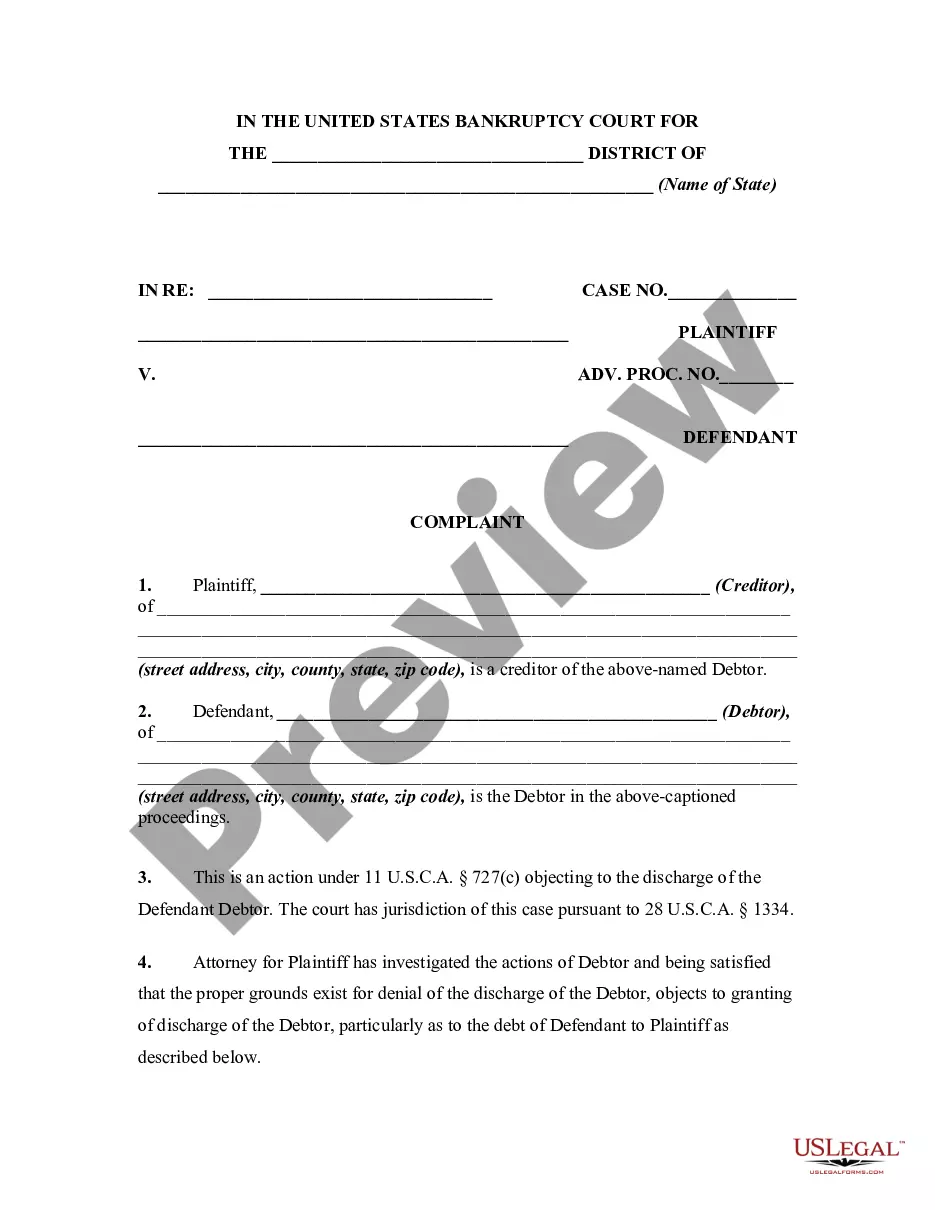
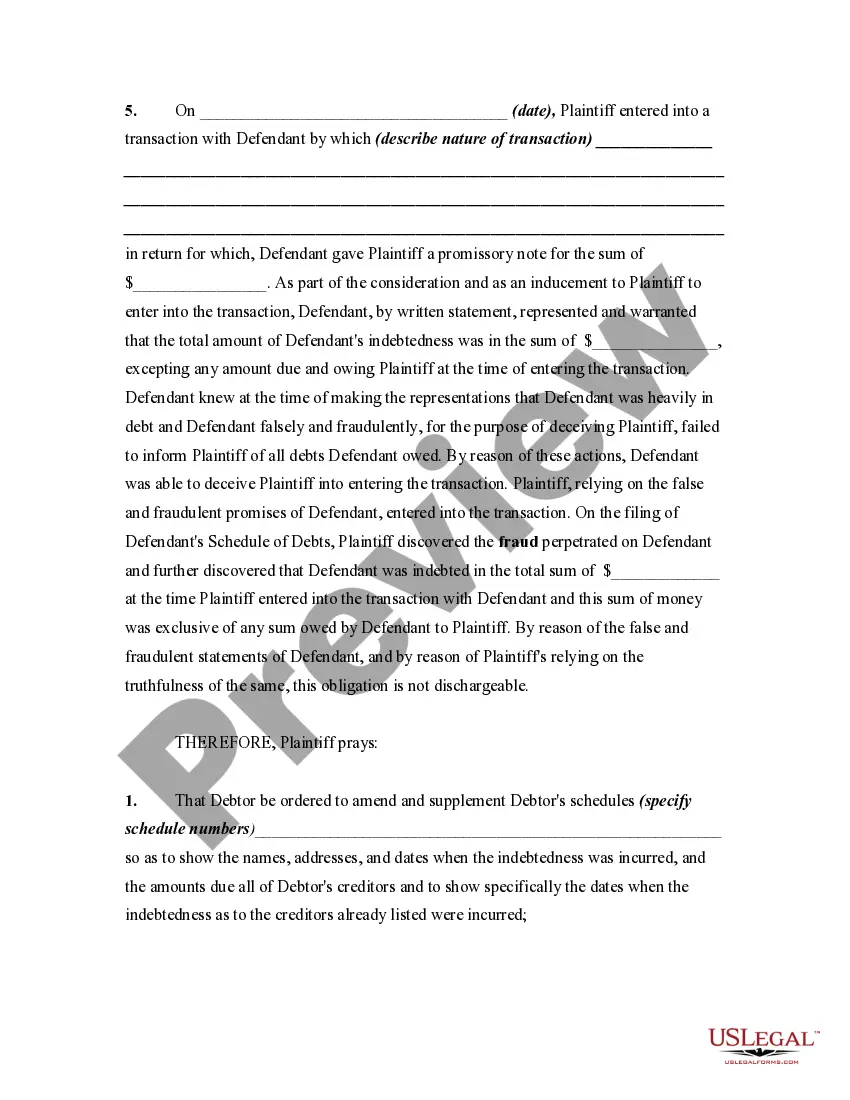
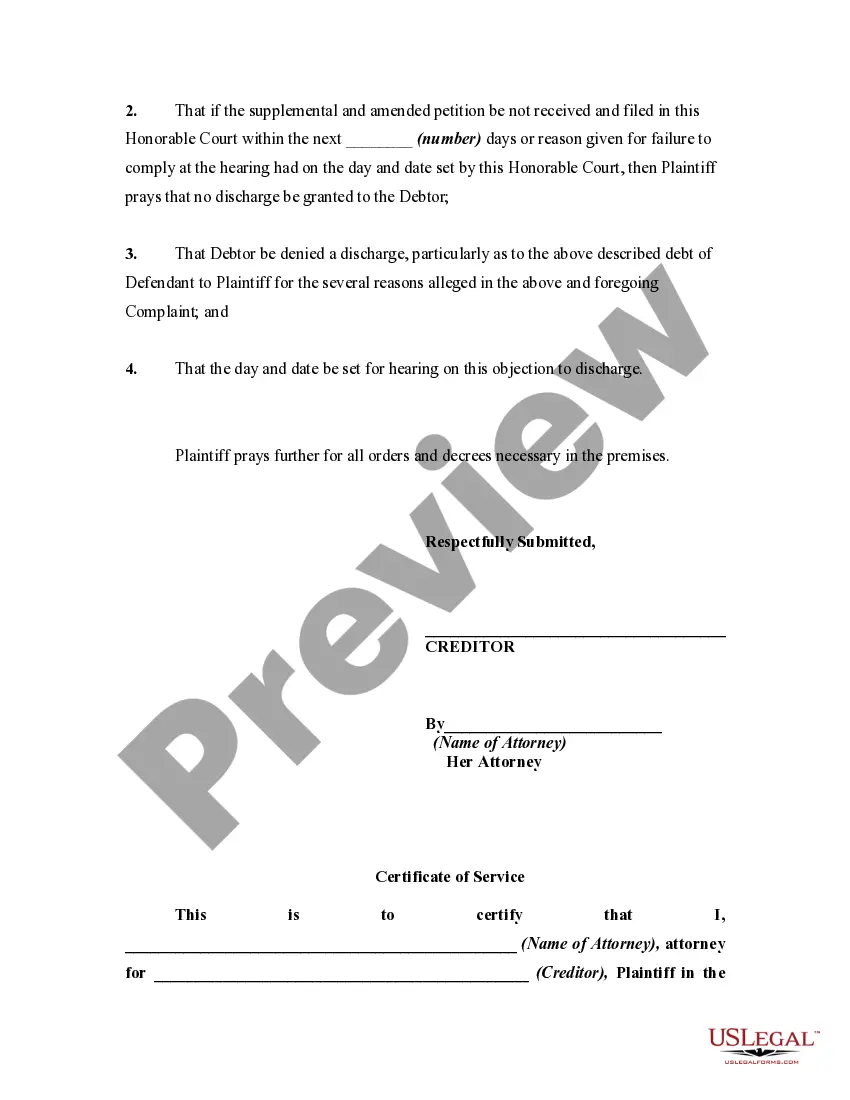
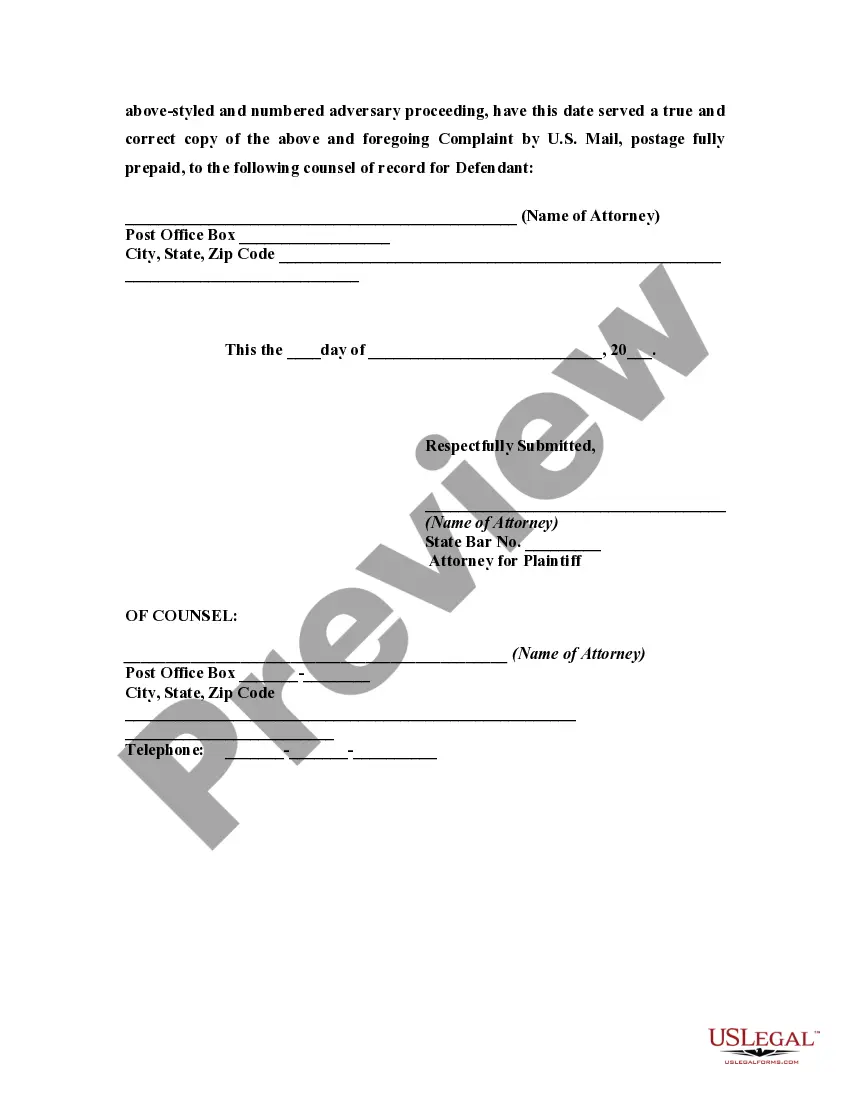
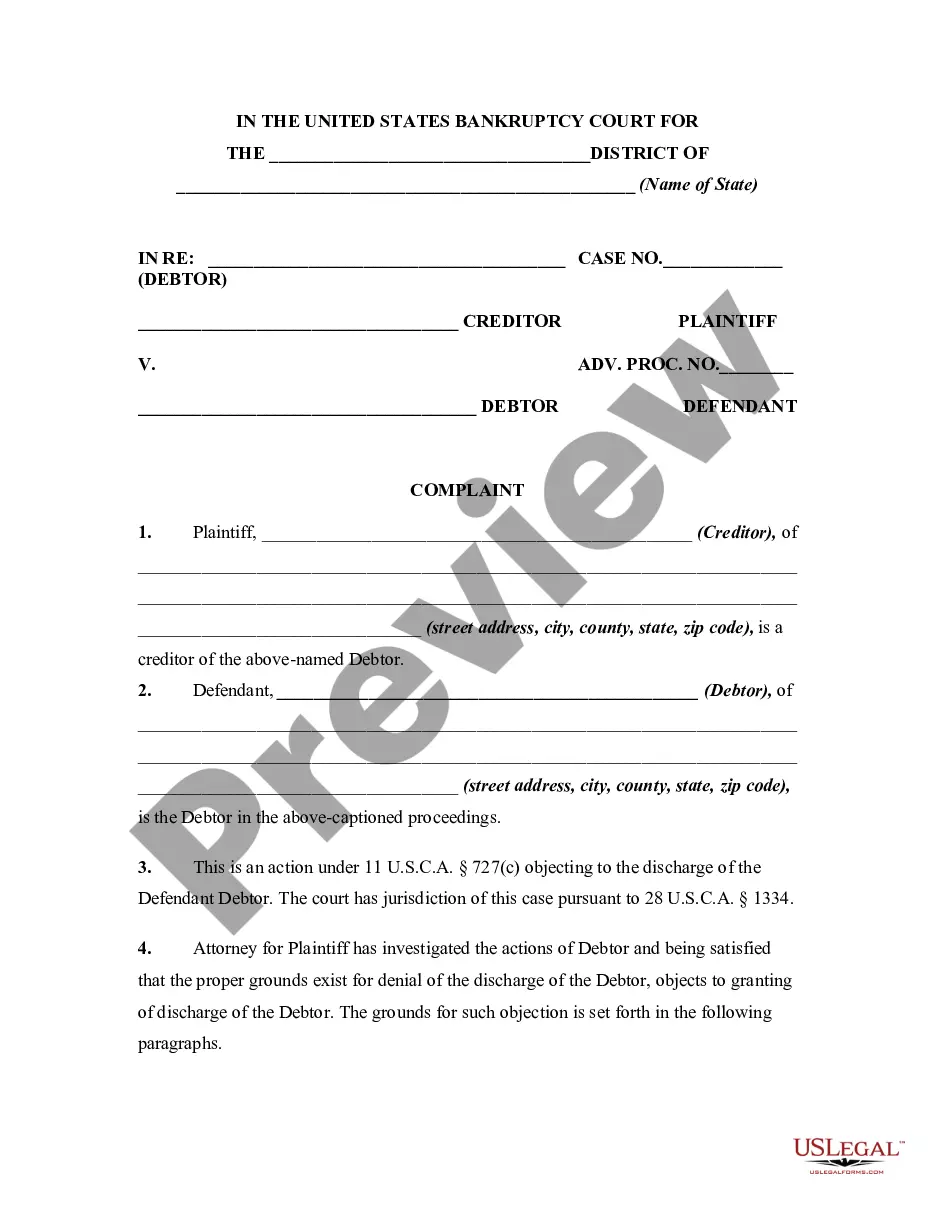
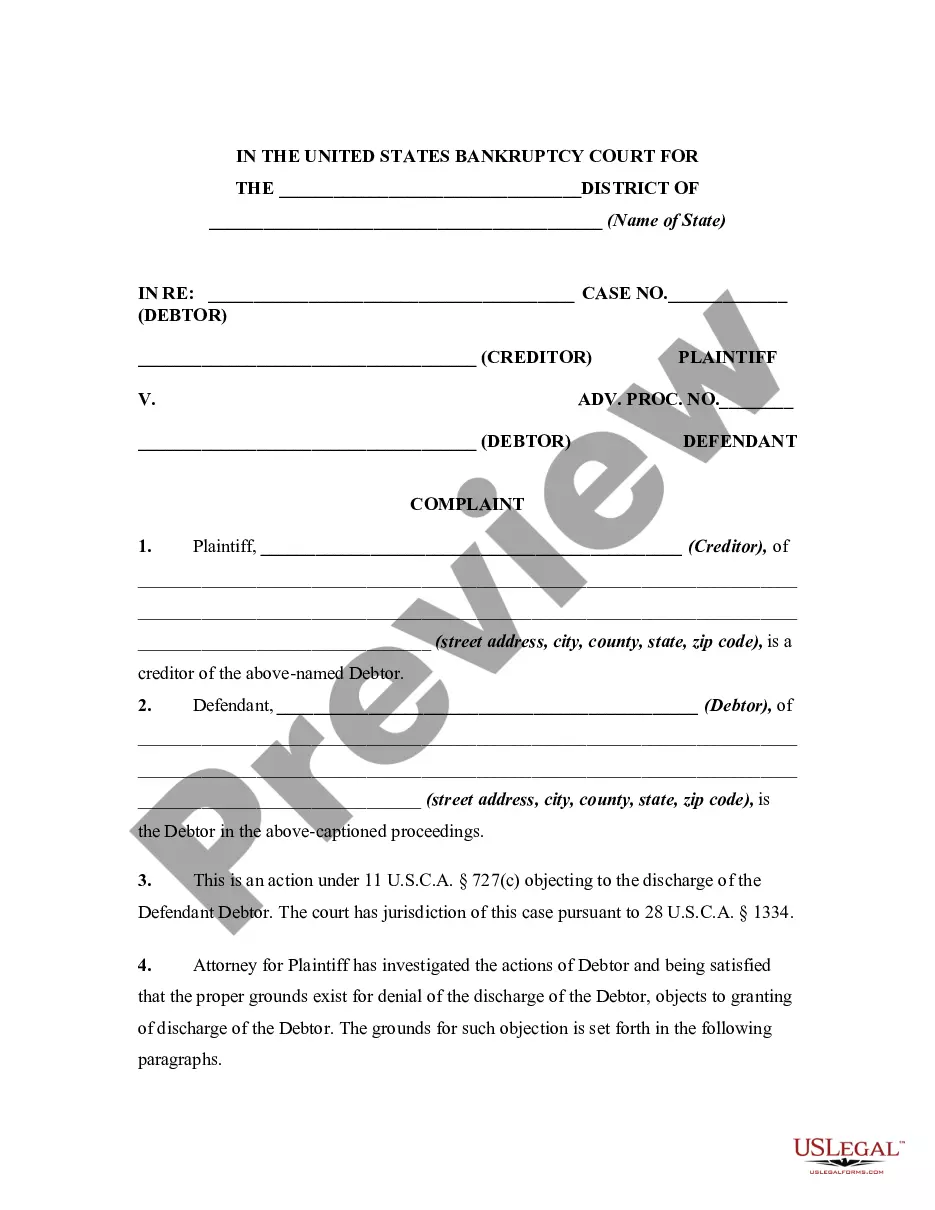
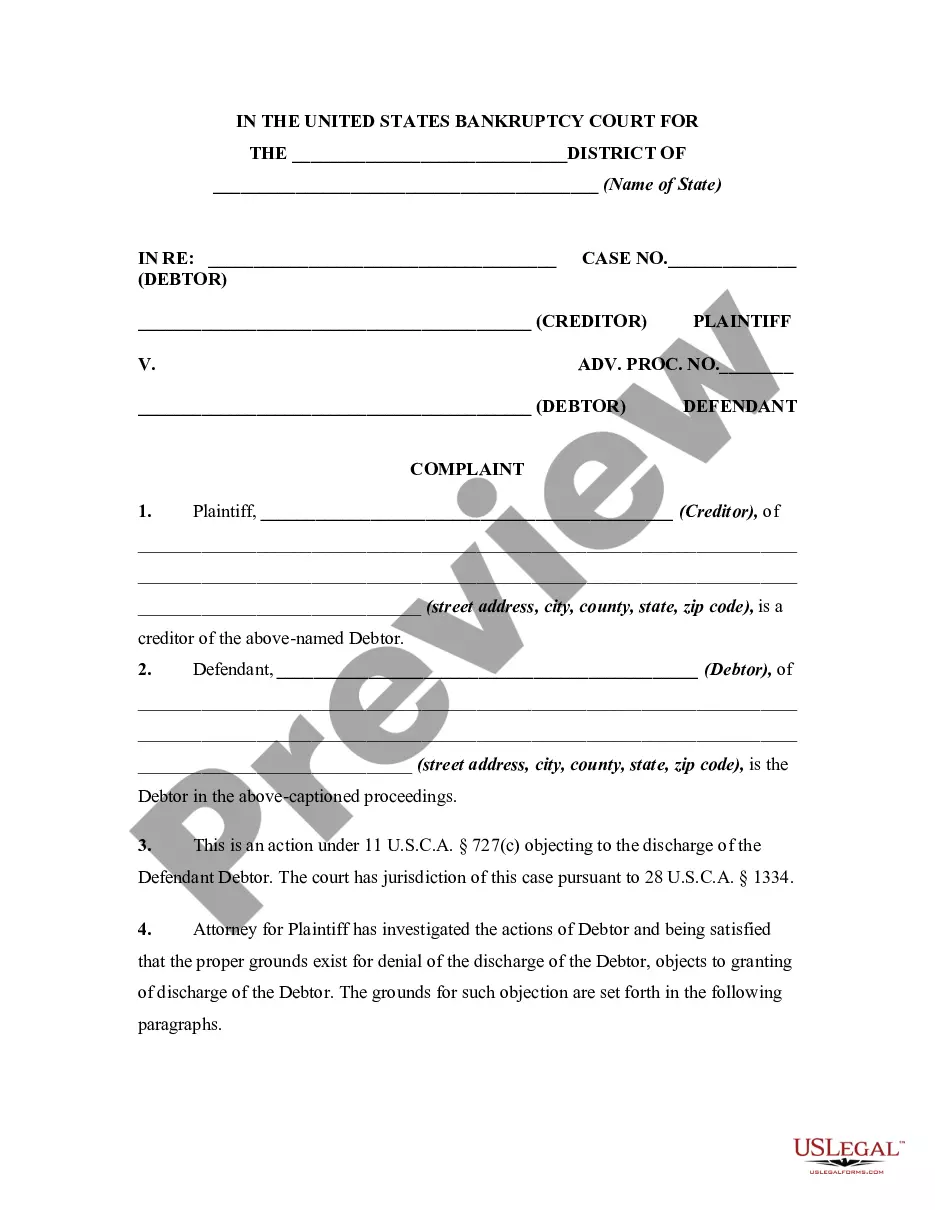
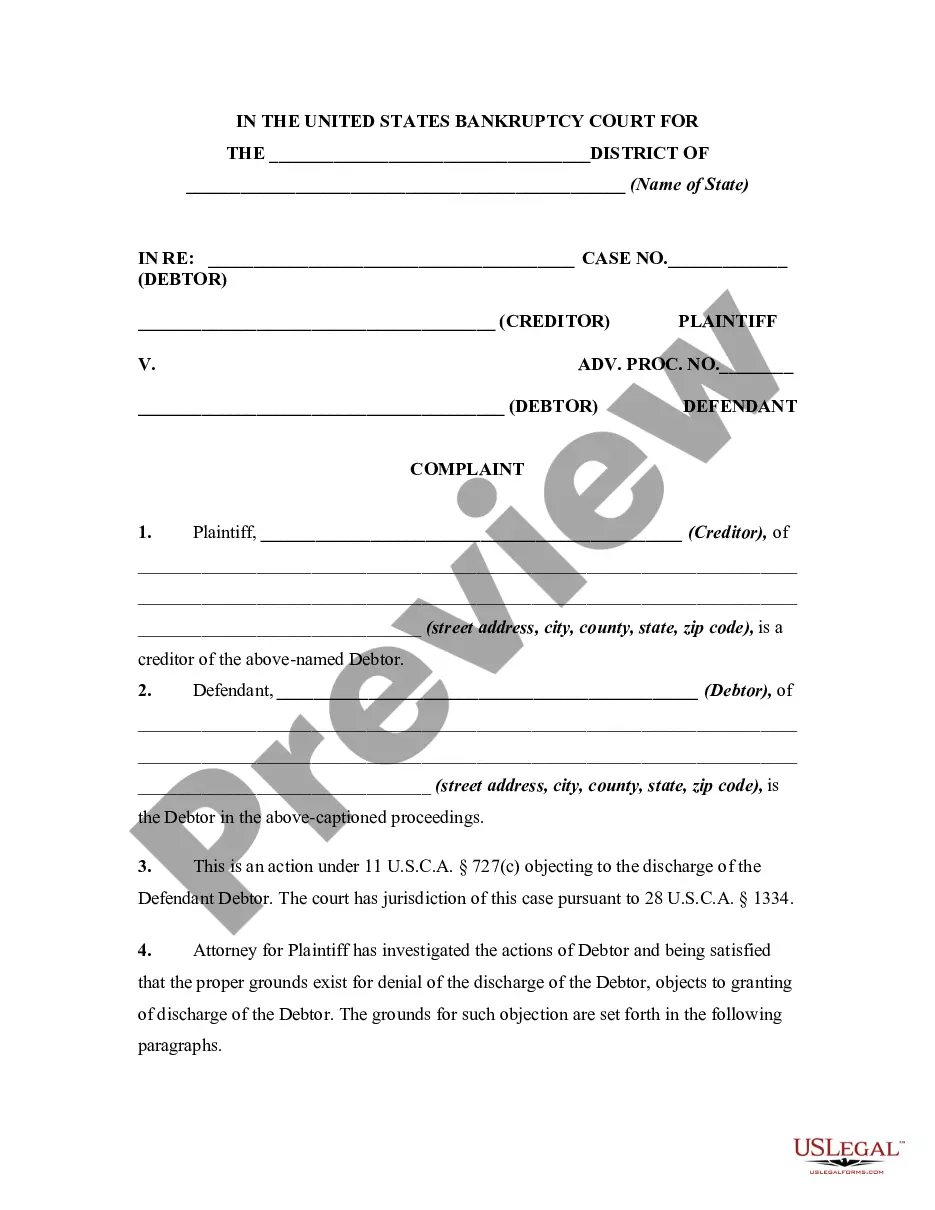


How to fill out Complaint Objecting To Discharge By Bankruptcy Court On The Grounds That Transaction Was Induced By Fraud Regarding Debtor's Financial Condition?
Locating the appropriate legal document design can be a challenge. Naturally, there are plenty of templates accessible online, but how can you find the specific legal type you need? Utilize the US Legal Forms website. The platform provides a vast array of templates, including the Colorado Complaint Objecting to Discharge by Bankruptcy Court on the Grounds that Transaction was Induced by Fraud Regarding, which can be utilized for both business and personal purposes. All documents are reviewed by professionals and meet state and federal standards.
If you are already registered, Log In to your account and click the Acquire button to obtain the Colorado Complaint Objecting to Discharge by Bankruptcy Court on the Grounds that Transaction was Induced by Fraud Regarding. Use your account to browse the legal forms you have previously purchased. Navigate to the My documents section of your account and obtain another copy of the documents you need.
If you are a new user of US Legal Forms, here are simple steps that you can follow: First, ensure you have selected the correct form for your area/region. You can preview the form using the Review button and read the form summary to confirm it is the right one for you. If the form does not meet your needs, utilize the Search field to find the appropriate form. Once you are confident the form is suitable, click the Get now button to obtain the form. Choose the payment plan you want and enter the required information. Create your account and complete the transaction using your PayPal account or credit card. Select the file format and download the legal document design for your device. Complete, modify, print, and sign the received Colorado Complaint Objecting to Discharge by Bankruptcy Court on the Grounds that Transaction was Induced by Fraud Regarding.
US Legal Forms is the premier source for legal documents where you can find numerous templates.
- US Legal Forms is the largest collection of legal documents available.
- Utilize the service to obtain professionally crafted paperwork that complies with state regulations.
- Ensure you have the right form before proceeding.
- Preview forms to ensure suitability.
- Search for specific forms if necessary.
- Download the document in your preferred format.
Form popularity
FAQ
Section 523 of the Bankruptcy Code exempts from discharge ?any debt . . . for money, property, services, or an extension, renewal, or refinancing of credit, to the extent obtained by . . . false pretenses, a false representation, or actual fraud. . . .? 11 U.S.C. § 523(a)(2)(A).
Proving fraud can be difficult. For almost all bankruptcy crimes, the government has to resolve two questions: Did the defendant misrepresent a material (important) fact? Did the defendant intend to deceive, hinder, or delay the court or the creditors?
In a unanimous decision, the Supreme Court held that § 523(a)(2)(A) of the Bankruptcy Code precludes a debtor from discharging a debt obtained by fraud, regardless of the debtor's own culpability.
Appx. 544 (2021). Invoking our decision in Strang v. Bradner, 114 U. S. 555 (1885), it held that a debtor who is liable for her partner's fraud cannot discharge that debt in bankruptcy, regardless of her own culpability.
The general rule is that all liability claims (or debts) are dischargeable in bankruptcy unless there is something specific in the bankruptcy statutes that states otherwise. In the bankruptcy world, they call these limitations ?exceptions to discharge.?
If you have been the victim of a financial scam, you may be entitled to file for bankruptcy in a California court. The type of protection that you seek will largely depend on your income, if you own property or if you have the ability to repay your debts over a period of three or five years.
The Supreme Court unanimously ruled that a woman could not use protection under the U.S. bankruptcy code to avoid paying a debt that resulted from fraud by her partner. The court said that the California woman, Kate Bartenwerfer, owed the debt even if she did not know or could not have known about her partner's fraud.
If a debt arose from the debtor's intentional wrongdoing, the creditor can object to discharging it. This might involve damages related to a drunk driving accident, for example, or costs caused by intentional damage to an apartment or other property.
In a unanimous decision, the Supreme Court held that § 523(a)(2)(A) of the Bankruptcy Code precludes a debtor from discharging a debt obtained by fraud, regardless of the debtor's own culpability.