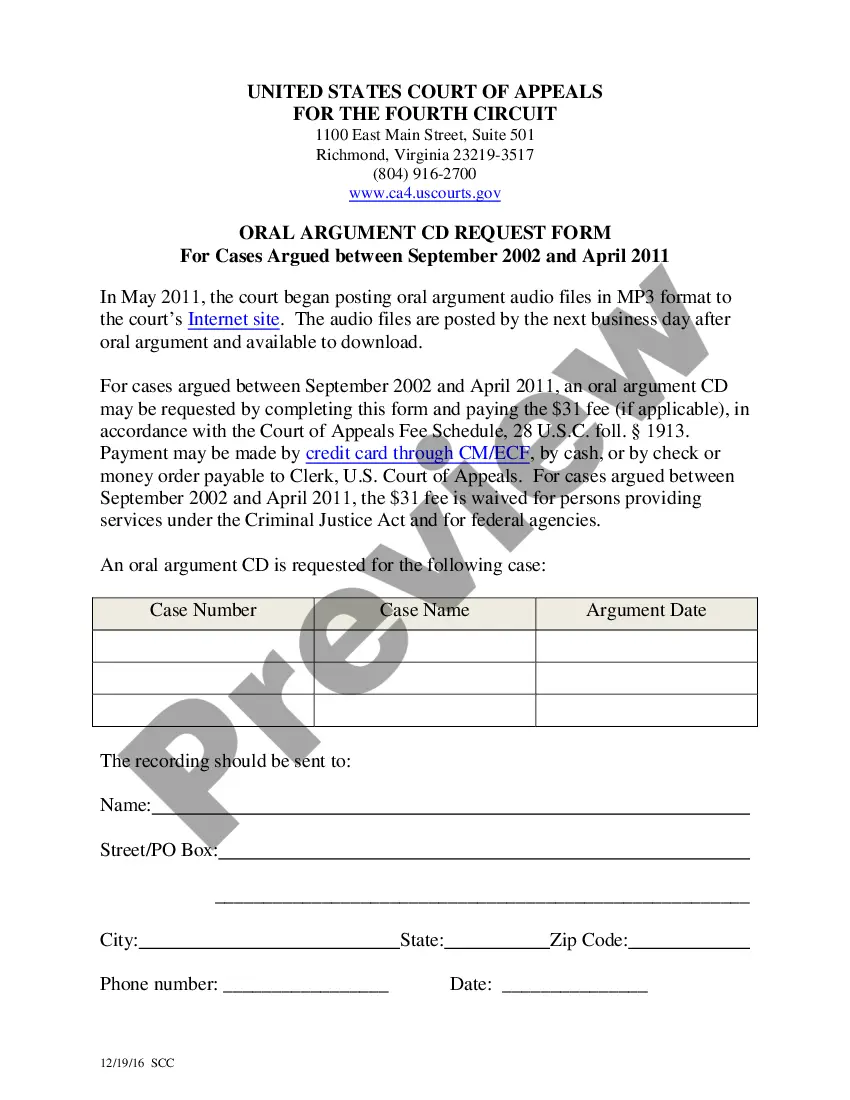
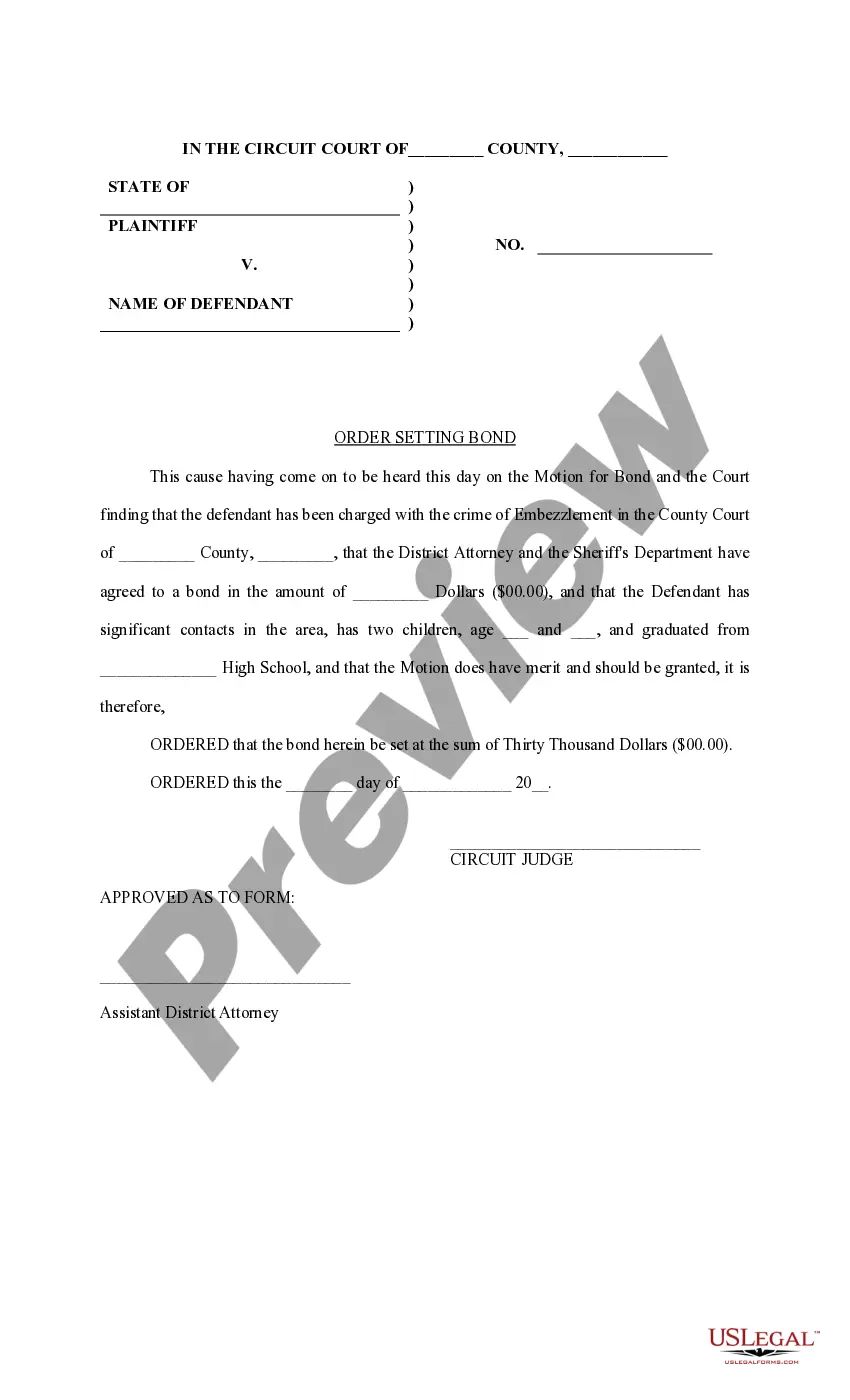
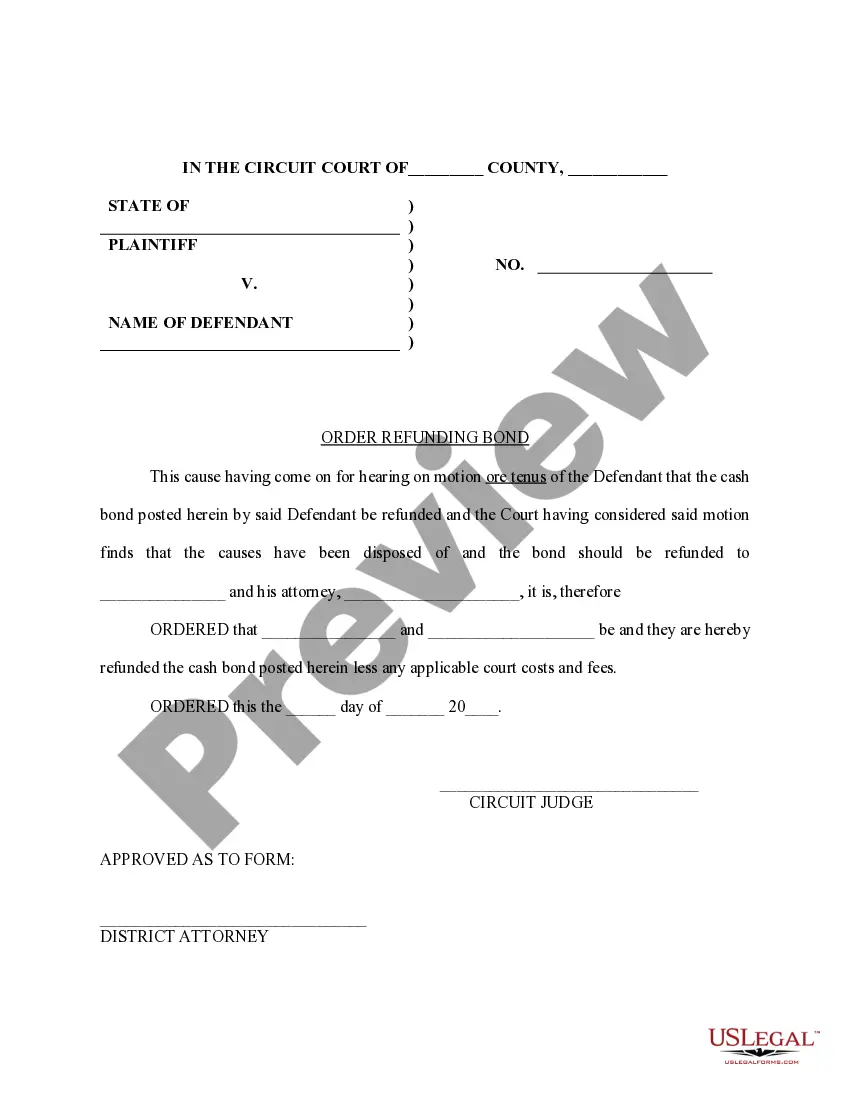
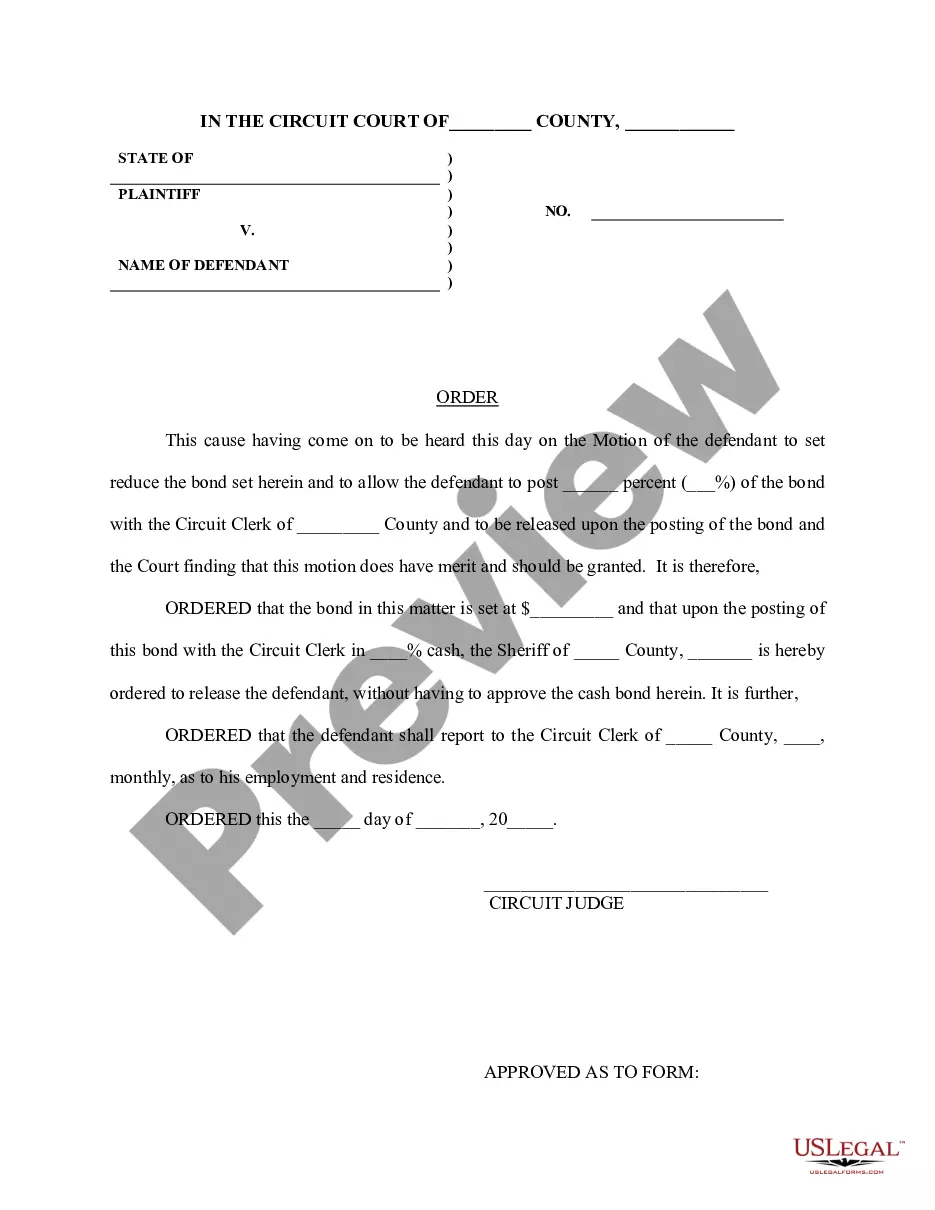
Colorado Order Setting Bond
Description
Get your form ready online
Our built-in tools help you complete, sign, share, and store your documents in one place.
Make edits, fill in missing information, and update formatting in US Legal Forms—just like you would in MS Word.
Download a copy, print it, send it by email, or mail it via USPS—whatever works best for your next step.
Sign and collect signatures with our SignNow integration. Send to multiple recipients, set reminders, and more. Go Premium to unlock E-Sign.
If this form requires notarization, complete it online through a secure video call—no need to meet a notary in person or wait for an appointment.
We protect your documents and personal data by following strict security and privacy standards.

Make edits, fill in missing information, and update formatting in US Legal Forms—just like you would in MS Word.

Download a copy, print it, send it by email, or mail it via USPS—whatever works best for your next step.

Sign and collect signatures with our SignNow integration. Send to multiple recipients, set reminders, and more. Go Premium to unlock E-Sign.

If this form requires notarization, complete it online through a secure video call—no need to meet a notary in person or wait for an appointment.

We protect your documents and personal data by following strict security and privacy standards.
Looking for another form?


How to fill out Order Setting Bond?
US Legal Forms - one of the largest collections of legal documents in the United States - offers a wide variety of legal form templates that you can download or print. By using the site, you can access thousands of forms for both business and personal purposes, categorized by types, states, or keywords. You can find the latest editions of forms like the Colorado Order Setting Bond in just seconds.
If you already have an account, Log In and download the Colorado Order Setting Bond from the US Legal Forms database. The Download button will be visible on every form you view. You can access all previously downloaded forms in the My documents section of your account.
If you are using US Legal Forms for the first time, here are simple steps to get you started: Ensure you have selected the correct form for your city/state. Click the Preview button to review the form's content. Check the form summary to confirm you have chosen the right form. If the form does not meet your needs, utilize the Search box at the top of the screen to find one that does. If you are satisfied with the form, confirm your selection by clicking the Download Now button. Then, choose your preferred payment plan and provide your details to create an account. Process the payment. Use your credit card or PayPal account to complete the transaction. Choose the format and download the form to your device. Edit. Fill out, modify, and print and sign the downloaded Colorado Order Setting Bond. Each template you add to your account has no expiration date and belongs to you indefinitely. Therefore, if you wish to download or print another copy, simply go to the My documents section and click on the form you need.
- Access the Colorado Order Setting Bond with US Legal Forms, one of the most comprehensive collections of legal document templates.
- Utilize thousands of professional and state-specific templates that meet your business or personal needs and requirements.
Form popularity
FAQ
If you work with a bail bond agent to post bail, you'll be required to pay around 10% of the total bail amount. This is due to California state mandates, and rates can only be negotiated in very specific terms.
The bail bond serves as surety that the defendant will appear for trial. Judges typically have wide latitude in setting bail amounts. Bail bondsmen generally charge 10% of the bail amount up front in return for their service and may charge additional fees. Some states have put a cap of 8% on the amount charged.
The primary purpose of bail is to ensure that the defendant appears for trial. A bond is an agreement between the defendant and the court under which the defendant agrees to comply with all of the conditions of release and to pay the bail amount if he or she does not appear in court.
If the accused cannot afford to pay the full bail amount set by the court, they can hire a bail bondsman who charges a non-refundable fee, usually 10 percent of the bond. If the accused fails to appear in court, the bondsman is responsible for the full bond amount.
If you post a bail of $25,000 for example, the bail bonds company can post bail for you if you pay 10% of the fee or $2,500. As long as you plan on attending court and following up with their agreement, you won't be responsible for paying the full cost of the bail, risking your assets, and more.
The act requires a court to hold a bond setting hearing within 48 hours after an arrestee's arrival at a jail or holding center beginning on April 1, 2022. Under current law, a person is allowed to post bond within 2 hours after the sheriff receives the bond information.
The amount and type of bail are fixed by the judge at the first appearance before the court. A court will consider the defendant's individual circumstances when the amount of bail is set. The bail amount must be sufficient to ensure that the defendant will appear for all scheduled proceedings.
A bail bondsman will want to make sure they're getting the most for their money. To do this they will charge a bail bond bond premium fee that is usually 10-20% of your bail bond amount. This fee is normally not refundable.