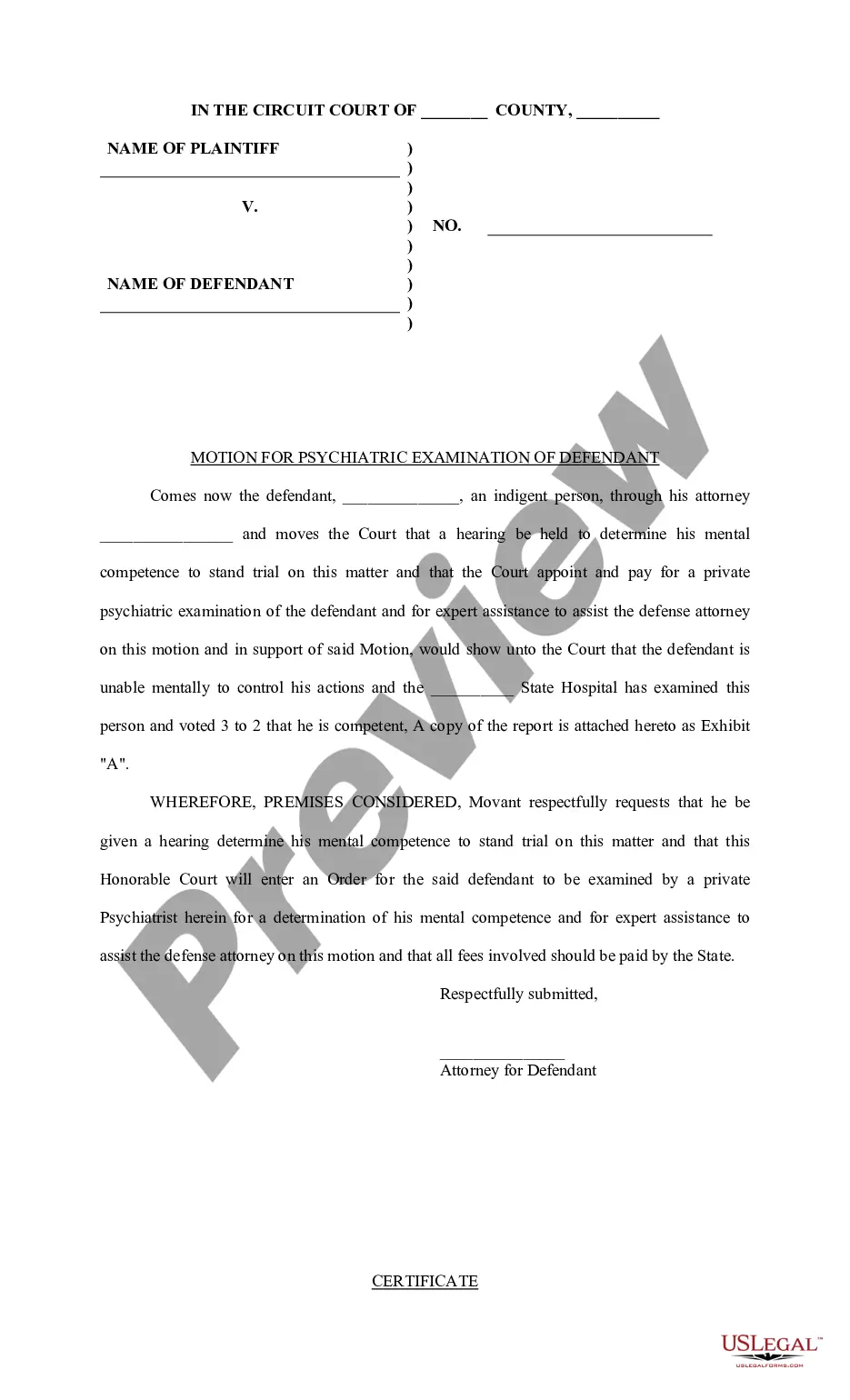
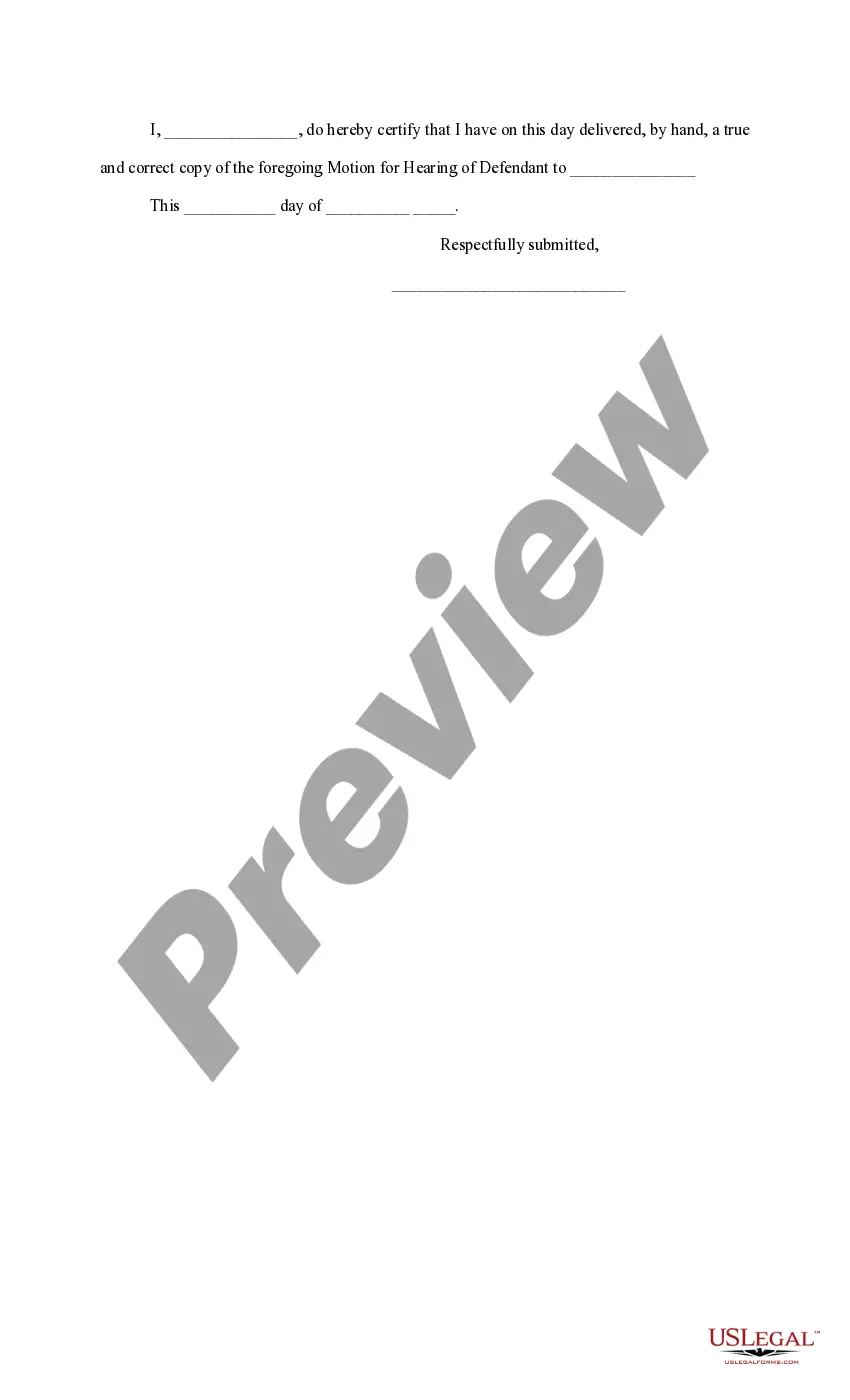
Colorado Motion for Psychiatric Examination of Defendant
Description
Get your form ready online
Our built-in tools help you complete, sign, share, and store your documents in one place.
Make edits, fill in missing information, and update formatting in US Legal Forms—just like you would in MS Word.
Download a copy, print it, send it by email, or mail it via USPS—whatever works best for your next step.
Sign and collect signatures with our SignNow integration. Send to multiple recipients, set reminders, and more. Go Premium to unlock E-Sign.
If this form requires notarization, complete it online through a secure video call—no need to meet a notary in person or wait for an appointment.
We protect your documents and personal data by following strict security and privacy standards.

Make edits, fill in missing information, and update formatting in US Legal Forms—just like you would in MS Word.

Download a copy, print it, send it by email, or mail it via USPS—whatever works best for your next step.

Sign and collect signatures with our SignNow integration. Send to multiple recipients, set reminders, and more. Go Premium to unlock E-Sign.

If this form requires notarization, complete it online through a secure video call—no need to meet a notary in person or wait for an appointment.

We protect your documents and personal data by following strict security and privacy standards.
Looking for another form?
How to fill out Motion For Psychiatric Examination Of Defendant?
Selecting the optimal legal document design can be a challenge. Clearly, there are numerous templates available online, but how will you find the legal form you require? Use the US Legal Forms website. The service offers thousands of templates, including the Colorado Motion for Psychiatric Examination of Defendant, which can be utilized for both business and personal needs. All the documents are reviewed by professionals and comply with state and federal regulations.
If you are already registered, Log In to your account and click the Download button to obtain the Colorado Motion for Psychiatric Examination of Defendant. Use your account to search for the legal forms you may have purchased previously. Visit the My documents tab of your account to retrieve another copy of the document you need.
If you are a new user of US Legal Forms, here are straightforward instructions for you to follow: First, ensure you have selected the correct form for your city/region. You can review the form using the Preview button and examine the form description to confirm this is the right one for you. If the form does not meet your requirements, utilize the Search field to find the appropriate form. When you are confident the form is suitable, click the Buy now button to acquire the form. Choose the pricing plan you need and enter the required information. Create your account and pay for an order using your PayPal account or credit card. Select the format and download the legal document template to your device. Complete, modify, print, and sign the acquired Colorado Motion for Psychiatric Examination of Defendant.
- US Legal Forms is the largest collection of legal documents where you can find a variety of paper templates.
- Utilize the service to download professionally crafted files that adhere to state requirements.
- Ensure accurate selections for your specific needs.
- Easily navigate through the forms with provided tools.
- Manage your documents efficiently through your user account.
- Access legal forms for a range of personal and business purposes.
Form popularity
FAQ
Rule 35 - Determination of Appeal (a) Disposition of Appeal. The appellate court may, in whole or in part, dismiss an appeal; affirm, vacate, modify, reverse, or set aside a lower court judgment; and remand any portion of the case to the lower court for further proceedings.
Rule 35(b) of the Colorado Rules of Criminal Procedure allows a criminal defendant who has been convicted and sentenced to ask the sentencing judge to reconsider the sentence that the judge imposed on the defendant.
Rule 35(c) Proceedings. Section 18-1-410, C.R.S. and Rule 35(c) of the Colorado Rules of Criminal Procedure allow defendants to raise certain claims in the trial court even after they have been convicted and exhausted all of their direct appeal rights.
This rule requires that either the party's physical or mental condition be "in controversy" and that the movant show "good cause" before the court may order that a party submit to a physical or mental examination.
Rule requires that, unless subpoenaed witness and other parties consent to an alternate arrangement or by other court order, subpoenaed documents be produced only at the deposition, hearing, or trial specified in the subpoena.
This rule requires that either the party's physical or mental condition be "in controversy" and that the movant show "good cause" before the court may order that a party submit to a physical or mental examination.
A motion under the rule is essentially a plea for leniency and presupposes a valid conviction. Rule 35 motion presupposes a valid conviction only for purposes of a hearing on that motion and does not preclude an appeal by a defendant from the conviction.
The court on motion of a defendant or of its own motion shall order the entry of a judgment of acquittal of one or more offenses charged in the indictment or information, or complaint, or summons and complaint after the evidence on either side is closed, if the evidence is insufficient to sustain a conviction of such ...