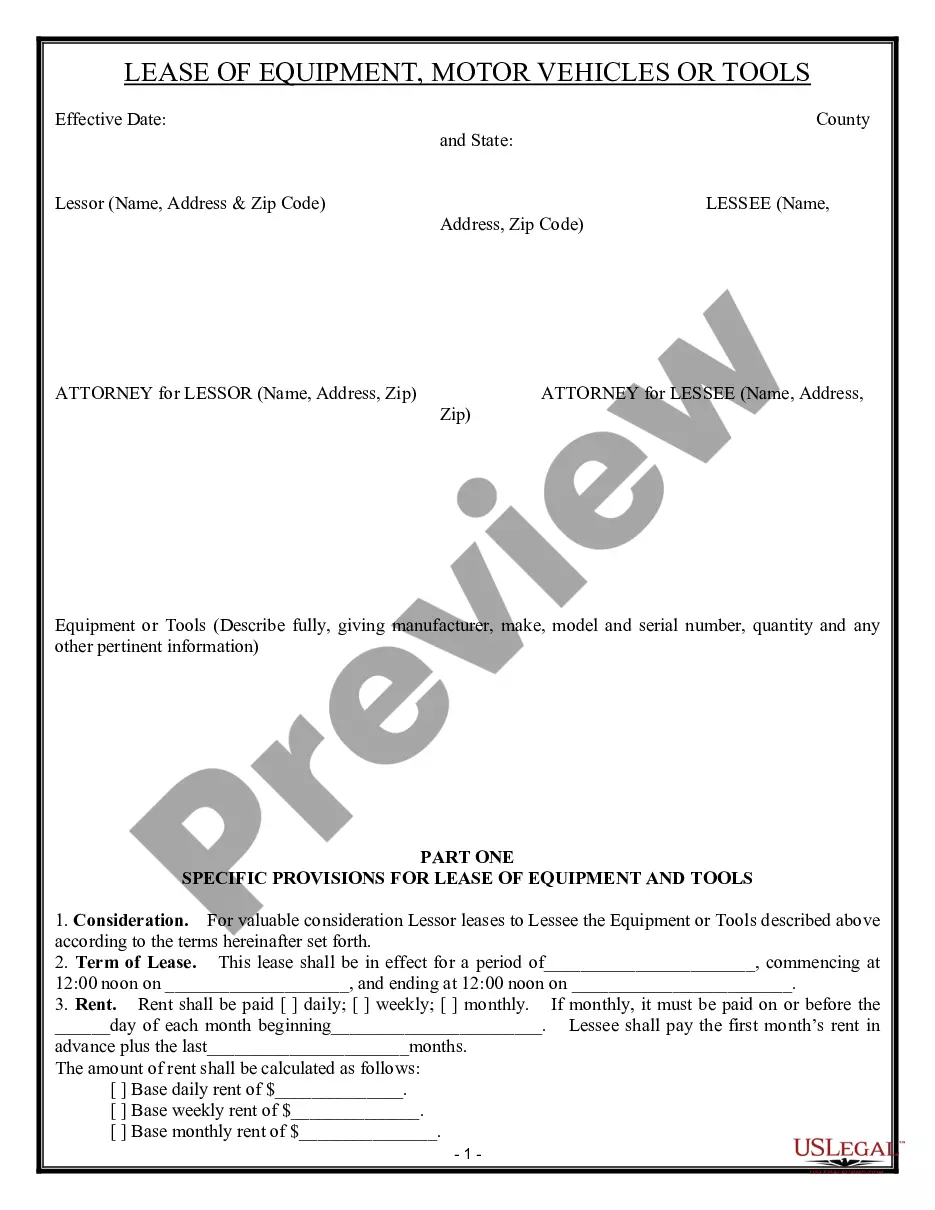
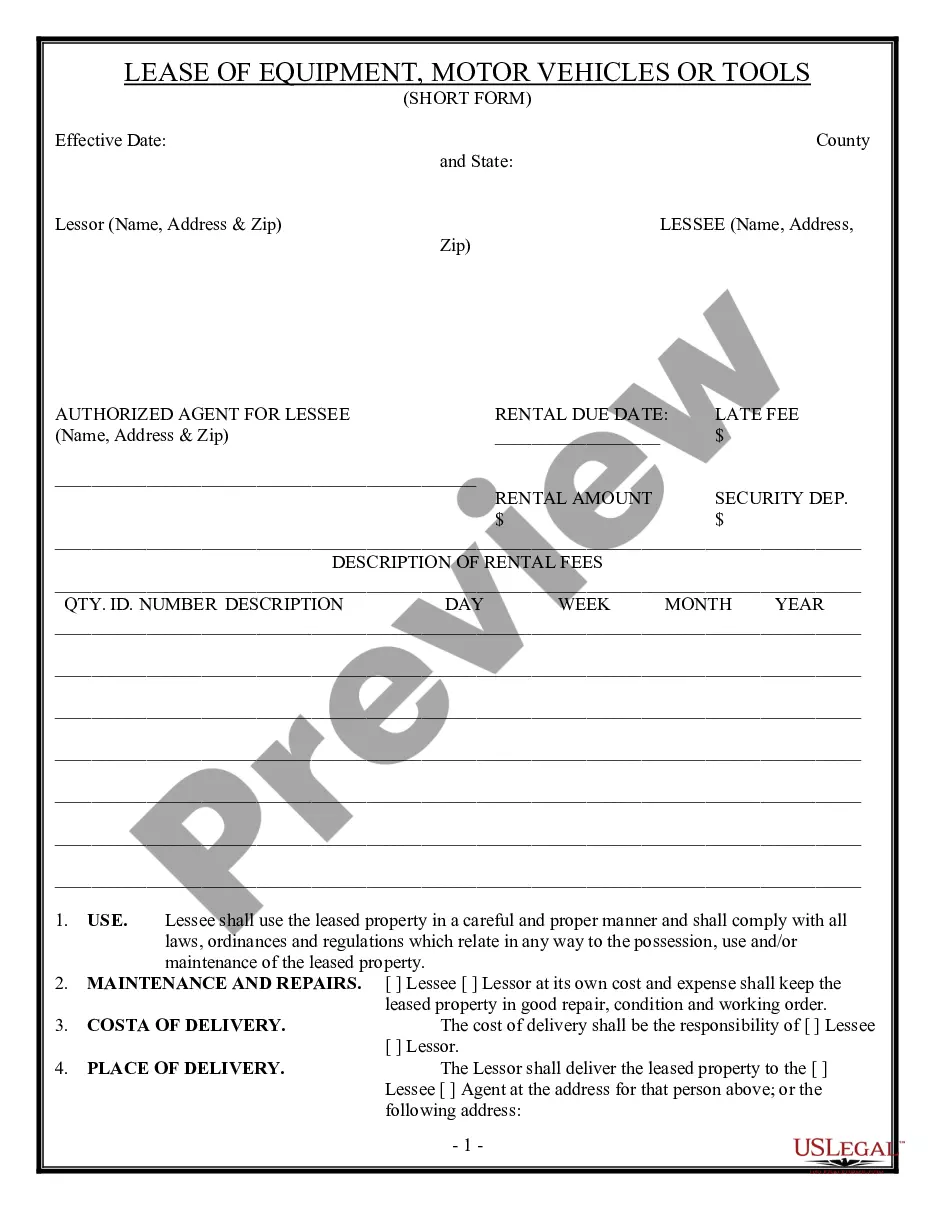
This form is an Equipment Lease. The lessor and lessee have entered into a contract for the renting of machinery and equipment. The contract also provides that the lessee may use the leased property at the location specified in the agreement. The contract is conditioned upon a landlord's waiver being executed.
Colorado Equipment Lease - General
188 downloads
Description
Free preview
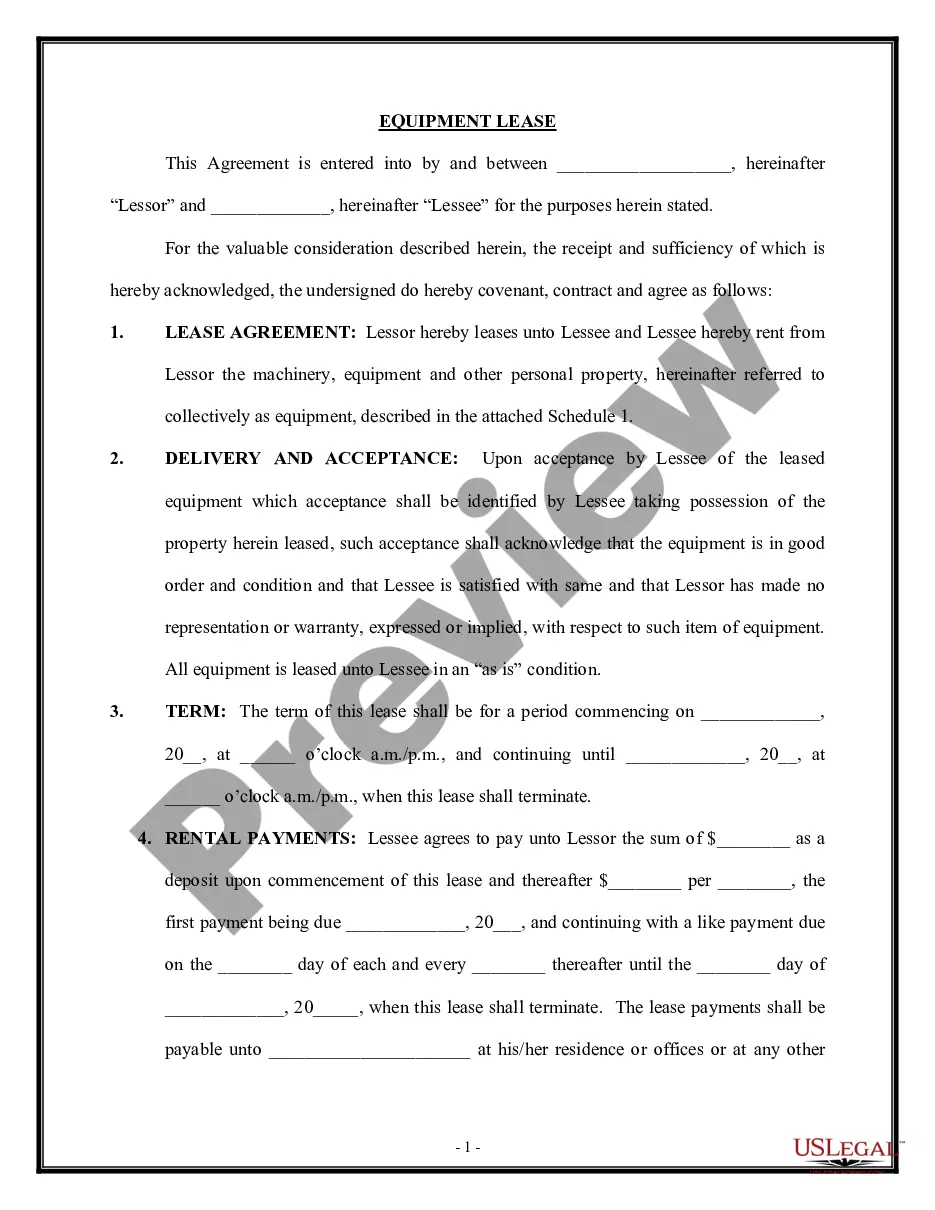
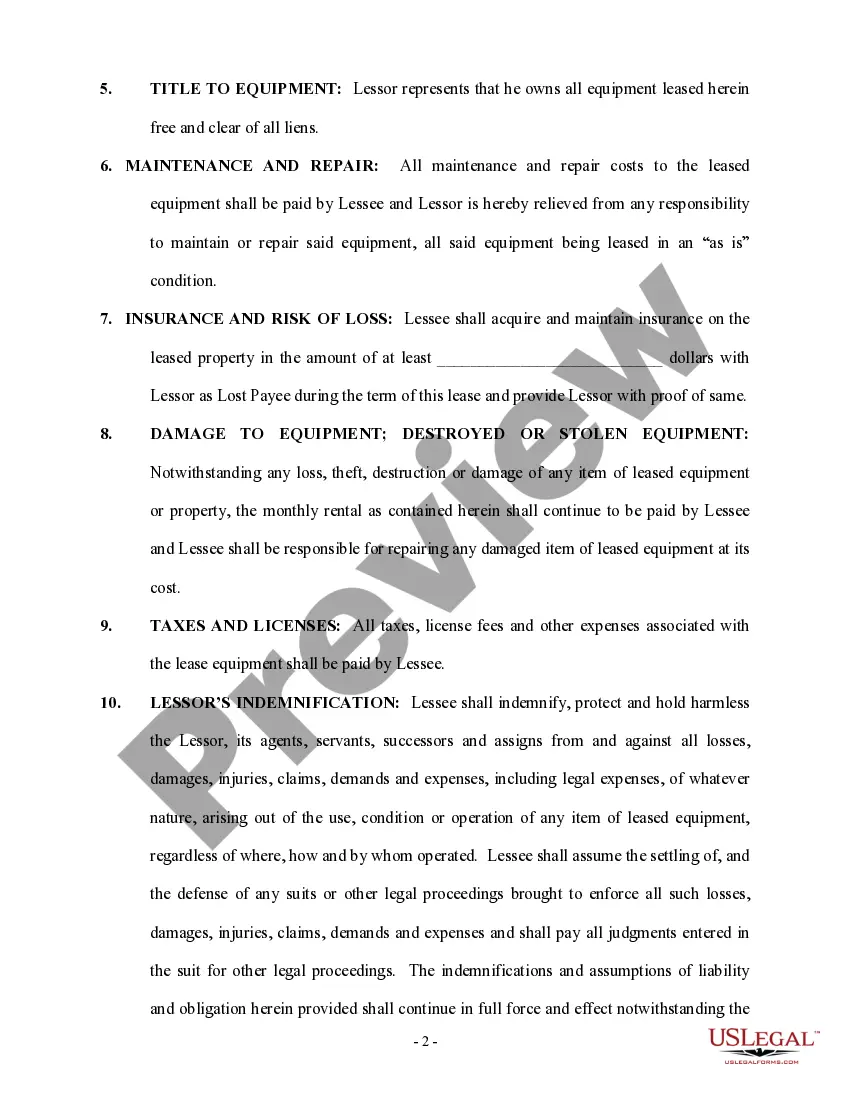
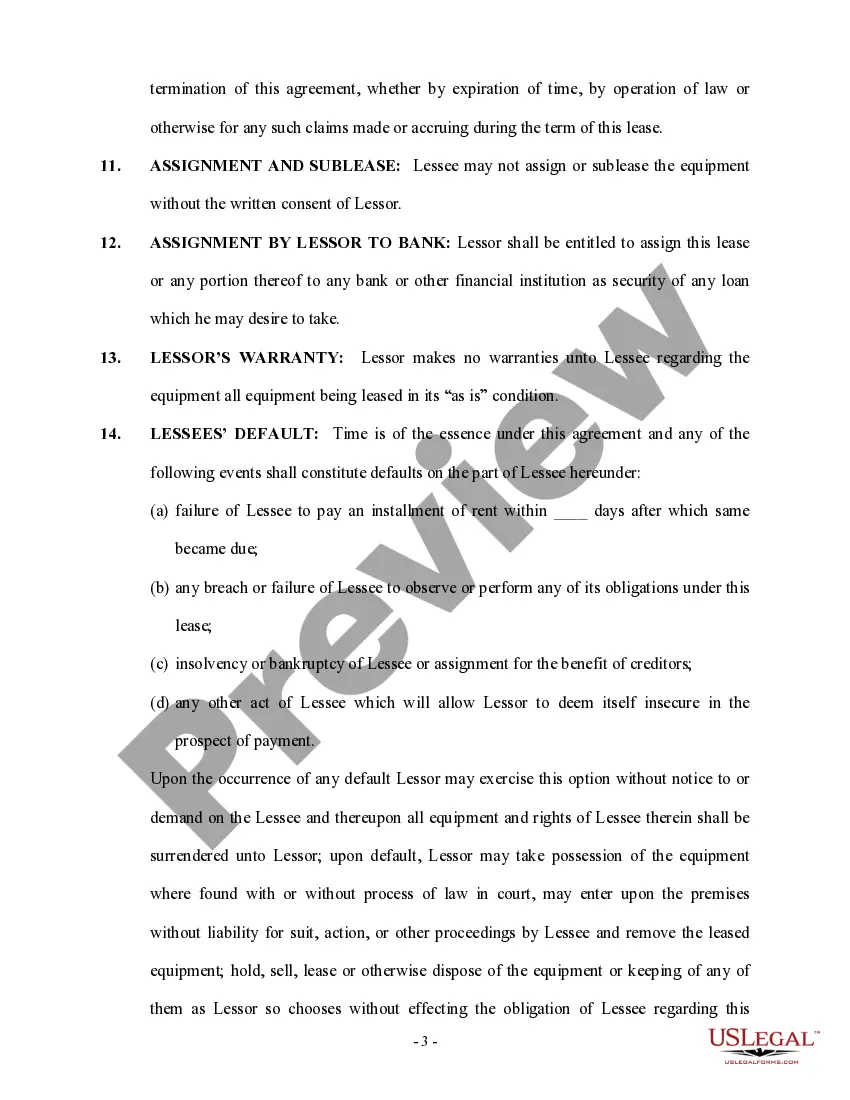
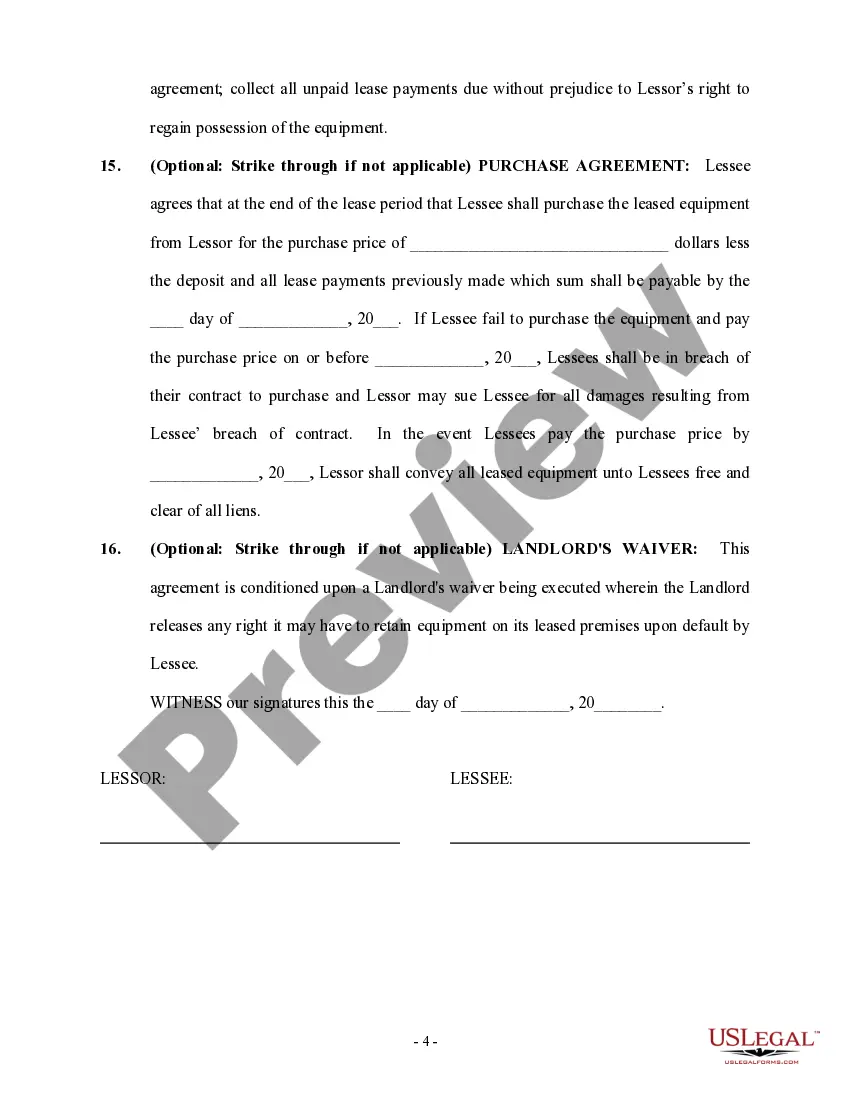
Get your form ready online
Our built-in tools help you complete, sign, share, and store your documents in one place.
Built-in online Word editor
Make edits, fill in missing information, and update formatting in US Legal Forms—just like you would in MS Word.
Export easily
Download a copy, print it, send it by email, or mail it via USPS—whatever works best for your next step.
E-sign your document
Sign and collect signatures with our SignNow integration. Send to multiple recipients, set reminders, and more. Go Premium to unlock E-Sign.
Notarize online 24/7
If this form requires notarization, complete it online through a secure video call—no need to meet a notary in person or wait for an appointment.
Store your document securely
We protect your documents and personal data by following strict security and privacy standards.

Make edits, fill in missing information, and update formatting in US Legal Forms—just like you would in MS Word.

Download a copy, print it, send it by email, or mail it via USPS—whatever works best for your next step.

Sign and collect signatures with our SignNow integration. Send to multiple recipients, set reminders, and more. Go Premium to unlock E-Sign.

If this form requires notarization, complete it online through a secure video call—no need to meet a notary in person or wait for an appointment.

We protect your documents and personal data by following strict security and privacy standards.
Looking for another form?

How to fill out Equipment Lease - General?
Locating the appropriate legal document template can present challenges.
It's obvious that there are numerous templates accessible online, but how do you find the legal document you need.
Utilize the US Legal Forms website.
First, ensure you have selected the correct document for your city/area. You can review the document using the Review option and examine the document description to confirm it is suitable for you.
- The service offers a vast array of templates, including the Colorado Equipment Lease - General, which can be utilized for business and personal purposes.
- All templates are reviewed by experts and comply with state and federal regulations.
- If you are already registered, sign in to your account and click on the Download option to obtain the Colorado Equipment Lease - General.
- Use your account to search through the legal documents you have previously acquired.
- Visit the My documents section of your account to get another copy of the document you need.
- If you are a new US Legal Forms user, here are simple steps for you to follow.
Form popularity
FAQ
Rental income generated from a Colorado Equipment Lease - General is considered taxable income at both the state and federal levels. Landlords must report this income on their tax returns, and it may be subject to state income tax rates. Additionally, property owners can deduct certain expenses related to the lease, such as maintenance or property management costs, which can help reduce their taxable income. Consult a tax expert for specific guidance tailored to your situation.
In Colorado, the taxability of leases depends on the type of property involved. Generally, a Colorado Equipment Lease - General might be subject to state sales tax if it involves tangible personal property. This means that the rental payments made for such leases could require sales tax to be collected and remitted. It's advisable to consult a tax professional to ensure compliance with local tax regulations.
Colorado tax is computed based on a combination of state, city, and special district taxes. Start with the base state tax rate, and then add any applicable local taxes based on the location of the lease. If you’re leasing equipment, clarity in these calculations ensures you align with tax regulations pertinent to your Colorado Equipment Lease - General. For assistance, consider using the uslegalforms platform for streamlined tax document management.
To add 7% sales tax to your total, first find the amount you want to tax. Then, multiply that amount by 0.07 to find the sales tax. Finally, add the sales tax to the original amount to determine the total including tax. This method is essential for ensuring compliance with local regulations on your Colorado Equipment Lease - General.
To calculate sales tax in Colorado, first determine the total taxable amount of your sale. Next, multiply that amount by the Colorado state sales tax rate, which is currently 2.9%. Additionally, many cities and counties impose their own sales tax, so you should incorporate those rates into your calculation. If you're leasing equipment, understanding these calculations is critical for your Colorado Equipment Lease - General needs.
A good equipment lease rate in a Colorado Equipment Lease - General typically ranges between 5% to 20% of the equipment's value annually, depending on various factors such as the lease term and equipment type. Factors like creditworthiness and the current market can also influence your rate. It’s wise to compare multiple offers to find the most favorable terms. Accessing industry insights with uslegalforms can help you negotiate competitive rates.
The biggest downside to leasing a car often involves mileage limitations and potential extra charges. When you lease, especially under a Colorado Equipment Lease - General, exceeding the mileage cap can lead to significant fees at the end of the lease term. Additionally, leasing means you do not own the vehicle, which may not suit everyone’s financial goals. Assessing your driving habits before signing a lease can save you from unexpected costs.
In Colorado, leases often have specific tax implications based on the type and duration of the lease. For a Colorado Equipment Lease - General, it’s crucial to document your lease terms accurately for tax purposes. Generally, lease payments can be deductible as business expenses, which can provide substantial tax benefits. It's wise to keep detailed records and consult an expert to navigate these complexities.
Yes, Software as a Service (SaaS) is subject to taxation in Colorado. This is important to consider when entering into a Colorado Equipment Lease - General for software-related services. Understanding the tax implications can help you manage your budget effectively while leasing equipment. Always consult with a tax professional to ensure compliance with state tax laws.
The GSA stands for the General Services Administration, a government agency that manages federal property and procurement. The GSA plays a crucial role in helping other federal agencies acquire equipment and services in a streamlined manner. Understanding the GSA can be beneficial when navigating the landscape of a Colorado Equipment Lease - General.