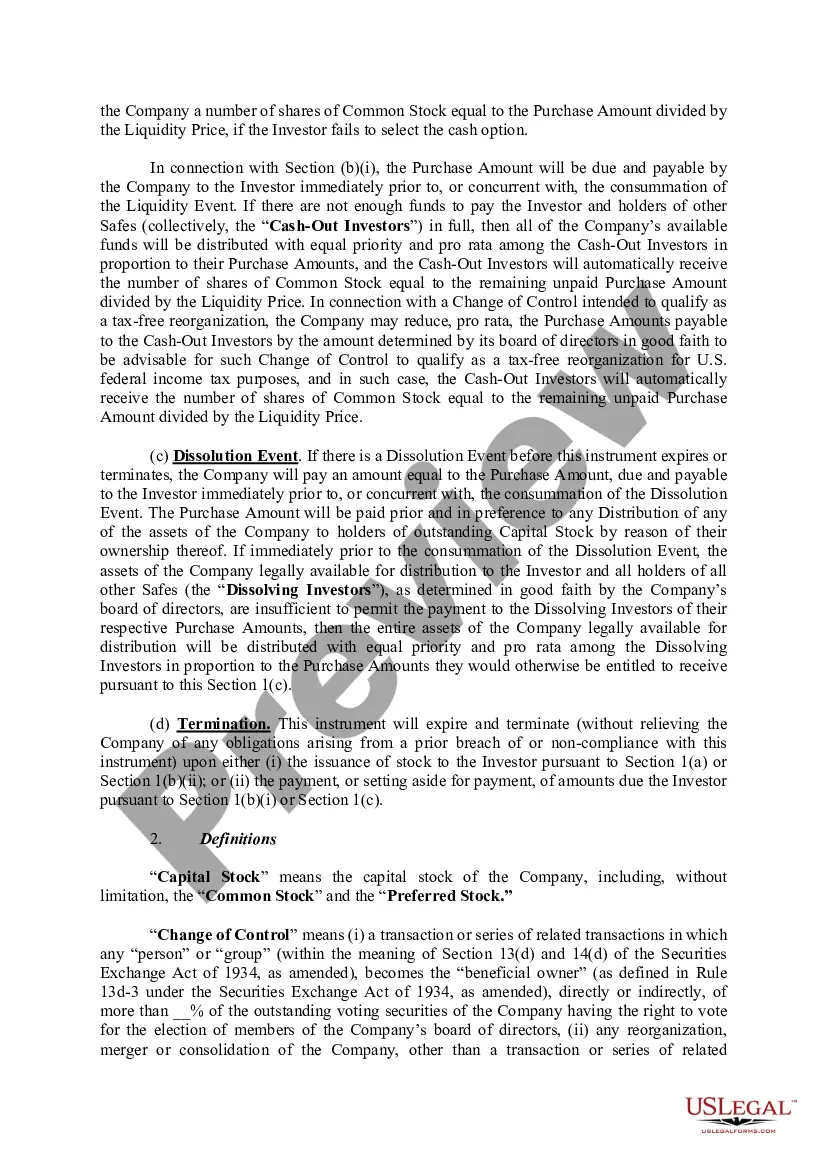
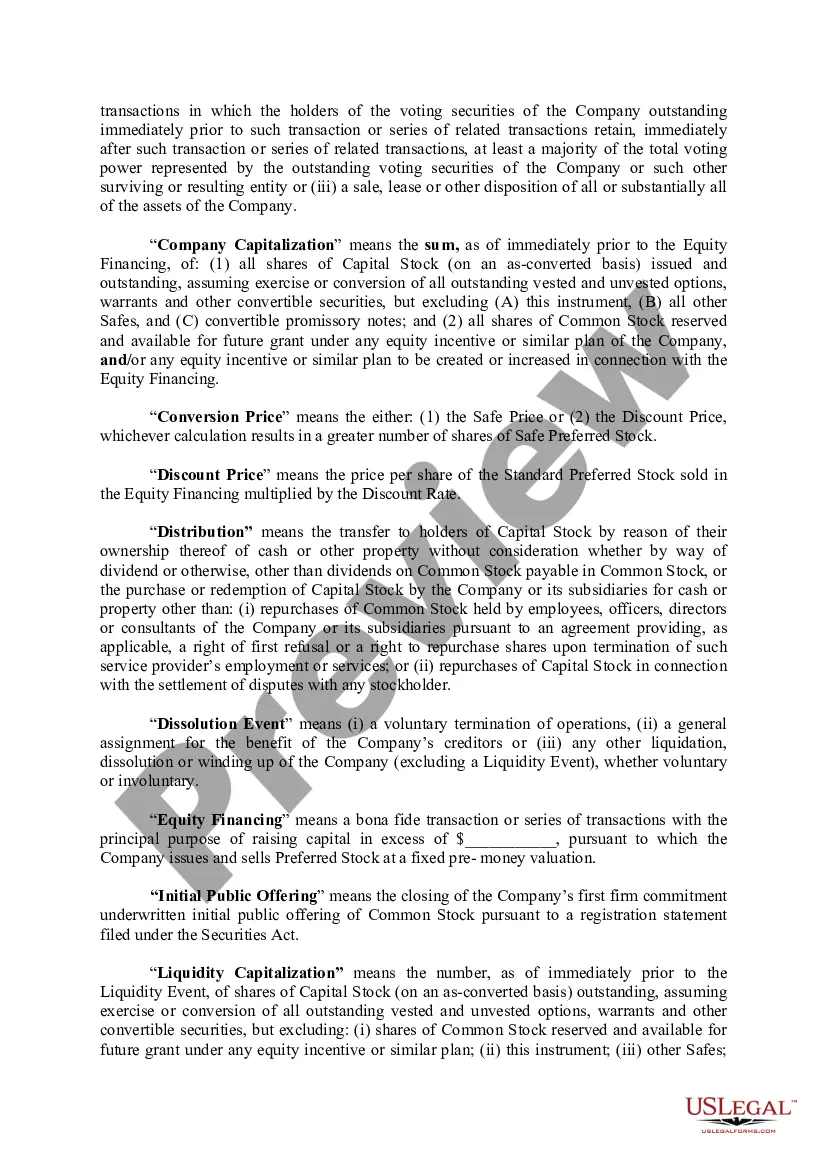
California Simple Agreement for Future Equity
Description
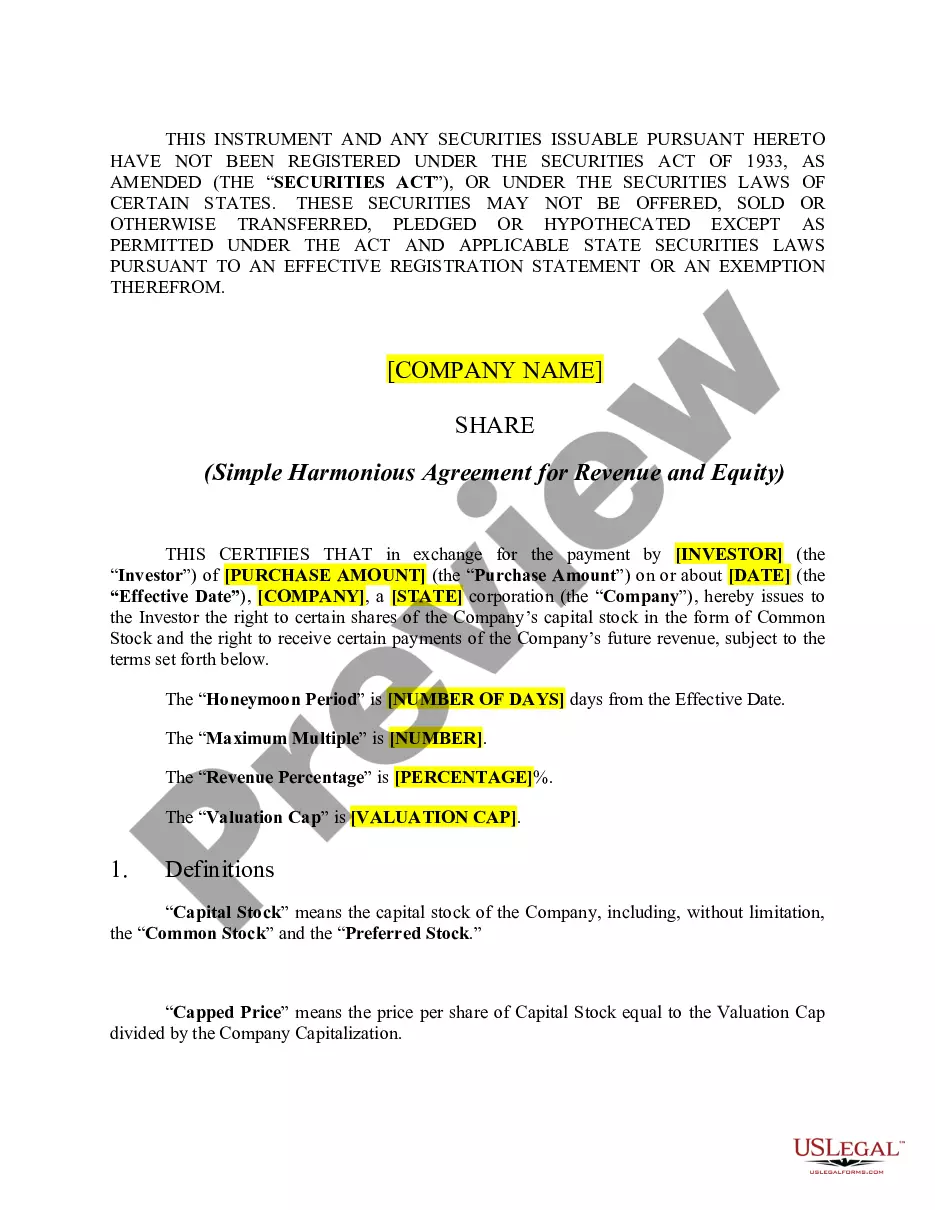
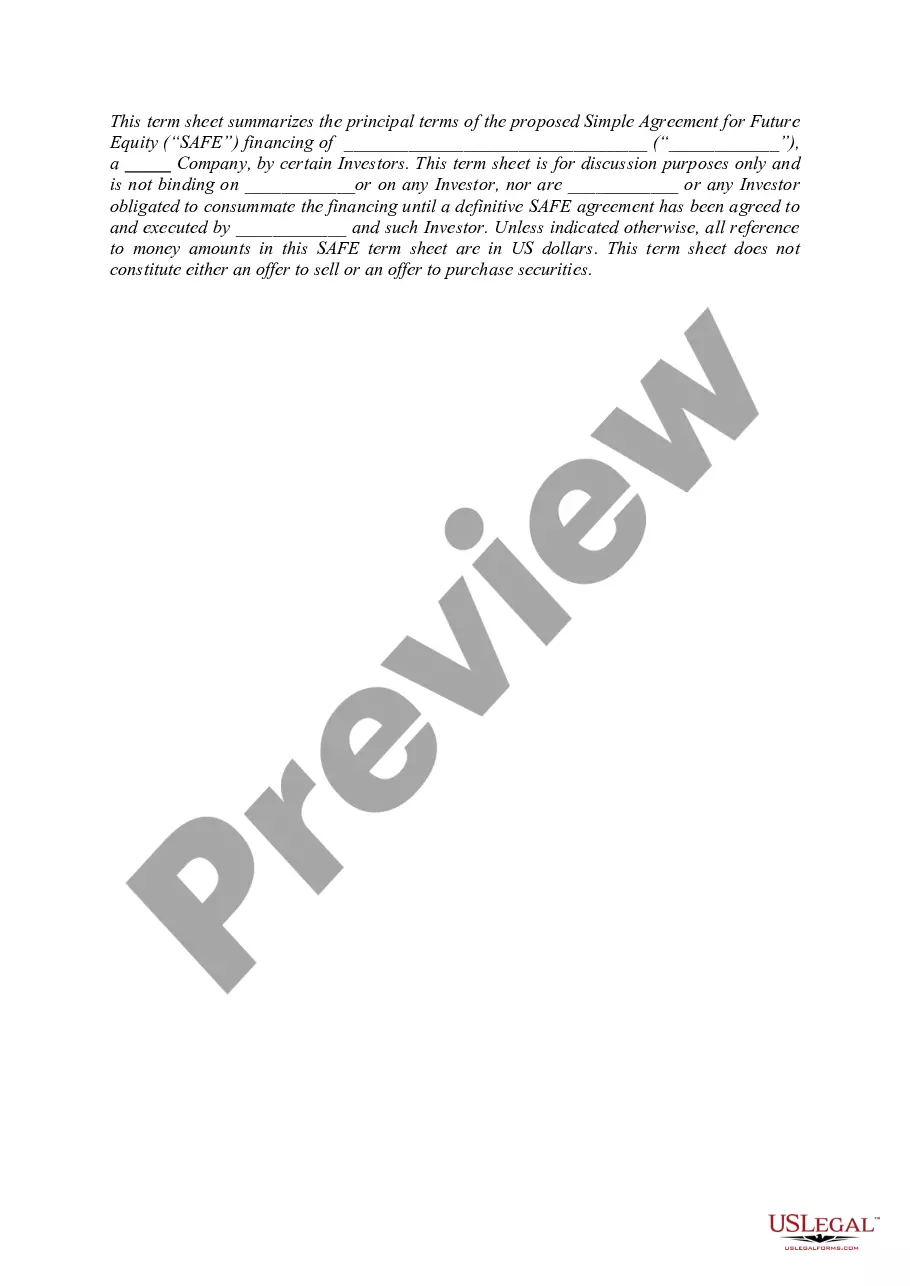
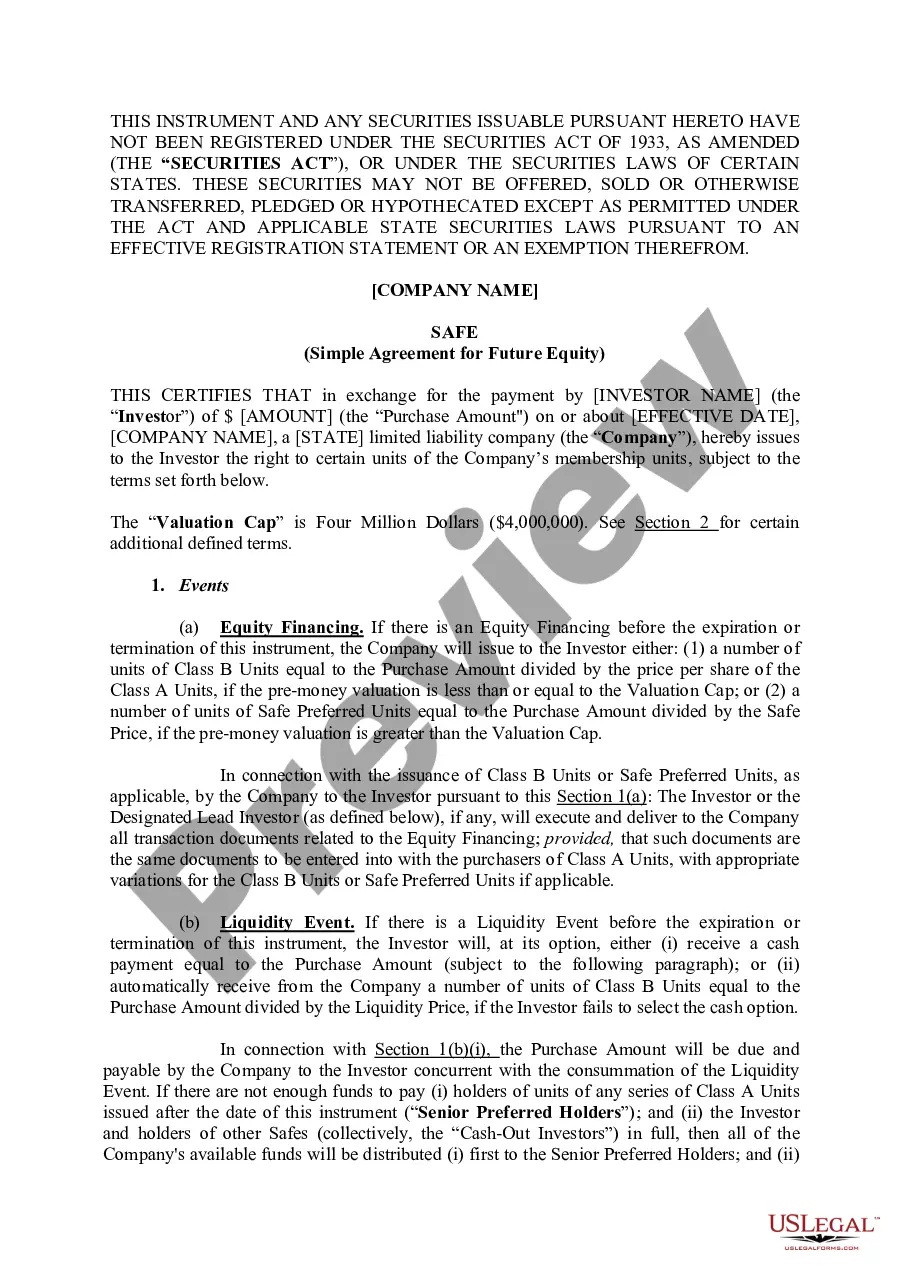
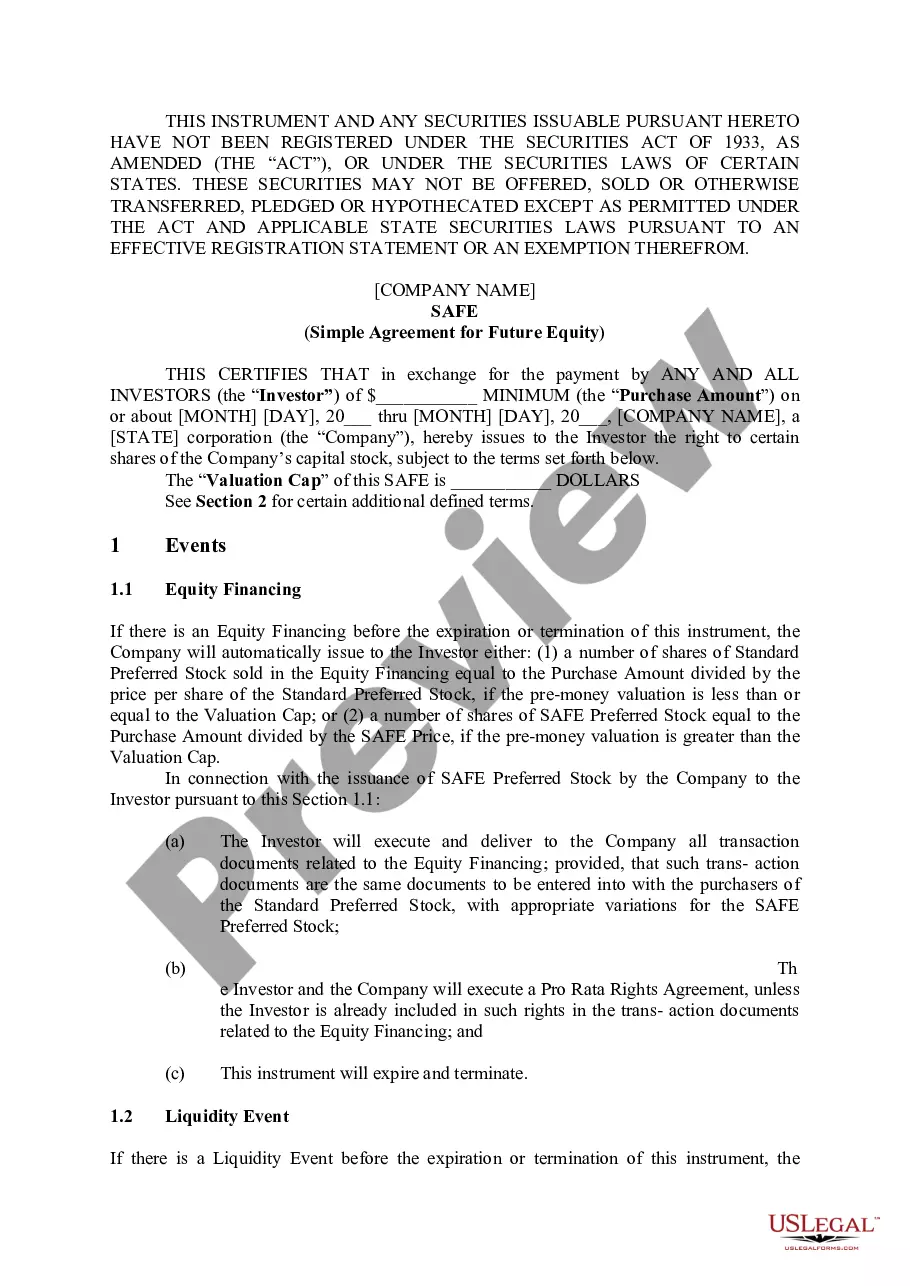
Get your form ready online
Our built-in tools help you complete, sign, share, and store your documents in one place.
Make edits, fill in missing information, and update formatting in US Legal Forms—just like you would in MS Word.
Download a copy, print it, send it by email, or mail it via USPS—whatever works best for your next step.
Sign and collect signatures with our SignNow integration. Send to multiple recipients, set reminders, and more. Go Premium to unlock E-Sign.
If this form requires notarization, complete it online through a secure video call—no need to meet a notary in person or wait for an appointment.
We protect your documents and personal data by following strict security and privacy standards.

Make edits, fill in missing information, and update formatting in US Legal Forms—just like you would in MS Word.

Download a copy, print it, send it by email, or mail it via USPS—whatever works best for your next step.

Sign and collect signatures with our SignNow integration. Send to multiple recipients, set reminders, and more. Go Premium to unlock E-Sign.

If this form requires notarization, complete it online through a secure video call—no need to meet a notary in person or wait for an appointment.

We protect your documents and personal data by following strict security and privacy standards.
Looking for another form?







How to fill out Simple Agreement For Future Equity?
Choosing the best lawful papers template can be a have difficulties. Obviously, there are plenty of layouts available online, but how can you get the lawful kind you need? Make use of the US Legal Forms site. The services offers a large number of layouts, such as the California Simple Agreement for Future Equity, which you can use for company and personal needs. Every one of the varieties are checked out by professionals and satisfy federal and state needs.
In case you are previously listed, log in to your accounts and click on the Down load option to get the California Simple Agreement for Future Equity. Make use of your accounts to appear through the lawful varieties you have acquired formerly. Proceed to the My Forms tab of the accounts and get an additional copy from the papers you need.
In case you are a new user of US Legal Forms, listed here are straightforward recommendations so that you can stick to:
- First, ensure you have chosen the correct kind for the metropolis/state. You can look through the shape making use of the Review option and study the shape explanation to make sure this is basically the right one for you.
- In case the kind will not satisfy your preferences, make use of the Seach industry to find the right kind.
- When you are certain the shape would work, select the Get now option to get the kind.
- Pick the prices program you would like and enter in the necessary information and facts. Create your accounts and buy the order using your PayPal accounts or credit card.
- Pick the file formatting and download the lawful papers template to your device.
- Comprehensive, revise and produce and signal the obtained California Simple Agreement for Future Equity.
US Legal Forms is the biggest library of lawful varieties in which you can find various papers layouts. Make use of the service to download expertly-produced papers that stick to status needs.
Form popularity
FAQ
Determine valuation cap for SAFE. The SAFE discount is derived by dividing the valuation cap by the typical equity financing valuation and then removing that value from one (representing no discount). In this case, $2 million / $4 million = 0.5 and 1 ? 0.5 = 0.5 would be the mathematical representations.
A simple agreement for future equity delays valuation of a company until it has more performance data on which to base a valuation. At the same time, it promises an investor the right to buy future equity when a valuation is made. A SAFE can be converted into preferred stock in the future.
SAFEs are generally considered taxable at the time of the triggering event, when the SAFE converts into equity (i.e. stock in the company).
A simple agreement for future equity (SAFE) is a financing contract that may be used by a start-up company to raise capital in its seed financing rounds. The instrument is viewed by some as a more founder-friendly alternative to convertible notes because a SAFE is quicker and easier to negotiate and has fewer terms.
Calculation ing to the Discount Rate The total shares are calculated ing to the SAFE money invested divided by the share price in the next round, multiplied by the discount rate. If we take our example above, if during the next financing round, the company raises money ing to a share price of $10.
A simple agreement for future equity (SAFE) is an agreement between an investor and a company that provides rights to the investor for future equity in the company similar to a warrant, except without determining a specific price per share at the time of the initial investment.
Cons: SAFE investors assume most, if not all, of the risk, in that there is no guarantee of any equity ownership in the company. ... A SAFE holder is not entitled to any company assets in the event of a liquidation.