California Paid Time Off Policy - PTO
Description




How to fill out Paid Time Off Policy - PTO?
Selecting the correct legal document format can be challenging.
Indeed, there are numerous templates accessible online, but how can you find the legal document you require.
Utilize the US Legal Forms website. The service offers a vast array of templates, such as the California Paid Time Off Policy - PTO, which can be used for business and personal needs.
You can review the form using the Review button and read the form details to confirm that it is the right one for you.
- All of the documents are reviewed by experts and meet state and federal standards.
- If you are already registered, Log In to your account and click the Obtain button to download the California Paid Time Off Policy - PTO.
- Use your account to browse through the legal forms you have purchased previously.
- Navigate to the My documents tab in your account and retrieve another copy of the document you need.
- If you are a new user of US Legal Forms, here are simple steps for you to follow.
- First, ensure you have selected the correct form for your location/state.
Form popularity
FAQ
In California, employees typically earn PTO through hours worked, usually at a rate specified in their employment agreement. Employers may also reward employees with additional PTO for years of service or exceptional performance. To maximize your benefits, be sure to review the California Paid Time Off Policy - PTO provided by your employer.
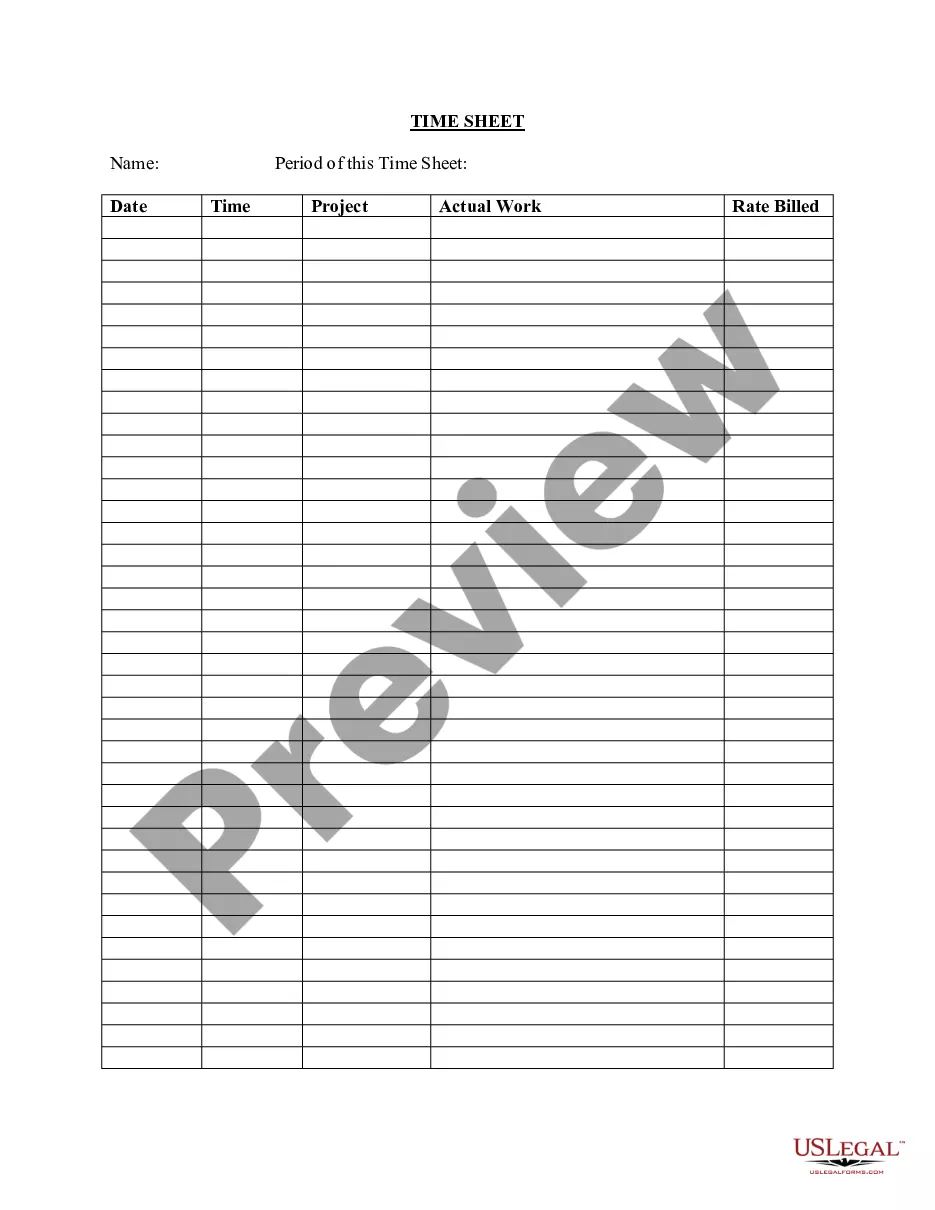
The 7-minute rule refers to the California labor regulation that allows employees to round time entries to the nearest quarter-hour for payroll purposes. This means if you work for 7 minutes past a quarter hour, it could potentially count as 15 minutes. It's related to the management of employee time under the California Paid Time Off Policy - PTO, illustrating how time is calculated for leave.
To obtain PTO in California, employees should follow their employer’s specific procedures for requesting time off. This often involves submitting a formal request to your supervisor or HR department ahead of time. Knowing the California Paid Time Off Policy - PTO will help you understand the steps to take and the notice required for approval.
Yes, an employer can deny PTO requests in California based on business needs or staffing requirements. However, companies must have a clear policy that outlines the procedures for requesting and approving PTO. Understanding your rights under the California Paid Time Off Policy - PTO can help ensure that you are treated fairly during these requests.
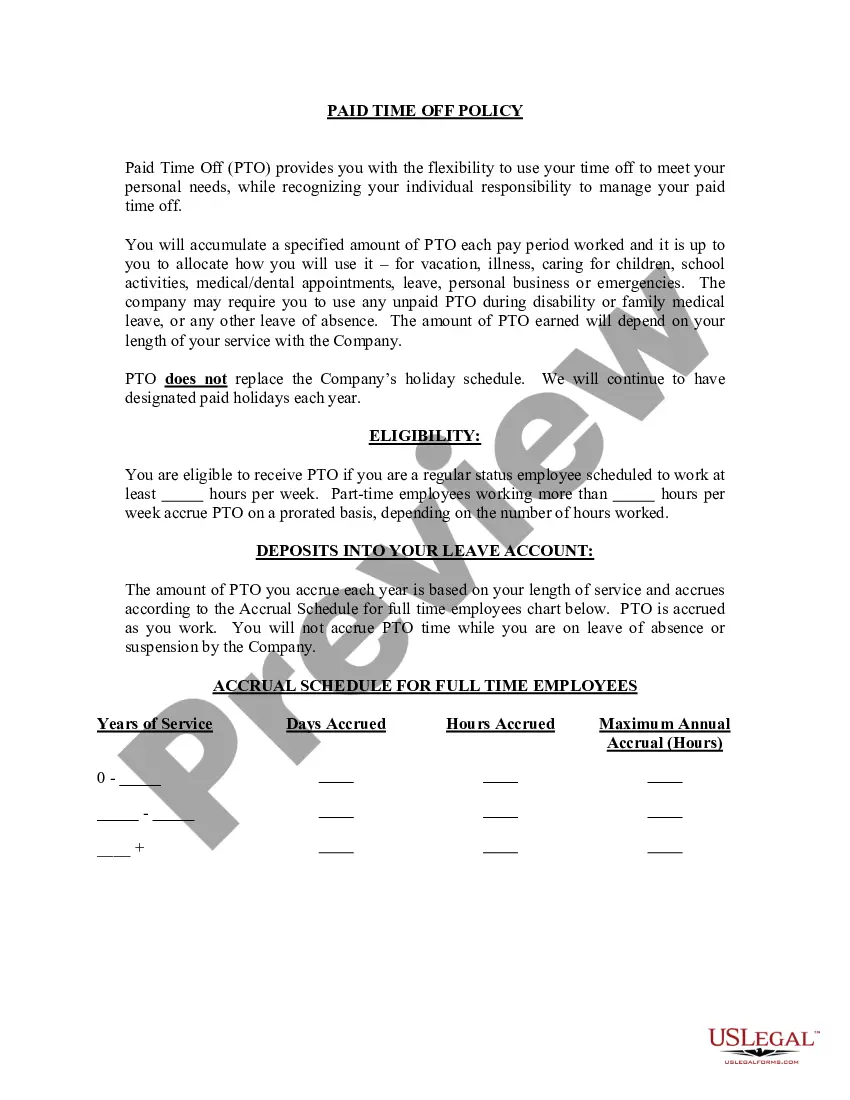
The standard Paid Time Off policy in California combines vacation days, sick leave, and personal days into a single pool of time. Many companies do not cap PTO accumulation, allowing employees to use their time when needed. It’s vital for employees to understand their company's California Paid Time Off Policy - PTO to take full advantage of their earned time.
In California, the average amount of Paid Time Off (PTO) is typically between 10 to 15 days per year, depending on the employer's policy. Employers may offer additional leave based on years of service or company size. A well-structured California Paid Time Off Policy - PTO provides clarity on how much time employees can expect and plan for.
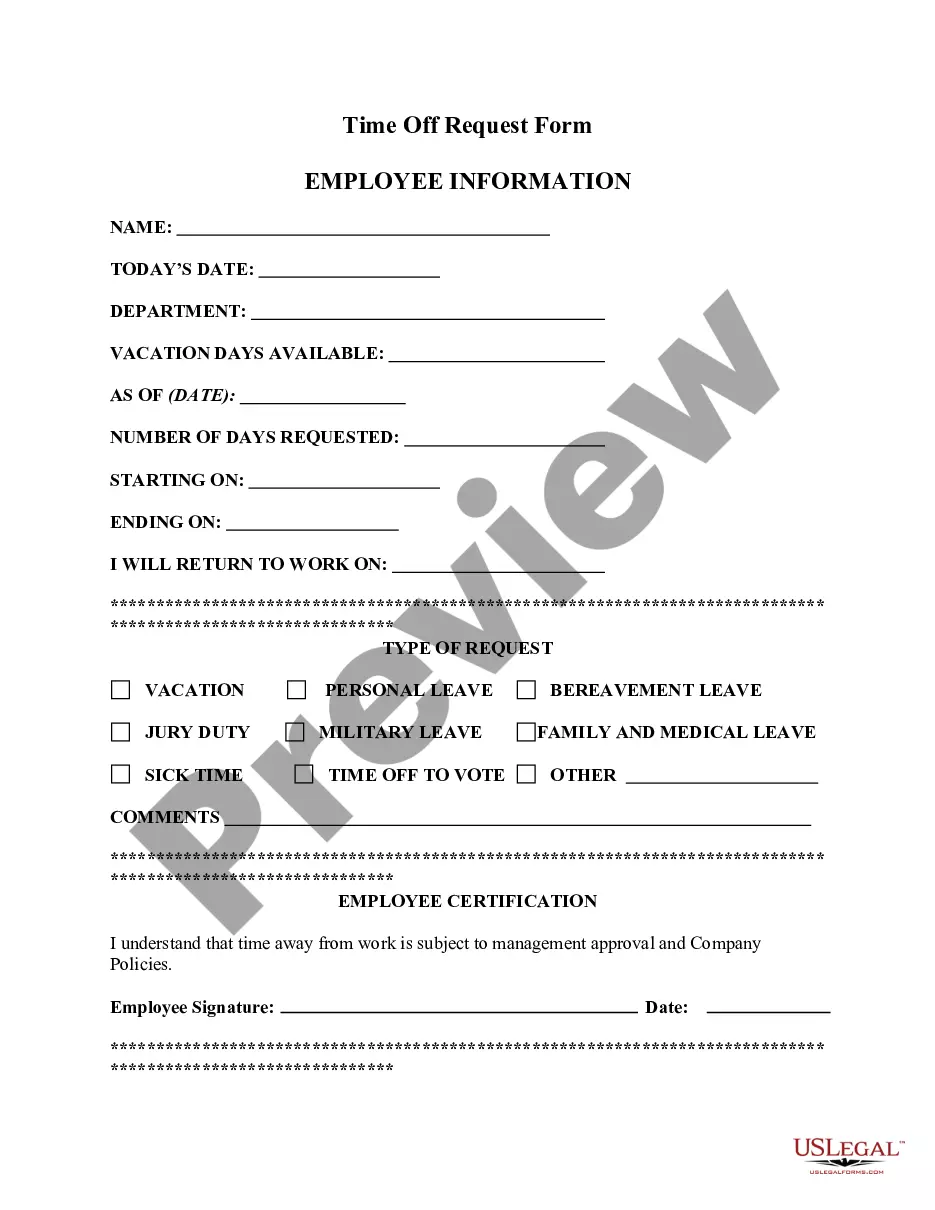
To fill a PTO form effectively, start by entering your personal details clearly. Specify the exact days you wish to take off and provide a brief explanation for your request. Following the California Paid Time Off Policy - PTO will help you ensure that your submission aligns with company protocols and can be approved promptly.
When filling out a PTO request, begin with your contact details at the top. List the dates of your planned leave and include any relevant information on project coverage. It’s essential to follow the guidelines in the California Paid Time Off Policy - PTO to ensure your request is processed seamlessly.
Writing a PTO request requires clarity and professionalism. Start by addressing your supervisor, then state your intent to take time off, including specific dates and the reason. Be concise, yet informative, to ensure your manager understands the context and urgency while adhering to the California Paid Time Off Policy - PTO.
Filling out a PTO form involves a few simple steps. First, write your name and department at the top of the form. Next, specify the dates you plan to be absent, and briefly state the reason for your time off. Finally, make sure to submit the form to your supervisor as outlined in the California Paid Time Off Policy - PTO.