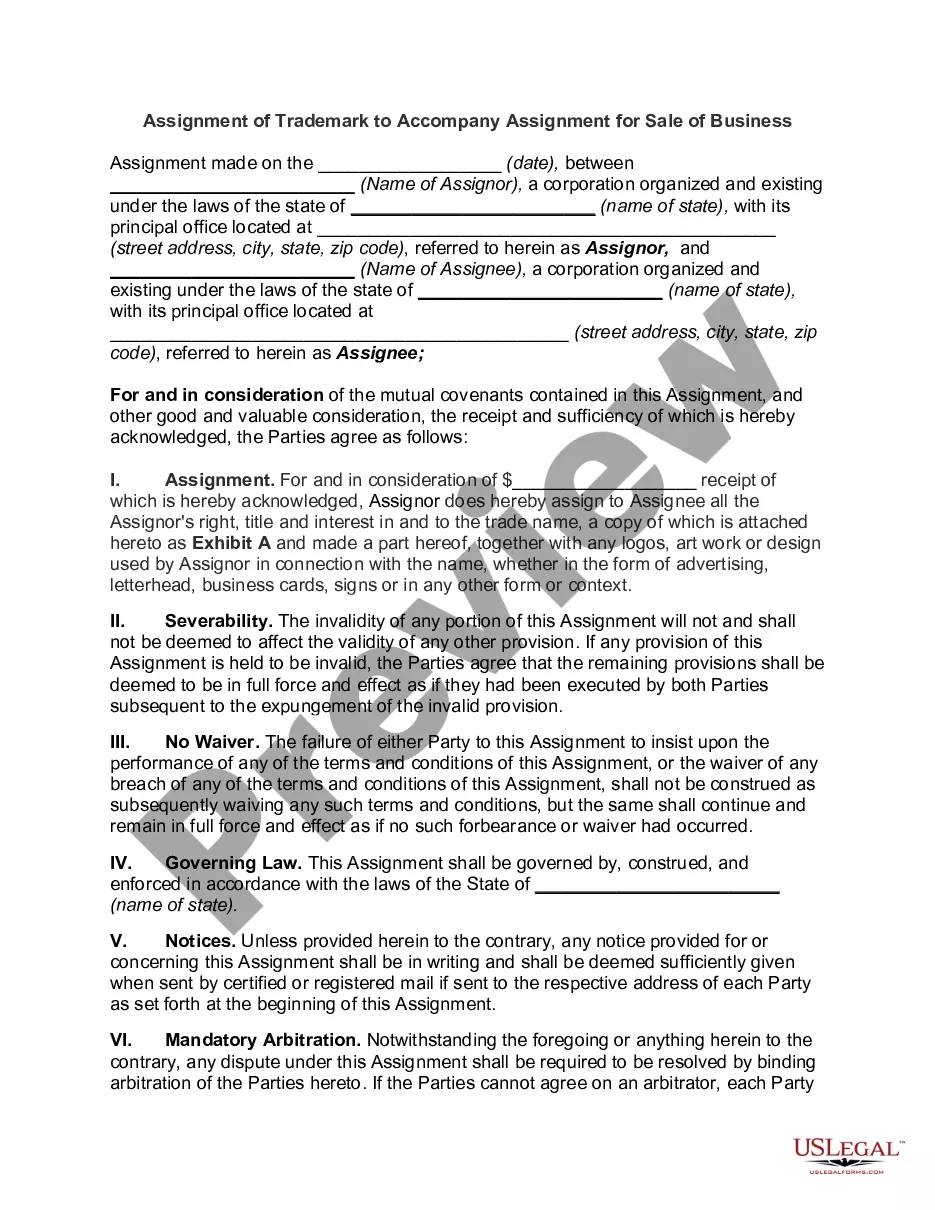
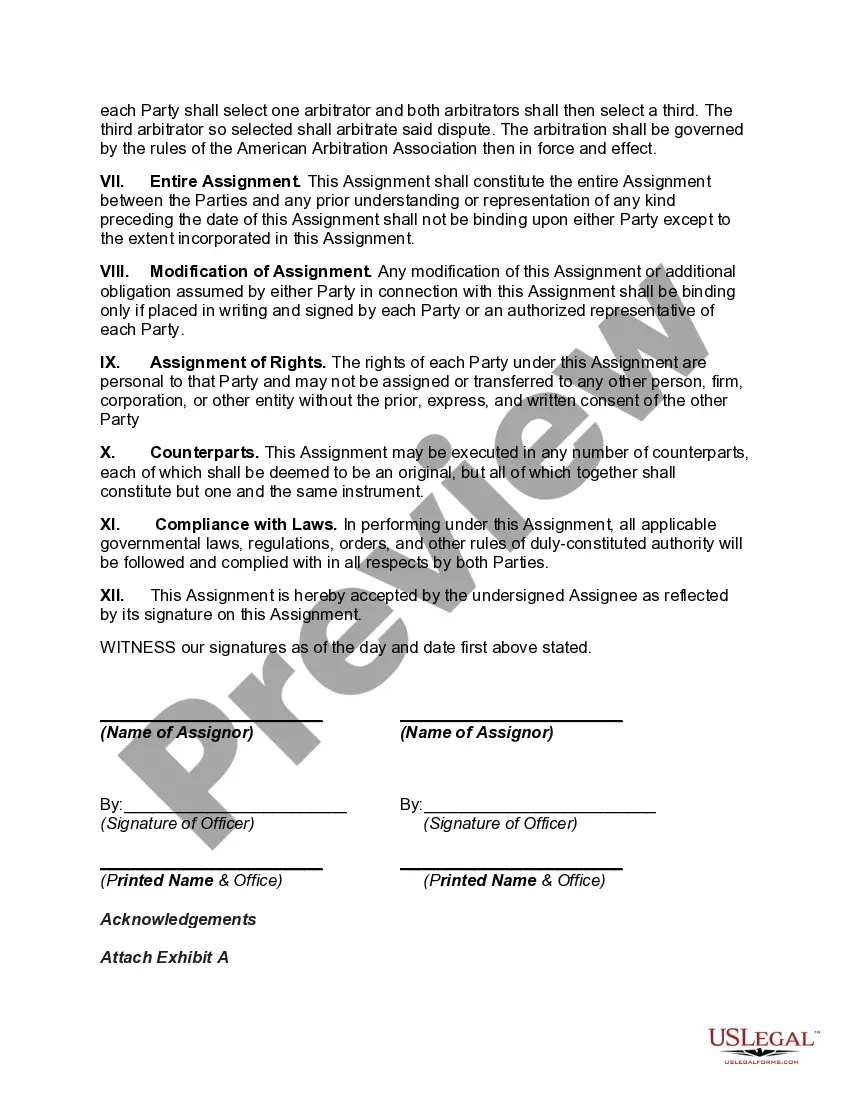
California Assignment of Trademark to Accompany Assignment for Sale of Business
Description
Get your form ready online
Our built-in tools help you complete, sign, share, and store your documents in one place.
Make edits, fill in missing information, and update formatting in US Legal Forms—just like you would in MS Word.
Download a copy, print it, send it by email, or mail it via USPS—whatever works best for your next step.
Sign and collect signatures with our SignNow integration. Send to multiple recipients, set reminders, and more. Go Premium to unlock E-Sign.
If this form requires notarization, complete it online through a secure video call—no need to meet a notary in person or wait for an appointment.
We protect your documents and personal data by following strict security and privacy standards.

Make edits, fill in missing information, and update formatting in US Legal Forms—just like you would in MS Word.

Download a copy, print it, send it by email, or mail it via USPS—whatever works best for your next step.

Sign and collect signatures with our SignNow integration. Send to multiple recipients, set reminders, and more. Go Premium to unlock E-Sign.

If this form requires notarization, complete it online through a secure video call—no need to meet a notary in person or wait for an appointment.

We protect your documents and personal data by following strict security and privacy standards.
Looking for another form?

How to fill out Assignment Of Trademark To Accompany Assignment For Sale Of Business?
You might spend hours online searching for the proper document template that fulfills the federal and state requirements you need.
US Legal Forms offers a vast collection of legal documents that can be reviewed by experts.
It is easy to download or print the California Assignment of Trademark to Accompany Assignment for Sale of Business from my services.
If available, use the Review button to browse through the document template as well.
- If you already have a US Legal Forms account, you can Log In and then click the Obtain button.
- After that, you can complete, modify, print, or sign the California Assignment of Trademark to Accompany Assignment for Sale of Business.
- Every legal document template you purchase is yours indefinitely.
- To get another copy of a purchased form, visit the My documents tab and click the corresponding button.
- If you are using the US Legal Forms website for the first time, follow the simple instructions below.
- First, ensure that you have selected the correct document template for the state/city of your choice.
- Review the form description to confirm you have chosen the right document.
Form popularity
FAQ
Yes, you can transfer a trademark to another individual or business. This process involves drafting an assignment agreement, which clearly outlines the terms of the transfer. Utilizing a California Assignment of Trademark to Accompany Assignment for Sale of Business can streamline your transfer and ensure compliance with legal requirements.
Elements Required for Valid Trademark Assignments Clearly identify the mark(s) covered by the agreement. Document the consideration for the agreement. Assign the trademark's goodwill to the assignee. Goodwill includes the connection the mark facilitates between the company and its customers.
The Procedure of Assignment or Transfer of TrademarkStep 1: Application for trademark assignment. Application for assignment can be made by the assignor or by the assignee or by both.Step 2: Filing Form TM-P.Step 3: Documents submission.Step 4: Application processing and advertisement of assignment.Step 5: Approval.
In basic terms, a nunc pro tunc is a type of assignment that is backdated. Nunc pro tunc is Latin meaning now for then.A nunc pro tunc assignment will be signed on a particular date, but parties will deem the assignment to have been granted on some earlier date.
19 The assignment involves no transfer of ownership but merely effects the transfer rights which the assignor has at the time, to the assignee.
The assignor must receive consideration for the agreement, otherwise the assignment will be ineffective. However, an absolute assignment does not require consideration to be given.
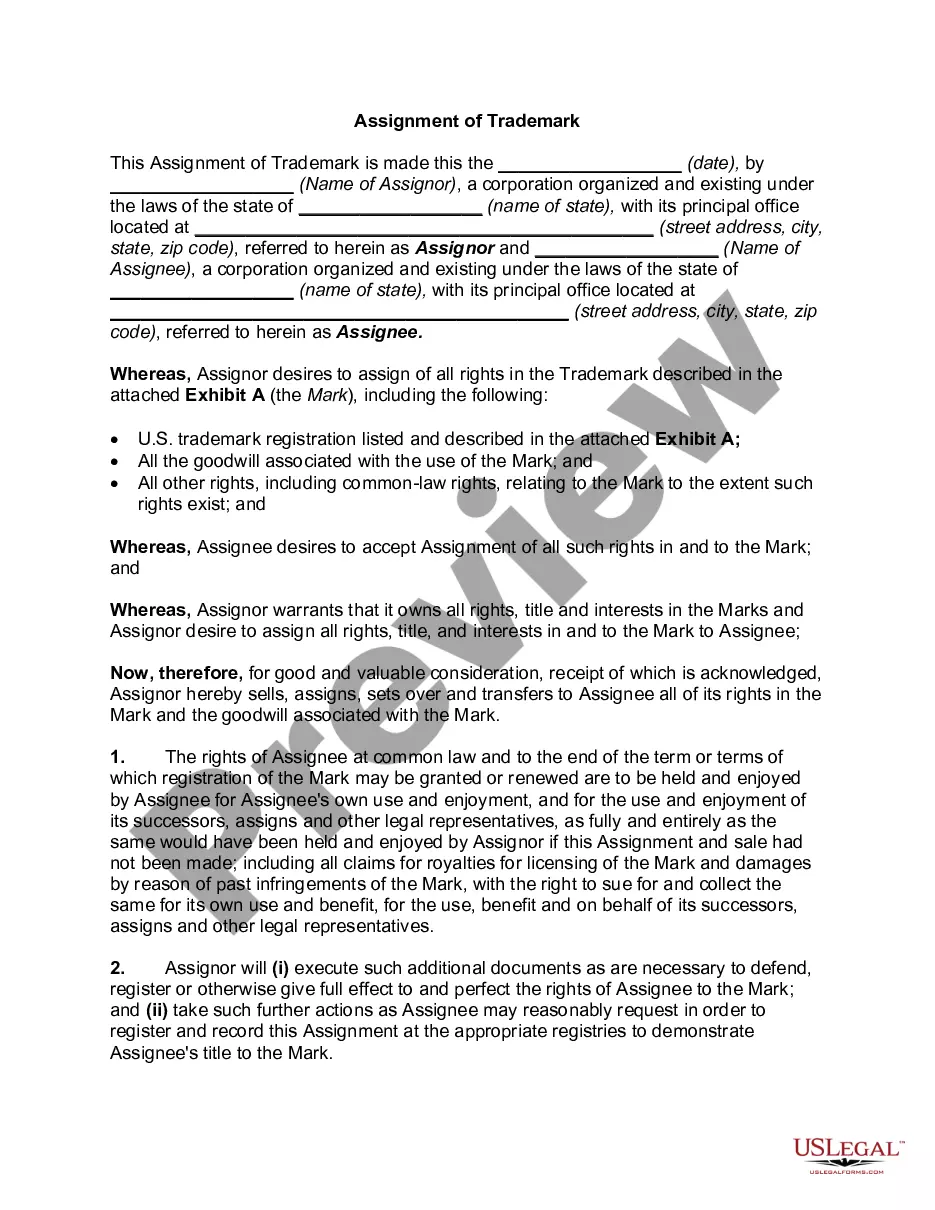
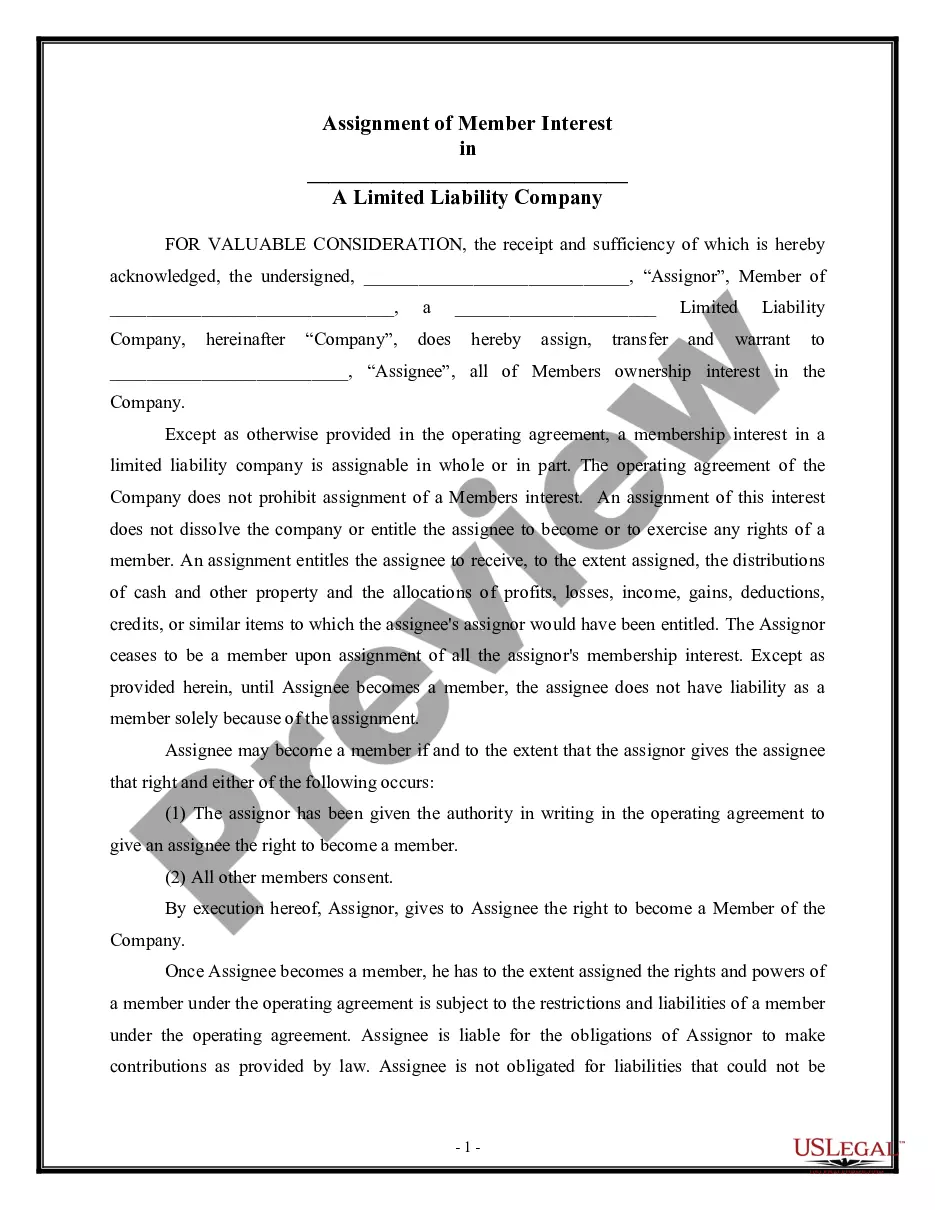
A trademark assignment is the transfer of an owner's property rights in a given mark or marks. Such transfers may occur on their own or as parts of larger asset sales or purchases. Trademark assignment agreements both provide records of ownership and transfer and protect the rights of all parties.
An assignment without consideration is valid when: there has been a delivery; the assignment is in writing; or. the assignment is by way of gift.
Assignment is a legal term whereby an individual, the assignor, transfers rights, property, or other benefits to another known as the assignee. This concept is used in both contract and property law. The term can refer to either the act of transfer or the rights/property/benefits being transferred.
An assignment is the transfer of rights held by one party called the assignor to another party called the assignee. The legal nature of the assignment and the contractual terms of the agreement between the parties determines some additional rights and liabilities that accompany the assignment.