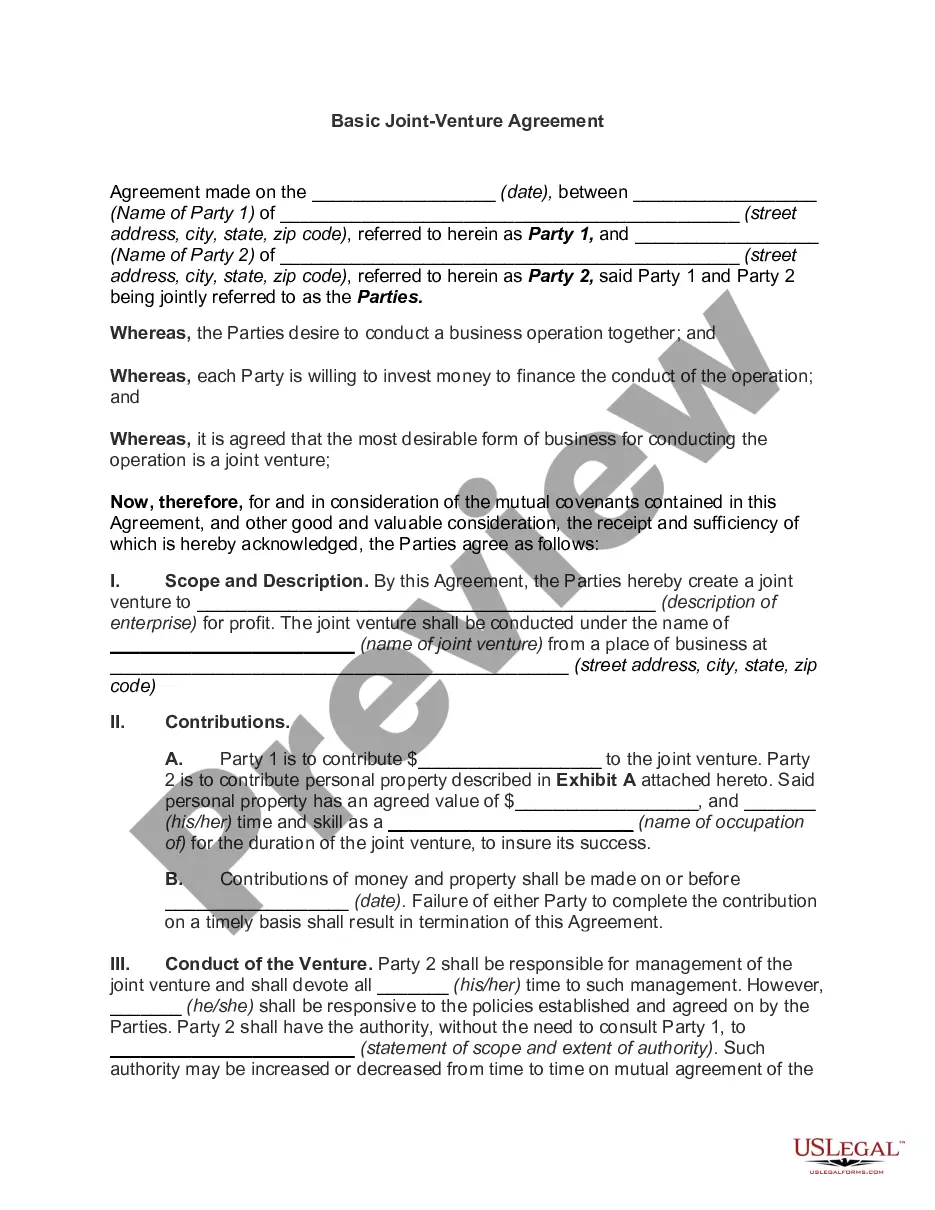
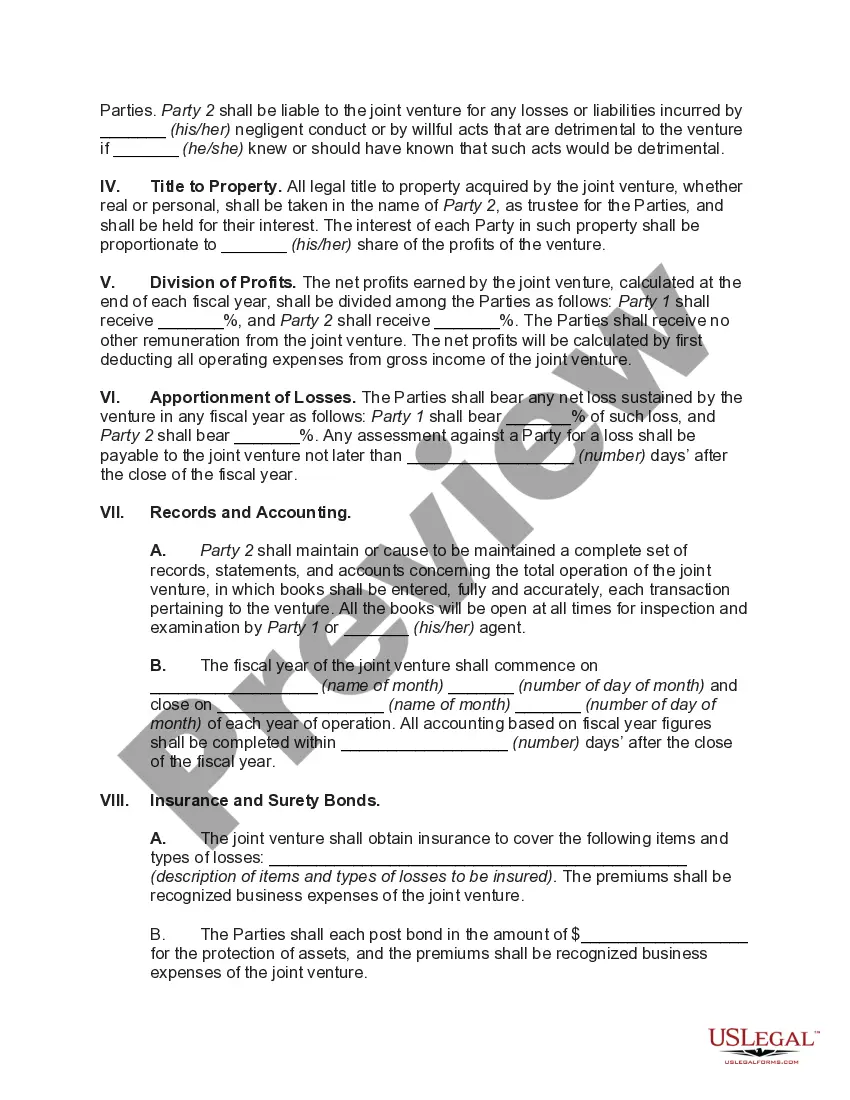
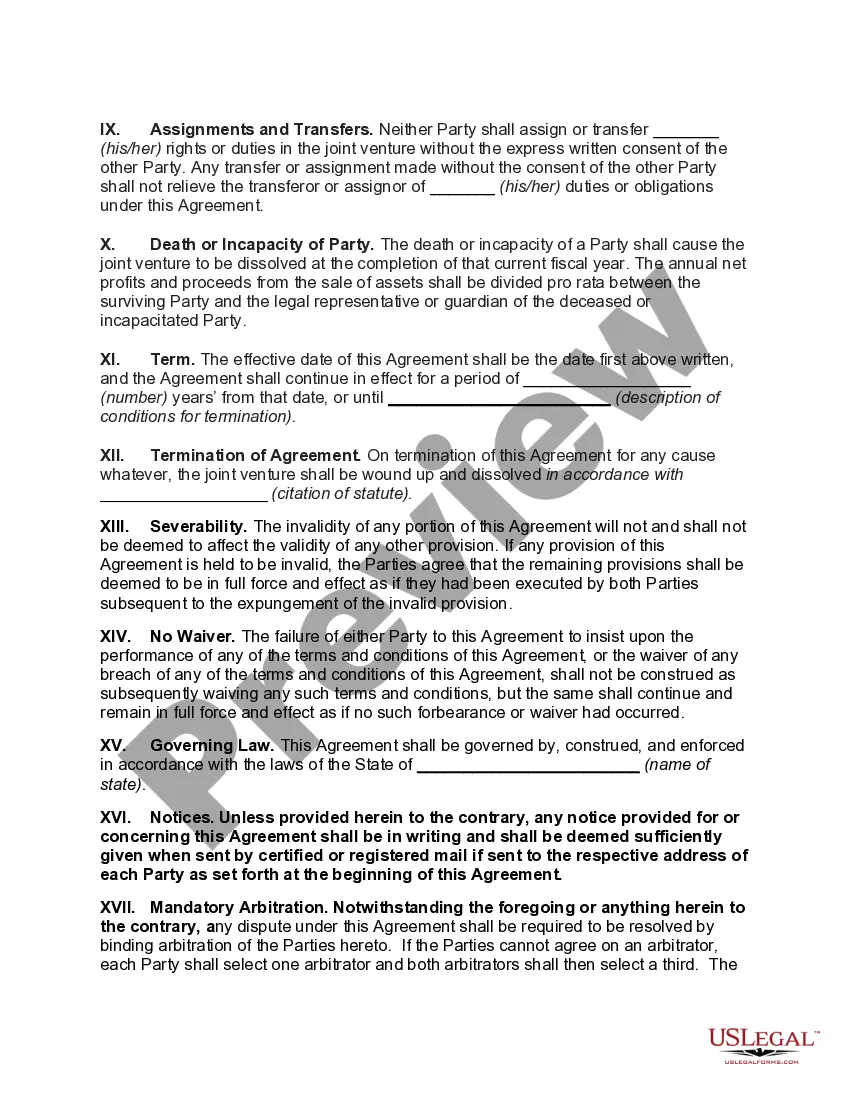
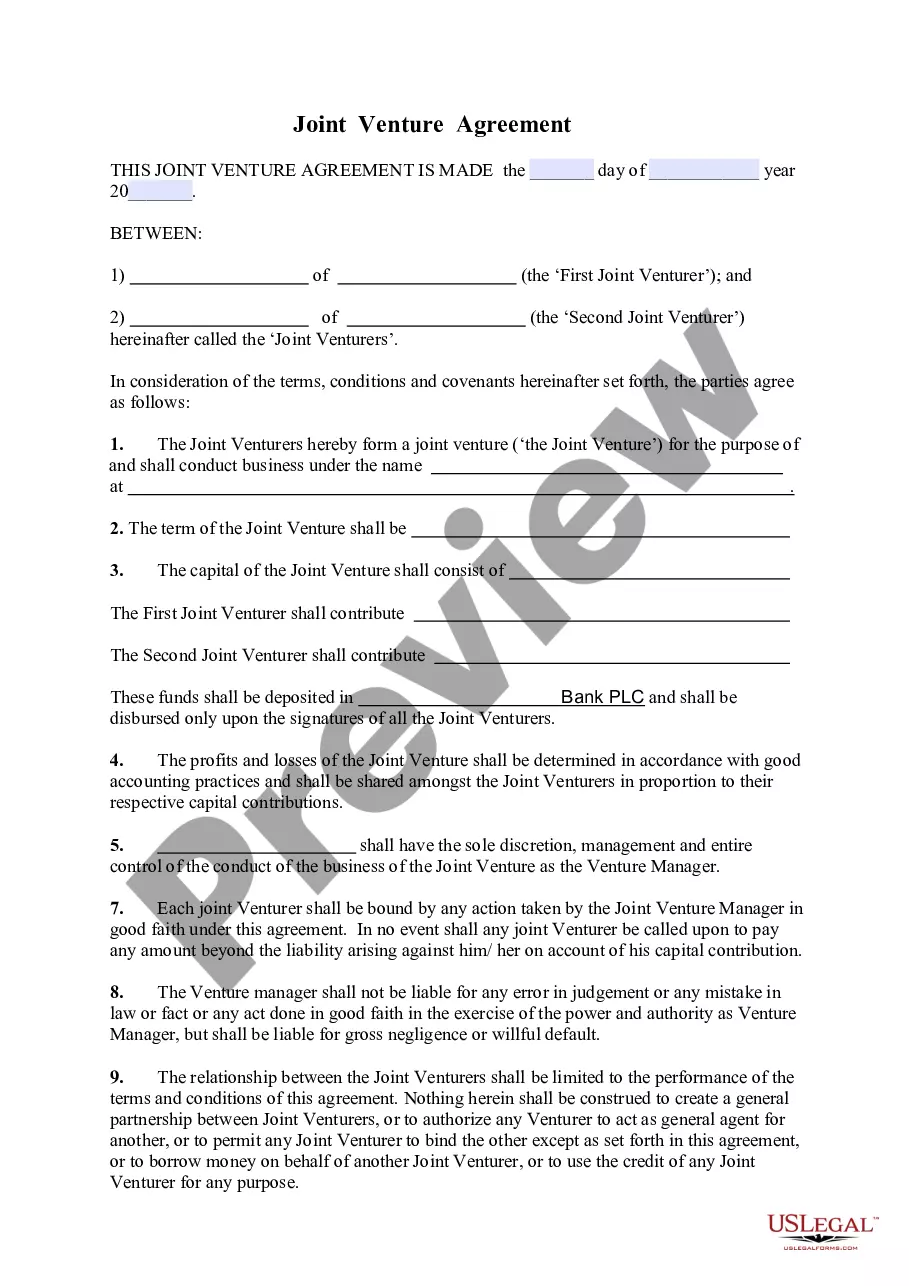
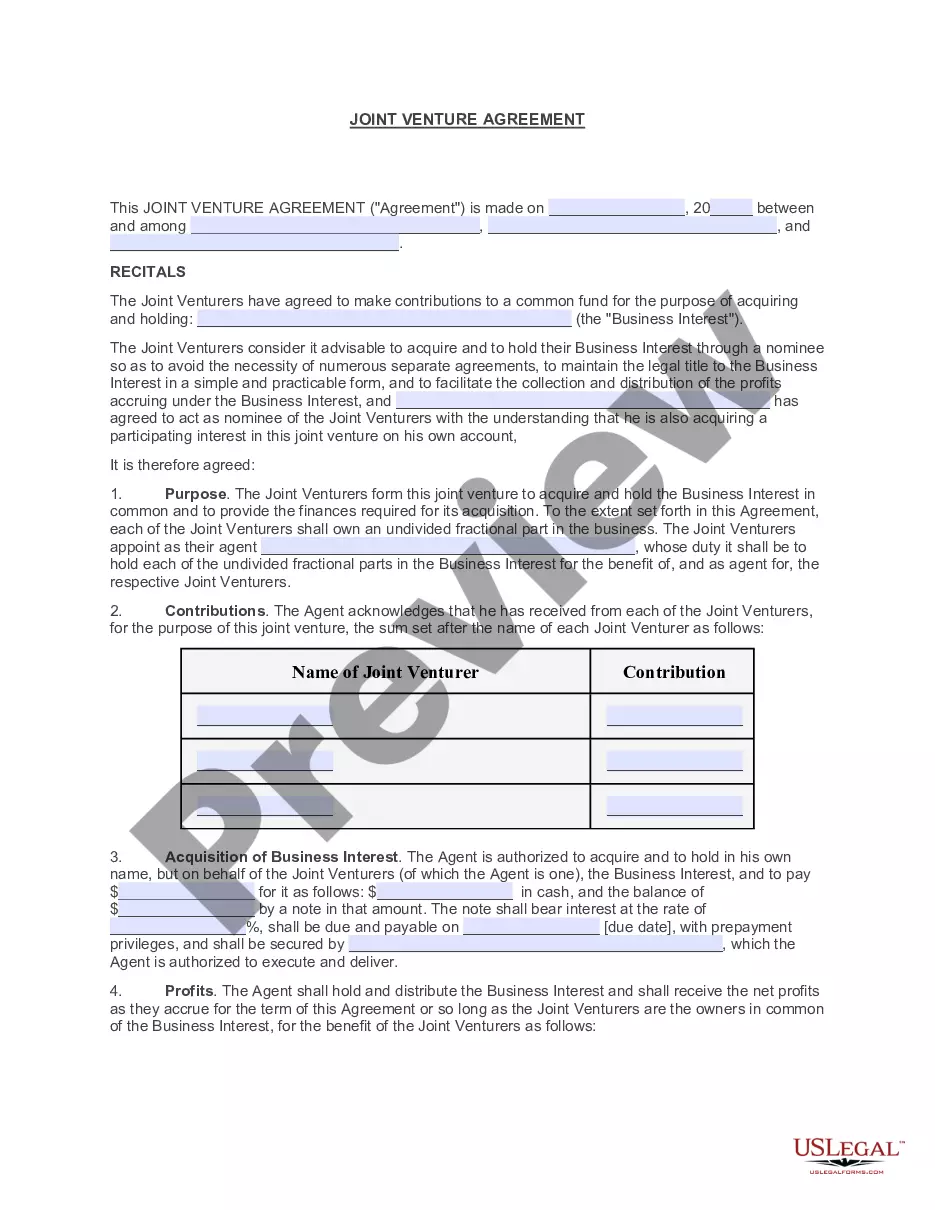
California Basic Joint-Venture Agreement
Description
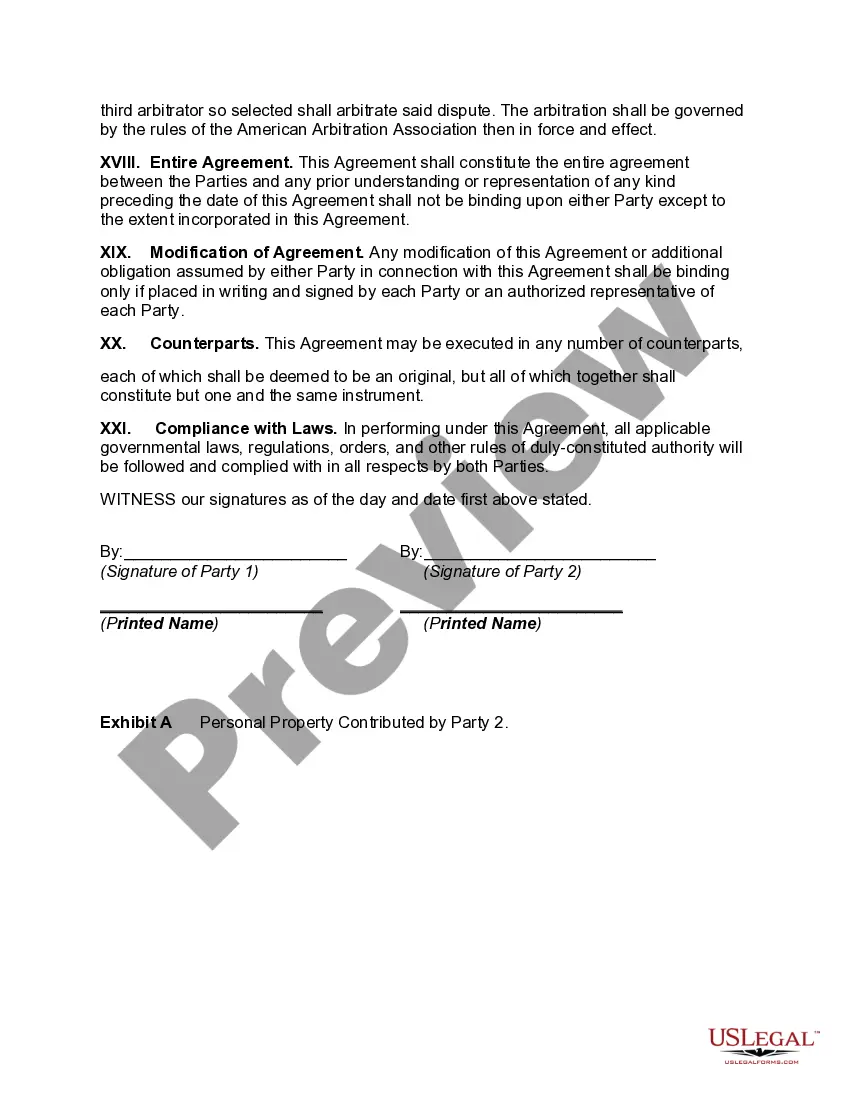
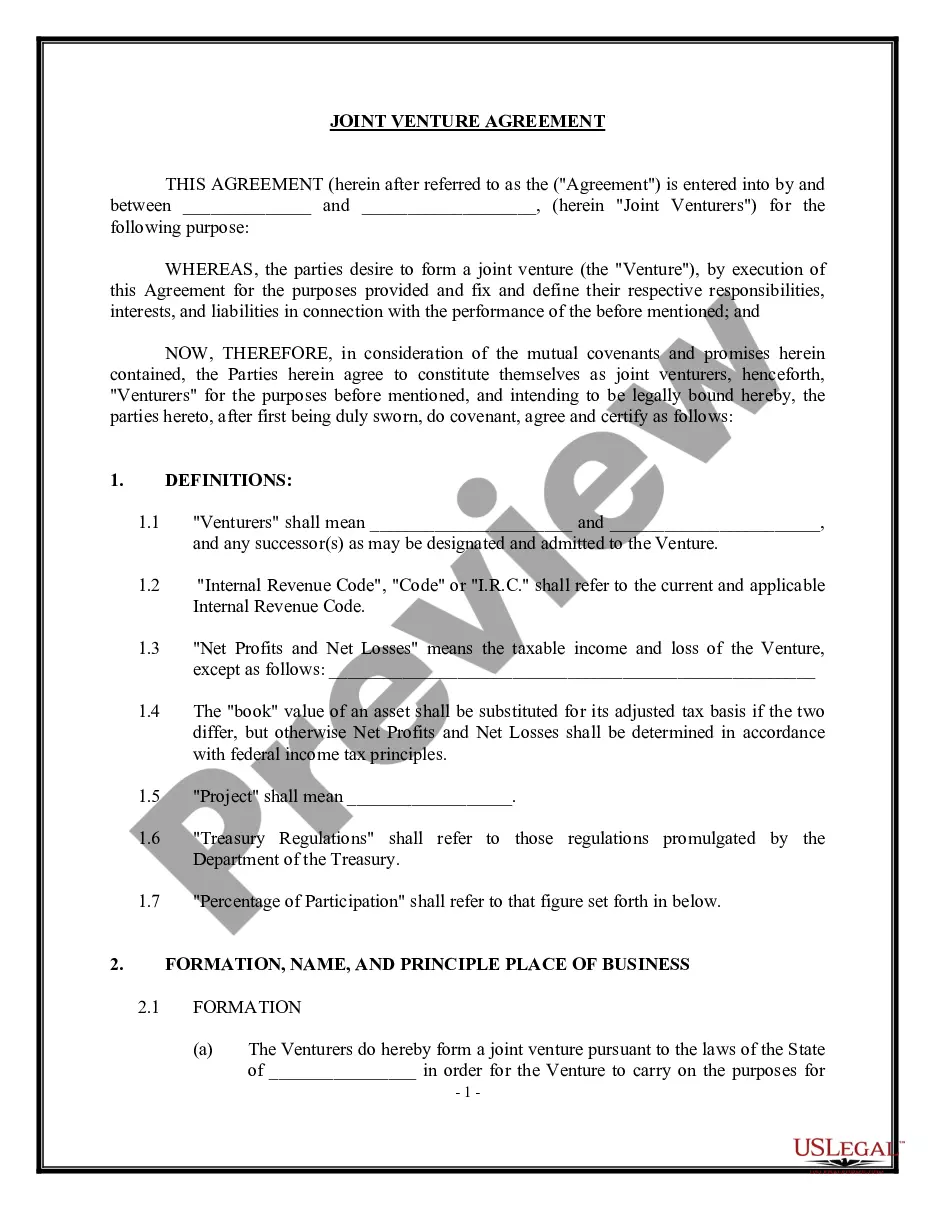
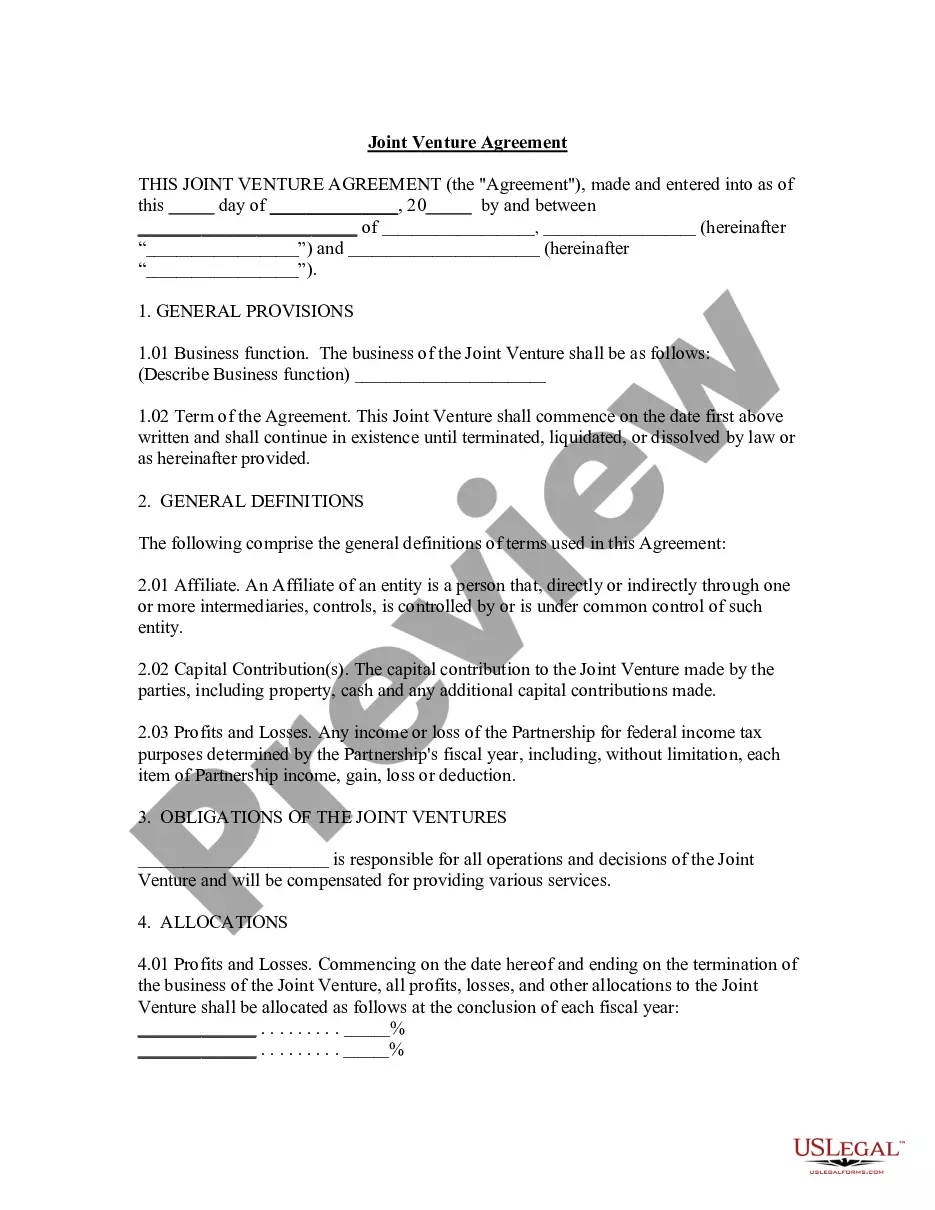
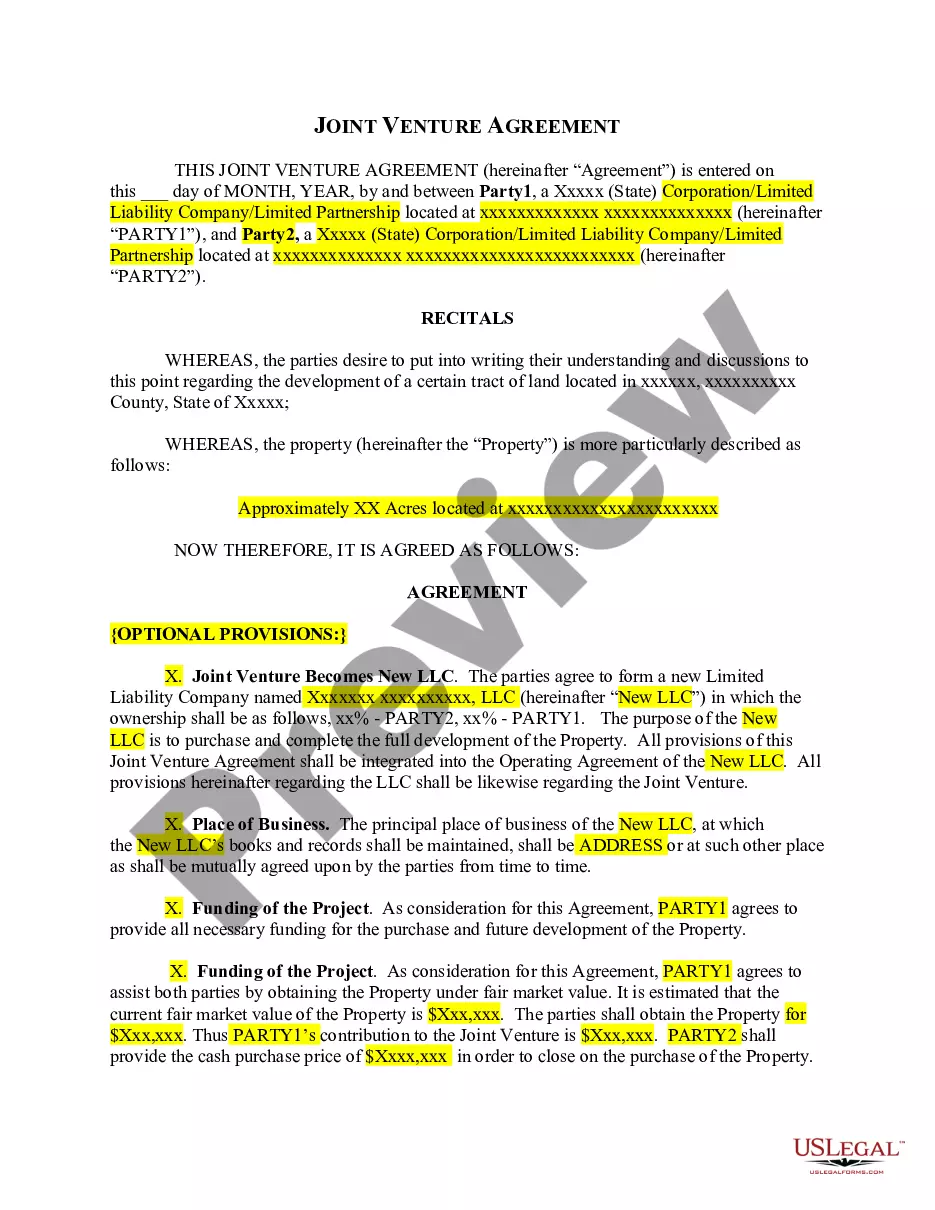
Get your form ready online
Our built-in tools help you complete, sign, share, and store your documents in one place.
Make edits, fill in missing information, and update formatting in US Legal Forms—just like you would in MS Word.
Download a copy, print it, send it by email, or mail it via USPS—whatever works best for your next step.
Sign and collect signatures with our SignNow integration. Send to multiple recipients, set reminders, and more. Go Premium to unlock E-Sign.
If this form requires notarization, complete it online through a secure video call—no need to meet a notary in person or wait for an appointment.
We protect your documents and personal data by following strict security and privacy standards.

Make edits, fill in missing information, and update formatting in US Legal Forms—just like you would in MS Word.

Download a copy, print it, send it by email, or mail it via USPS—whatever works best for your next step.

Sign and collect signatures with our SignNow integration. Send to multiple recipients, set reminders, and more. Go Premium to unlock E-Sign.

If this form requires notarization, complete it online through a secure video call—no need to meet a notary in person or wait for an appointment.

We protect your documents and personal data by following strict security and privacy standards.
Looking for another form?



How to fill out Basic Joint-Venture Agreement?
US Legal Forms - one of the largest collections of legal documents in the United States - offers a variety of legal template formats that you can download or create.
By using the site, you can discover thousands of forms for business and personal purposes, organized by categories, states, or keywords. You can find the latest versions of forms such as the California Basic Joint-Venture Agreement in moments.
If you have a subscription, Log In and obtain the California Basic Joint-Venture Agreement from the US Legal Forms library. The Download button will appear on each form you view. You have access to all previously downloaded forms from the My documents tab in your account.
- Ensure you have selected the right form for your city/region.
- Click the Preview button to check the form's details.
- Review the form description to confirm you have chosen the correct one.
- If the form does not meet your requirements, use the Search box at the top of the screen to find one that does.
- Once satisfied with the form, confirm your choice by clicking the Purchase now button.
- Then, select the payment plan you prefer and provide your information to register for an account.
Form popularity
FAQ
Joint ventures do not typically require formal registration in California, but it is essential to comply with applicable laws. A California Basic Joint-Venture Agreement should be documented and signed by all parties to provide legal protection. This agreement clarifies the terms and can prevent potential disputes, making it a crucial part of any joint venture arrangement.
Writing a joint venture agreement begins with identifying the parties involved and defining the purpose of the JV. Include details on each party's contributions, management roles, and how profits will be shared. Utilizing a California Basic Joint-Venture Agreement template from USLegalForms can simplify this process and ensure all crucial points are covered.
The fundamental elements of a joint venture in California include a shared purpose, contributions from each party, and a clear agreement on profit sharing. Additionally, the California Basic Joint-Venture Agreement should detail the management structure and procedures for resolving disputes. By ensuring these elements are in place, partners can work together seamlessly.
Forming a joint venture in California involves several key steps. First, select the partners, then outline the purpose and scope of the venture. Next, create a California Basic Joint-Venture Agreement that encompasses all essential elements such as capital contributions and management structure. Lastly, ensure compliance with any California regulations that may apply.
To structure a joint venture (JV) effectively, start with clear objectives and scope of work. Determine the contributions of each party, from capital to expertise, and outline how profits and losses will be shared. A well-defined California Basic Joint-Venture Agreement clarifies roles, responsibilities, and decision-making processes, ensuring each party understands their position.
While you do not necessarily need an LLC for a joint venture, forming one can provide benefits such as limited liability and simplified tax structures. The California Basic Joint-Venture Agreement can be structured to function independently of an LLC, but incorporating one could enhance your venture's legal standing and protect personal assets. Evaluating your specific circumstances is essential, and platforms like US Legal Forms can help facilitate the formation process.
The steps in forming a joint venture involve initial discussions between potential partners, followed by market research and defining mutual goals. After reaching an agreement, draft the California Basic Joint-Venture Agreement to formalize the commitment. Finally, you may need to file necessary paperwork with state agencies and obtain any relevant permits to ensure the venture operates legally. Using resources from US Legal Forms can guide you through these steps efficiently.
To legally form a joint venture, you must first draft a partnership agreement that defines the relationship between the parties. This includes outlining the business purpose, capital contributions, and profit distribution, all of which should be included in your California Basic Joint-Venture Agreement. It's important to register the venture according to state laws to ensure compliance and protect all parties involved. Consider consulting with legal professionals to help navigate this process.
The four main types of joint ventures include contractual joint ventures, equity joint ventures, cooperative joint ventures, and limited partnerships. Each type serves different purposes and legal requirements, depending on the nature of your business objectives. Understanding these distinctions is crucial when drafting your California Basic Joint-Venture Agreement to suit your specific needs. Always seek guidance to find the best fit for your situation.
To set up a joint venture agreement, start by identifying the partners involved and their shared goals. Clearly outline the roles, responsibilities, and contributions of each partner in the California Basic Joint-Venture Agreement. This will help establish a strong foundation for collaboration and ensure everyone is on the same page. Using a platform like US Legal Forms can simplify the process by providing customizable templates.