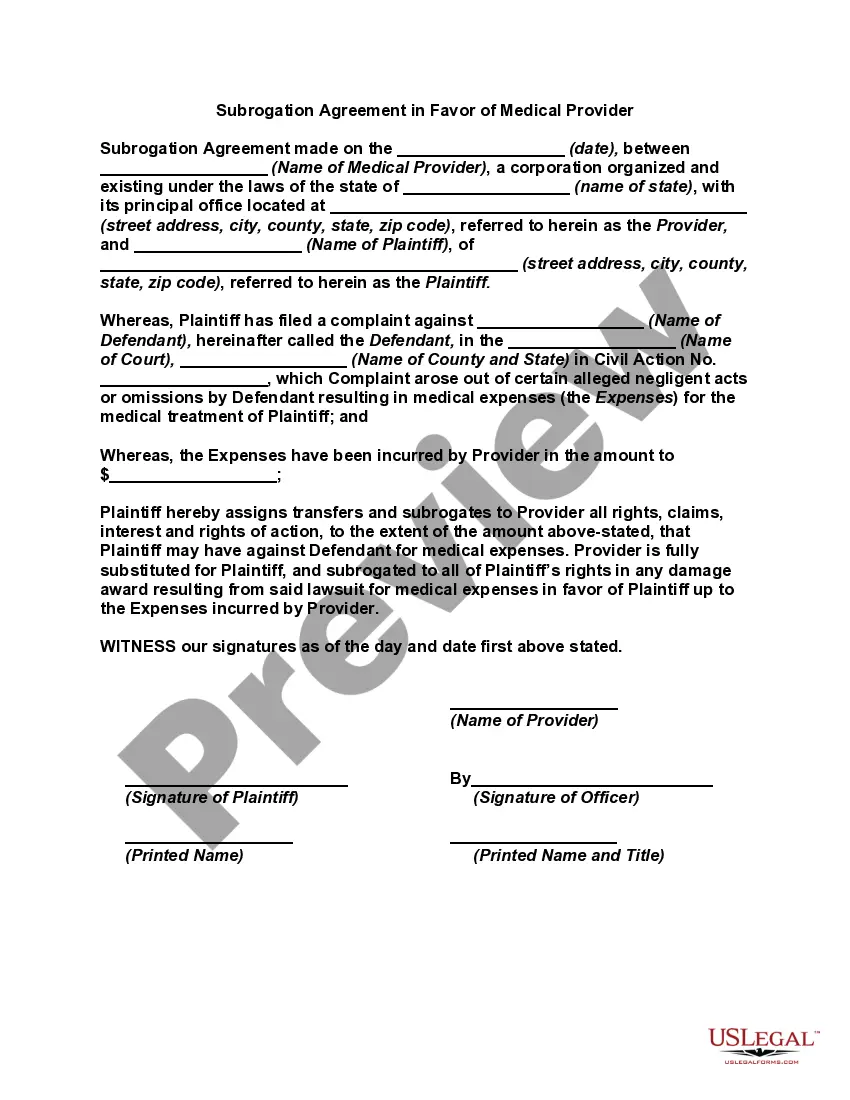
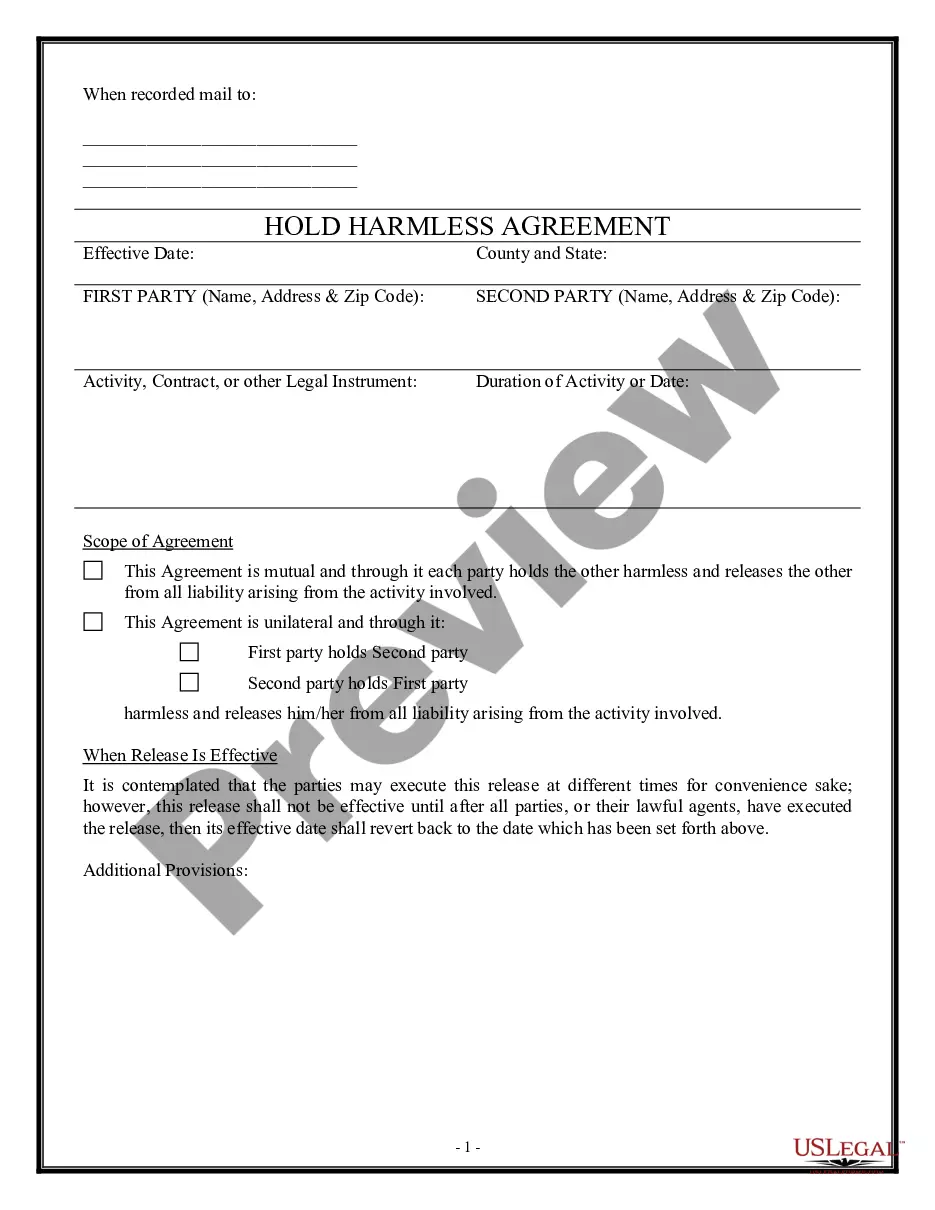
California Hold Harmless Agreement for Real Estate
Description
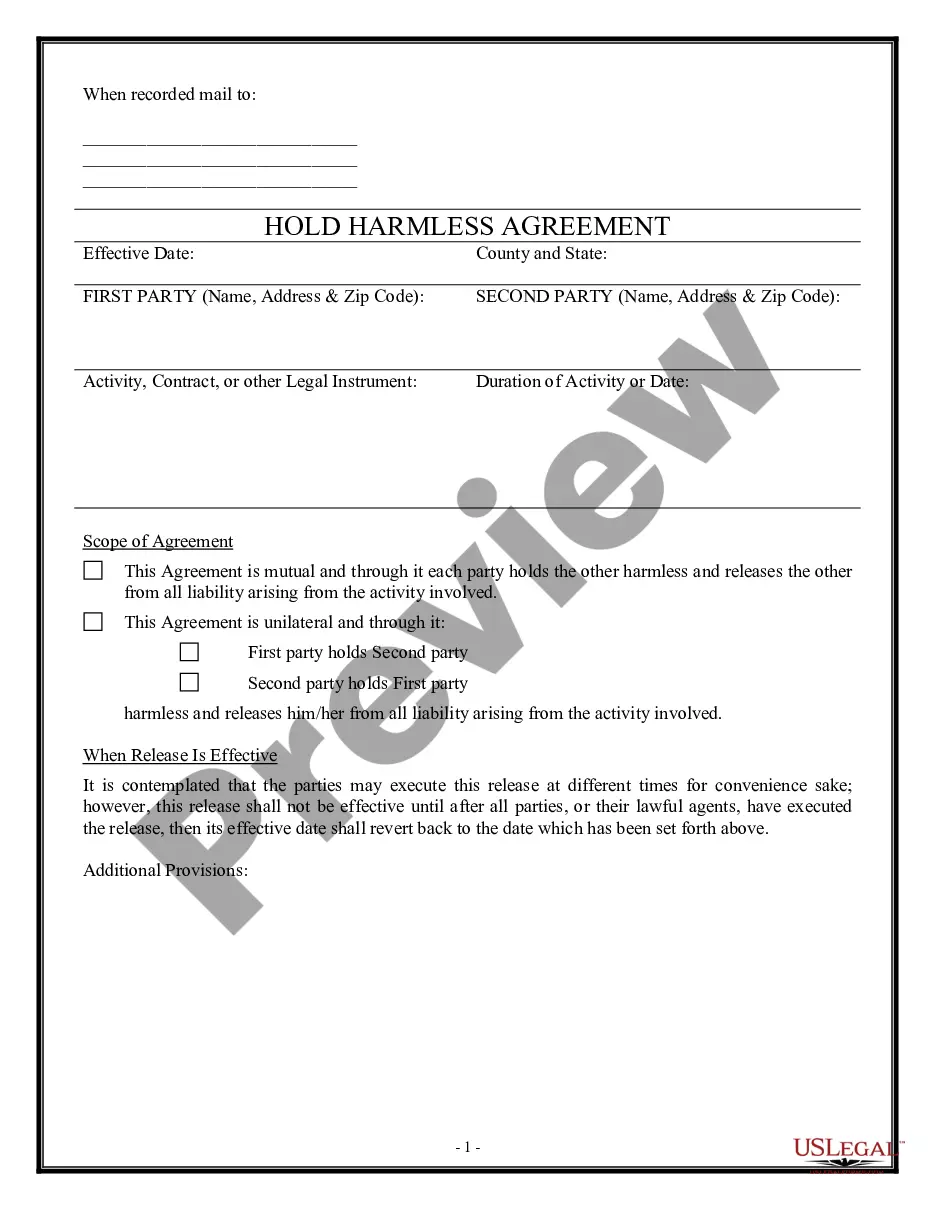
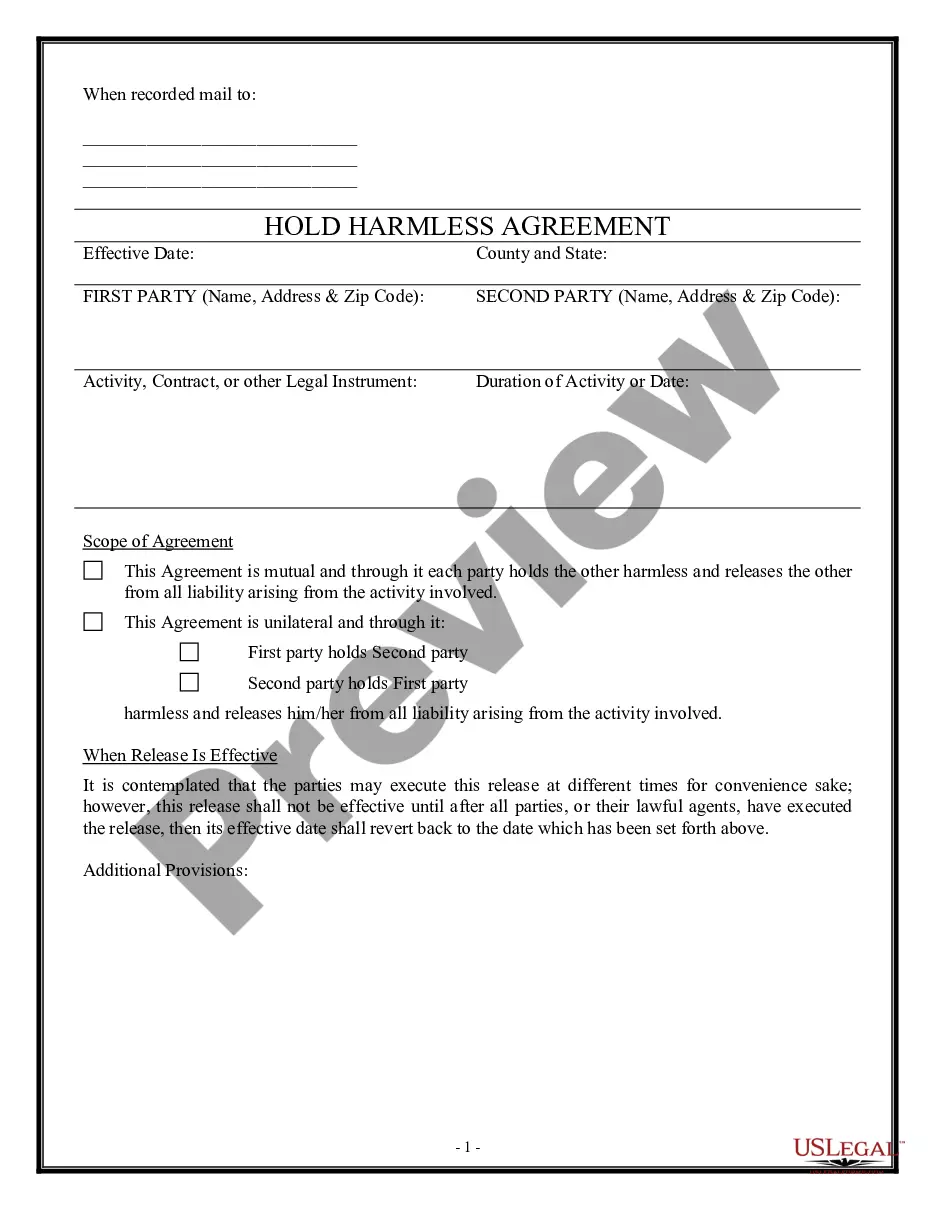
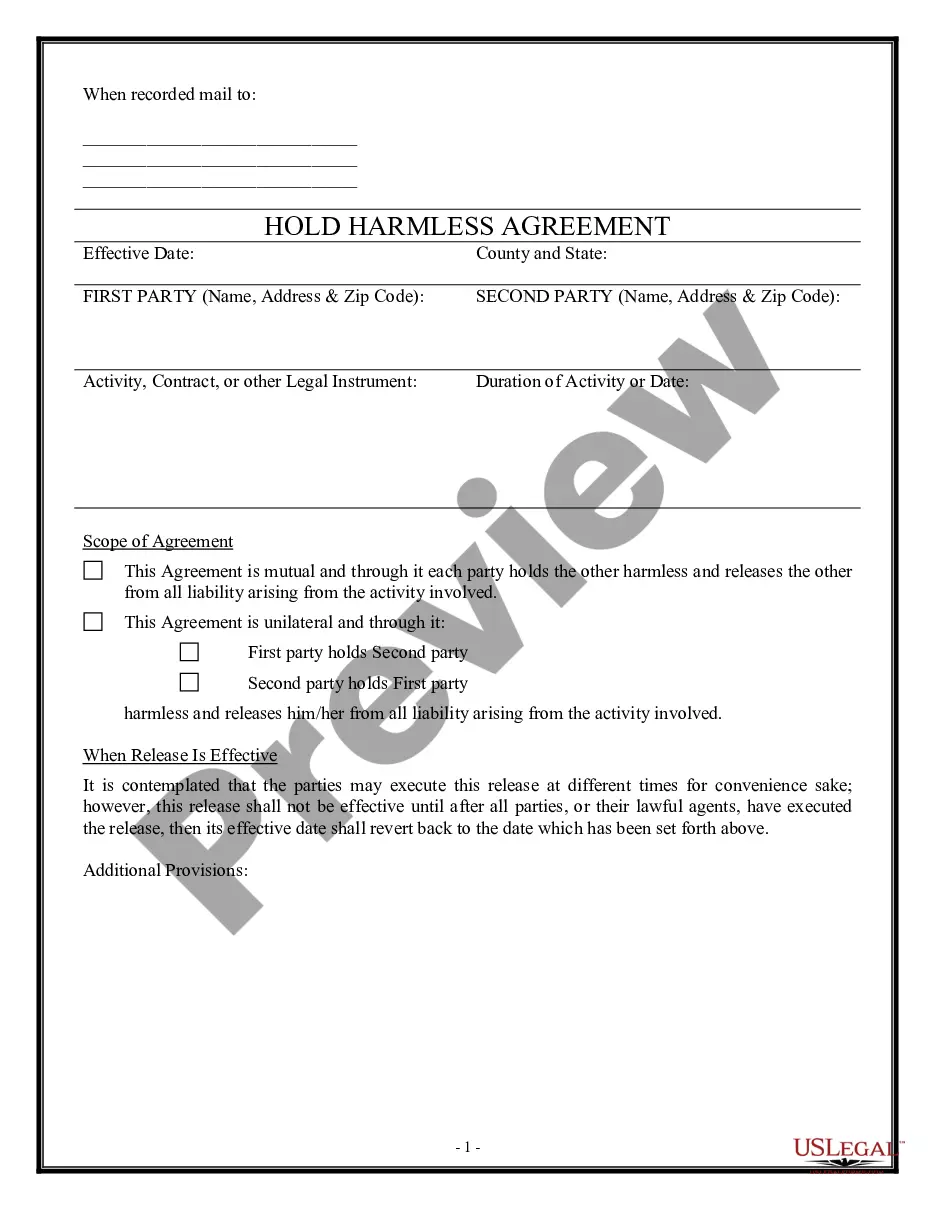
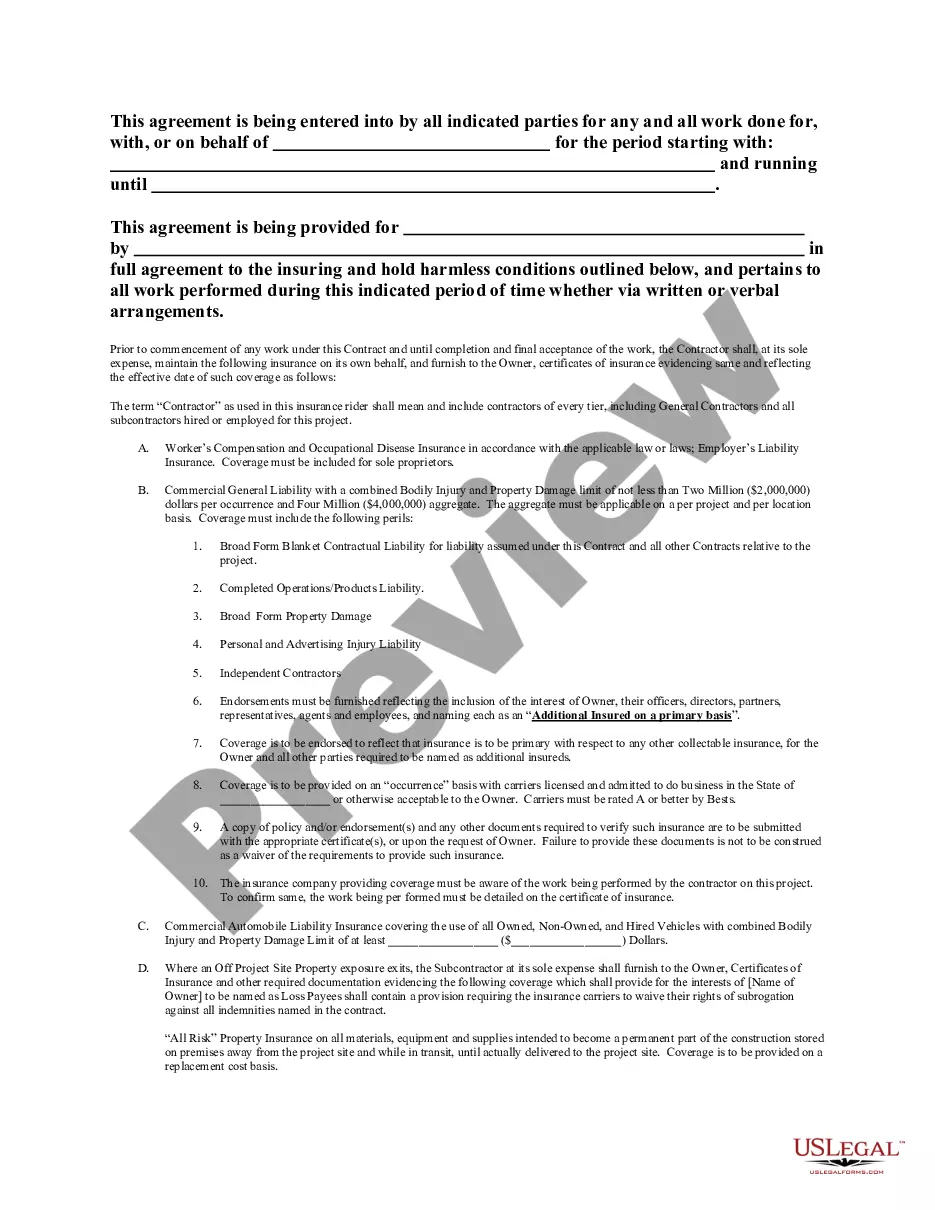
Get your form ready online
Our built-in tools help you complete, sign, share, and store your documents in one place.
Make edits, fill in missing information, and update formatting in US Legal Forms—just like you would in MS Word.
Download a copy, print it, send it by email, or mail it via USPS—whatever works best for your next step.
Sign and collect signatures with our SignNow integration. Send to multiple recipients, set reminders, and more. Go Premium to unlock E-Sign.
If this form requires notarization, complete it online through a secure video call—no need to meet a notary in person or wait for an appointment.
We protect your documents and personal data by following strict security and privacy standards.

Make edits, fill in missing information, and update formatting in US Legal Forms—just like you would in MS Word.

Download a copy, print it, send it by email, or mail it via USPS—whatever works best for your next step.

Sign and collect signatures with our SignNow integration. Send to multiple recipients, set reminders, and more. Go Premium to unlock E-Sign.

If this form requires notarization, complete it online through a secure video call—no need to meet a notary in person or wait for an appointment.

We protect your documents and personal data by following strict security and privacy standards.
Looking for another form?



How to fill out Hold Harmless Agreement For Real Estate?
US Legal Forms - one of the largest collections of legal documents in the USA - provides a range of legal template documents that you can download or print.
By using the site, you can find thousands of documents for both business and personal use, categorized by type, state, or keywords.
You can access the latest forms like the California Hold Harmless Agreement for Real Estate in just a few seconds.
Read the form description to confirm that you have picked the correct form.
If the form does not meet your requirements, use the Search field at the top of the page to find one that does.
- If you have an account, Log In and download the California Hold Harmless Agreement for Real Estate from the US Legal Forms library.
- The Download button appears on every form page you view.
- You can find all previously downloaded documents in the My documents section of your account.
- If you are using US Legal Forms for the first time, here are some simple instructions to help you get started.
- Make sure you have selected the correct form for your area.
- Click the Review button to examine the content of the form.
Form popularity
FAQ
Typically, a California Hold Harmless Agreement for Real Estate can be prepared by various legal professionals, such as attorneys specializing in real estate law. However, if you are looking for a quick and reliable solution, consider platforms like US Legal Forms. They offer customizable templates that make it easy to generate a hold harmless agreement tailored to your specific needs. This ensures that you can confidently navigate the intricacies of real estate transactions in California.
An example of hold harmless can be found in construction contracts. A contractor may enter into a California Hold Harmless Agreement for Real Estate that specifies they will not hold the property owner responsible for injuries sustained during the construction process. This agreement helps protect the owner from lawsuits and clearly establishes the contractor's responsibilities.
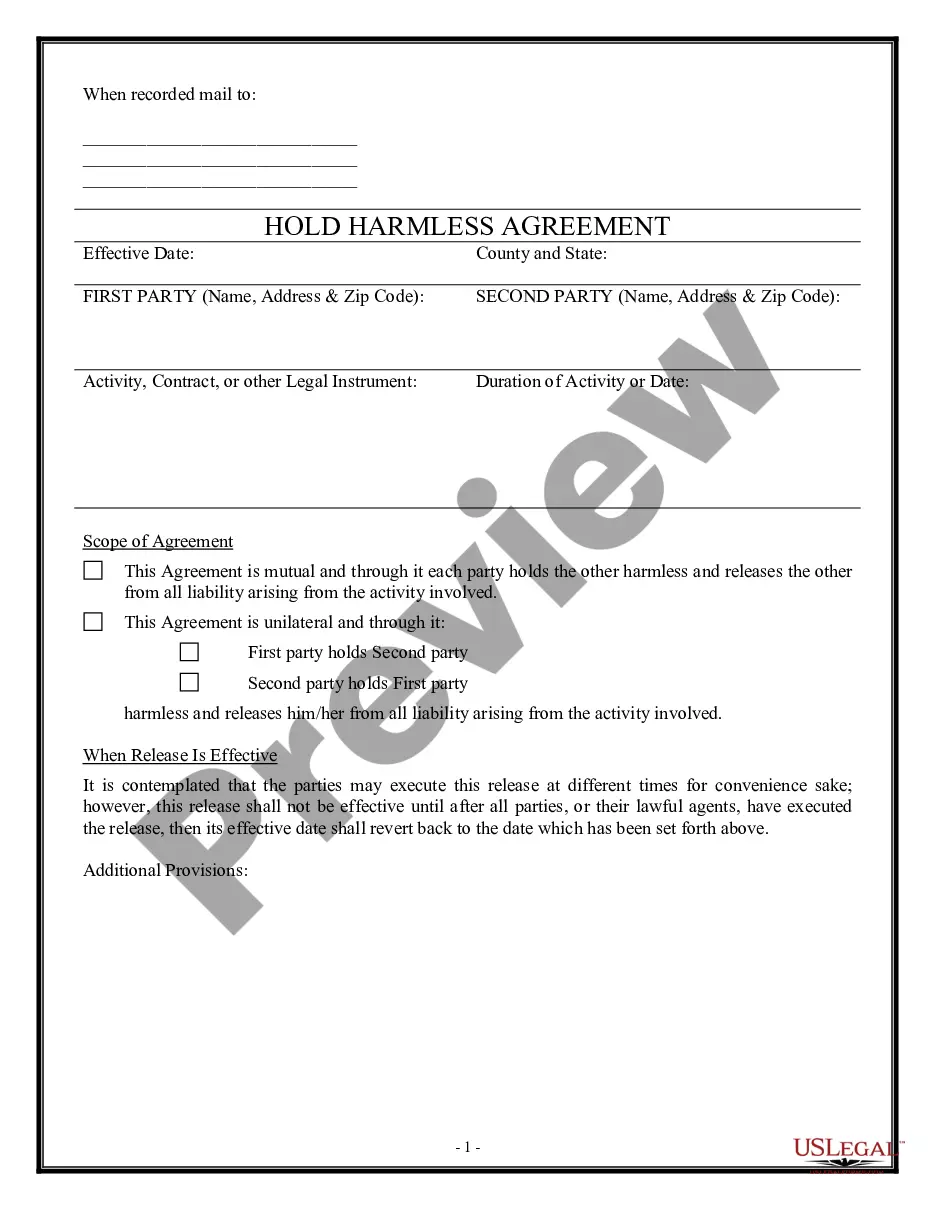
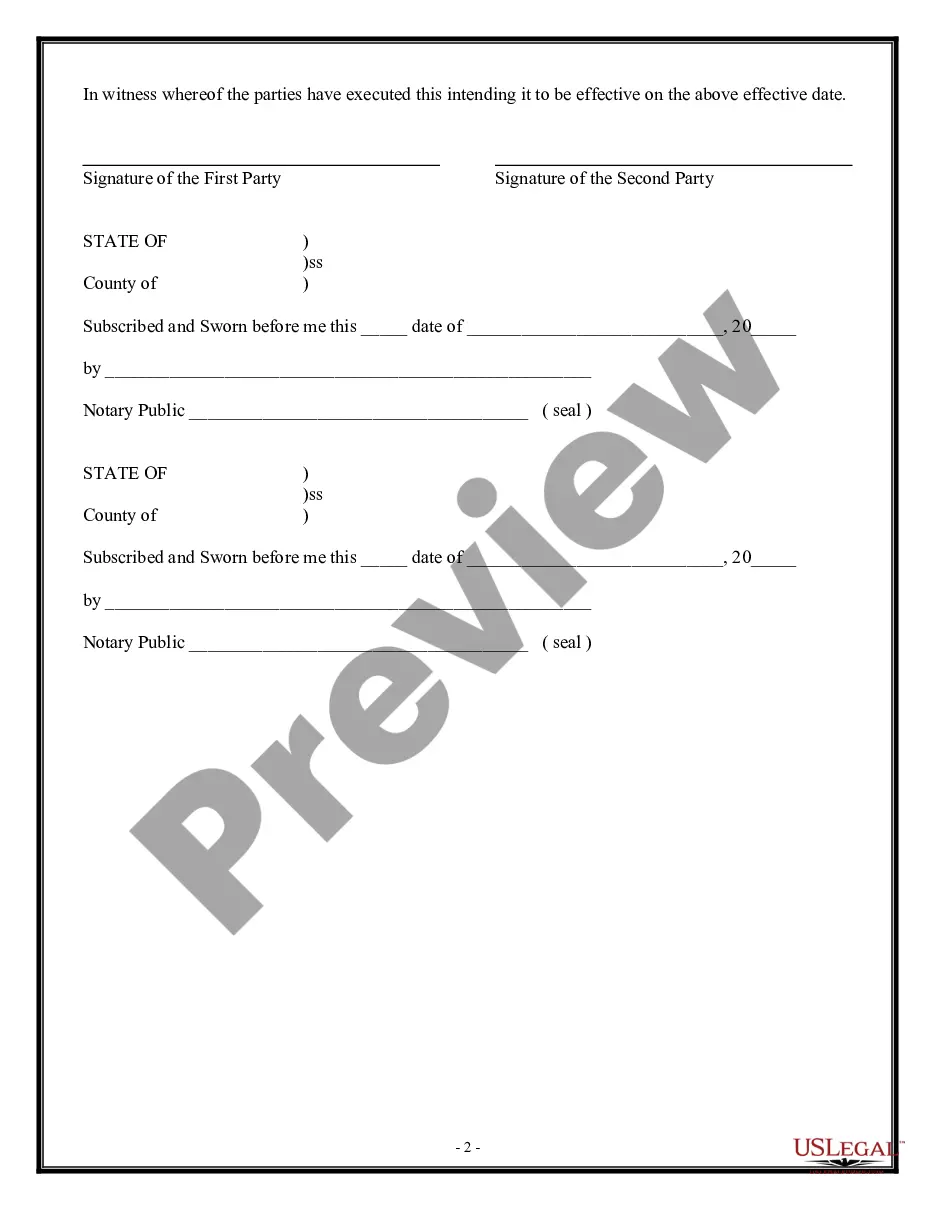
Filling out a hold harmless agreement requires clear attention to detail. Start by entering the names and addresses of both parties, followed by a thorough description of the property associated with the California Hold Harmless Agreement for Real Estate. Ensure you clearly state the liabilities that are being waived and provide spaces for both parties’ signatures and dates to finalize the agreement.
To write a simple hold harmless agreement, begin with a clear title, such as 'California Hold Harmless Agreement for Real Estate.' Next, identify the parties involved and specify the property in question. Finally, outline the terms of indemnification, including a clear statement of protection from liability and the signatures of both parties for validation.
A release and hold harmless agreement is a legal document that releases one party from liability while requiring another party to assume that risk. In the context of a California Hold Harmless Agreement for Real Estate, a buyer might sign an agreement stating they release the seller from any claims related to property defects discovered after the sale. This type of agreement safeguards the seller and clarifies the risk involved for the buyer.
A hold harmless statement is a clause that protects one party from legal claims made by another party. For instance, in a California Hold Harmless Agreement for Real Estate, a property owner might require a tenant to agree that they will not hold the owner liable for any injuries occurring on the property. This statement clearly outlines responsibilities and helps mitigate potential legal risks.
In California, a Hold Harmless Agreement for Real Estate does not necessarily need to be notarized to be valid. While notarization can lend additional credibility, the agreement is enforceable as long as both parties sign it willingly. However, having a notary can be beneficial, as it provides a layer of verification that can protect against disputes later. It's always wise to consult legal professionals when drafting such agreements to meet your specific needs.
For a liability release to be enforceable in California, it must clearly state the scope of the release, be written in understandable language, and not violate public policy. A California Hold Harmless Agreement for Real Estate should be explicit about what liabilities are being released. Additionally, the document should not be buried in legal jargon; clear terms help ensure all parties grasp their rights and responsibilities. Meeting these requirements can provide more robust legal protection.
In California, signing a waiver does limit your ability to sue, but it does not completely eliminate it. A California Hold Harmless Agreement for Real Estate may include terms that protect one party but doesn't release the other from all liability. If negligence or intentional harm occurs, you may still have grounds to file a lawsuit. Therefore, it's crucial to read and understand any agreements before signing to know your rights.
A California Hold Harmless Agreement for Real Estate is a legal document that protects one party from liability for damages or legal claims arising during real estate transactions. This agreement shifts the responsibility for any potential losses or damages from one party to another. Typically used in lease agreements, this document clearly defines each party's responsibilities, helping to prevent disputes. It's essential for landlords and tenants to have a strong understanding of this agreement to safeguard their interests.