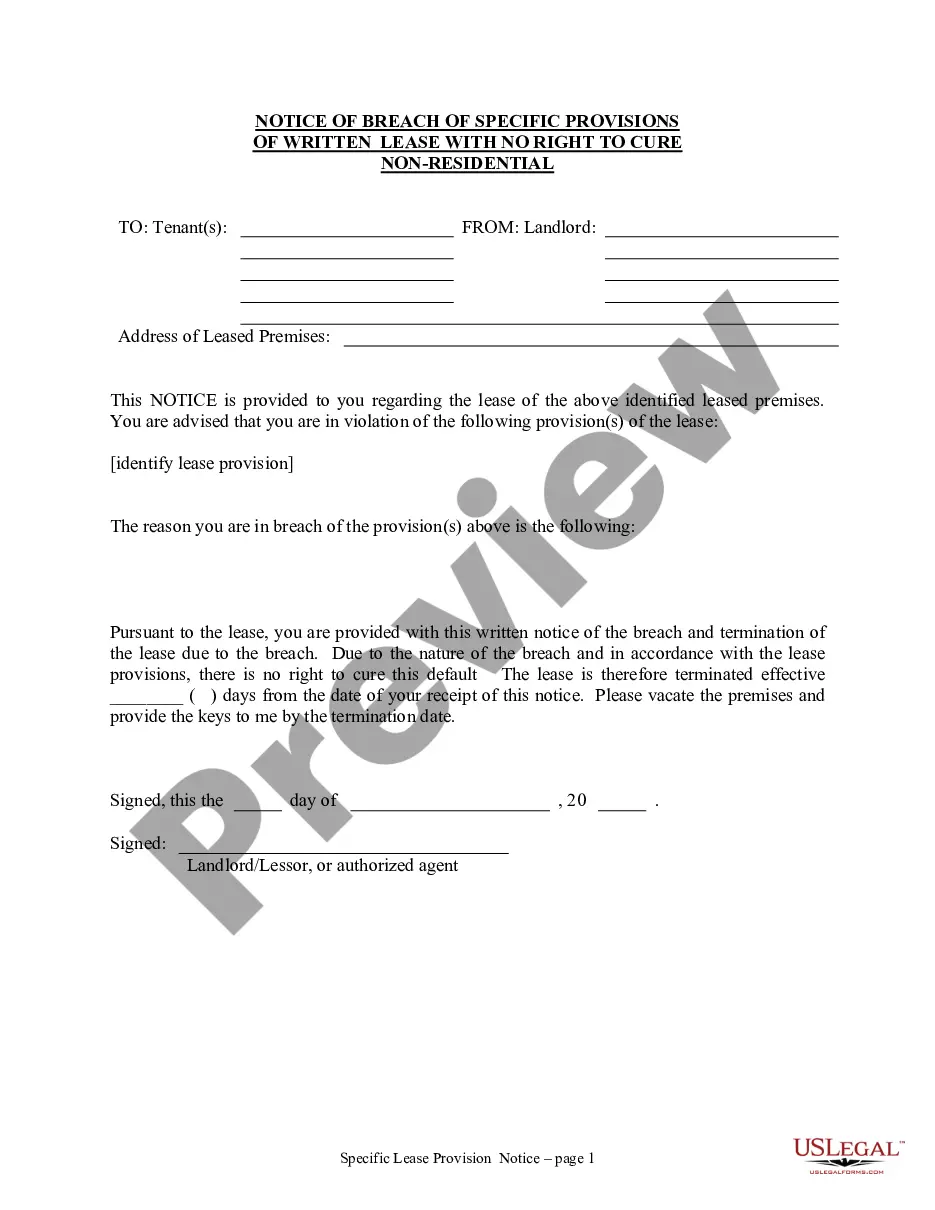
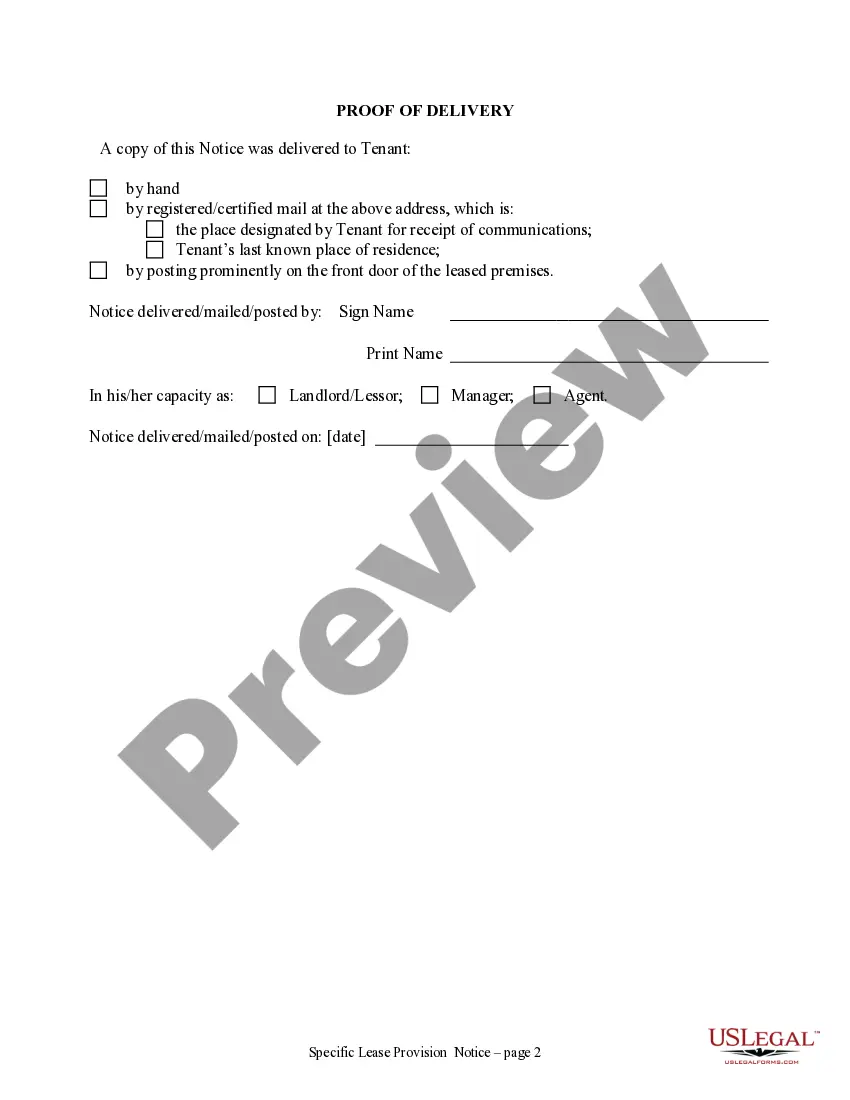
This form is to for a Landlord to provide notice of breach of a written lease for violating a specific provision of lease with no right to cure. It is for a Non-Residential lease. You insert the specific breach in the form. The lease should contain the specific provision which has been violated and provide that violation of that provision that cannot be cured, or the statutory law must state that this particular breach cannot be cured. This form is for use when a form for your specific situation is not available.
California Notice of Breach of Written Lease for Violating Specific Provisions of Lease with No Right to Cure for Nonresidential Property from Landlord to Tenant
State:
California
Control #:
CA-1503LT
Format:
Word;
Rich Text
Instant download
Description
Free preview
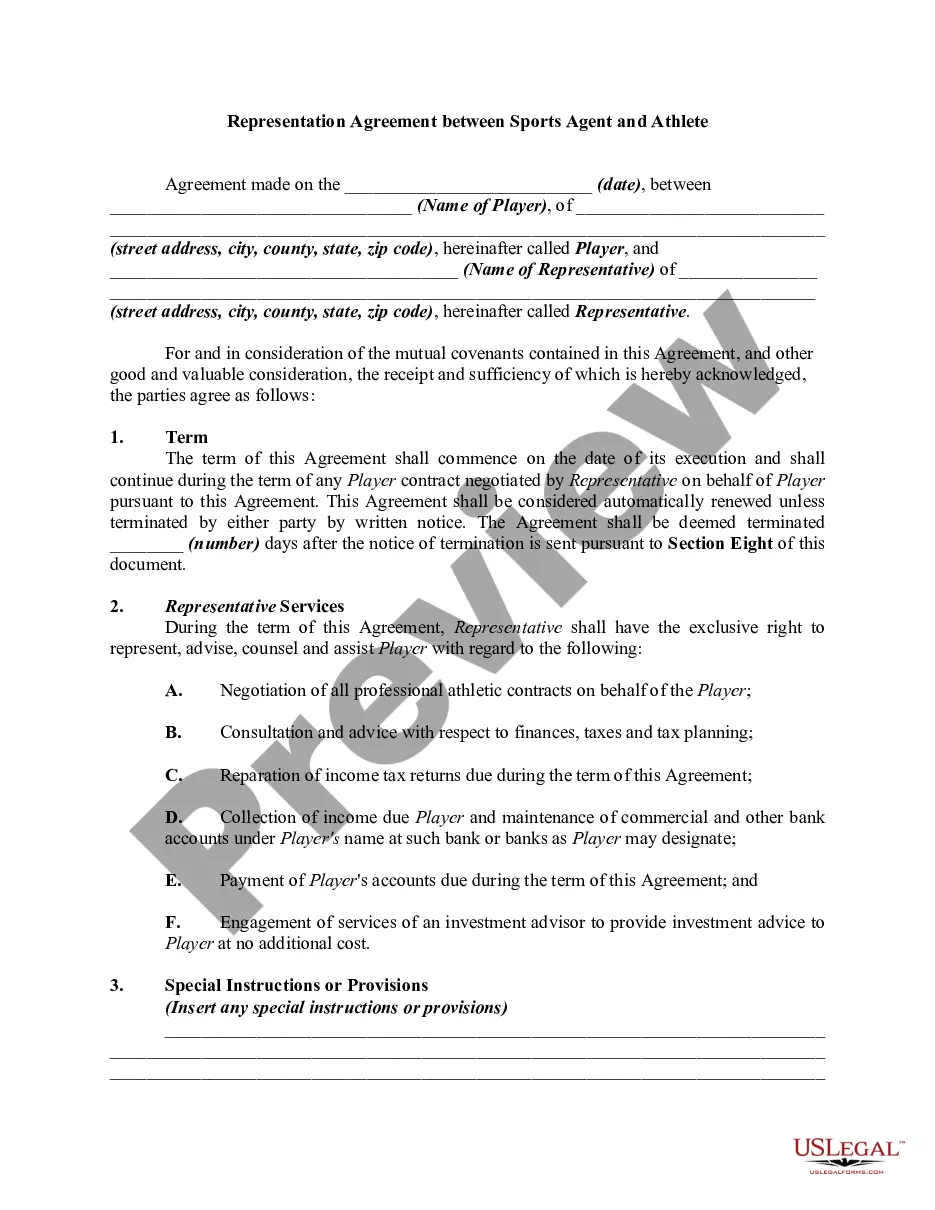
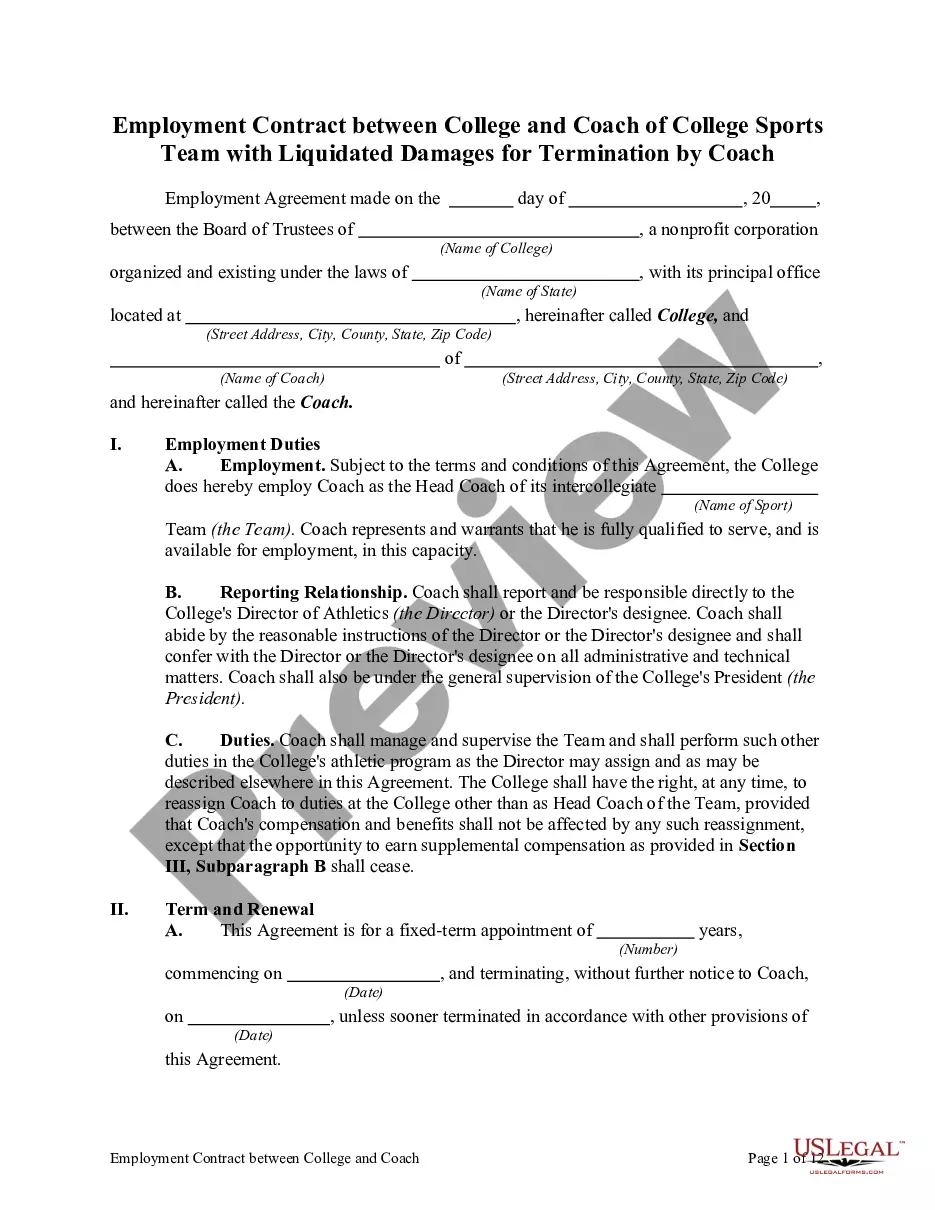

How to fill out California Notice Of Breach Of Written Lease For Violating Specific Provisions Of Lease With No Right To Cure For Nonresidential Property From Landlord To Tenant?
If you're looking to obtain precise California Notice of Breach of Written Lease for Breaching Specific Terms of Lease without Right to Cure for Nonresidential Property from Landlord to Tenant templates, US Legal Forms is what you require; access files crafted and reviewed by state-certified legal professionals.
Utilizing US Legal Forms not only protects you from complications regarding legal documents; additionally, it saves you time, effort, and money! Downloading, printing, and filling out a professional template is far less expensive than hiring an attorney to do it on your behalf.
And that’s it. In just a few simple clicks, you receive an editable California Notice of Breach of Written Lease for Breaching Specific Terms of Lease without Right to Cure for Nonresidential Property from Landlord to Tenant. Once you create an account, all future orders will be processed even more easily. With a US Legal Forms subscription, simply Log In to your account and click the Download button you see on the form’s webpage. Then, when you need to use this sample again, you'll always be able to find it in the My documents section. Don't waste your energy sifting through countless forms on various websites. Order accurate templates from one reliable platform!
- To begin, complete your sign-up process by providing your email and creating a secure password.
- Follow the steps below to set up your account and obtain the California Notice of Breach of Written Lease for Breaching Specific Terms of Lease without Right to Cure for Nonresidential Property from Landlord to Tenant sample to address your concerns.
- Use the Preview tool or view the document description (if available) to confirm that the template is the one you need.
- Verify its relevance in your jurisdiction.
- Click Buy Now to place an order.
- Select a preferred pricing plan.
- Create an account and pay via credit card or PayPal.
- Choose a convenient format and save the document.
Form popularity
FAQ
The penalties for breaking a lease in California can vary significantly based on the lease terms. Generally, landlords may retain your security deposit, and you may face lawsuits for unpaid rent until the property is re-leased. In some cases, a California Notice of Breach of Written Lease for Violating Specific Provisions of Lease with No Right to Cure for Nonresidential Property from Landlord to Tenant can be issued, marking a formal notice of the breach. It is essential to know your options and rights before taking any action.
Violating your lease in California can lead to serious consequences, including eviction. Typically, the landlord will issue a California Notice of Breach of Written Lease for Violating Specific Provisions of Lease with No Right to Cure for Nonresidential Property from Landlord to Tenant, informing you of the specific violation. Depending on the nature of the breach, you may have a limited time to resolve the issue. It’s advisable to address any lease violations promptly to avoid escalation.
Yes, in California, a landlord can evict a tenant even if there is no written lease in place. This is often referred to as a month-to-month tenancy. However, the landlord must still follow proper legal procedures, which may include providing a California Notice of Breach of Written Lease for Violating Specific Provisions of Lease with No Right to Cure for Nonresidential Property from Landlord to Tenant if there are lease violations. It is crucial for tenants to understand their rights in such situations.
The eviction process in California typically takes between 30 to 60 days, depending on various factors like court schedules and tenant responses. A critical step in this process is serving a California Notice of Breach of Written Lease for Violating Specific Provisions of Lease with No Right to Cure for Nonresidential Property from Landlord to Tenant. If the tenant does not comply, the landlord may proceed with filing legal action. Understanding the timeline helps landlords prepare effectively.
If you receive a lease violation in California, the landlord may send you a California Notice of Breach of Written Lease for Violating Specific Provisions of Lease with No Right to Cure for Nonresidential Property from Landlord to Tenant. This document outlines the specific breach and could lead to termination of your lease. Responding promptly is essential to avoid potential eviction. Always consider reviewing your lease terms and seeking legal guidance.
A leasing violation occurs when a tenant fails to comply with the terms of their lease agreement. This can include minor breaches, like unauthorized guests, or major issues, like non-payment of rent. Landlords should take these violations seriously, potentially utilizing a California Notice of Breach of Written Lease for Violating Specific Provisions of Lease with No Right to Cure for Nonresidential Property from Landlord to Tenant to address the situation effectively.
Landlords typically start with issuing a notice to the tenant, prompting them to correct the violation or face eviction. If the violation remains unresolved, landlords may proceed with the eviction process as prescribed by California law. A California Notice of Breach of Written Lease for Violating Specific Provisions of Lease with No Right to Cure for Nonresidential Property from Landlord to Tenant can serve as the formal step before eviction.
Yes, lease violations can negatively impact a tenant's rental history and may be reported to tenant screening services. This information can affect future rental applications, as potential landlords may consider past violations when evaluating a tenant. Address any issues promptly, and if necessary, use the California Notice of Breach of Written Lease for Violating Specific Provisions of Lease with No Right to Cure for Nonresidential Property from Landlord to Tenant to document the violation.
When faced with a lease violation, the first step is to communicate directly with the tenant. Clearly outline the specific violation and the expected remedy. Utilizing a formal approach, such as the California Notice of Breach of Written Lease for Violating Specific Provisions of Lease with No Right to Cure for Nonresidential Property from Landlord to Tenant, can help ensure that you follow legal protocols and effectively document the issue.
A violation of lease provision refers to any action that does not comply with the terms set forth in the lease agreement. This could involve actions like noise complaints, improper use of the property, or lease term violations. Landlords often need to address these violations quickly, possibly with a California Notice of Breach of Written Lease for Violating Specific Provisions of Lease with No Right to Cure for Nonresidential Property from Landlord to Tenant.