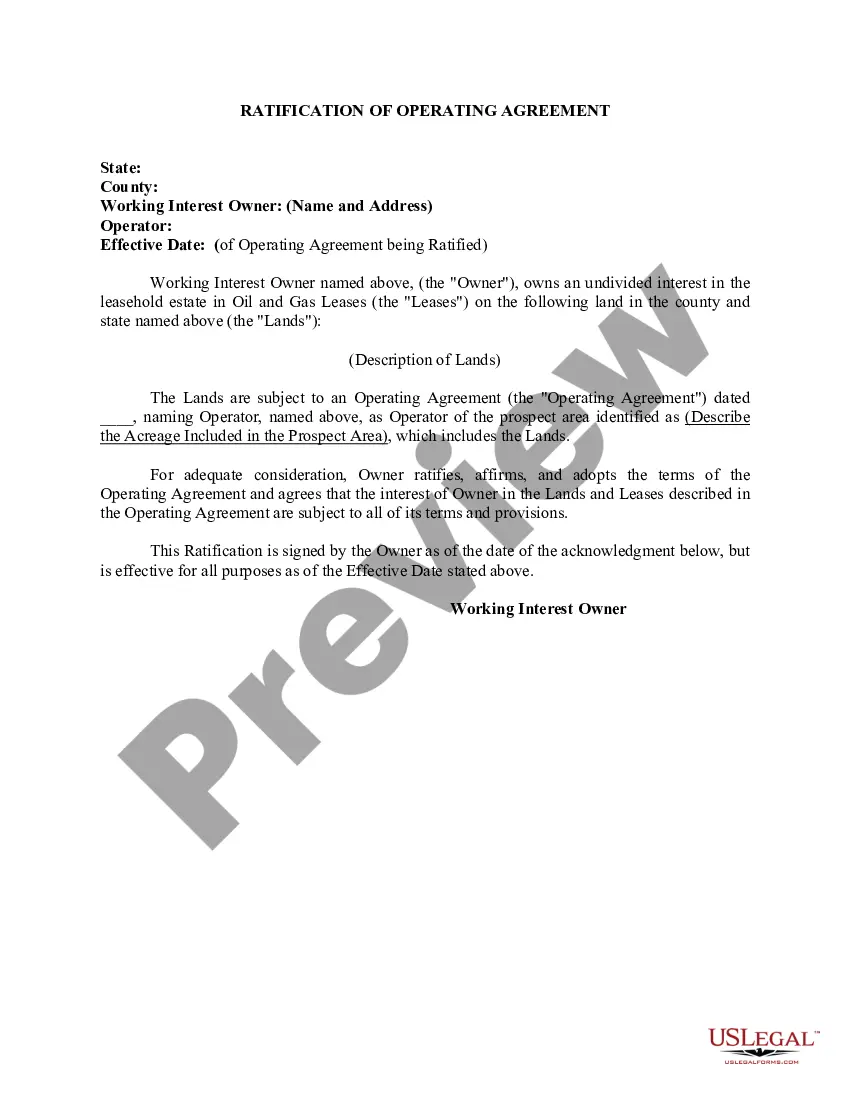
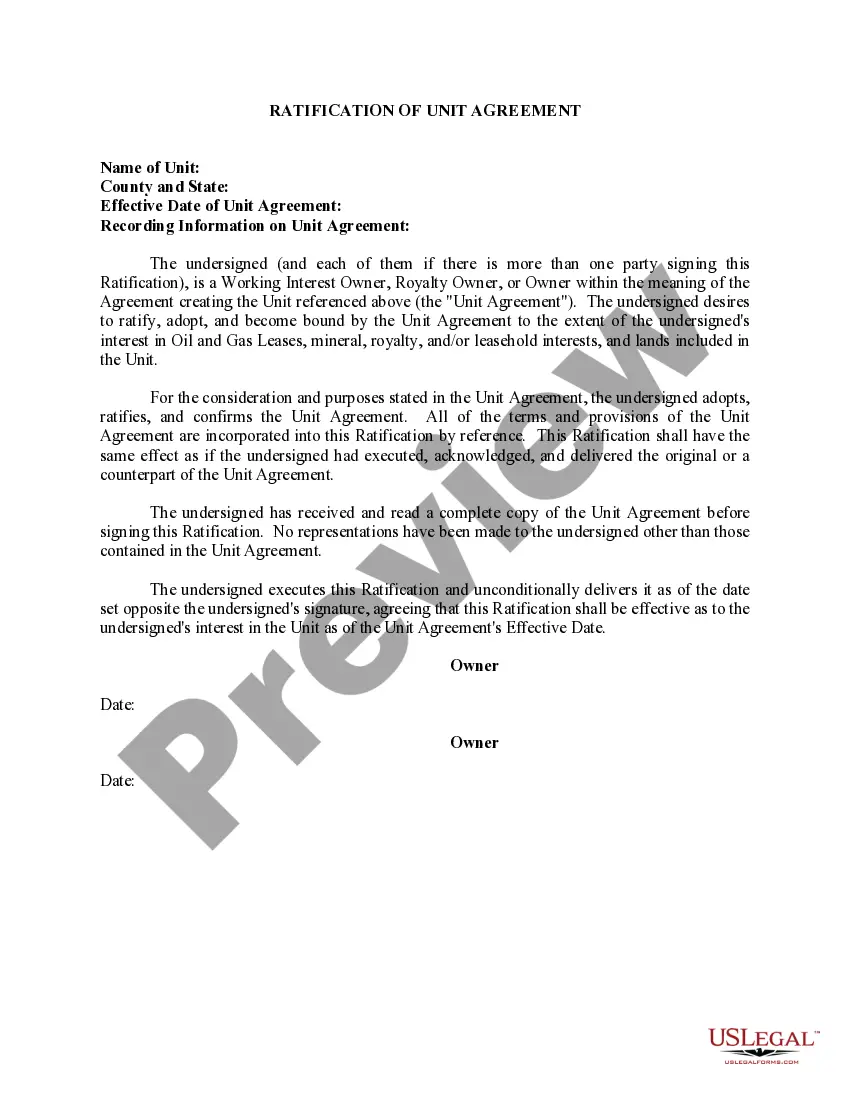
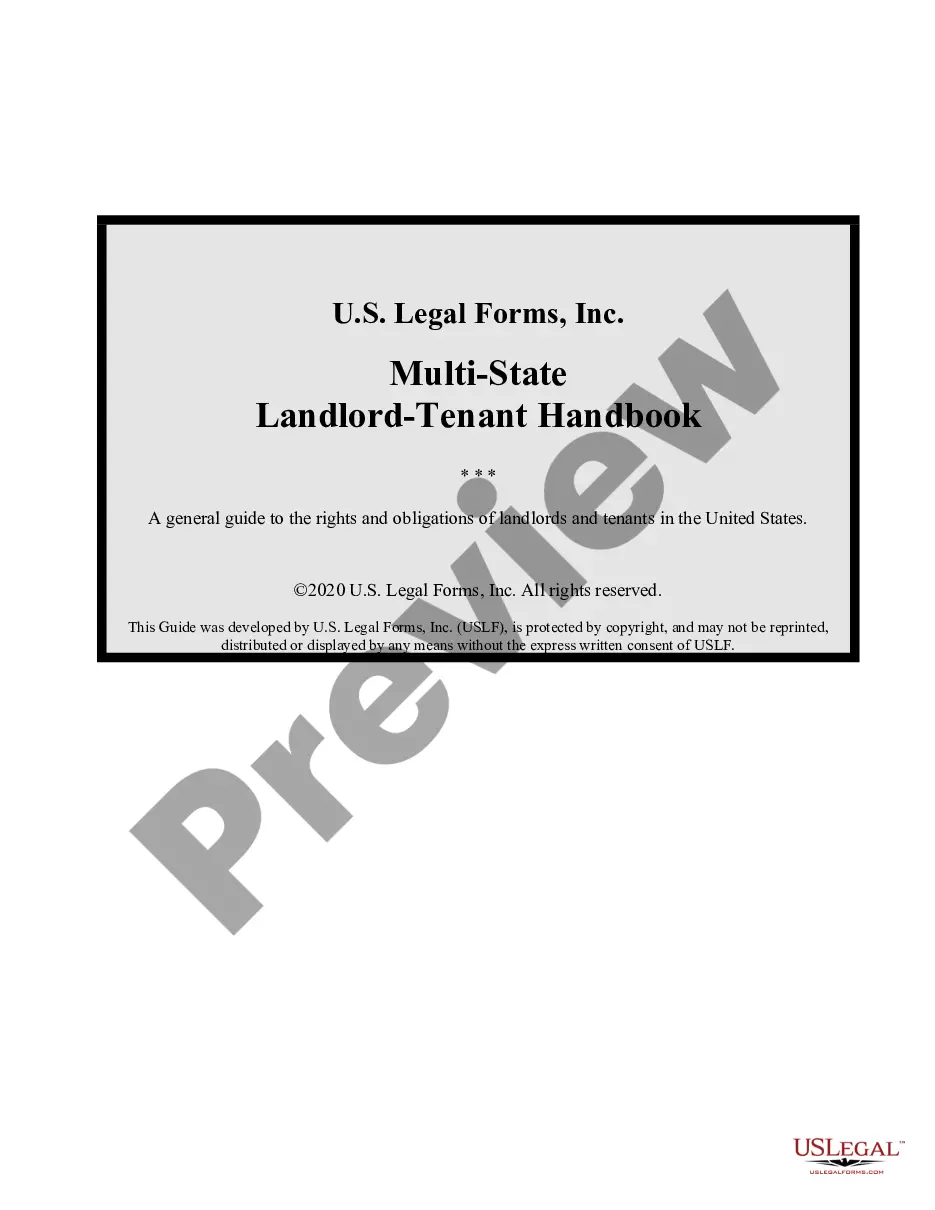
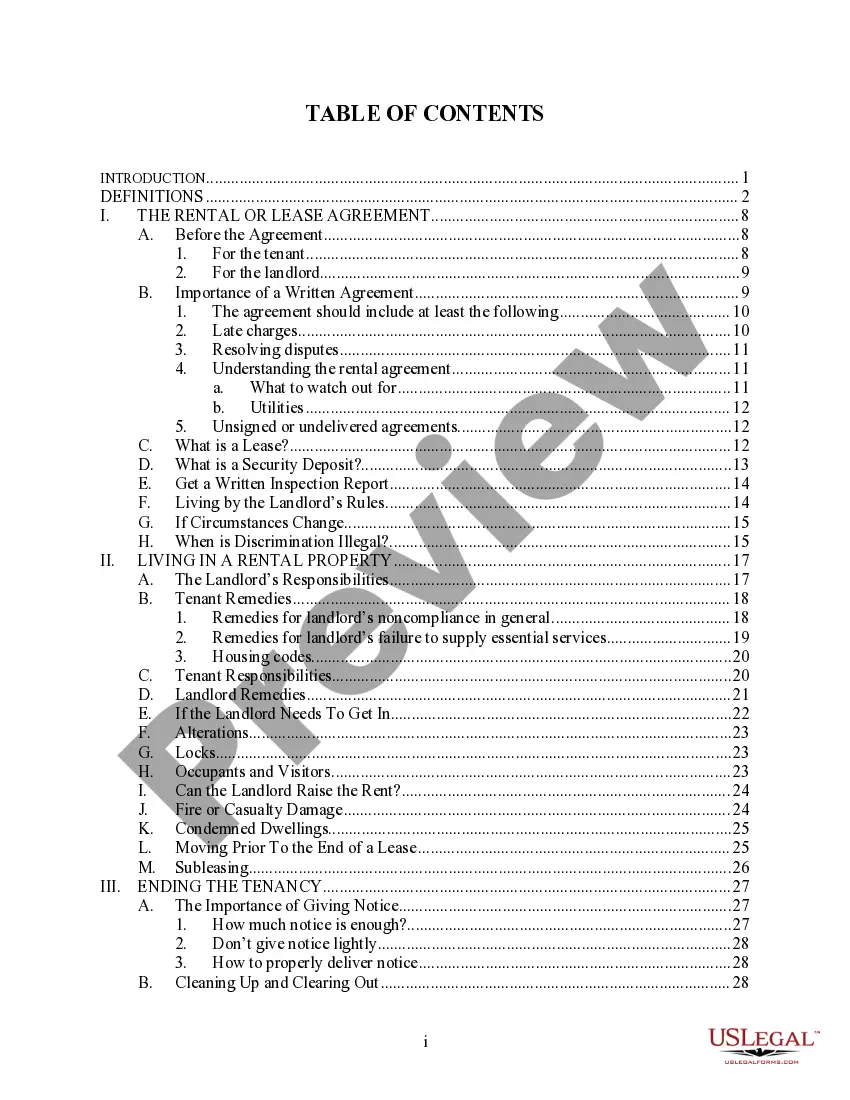
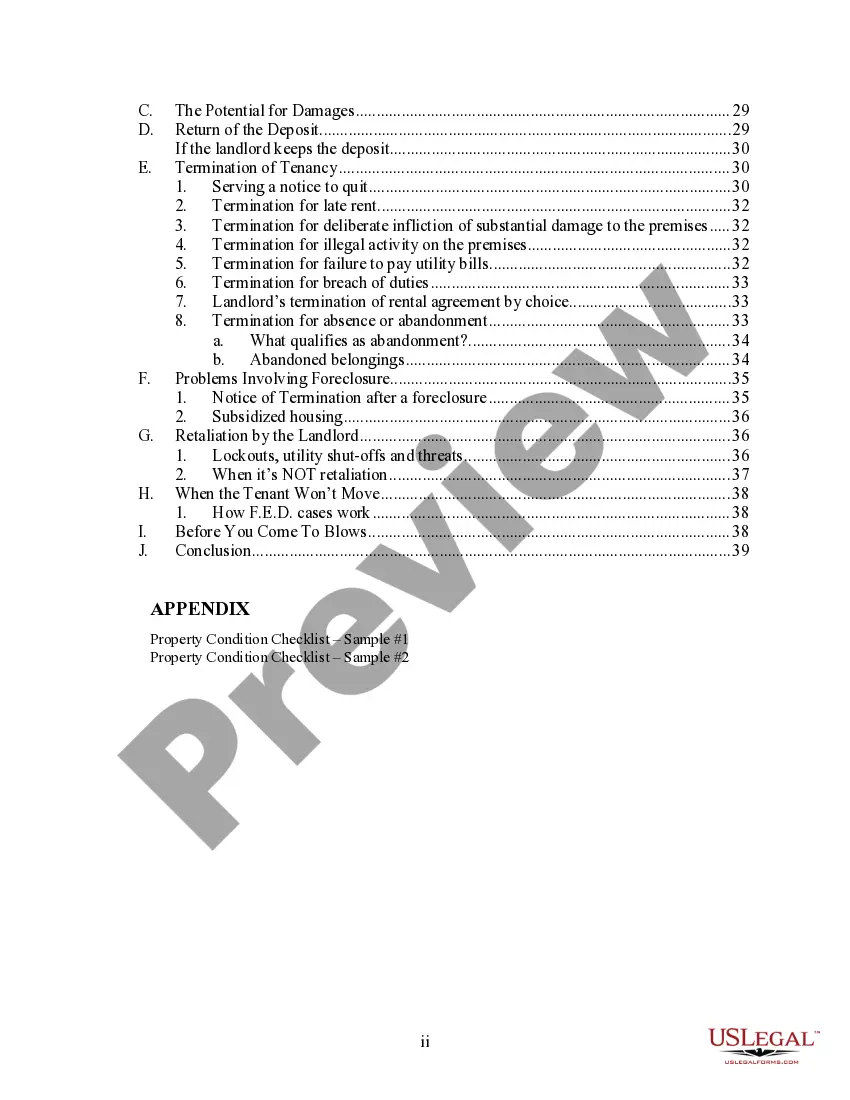
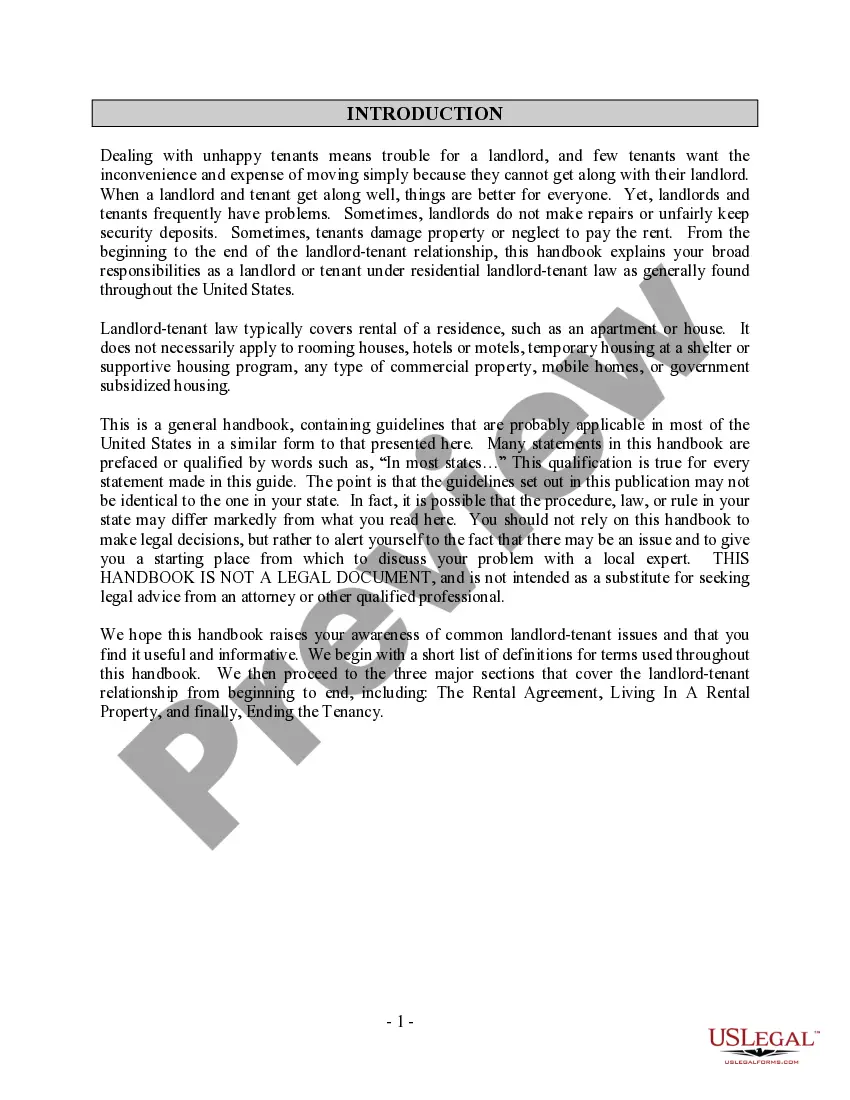
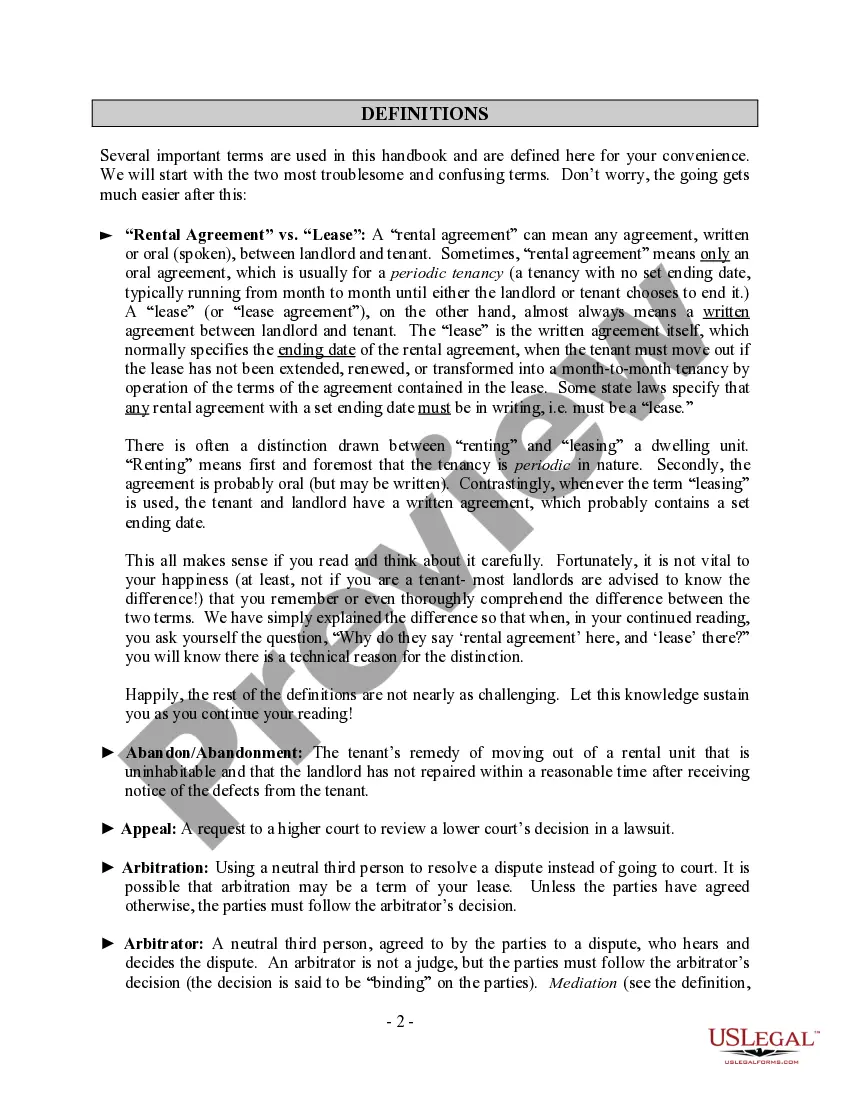
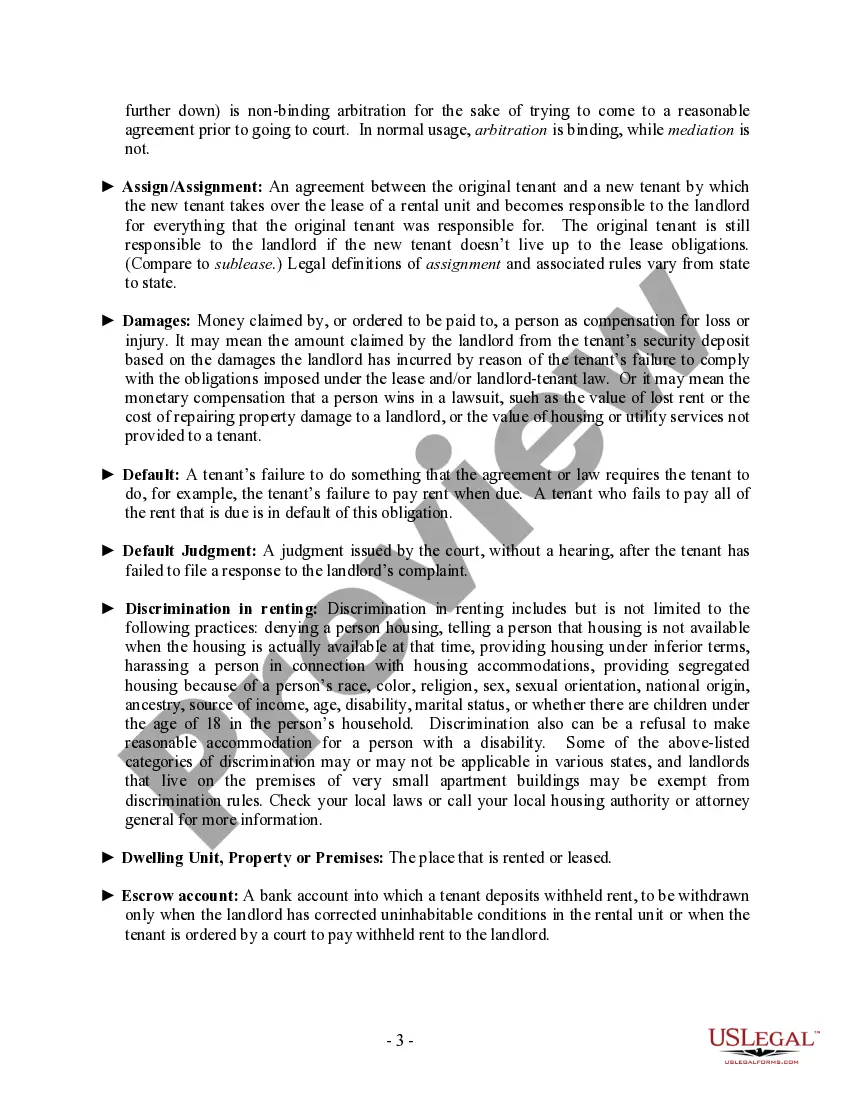
This Handbook summarizes the rights and obligations of landlords and tenants, and is designed to be a helpful guide to both landlords and tenants. Information about rental applications, leases, security deposits, inventory checklists, repair responsibilities, rent increases, termination of leases, eviction notices and much more is included in 40+ pages of materials.
Arizona Multistate Landlord Tenant Handbook - Guide - Laws
Instant download
Description
Free preview
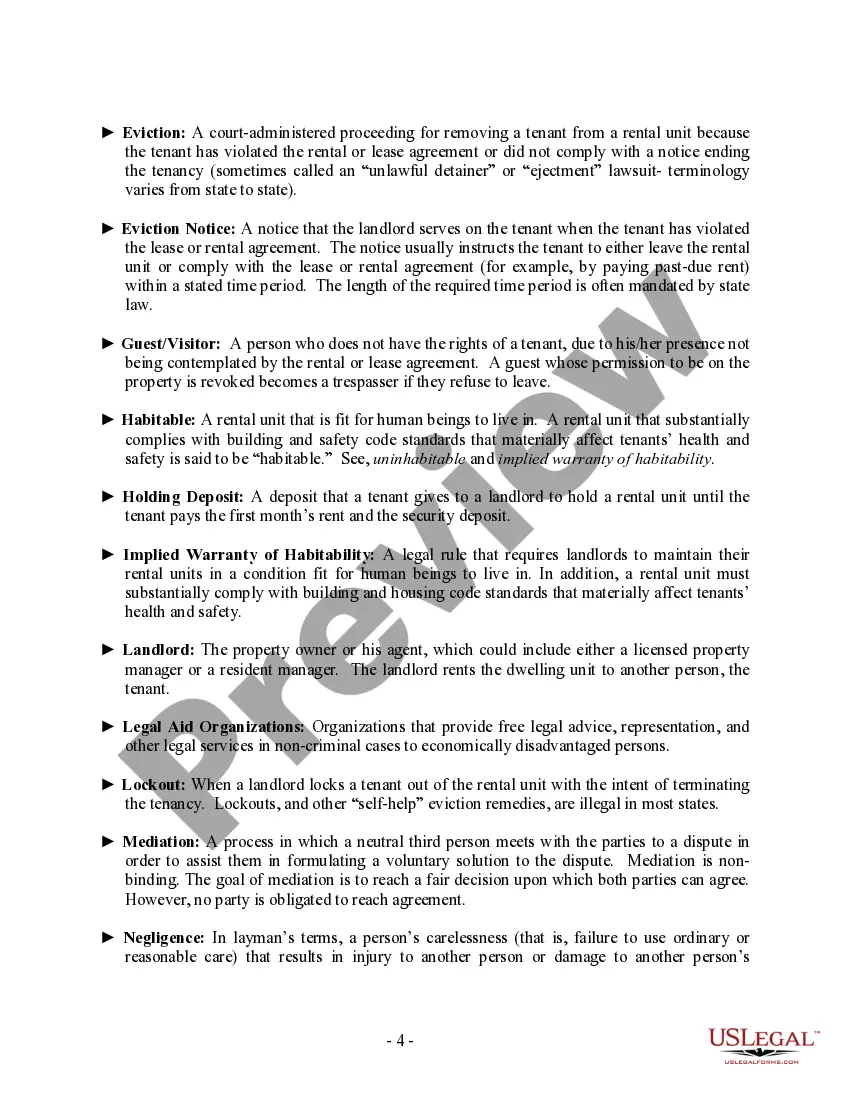
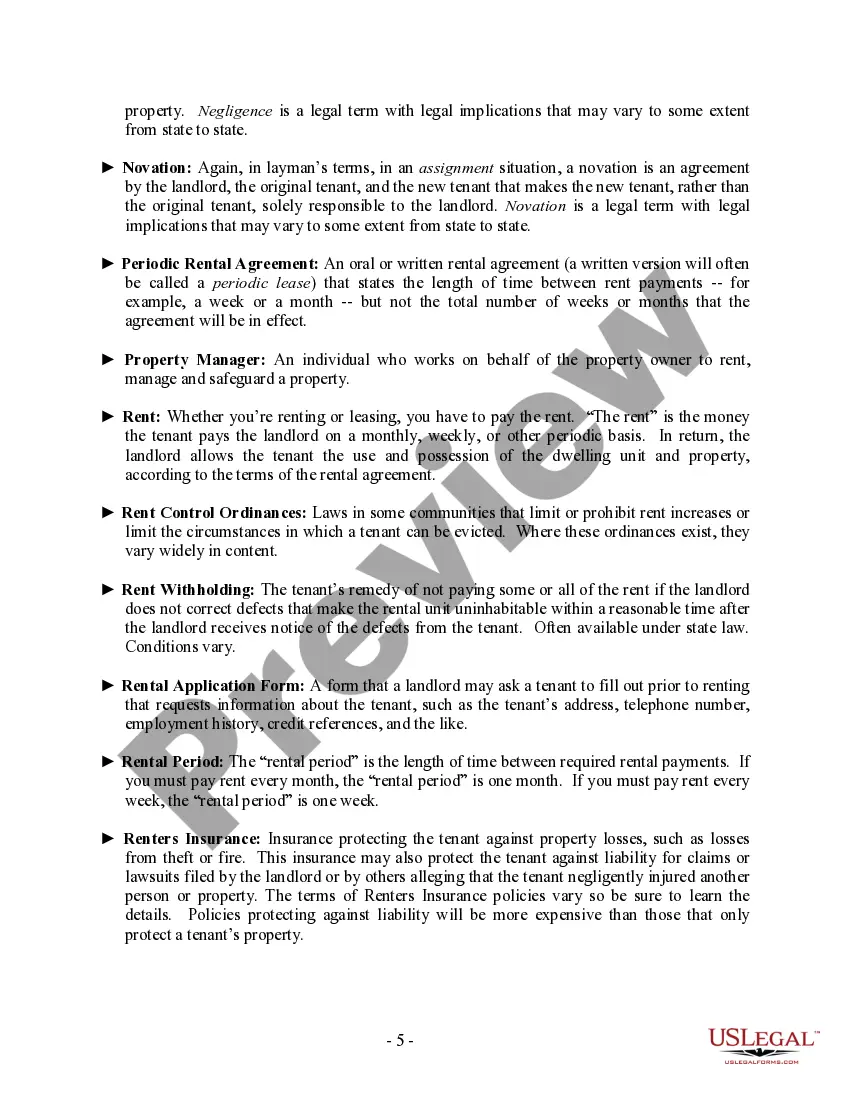
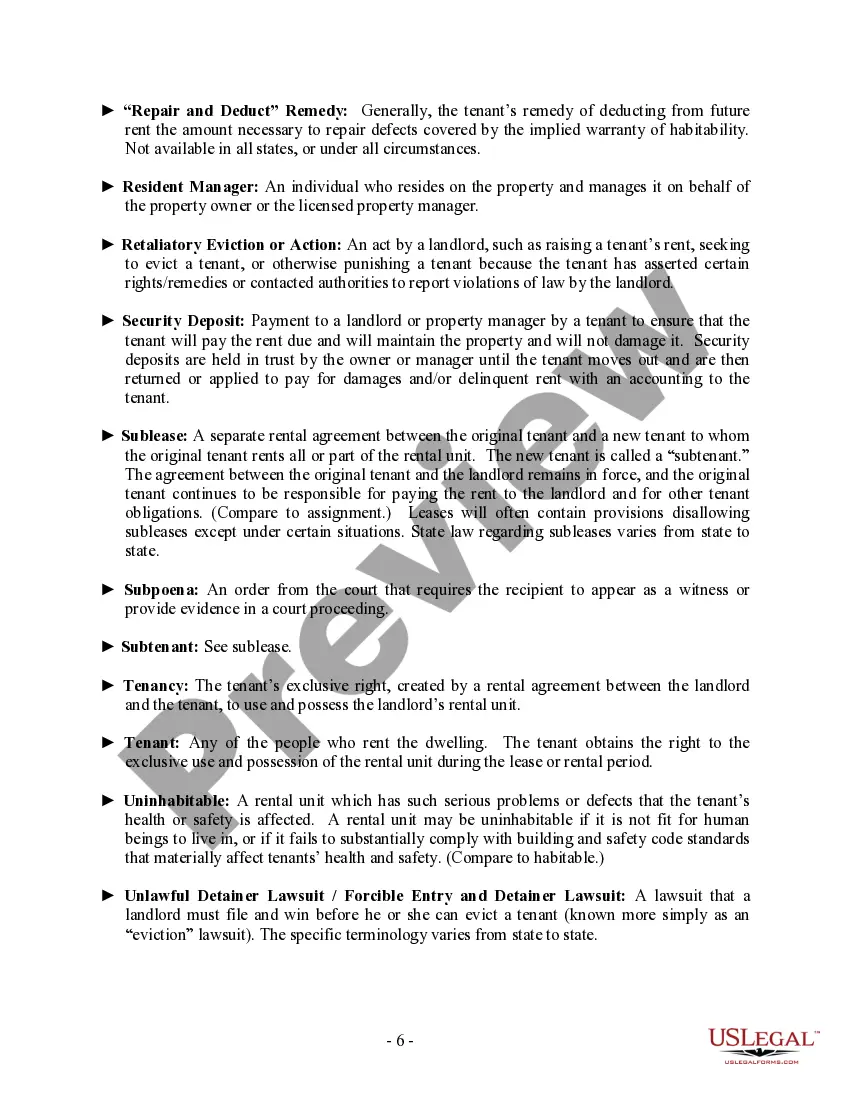
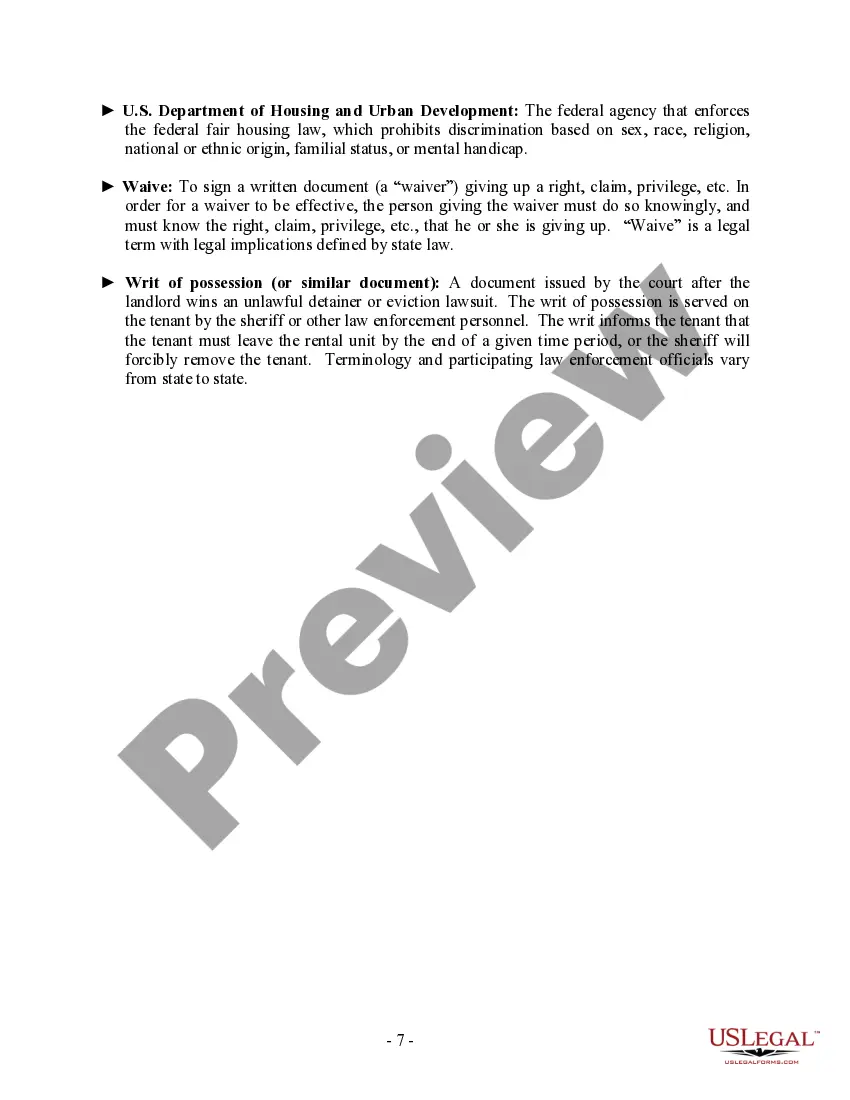

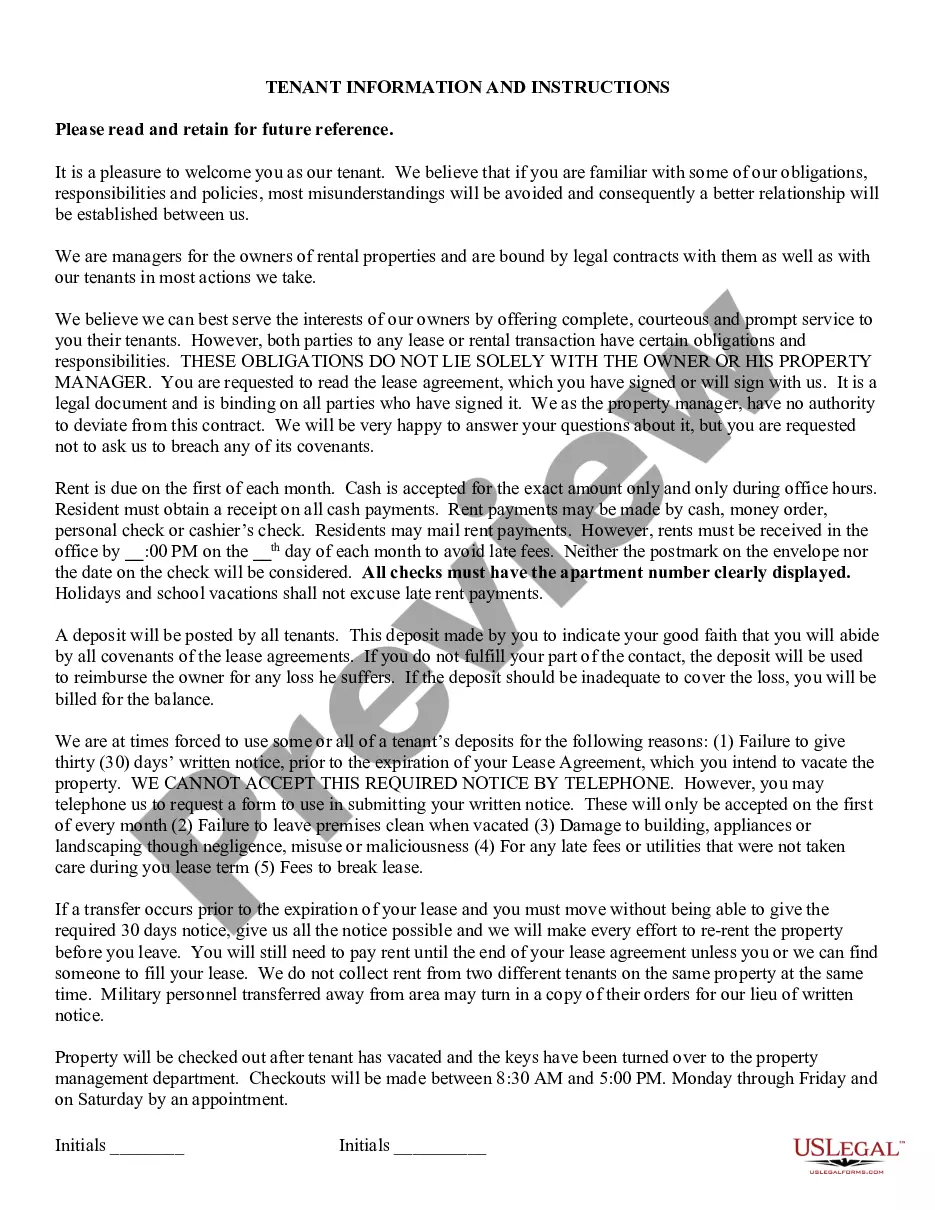

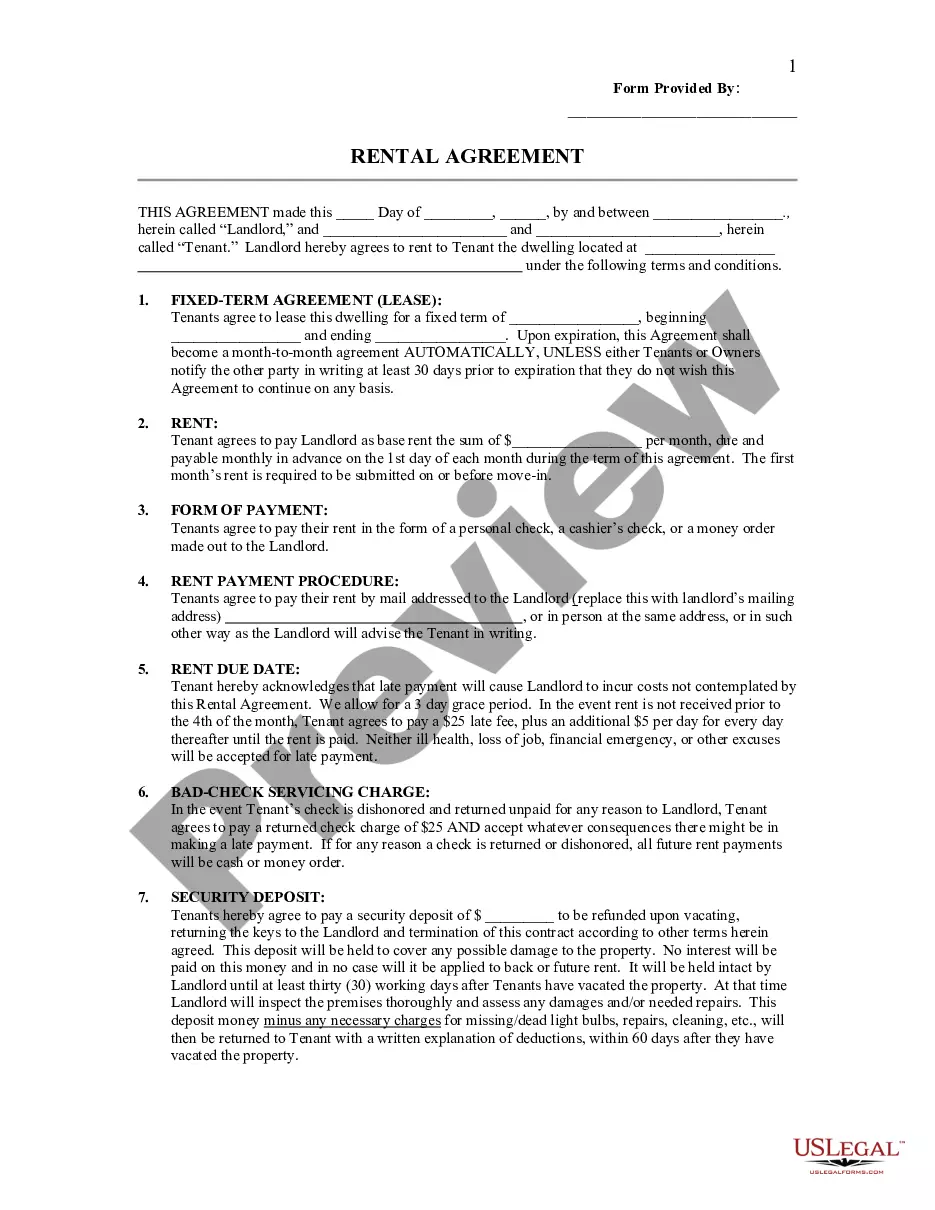
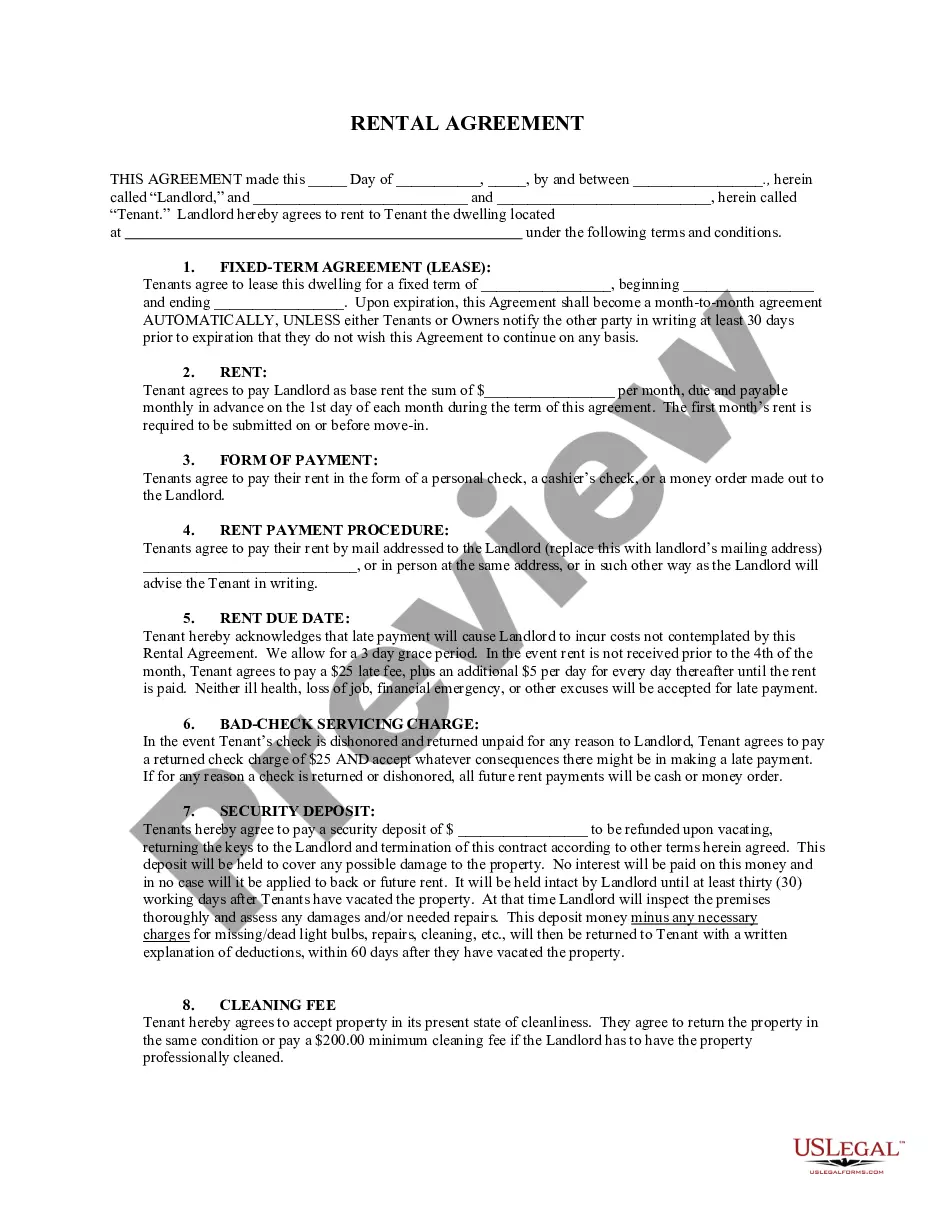



How to fill out Multistate Landlord Tenant Handbook - Guide - Laws?
US Legal Forms - one of the largest repositories of legal documents in the United States - offers a variety of legal template documents that you can download or print.
Through the website, you can find thousands of forms for business and personal use, organized by categories, states, or keywords. You can access the latest versions of forms like the Arizona Multistate Landlord Tenant Handbook - Guide - Laws in moments.
If you already have a monthly subscription, Log In and download the Arizona Multistate Landlord Tenant Handbook - Guide - Laws from the US Legal Forms library. The Download option will appear on each form you view. You can access all previously downloaded forms in the My documents section of your account.
Process the transaction. Use your Visa or Mastercard or PayPal account to complete the transaction.
Select the format and download the form onto your device. Make edits. Fill out, modify and print and sign the downloaded Arizona Multistate Landlord Tenant Handbook - Guide - Laws. Each template you added to your account has no expiration date and belongs to you forever. So, if you wish to download or print another copy, just go to the My documents section and click on the form you need. Access the Arizona Multistate Landlord Tenant Handbook - Guide - Laws with US Legal Forms, the most extensive library of legal document templates. Utilize thousands of professional and state-specific templates that meet your business or personal needs and requirements.
- If you want to use US Legal Forms for the first time, here are some simple tips to get you started.
- Ensure you have selected the correct form for your location/region.
- Click the Preview option to review the form’s content.
- Read the form description to confirm you have chosen the right form.
- If the form does not meet your needs, use the Search field at the top of the screen to find one that does.
- When you are satisfied with the form, confirm your choice by clicking the Get now button.
- Then, select the pricing plan you prefer and provide your details to register for the account.
Form popularity
FAQ
The Landlord Tenant Act in Arizona serves as a legal framework that outlines the rights and responsibilities of both landlords and tenants. This act covers aspects such as rental agreements, security deposits, and eviction procedures. It aims to create a fair and balanced relationship between landlords and tenants, protecting both parties. For a thorough understanding, you can access the Arizona Multistate Landlord Tenant Handbook - Guide - Laws.
In Arizona, landlords cannot engage in actions that violate a tenant's rights, such as shutting off utilities, entering the property without notice, or retaliating against tenants for exercising their rights. These prohibitions ensure that tenants can live securely and comfortably in their homes. Understanding these restrictions is vital for both parties to maintain a healthy landlord-tenant relationship. For more insights, explore the Arizona Multistate Landlord Tenant Handbook - Guide - Laws.
In Arizona, the two main pieces of landlord-tenant legislation are the Arizona Residential Landlord and Tenant Act and the Arizona Mobile Home Parks Residential Landlord-Tenant Act. These laws provide essential guidelines and protections for both landlords and tenants. Understanding these laws is crucial for navigating your rights and responsibilities effectively. For a comprehensive overview, consult the Arizona Multistate Landlord Tenant Handbook - Guide - Laws.
Make all repairs to keep the property fit and habitable. Keep the common areas clean and safe. Maintain all services and appliances in good and safe working order. Provide and maintain trash receptacles.
Landlords cannot enter tenanted properties without giving proper notice. Landlords cannot arbitrarily end someone's tenancy before the lease expires. Arbitrary, mid-lease rent increases are not permitted unless specified in certain circumstances in the lease or by the municipality.
A tenancy agreement is a legally binding document as soon as it has been signed by all of the relevant parties. Usually, this is the tenant and the landlord, though it may also include a guarantor if the rental requires one.
Refusing a tenancy Landlords cannot discriminate against potential tenants on grounds of gender, civil status, family status, sexual orientation, religion, age, disability, race or membership of the Traveller community.
In Arizona, the landlord cannot terminate a lease, refuse to renew a lease, or raise the rent on a tenant who has: Exercised a legal right.
A landlord is responsible for: repairs to the structure and exterior of the property, heating and hot water systems, basins, sinks, baths and other sanitaryware. the safety of gas and electrical appliances. the fire safety of furniture and furnishings provided under the tenancy.
In Arizona, the landlord cannot terminate a lease, refuse to renew a lease, or raise the rent on a tenant who has: Exercised a legal right.