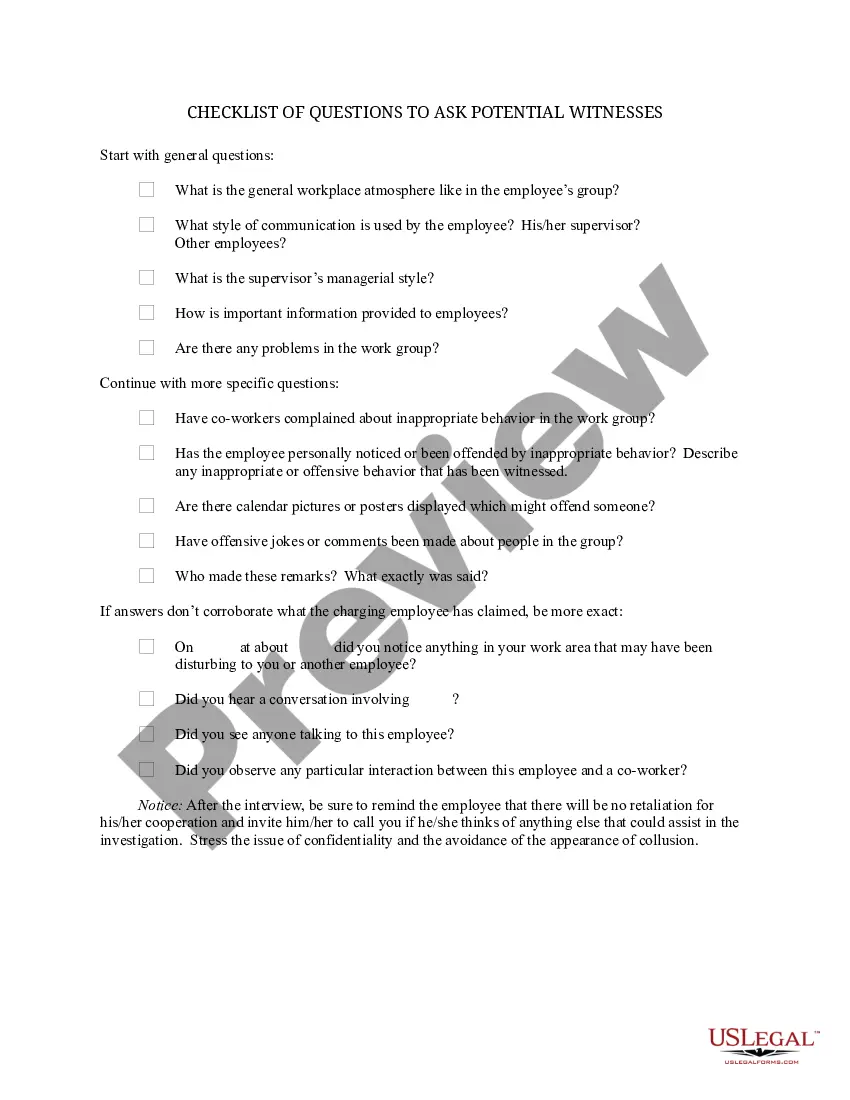
Arizona Checklist of Questions to Ask Potential Witnesses
Description
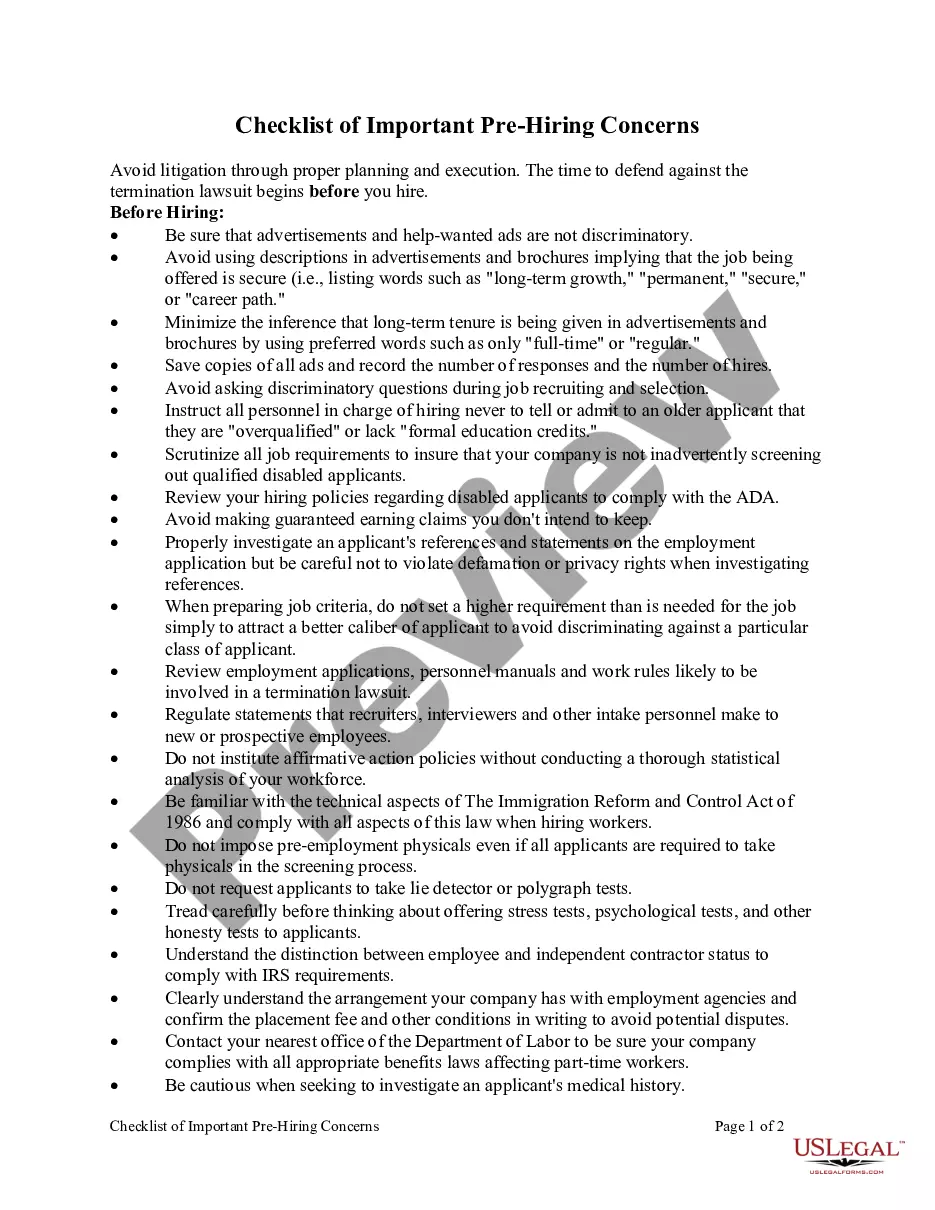
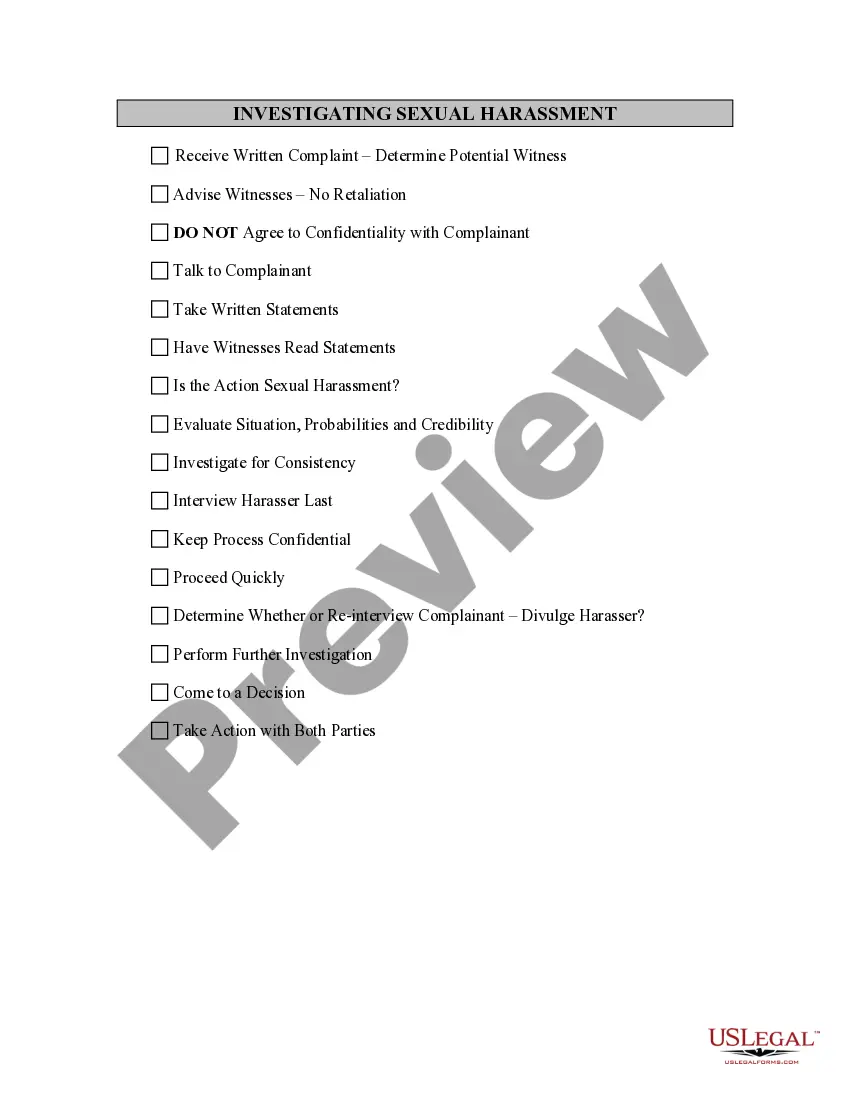
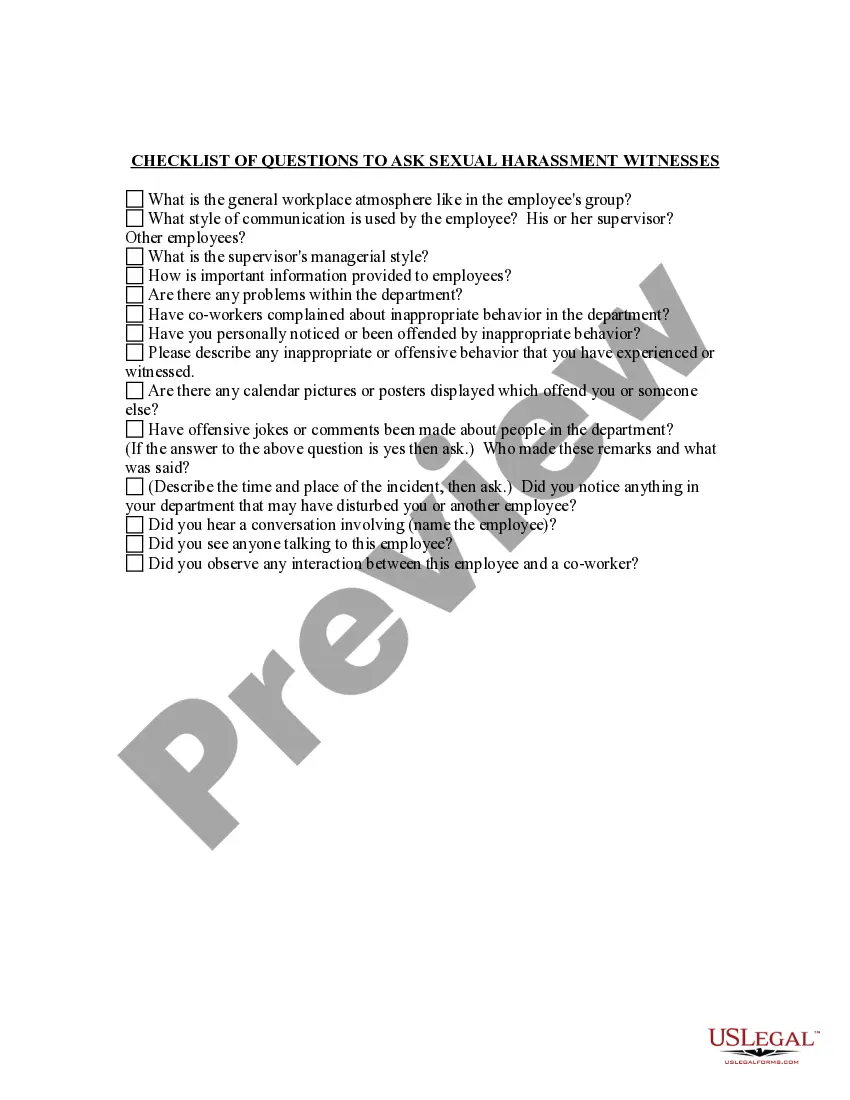
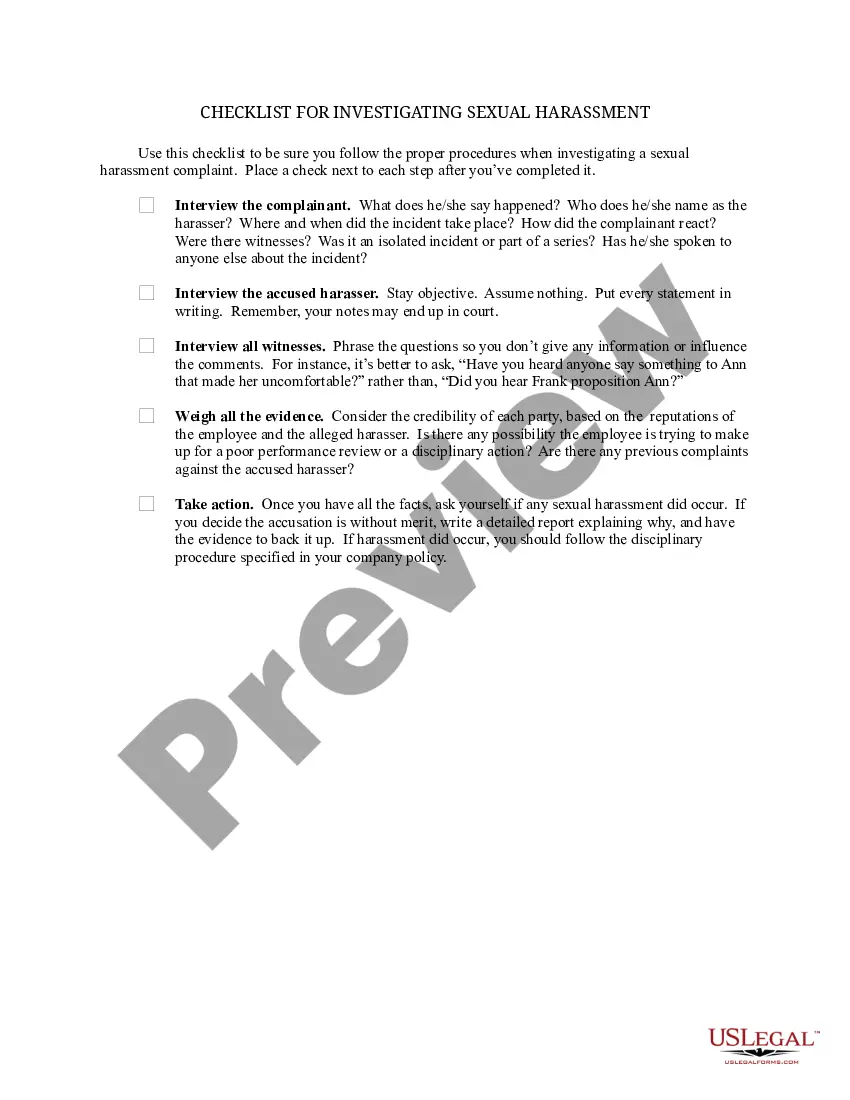
How to fill out Checklist Of Questions To Ask Potential Witnesses?
If you are seeking exhaustive, acquire, or generate sanctioned document templates, utilize US Legal Forms, the largest selection of legal forms, that are accessible online.
Utilize the site's straightforward and convenient search feature to find the documents you need.
A variety of templates for business and personal purposes are organized by categories and states, or keywords.
Step 4. Once you have found the form you need, click the Download now button. Choose the pricing plan you prefer and enter your details to register for an account.
Step 5. Complete the transaction. You can use your credit card or PayPal account to finalize the purchase.
- Employ US Legal Forms to access the Arizona Checklist of Questions to Ask Potential Witnesses in just a few clicks.
- If you are already a US Legal Forms user, sign in to your account and click on the Download button to obtain the Arizona Checklist of Questions to Ask Potential Witnesses.
- You can also access forms you previously acquired in the My documents section of your account.
- If you are using US Legal Forms for the first time, refer to the steps outlined below.
- Step 1. Ensure you have chosen the form for the appropriate city/state.
- Step 2. Take advantage of the Preview option to review the form's content. Don't forget to read the summary.
- Step 3. If you are dissatisfied with the template, use the Search field at the top of the screen to find other versions of the legal form template.
Form popularity
FAQ
You can start questioning your witnesses, one at a time, by asking them their name and asking them some background information, like how they know the parties in the case. You will then have to get into asking questions about the event they witnessed or any other issue they are there to testify about.
As indicated by the term, a leading question is one that leads a witness to an answer, by either suggesting the answer or by substituting the words of the questioning attorney for those of the witness.
You must ask questions beginning with words such as Who, What, Where, When, Why, How, Describe, Tell, Explain, etc. You should ask questions that allow the witness to provide her own answer. For example, Witness, what did you see at the intersection of A and B streets?
Ask Open-Ended Questions Instead, questions should use simple words and allow the witness to elaborate on various facts. A general rule is all direct examinations should be open-ended, short questions. To entice a detailed response, questions should begin with: Who, Why, What, Where, and When.
The easiest way to avoid leading is to begin your questions with the letter w. In the words of Rudyard Kipling: I keep six honest serving-men (They taught me all I knew); Their names are What and Why and When And How and Where and Who. Nearly all of your questions on direct should be short and simple w questions.
You must ask questions beginning with words such as Who, What, Where, When, Why, How, Describe, Tell, Explain, etc. You should ask questions that allow the witness to provide her own answer. For example, Witness, what did you see at the intersection of A and B streets?
In general, leading questions are not allowed during the direct examination of a witness, however, they are allowed on the cross-examination of a witness.
You can start questioning your witnesses, one at a time, by asking them their name and asking them some background information, like how they know the parties in the case. You will then have to get into asking questions about the event they witnessed or any other issue they are there to testify about.
Non-leading question: Did you tell anyone your concern? Leading question: Were you mad or angry? Non-leading question: How did you feel? Leading: Do you and your roommate fight and argue?
In cross-examination, just about every question should be leading. (Sometimes, the right non-leading question can be devastatingly effective, but we'll discuss that in a later column.) But just because you're allowed to lead doesn't mean you should ask long or convoluted questions.