Arizona Installment Purchase and Security Agreement With Limited Warranties - Horse Equine Forms
About this form
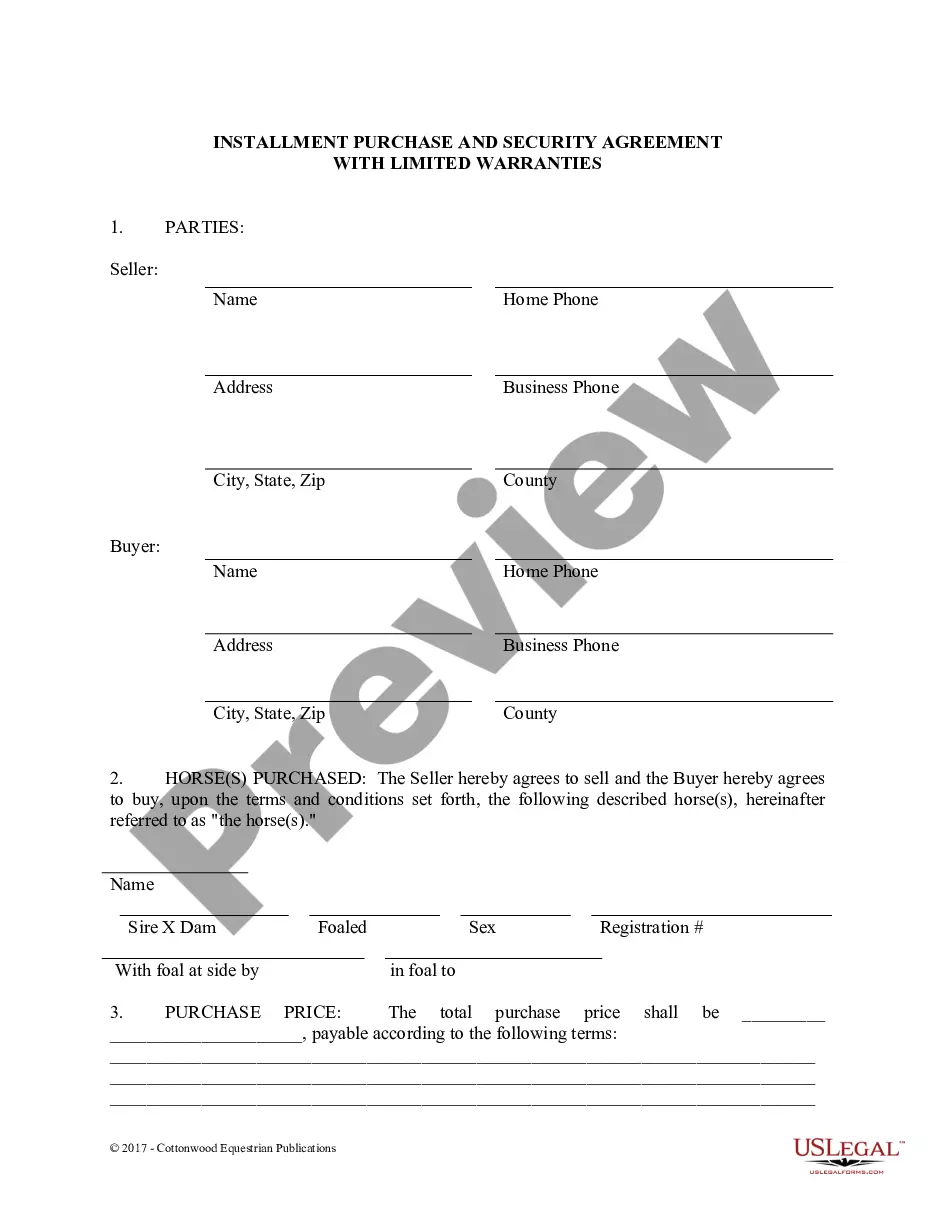
The Installment Purchase and Security Agreement With Limited Warranties is a legal document used for purchasing a horse on an installment basis. This agreement secures the seller's interest in the horse until the full purchase price is paid, differentiating it from simpler purchase agreements by including mechanisms for warranties and securing collateral.
What’s included in this form
- Identification of the seller and buyer, including contact details.
- Description of the horse(s) being purchased, including registration and pedigree information.
- Terms of the purchase price and payment schedule.
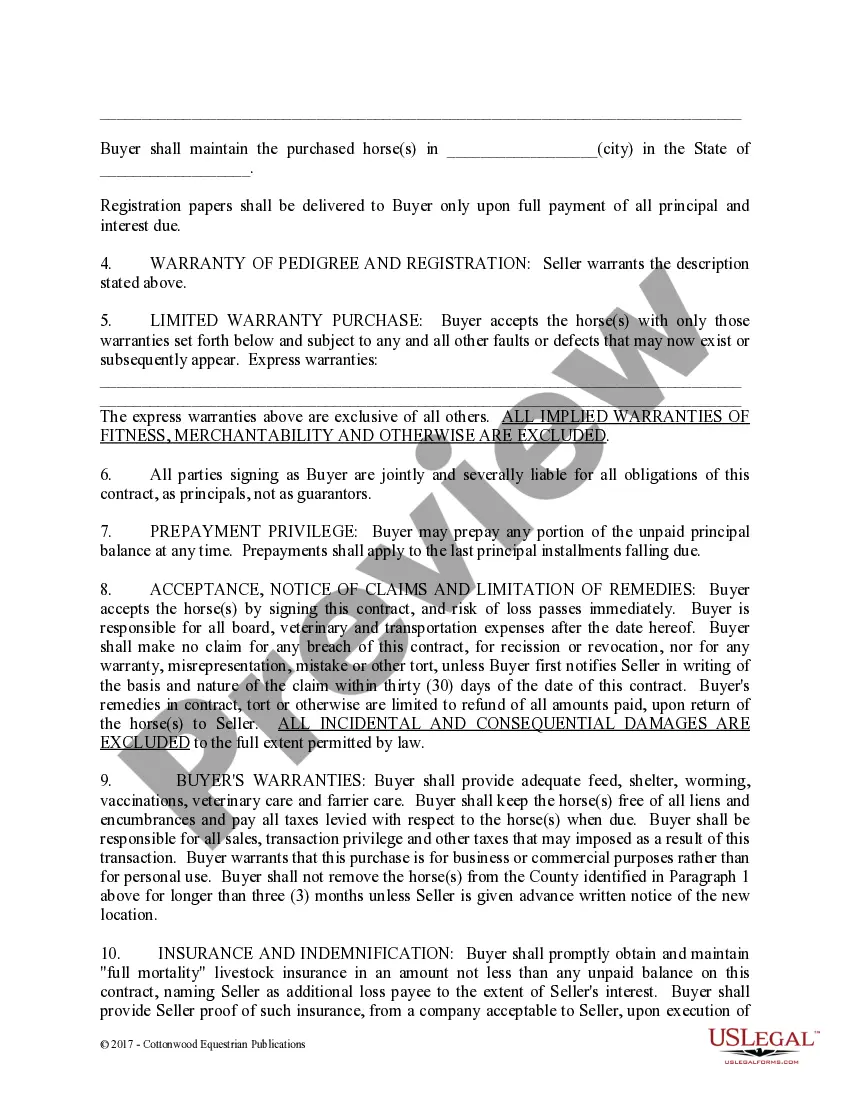
- Limited warranties regarding the condition and pedigree of the horse.
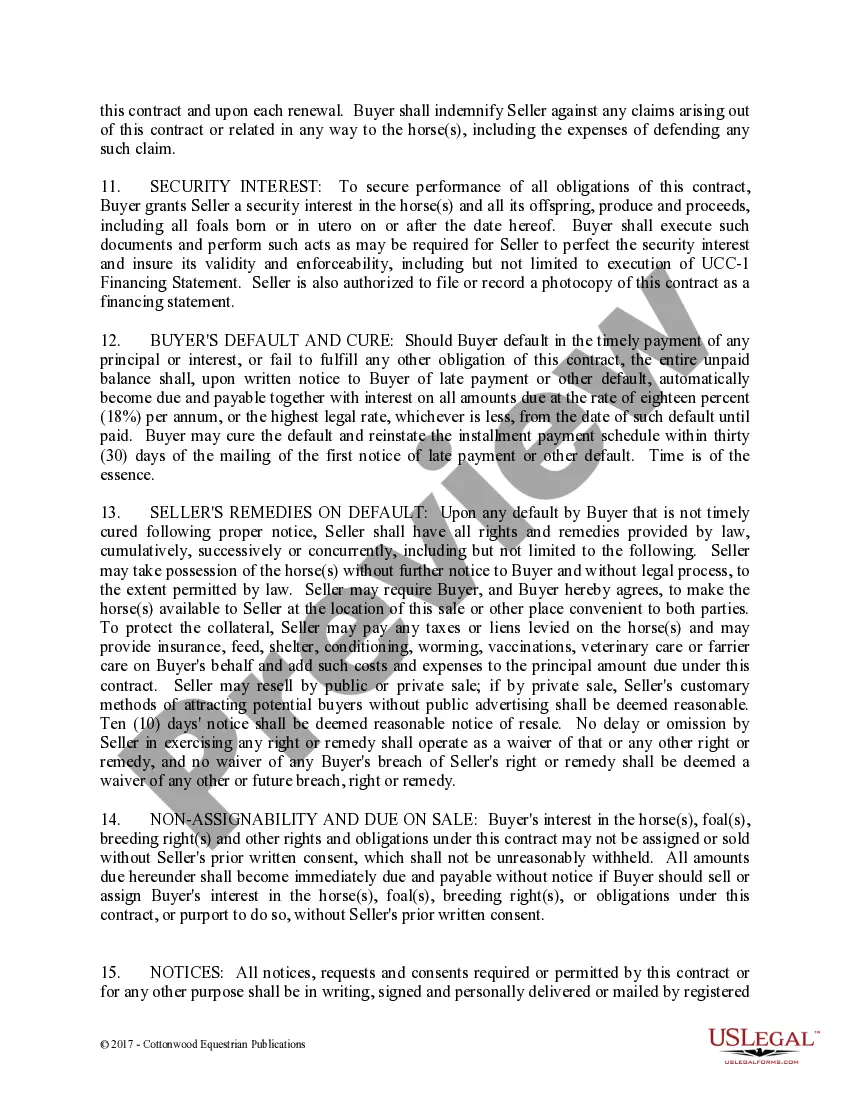
- Security interest granted by the buyer over the horse until full payment.
- Buyer's obligations, including maintenance and insurance requirements.
Common use cases
This agreement is ideal for buyers who wish to purchase a horse over time while providing the seller with security for the unpaid balance. It is particularly useful in situations where individuals or businesses require flexibility in financing the purchase or where significant capital is involved in acquiring equine assets.
Who can use this document
- Individuals or businesses looking to purchase a horse on an installment basis.
- Sellers who wish to secure their interest in the horse until payment is completed.
- Horse owners wanting clarity on warranties and obligations related to horse care.
Completing this form step by step
- Identify the parties involved by filling in the names and contact information for the seller and buyer.
- Describe the horse being purchased, including its name, sire, dam, foaling date, sex, and registration details.
- Specify the total purchase price and detail the payment terms, including any installment plans.
- Review and complete the warranty sections, ensuring clarity on any express warranties provided by the seller.
- Both parties should sign and date the agreement to acknowledge acceptance of the terms.
Is notarization required?
This form usually doesn’t need to be notarized. However, local laws or specific transactions may require it. Our online notarization service, powered by Notarize, lets you complete it remotely through a secure video session, available 24/7.
Get your form ready online
Our built-in tools help you complete, sign, share, and store your documents in one place.
Make edits, fill in missing information, and update formatting in US Legal Forms—just like you would in MS Word.
Download a copy, print it, send it by email, or mail it via USPS—whatever works best for your next step.
Sign and collect signatures with our SignNow integration. Send to multiple recipients, set reminders, and more. Go Premium to unlock E-Sign.
If this form requires notarization, complete it online through a secure video call—no need to meet a notary in person or wait for an appointment.
We protect your documents and personal data by following strict security and privacy standards.

Make edits, fill in missing information, and update formatting in US Legal Forms—just like you would in MS Word.

Download a copy, print it, send it by email, or mail it via USPS—whatever works best for your next step.

Sign and collect signatures with our SignNow integration. Send to multiple recipients, set reminders, and more. Go Premium to unlock E-Sign.

If this form requires notarization, complete it online through a secure video call—no need to meet a notary in person or wait for an appointment.

We protect your documents and personal data by following strict security and privacy standards.
Typical mistakes to avoid
- Failing to complete all identifying information for both buyer and seller.
- Not clearly defining the payment schedule and terms.
- Omitting specific details about the horse, which may lead to disputes.
- Neglecting to understand and agree upon the warranties and obligations stated in the form.
- Not having both parties sign and date the document properly.
Why complete this form online
- Convenient downloadable access, allowing immediate use without travel to a lawyer.
- Editable templates ensure that users can customize information to fit their specific transaction.
- Reliability, as the forms are drafted by licensed attorneys to ensure legal compliance.
Legal use & context
- The form is enforceable in a court of law as long as it complies with the applicable state laws.
- Buyers should be aware that implied warranties are excluded, focusing only on warranties expressly stated in the agreement.
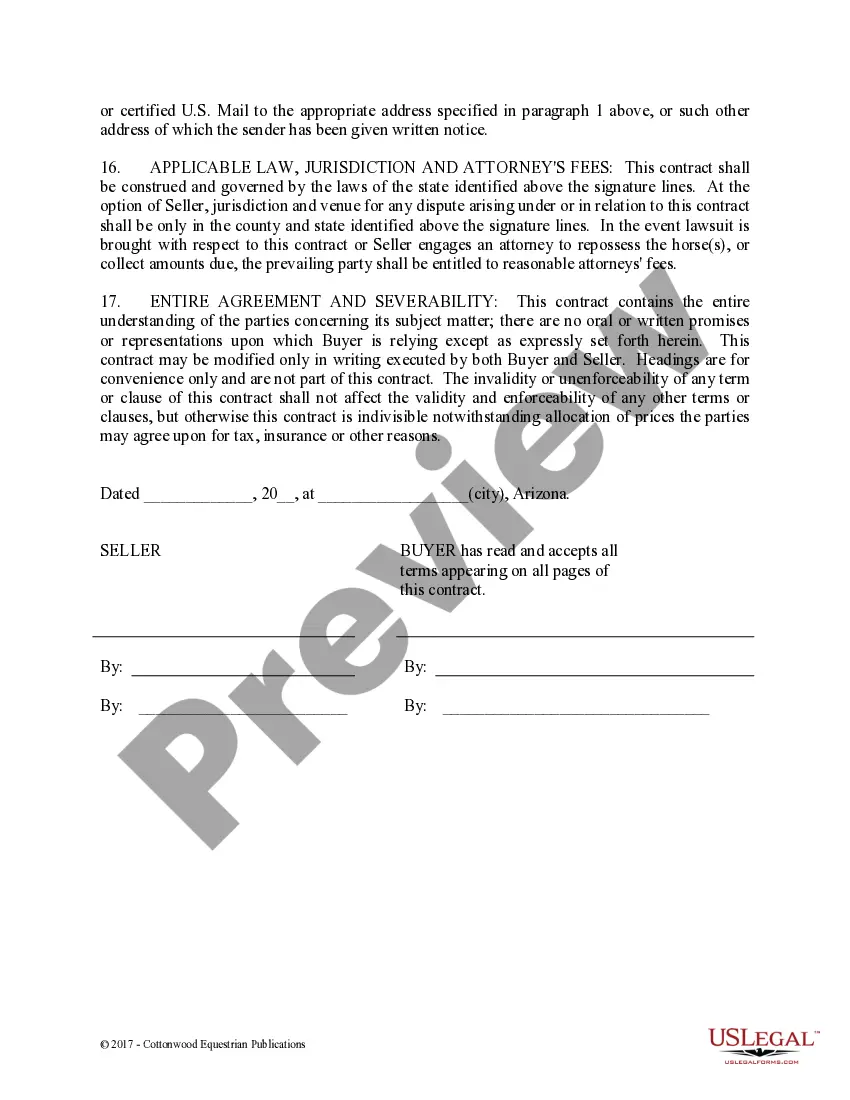
- Defaulting on payment may lead to the seller reclaiming possession of the horse without legal proceedings.
Looking for another form?

Form popularity
FAQ
A real estate deal can take a turn for the worst if the contract is not carefully written to include all the legal stipulations for both the buyer and seller.You can write your own real estate purchase agreement without paying any money as long as you include certain specifics about your home.
Offer price. Amount of earnest money. Amount of down payment. Closing date. Personal property included. Seller contribution to Buyer closing costs, if any. Escrow company. Home warranty.
A purchase agreement is a legal document that is signed by both the buyer and the seller. Once it is signed by both parties, it is a legally binding contract. The seller can only accept the offer by signing the document, not by just providing the goods.
The identity of the buyer and of the seller. A sufficient description of the real property to be sold. The sale price, or consideration to be paid for the real property by the buyer. The amount of any earnest money deposit to be paid by the buyer.
In real estate, a purchase agreement is a binding contract between a buyer and seller that outlines the details of a home sale transaction. The buyer will propose the conditions of the contract, including their offer price, which the seller will then either agree to, reject or negotiate.Real estate purchase contract.
If you're backing out of an offer without a contingency, you risk losing your earnest money. Since you put that money down based on the promise you'll follow through with the contract, backing out for any reason that's not outlined in the agreement means the seller is legally permitted to keep your money.
Identifying the Address and Parties Involved. First and foremost, a purchase agreement must outline the property at stake. Price and Terms. Closing Date and Costs. Real Estate Taxes and Special Assessments. Homestead Classification. Delivery, Acceptance Date, and Offer Expiration. Default. Counter Offer.
But unlike buyers, sellers can't back out and forfeit their earnest deposit money (usually 1-3 percent of the offer price). If you decide to cancel a deal when the home is already under contract, you can be either legally forced to close anyway or sued for financial damages.
Every real estate contract meets four requirements to be valid:The contract must contain an offer and an acceptance. The purpose of the agreement must be legal. There must be an exchange of things of value (usually, it's money for property)