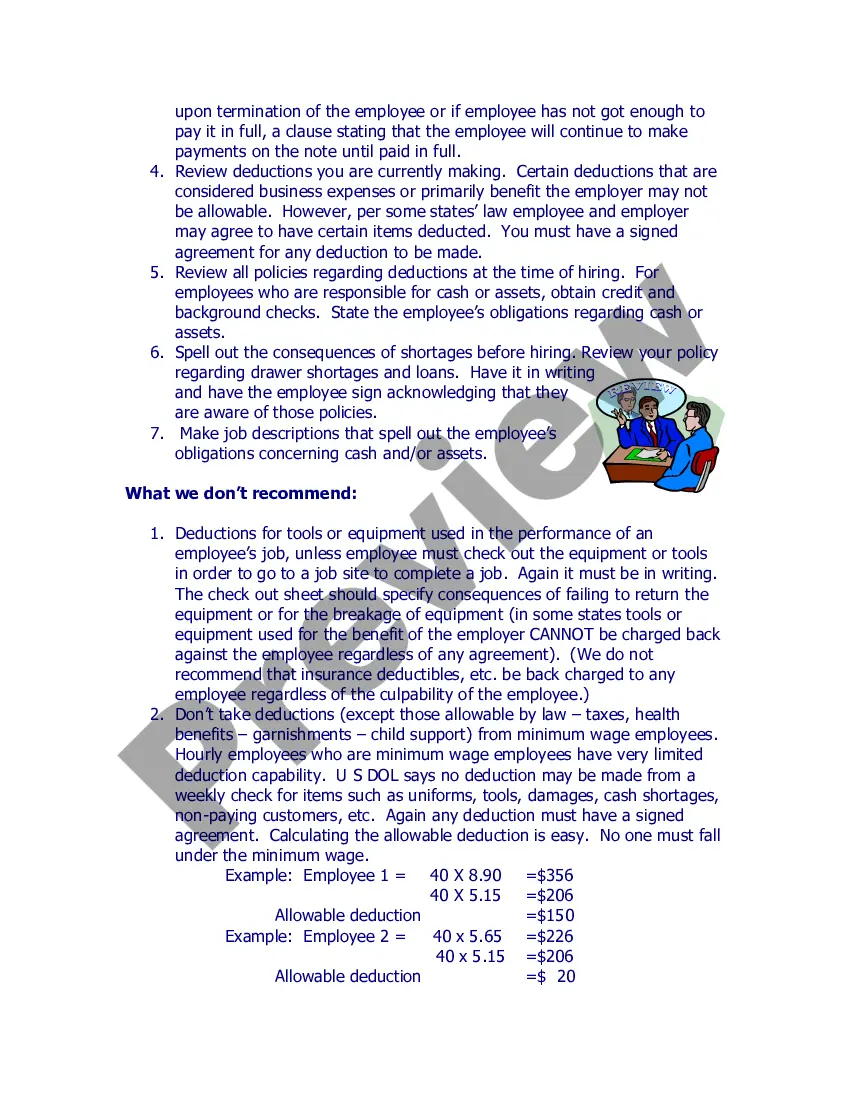
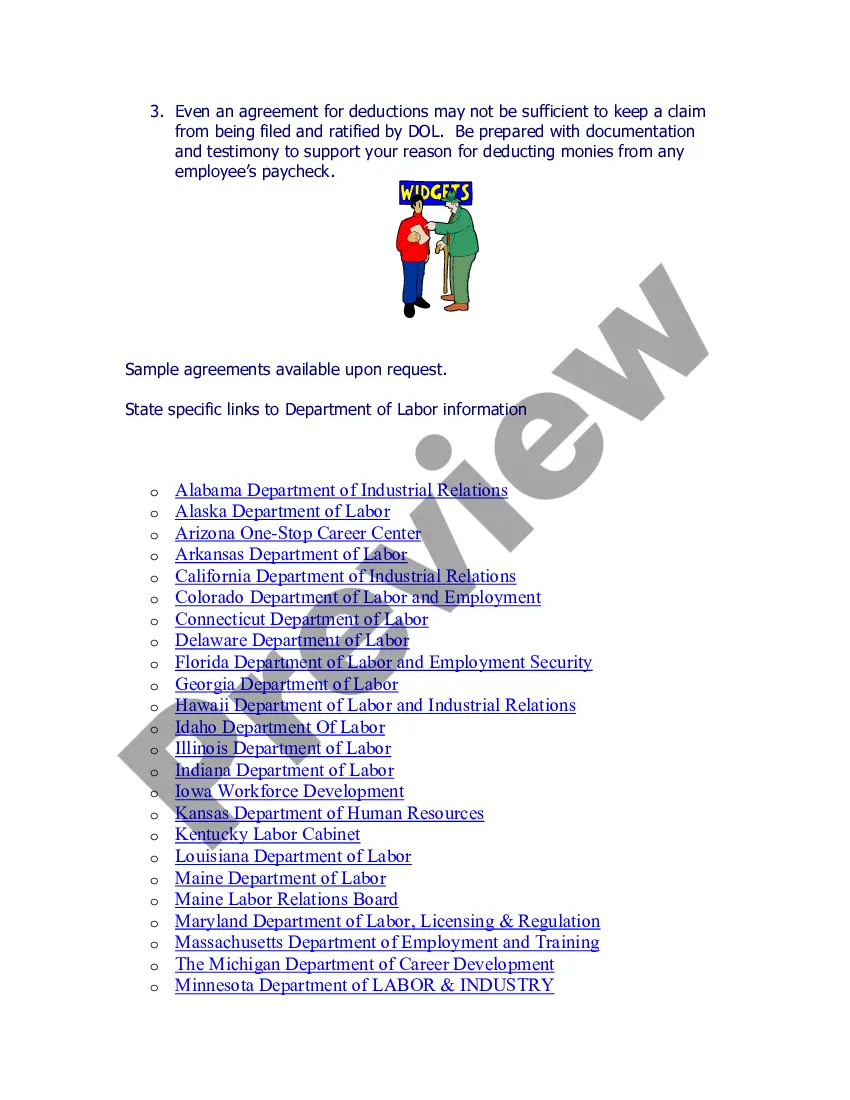
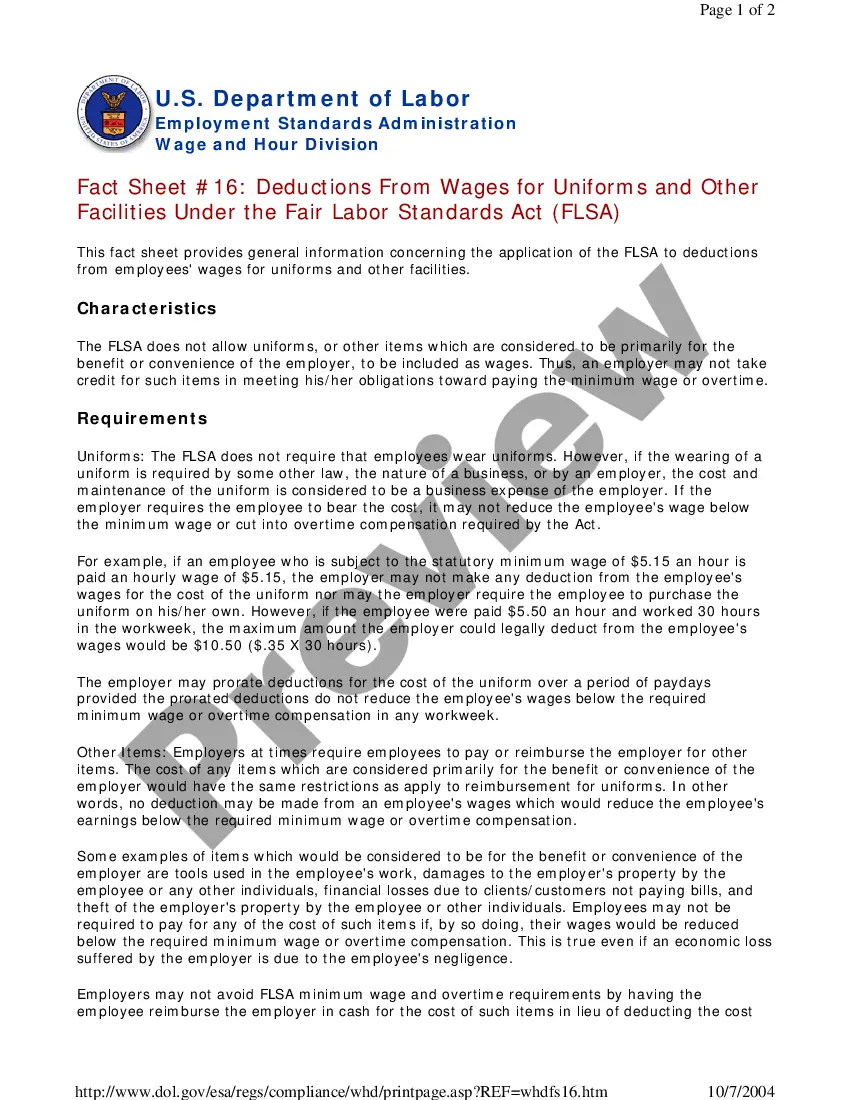
Information for Employers regarding how and when deductions can be made.
Arkansas Employer Training Memo - Payroll Deductions
Instant download
Description
Free preview
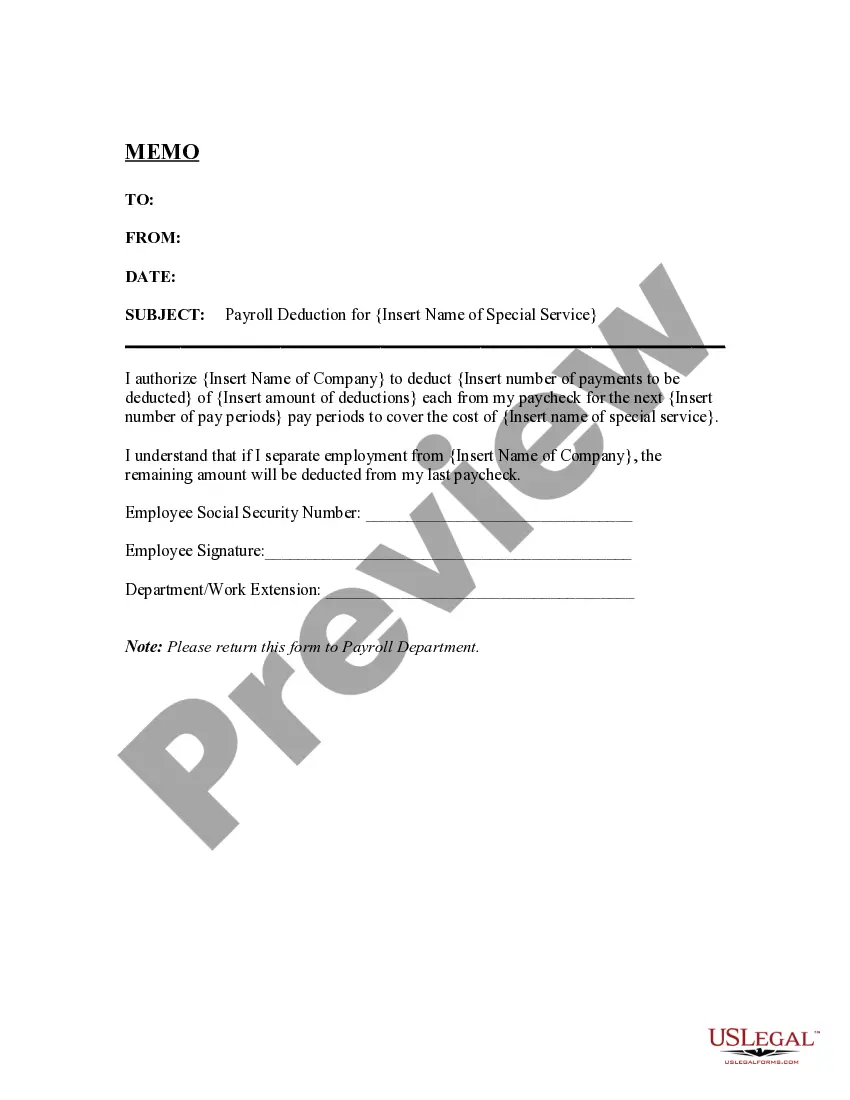
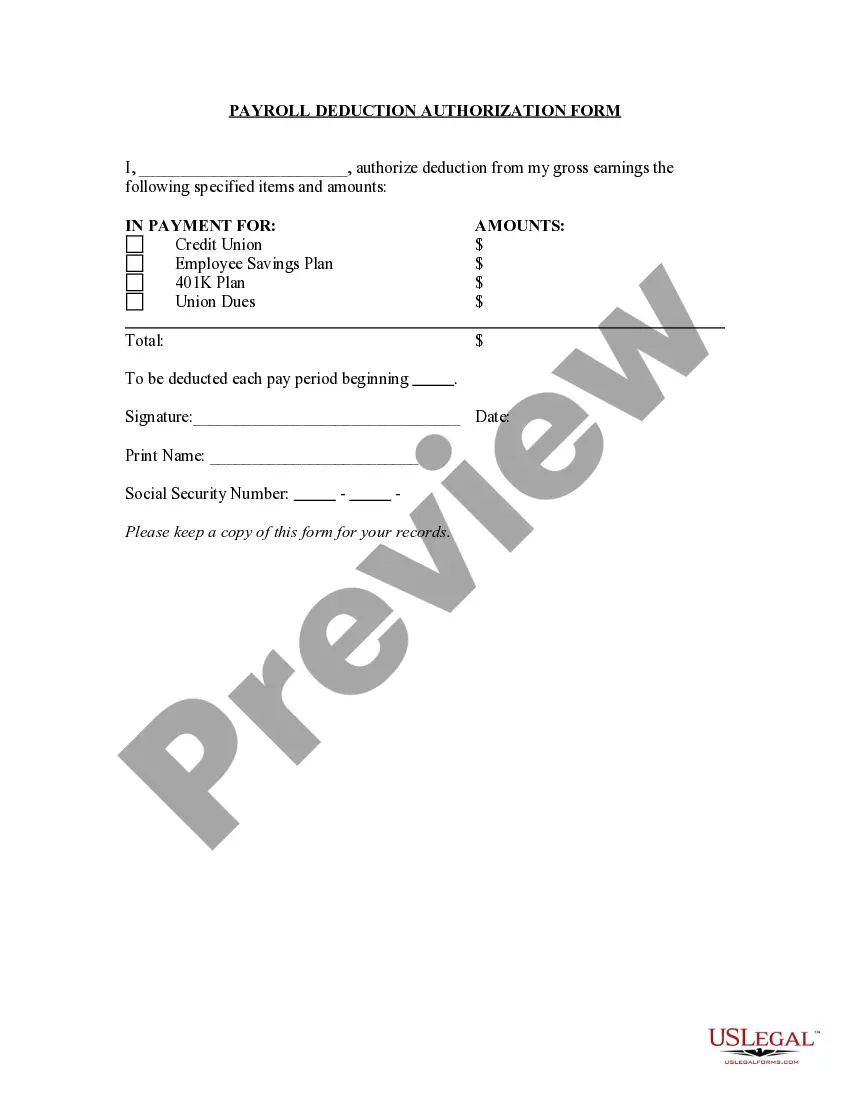
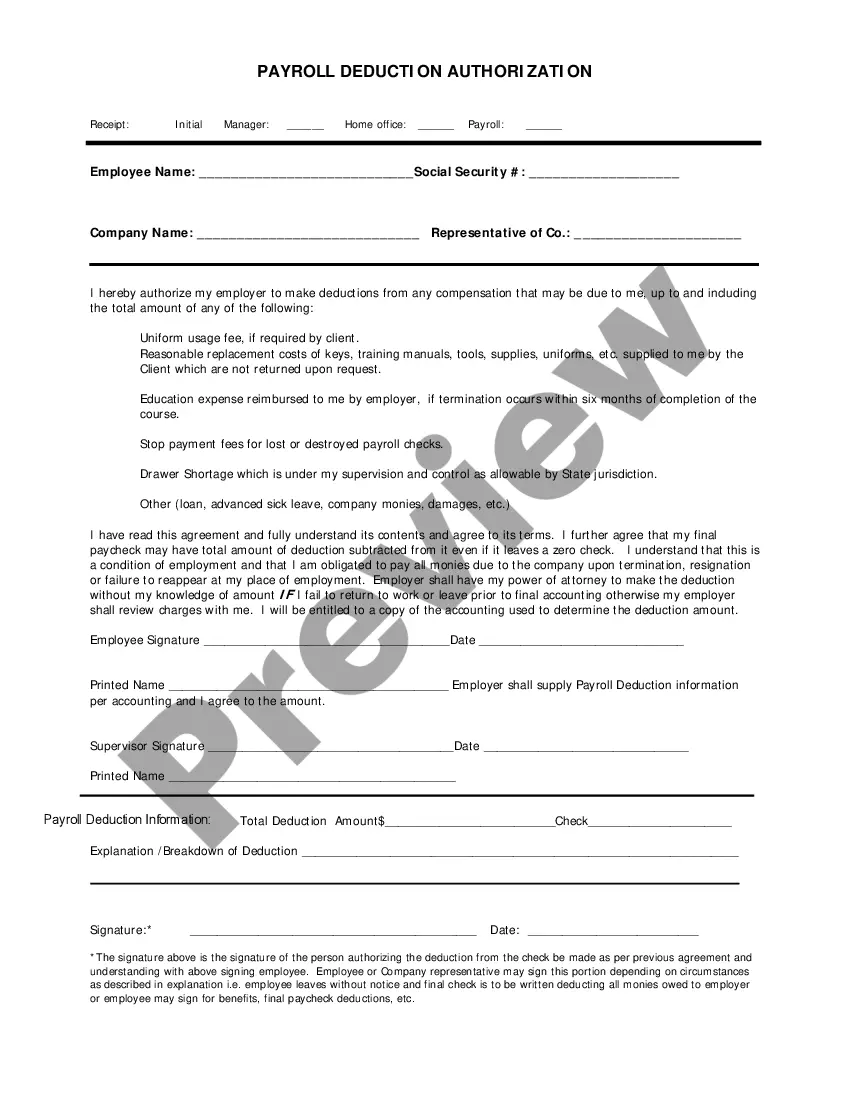
How to fill out Employer Training Memo - Payroll Deductions?
Selecting the appropriate valid document template can be a challenge.
Of course, there are numerous designs accessible online, but how do you find the valid form you need.
Utilize the US Legal Forms site.
First, ensure you have selected the correct form for your city/county. You can review the form using the Preview button and read the form details to confirm it is the right one for you.
- The service provides thousands of designs, such as the Arkansas Employer Training Memo - Payroll Deductions, which can be utilized for commercial and personal purposes.
- All forms are reviewed by professionals and comply with state and federal requirements.
- If you are already registered, Log In to your account and click the Download button to obtain the Arkansas Employer Training Memo - Payroll Deductions.
- Use your account to browse through the valid forms you may have previously ordered.
- Visit the My documents section of your account to retrieve another copy of the document you need.
- If you are a new user of US Legal Forms, here are some simple instructions you can follow.
Form popularity
FAQ
You fill out the W4 form for payroll deductions, which allows employees to specify their withholding preferences. Completing this form accurately helps prevent over or under-withholding from your paycheck. Always refer to the Arkansas Employer Training Memo - Payroll Deductions for more detailed guidance and best practices.
The Arkansas standard deduction is a specific amount that taxpayers can deduct from their taxable income. For both single and married individuals, the deduction amount can vary based on filing status. Staying informed about the state deductions is vital for effective payroll management, as highlighted in the Arkansas Employer Training Memo - Payroll Deductions.
The primary form for payroll deductions is the W4. This document allows employees to indicate their tax withholding preferences. In Arkansas, you can find additional details and guidelines in the Arkansas Employer Training Memo - Payroll Deductions, ensuring that your payroll processes run smoothly and efficiently.
Employees typically fill out a W4 form to determine their tax withholding. The W9 form is generally used for independent contractors or freelancers for reporting their taxpayer identification. Knowing the distinction helps you remain compliant and ensures proper payroll deductions, as outlined in the Arkansas Employer Training Memo - Payroll Deductions.
To correct payroll deductions, first, communicate the issue with your payroll department. They will typically require you to file a new W4 or provide additional documentation. Ensuring accuracy in payroll deductions can save you from future tax complications, so always refer to the Arkansas Employer Training Memo - Payroll Deductions for detailed instructions.
Filling out a W4 form is simple. Start by providing your personal information and indicating your filing status. Next, specify the number of allowances you wish to claim. This document is crucial in ensuring that the correct amount is withheld from your paychecks, aligning with the guidance provided in the Arkansas Employer Training Memo - Payroll Deductions.
As of now, Arkansas' minimum wage is set to increase incrementally each year until it reaches $11 per hour in 2025. This gradual increase supports a fair wage for workers while allowing employers to adjust their payroll practices accordingly. Staying informed through resources like the Arkansas Employer Training Memo - Payroll Deductions will ensure that you are prepared for these changes. Understanding these future wage rates will help you plan for effective financial management and employee compensation.
The convenience of the employer rule in Arkansas allows employers to deduct certain expenses from employees' paychecks effectively. This rule simplifies the process of managing payroll deductions, ensuring that both employers and employees understand their financial obligations. The Arkansas Employer Training Memo - Payroll Deductions provides vital information on how to implement these deductions correctly. Utilizing this memo can help streamline payroll processes and maintain compliance with state regulations.
The director of the Arkansas Employee Benefits Division oversees the administration of state employee benefits programs. This position is vital for ensuring compliance and regulation within the state. For updates or specific inquiries, refer to the Arkansas Employer Training Memo - Payroll Deductions, which may provide contact information and relevant resources.
Yes, Arkansas does impose a state payroll tax on employee wages. Employers are responsible for withholding this tax from employee paychecks. Familiarizing yourself with the Arkansas Employer Training Memo - Payroll Deductions can assist both employers and employees in understanding their payroll tax obligations thoroughly.