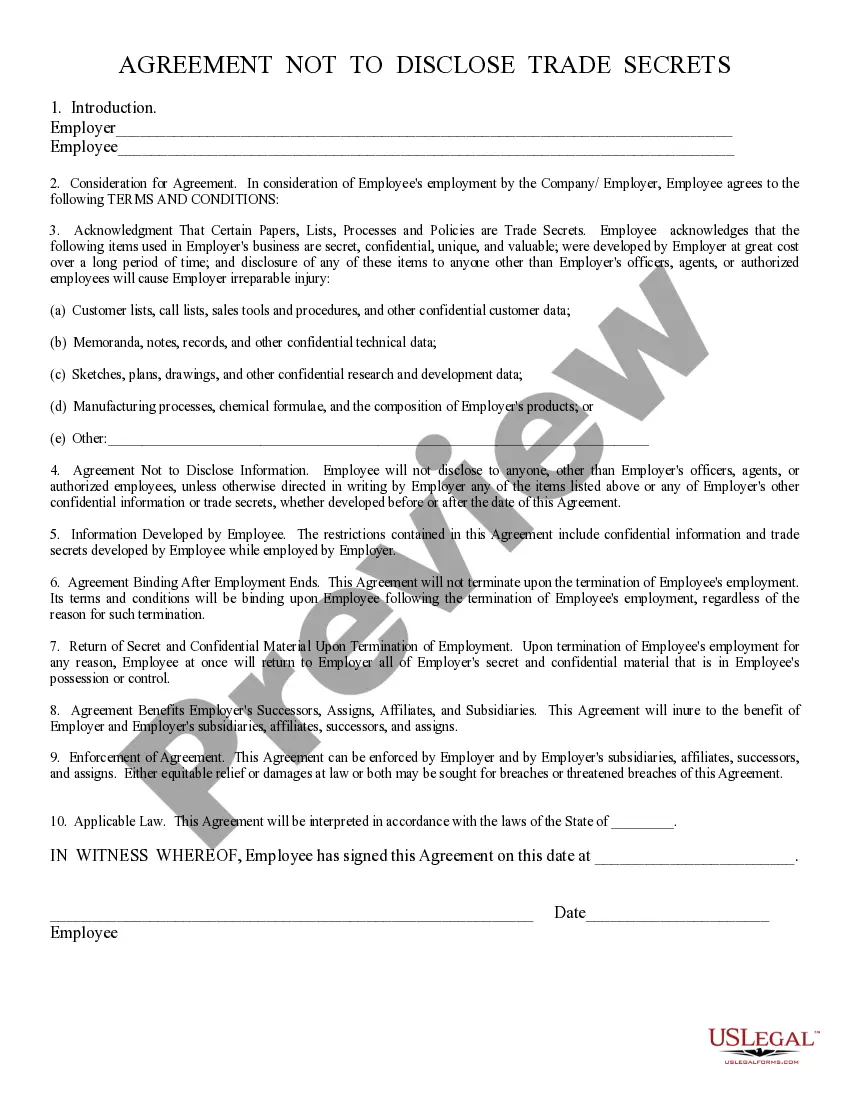
Arkansas Agreement Not to Disclose Trade Secrets
Description
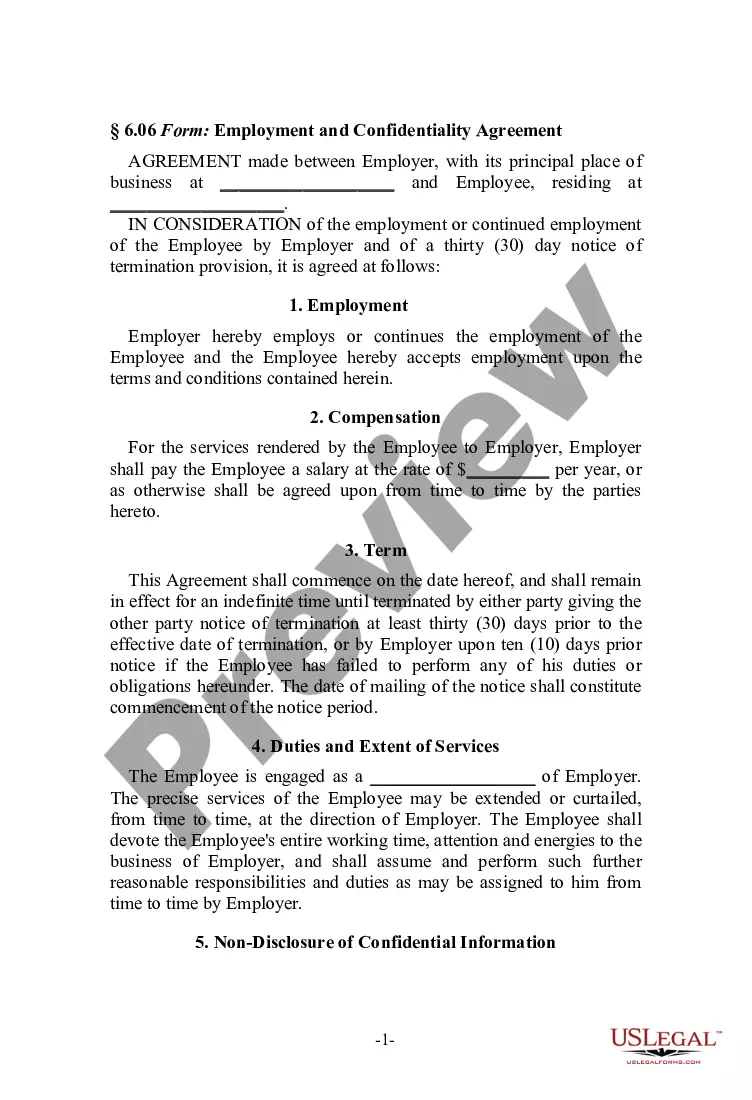
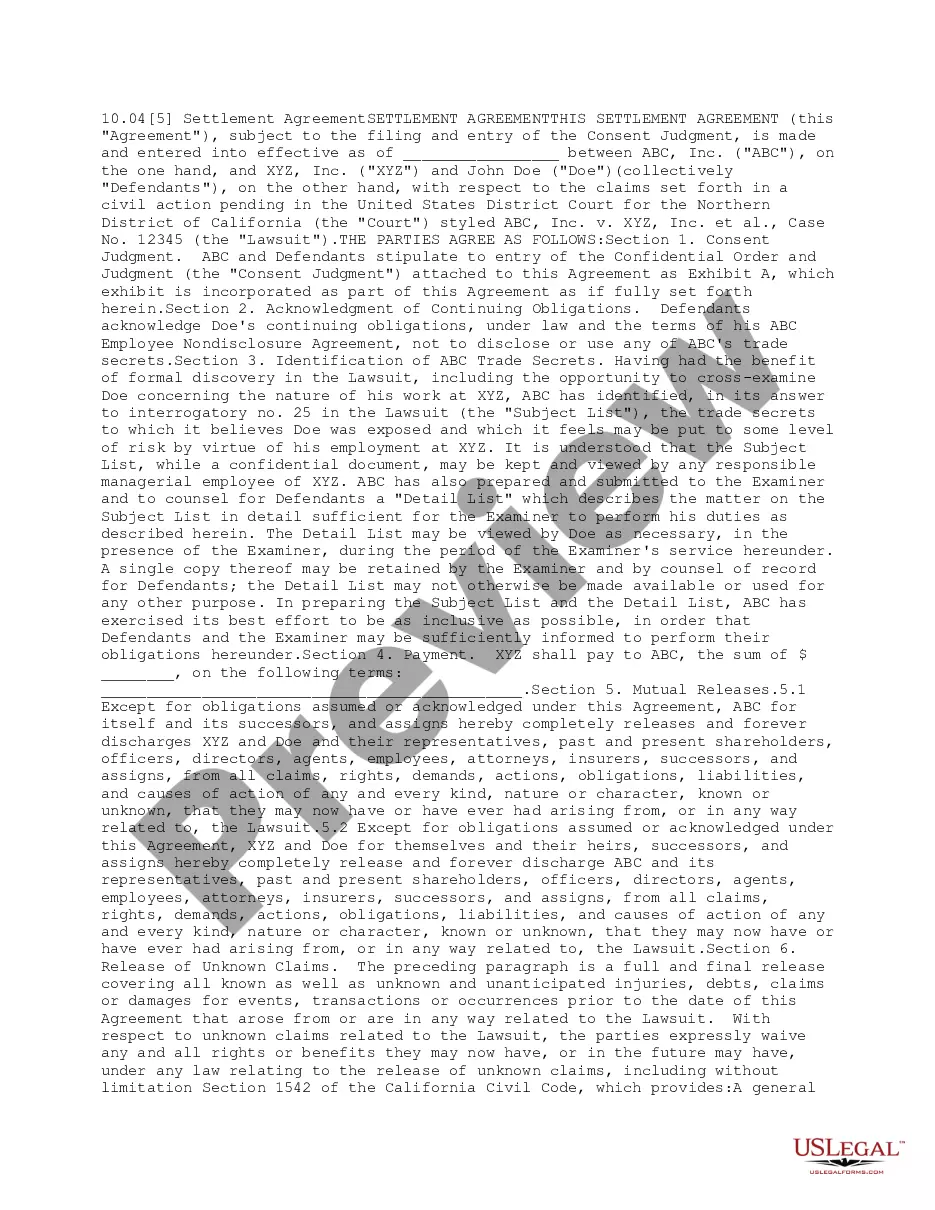


How to fill out Agreement Not To Disclose Trade Secrets?
US Legal Forms - one of the largest collections of legal documents in the USA - provides a vast selection of legal record templates that you can download or print.
By utilizing the website, you can access thousands of forms for both business and personal usage, organized by categories, states, or keywords.
You can find the latest versions of forms such as the Arkansas Agreement Not to Disclose Trade Secrets within moments.
Check the form description to confirm that you have selected the appropriate form. If the form does not suit your needs, utilize the Search field at the top of the screen to locate one that does.
If you are satisfied with the form, confirm your choice by clicking the Buy now button. Then, select your preferred pricing plan and provide your information to sign up for an account.
- If you have an account, Log In and download the Arkansas Agreement Not to Disclose Trade Secrets from the US Legal Forms library.
- The Download button will appear on each form you view.
- You can access all previously downloaded forms from the My documents tab of your account.
- If you are using US Legal Forms for the first time, here are simple instructions to get started.
- Ensure you have selected the correct form for the city/county.
- Click the Review button to examine the content of the form.
Form popularity
FAQ
A Trade Secret Agreement ensures that all your secret designs, inventions, ideas, etc. are protected and not disclosed to any third party or the public. Trade secrets must be specifically defined in your agreement as they are treated differently from confidential information by the courts.
Trade secrets may be disclosed during meetings between parties. Ideally, such disclosures are made under a confidential disclosure or nondisclosure agreement, and should always reveal only as much trade secret information as is required under the circumstances.
There is no central agency that enforces trade secrets. In most states, you must enforce your trade secret through a misappropriation (infringement) lawsuit brought within the statute of limitations. Most state laws are adaptations of the Uniform Trade Secrets Act (UTSA), a model law.
Since trade secrets are not made public, unlike patents, they do not provide defensive protection, as being prior art.
Trade secret protection lasts for as long as the secret is kept confidential without any statutory limitations period. However, once a trade secret is made available to the public, trade secret protection ends.
This is a relatively simple legal agreement between a company and a counter-party of that company to exchange information, for the purpose of a project, marketing campaign, R&D or sourcing, etc.
The NDA ensures your secrets remain secret, and if they do not you have legal recourse against the person or entity that disclosed them. When an NDA is violated, you can ask the court to enjoin the party responsible from infringing or misappropriating your trade secrets, and you can sue for any resulting damages.
Nonetheless, an NDA may provide broader protection than trade secret laws because it can cover proprietary and non-public information that does not meet the definition of a trade secret. "Trade secrets are defined by statute, but terms such as confidential and proprietary information are defined by the contract.
Nonetheless, an NDA may provide broader protection than trade secret laws because it can cover proprietary and non-public information that does not meet the definition of a trade secret. "Trade secrets are defined by statute, but terms such as confidential and proprietary information are defined by the contract.
A trade secret can also be revealed legally, and you have no recourse in this case, even if it was not your intention to reveal it. Illegal disclosure may be made by people who: Used illegal means, such as theft or bribery, to obtain the information.