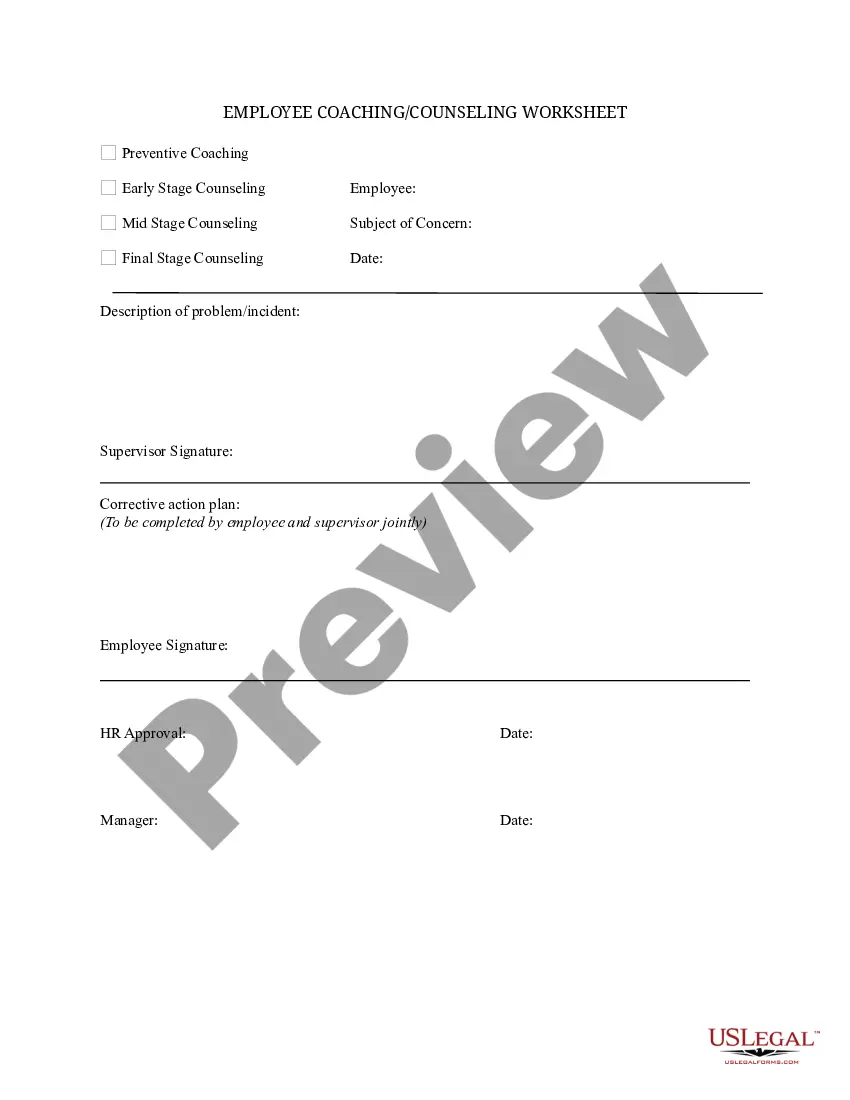
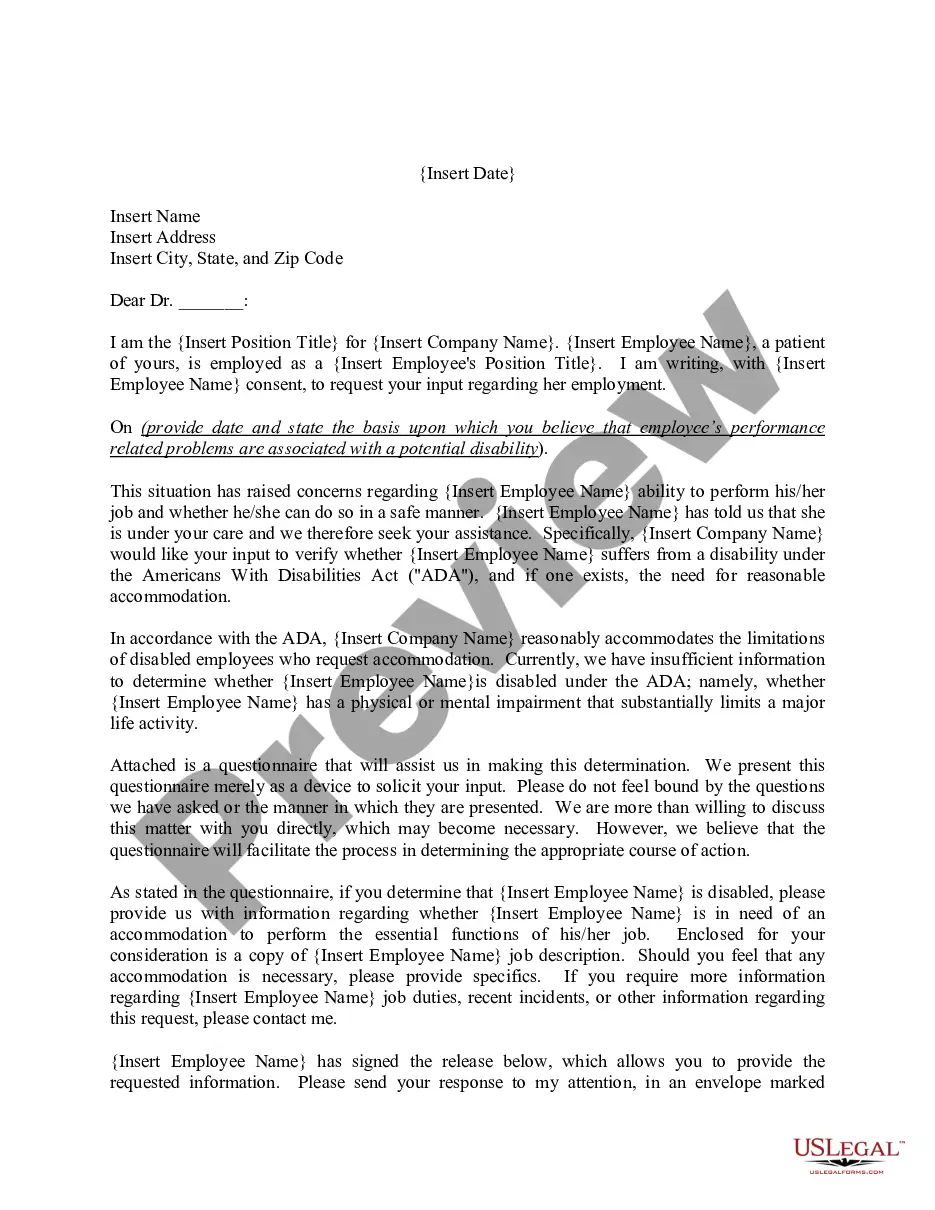
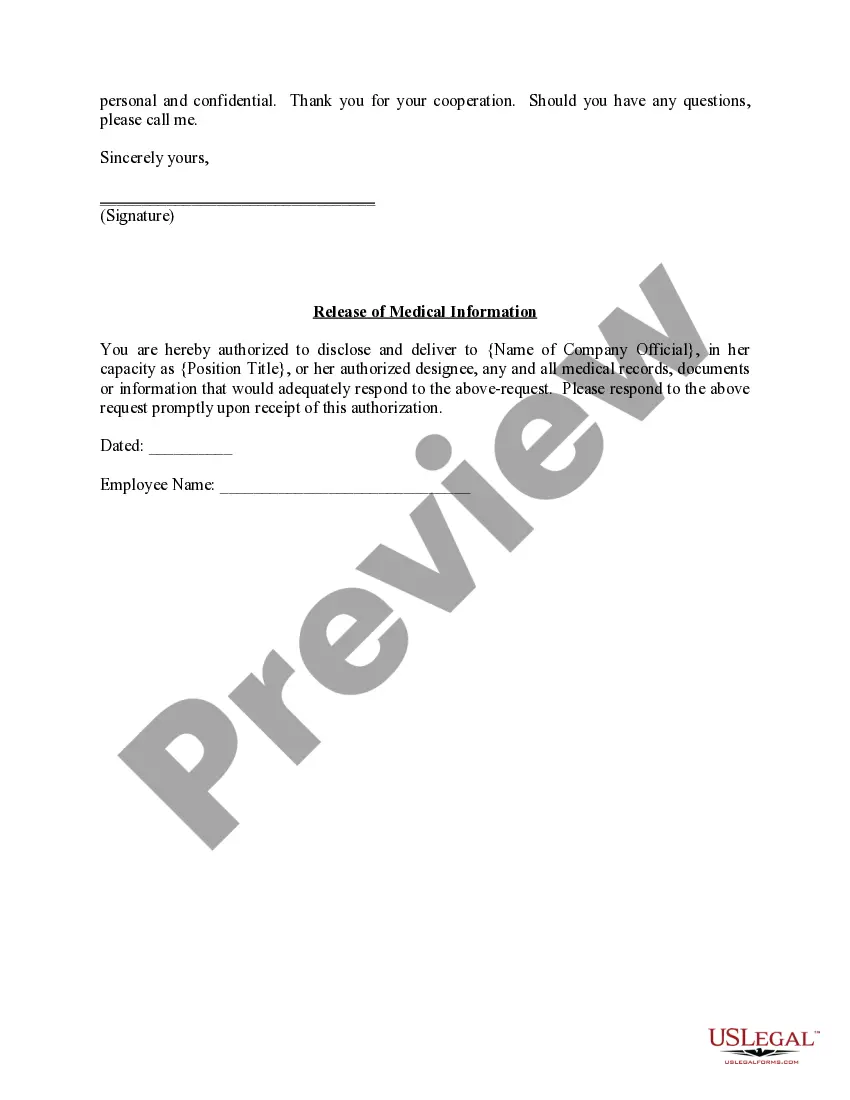
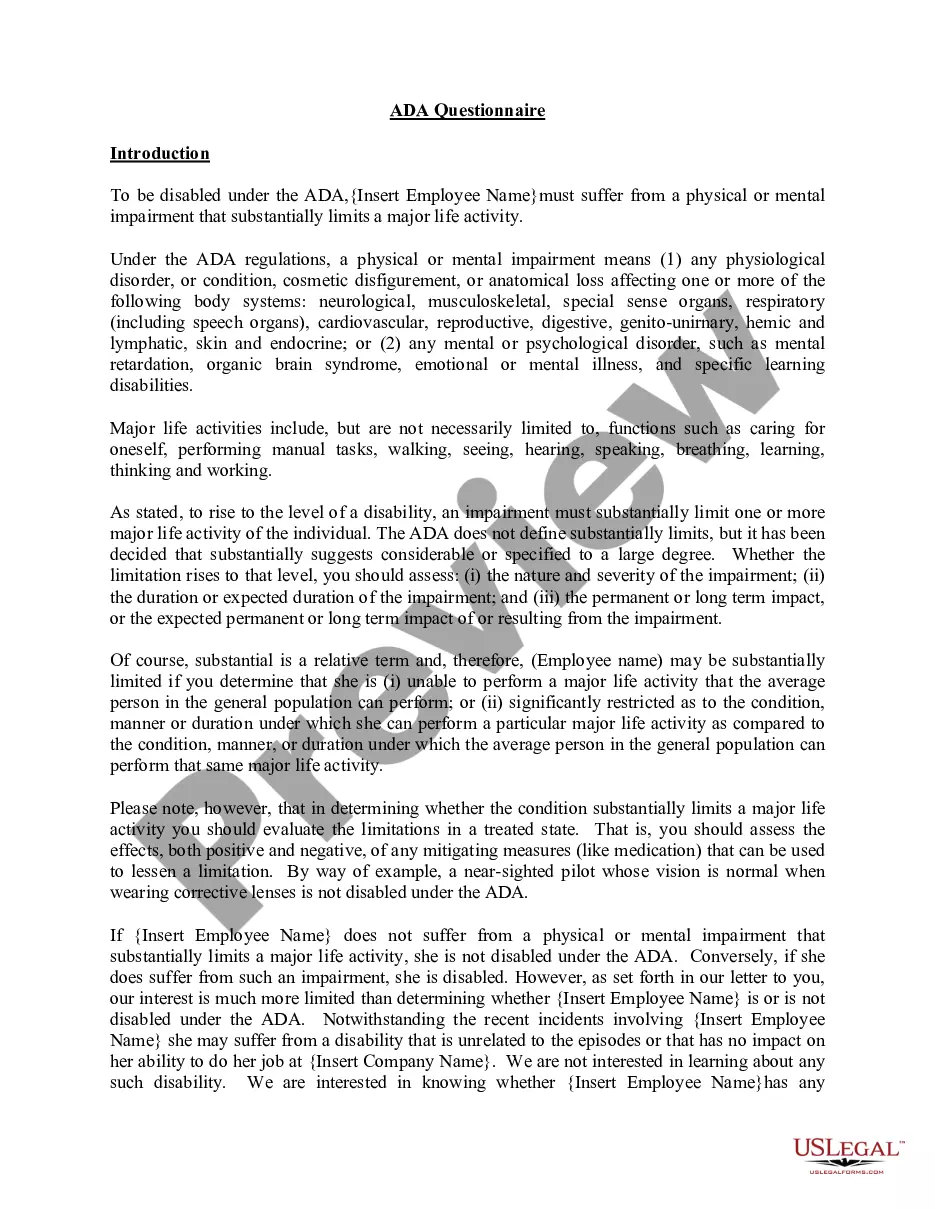
Alabama ADA Questionnaire for Physician
Description
Get your form ready online
Our built-in tools help you complete, sign, share, and store your documents in one place.
Make edits, fill in missing information, and update formatting in US Legal Forms—just like you would in MS Word.
Download a copy, print it, send it by email, or mail it via USPS—whatever works best for your next step.
Sign and collect signatures with our SignNow integration. Send to multiple recipients, set reminders, and more. Go Premium to unlock E-Sign.
If this form requires notarization, complete it online through a secure video call—no need to meet a notary in person or wait for an appointment.
We protect your documents and personal data by following strict security and privacy standards.

Make edits, fill in missing information, and update formatting in US Legal Forms—just like you would in MS Word.

Download a copy, print it, send it by email, or mail it via USPS—whatever works best for your next step.

Sign and collect signatures with our SignNow integration. Send to multiple recipients, set reminders, and more. Go Premium to unlock E-Sign.

If this form requires notarization, complete it online through a secure video call—no need to meet a notary in person or wait for an appointment.

We protect your documents and personal data by following strict security and privacy standards.
Looking for another form?
How to fill out ADA Questionnaire For Physician?
Locating the appropriate legal document template can be rather challenging.
Certainly, there are numerous templates available on the web, but how can you access the legal document you require.
Utilize the US Legal Forms website.
First, ensure you have selected the correct document for your area/region. You can examine the form using the Review button and review the form details to confirm it is suitable for you.
- This service offers thousands of templates, including the Alabama ADA Questionnaire for Physician, which can be utilized for both business and personal needs.
- All documents are reviewed by experts and comply with federal and state regulations.
- If you are already registered, Log In to your account and then click the Obtain button to find the Alabama ADA Questionnaire for Physician.
- Use your account to search for the legal documents you have previously purchased.
- Visit the My documents tab in your account to download another copy of the document you need.
- If you are a new user of US Legal Forms, here are some simple guidelines that you can follow.
Form popularity
FAQ
To be protected under the ADA, an individual must have a physical or mental impairment that substantially limits one or more major life activities, a record of such an impairment; or being regarded as having a substantial impairment.
The Americans with Disabilities Act (ADA) prohibits discrimination against people with disabilities in several areas, including employment, transportation, public accommodations, communications and access to state and local government' programs and services.
The ADA does not name all of the impairments that are covered, but common examples of disabilities include wheelchair confinement, blindness, deafness, learning disabilities, and certain kinds of mental illness.
What are Some Examples of ADA Violations?Failing to install a wheelchair ramp to access a place that is open to the public;Having a lack of handrails on staircases or walkways;Failing to install adequate handicap restroom accommodations or parking spots in the parking lot of a public place;More items...?
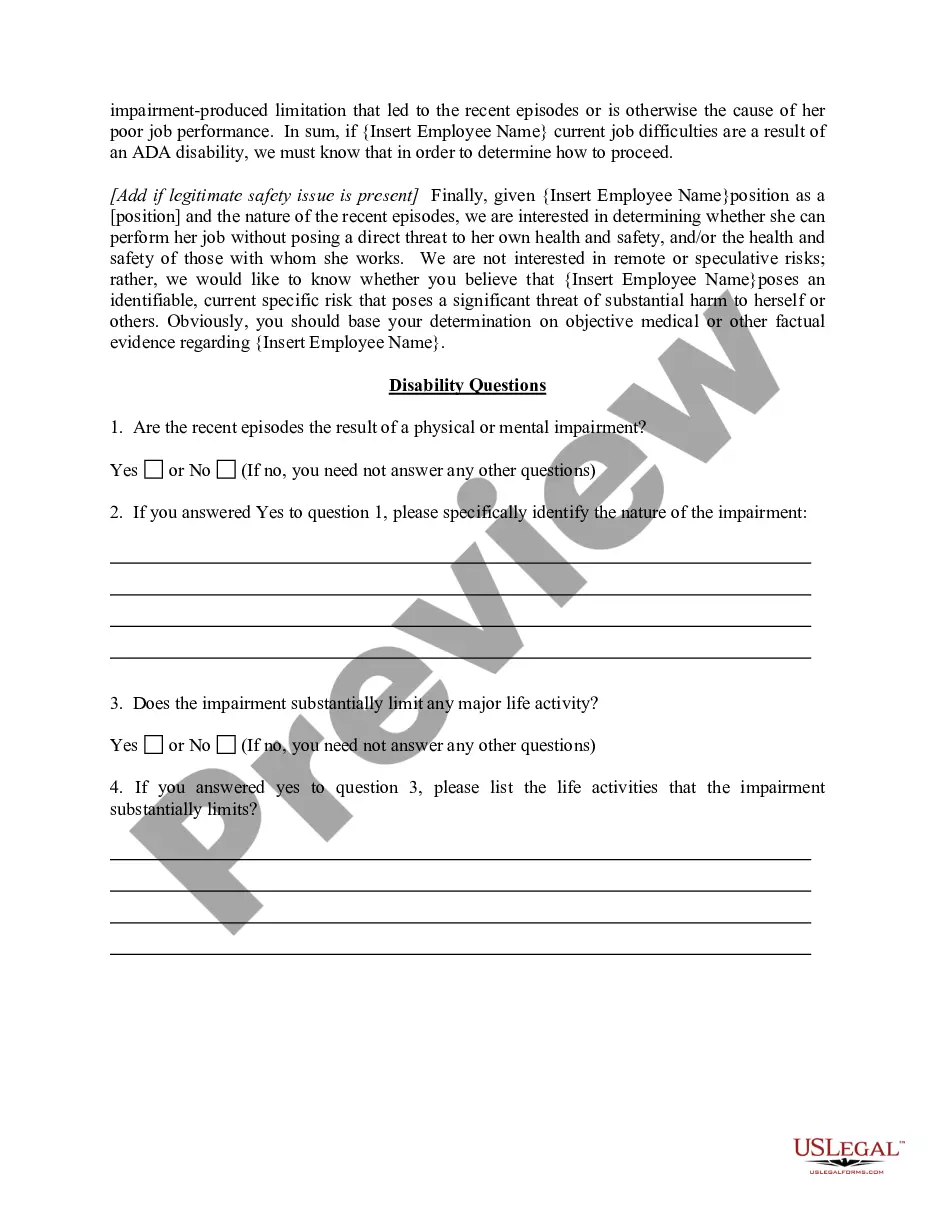
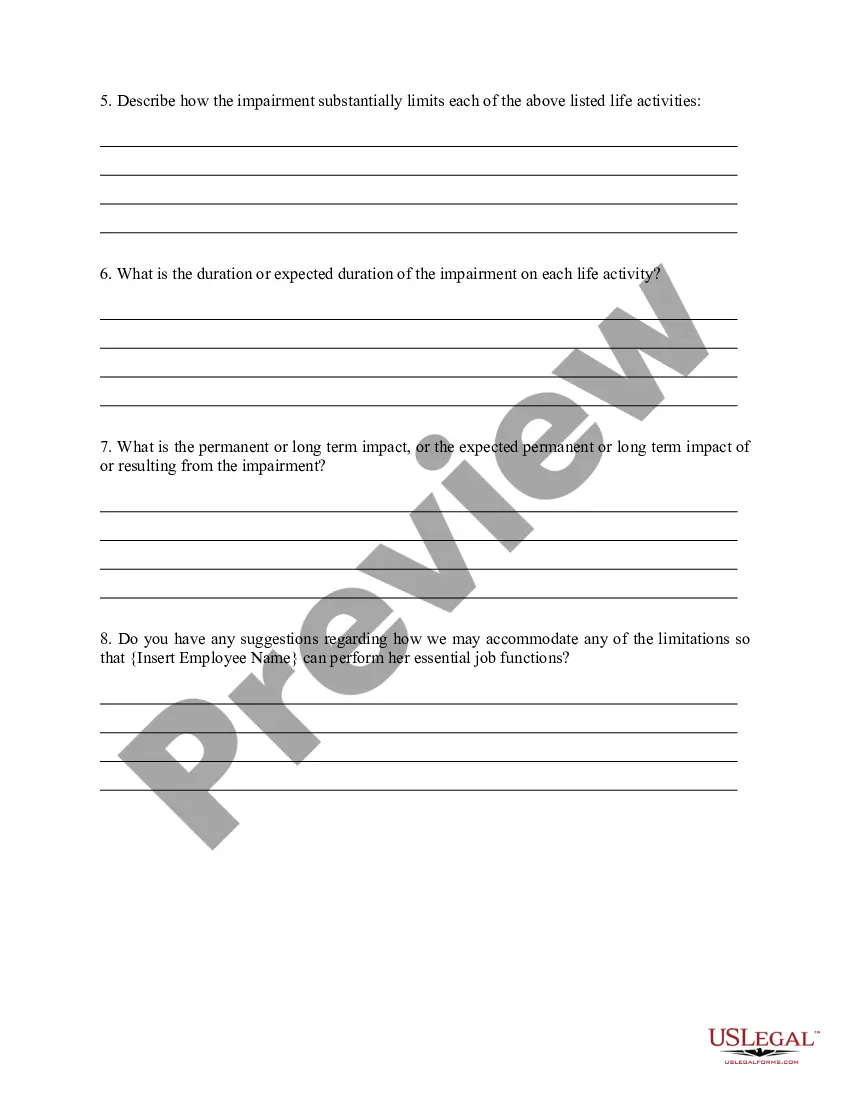
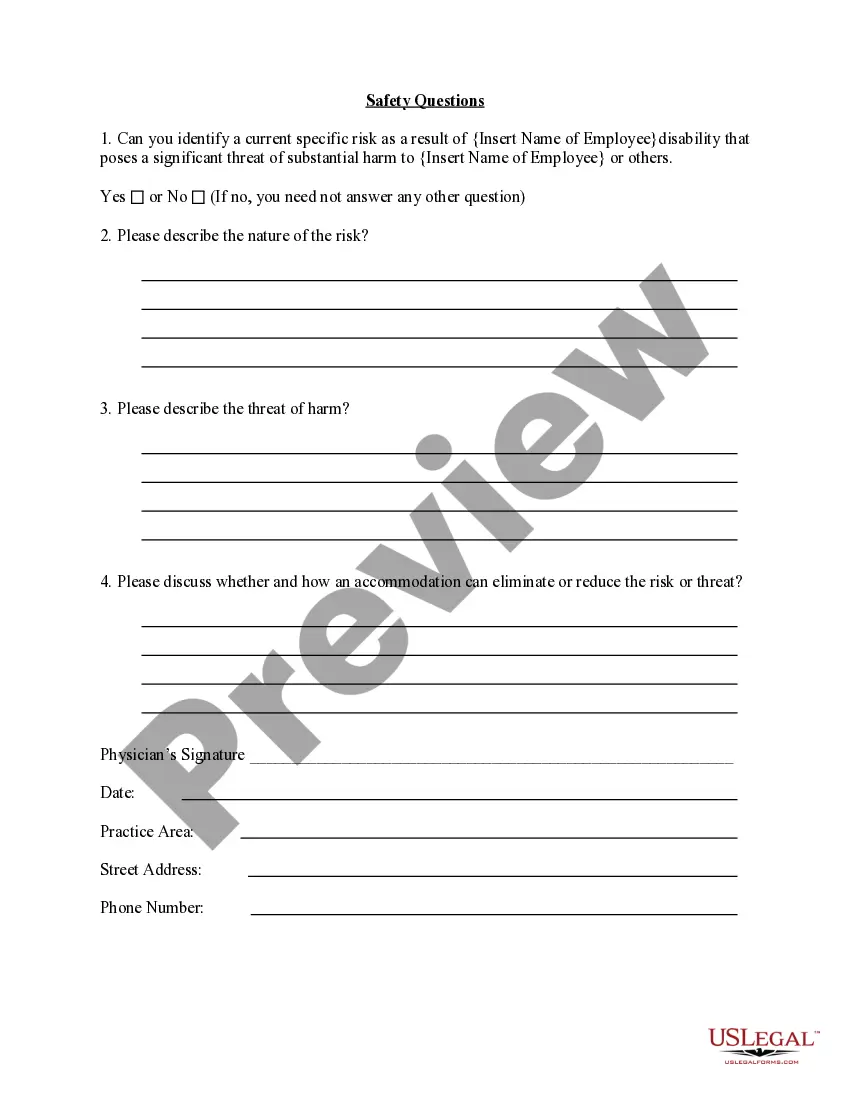
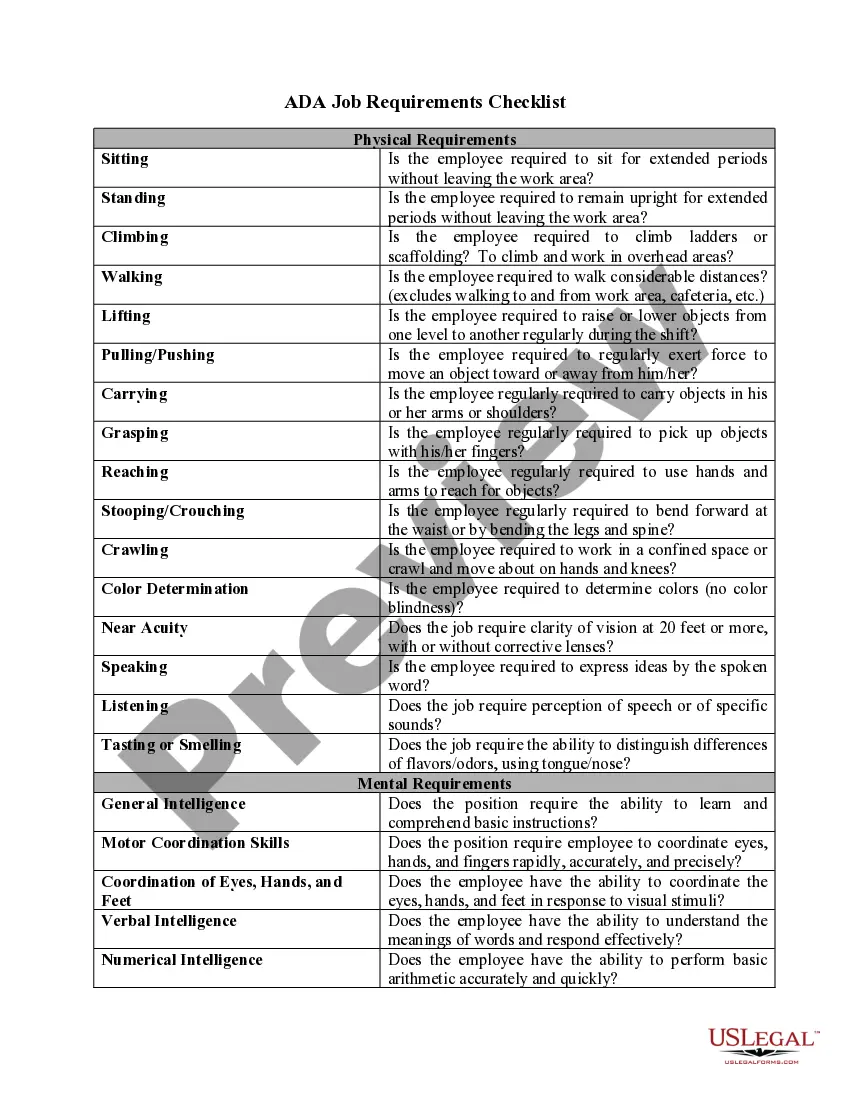
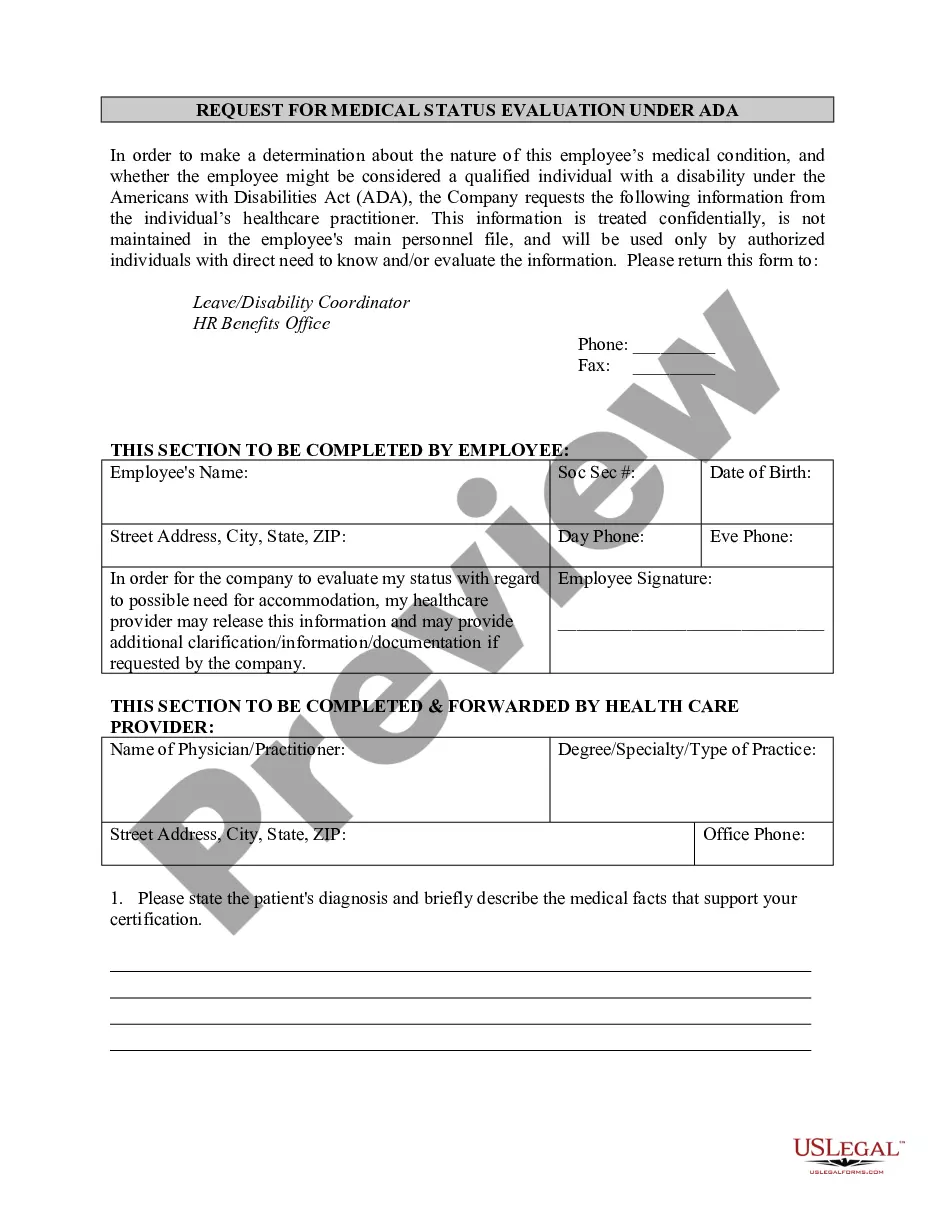
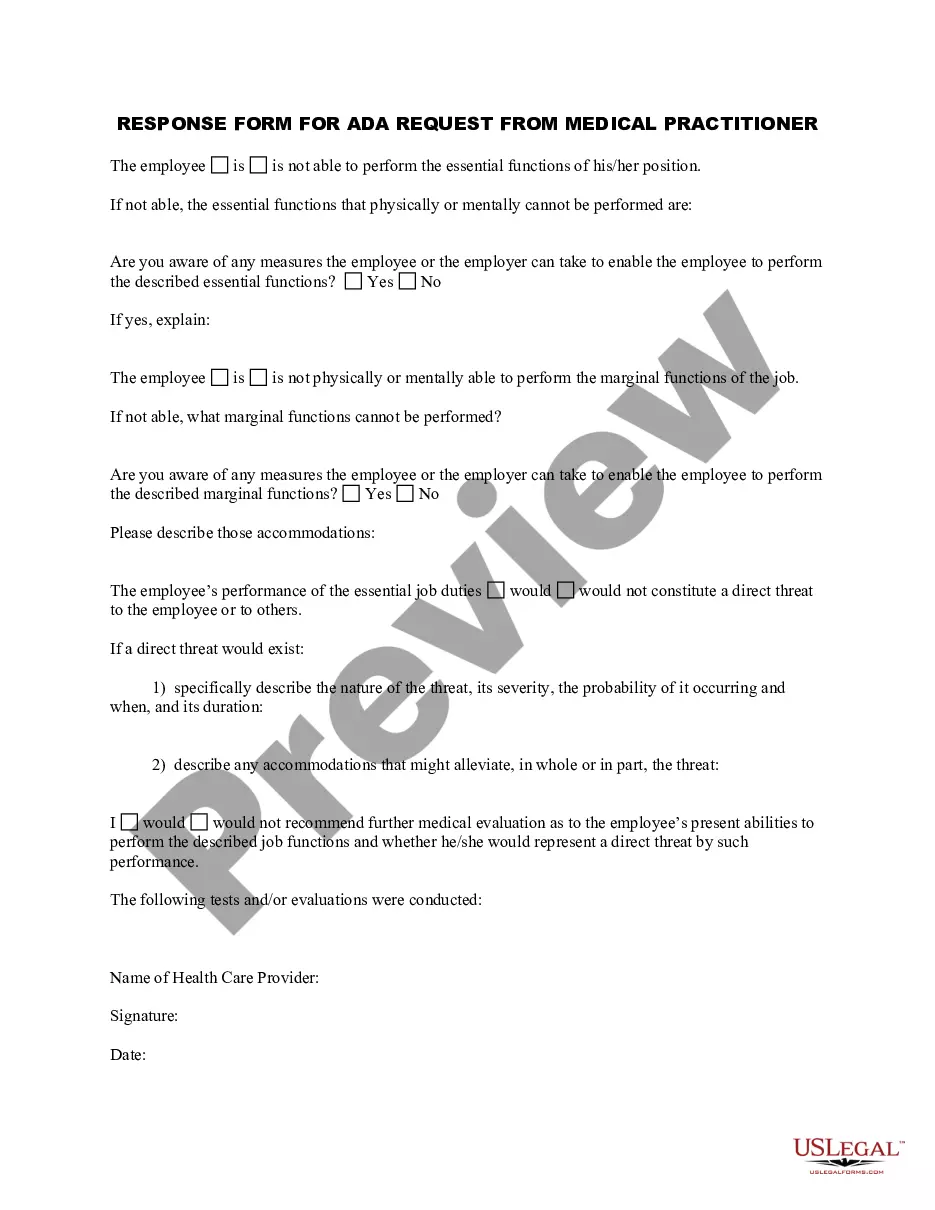
This questionnaire is part of an interactive process that is necessary in order to determine if your patient (our employee) has a disability recognized under the Americans With Disabilities Act, and, if so, what, if any, reasonable accommodation(s) are necessary and can be made that would enable your patient to perform
Under the ADA , you have a disability if you have a physical or mental impairment that substantially limits a major life activity. The ADA also protects you if you have a history of such a disability, or if an employer believes that you have such a disability, even if you don't.
A violation can occur when job postings discourage individuals with disabilities from applying, exclude them, or deny a qualified individual employment because of their disability. It is an ADA violation for any employer to demote, terminate, harass, or fail to provide reasonable accommodations to disabled employees.
You can file an ADA complaint alleging disability discrimination against a state or local government (Title II) or a public accommodation (Title III - including, for example, a restaurant, doctor's office, retail store, hotel, etc.) online, by mail, or fax.
A completed Special Accommodation Request Packet includes the Candidate ADA Request Form, the Professional Accommodation Verification Form and any additional information or documentation requested by PCS to evaluate an accommodation request.
The common violations (in no particular order) include:Incorrect ramp height to building and/or curb. Incorrect ADA signage or no signage at all. No parking access or no area for drop-offs. Inaccessible restroom facilities and/or location in building.