Alabama Competence - Unanimous Verdict
Description
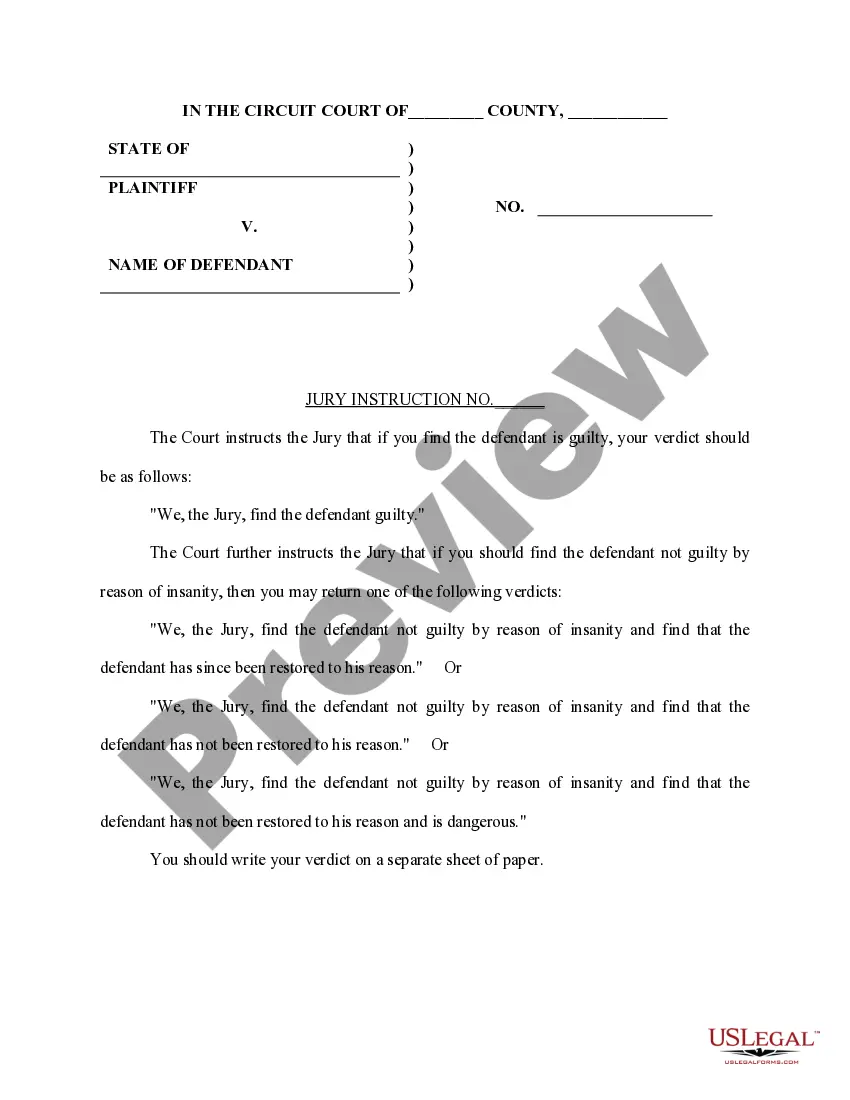
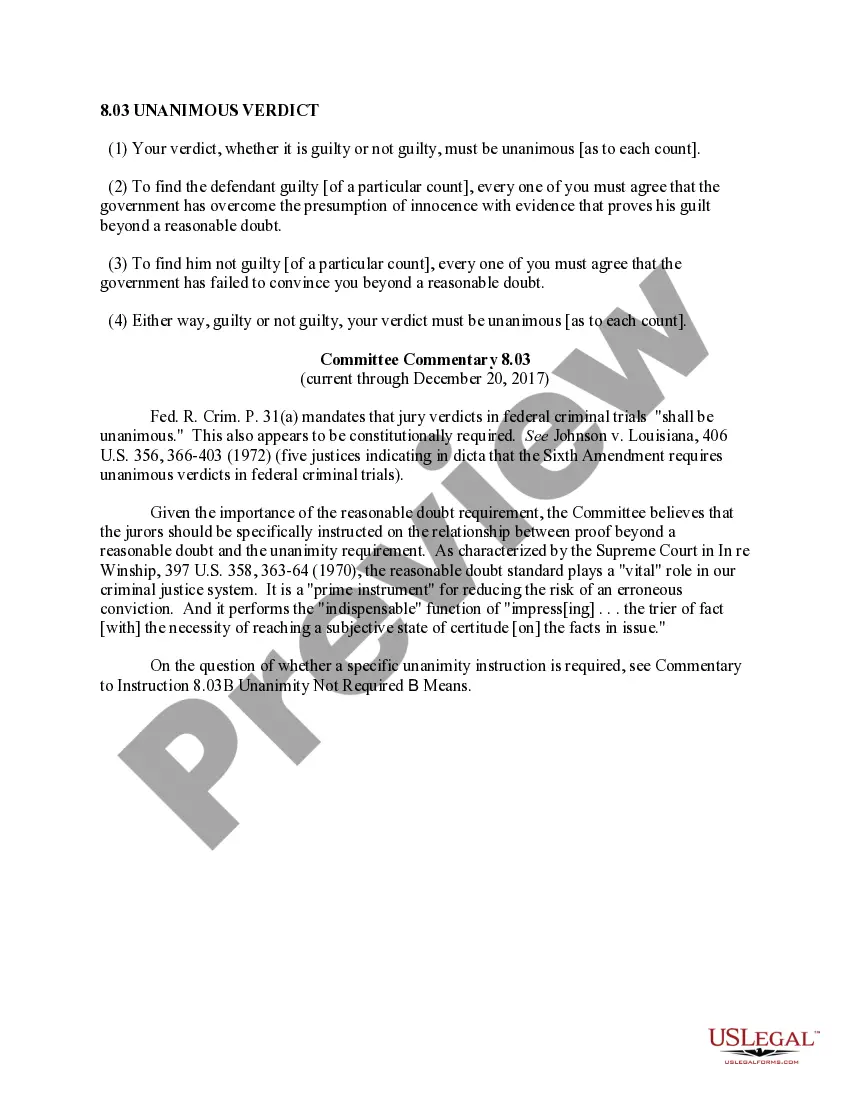
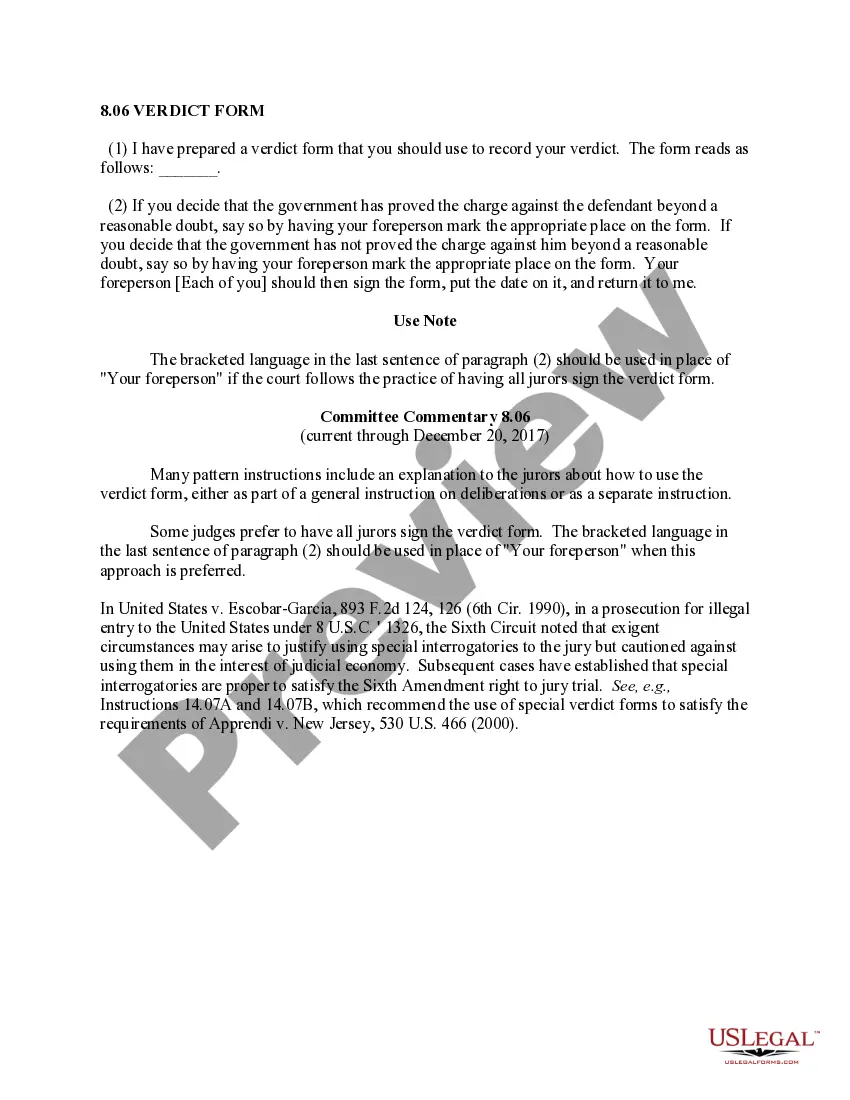
Get your form ready online
Our built-in tools help you complete, sign, share, and store your documents in one place.
Make edits, fill in missing information, and update formatting in US Legal Forms—just like you would in MS Word.
Download a copy, print it, send it by email, or mail it via USPS—whatever works best for your next step.
Sign and collect signatures with our SignNow integration. Send to multiple recipients, set reminders, and more. Go Premium to unlock E-Sign.
If this form requires notarization, complete it online through a secure video call—no need to meet a notary in person or wait for an appointment.
We protect your documents and personal data by following strict security and privacy standards.

Make edits, fill in missing information, and update formatting in US Legal Forms—just like you would in MS Word.

Download a copy, print it, send it by email, or mail it via USPS—whatever works best for your next step.

Sign and collect signatures with our SignNow integration. Send to multiple recipients, set reminders, and more. Go Premium to unlock E-Sign.

If this form requires notarization, complete it online through a secure video call—no need to meet a notary in person or wait for an appointment.

We protect your documents and personal data by following strict security and privacy standards.
Looking for another form?

How to fill out Competence - Unanimous Verdict?
US Legal Forms - one of the most prominent collections of legal documents in the USA - offers a variety of legal form templates that you can download or create. By using the site, you can access thousands of forms for business and personal purposes, organized by categories, states, or keywords. You can find the latest forms like the Alabama Competence - Unanimous Verdict in just moments.
If you already have an account, Log In and download Alabama Competence - Unanimous Verdict from the US Legal Forms library. The Download button will appear on every form you view. You can access all previously acquired forms from the My documents section of your account.
To use US Legal Forms for the first time, here are simple instructions to get started: Ensure you have selected the correct form for your city/region. Click on the Review button to examine the form's content. Read the form summary to confirm you have chosen the right form. If the form does not meet your needs, utilize the Search area at the top of the screen to find one that does. If you are satisfied with the form, affirm your choice by clicking the Get now button. Then, choose the pricing plan you desire and provide your information to register for the account. Process the payment. Use your Visa or Mastercard or PayPal account to complete the transaction. Select the format and download the form to your device. Make modifications. Complete, alter, and print and sign the downloaded Alabama Competence - Unanimous Verdict. Each template you add to your account has no expiration date and is yours forever. Therefore, if you want to download or print another copy, simply go to the My documents section and click on the form you need.
- Access the Alabama Competence - Unanimous Verdict with US Legal Forms, the most extensive collection of legal document templates.
- Utilize thousands of professional and state-specific templates that meet your business or personal requirements and specifications.
Form popularity
FAQ
Under Rule 11.6, a person charged with a crime may be committed for treatment and therapy for at most a six-month period.
The Court may order a defendant to pay an amount equal to each victim's actual losses, usually the value of the principle or property fraudulently obtained. In most cases, attorney fees, and tax penalties are not included in court ordered restitution.
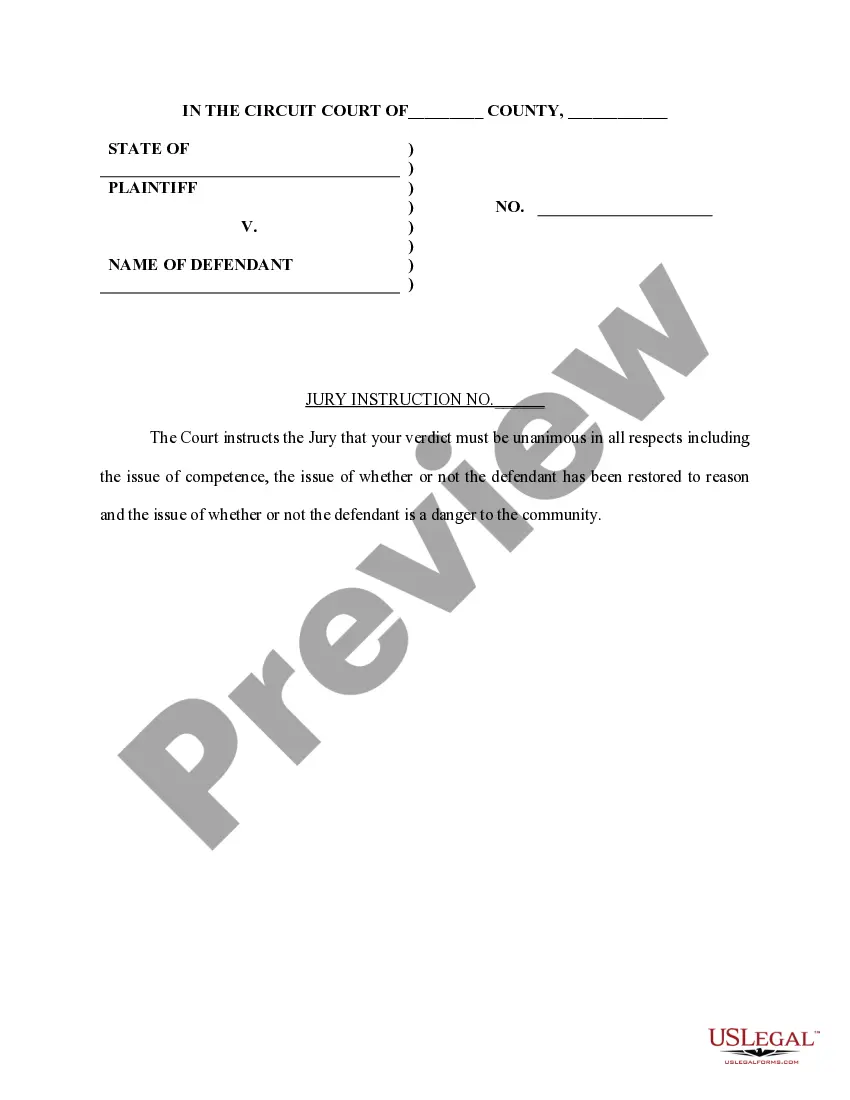
The jury are asked by the judge to reach a unanimous verdict - that means, they should all agree on whether the defendant is 'guilty' or 'not guilty'. If they can't do that after carefully considering and discussing the evidence, the judge can allow them to reach a majority verdict of at least 10 people.
In a criminal case, the unanimous agreement of all 12 jurors is required.
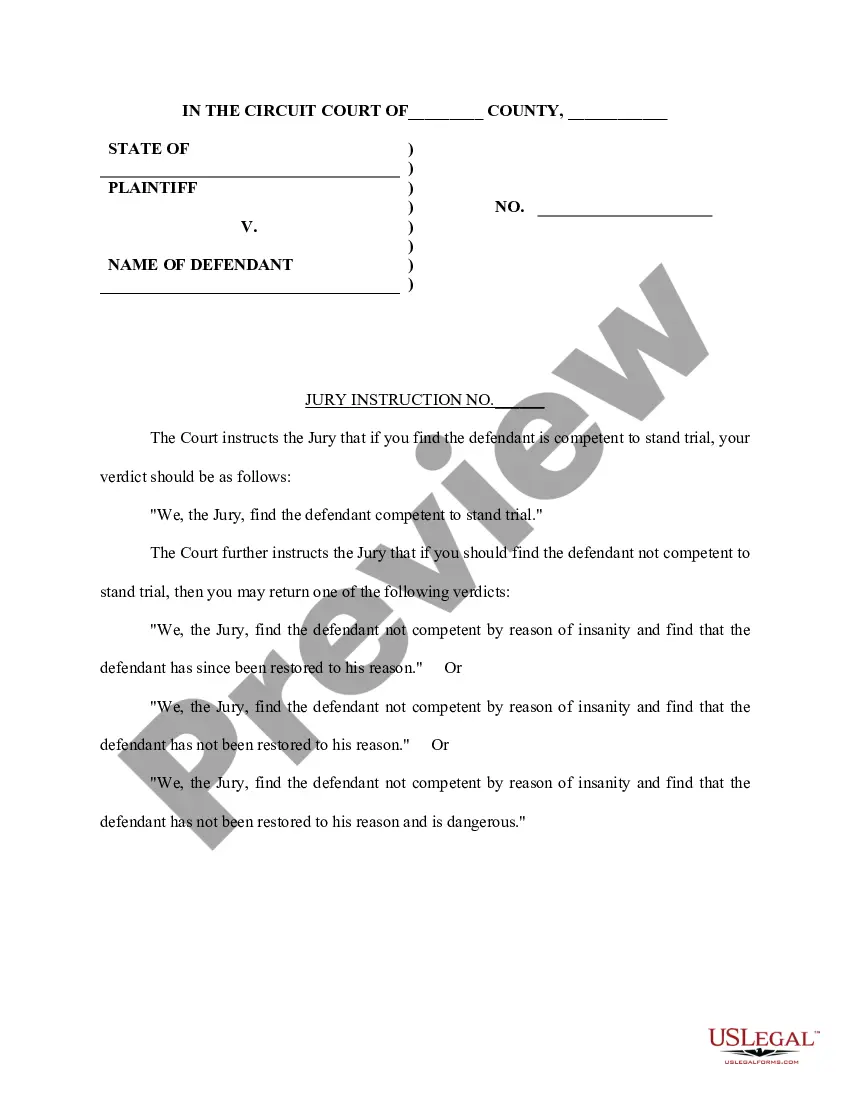
?If any person charged with any felony is held in confinement under indictment and the trial court shall have reasonable ground to doubt his sanity, the trial of such person for such offense shall be suspended until the jury shall inquire into the fact of such sanity, such jury to be impaneled from the regular jurors ...
No one may be sentenced to incarceration for inability to pay fines, fees, or restitution. However, the court may incarcerate a person for nonpayment of fines and fees after holding an ability to pay hearing and determining that the failure to pay was willful (i.e. the defendant had the ability to pay but did not).
Rule 7.3(a) provides mandatory conditions of release, which apply in every release order. Rule 7.3(b) allows the court the flexibility to fashion other conditions of release.
Alabama is one of only two states* that doesn't require a unanimous jury verdict to sentence someone to death. In Alabama, only 10 jurors need to agree to sentence someone to death. Every other state with a death penalty requires a unanimous jury sentencing verdict. The Supreme Court recently ruled in Ramos v.