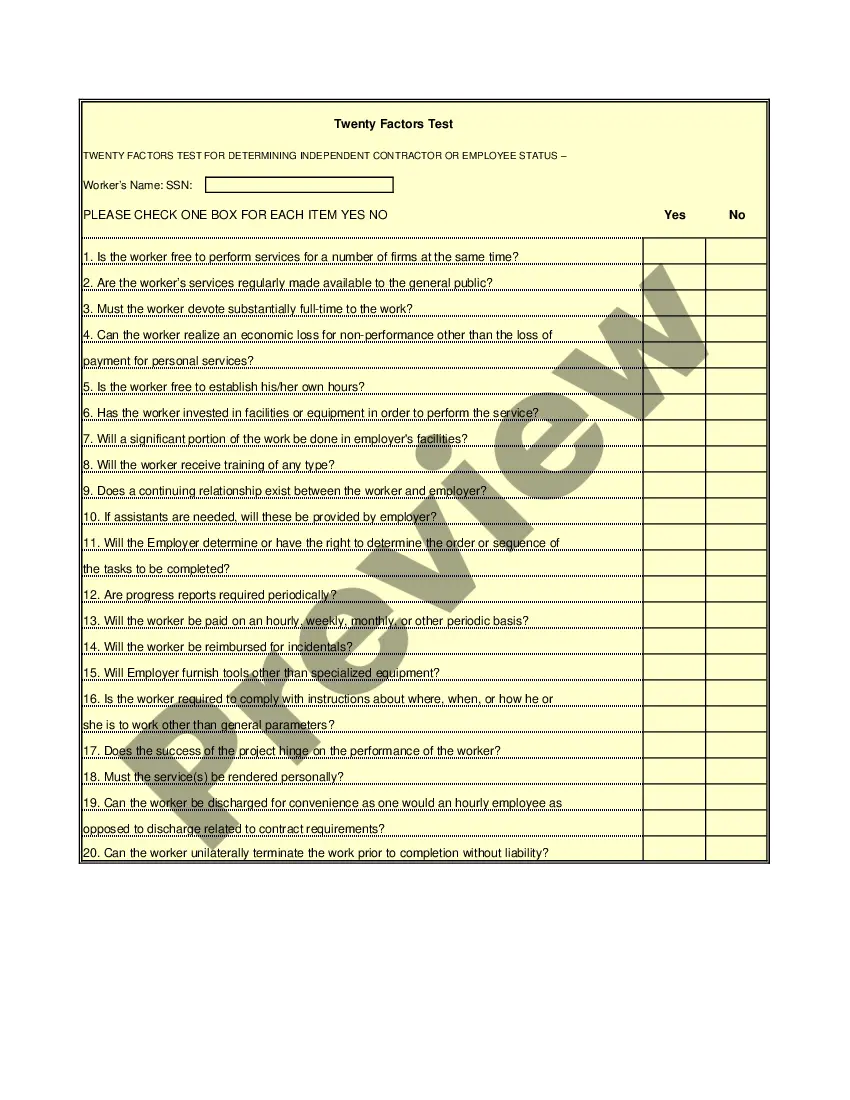
Employer's form to determine between employee and 1099 contractor.
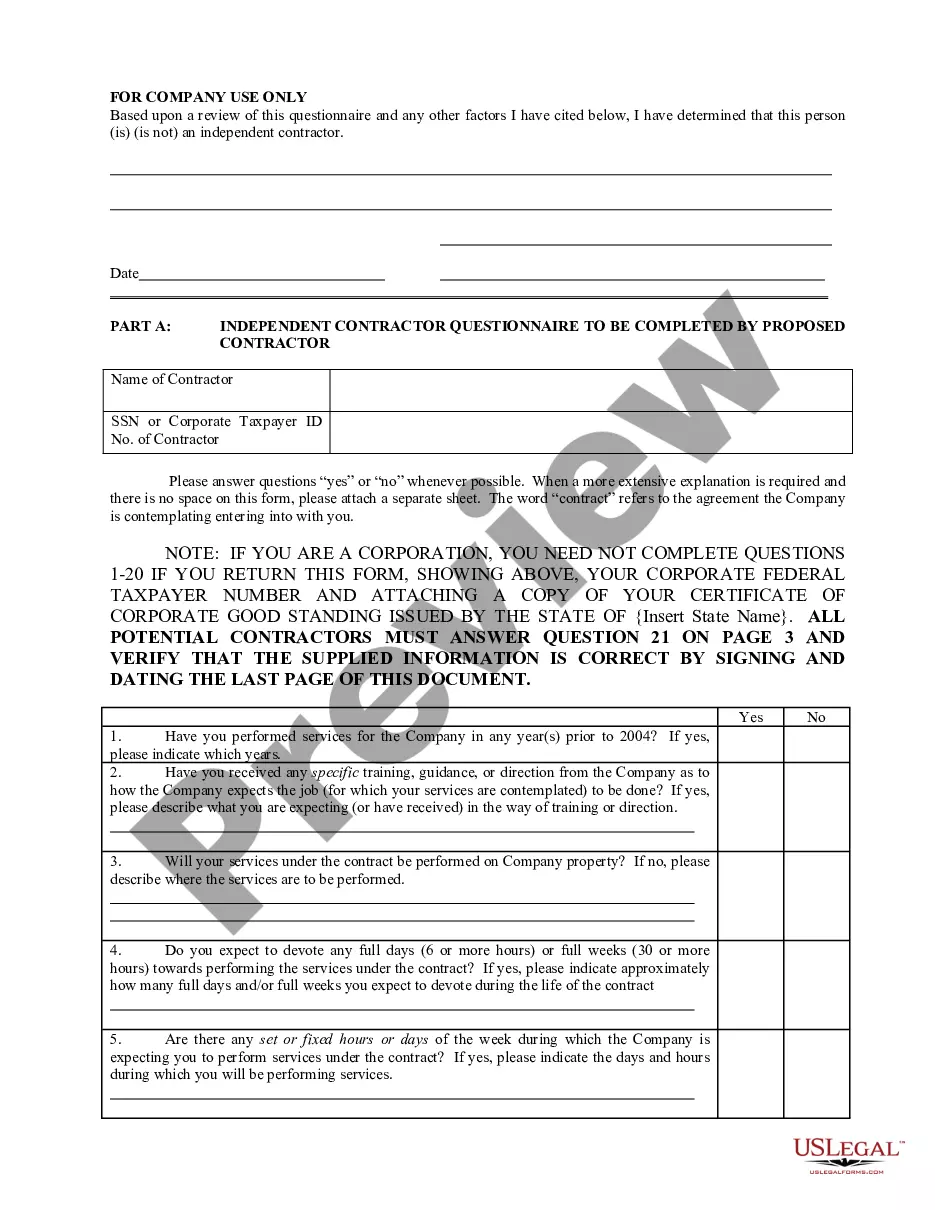
Alaska IRS 20 Quiz to Determine 1099 vs Employee Status
Instant download
Description
How to fill out IRS 20 Quiz To Determine 1099 Vs Employee Status?
US Legal Forms - one of the largest collections of legal templates in the United States - offers a selection of legal document formats that you can download or print.
By using the website, you can access thousands of forms for both business and personal purposes, organized by categories, states, or keywords.
You can obtain the latest versions of forms such as the Alaska IRS 20 Quiz to Determine 1099 vs Employee Status in a matter of minutes.
Read the form details to confirm you have chosen the correct one.
If the form does not fit your requirements, use the Search field at the top of the screen to find one that does.
- If you have a monthly membership, Log In and download the Alaska IRS 20 Quiz to Determine 1099 vs Employee Status from the US Legal Forms library.
- The Download button will be visible on each form you view.
- You have access to all previously downloaded forms in the My documents section of your account.
- If you are new to US Legal Forms, here are simple instructions to get you started.
- Ensure you have selected the correct form for your city/state.
- Click the Review button to evaluate the contents of the form.
Form popularity
FAQ
The determination of whether a person is an employee or an independent contractor revolves around several key factors. The IRS uses a three-part test that includes Behavioral Control, Financial Control, and the Type of Relationship. This is where the Alaska IRS 20 Quiz to Determine 1099 vs Employee Status becomes crucial, as it guides you through the specifics of these factors. Utilizing resources like US Legal Forms can streamline the process and help ensure you classify your workers correctly, protecting yourself from potential tax issues.
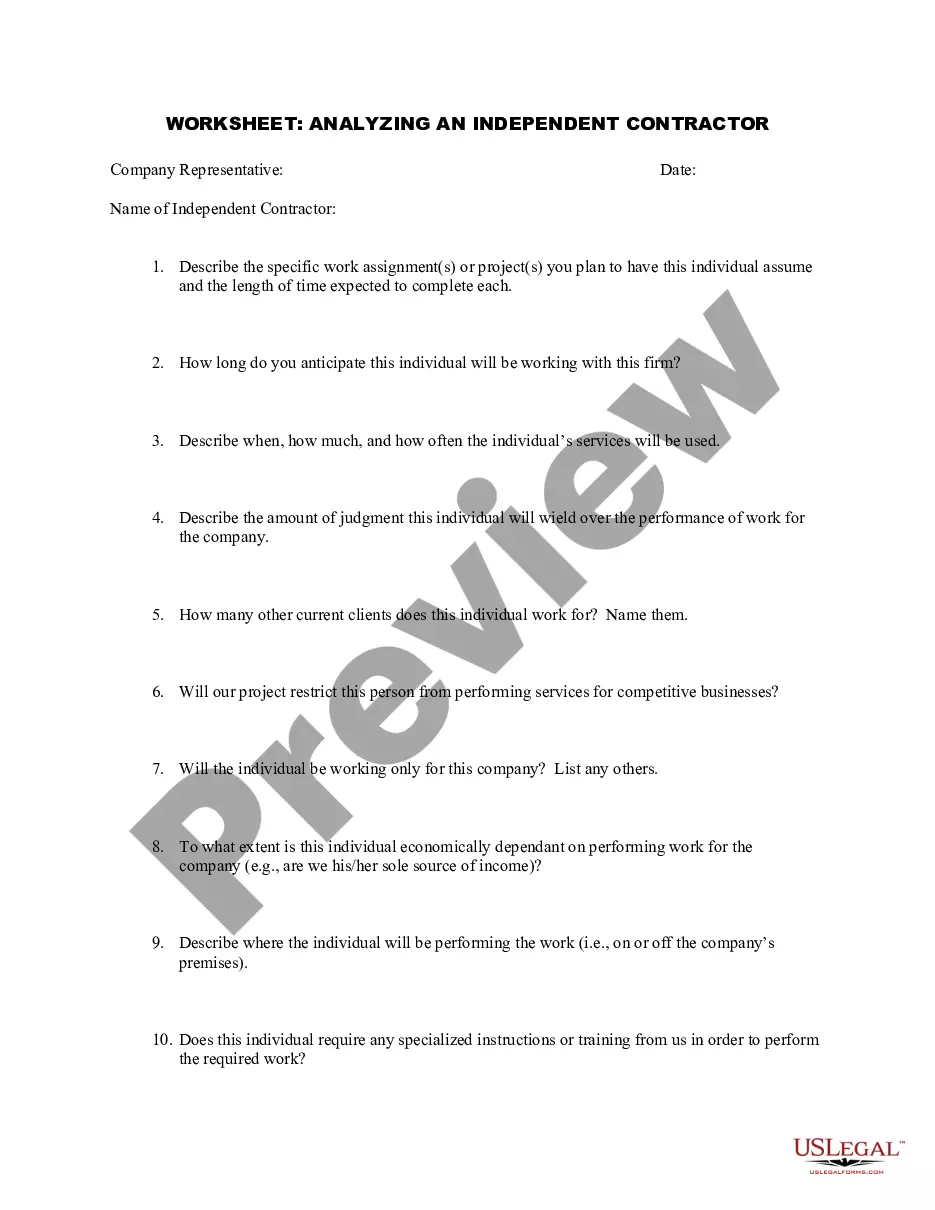
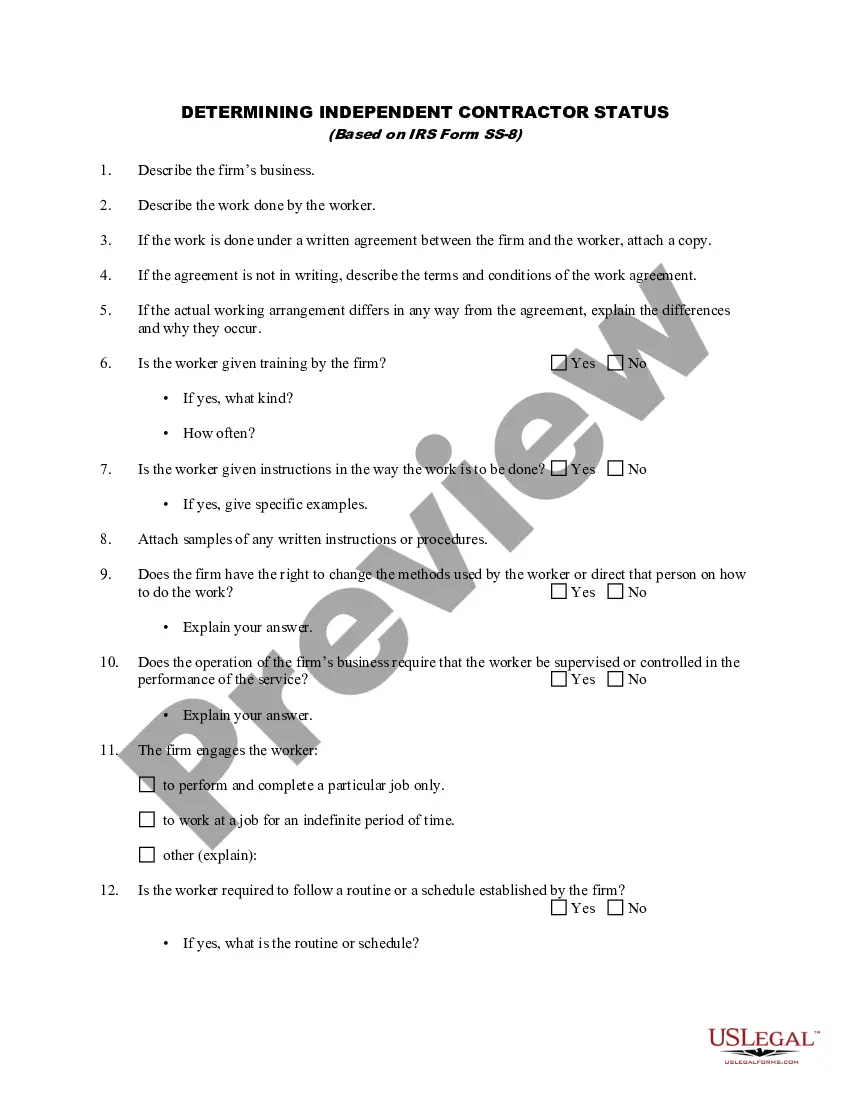
The Alaska IRS 20 Quiz to Determine 1099 vs Employee Status typically includes questions about the degree of control a business has over the worker. It explores whether the business dictates how, when, and where work is performed. Additionally, the quiz evaluates the independence of the worker in terms of their ability to make a profit or incur a loss. For a comprehensive understanding and to navigate these complexities effectively, you can rely on resources like US Legal Forms.
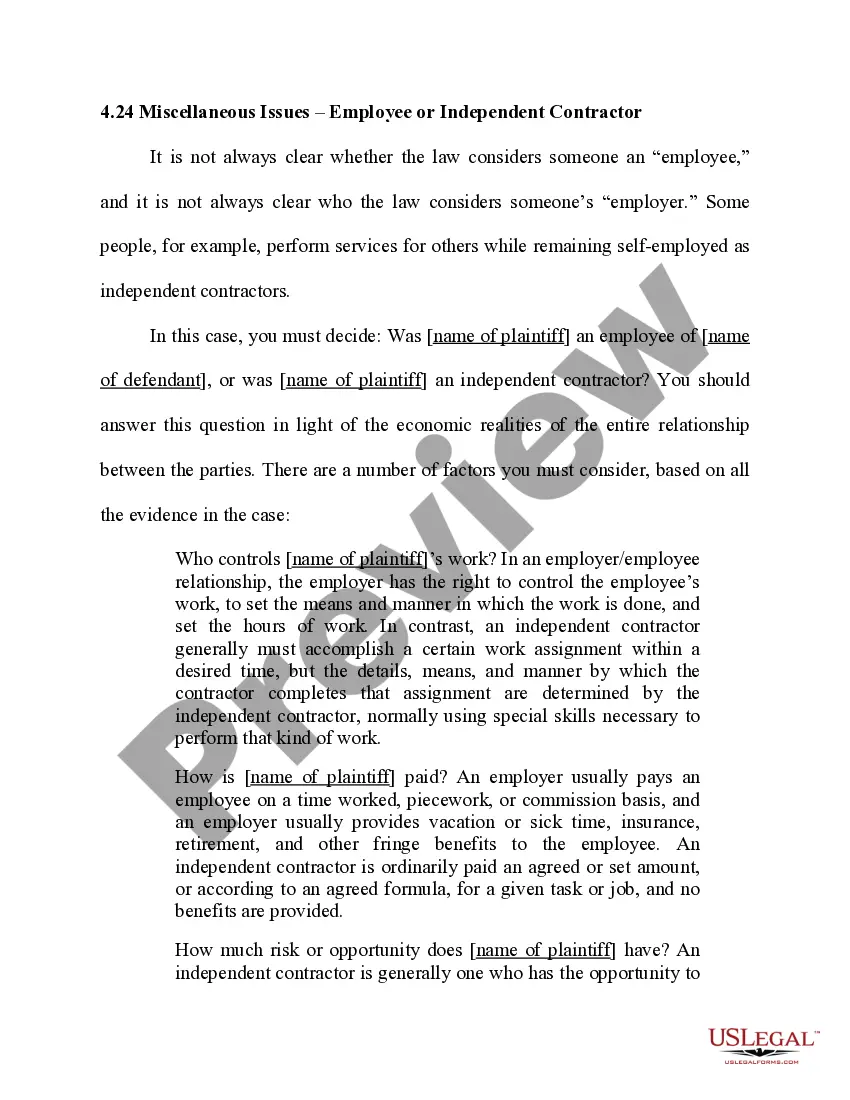
The IRS uses several factors to differentiate between independent contractors and employees, focusing on behavioral control, financial control, and the type of relationship. Essential aspects like how a worker is compensated and the level of control exerted by the employer play a crucial role. Completing the Alaska IRS 20 Quiz to Determine 1099 vs Employee Status can greatly simplify this evaluation process.
Key factors include the degree of control over work, the financial arrangements, and the nature of the working relationship. This evaluates whether the individual operates independently or is dependent on your business. The Alaska IRS 20 Quiz to Determine 1099 vs Employee Status can help clarify these distinctions for your specific case.
You can determine the status of a person by assessing the level of independence they have in completing their work, the methods of payment, and the degree of control your organization has over the work environment. Furthermore, relevant legal definitions and IRS standards should be consulted. The Alaska IRS 20 Quiz to Determine 1099 vs Employee Status serves as a useful tool in making this determination.
Determining if someone is a W-2 employee or a 1099 contractor involves evaluating the nature of the work relationship. A W-2 employee typically has a set schedule, receives regular paychecks, and benefits from the employer, while a 1099 contractor often has more autonomy and operates on a project basis. The Alaska IRS 20 Quiz to Determine 1099 vs Employee Status can guide you through this decision making.
The IRS 20-Factor Test, commonly referred to as the Right-to-Control Test, is designed to evaluate who controls how the work is performed. According to the IRS's Common-Law Rules, a worker's status corresponds to the level of control and independence they have over their work.
A 1099 refers to the tax form companies must provide to independent contractors for work performed throughout the year. Business taxpayers must report nonemployee compensation of $600 or more to the IRS using a Form 1099-NEC, Nonemployee Compensation.
Pay basis: If you pay a worker on an hourly, weekly, or monthly basis, the IRS will consider it a sign the worker is your employee. An independent is generally paid by the job, project, assignment, etc., or receives a commission or similar fee.
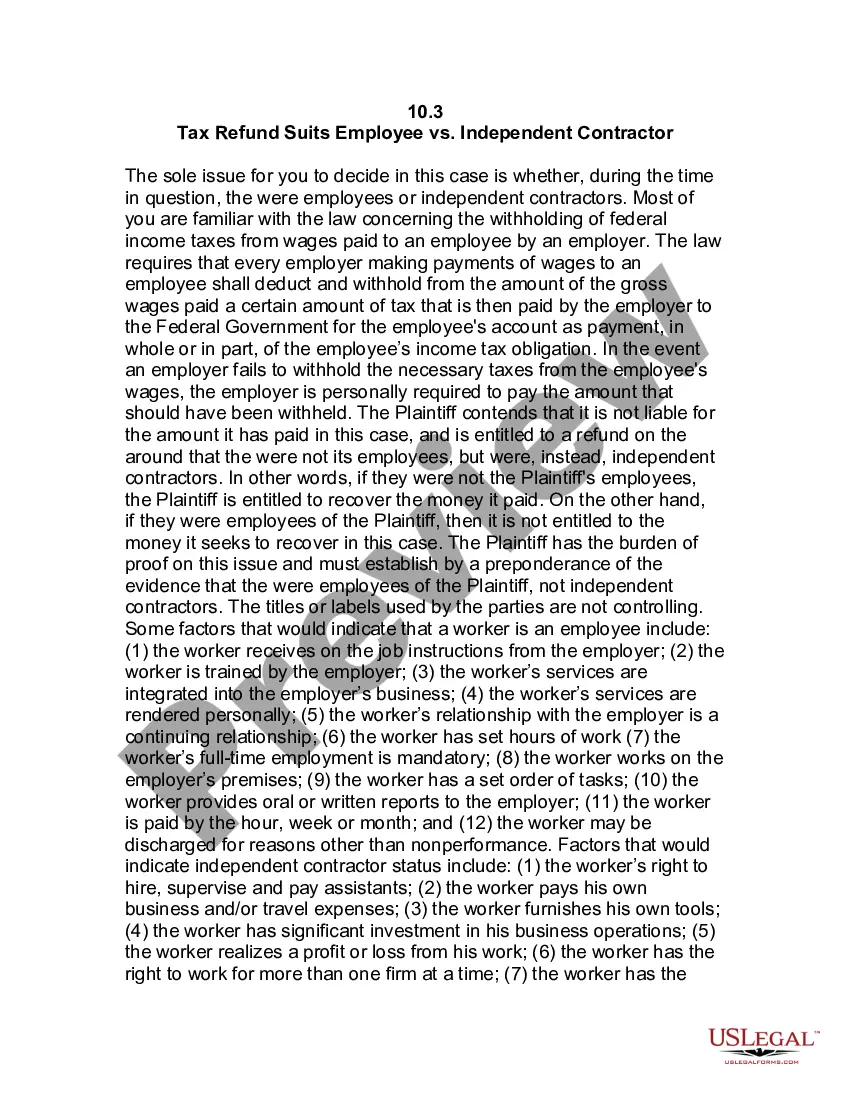
Under common-law rules, anyone who performs services for you is your employee if you can control what will be done and how it will be done.