Alaska Indemnification of Corporate Director
Description
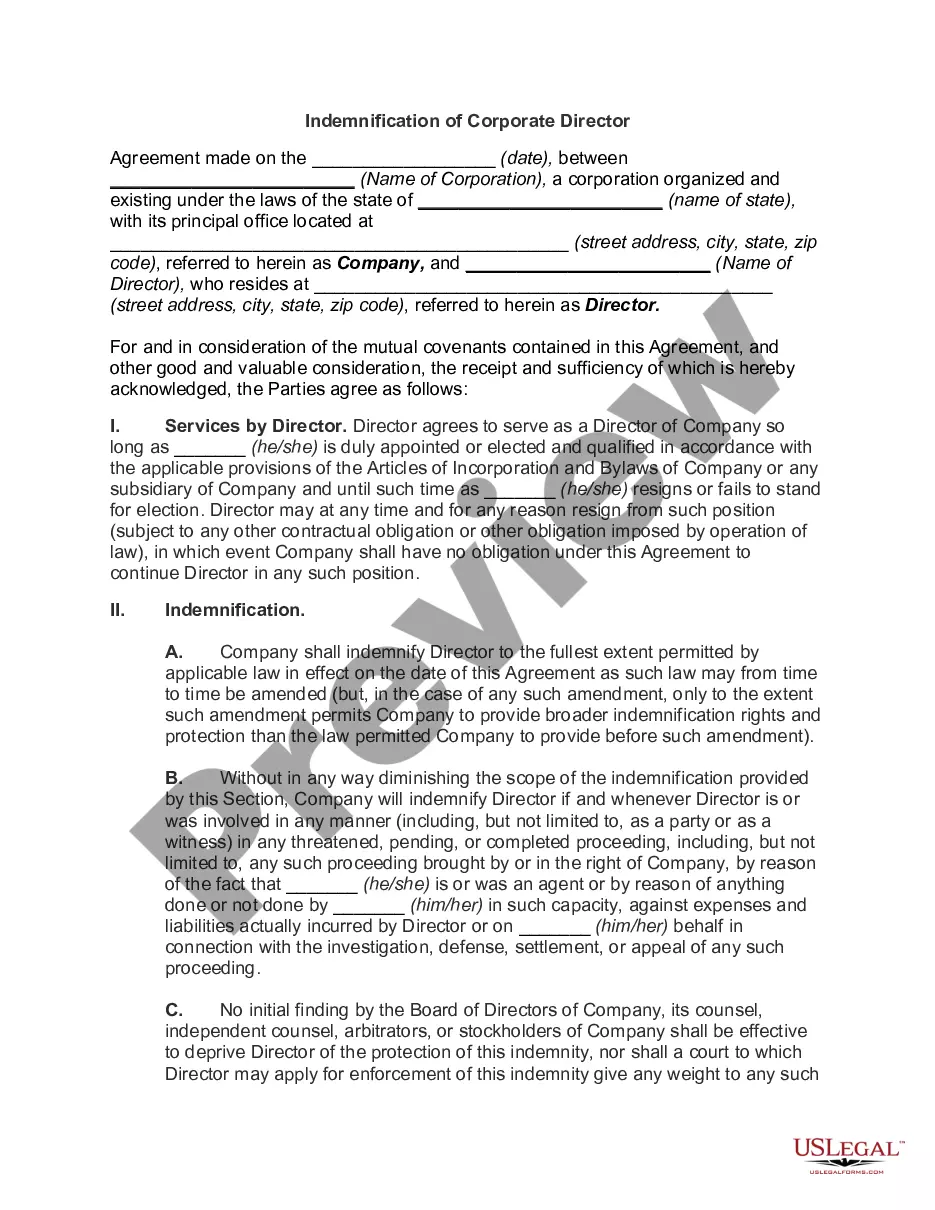
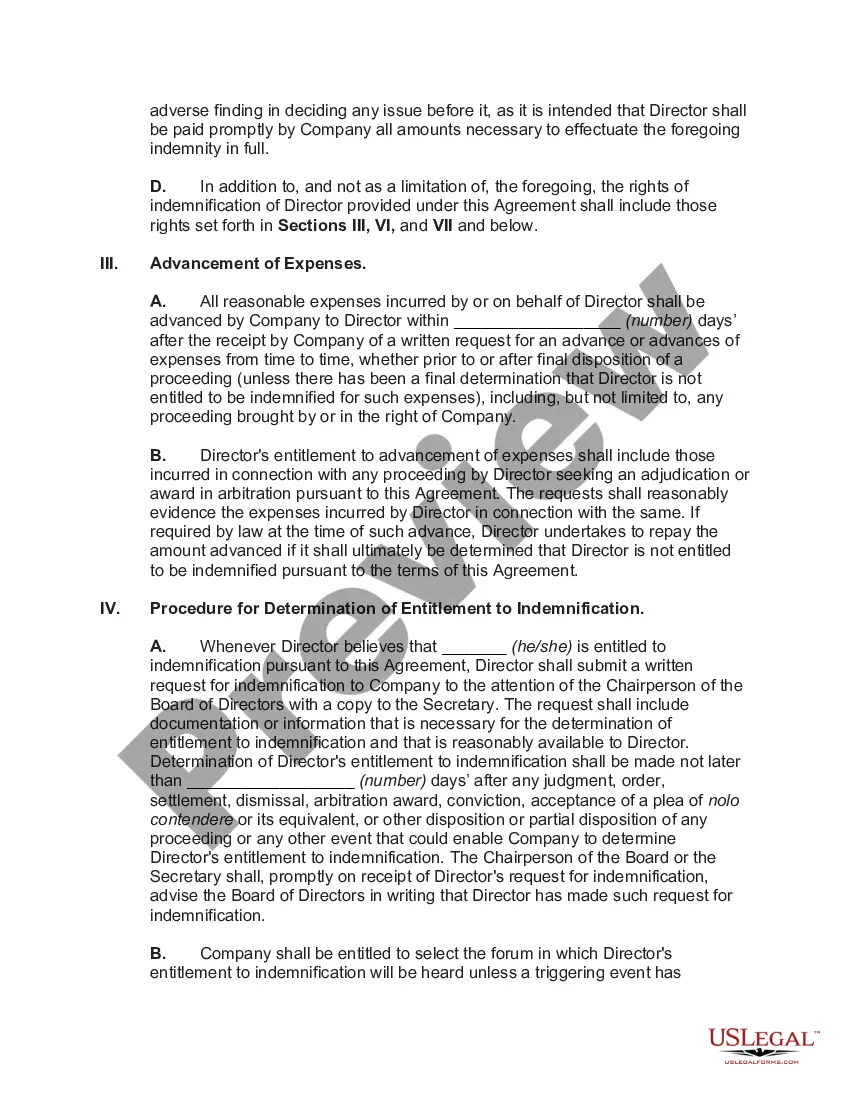
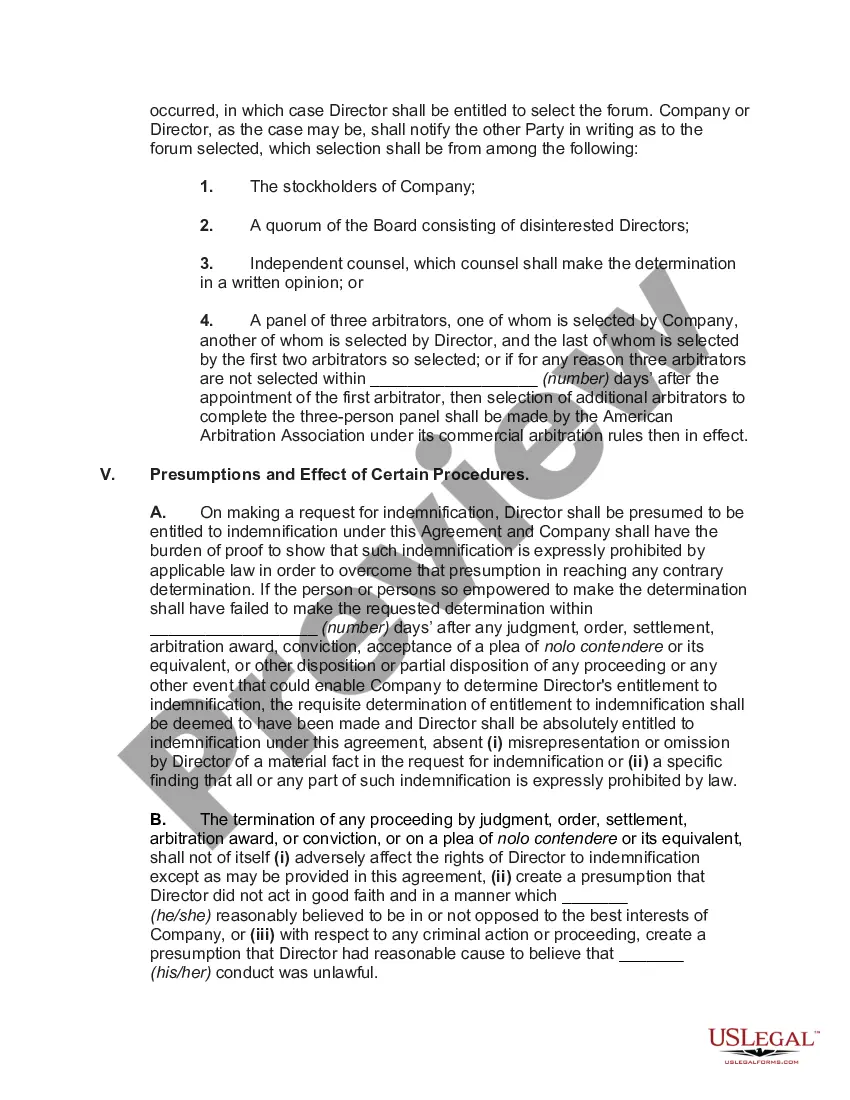
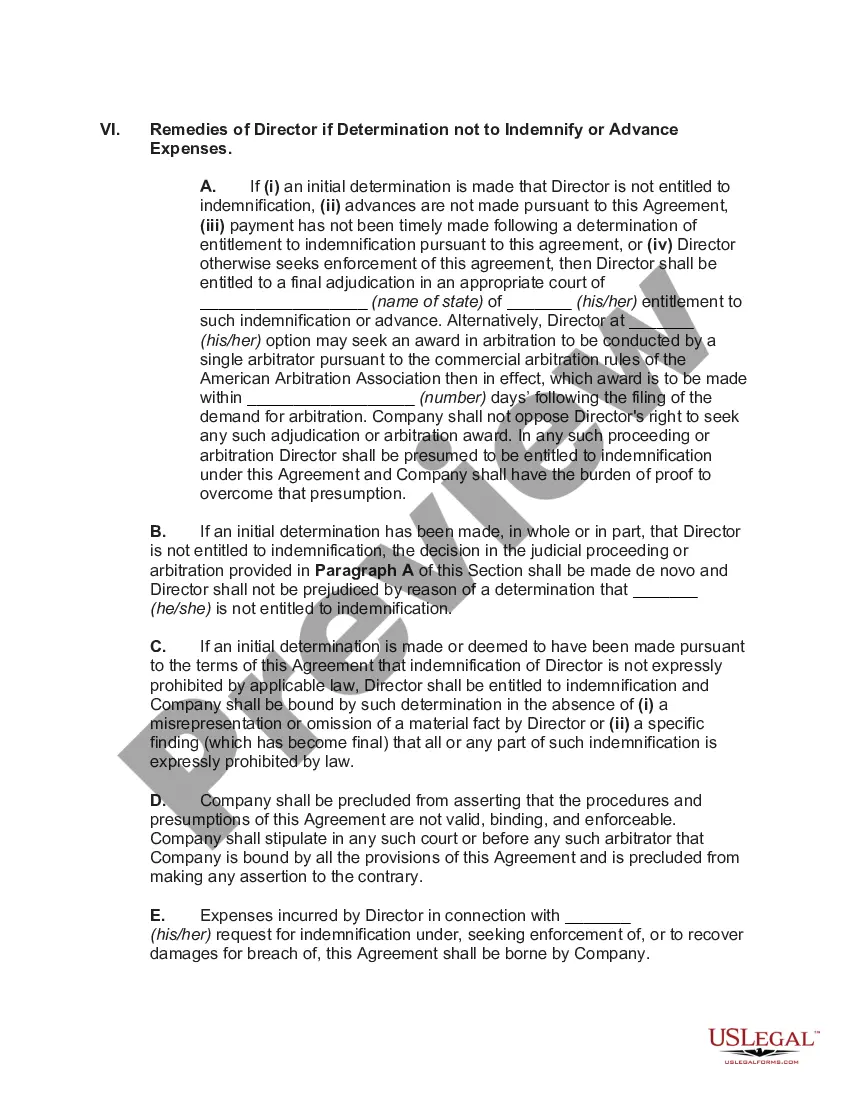
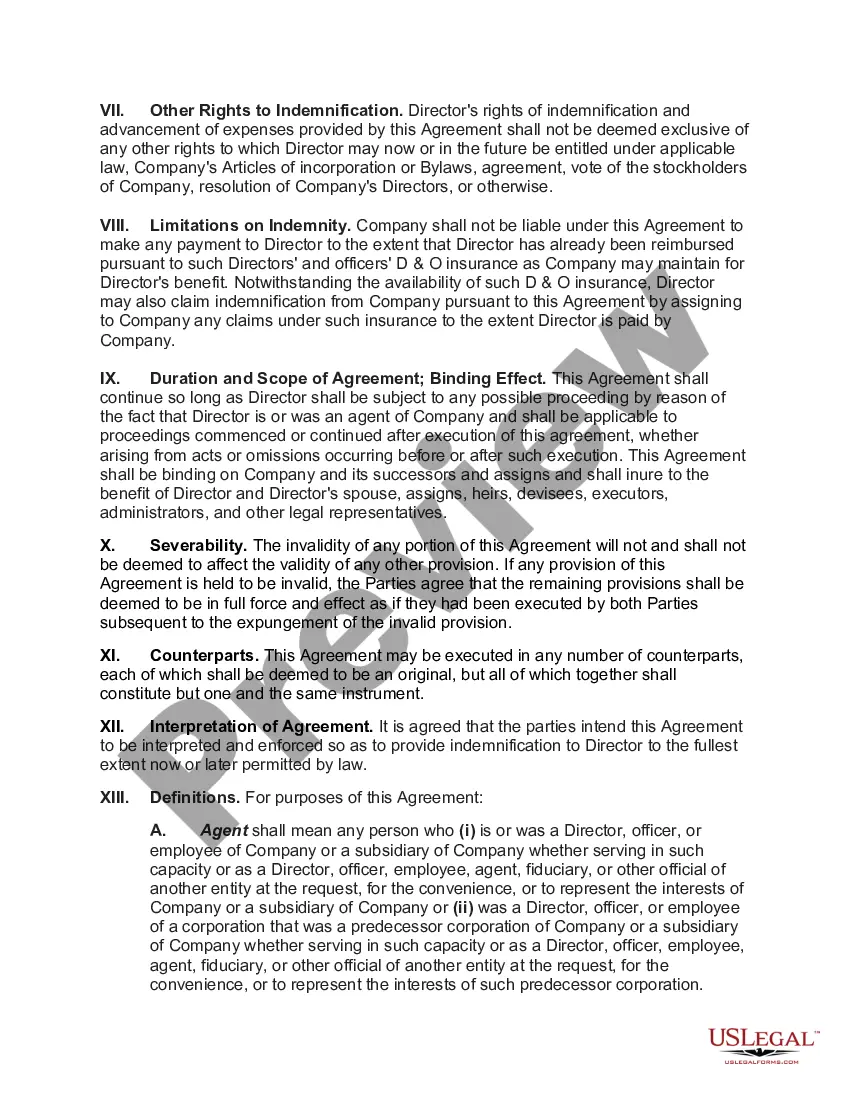
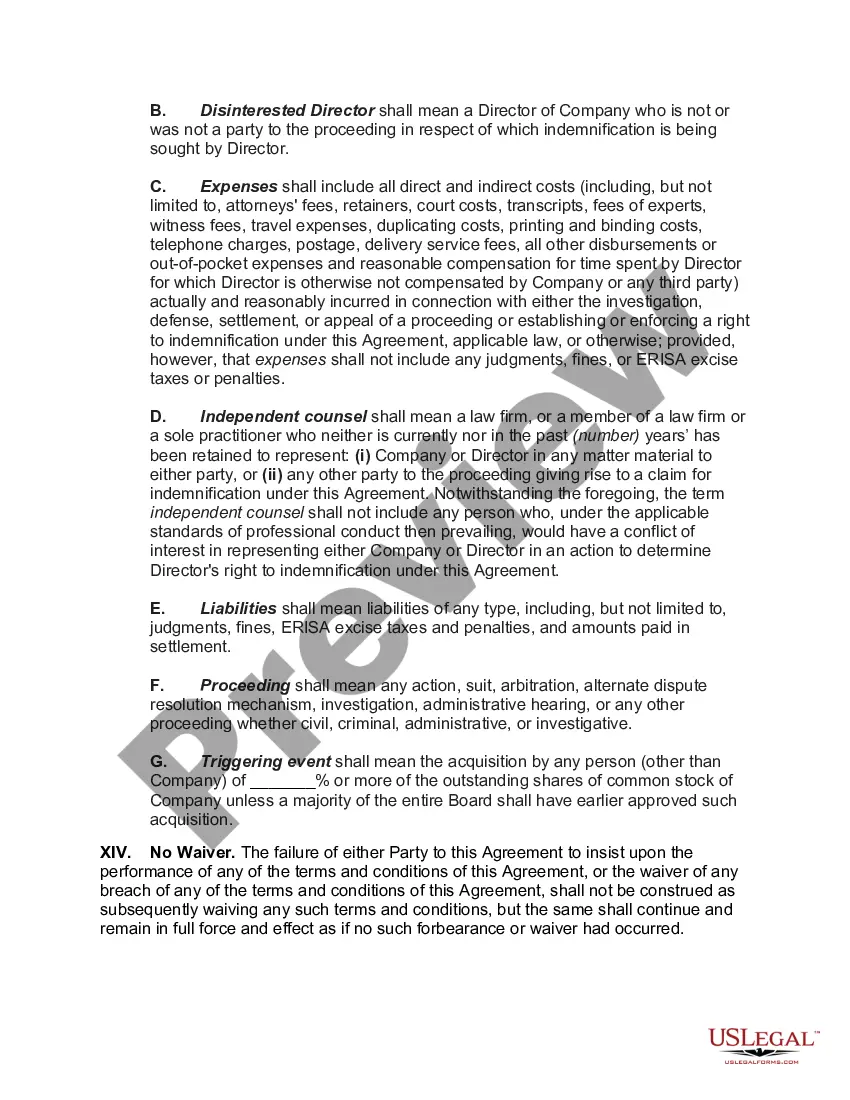
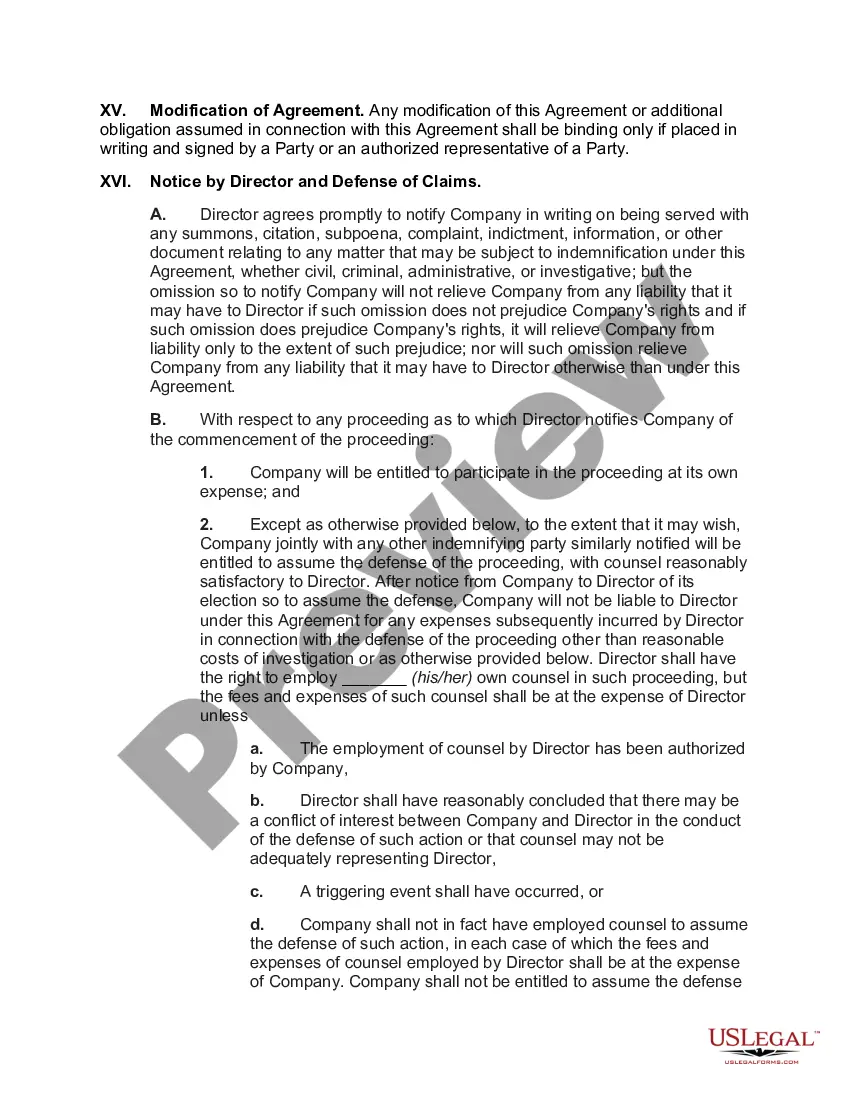

How to fill out Indemnification Of Corporate Director?
Selecting the optimal authorized document template can be a challenge.
Certainly, there is an array of formats accessible online, but how can you locate the authorized document you require.
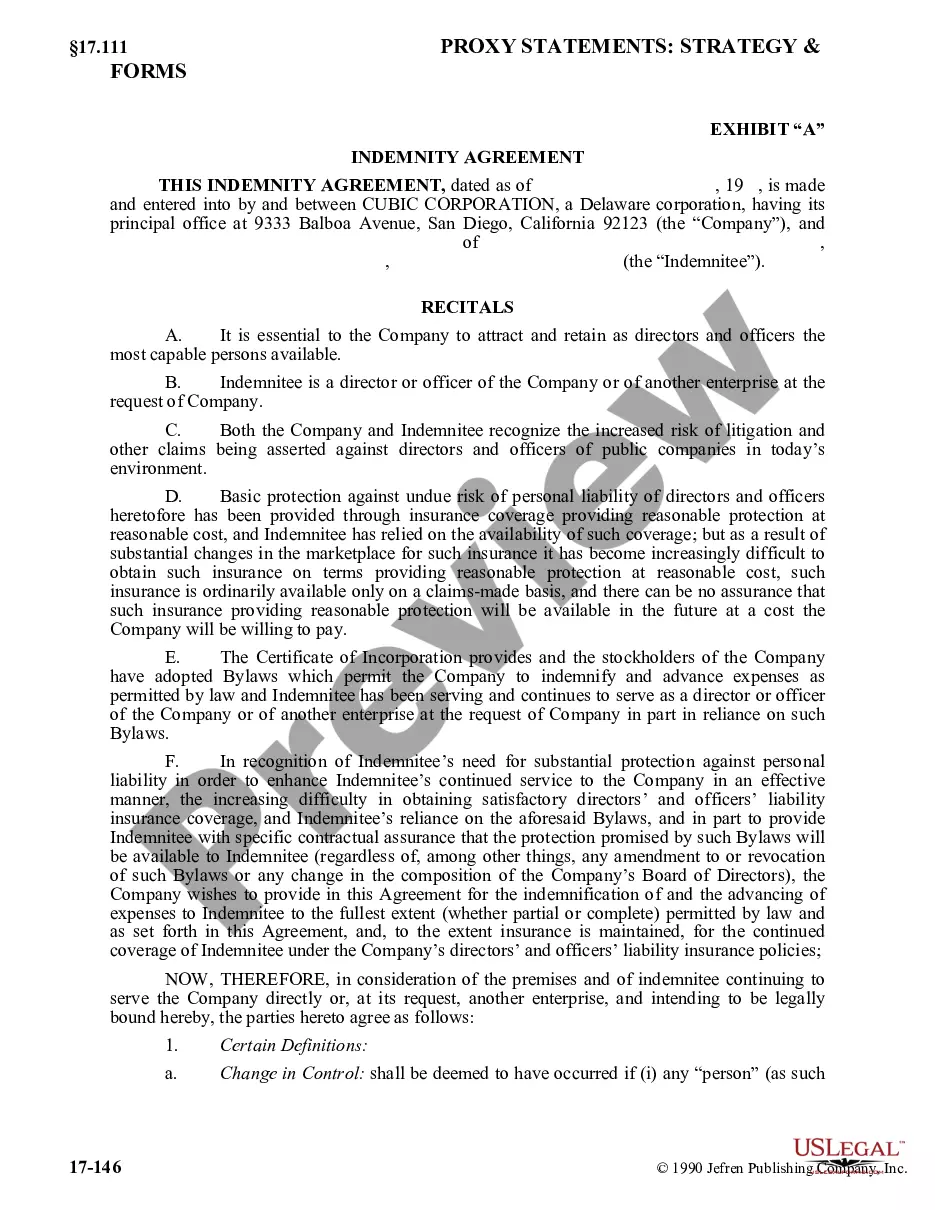
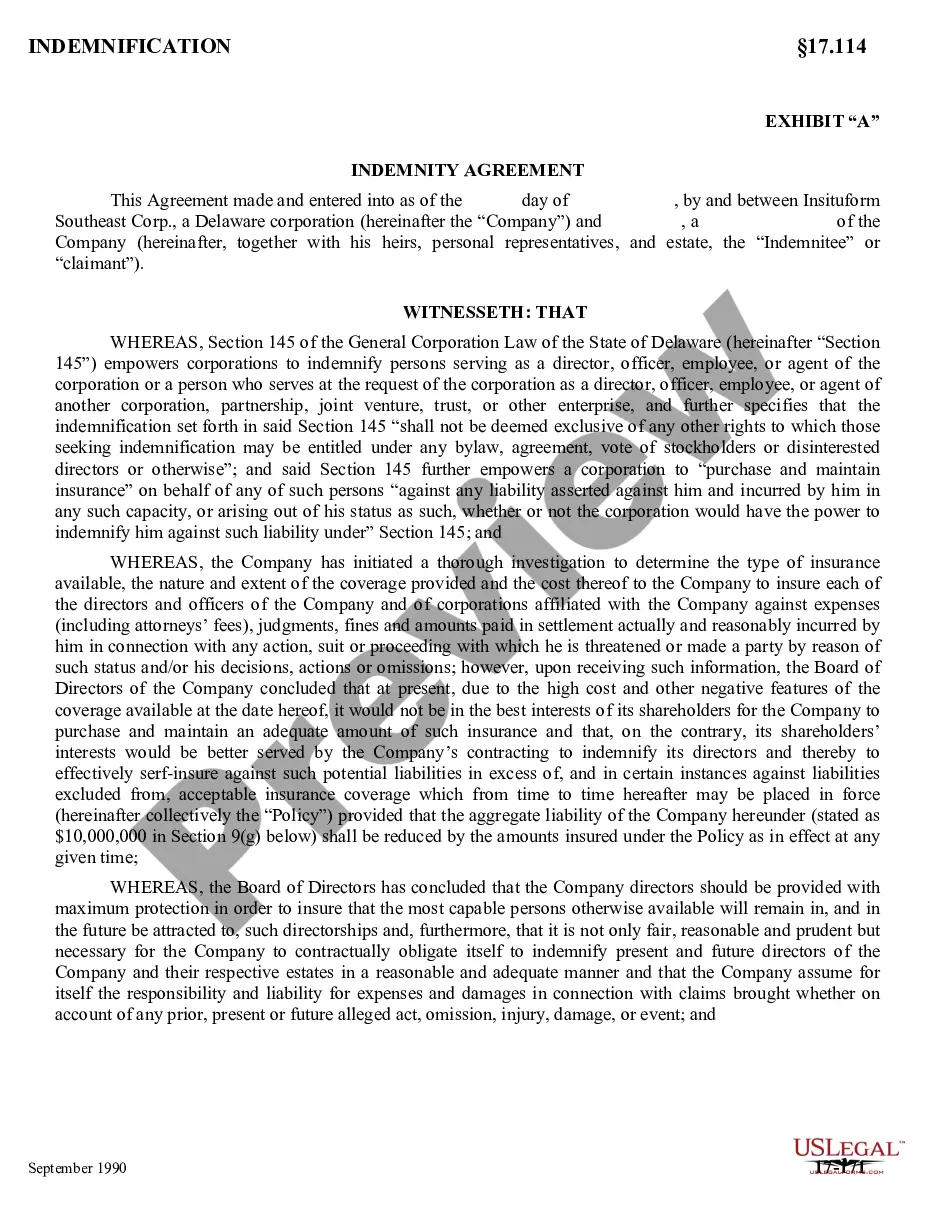
Utilize the US Legal Forms website. The service offers thousands of formats, such as the Alaska Indemnification of Corporate Director, which can be utilized for both business and personal needs.
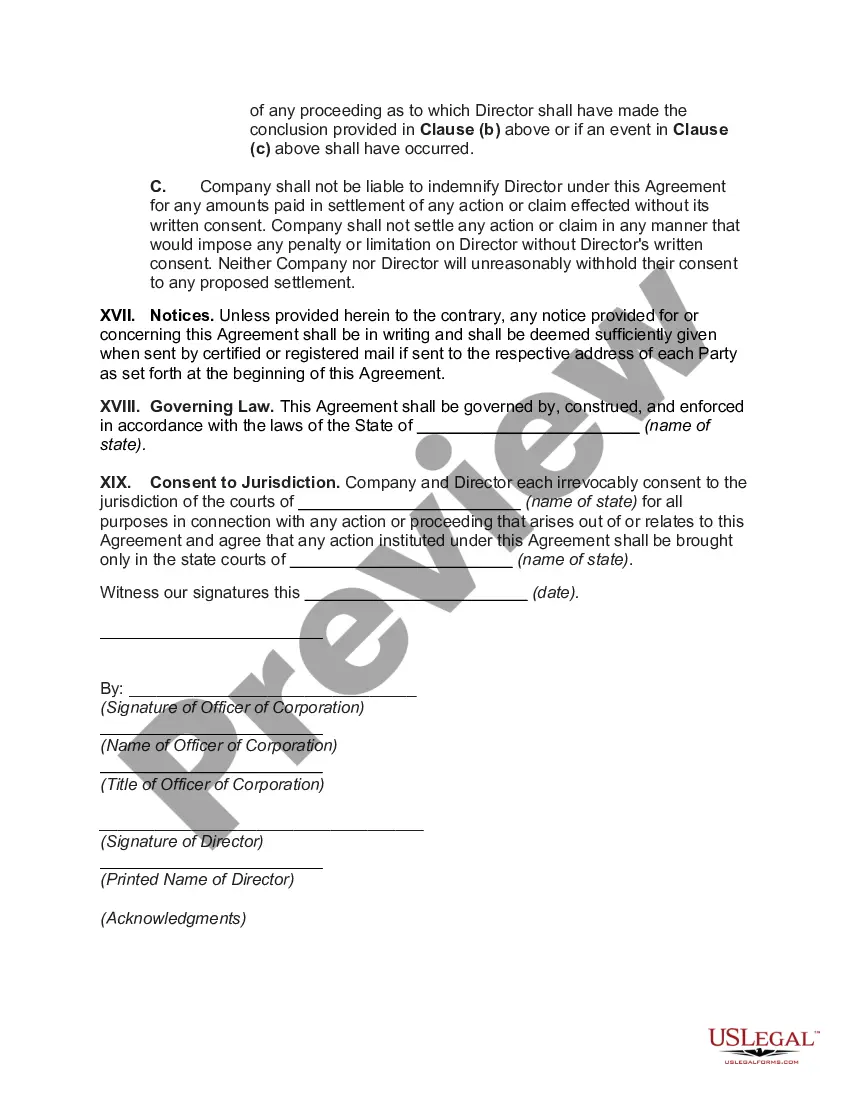
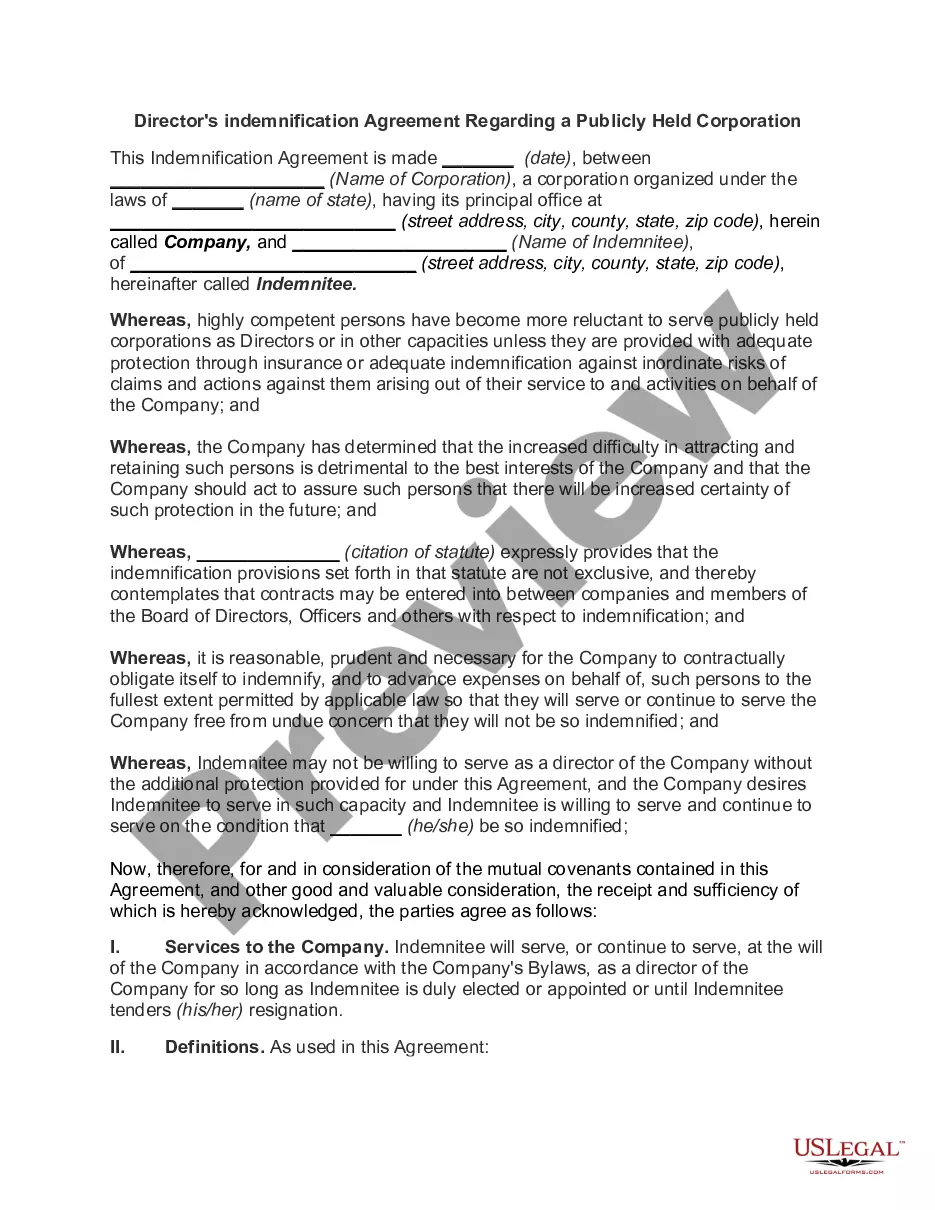
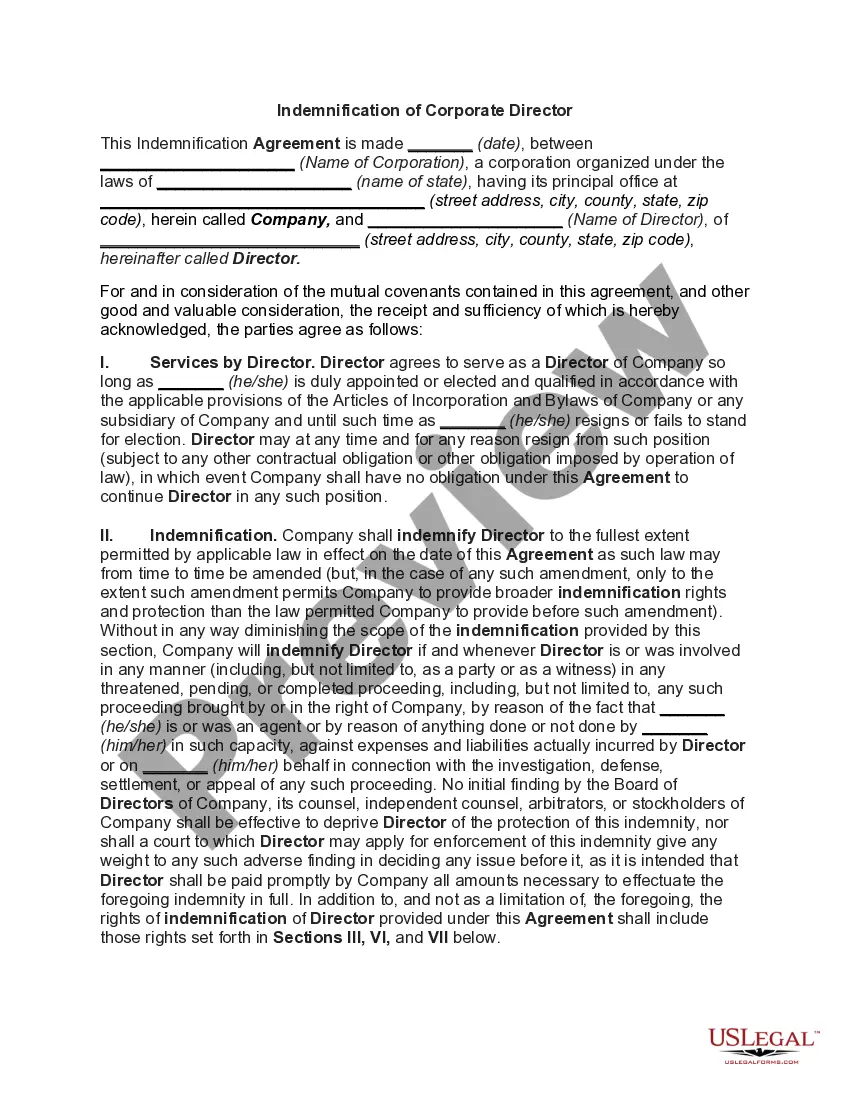
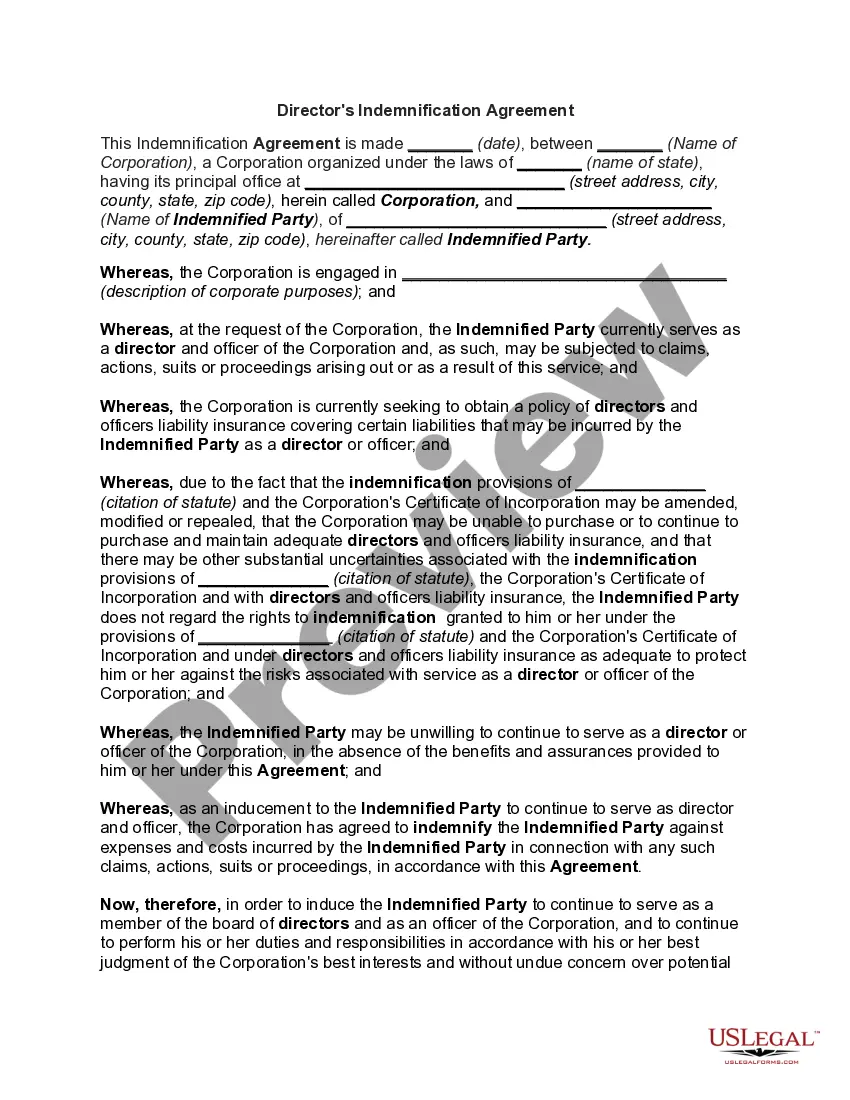
You can review the document using the Preview button and read the document description to confirm it is indeed the right one for you.
- All of the documents are reviewed by professionals and comply with state and federal regulations.
- If you are already registered, Log In to your account and click on the Download button to access the Alaska Indemnification of Corporate Director.
- Use your account to search through the authorized documents you have purchased previously.
- Navigate to the My documents tab in your account to download another copy of the document you need.
- If you are a new user of US Legal Forms, here are simple instructions to follow.
- First, ensure you have selected the correct document for your city/region.
Form popularity
FAQ
An Alberta corporation is not permitted to indemnify its directors for their actions if they have not acted honestly and in good faith with a view to the best interests of the corporation that is, if they have breached their fiduciary duty to the corporation.
The rule of indemnity, or the indemnity principle, says that an insurance policy should not confer a benefit that is greater in value than the loss suffered by the insured. Indemnities and insurance both guard against financial losses and aim to restore a party to the financial status held before an event occurred.
Indemnification clauses are common in corporations and LLCs. Often a company will agree to indemnify its shareholders, members, officers, and directors for actions they take in such roles on behalf of the company.
The Solution: Personal Indemnification Agreements These agreements promise to (1) advance legal fees, and (2) pay loss (indemnification) on behalf of an individual should he or she be named in a lawsuit in his or her capacity as a director or officer of the company.
Any UK company can now indemnify any of its directors, and any director of a company in the same group, against damages, costs and interest awarded against him in civil proceedings brought by a third party, and against legal and other costs incurred in defending both civil and criminal proceedings if and when the
Indemnification clauses are clauses in contracts that set out to protect one party from liability if a third-party or third entity is harmed in any way. It's a clause that contractually obligates one party to compensate another party for losses or damages that have occurred or could occur in the future.
Indemnification is where the company reimburses the director or officer for the attorneys' fees and costs, and potentially judgments, incurred in connection with claims arising out of the director's or officer's service to the company.
Further, in light of the recent amendments to Section 145, only certain officers are entitled to mandatory indemnification of expenses as a matter of law when they are successful on the merits; an indemnification agreement allows a director or officer to secure such rights in the absence of express statutory coverage.
Indemnification. Indemnification is an undertaking by the company to defend the director and officer against the cost of certain claims, including legal fees, litigation awards and settlement costs.
As described above, directors and officers can never be indemnified for bad faith actions. Two other limits are also notable: the derivative settlement exclusion and the by reason of limitation.