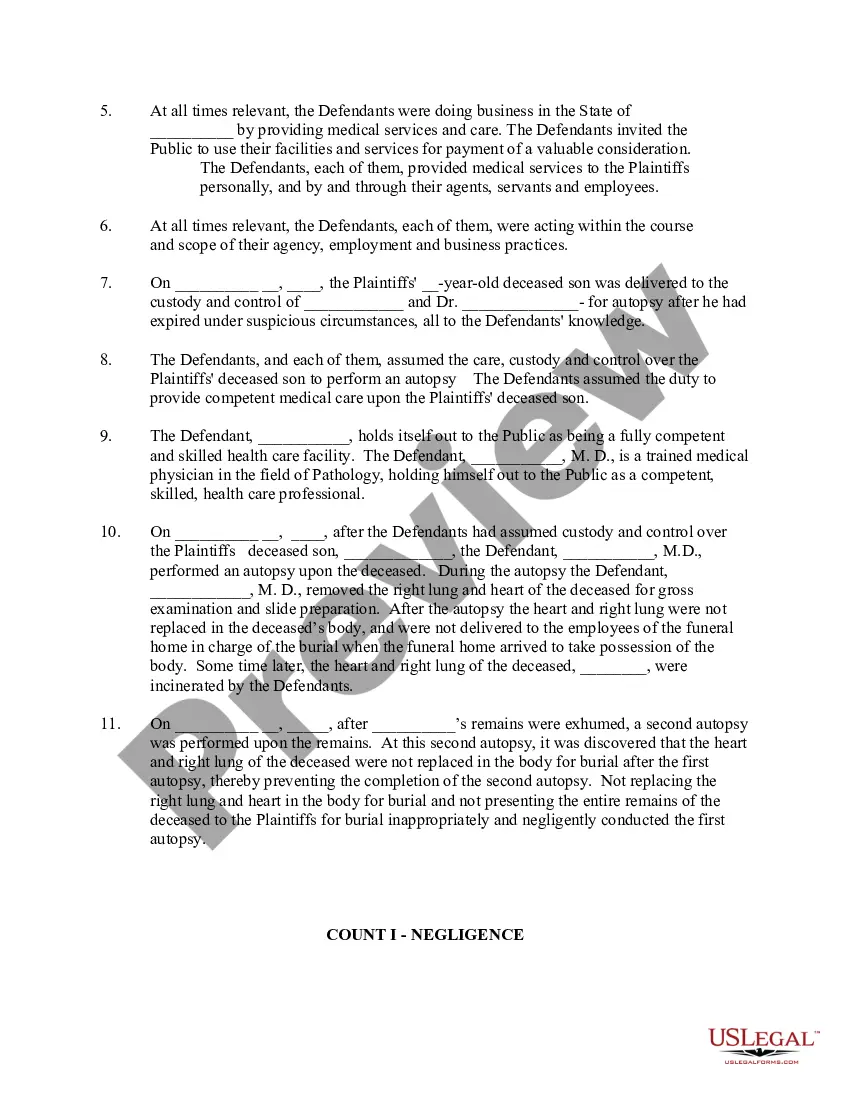
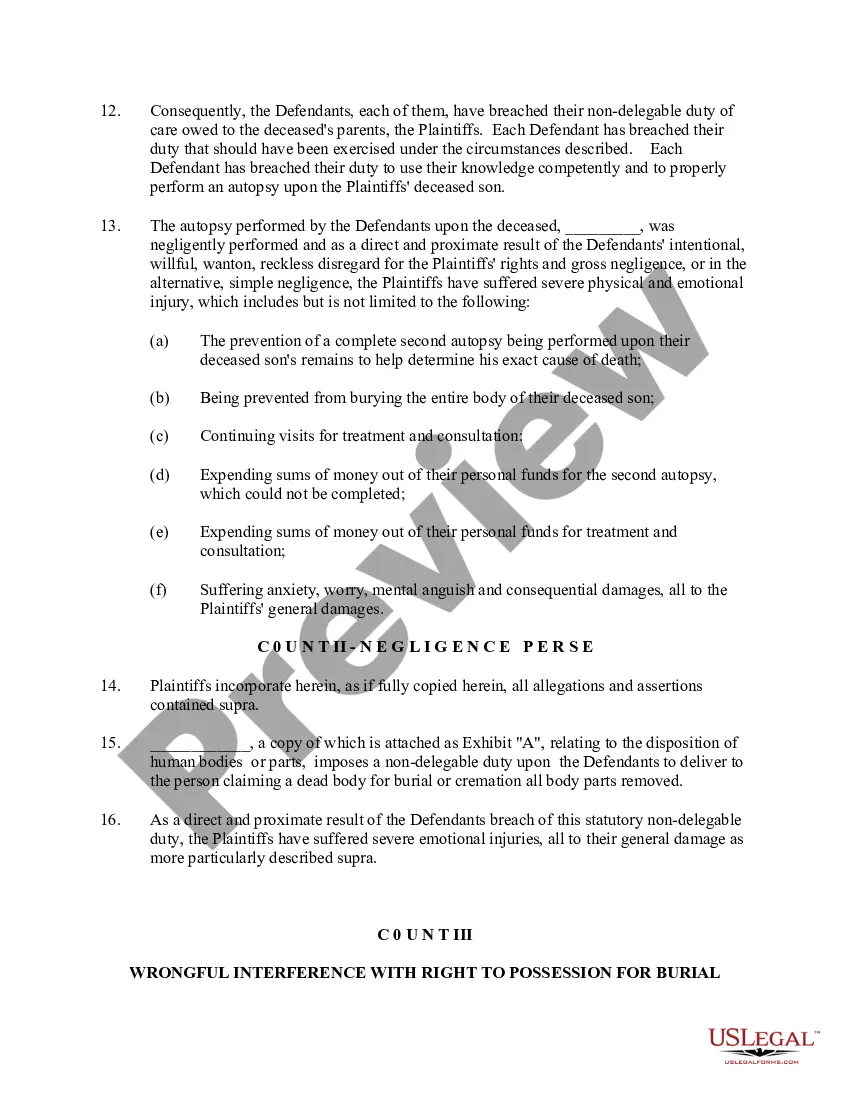
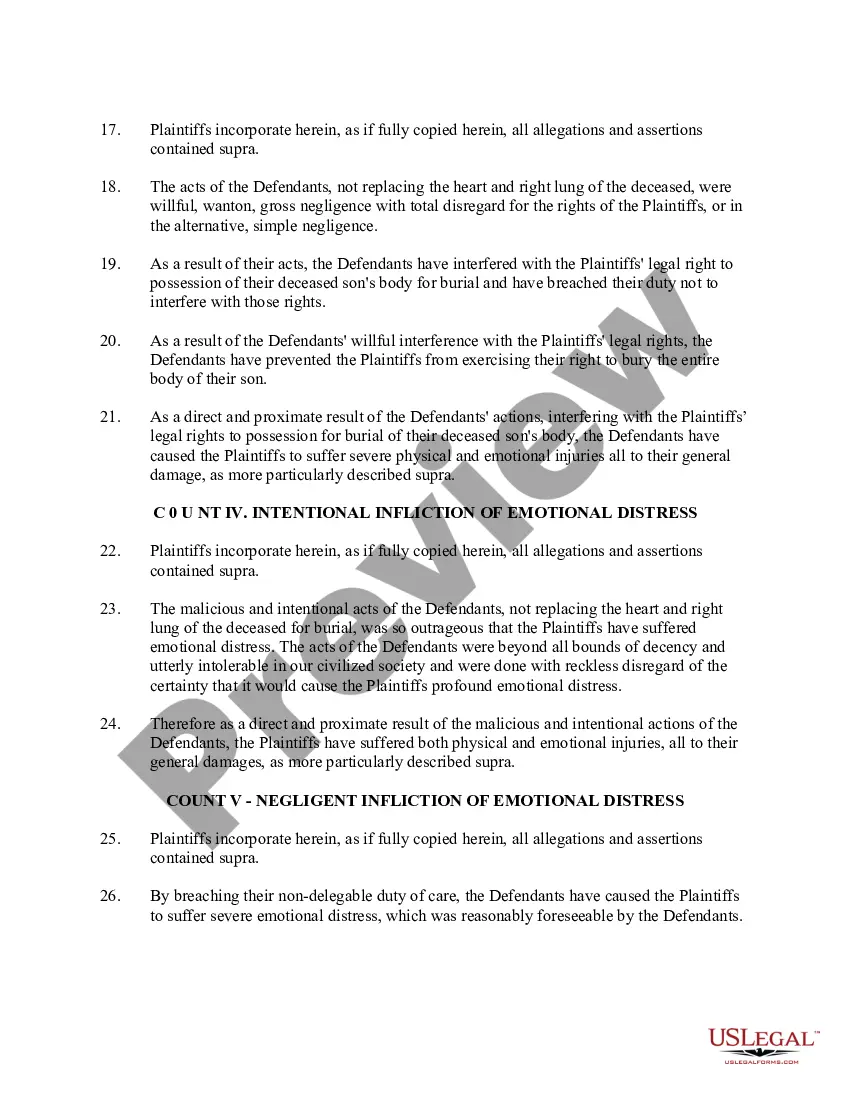
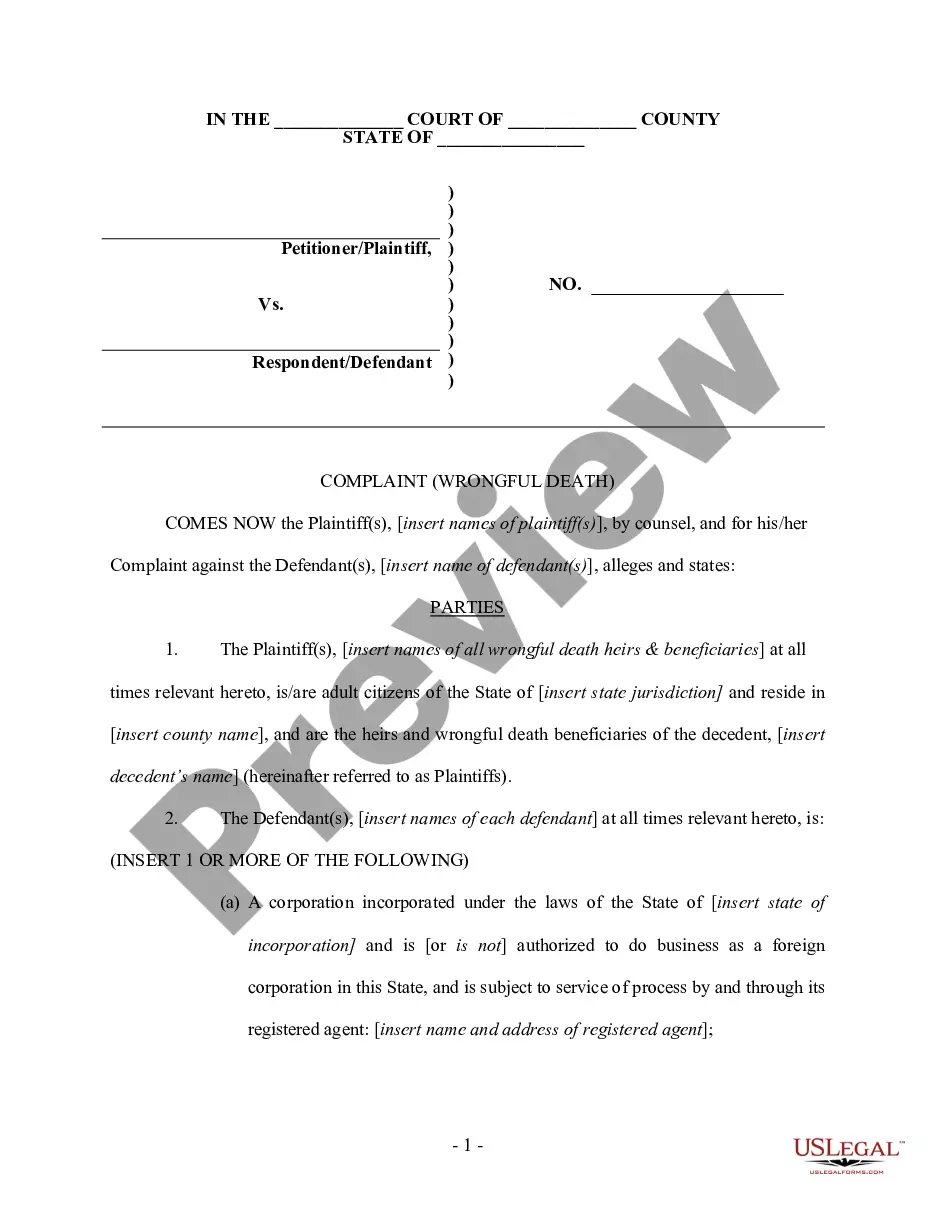
This is a Complaint pleading for use in litigation of the title matter. Adapt this form to comply with your facts and circumstances, and with your specific state law. Not recommended for use by non-attorneys.
Alaska Complaint For Wrongful Interference With Right To Possession For Burial
Category:
State:
Multi-State
Control #:
US-000303
Format:
Word;
Rich Text
Instant download
Description
Free preview

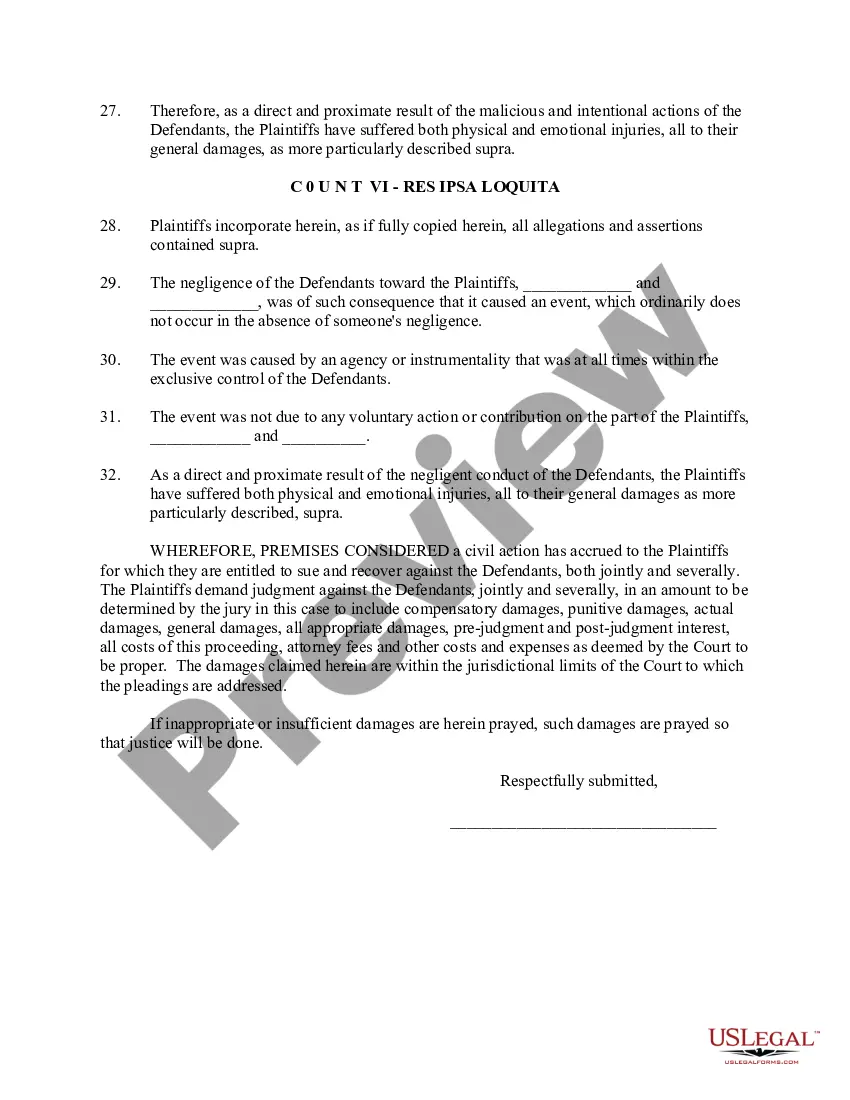

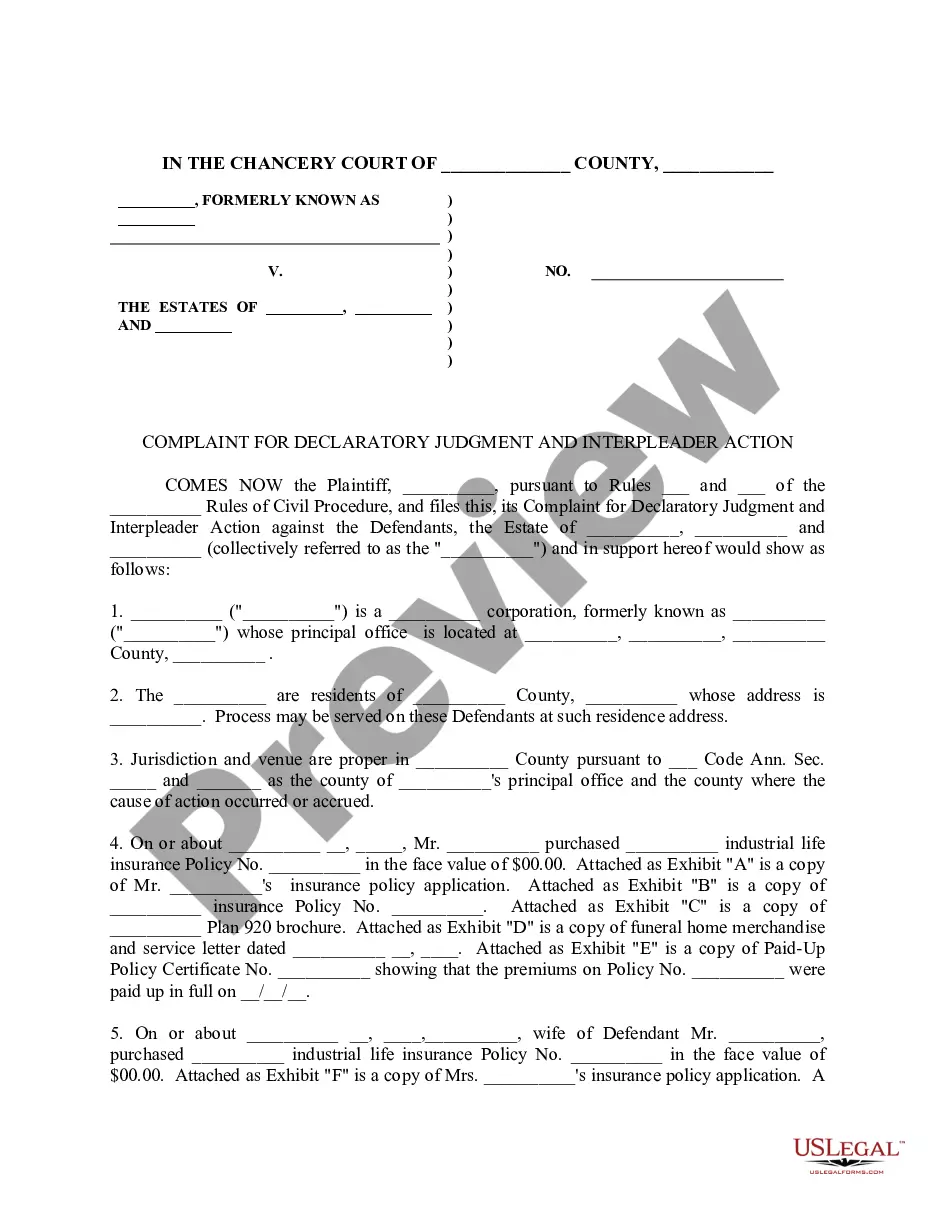
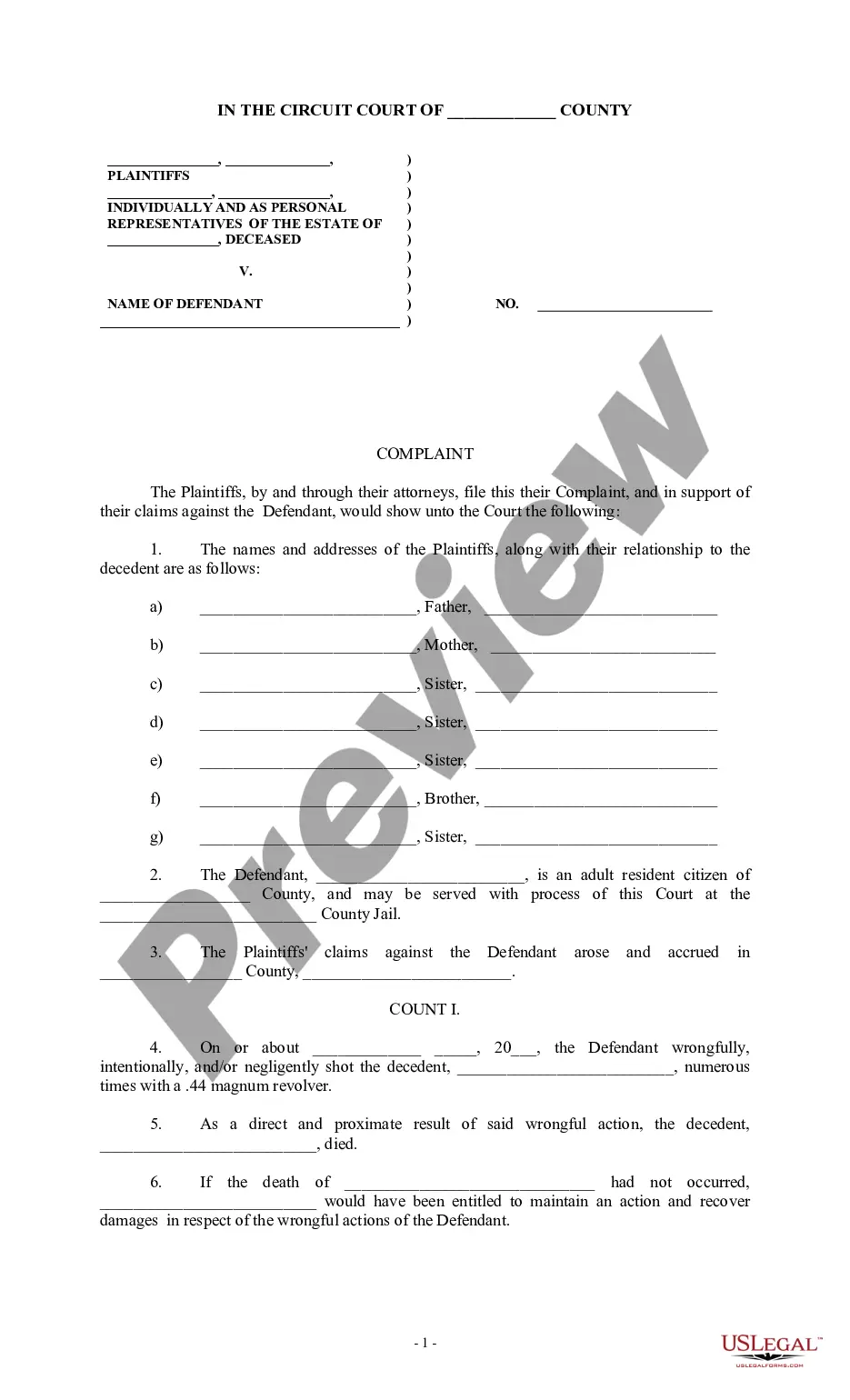
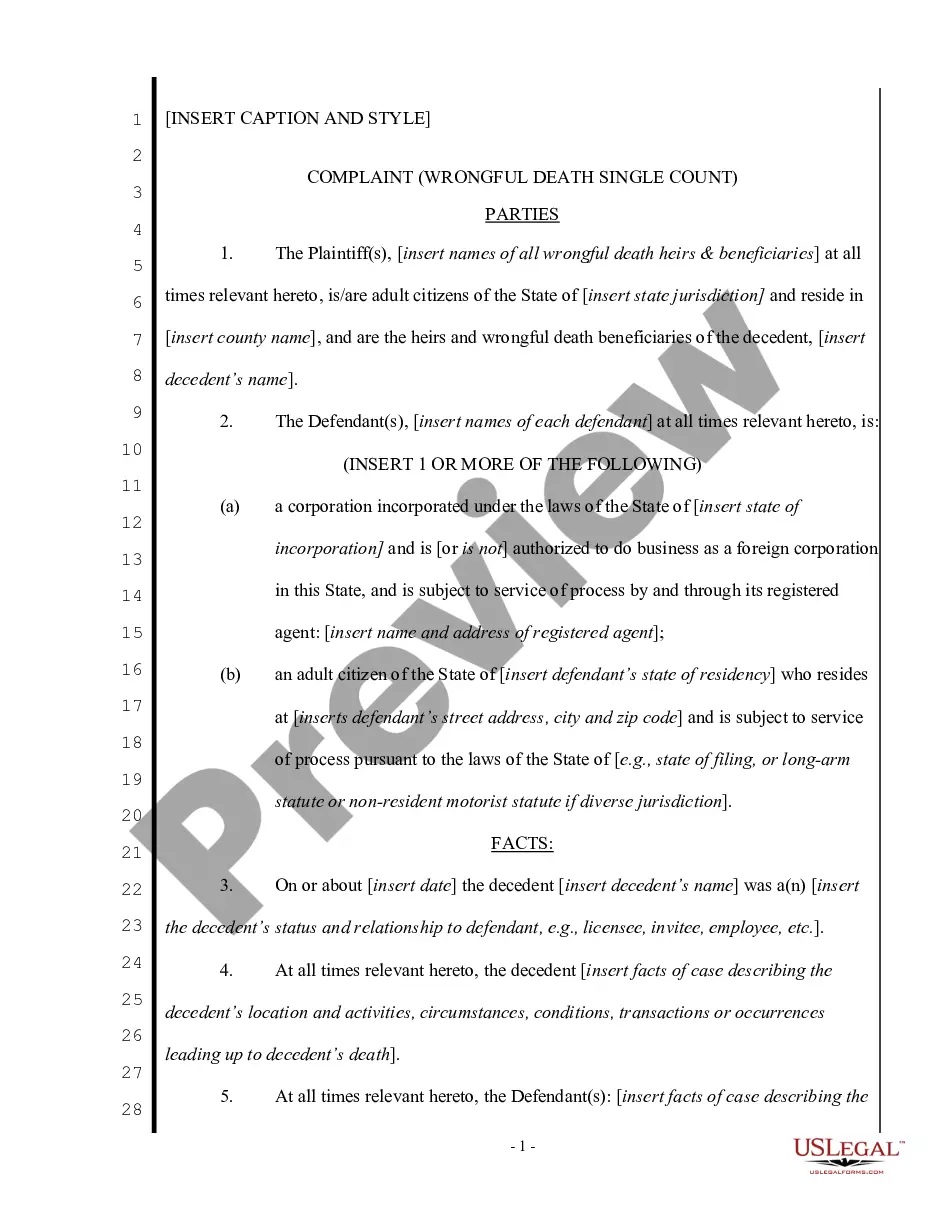
Get your form ready online
Our built-in tools help you complete, sign, share, and store your documents in one place.
Built-in online Word editor
Make edits, fill in missing information, and update formatting in US Legal Forms—just like you would in MS Word.
Export easily
Download a copy, print it, send it by email, or mail it via USPS—whatever works best for your next step.
E-sign your document
Sign and collect signatures with our SignNow integration. Send to multiple recipients, set reminders, and more. Go Premium to unlock E-Sign.
Notarize online 24/7
If this form requires notarization, complete it online through a secure video call—no need to meet a notary in person or wait for an appointment.
Store your document securely
We protect your documents and personal data by following strict security and privacy standards.

Make edits, fill in missing information, and update formatting in US Legal Forms—just like you would in MS Word.

Download a copy, print it, send it by email, or mail it via USPS—whatever works best for your next step.

Sign and collect signatures with our SignNow integration. Send to multiple recipients, set reminders, and more. Go Premium to unlock E-Sign.

If this form requires notarization, complete it online through a secure video call—no need to meet a notary in person or wait for an appointment.

We protect your documents and personal data by following strict security and privacy standards.
Looking for another form?






How to fill out Complaint For Wrongful Interference With Right To Possession For Burial?
It is feasible to spend numerous hours online searching for the approved document format that meets the federal and state requirements you will need.
US Legal Forms offers a vast array of legal templates that are reviewed by experts.
You can conveniently download or print the Alaska Complaint For Wrongful Interference With Right To Possession For Burial from our service.
- If you already have a US Legal Forms account, you can Log In and select the Obtain option.
- After that, you can fill out, modify, print, or sign the Alaska Complaint For Wrongful Interference With Right To Possession For Burial.
- Every legal document template you acquire is yours indefinitely.
- To obtain another copy of any downloaded form, go to the My documents tab and click on the relevant option.
- If you are using the US Legal Forms website for the first time, follow the straightforward instructions below.
- First, ensure you have selected the correct document format for your county/town of choice.
- Review the form description to confirm you have chosen the right document.
- If available, utilize the Preview option to view the document format as well.
- If you wish to get another version of the document, use the Search field to find the format that meets your needs.
- Once you have located the template you require, click Buy now to proceed.
- Select the pricing plan you need, enter your details, and create your account on US Legal Forms.
- Complete the transaction.
- You can use your credit card or PayPal account to pay for the legal document.
- Locate the format in the documents and download it to your device.
- Make modifications to your document if necessary.
- You can fill out, edit, sign, and print the Alaska Complaint For Wrongful Interference With Right To Possession For Burial.
- Download and print numerous document templates using the US Legal Forms site, which provides the largest collection of legal forms.
- Utilize professional and state-specific templates to address your business or personal requirements.
Form popularity
FAQ
Administrative Rule 40 in Alaska governs the procedures for administrative hearings and appeals. This rule is crucial for individuals seeking to challenge decisions made by state agencies. If you're involved in an Alaska Complaint For Wrongful Interference With Right To Possession For Burial, knowing about this rule can aid you in preparing your case.
The Alaska Administrative Procedure Act outlines the process for creating and enforcing state regulations. This act ensures transparency and fairness in administrative decision-making. If you are filing an Alaska Complaint For Wrongful Interference With Right To Possession For Burial, understanding this act can help you navigate the legal landscape effectively.
Ignoring jury duty in Alaska can lead to penalties, including fines or additional legal consequences. It is important to respond to jury summons and fulfill this civic duty. If you are facing complications related to jury duty that may affect an Alaska Complaint For Wrongful Interference With Right To Possession For Burial, consider seeking legal assistance.
In Alaska, it is illegal to record a conversation without the consent of at least one party involved. This law aims to protect privacy and ensure that individuals are aware of when they are being recorded. If you find yourself dealing with issues related to privacy in an Alaska Complaint For Wrongful Interference With Right To Possession For Burial, understanding this law is essential.
The Alaska Rule of Professional Conduct 3.7 A addresses the issue of a lawyer acting as a witness in a case they are involved in. This rule ensures that lawyers maintain their professional integrity while representing clients. In contexts like an Alaska Complaint For Wrongful Interference With Right To Possession For Burial, knowing these rules can help ensure fair representation.
Ing to US statutes, corpse abuse constitutes anything that would outrage normal family and community sensibilities. The offense can range from mutilation to rape, storage to exploitation, and disinterment to dismemberment.
Yes, a hospital can be liable for negligent mishandling of a corpse if it is found to have acted negligently or improperly in the handling of a deceased person's body.
Depending on the space available in the hospital morgue, you will typically be allowed anywhere from three days to three weeks to remove the body from the hospital. What type of funeral do you want?
The tort of interference with a dead body applies to intentional acts, reckless acts, and negligent acts. An undertaker who negligently or recklessly embalms a deceased person's body is liable for the tort if he or she harms the body or if he or she prevents the body from being properly buried or cremated.
Burial should be a minimum of 3.5 to 4 feet below the ground surface. Burial in a casket or vault is not required. Grave sites should not be located on a slope or other area where erosion could eventually expose the body. All grave sites should be a minimum of 200 feet from any stream, lake, or potable water supply.