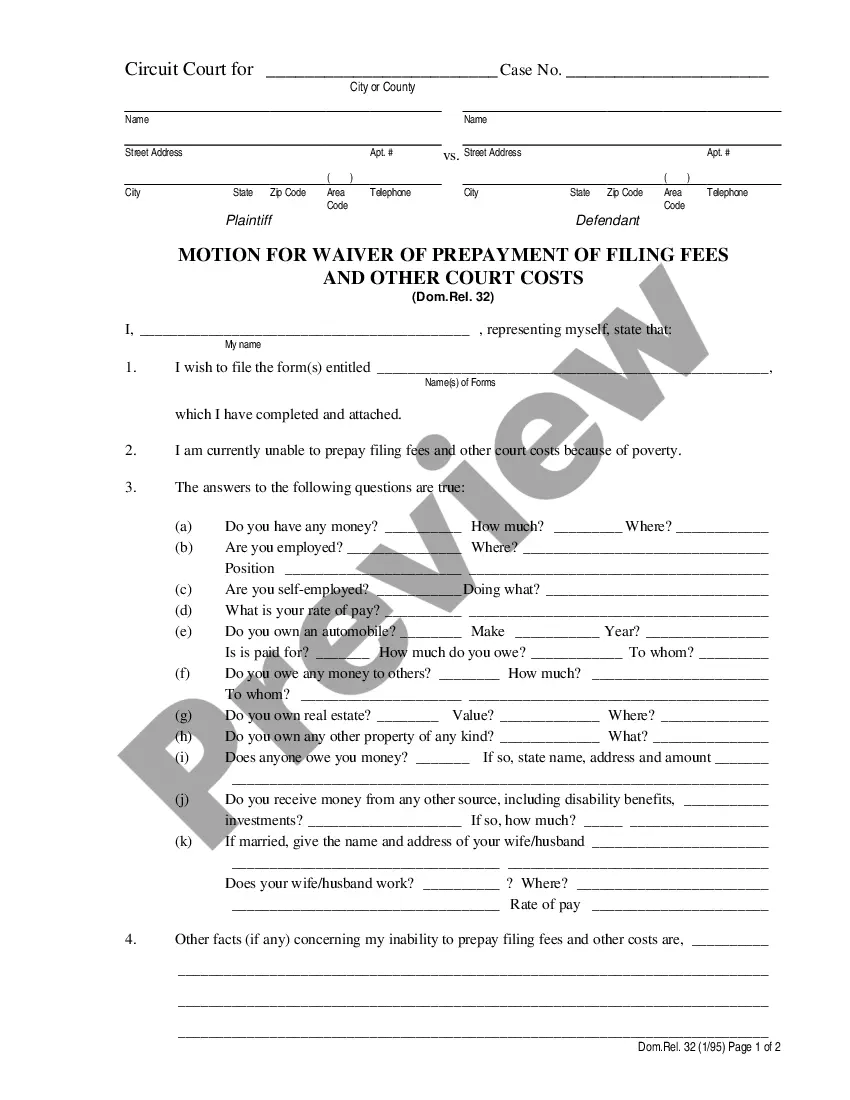
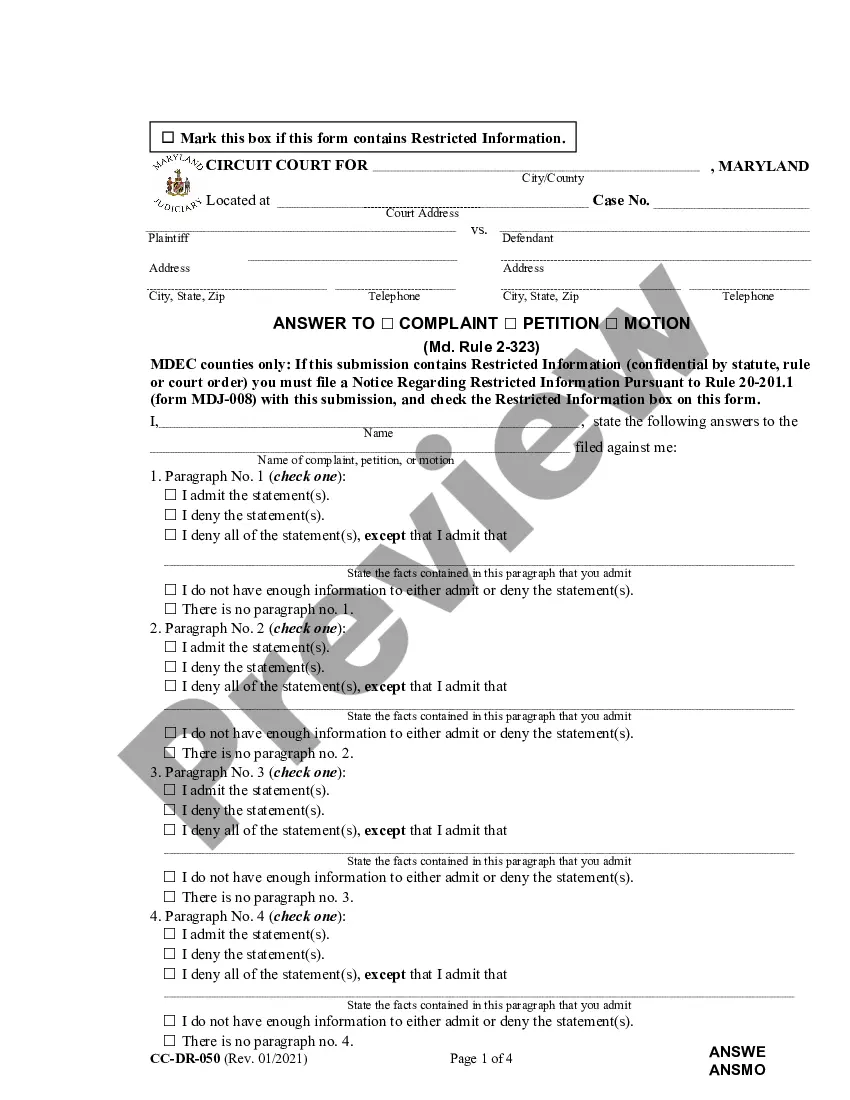
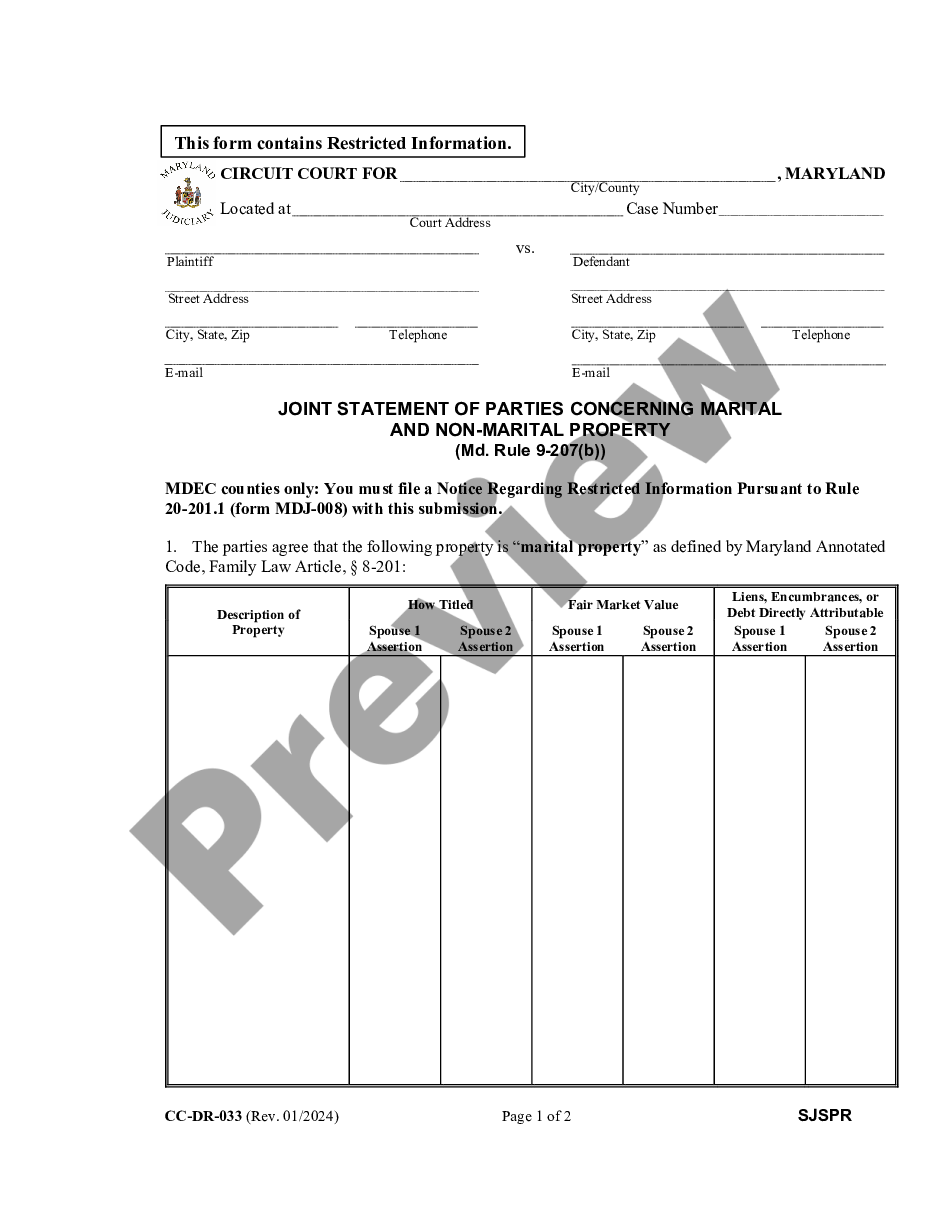
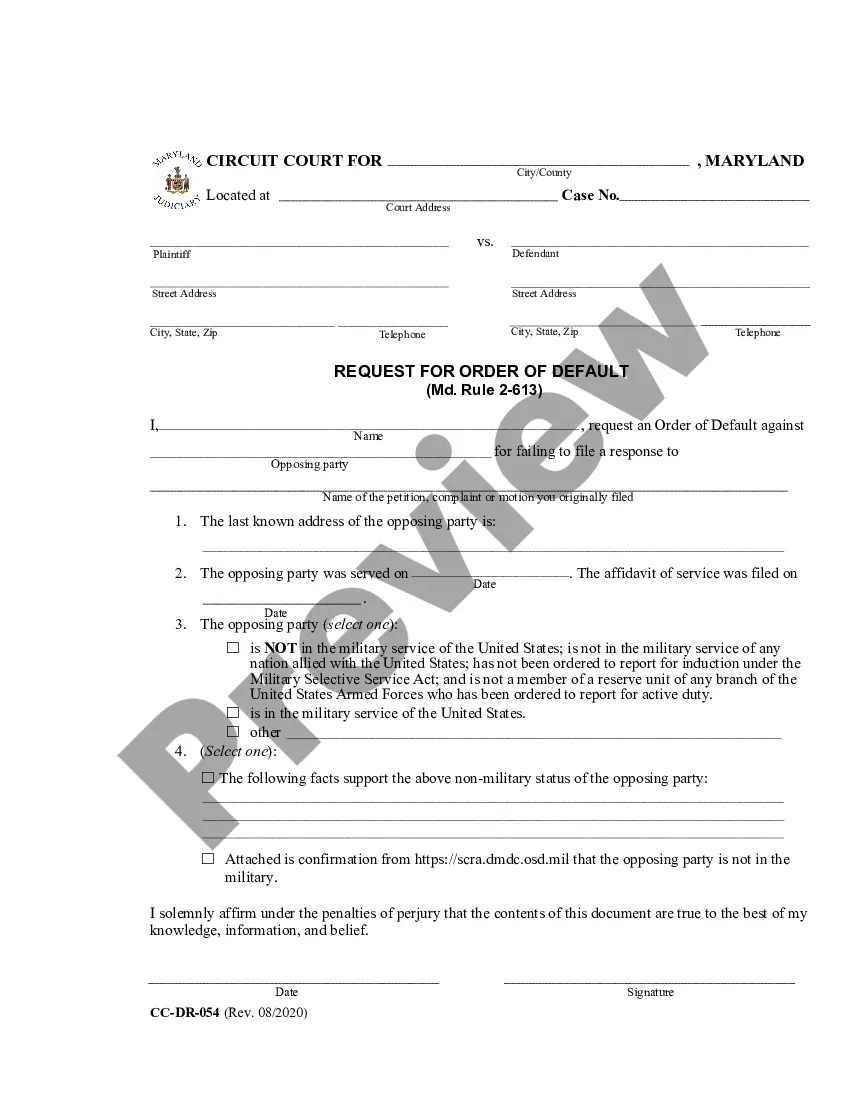
This is an official form from the North Carolina Court System, which complies with all applicable laws and statutes. USLF amends and updates the forms as is required by North Carolina statutes and law.
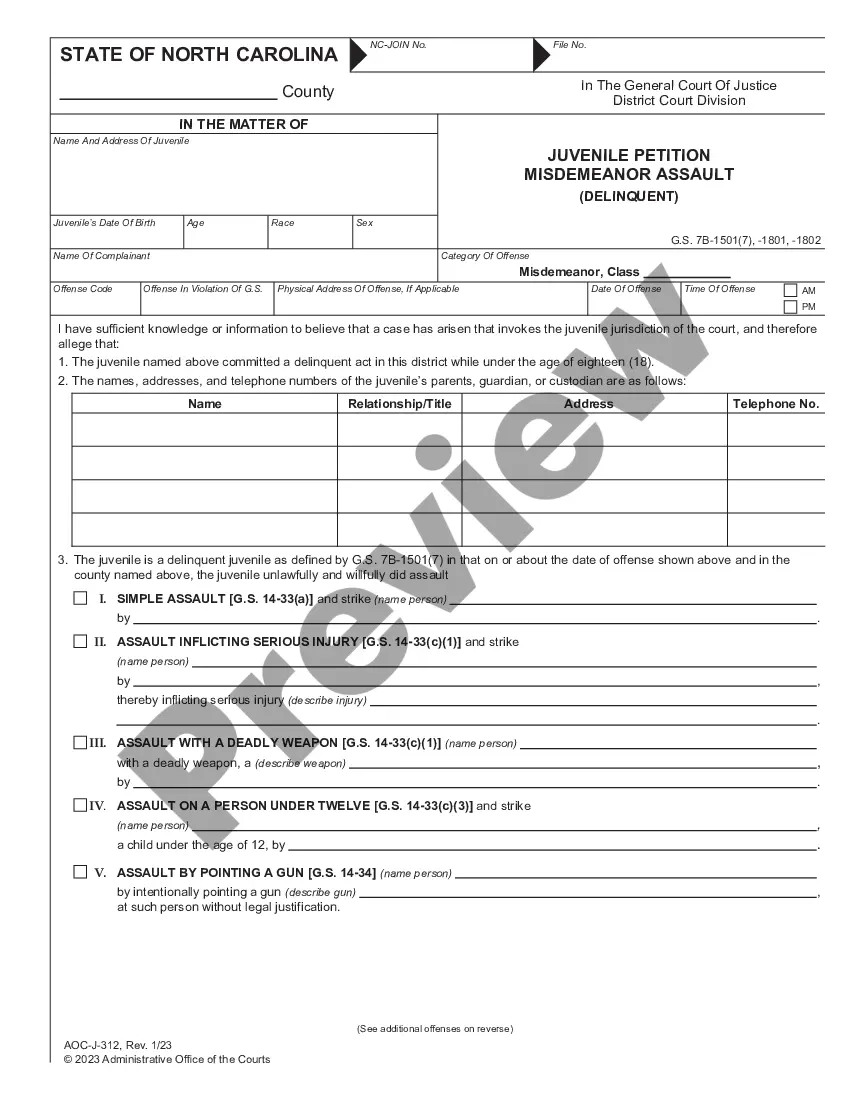
North Carolina Juvenile Petition Simple Affray - Delinquent
Instant download
This website is not affiliated with any governmental entity
Public form
Description
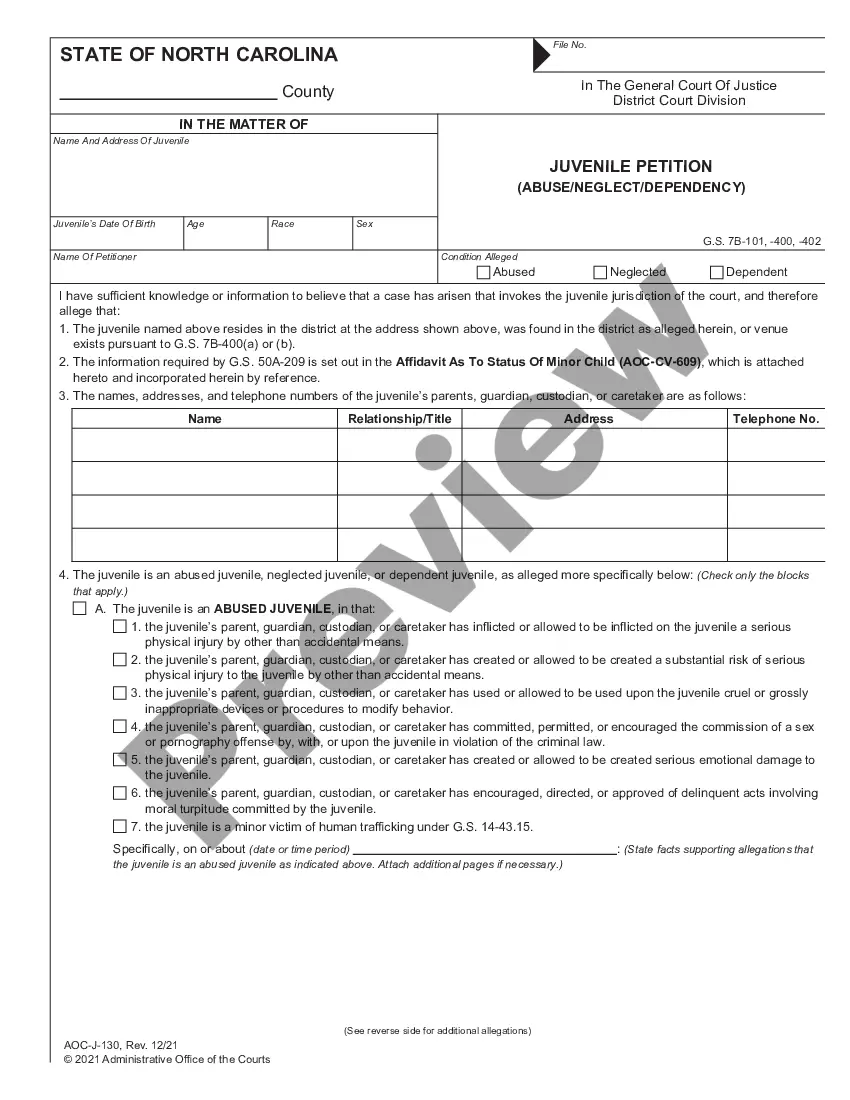
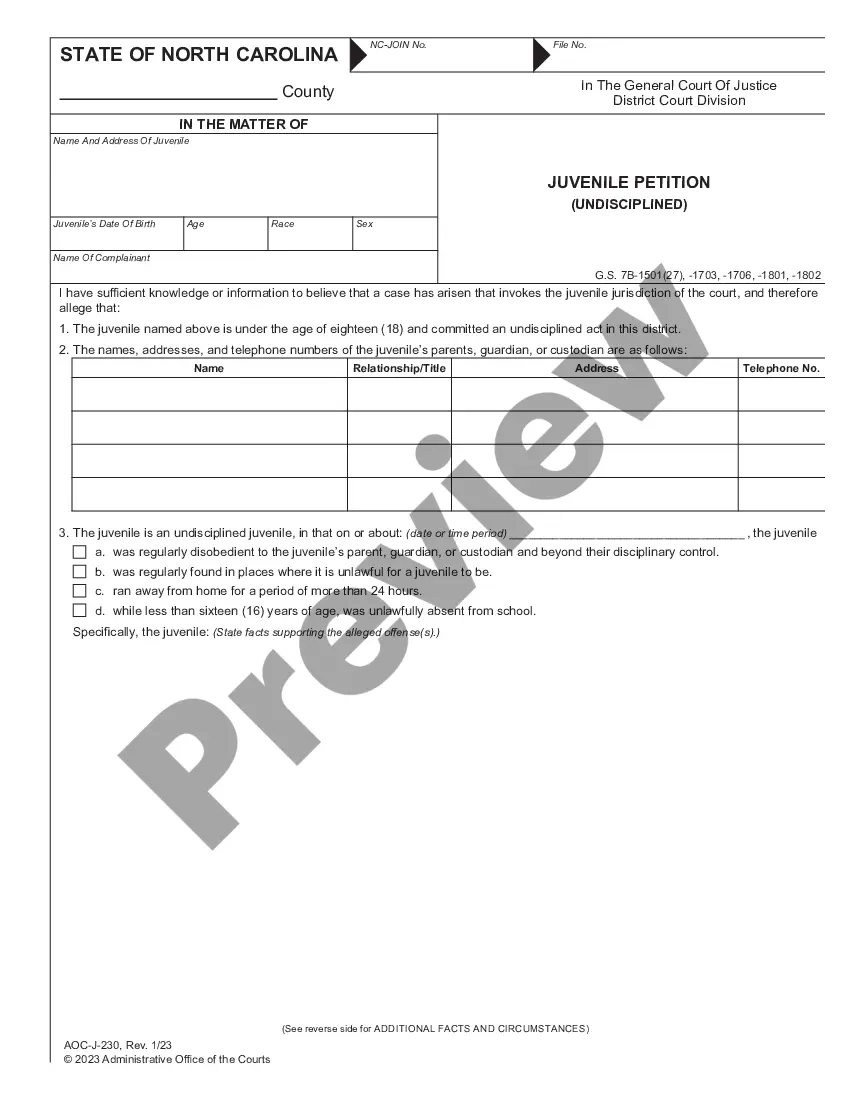
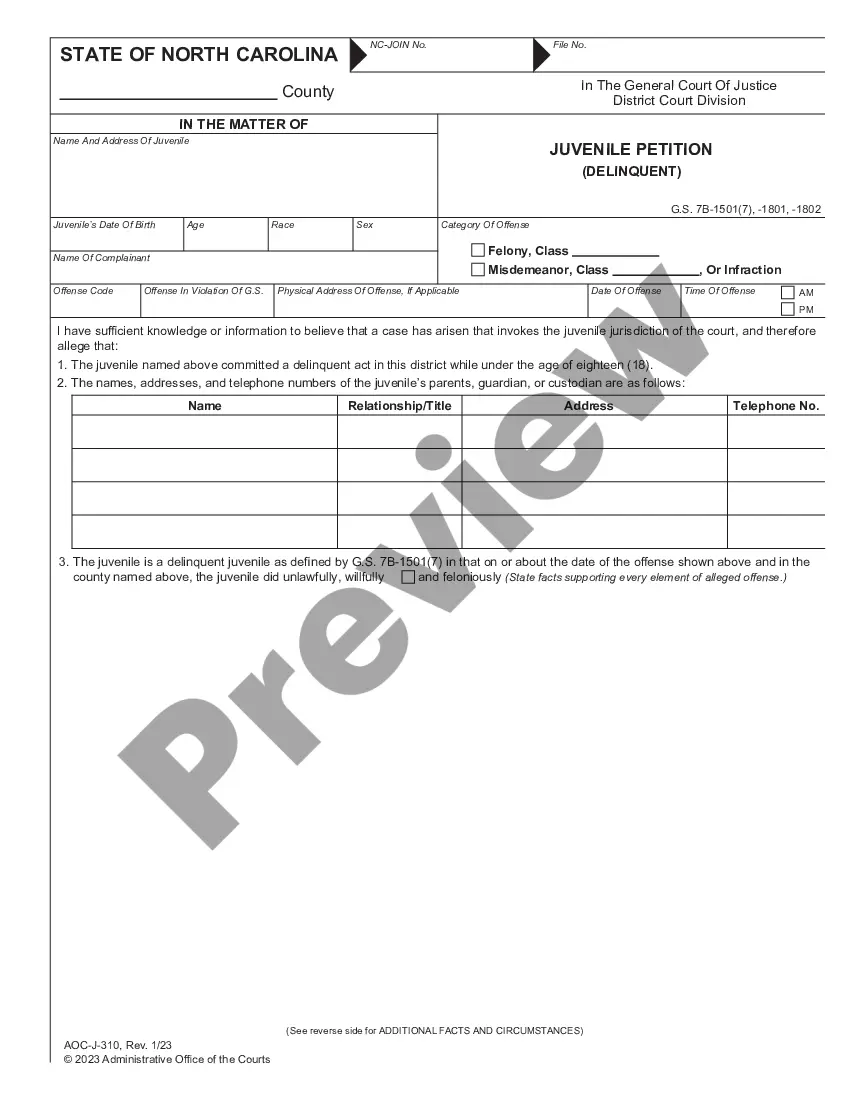

How to fill out North Carolina Juvenile Petition Simple Affray - Delinquent?
Steer clear of pricey lawyers and discover the North Carolina Juvenile Petition Simple Affray - Delinquent you require at an affordable rate on the US Legal Forms site.
Utilize our straightforward categories feature to search for and acquire legal and tax documents. Review their details and preview them before downloading. Moreover, US Legal Forms provides users with step-by-step guidance on how to obtain and fill out each form.
Click on Download and locate your form in the My documents section. Feel free to save the document to your device or print it out. After downloading, you can complete the North Carolina Juvenile Petition Simple Affray - Delinquent by hand or with editing software. Print it out and reuse the form multiple times. Achieve more for less with US Legal Forms!
- US Legal Forms users simply need to Log In and retrieve the specific document they need from their My documents section.
- Those who haven’t purchased a subscription yet should follow the guidelines below.
- Confirm the North Carolina Juvenile Petition Simple Affray - Delinquent is suitable for use in your region.
- If applicable, examine the description and utilize the Preview feature prior to downloading the template.
- If you believe the document is appropriate for you, click on Buy Now.
- If the form is incorrect, use the search bar to locate the correct one.
- Then, create your account and choose a subscription plan.
- Make payment via credit card or PayPal.
- Choose to download the document in PDF or DOCX.
Form popularity
FAQ
During these hearings the court will consider the age of the minor, how serious the crime is, and whether the minor has a prior criminal record.The court's authority over juvenile delinquency matters is found within the California Welfare and institutions Code.
How are juvenile cases handled? In North Carolina, juvenile cases are sent to the state district courts for hearings. These courts have authority over delinquent and undisciplined juveniles.
Petition: A document filed in juvenile court alleging that a juvenile is a delinquent or a status offender and asking that the court assume jurisdiction over the juvenile or that an alleged delinquent be transferred to criminal court for prosecution as an adult.
Although courts with juvenile jurisdiction handle a variety of cases, including abuse, neglect, adoption, and traffic violations, the Juvenile Court Statistics series focuses on the disposition of delinquency cases and formally pro- cessed status offense cases.
The Supreme Court has not ruled on whether juveniles have the right to bail, the right to a speedy trial, or the right to self- representation under the United States Constitution, and the North Carolina General Assembly did not extend those rights to juveniles as part of the Juvenile Code. G.S. 7B- 2405.
2756 Petition: a formal document filed by a court counselor requesting that charges be brought against a juvenile.Juveniles are entitled to a probable cause hearing if they are charged with felonies. 2756 Probation: a court-2010ordered period of supervision for a juvenile who has been adjudicated as delinquent.
The juvenile justice process involves nine major decision points: (1) arrest, (2) referral to court, (3) diversion, (4) secure detention, (5) judicial waiver to adult criminal court, (6) case petitioning, (7) delinquency finding/adjudication, (8) probation, and (9) residential placement, including confinement in a
Although courts with juvenile jurisdiction handle a variety of cases, including abuse, neglect, adoption, and traffic violations, the Juvenile Court Statistics series focuses on the disposition of delinquency cases and formally pro- cessed status offense cases.