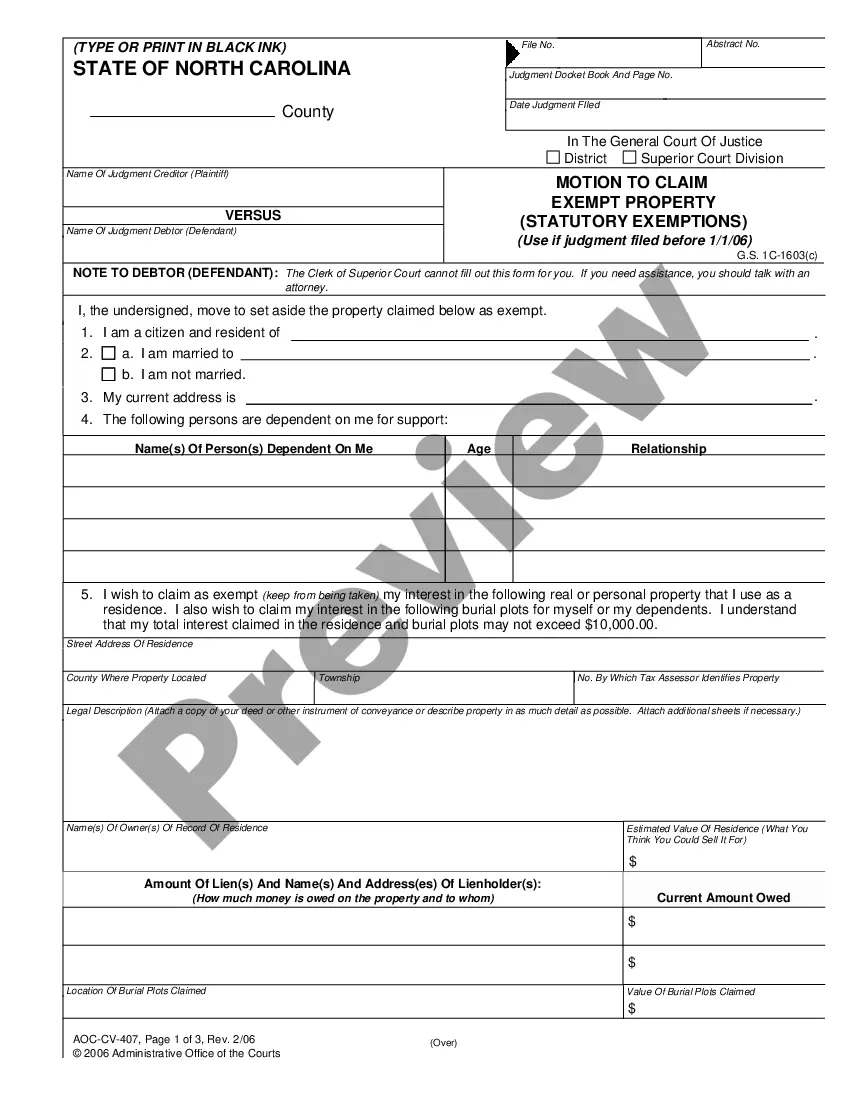
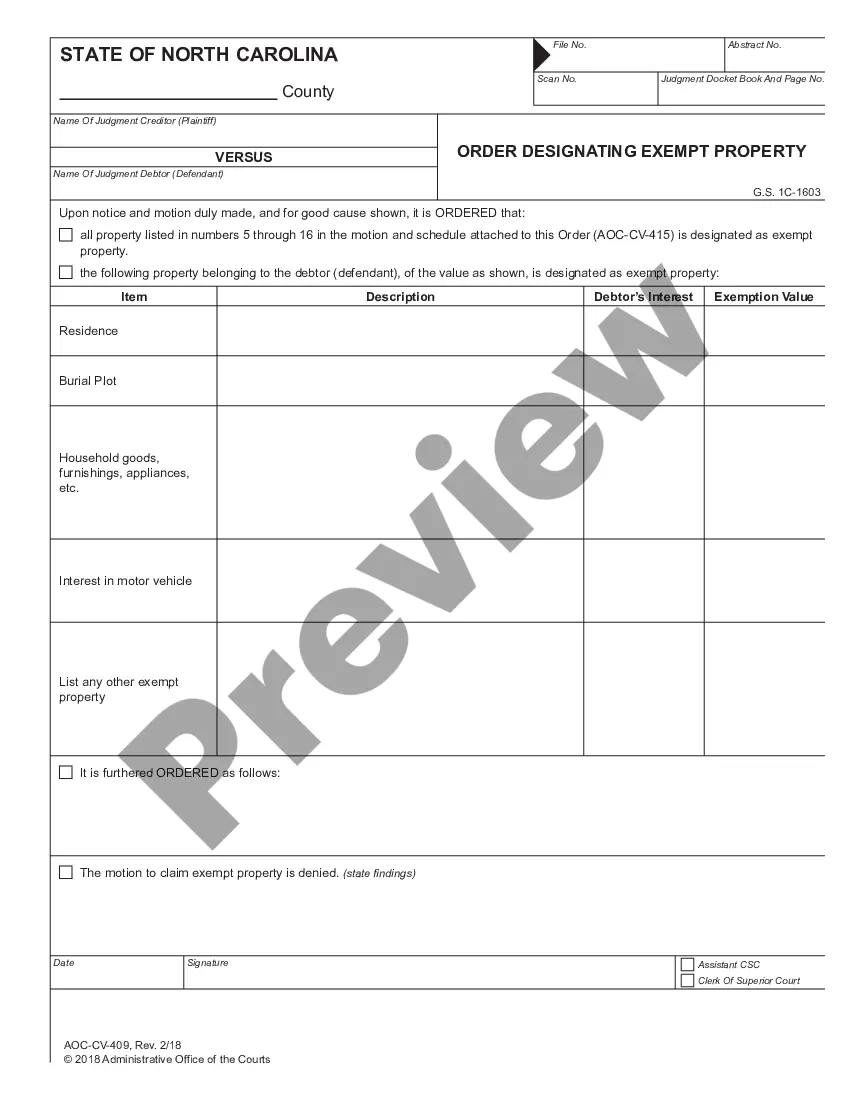
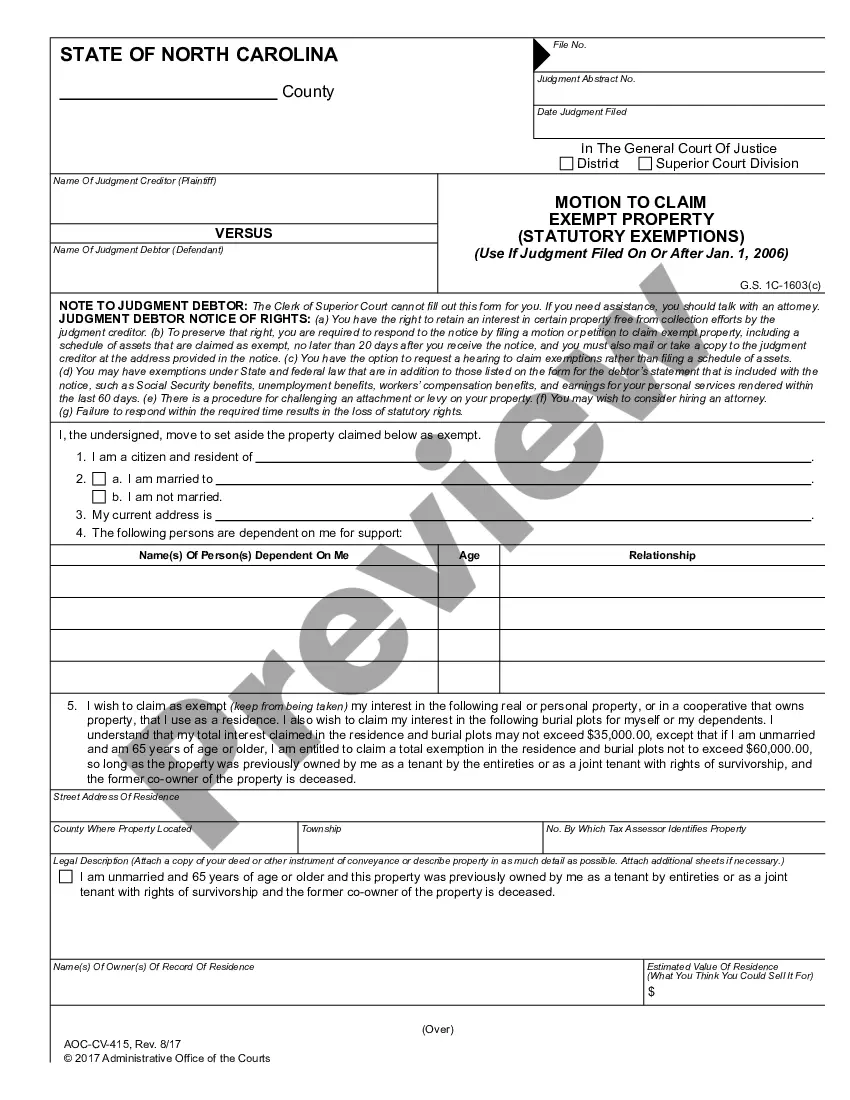
Motion To Claim Exempt Property - Constitutional Exemptions: This is an official form from the North Carolina Administration of the Courts - AOC, which complies with all applicable laws and statutes. USLF amends and updates the forms as is required by North Carolina statutes and law.
North Carolina Motion To Claim Exempt Property - Constitutional Exemptions
Category:
State:
North Carolina
Control #:
NC-CV-411
Format:
PDF
Instant download
This website is not affiliated with any governmental entity
Public form
Description
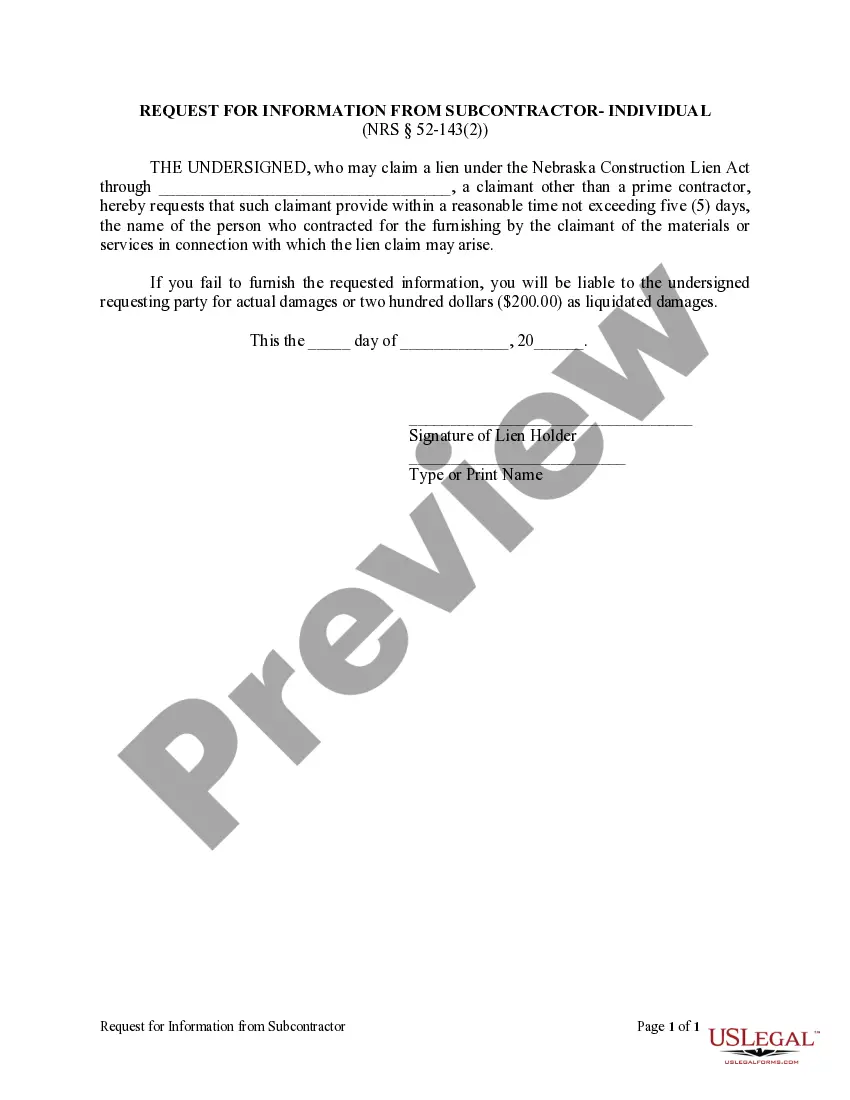


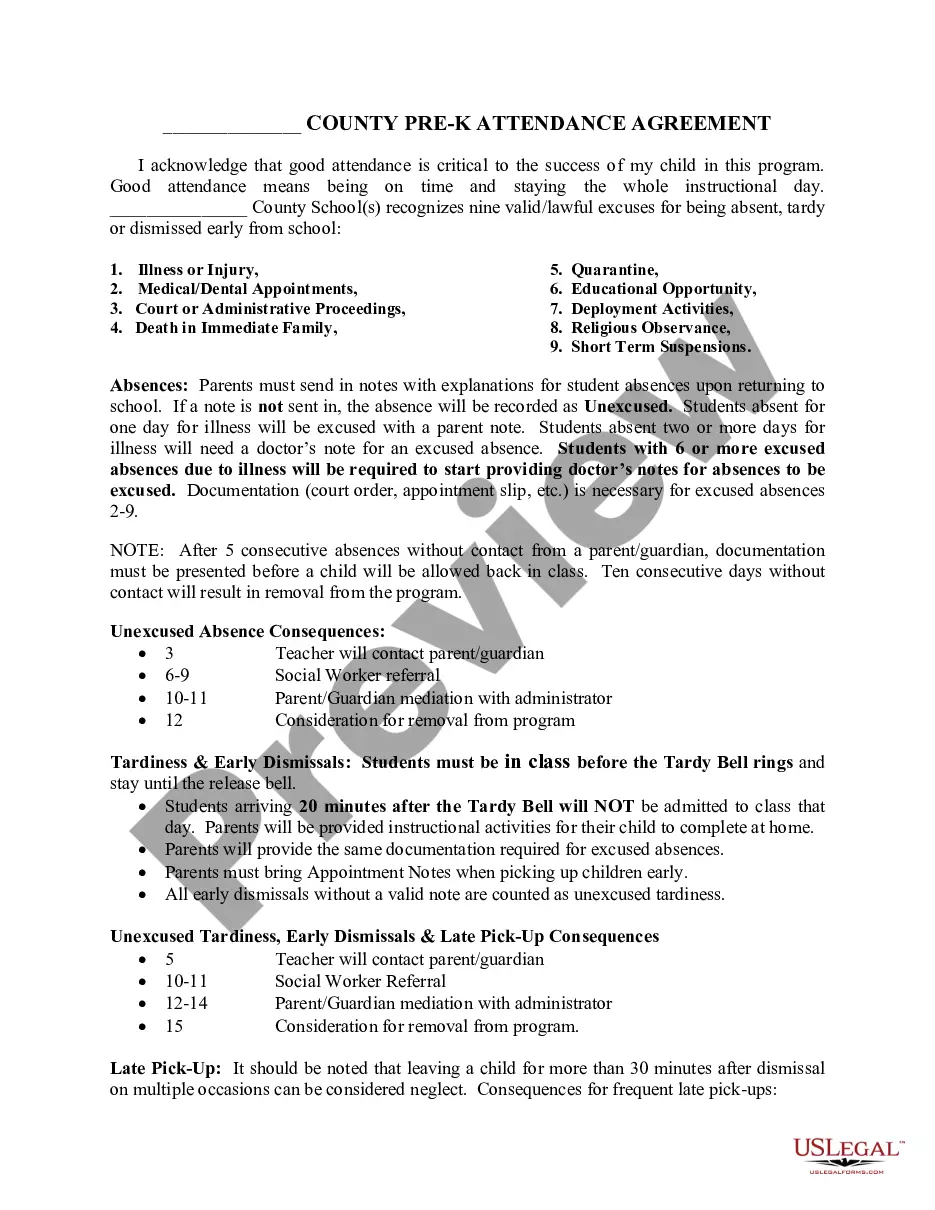
How to fill out North Carolina Motion To Claim Exempt Property - Constitutional Exemptions?
Steer clear of expensive attorneys and discover the North Carolina Motion To Claim Exempt Property - Constitutional Exemptions you seek at a reasonable cost on the US Legal Forms site.
Utilize our straightforward groups feature to locate and download legal and tax documents. Review their details and preview them before downloading.
Opt to receive the document in PDF or DOCX format. Simply click Download and locate your template in the My documents section. You can save the document to your device or print it out. After downloading, you can fill out the North Carolina Motion To Claim Exempt Property - Constitutional Exemptions manually or using editing software. Print it out and reuse the form multiple times. Achieve more for less with US Legal Forms!
- Additionally, US Legal Forms offers clients with guided instructions on how to acquire and fill out each form.
- US Legal Forms users just need to Log In and retrieve the specific document they require to their My documents section.
- Those who do not have a subscription yet should adhere to the following suggestions.
- Confirm that the North Carolina Motion To Claim Exempt Property - Constitutional Exemptions is permissible for use in your location.
- If present, read the summary and utilize the Preview feature before downloading the template.
- If you’re certain the form fulfills your requirements, click on Buy Now.
- If the document is incorrect, employ the search bar to find the appropriate one.
- Next, set up your account and choose a subscription option.
- Make payment via card or PayPal.
Form popularity
FAQ
North Carolina excludes from property taxes a portion of the appraised value of a permanent residence owned and occupied by North Carolina residents aged 65 or older or totally and permanently disabled whose 2020 income does not exceed $31,500 annually.
Exemption laws allow you to keep a portion of your property away from your creditors when you can't pay a bill.The protected property is known as exempt property. You'll find a listing of exempt property in your state's exemption statutes.
In North Carolina a judgment accrues 8% interest from the time it is entered. Judgment can be enforced by execution/through Court process. A creditor with a judgment can attempt to use some of your property to pay the judgment. However, the creditor MUST use the Court system before getting access to your property.
You can exempt the following personal property in North Carolina: A total of $5,000 for clothing, household goods, furnishings, appliances, books, and the like, plus an additional $1,000 per dependent up to $4,000 total. (N.C. Gen. Stat.
Exempt property refers to any property that cannot be claimed by creditors in order to satisfy the borrower's debts. Non-exempt property refers to any other property that may be reached by creditors.An example involving exempt property would be when a homeowner has failed to maintain their mortgage payments.
Assets such as IRAs, Roth IRAs, qualified retirement plans, and qualified profit sharing plans are protected under North Carolina law and federal law.
In North Carolina, Section 1-52.1 of the North Carolina Rules of Civil Procedure explains the statute of limitations for debts is 3 years for auto and installment loans, promissory notes, and credit cards.
A lien can be placed on investment property, even if that property is owned jointly by multiple owners. However, the effects of that lien may depend heavily on not only the type of lien, but also the type of ownership under which the joint owners hold the property.