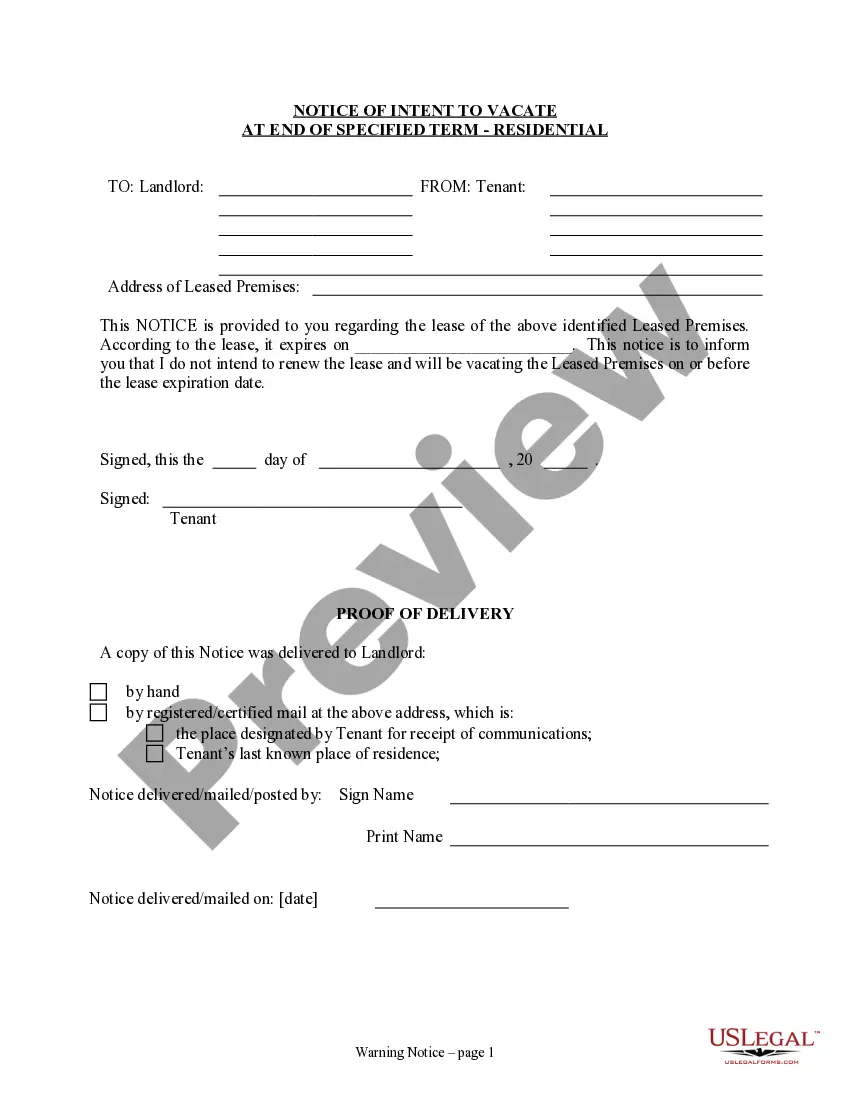
Notice Lease Tenant For Tenant
Description
Get your form ready online
Our built-in tools help you complete, sign, share, and store your documents in one place.
Make edits, fill in missing information, and update formatting in US Legal Forms—just like you would in MS Word.
Download a copy, print it, send it by email, or mail it via USPS—whatever works best for your next step.
Sign and collect signatures with our SignNow integration. Send to multiple recipients, set reminders, and more. Go Premium to unlock E-Sign.
If this form requires notarization, complete it online through a secure video call—no need to meet a notary in person or wait for an appointment.
We protect your documents and personal data by following strict security and privacy standards.

Make edits, fill in missing information, and update formatting in US Legal Forms—just like you would in MS Word.

Download a copy, print it, send it by email, or mail it via USPS—whatever works best for your next step.

Sign and collect signatures with our SignNow integration. Send to multiple recipients, set reminders, and more. Go Premium to unlock E-Sign.

If this form requires notarization, complete it online through a secure video call—no need to meet a notary in person or wait for an appointment.

We protect your documents and personal data by following strict security and privacy standards.
Looking for another form?

How to fill out Wyoming Notice Of Intent To Vacate At End Of Specified Lease Term From Tenant To Landlord For Residential Property?
- Log into your US Legal Forms account if you're a returning user. Ensure your subscription is active to access the necessary templates.
- First-time users should explore our platform by checking the Available Forms section. Review and select the appropriate lease notice.
- If needed, use our Search feature to find additional templates that align with your specific requirements.
- Once you identify the correct form, click on the Buy Now button and select your preferred subscription plan.
- Complete your purchase by entering your payment information, either via credit card or PayPal.
- After purchase, download your form immediately and store it on your device for easy access.
With a robust collection of over 85,000 editable legal forms, US Legal Forms stands out as a leader in the industry. Whether you need assistance or are looking for expert advice, our resources ensure that your documents are completed accurately and according to legal standards.
Start your journey with US Legal Forms today and streamline your legal documentation processes. Don’t wait—your simplified legal experience awaits!
Form popularity
FAQ
When writing a notice letter for moving out, include your name, address, and the date. State that you intend to vacate the property by a specific date and mention any necessary information regarding the return of the security deposit. A well-crafted notice lease tenant for tenant establishes a clear record and promotes a smoother end to the rental relationship, so consider utilizing resources like USLegalForms for added guidance.
Filling out a notice to vacate involves entering essential details such as the property address, tenant's name, and the desired move-out date. Additionally, ensure you include any pertinent lease specifics and conditions, such as cleaning responsibilities. Using a legally verified template can simplify the process and ensure that your notice lease tenant for tenant is not only clear but also legally enforceable.
To politely tell a tenant to move out, begin by expressing appreciation for their time in the property. Clearly explain the reasons for the request, while also providing the specific date they need to vacate. A compassionate approach can facilitate a smoother transition, making your notice lease tenant for tenant more effective and respectful.
To write a notice to vacate letter to tenant, start with the date and the tenant's name and address. Clearly state your intention for the tenant to vacate, include the specific date by which they must leave, and provide any relevant details concerning the security deposit and final inspections. Using a structured format helps ensure that the notice lease tenant for tenant is clear and legally compliant.
No, a notice to vacate is not the same as an eviction. A notice to vacate serves as a formal request for a tenant to move out of the rental property, while eviction is a legal process that follows when a tenant fails to comply with that notice. It is crucial for landlords to understand the difference, as providing a proper notice lease tenant for tenant can often prevent the need for further legal action.
No, in California, a landlord cannot evict a tenant without proper notice. Even in cases of lease violations or non-payment, landlords must follow legal procedures and provide a notice lease tenant for tenant, typically giving you time to correct the issue. Understanding your rights as a tenant is essential to ensure you are treated fairly.
Whether you need to give your landlord a 60-day notice lease tenant for tenant depends on your specific situation. Generally, if you've lived in the rental for more than 12 months, a 60-day notice is required. However, for shorter tenancies, a 30-day notice will suffice. Always ensure you send the notice properly to avoid disputes.
In California, the eviction process requires a minimum of 5 days of notice for non-payment of rent in most cases. After issuing a proper notice lease tenant for tenant, landlords must go through the legal process to evict tenants. This process can take additional time, so it's crucial to understand the legal requirements to avoid hasty actions.
In California, the notice you must give to your landlord depends on the length of your tenancy. If you rent month-to-month, you typically need to provide a 30-day notice lease tenant for tenant. If you've lived in the apartment for over a year, a 60-day notice may be necessary. It's important to follow these guidelines to avoid any complications.
The minimum notice a landlord can give a tenant can vary based on state laws and the terms of the lease agreement. Generally, most states require at least a 30-day notice for month-to-month rentals. However, some states may allow shorter notice periods under specific conditions. For a clear understanding of your rights and responsibilities regarding notice lease tenant for tenant, it's advisable to consult a resource like US Legal Forms to obtain the necessary documents and legal guidance.