Day Lease Right For Rent
Description

Get your form ready online
Our built-in tools help you complete, sign, share, and store your documents in one place.
Make edits, fill in missing information, and update formatting in US Legal Forms—just like you would in MS Word.
Download a copy, print it, send it by email, or mail it via USPS—whatever works best for your next step.
Sign and collect signatures with our SignNow integration. Send to multiple recipients, set reminders, and more. Go Premium to unlock E-Sign.
If this form requires notarization, complete it online through a secure video call—no need to meet a notary in person or wait for an appointment.
We protect your documents and personal data by following strict security and privacy standards.

Make edits, fill in missing information, and update formatting in US Legal Forms—just like you would in MS Word.

Download a copy, print it, send it by email, or mail it via USPS—whatever works best for your next step.

Sign and collect signatures with our SignNow integration. Send to multiple recipients, set reminders, and more. Go Premium to unlock E-Sign.

If this form requires notarization, complete it online through a secure video call—no need to meet a notary in person or wait for an appointment.

We protect your documents and personal data by following strict security and privacy standards.
Looking for another form?



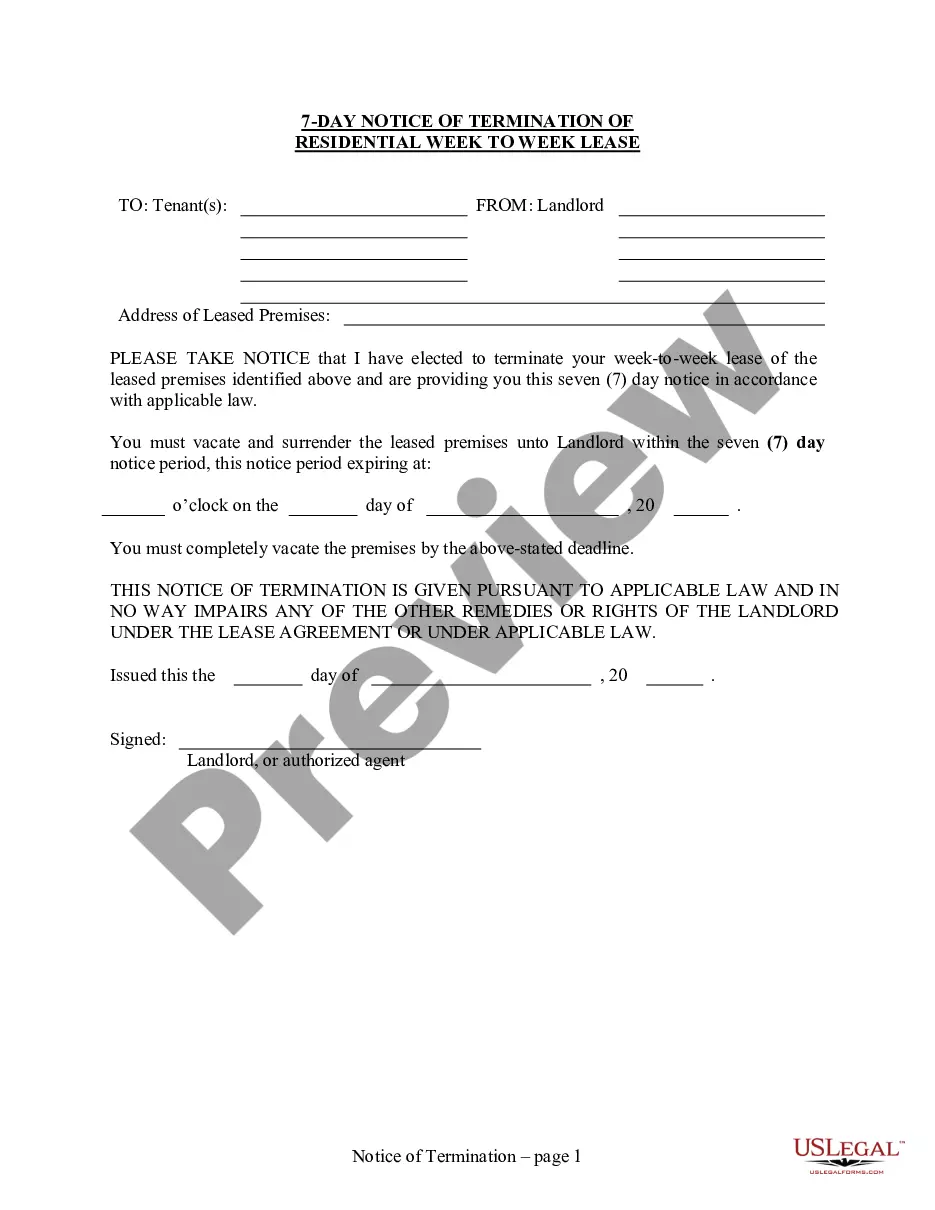
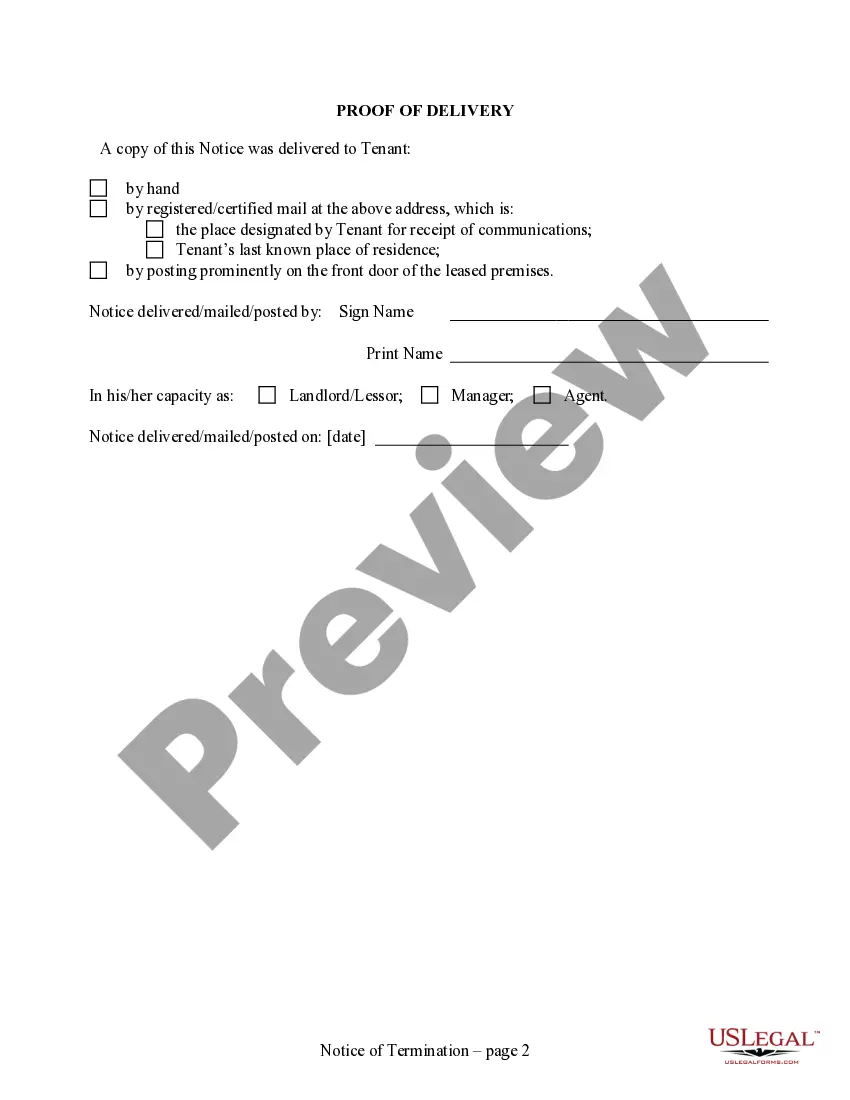
How to fill out Wisconsin 7 Day Notice To Terminate Week To Week Lease - No Right To Cure - Residential?
- If you're a returning user, log in to your account and download the required template by hitting the Download button. Verify that your subscription is current, or renew it as required.
- For first-time users, begin by previewing the form description to ensure it fits your requirements and complies with local jurisdiction standards.
- Search for alternative templates if necessary. Use the Search tab to find the right documents in case of discrepancies.
- Once satisfied, click the Buy Now button to select your subscription plan and register for an account for full access.
- Complete your purchase with your credit card or PayPal account to finalize the subscription.
- Download your form to complete it and store it safely. You can also access it anytime from the My Forms section in your profile.
With US Legal Forms, you benefit from a robust collection of legal documents that far outnumber those of competitors, offering excellent value.
Empower yourself with the right legal resources today. Start your journey towards effective legal solutions by visiting US Legal Forms!
Form popularity
FAQ
An owner can use a rental property for personal use without affecting their tax status for up to 14 days in a year. This usage time must not interfere with their day lease right for rent. If an owner uses the property beyond this period, their rental classification may be impacted for tax purposes.
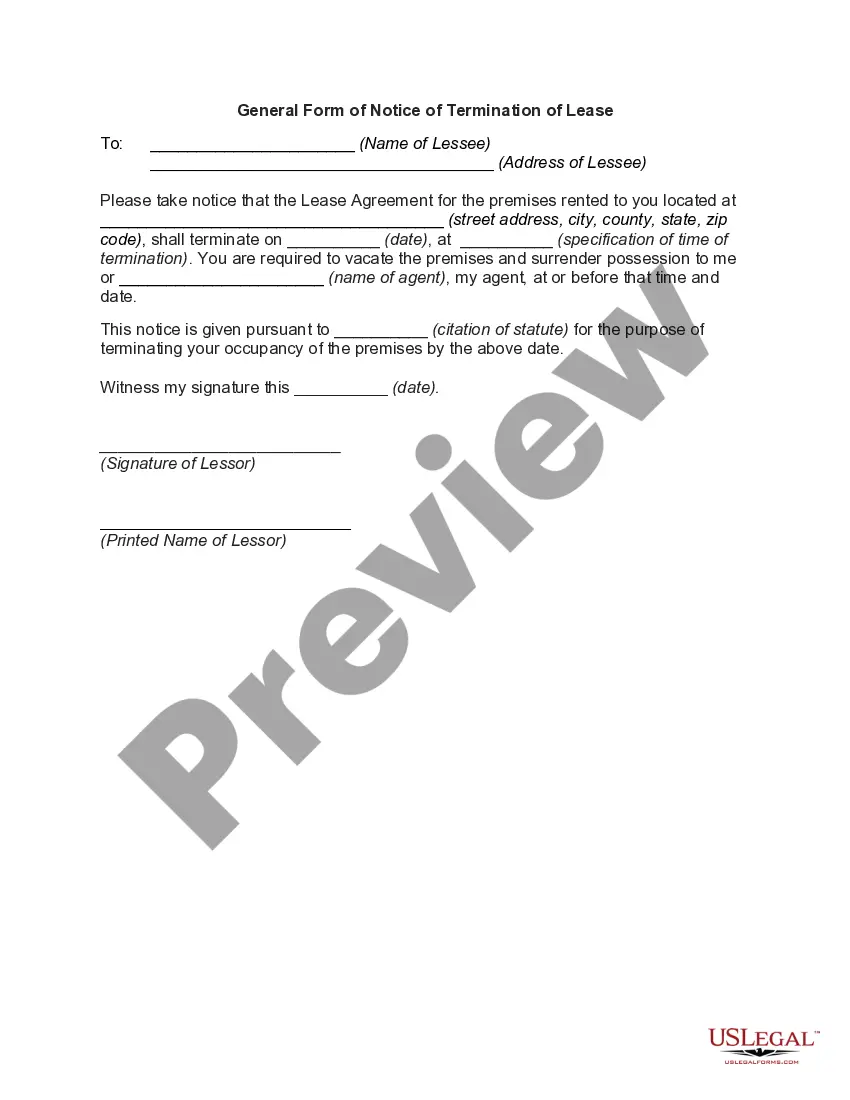
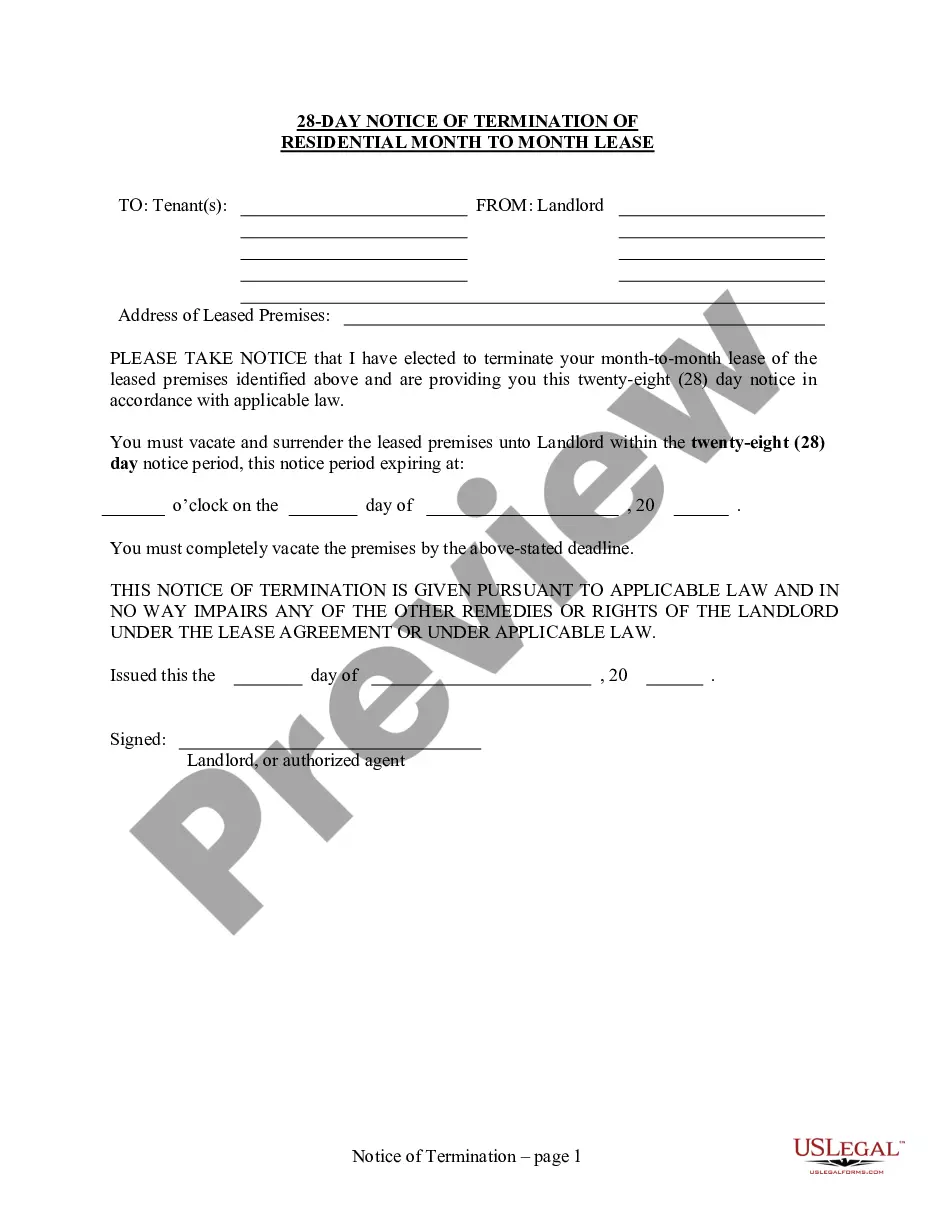
To give a 30-day notice on a lease, you should write a clear and concise letter to your landlord or tenant. Include relevant details, such as the date of the notice, your intention to end the lease, and the specific lease date. Ensuring your communication is direct helps maintain your day lease right for rent and fosters a positive rental experience.
The IRS considers fair rental days the number of days you rent your property in a year. For tax purposes, maintaining your day lease right for rent means you must distinguish between personal use and rental use. Generally, if you rent out the property for more than 14 days, you must report the rental income, so keeping accurate records is vital.
The 50% rule in rental property states that you should expect at least 50% of your rental income to go towards expenses, including maintenance, management, and utilities. Understanding this rule can help you gauge the financial viability of your property. Utilizing the day lease right for rent can also enhance your income strategy by maximizing rent possibilities while managing costs effectively.
You can rent your house for 14 days or fewer each year without paying taxes on the rental income. This is known as maintaining your day lease right for rent. It allows homeowners to benefit financially from short-term rentals, such as vacation stays, while significantly minimizing their tax burden.
The 15 day rule for rental property refers to the IRS guideline that states if you rent out your home for 14 days or less in a year, you do not have to report the rental income. This means you maintain your day lease right for rent without tax implications. It benefits homeowners who wish to rent their property occasionally, allowing them to earn extra income without financial obligations.
Recently, new laws in Georgia have focused on protecting renters by providing clearer guidelines regarding eviction processes and tenant rights. These laws aim to enhance the day lease right for rent by promoting transparency between landlords and tenants. Staying updated on these amendments is crucial for ensuring fair treatment during tenancy. You can learn more about these regulations on platforms like uslegalforms.
Yes, a landlord in Georgia can refuse to accept rent under certain circumstances. If the tenant violates lease agreements, the landlord can choose not to accept rent payments. However, it is advisable for landlords to document their actions to avoid confusion. Utilizing the day lease right for rent can clarify the process for both parties.
In Georgia, a tenant cannot stay indefinitely without paying rent. The day lease right for rent requires that tenants must adhere to the terms of their lease, which usually allows for a grace period. After the grace period, landlords can initiate eviction proceedings if rent remains unpaid. It's essential to stay informed about your rights and responsibilities as a tenant.
To give a 30-day notice on a lease, begin by reviewing your lease agreement for any specific notice requirements. Write a concise letter stating your intention to vacate and include your current address, the date of your notice, and your expected move-out date. Deliver the notice to your landlord through the preferred method outlined in your lease, ensuring you keep a copy for your records. US Legal Forms can provide you with templates to make this process seamless while preserving your day lease rights for rent.