Tenant Ti
Description


Get your form ready online
Our built-in tools help you complete, sign, share, and store your documents in one place.
Make edits, fill in missing information, and update formatting in US Legal Forms—just like you would in MS Word.
Download a copy, print it, send it by email, or mail it via USPS—whatever works best for your next step.
Sign and collect signatures with our SignNow integration. Send to multiple recipients, set reminders, and more. Go Premium to unlock E-Sign.
If this form requires notarization, complete it online through a secure video call—no need to meet a notary in person or wait for an appointment.
We protect your documents and personal data by following strict security and privacy standards.

Make edits, fill in missing information, and update formatting in US Legal Forms—just like you would in MS Word.

Download a copy, print it, send it by email, or mail it via USPS—whatever works best for your next step.

Sign and collect signatures with our SignNow integration. Send to multiple recipients, set reminders, and more. Go Premium to unlock E-Sign.

If this form requires notarization, complete it online through a secure video call—no need to meet a notary in person or wait for an appointment.

We protect your documents and personal data by following strict security and privacy standards.
Looking for another form?



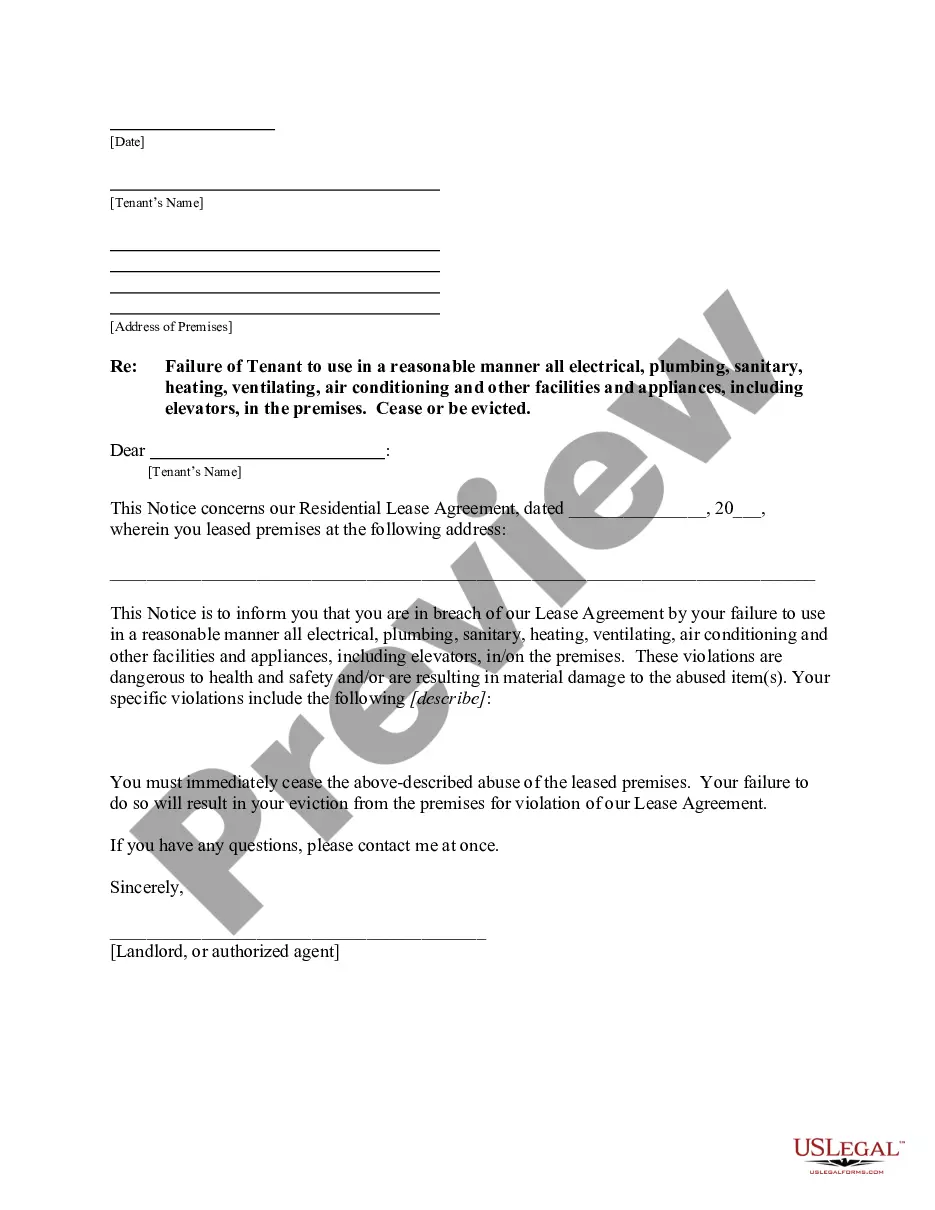
How to fill out Vermont Letter From Landlord To Tenant For Failure To Use Electrical, Plumbing, Sanitary, Heating, Ventilating, Air Conditioning And Other Facilities In A Reasonable Manner?
- Log in to your account at US Legal Forms if you're a returning user. Ensure that your subscription is active; if it has expired, renew as necessary.
- For new users, start by browsing the extensive form library and select the tenant ti document that suits your needs. Check its description carefully to confirm it meets local jurisdiction requirements.
- If you don't find the exact template, use the Search tool to refine your search for alternative options fitting your criteria.
- Once you've identified the correct document, click on the Buy Now button and choose your preferred subscription plan. Create an account to gain full access to the form library.
- After selecting your plan, complete your purchase by entering your payment details via credit card or PayPal.
- Finally, download the tenant ti template to your device. You can also access it later in the My Forms section of your account.
US Legal Forms not only offers a vast selection of over 85,000 editable and fillable legal forms but also provides access to premium experts for assistance. This ensures that your documents are accurate and compliant with legal standards.
In conclusion, using US Legal Forms to obtain your tenant ti documents can save you time and ensure reliability. Start your journey today and experience seamless access to legal document solutions!
Form popularity
FAQ
Tenant improvements, or TI, refer to the modifications made to a rented space to suit the needs of a tenant. Typically, the landlord and tenant agree on certain enhancements that will be made to the property before the tenant moves in. These can include changes like painting, installing new flooring, or building partitions. Understanding how Tenant TI works in your lease can enhance your rental experience and ensure the space effectively meets your operational requirements.
Ti stands for tenant improvements, while lc refers to lease contributions. Together, they describe the financial aspects of the improvements that landlords may offer. Understanding tenant ti and lease contributions allows you to better evaluate your lease options and negotiate favorable terms.
A TI job in construction involves performing tenant improvements to create a functional and appealing space for tenants. These jobs can vary widely depending on the tenant's needs, from basic renovations to extensive build-outs. Engaging experienced professionals for your tenant ti jobs ensures higher satisfaction and achieves your vision.
In construction terms, ti stands for 'tenant improvements.' It includes all alterations made to a rental space to tailor it to the tenant’s specifications. Knowing what tenant ti entails helps you participate actively in the design of your workspace.
Ti in construction refers to 'tenant improvements,' which are physical alterations made to a space to meet the requirements of the tenant. These improvements can include anything from painting walls to installing specialized equipment. Recognizing the role of tenant ti is essential for ensuring that the space suits your business operations.
In leasing terms, ti stands for 'tenant improvements.' These are modifications or upgrades that a landlord agrees to make in a rental space to accommodate the tenant's needs. Tenant ti can include changes to layout, finishes, or fixtures. Understanding this term helps you better negotiate your lease.
Writing a quit notice for a tenant requires you to provide a clear notification about the lease termination. Start with essential details like the tenant’s name, the property address, and the expected move-out date. This formal notice helps establish a transparent communication regarding the rental agreement, tying back to any tenant ti considerations.
To write a letter to quit a rental property, start by addressing your landlord and stating your intention to terminate the lease. Clearly mention the date you will vacate and thank them for your time in the property. A well-structured letter not only conveys respect but also helps keep the process professional, especially in relation to your tenant ti.
You can record a tenant improvement allowance by documenting it in your accounting records as a long-term asset. Use appropriate accounting software or methods to categorize these funds accurately. This keeps your financial statements clear and reflects how the tenant ti enhances the property’s value.
Writing a notice to vacate involves stating your intention to leave the rental property clearly and concisely. Include the date you plan to move out and any relevant details about the condition of the space. Ensure to refer to your lease agreement to respect any required notice period while considering your tenant ti.