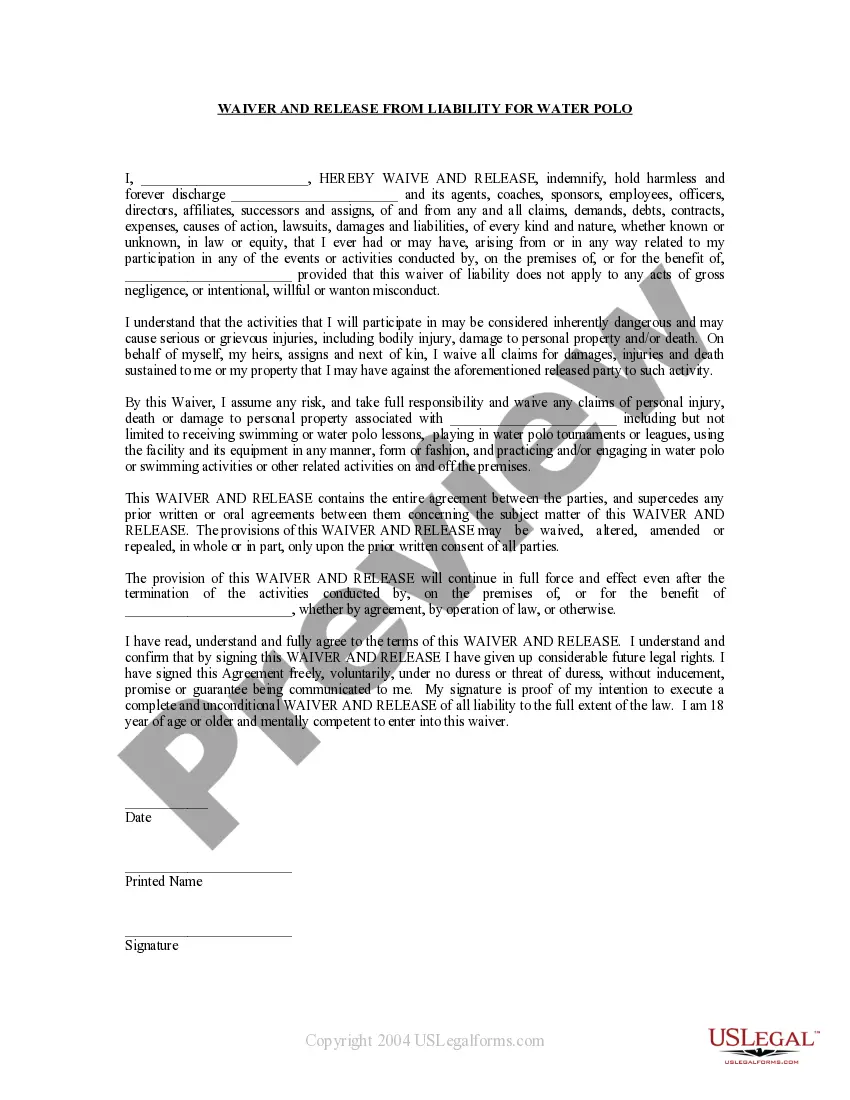
Water Liability Exclusion
Description
Get your form ready online
Our built-in tools help you complete, sign, share, and store your documents in one place.
Make edits, fill in missing information, and update formatting in US Legal Forms—just like you would in MS Word.
Download a copy, print it, send it by email, or mail it via USPS—whatever works best for your next step.
Sign and collect signatures with our SignNow integration. Send to multiple recipients, set reminders, and more. Go Premium to unlock E-Sign.
If this form requires notarization, complete it online through a secure video call—no need to meet a notary in person or wait for an appointment.
We protect your documents and personal data by following strict security and privacy standards.

Make edits, fill in missing information, and update formatting in US Legal Forms—just like you would in MS Word.

Download a copy, print it, send it by email, or mail it via USPS—whatever works best for your next step.

Sign and collect signatures with our SignNow integration. Send to multiple recipients, set reminders, and more. Go Premium to unlock E-Sign.

If this form requires notarization, complete it online through a secure video call—no need to meet a notary in person or wait for an appointment.

We protect your documents and personal data by following strict security and privacy standards.
Looking for another form?
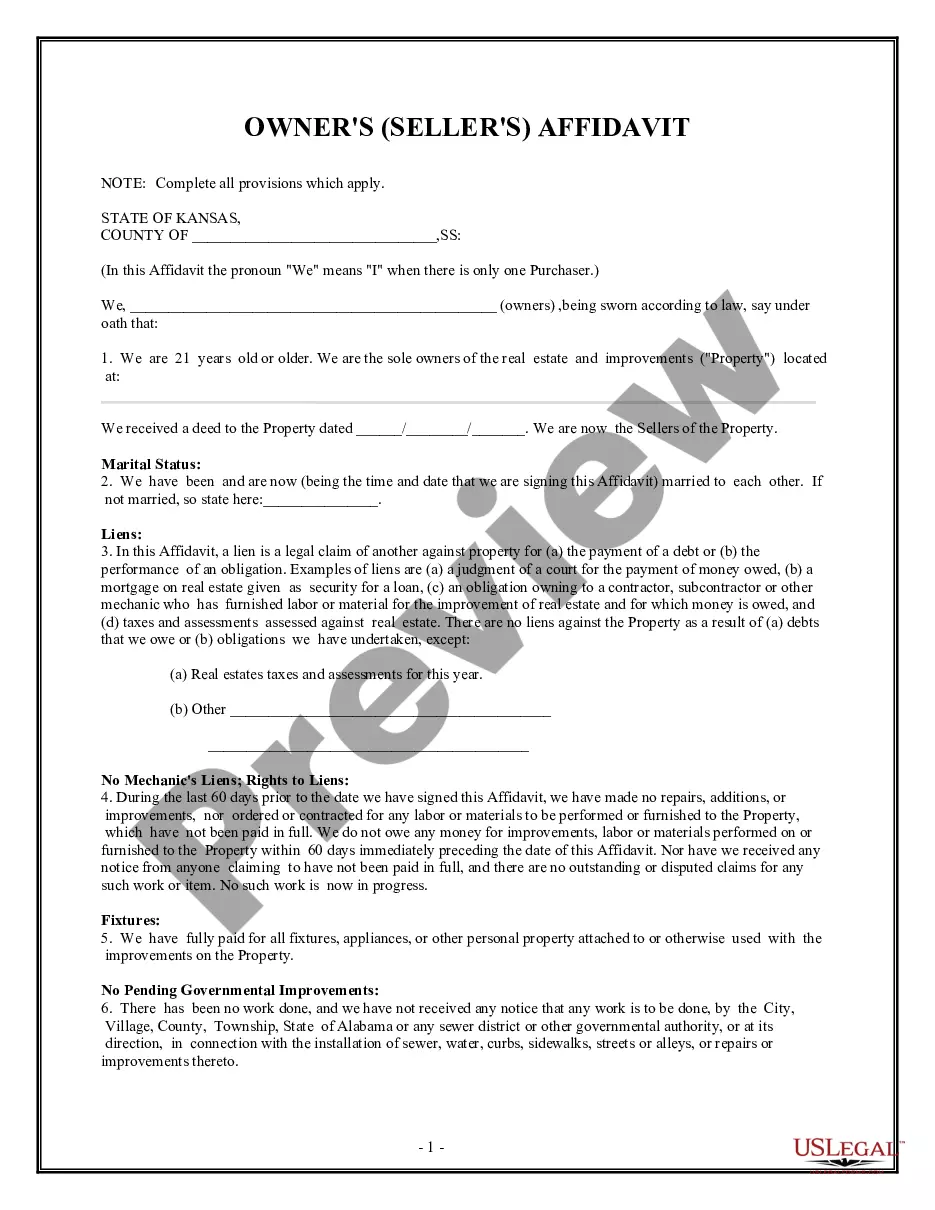
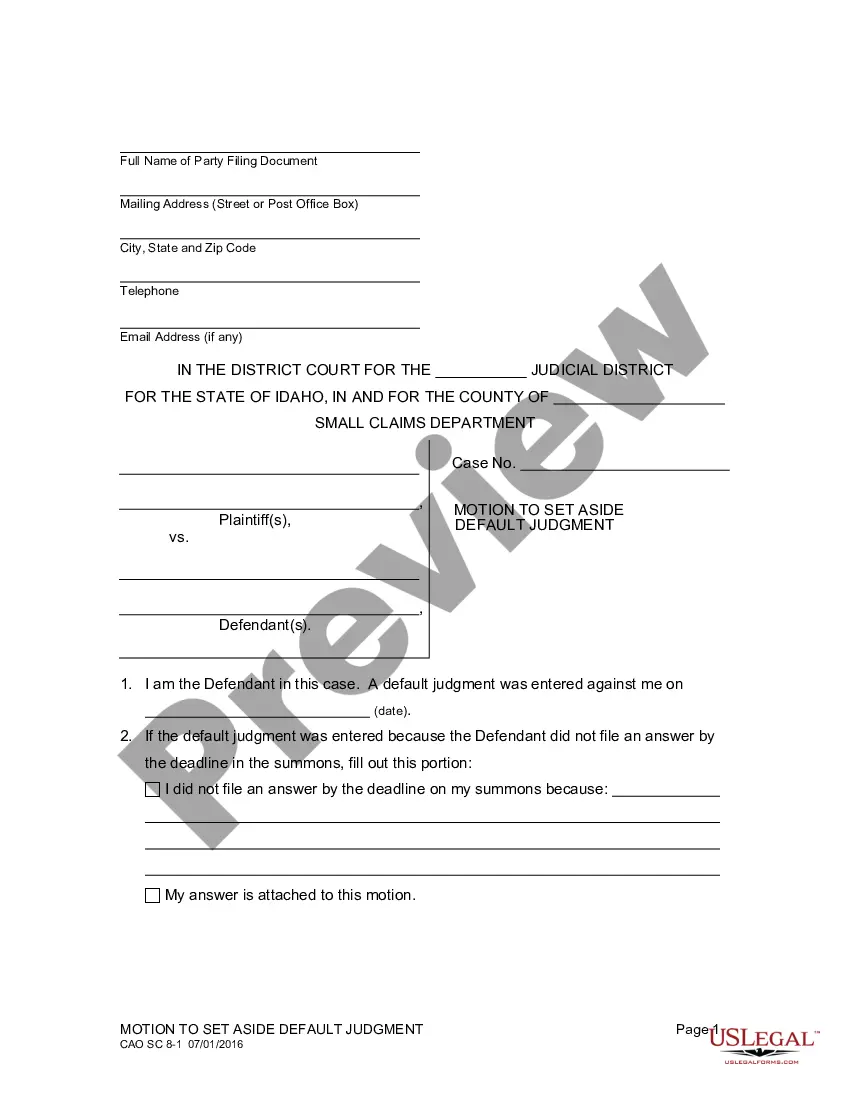

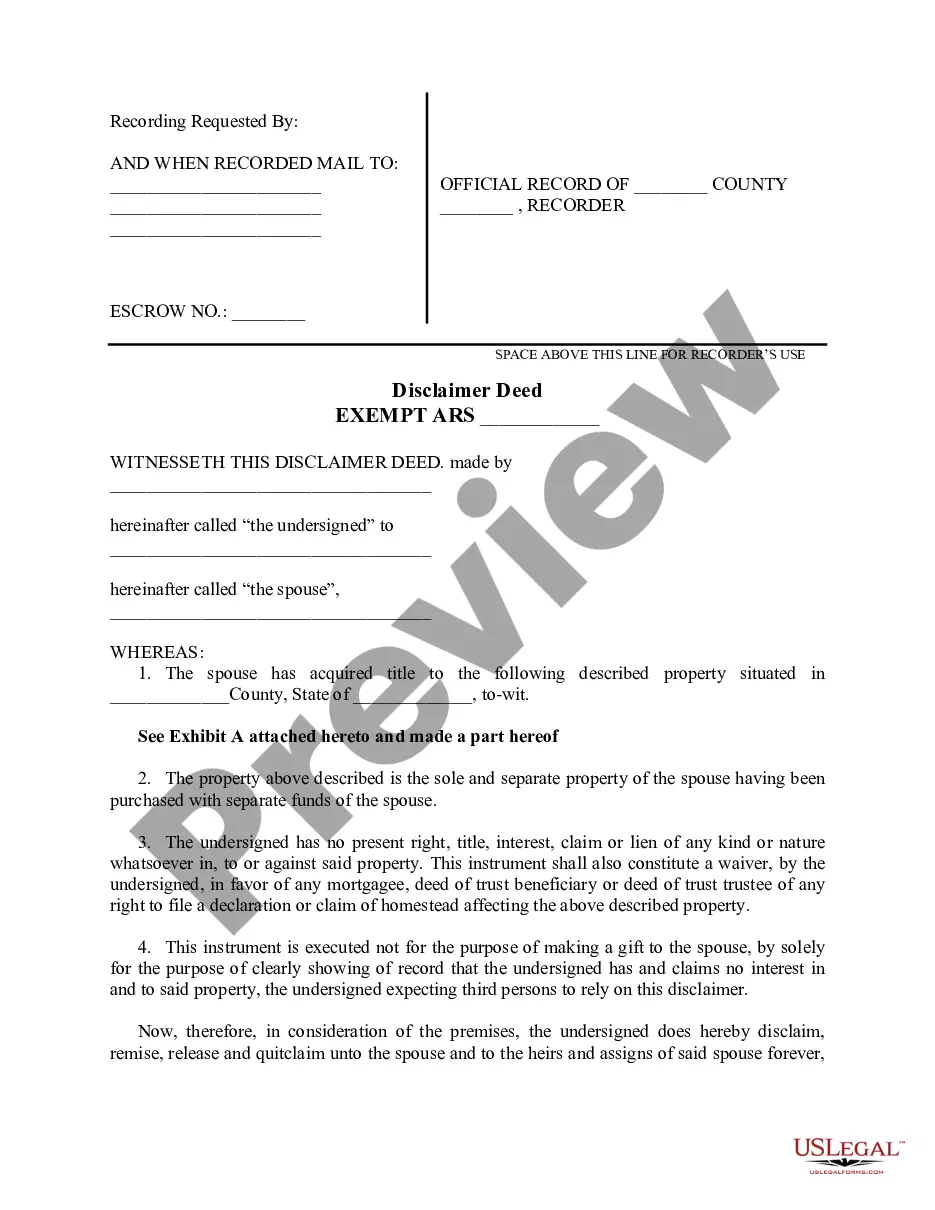
How to fill out Waiver And Release From Liability For Adult For Water Polo?
Finding a reliable source to obtain the latest and pertinent legal templates is part of the challenge of dealing with administration.
Identifying the correct legal documents demands accuracy and meticulousness, which is why it's essential to source Water Liability Exclusion samples exclusively from reputable providers, such as US Legal Forms. An incorrect template will squander your time and delay the situation you're facing. With US Legal Forms, your concerns are minimal. You can easily access and verify all the information concerning the document’s applicability and relevance to your circumstances and jurisdiction.
Once you have the form on your device, you can modify it using the editor or print it and fill it out manually. Eliminate the hassle associated with your legal documentation. Explore the vast collection at US Legal Forms, where you can find legal templates, verify their suitability to your circumstances, and download them instantly.
- Utilize the catalog browsing or search option to find your template.
- Examine the form’s description to confirm if it meets your state and regional requirements.
- View the form preview, if available, to ensure the template aligns with your needs.
- Continue searching for the appropriate template if the Water Liability Exclusion does not satisfy your requirements.
- If you are confident about the form’s applicability, download it.
- If you are a registered user, click Log in to verify and access your selected forms in My documents.
- If you do not possess an account yet, click Buy now to obtain the template.
- Select the pricing option that aligns with your preferences.
- Continue to registration to finalize your purchase.
- Complete your purchase by choosing a payment method (credit card or PayPal).
- Select the file format for downloading the Water Liability Exclusion.
Form popularity
FAQ
The complete water damage exclusion refers to the comprehensive list of water-related incidents that an insurance policy does not cover. This often includes flooding, overflows from sewer systems, and damages that stem from natural disasters. Being well-informed about your policy's exclusions is essential to avoid surprises during a claim process. Platforms like uslegalforms can assist you in navigating your options and understanding your policy more thoroughly.
Water damage exclusion refers to specific conditions under which an insurance policy will not cover water damage repairs. Common exclusions include flooding, sewer backups, and damage that arises from neglect or poor maintenance. By knowing the details of your water liability exclusion, you can better prepare for potential risks. It’s wise to assess your policy and consider additional coverage if you live in an area prone to water damage.
Water damage is generally determined by the extent and impact of the water present in your home. Typically, even a small leak from a pipe can cause significant damage over time, due to mold growth and structural issues. Your insurance might have specific thresholds for assessing damage, so what matters most is the extent of damage and your policy's definitions. Understanding the terms of your water liability exclusion can also guide you in determining whether your situation qualifies for coverage.
When talking to an insurance adjuster about water damage, avoid making admissions of fault or downplaying the severity of the damage. You should also refrain from providing unnecessary information that could complicate your claim. Stick to the facts and provide accurate details about the circumstances surrounding the incident. Remember, the water liability exclusion could affect your claim, so be thoughtful in your communication.
Insurance might not cover water damage if the water liability exclusion applies to your policy. This can include situations where the damage resulted from a lack of maintenance or neglect, such as an aging roof or plumbing issues. Moreover, some policies exclude coverage for specific types of water damage, like flood or sewer backups, unless you have separate coverage for these risks. It's important to read your policy closely to understand your coverage limitations.
When filing a homeowners insurance claim, avoid making statements that may weaken your case. For instance, refrain from admitting fault or offering opinions about the damage. Stick to the facts of the situation and clearly outline what has occurred. Be mindful of how water liability exclusions may impact the outcome of your claim, and consult with experts if necessary.
The amount you can claim for water damage often depends on your policy limits and deductibles. Insurance coverage may be influenced by specific water liability exclusions in your policy, which can limit how much you'll receive. It’s essential to evaluate the extent of the damage and how your policy applies. Using a comprehensive service like US Legal Forms can help you navigate the complexities of your claim.
You typically have a limited time to file a water damage claim, which can vary by state and insurance policy. Most homeowners have between one to three years from the date of the damage to submit their claim. It's vital to check your policy details to understand the specific timeline. Remember, if you have a water liability exclusion, it may impact the coverage options available to you.
To get insurance to cover water damage, you need to verify the specific terms of your policy regarding water liability exclusion. Start by documenting the damage thoroughly and contacting your insurance agent for guidance. They can help you understand any applicable exclusions and suggest how to address them. Additionally, explore uslegalforms, a helpful resource that can assist you in getting the right forms and information to file your claims effectively.
In homeowners insurance, the water exclusion refers to specific situations where water damage is not covered. Typically, policies exclude damages resulting from flooding or surface water, as well as issues related to failed sump pumps. It is crucial to review your policy and understand the water liability exclusion to ensure you are fully protected. If necessary, consider obtaining a separate flood insurance policy for comprehensive coverage.