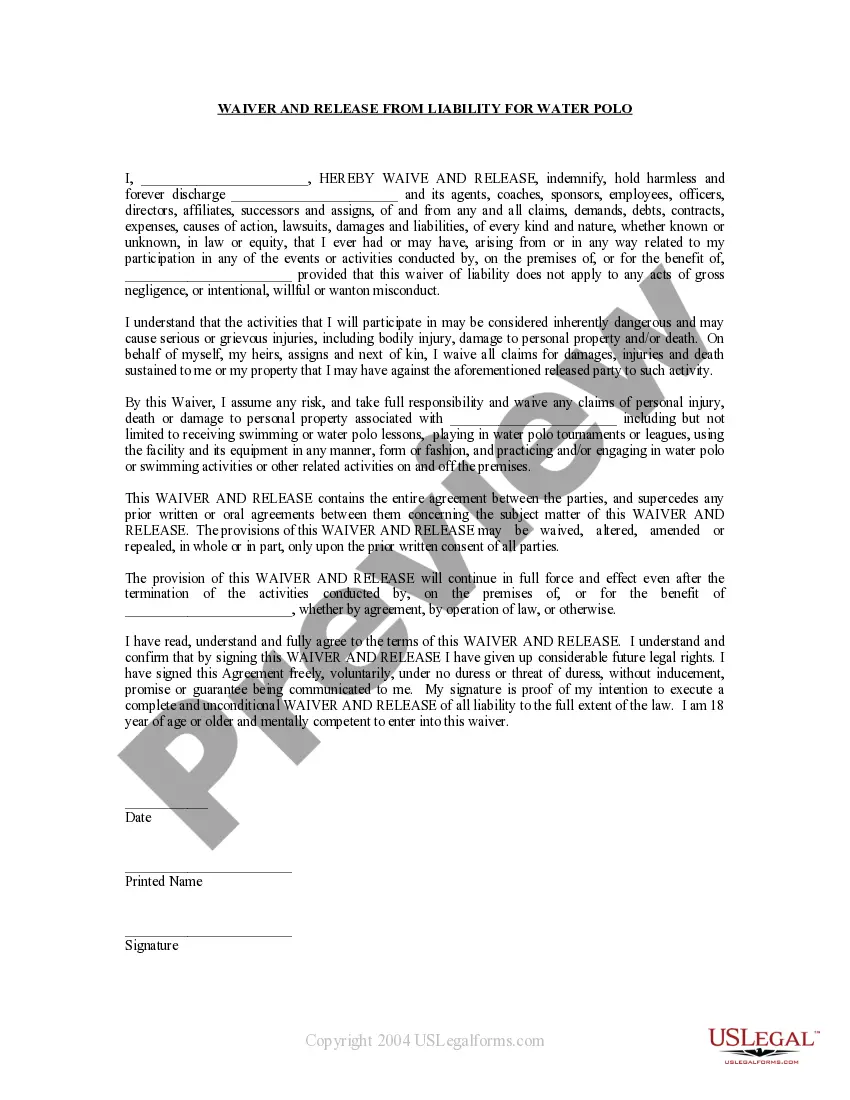
Liability For Water
Description
Get your form ready online
Our built-in tools help you complete, sign, share, and store your documents in one place.
Make edits, fill in missing information, and update formatting in US Legal Forms—just like you would in MS Word.
Download a copy, print it, send it by email, or mail it via USPS—whatever works best for your next step.
Sign and collect signatures with our SignNow integration. Send to multiple recipients, set reminders, and more. Go Premium to unlock E-Sign.
If this form requires notarization, complete it online through a secure video call—no need to meet a notary in person or wait for an appointment.
We protect your documents and personal data by following strict security and privacy standards.

Make edits, fill in missing information, and update formatting in US Legal Forms—just like you would in MS Word.

Download a copy, print it, send it by email, or mail it via USPS—whatever works best for your next step.

Sign and collect signatures with our SignNow integration. Send to multiple recipients, set reminders, and more. Go Premium to unlock E-Sign.

If this form requires notarization, complete it online through a secure video call—no need to meet a notary in person or wait for an appointment.

We protect your documents and personal data by following strict security and privacy standards.
Looking for another form?



How to fill out Waiver And Release From Liability For Adult For Water Polo?
It’s clear that you cannot instantly become a legal expert, nor can you swiftly learn how to draft a Liability For Water without possessing a specialized background.
The process of creating legal documents is lengthy and necessitates specific education and skills. So why not entrust the generation of the Liability For Water to the professionals.
With US Legal Forms, which offers one of the most extensive legal document databases, you can locate everything from court documents to templates for internal corporate correspondence.
You can regain access to your documents from the My documents tab at any moment. If you’re a returning customer, simply Log In to locate and download the template from the same tab.
No matter the aim of your paperwork—be it financial, legal, or personal—our website has you supported. Try US Legal Forms today!
- Recognize the form you need by utilizing the search bar located at the top of the webpage.
- Preview it (if this choice is available) and review the accompanying description to determine if Liability For Water aligns with what you seek.
- Restart your search if you require a different document.
- Create a complimentary account and choose a subscription plan to acquire the template.
- Select Buy now. Once the purchase is finalized, you can download the Liability For Water, fill it out, print it, and send or mail it to the relevant parties or organizations.
Form popularity
FAQ
Writing a simple liability waiver involves outlining the specific risks associated with your activity, especially those linked to liability for water. Start with an introductory statement that describes the nature of the activity and the inherent risks participants face. Follow that with a declaration that they agree to assume those risks and release you from liability. To ensure clarity and legality, consider using US Legal Forms, which provides precise templates for creating effective waivers.
To write a simple release of liability, clearly define the scope of the release, specifying what activities or risks it covers, particularly regarding liability for water. Include a statement where the signer agrees to waive their right to claims or lawsuits connected to those risks. Additionally, make sure to have both the date and signatures from all parties involved to enhance the document’s credibility. Utilizing US Legal Forms can simplify this process with pre-built templates designed for your needs.
Yes, you can write your own liability waiver for situations involving potential liability for water. Start with a clear statement that outlines the risks associated with the activity or event. Include terms that specify the participant acknowledges these risks and agrees to release you from liability. For additional guidance, US Legal Forms offers templates that can help you structure a legally sound waiver.
To submit a liability claim related to water, begin by gathering all relevant documentation, such as photographs, witness statements, and any reports detailing the incident. Next, contact the appropriate insurance company or legal entity to initiate the claim process. Make sure to clearly outline the details of the incident, including how it resulted in liability for water. If you need assistance, consider using platforms like US Legal Forms to access essential templates and resources.
When speaking to an insurance adjuster about water damage, clearly state the facts of the incident. Provide detailed information about the damage and any repairs made. Always stay calm and respectful, as this encourages a productive dialogue. Remember, being prepared with documentation can strengthen your position regarding liability for water.
You usually have a limited time frame to file a water damage claim, often ranging from a few months to a year. It varies by state, so reviewing your insurance policy and local laws is important. Prompt action helps establish your claim and clarifies your liability for water-related issues. Don’t hesitate to reach out to uslegalforms for guidance on filing.
The amount you can claim for water damage depends on the extent of the damage and your policy limits. Typically, home insurance covers damages after deductibles are deducted. It's essential to document the damage thoroughly and consult your insurance policy. Knowing your coverage limits can help you understand potential claims related to liability for water.
Responsibility for paying for a water leak typically falls on the property owner unless specific agreements dictate otherwise. Clarifying these terms in your lease can avoid confusion later. If disputes arise, seeking help from services like US Legal Forms can provide guidance on how to address these issues correctly.
Your neighbor can sue you for water damage if they can prove the damage directly resulted from negligence on your part. Liability for water includes being accountable for any harm caused by leaks or overflows. Engaging with legal advice may help navigate such disputes effectively.
Yes, a tenant can be liable for water damage if the damage results from their actions, such as neglecting to report a leak. Liability for water extends to both the property owner and tenant, depending on the circumstances. Reviewing your lease and understanding your responsibilities can prevent disputes.