Uniform Commercial Code File Force Majeure
Description

Get your form ready online
Our built-in tools help you complete, sign, share, and store your documents in one place.
Make edits, fill in missing information, and update formatting in US Legal Forms—just like you would in MS Word.
Download a copy, print it, send it by email, or mail it via USPS—whatever works best for your next step.
Sign and collect signatures with our SignNow integration. Send to multiple recipients, set reminders, and more. Go Premium to unlock E-Sign.
If this form requires notarization, complete it online through a secure video call—no need to meet a notary in person or wait for an appointment.
We protect your documents and personal data by following strict security and privacy standards.

Make edits, fill in missing information, and update formatting in US Legal Forms—just like you would in MS Word.

Download a copy, print it, send it by email, or mail it via USPS—whatever works best for your next step.

Sign and collect signatures with our SignNow integration. Send to multiple recipients, set reminders, and more. Go Premium to unlock E-Sign.

If this form requires notarization, complete it online through a secure video call—no need to meet a notary in person or wait for an appointment.

We protect your documents and personal data by following strict security and privacy standards.
Looking for another form?


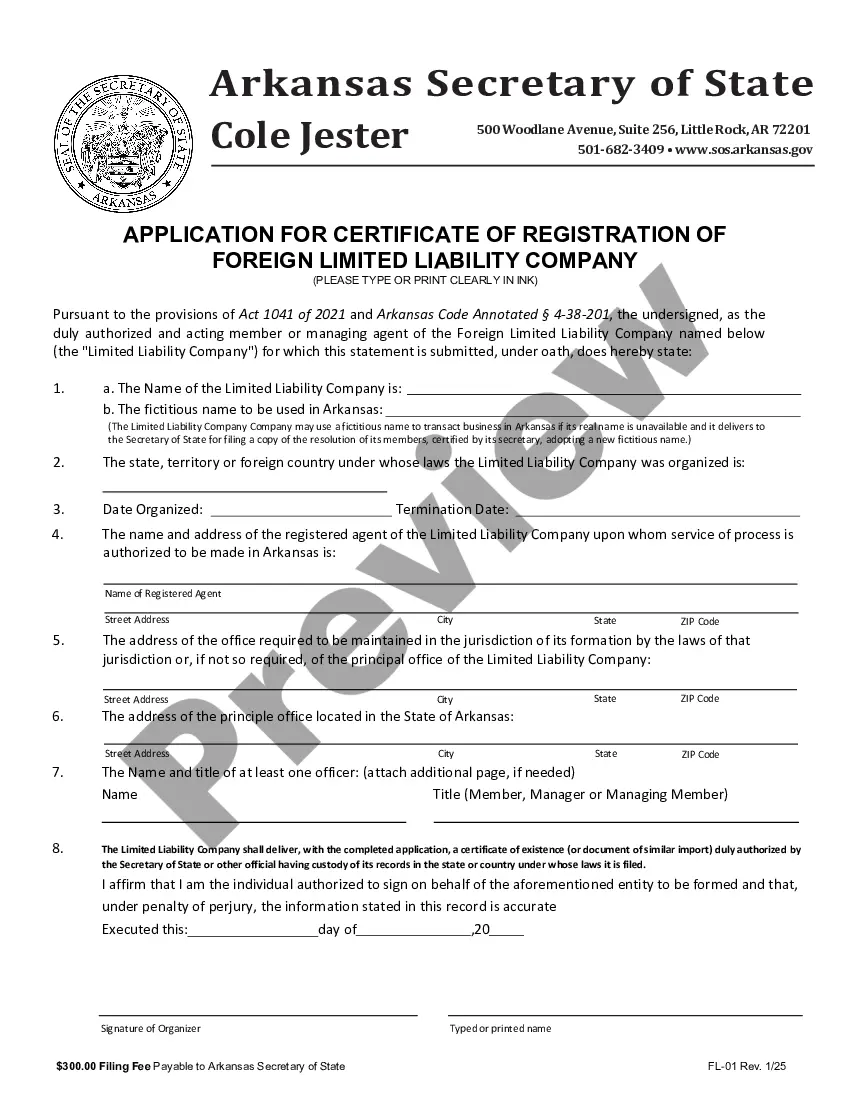




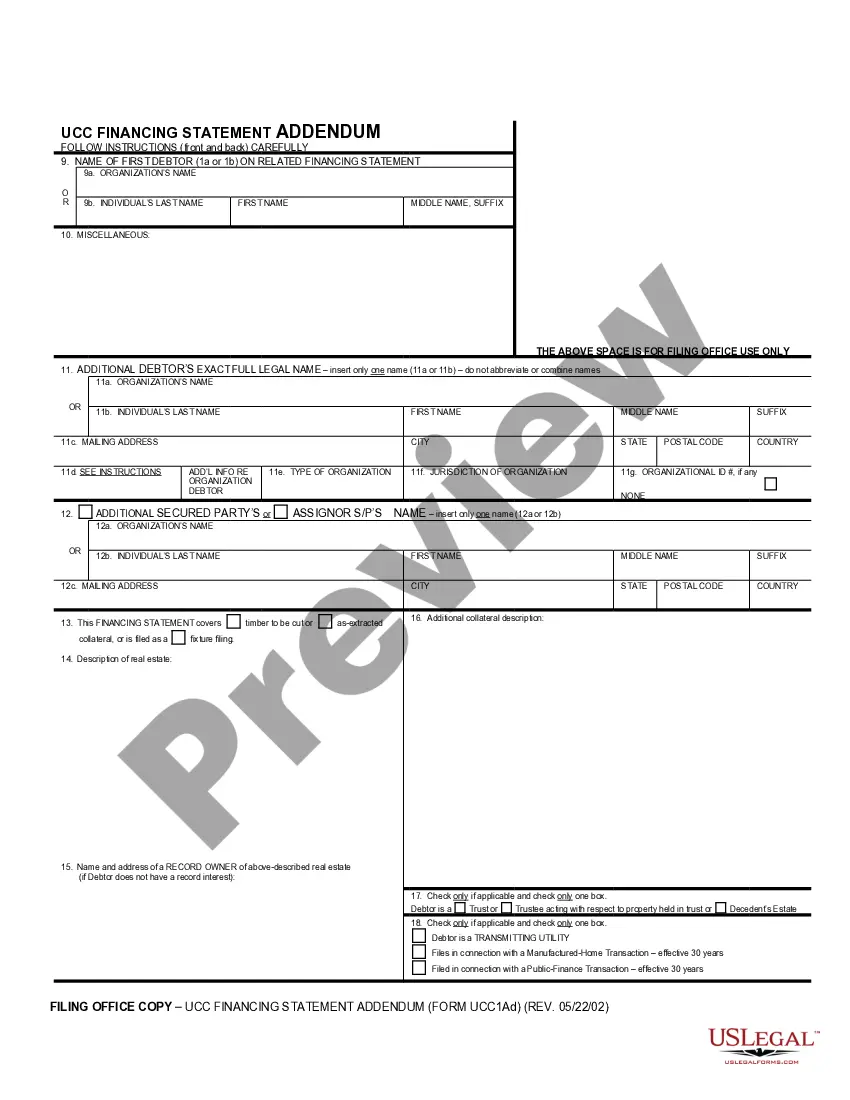
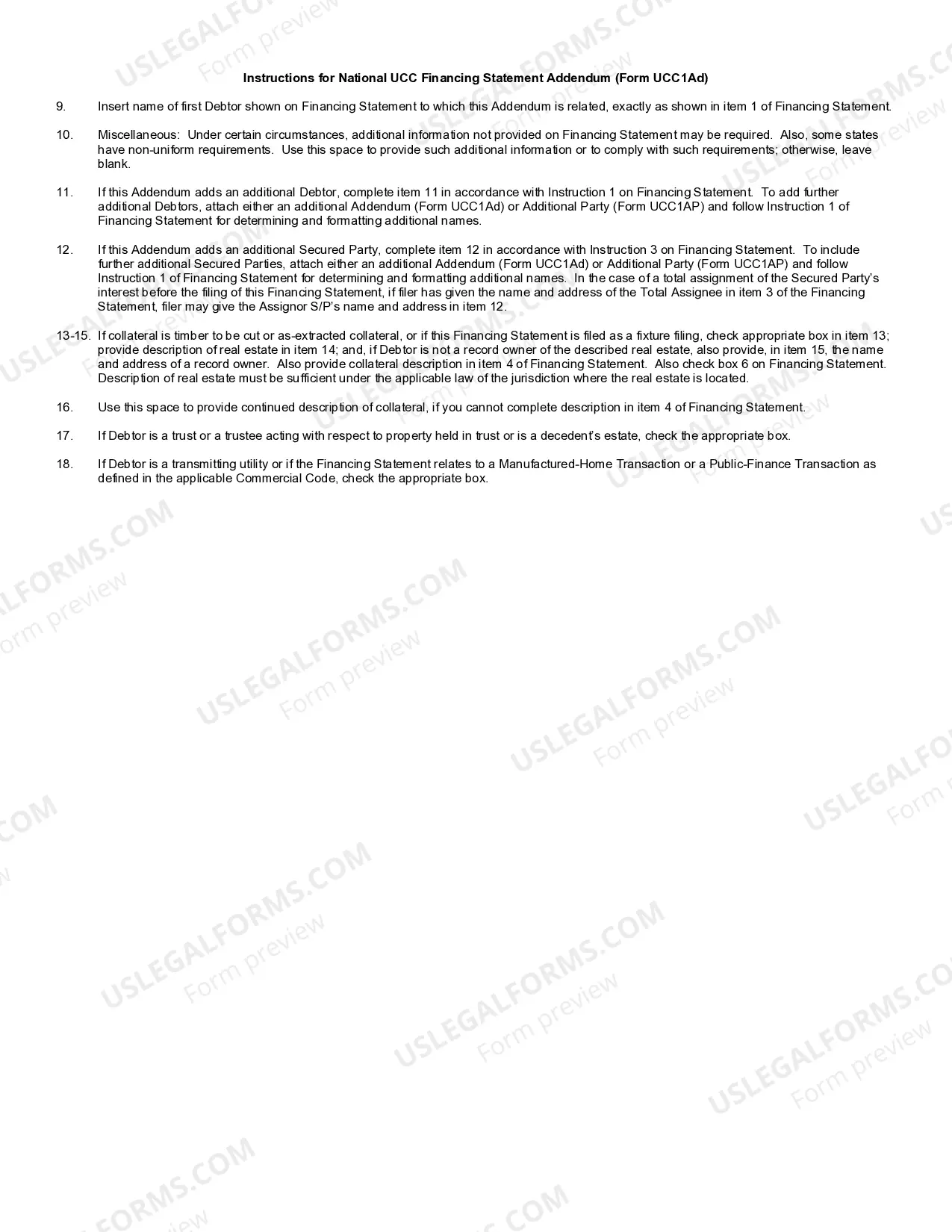
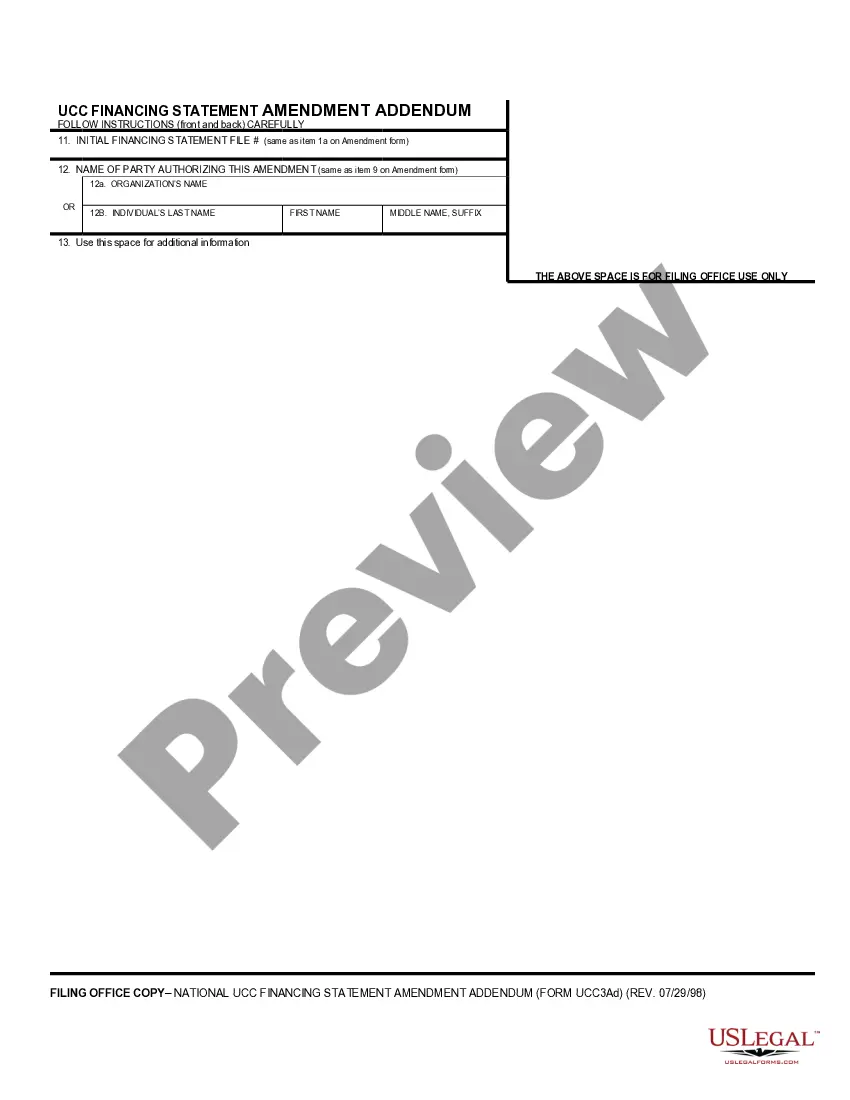
How to fill out UCC1-AD Financing Statement Addendum?
Securing a reliable source for the latest and suitable legal templates is a significant part of navigating bureaucracy.
Locating the correct legal documents requires precision and meticulousness, which is why it is essential to obtain Uniform Commercial Code File Force Majeure samples exclusively from credible providers, such as US Legal Forms. An incorrect template can squander your time and delay your current situation. With US Legal Forms, you have minimal concerns. You can view and review all the information regarding the document’s applicability and significance for your circumstances in your state or county.
After you have the form on your device, you may modify it using the editor or print it out and complete it manually. Eliminate the stress associated with your legal documentation. Explore the comprehensive US Legal Forms library to discover legal templates, evaluate their relevance to your situation, and download them instantly.
- Utilize the library navigation or search function to locate your template.
- Examine the form’s description to determine if it meets the criteria of your state and locality.
- Access the form preview, if available, to confirm that this is indeed the document you need.
- Return to the search and look for the correct template if the Uniform Commercial Code File Force Majeure does not fulfill your needs.
- Once you are confident about the form’s applicability, download it.
- If you are a registered user, click Log in to verify and access your chosen forms in My documents.
- If you do not yet have an account, click Buy now to acquire the template.
- Select the pricing option that fits your requirements.
- Continue to the registration to complete your purchase.
- Conclude your purchase by selecting a payment method (credit card or PayPal).
- Choose the file format for downloading the Uniform Commercial Code File Force Majeure.
Form popularity
FAQ
Force majeure is a clause that is included in contracts to remove liability for unforeseeable and unavoidable catastrophes that interrupt the expected course of events and prevent participants from fulfilling obligations. These clauses generally cover both natural disasters and catastrophes created by humans.
What Is the Difference Between Force Majeure and Act of God? Generally speaking, an act of God includes acts of nature only. Force majeure, meanwhile, includes both acts of nature and extraordinary circumstances due to human intervention.
The event must be either unforeseeable or unavoidable; The event must be such as to render it impossible for the debtor to fulfill his obligation in a normal manner; and. The party claiming did not participate in, nor aggravate, the injury to the other party.
What are examples of force majeure? Events that could potentially trigger a force majeure clause include war, terrorist attacks, and a pandemic, or natural disasters that fall under the ?act of God? category, such as a flood, earthquake, or hurricane.
Neither Party will be liable for any failure or delay in performing an obligation under this Agreement that is due to any of the following causes (which causes are hereinafter referred to as ?Force Majeure?), to the extent beyond its reasonable control: acts of God, accident, riots, war, terrorist act, epidemic, ...