Child Custody Visitation Formula
Description
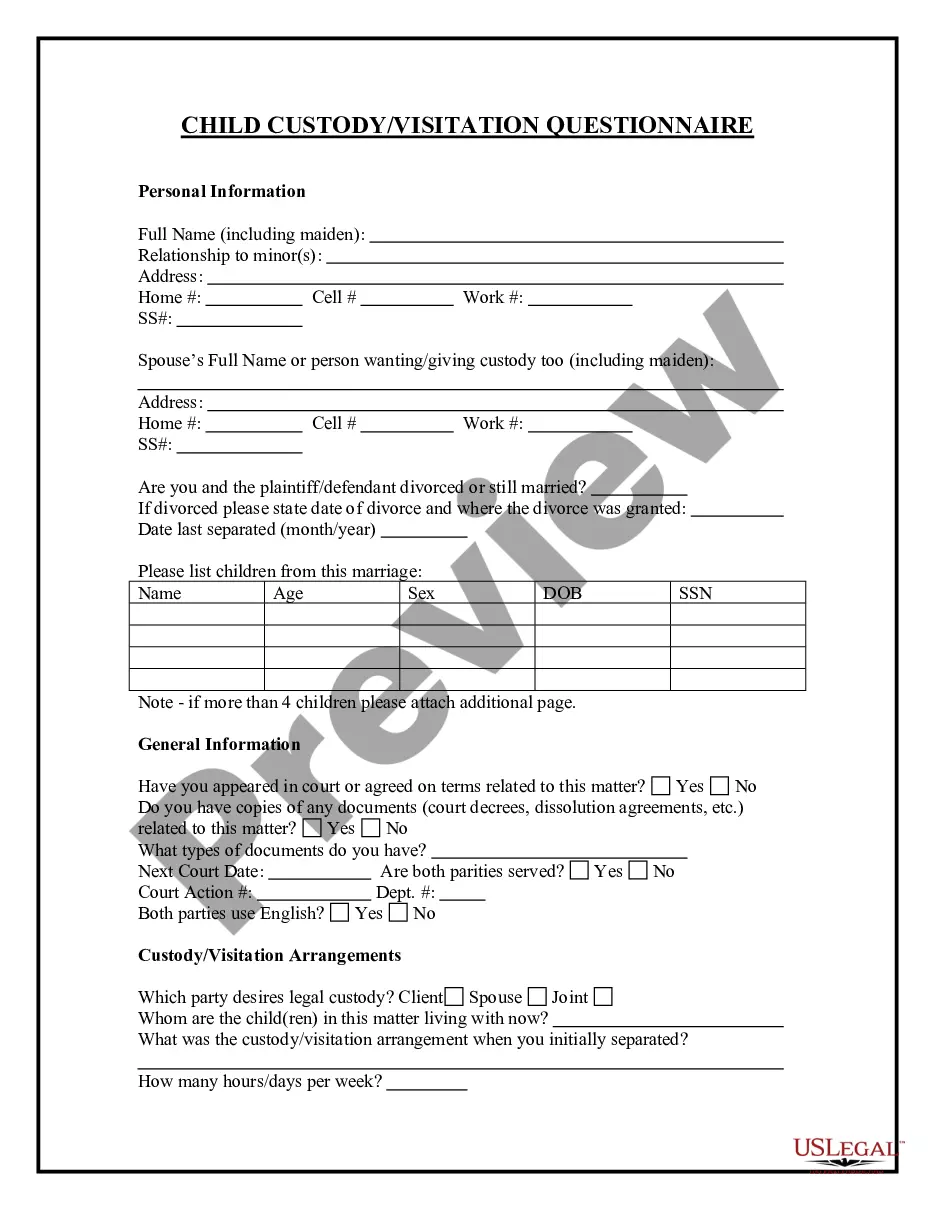
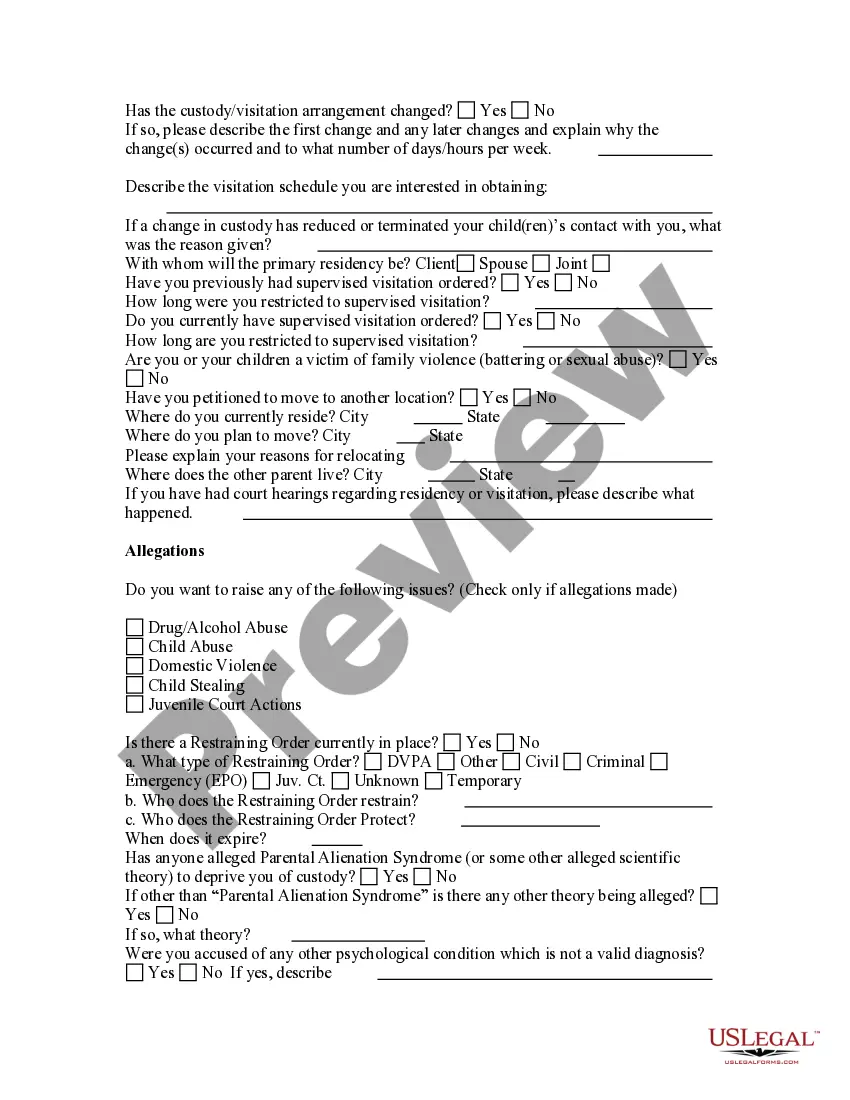
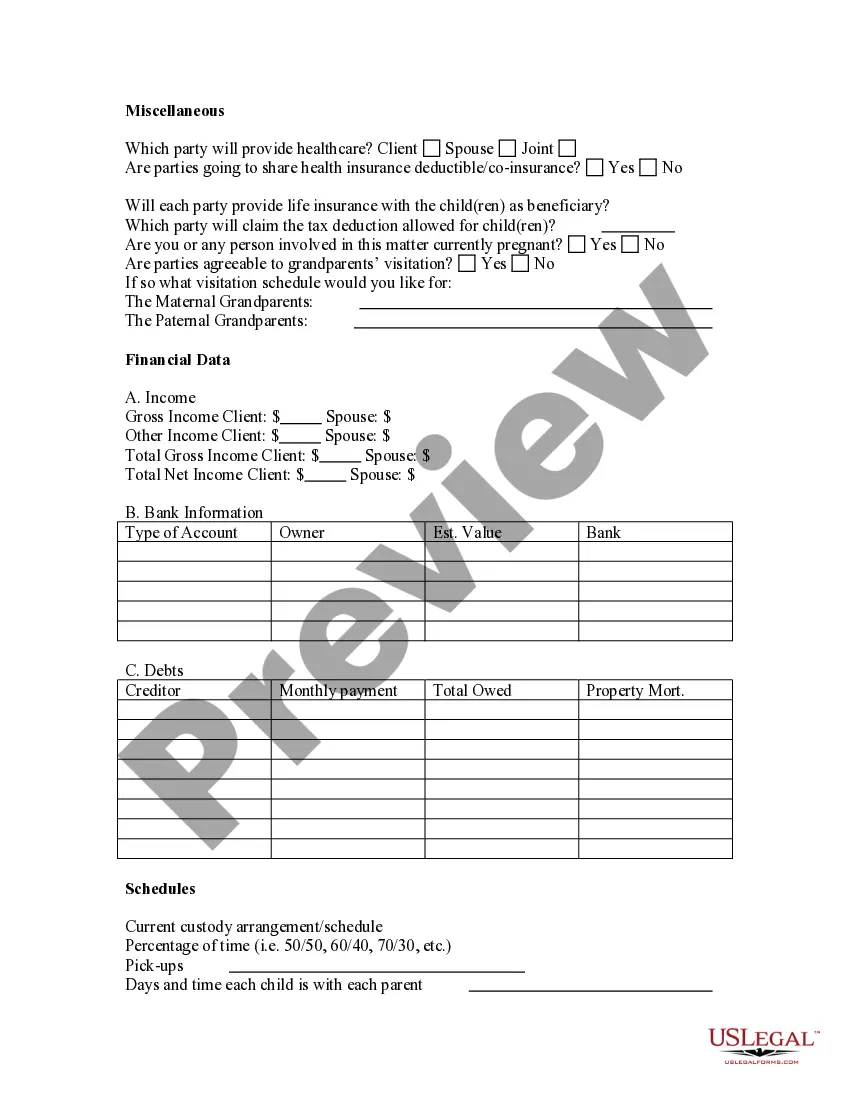
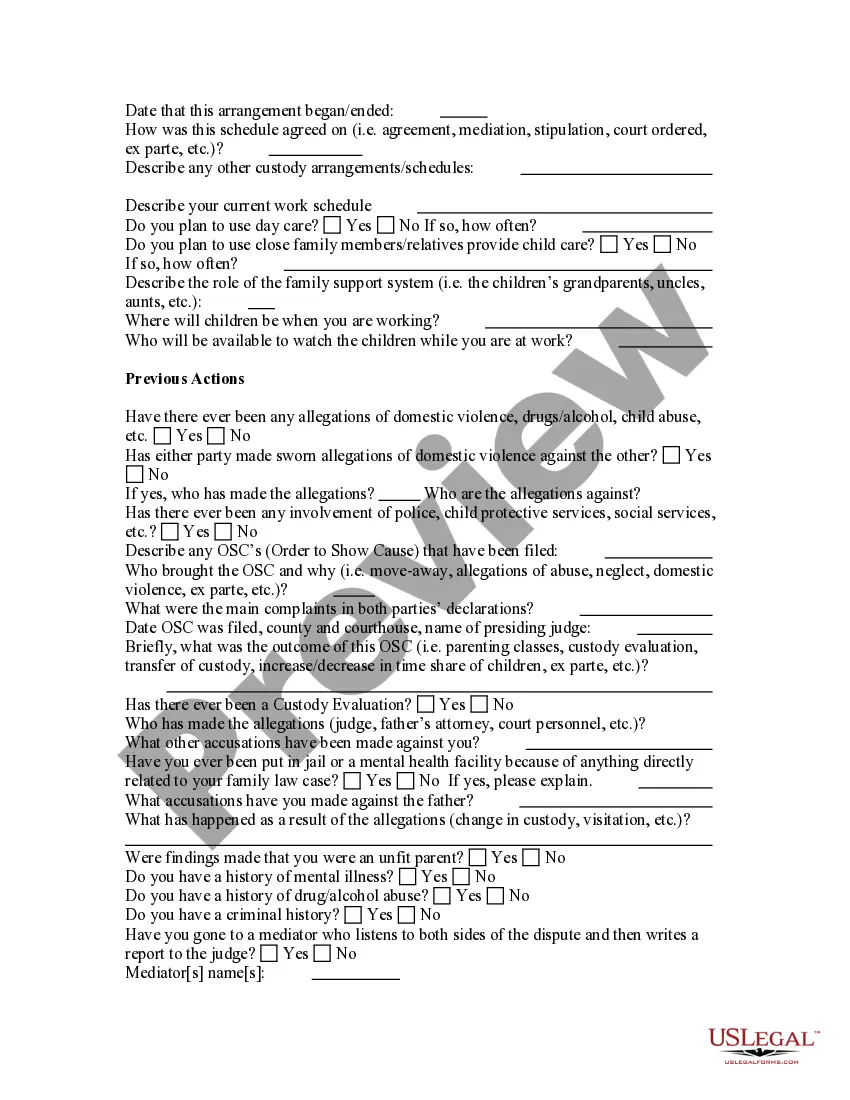
Get your form ready online
Our built-in tools help you complete, sign, share, and store your documents in one place.
Make edits, fill in missing information, and update formatting in US Legal Forms—just like you would in MS Word.
Download a copy, print it, send it by email, or mail it via USPS—whatever works best for your next step.
Sign and collect signatures with our SignNow integration. Send to multiple recipients, set reminders, and more. Go Premium to unlock E-Sign.
If this form requires notarization, complete it online through a secure video call—no need to meet a notary in person or wait for an appointment.
We protect your documents and personal data by following strict security and privacy standards.

Make edits, fill in missing information, and update formatting in US Legal Forms—just like you would in MS Word.

Download a copy, print it, send it by email, or mail it via USPS—whatever works best for your next step.

Sign and collect signatures with our SignNow integration. Send to multiple recipients, set reminders, and more. Go Premium to unlock E-Sign.

If this form requires notarization, complete it online through a secure video call—no need to meet a notary in person or wait for an appointment.

We protect your documents and personal data by following strict security and privacy standards.
Looking for another form?




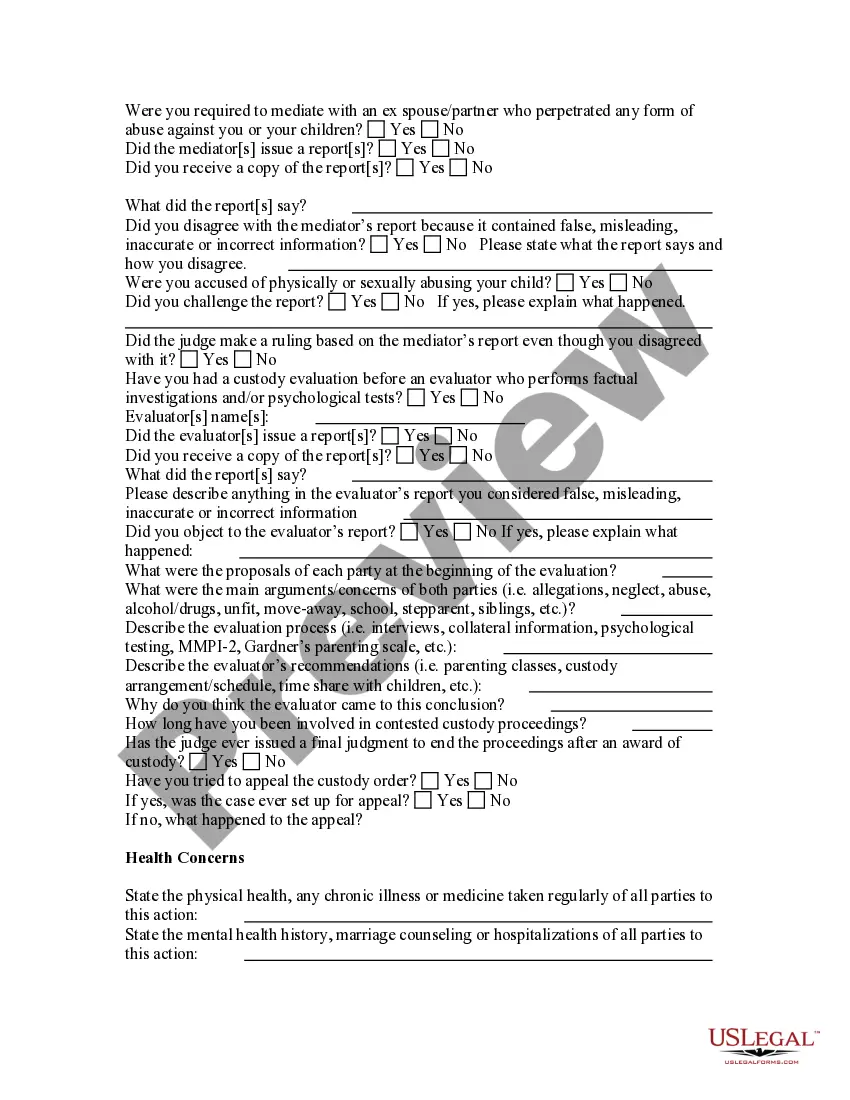
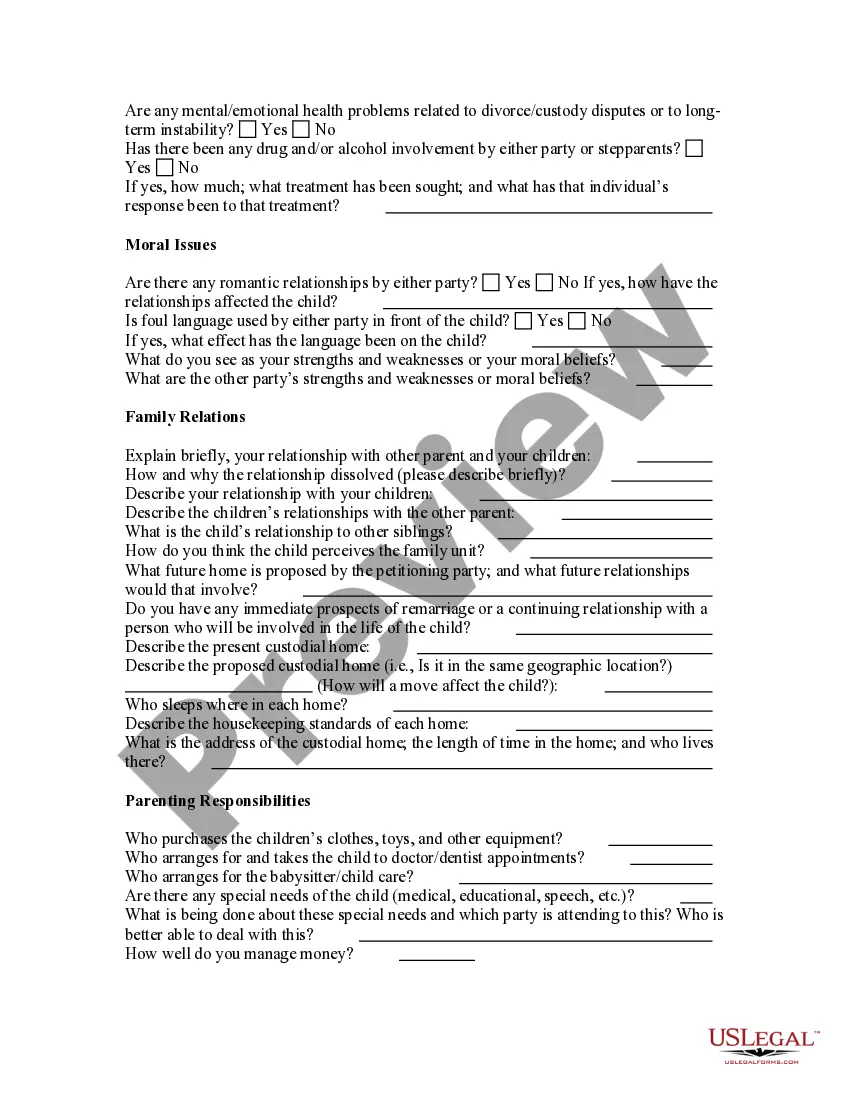
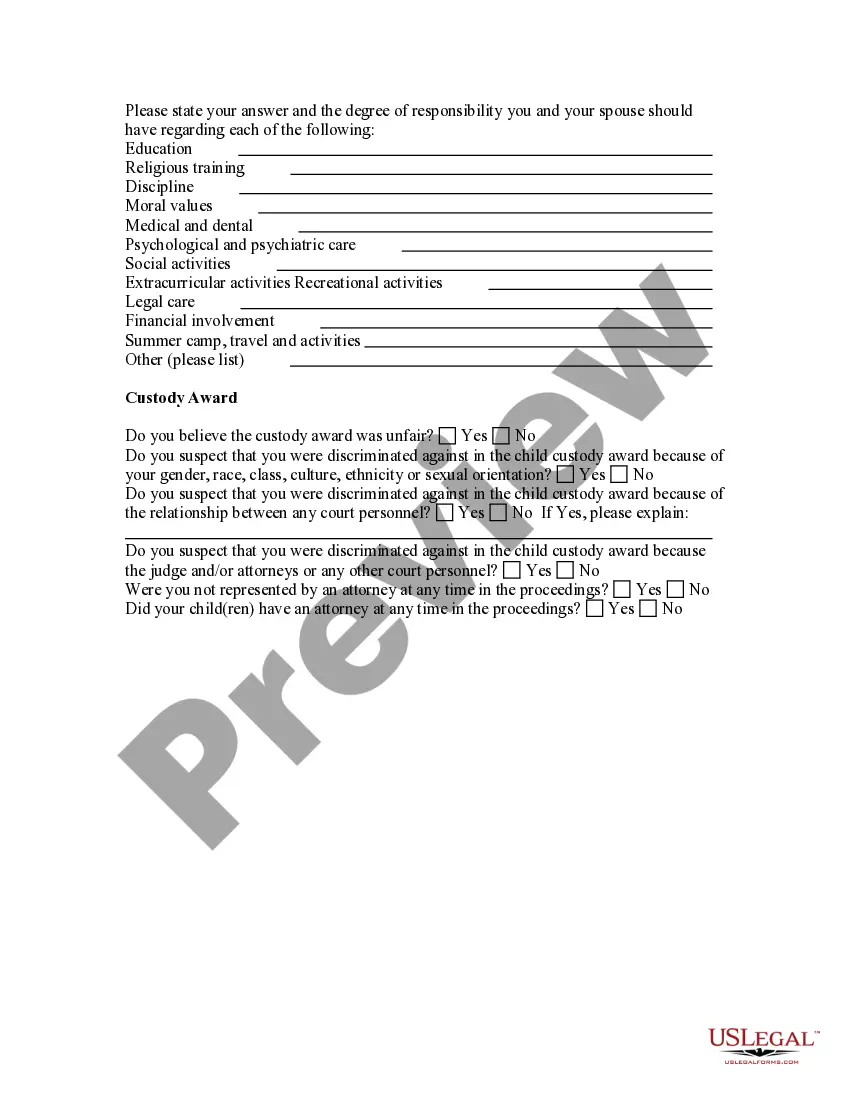
How to fill out Child Custody And Visitation Questionnaire?
Creating legal documents from the ground up can frequently be overwhelming.
Some situations may require extensive research and significant financial resources.
If you seek a more straightforward and cost-effective method to prepare Child Custody Visitation Form or any other documents without unnecessary complications, US Legal Forms is readily available.
Our online collection of over 85,000 current legal forms addresses nearly every facet of your financial, legal, and personal matters. With a few clicks, you can promptly obtain state- and county-compliant forms carefully created for you by our legal experts.
Examine the document preview and descriptions to confirm that you have found the correct form. Ensure that the template you select meets the standards of your state and county. Choose the appropriate subscription plan to acquire the Child Custody Visitation Form. Download the form, then fill it out, validate, and print it. US Legal Forms enjoys an impeccable reputation and boasts over 25 years of expertise. Join us today and simplify document processing into a seamless experience!
- Utilize our website whenever you require dependable and trustworthy services to effortlessly locate and download the Child Custody Visitation Form.
- If you are already familiar with our site and have created an account with us previously, simply Log In to your account, select the form, and download it or re-download it anytime from the My documents section.
- Not registered yet? No problem. Setting it up is quick and allows exploration of the library.
- Before proceeding to download the Child Custody Visitation Form, consider these suggestions.
Form popularity
FAQ
Documenting child visitation requires you to create a comprehensive record of each visit to track compliance with the visitation schedule. You can jot down the date, time, location, and any significant occurrences during the visit. It’s also helpful to note the child’s reactions and any interactions that highlight the parent-child relationship. Implementing a child custody visitation formula can assist you in maintaining consistency and clarity in these records.
To document supervised visitation, keep a detailed log of each visit, including the date, duration, and activities undertaken during that time. Make notes on the behavior of both the child and the visiting parent, as well as any incidents that may arise. It is essential to communicate these reports with the supervising adult and the court, if applicable. Using a child custody visitation formula can provide a structured way to maintain these records effectively.
A visitation letter is a formal document that outlines the terms of visitation for a non-custodial parent. This letter can detail the visitation schedule, locations, and any specific rules that need to be followed during visits. Additionally, a visitation letter may serve as a reference in case of disputes regarding visitation rights. Incorporating a child custody visitation formula can streamline the process and clarify expectations for all parties.
To write a child visitation agreement, start by clearly stating the names of the parents and children involved. Next, outline the visitation schedule, including specific days and times for visitation. Be sure to include any guidelines regarding communication, transportation, and holidays. Utilizing a child custody visitation formula can help ensure that both parents understand their responsibilities and the expectations for post-divorce co-parenting.
A 70/30 split often results in a clear schedule where one parent has the child for a larger portion of the time. For example, the child might live with one parent during most weekdays and alternate weekends with the other parent. This dynamic can be confusing if not laid out properly; therefore, a child custody visitation formula can aid in structuring this split effectively. US Legal Forms offers valuable resources to assist parents in developing an organized plan.
In a 70/30 custody split, there are generally more overnights with one parent compared to the other. Typically, this means that the child could spend around 21 nights a month with one parent and 9 nights with the other. Having a clear child custody visitation formula can help specify these overnight arrangements more explicitly. Utilizing tools from US Legal Forms can help parents navigate these complexities smoothly.
A 70/30 split can look like the child staying with one parent during weekdays and alternating weekends with the other. For example, a child may live with Parent A from Monday to Friday and go to Parent B's home on weekends. By utilizing a child custody visitation formula, both parents can ensure that the schedule is fair and works for everyone involved. Platforms such as US Legal Forms provide templates to help facilitate these agreements.
In a 70/30 custody arrangement, one parent typically has the child for 70% of the time, while the other has them for 30%. For instance, this could manifest as the child residing primarily with one parent during the week, while spending weekends with the other. A child custody visitation formula can support this type of split by defining specific days and times. Resources from US Legal Forms can assist in drafting a clear visitation plan.
The best approach to a 50/50 custody arrangement often includes effective communication between parents. Both parents need to agree on a consistent schedule, ensuring that the child's needs come first. Using a child custody visitation formula can help outline specific details about time-sharing. Platforms like US Legal Forms provide resources to create a tailored agreement that works for both parties.
It's crucial to avoid emotionally charged or aggressive language during a custody battle. Statements that could be construed as manipulative or accusatory can harm your position. Stability and positivity are key; focus on the child custody visitation formula and express your commitment to co-parenting for your child's best interests.