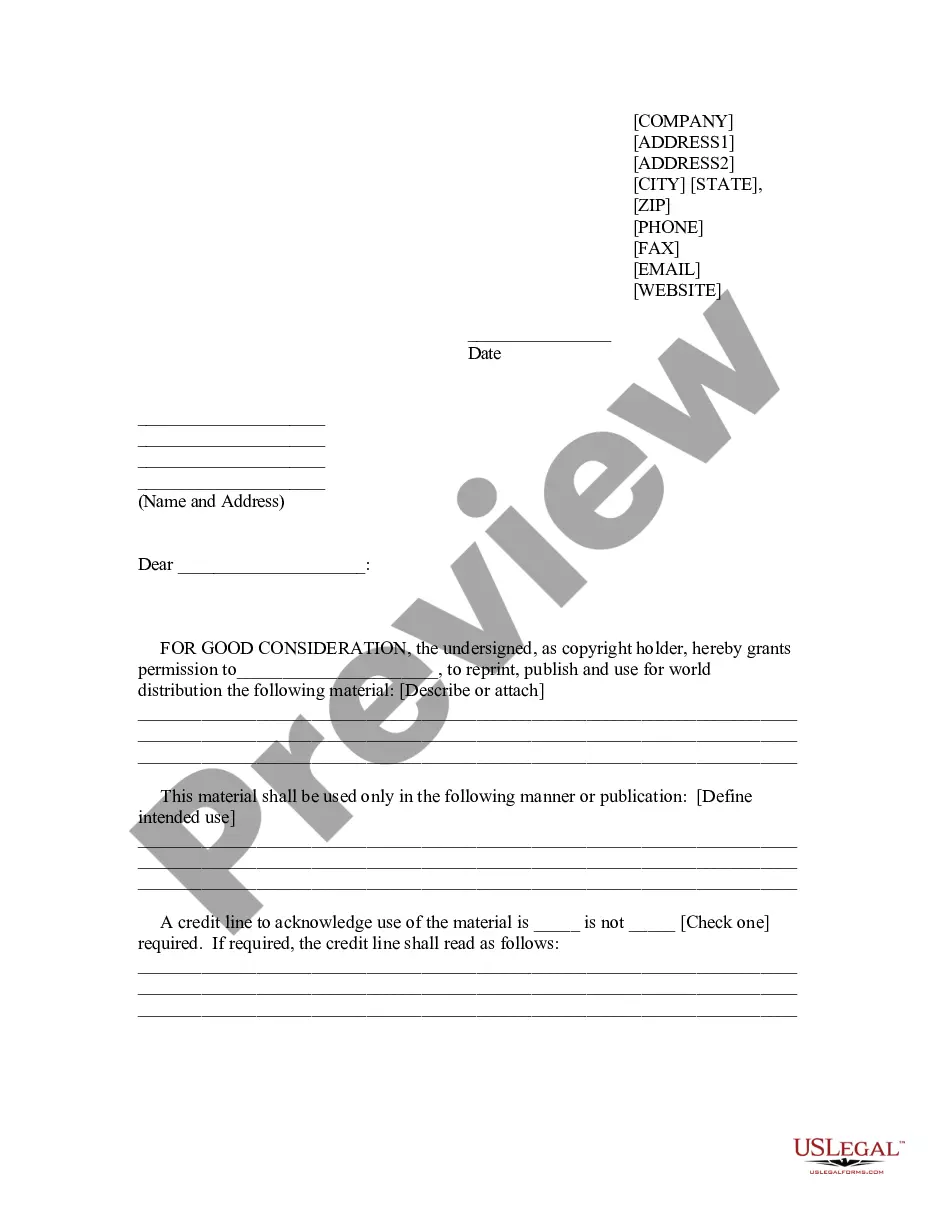
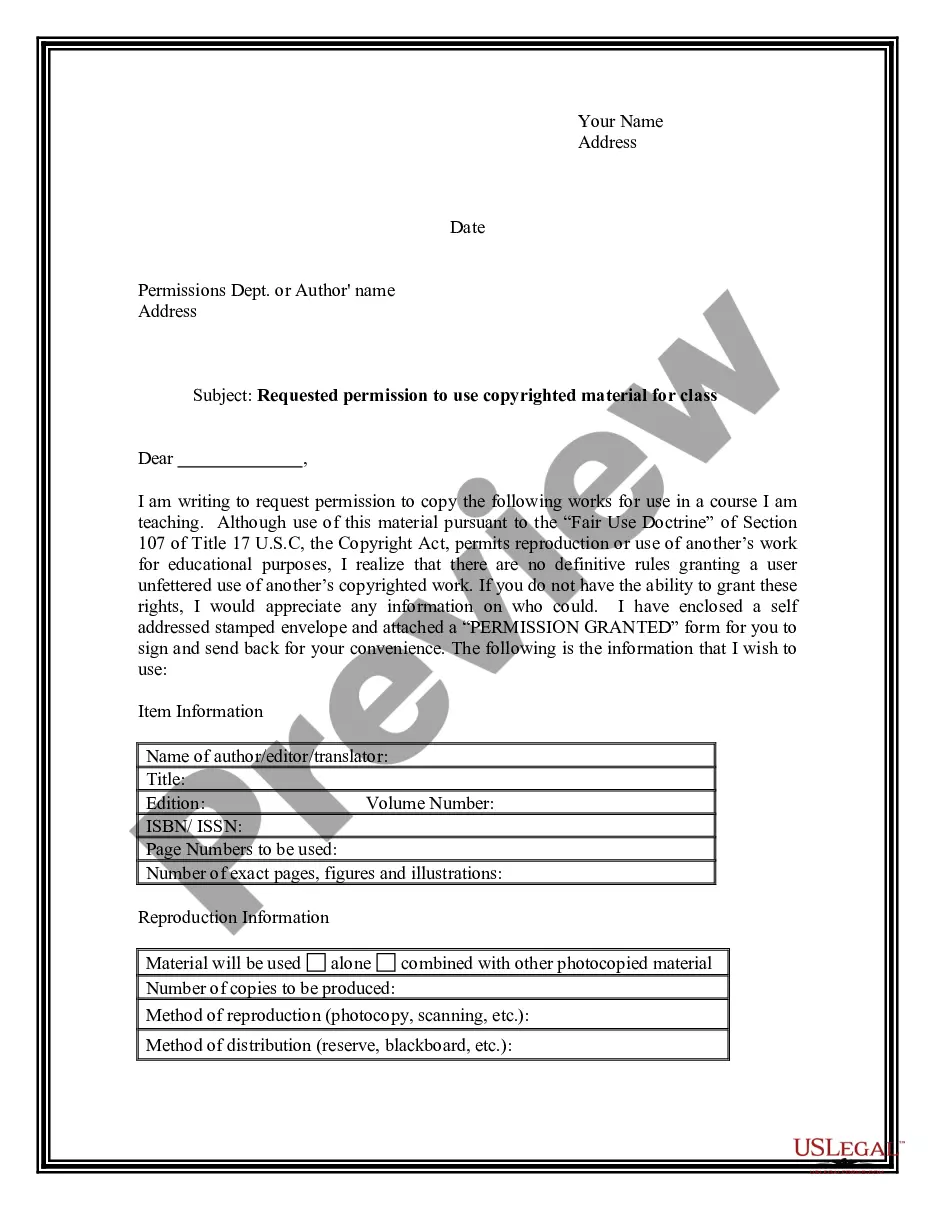
Use Of Copyrighted Material
Description
Get your form ready online
Our built-in tools help you complete, sign, share, and store your documents in one place.
Make edits, fill in missing information, and update formatting in US Legal Forms—just like you would in MS Word.
Download a copy, print it, send it by email, or mail it via USPS—whatever works best for your next step.
Sign and collect signatures with our SignNow integration. Send to multiple recipients, set reminders, and more. Go Premium to unlock E-Sign.
If this form requires notarization, complete it online through a secure video call—no need to meet a notary in person or wait for an appointment.
We protect your documents and personal data by following strict security and privacy standards.

Make edits, fill in missing information, and update formatting in US Legal Forms—just like you would in MS Word.

Download a copy, print it, send it by email, or mail it via USPS—whatever works best for your next step.

Sign and collect signatures with our SignNow integration. Send to multiple recipients, set reminders, and more. Go Premium to unlock E-Sign.

If this form requires notarization, complete it online through a secure video call—no need to meet a notary in person or wait for an appointment.

We protect your documents and personal data by following strict security and privacy standards.
Looking for another form?





How to fill out Requested Permission To Use Copyrighted Material?
The Application Of Copyrighted Content you observe on this page is a reusable legal framework crafted by expert attorneys in line with federal and local statutes and guidelines.
For over 25 years, US Legal Forms has delivered individuals, corporations, and legal practitioners with more than 85,000 validated, state-specific documents for any business and personal circumstance. It’s the fastest, simplest, and most reliable means to secure the paperwork you require, as the service ensures bank-level data protection and anti-malware safeguards.
Select the format you desire for your Application Of Copyrighted Content (PDF, DOCX, RTF) and store the sample on your device.
- Search for the document you require and review it.
- Browse through the sample you located and preview it or examine the form description to ensure it meets your needs. If it doesn’t, utilize the search bar to find the appropriate one. Click Buy Now when you have identified the template you need.
- Register and access your account.
- Choose the pricing plan that fits you and set up an account. Use PayPal or a credit card to make a swift payment. If you already possess an account, Log In and verify your subscription to continue.
- Acquire the editable template.
Form popularity
FAQ
The Copyright Act allows anyone to photocopy copyrighted works without securing permission from the copyright owner when the photocopying amounts to a ?fair use? of the material (17 U.S.C.
The IPR Center encourages victims to visit its website at .IPRCenter.gov to obtain more information about the IPR Center and to report violations of intellectual property rights online or by emailing IPRCenter@dhs.gov. You can also report IP crime by clicking on The IRP Center's ?Report IP Theft? button.
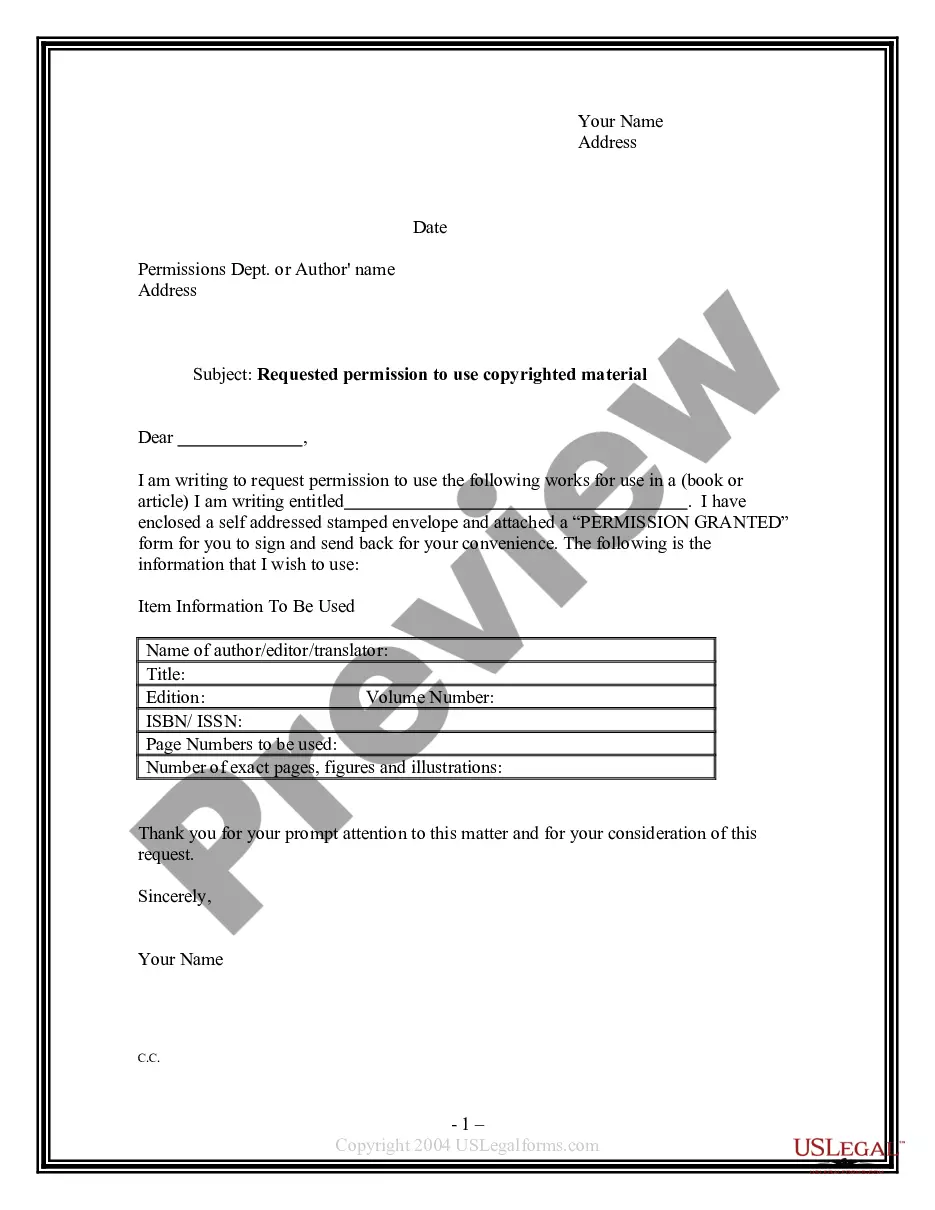
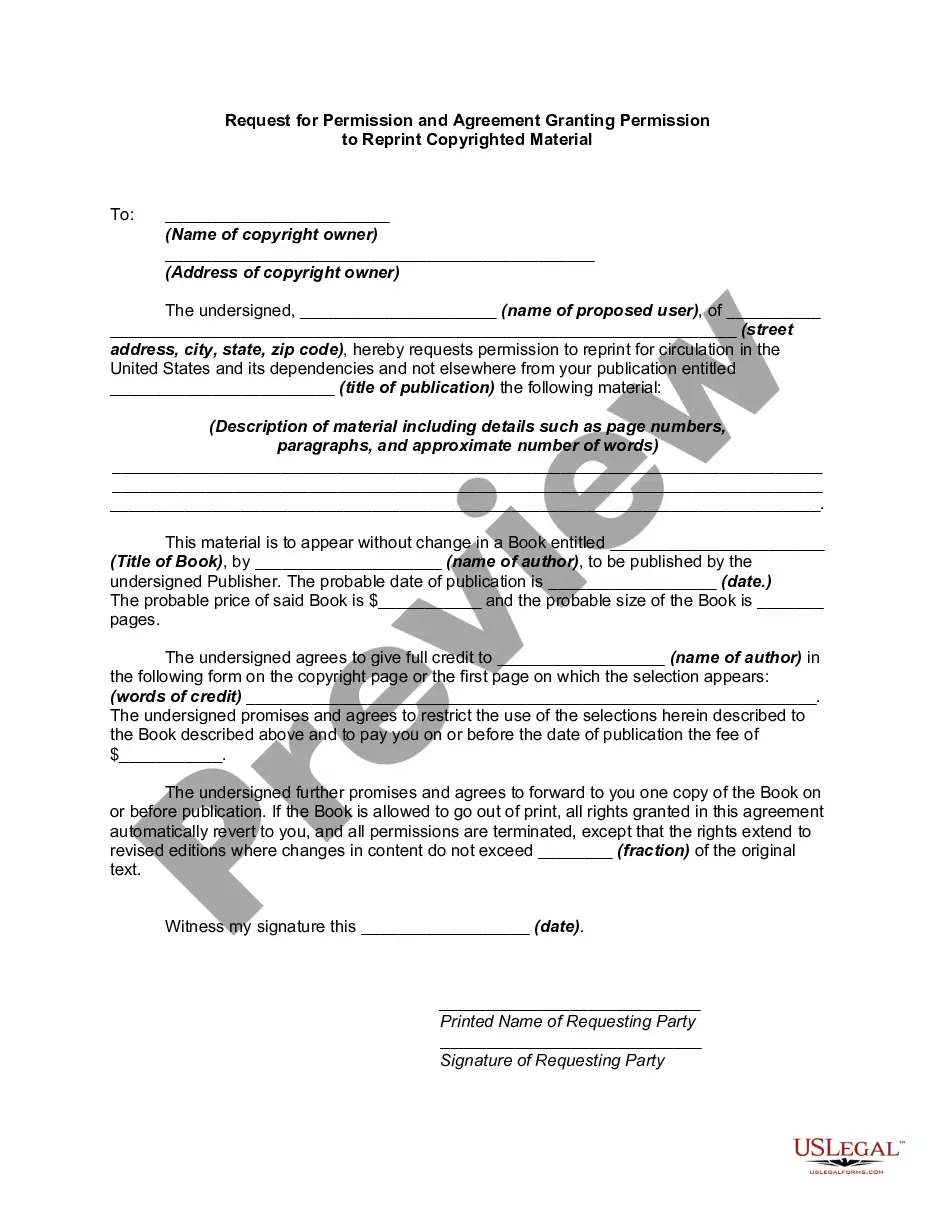
Once you have determined the identity of the copy- right owner, you will need to contact that person to request permission to use the work. Groups representing publishers report that delays in granting permissions often arise because copyright owners receive inaccurate or incomplete information.
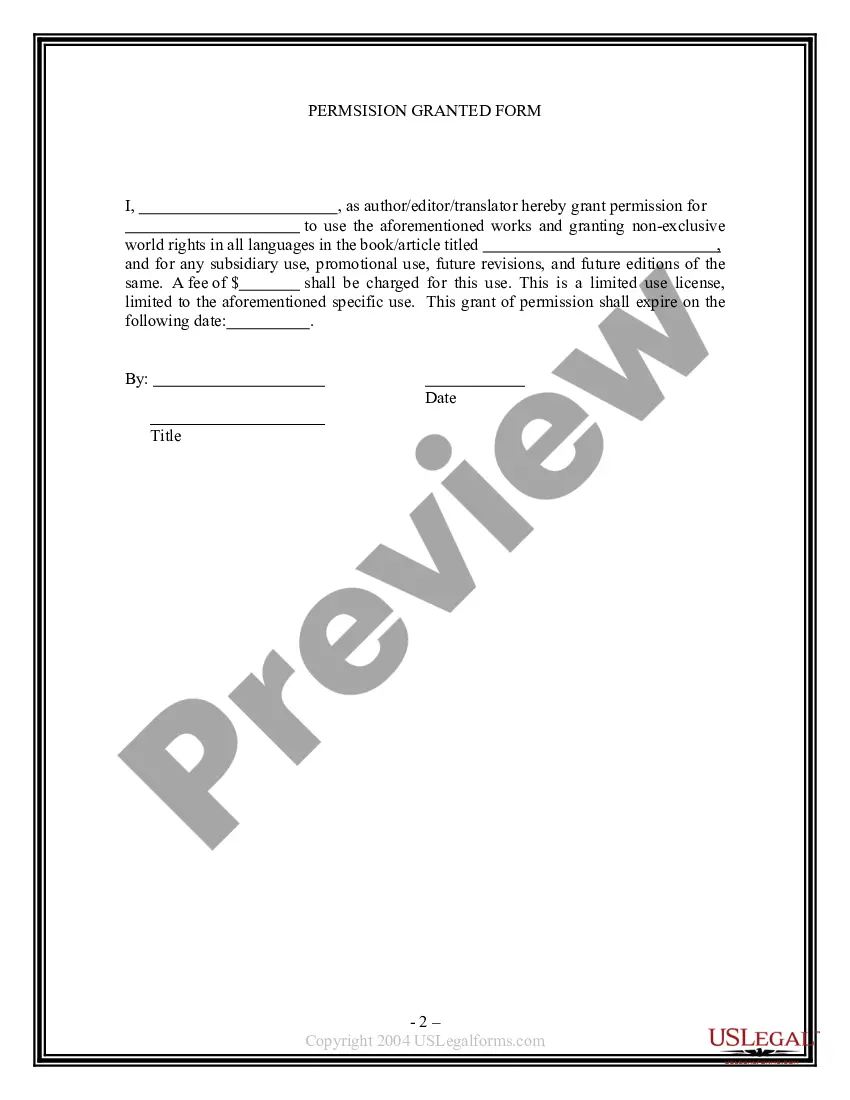
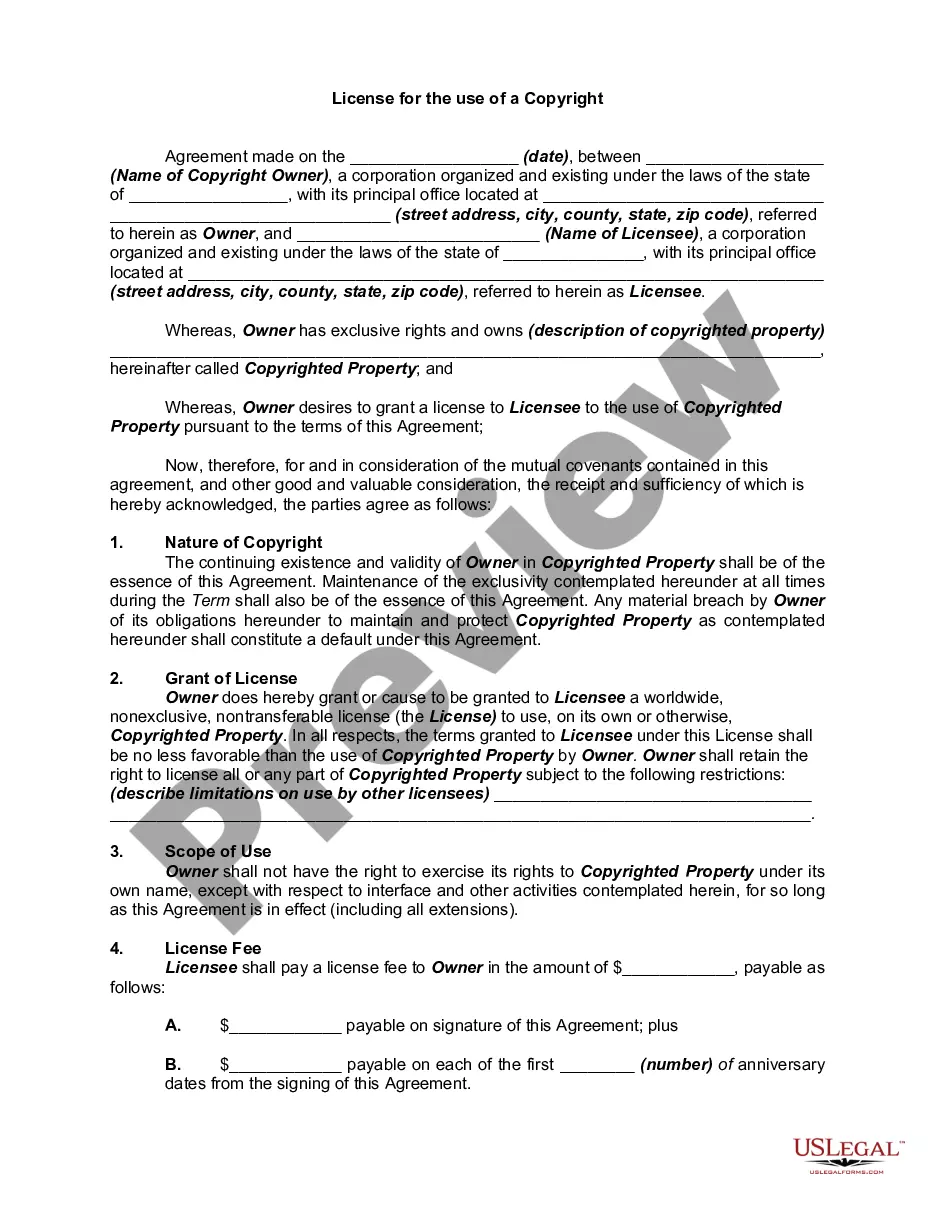
First, reach out to the copyright owners or rightsholders directly and negotiate the appropriate licenses for your use. Then, check the license. Licenses have explicit permission for using the content and often include limitations for how the content is used.
Copyrights are related to legal rights of authors on their original published and unpublished literary or artistic works. They limit the rights for their use and distribution. As in case of other forms of intellectual property, copyrights protect tangible form of the original work, not the underlying ideas.