Primary Physical Custody And Moving
Description
Get your form ready online
Our built-in tools help you complete, sign, share, and store your documents in one place.
Make edits, fill in missing information, and update formatting in US Legal Forms—just like you would in MS Word.
Download a copy, print it, send it by email, or mail it via USPS—whatever works best for your next step.
Sign and collect signatures with our SignNow integration. Send to multiple recipients, set reminders, and more. Go Premium to unlock E-Sign.
If this form requires notarization, complete it online through a secure video call—no need to meet a notary in person or wait for an appointment.
We protect your documents and personal data by following strict security and privacy standards.

Make edits, fill in missing information, and update formatting in US Legal Forms—just like you would in MS Word.

Download a copy, print it, send it by email, or mail it via USPS—whatever works best for your next step.

Sign and collect signatures with our SignNow integration. Send to multiple recipients, set reminders, and more. Go Premium to unlock E-Sign.

If this form requires notarization, complete it online through a secure video call—no need to meet a notary in person or wait for an appointment.

We protect your documents and personal data by following strict security and privacy standards.
Looking for another form?
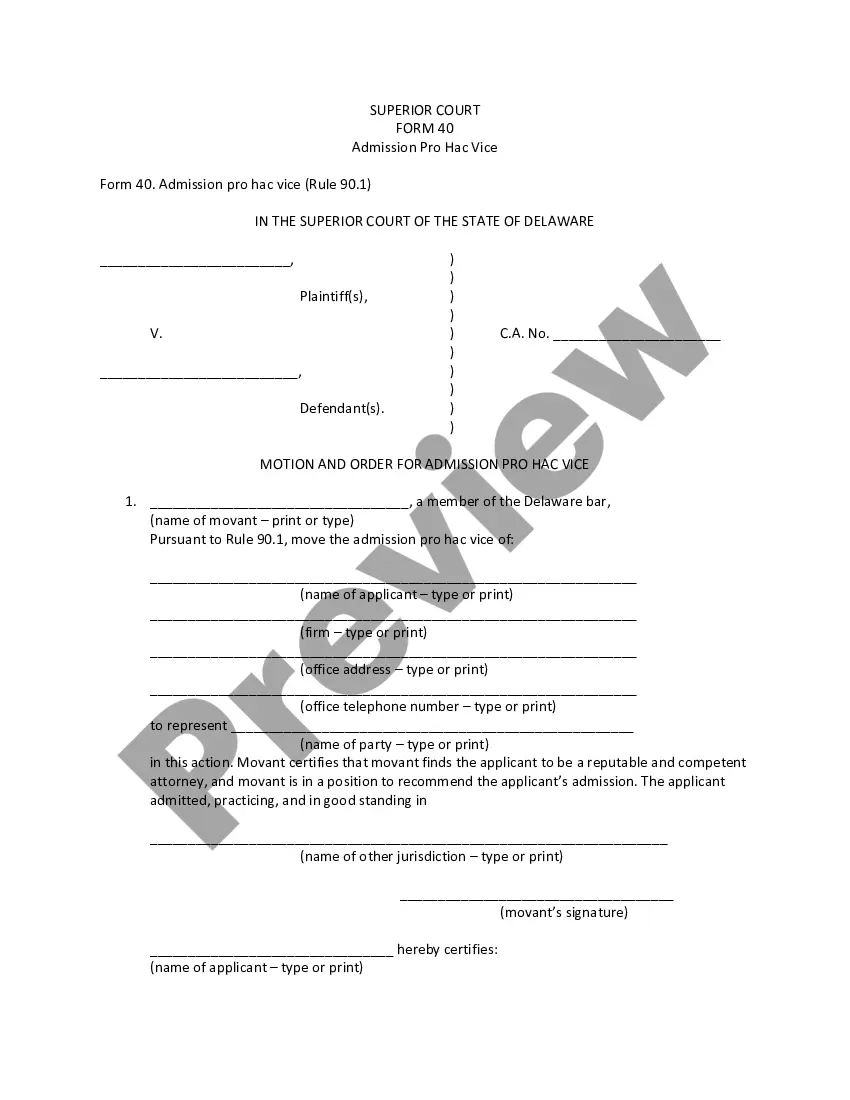



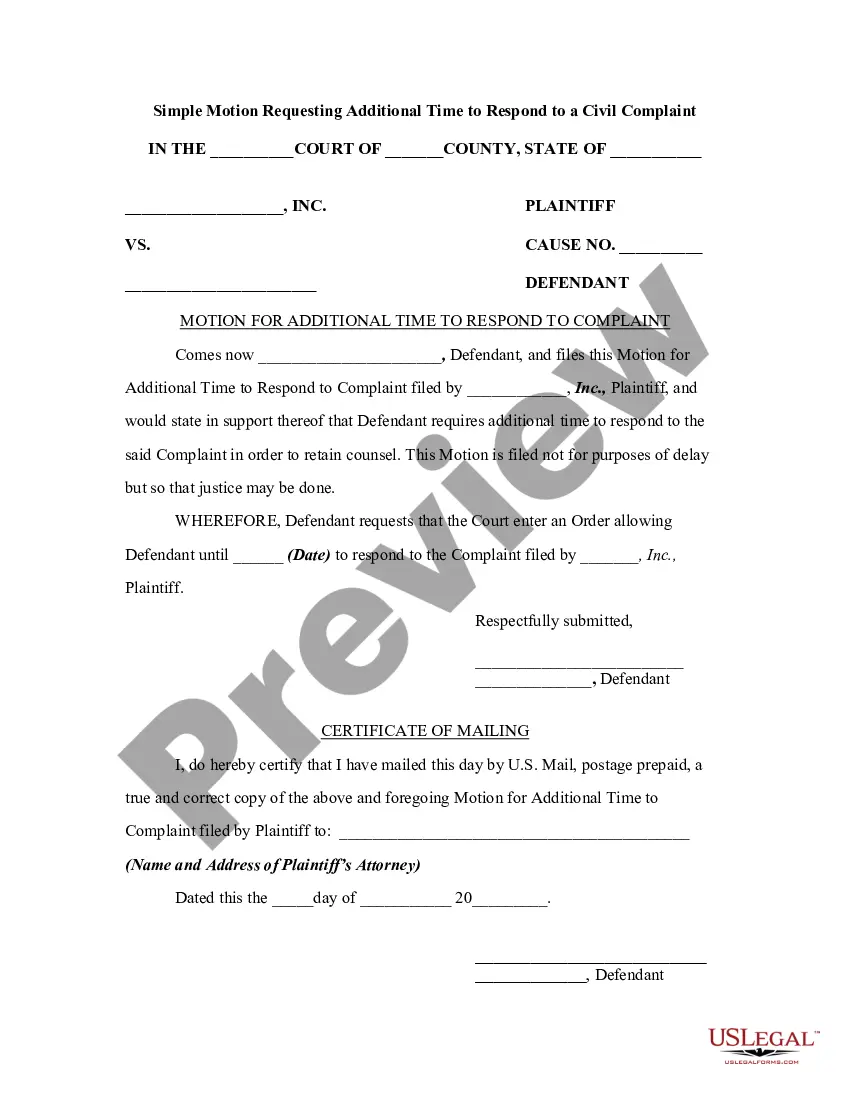
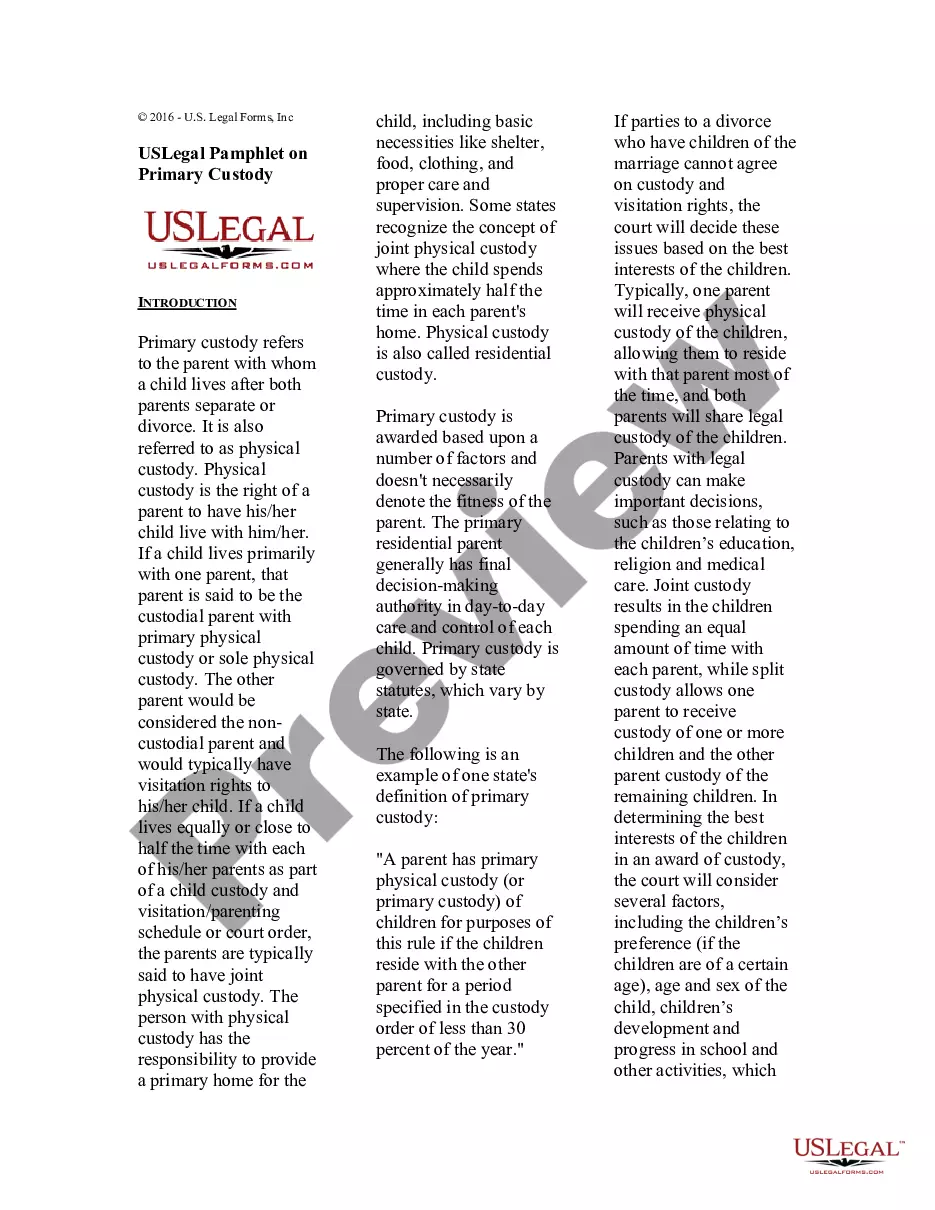
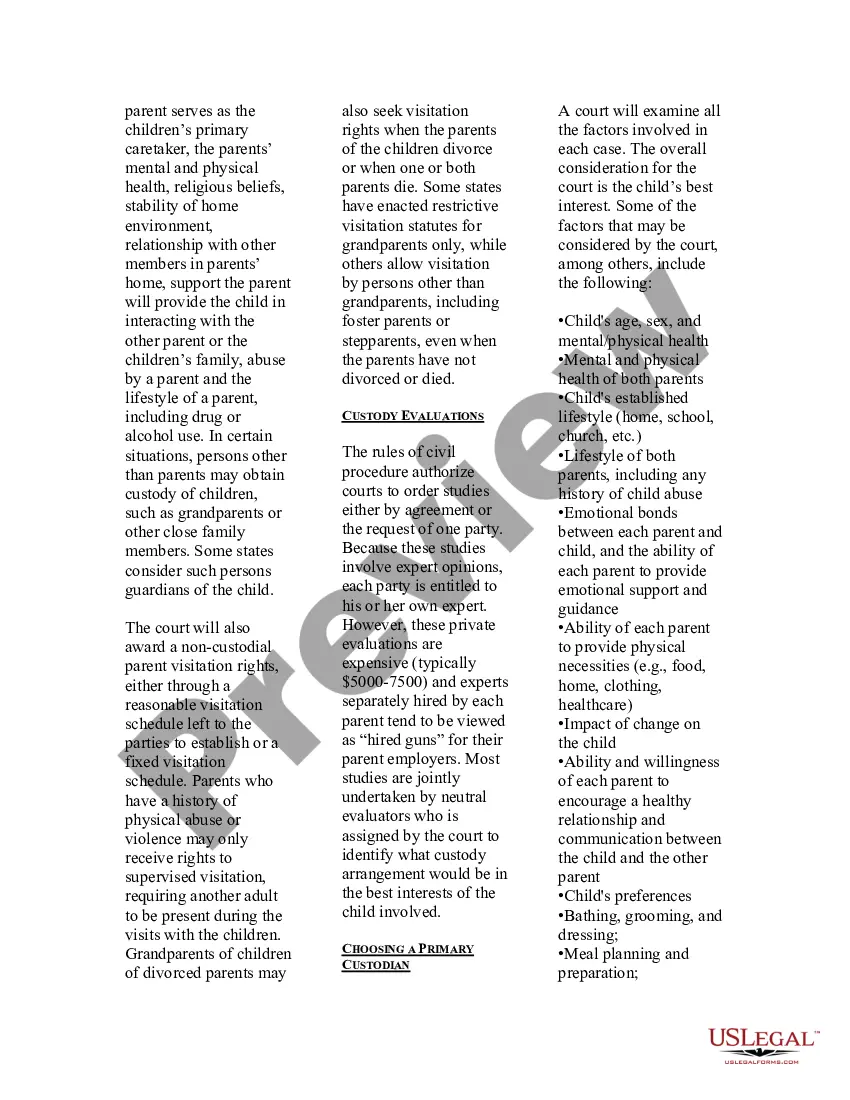
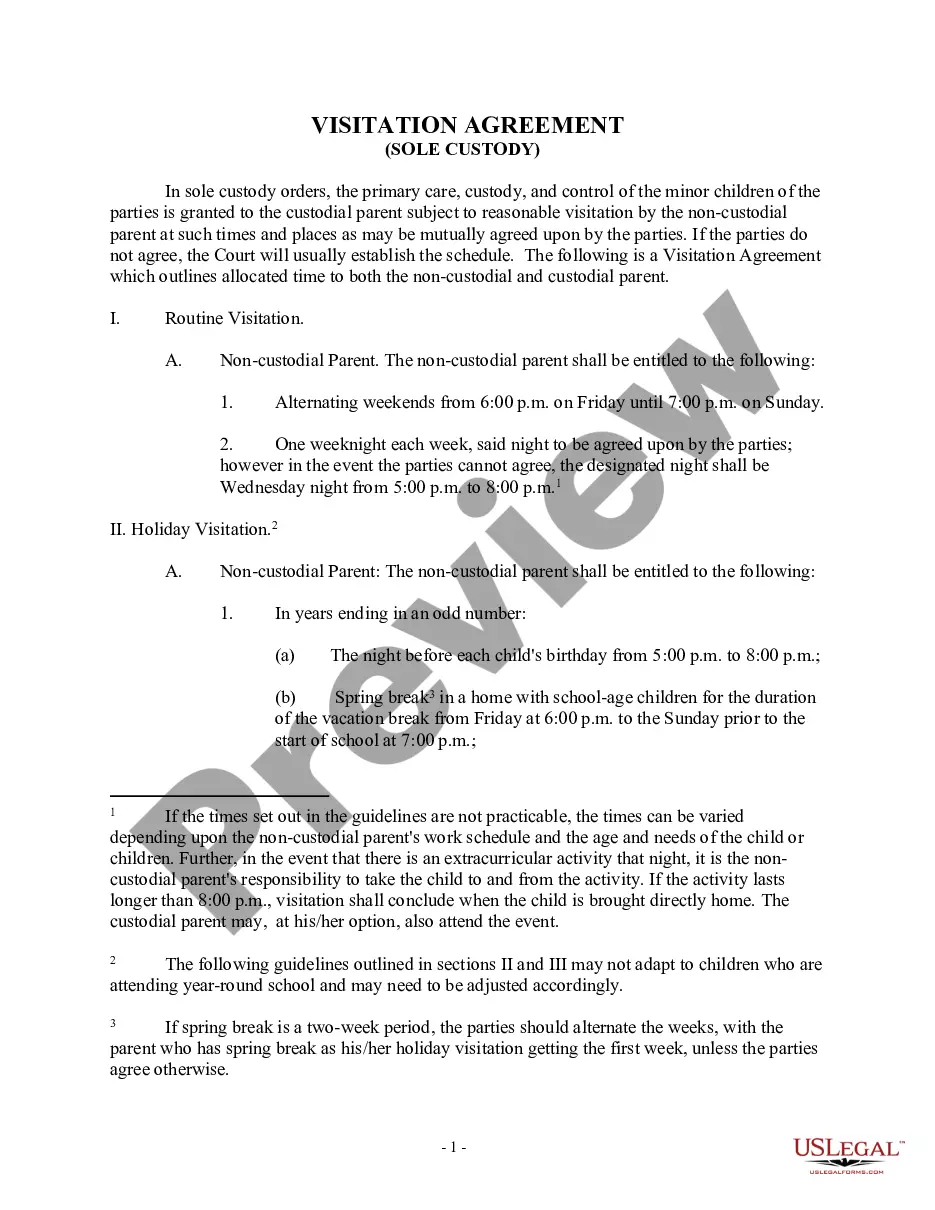
How to fill out USLegal Pamphlet On Primary Custody?
Legal administration can be daunting, even for the most seasoned professionals.
When you are focused on a Principal Physical Custody and Relocation and lack the time to dedicate to finding the accurate and updated version, the tasks may be challenging.
Tap into a repository of articles, manuals, and resources pertinent to your context and needs.
Conserve time and energy searching for the forms you require, and utilize US Legal Forms' sophisticated search and Review capability to identify Principal Physical Custody and Relocation and obtain it.
Choose a monthly subscription package, find the format you need, and Download, complete, sign, print, and dispatch your documents. Experience the US Legal Forms online catalog, backed by 25 years of knowledge and reliability. Revolutionize your routine document management into a straightforward and user-friendly process today.
- If you possess a monthly subscription, Log In to your US Legal Forms account, locate the document, and retrieve it.
- Check your My documents section to view the documents you have saved and to manage your folders as you wish.
- If this is your initial experience with US Legal Forms, create a free account and gain unlimited access to all the benefits of the collection.
- After downloading the needed form, validate that it is the correct one by previewing and reviewing its summary.
- Ensure the template is sanctioned in your jurisdiction.
- Select Buy Now when you are prepared.
- Access state- or county-specific legal and business documents.
- US Legal Forms meets any needs you may have, spanning from personal to commercial paperwork, all in one location.
- Utilize cutting-edge tools to complete and manage your Principal Physical Custody and Relocation.
Form popularity
FAQ
Yes, you can move if you have primary physical custody, but there are important considerations to keep in mind. It's crucial to review your custody agreement, as it may contain specific provisions regarding relocation. Additionally, you may need to notify the other parent and possibly seek their consent or a court's approval for the move. If you are unsure about the legal requirements, uslegalforms can provide the necessary resources to help you navigate the complexities of primary physical custody and moving.
Winning a relocation case can be challenging, as courts prioritize the child's well-being above all. Factors such as the reason for the move, the child's relationship with both parents, and the potential impact on their life will be considered. If you prepare thoroughly and present a strong case, you increase your chances of success. For assistance, US Legal Forms offers resources to help you understand the process of primary physical custody and moving.
You can move if you have primary custody, but there are legal obligations to fulfill first. You need to inform the other parent and possibly file a petition in court, especially if the move significantly affects custody arrangements. Failing to do so may result in legal complications. Utilizing platforms like US Legal Forms can provide you with the necessary documents and guidance for primary physical custody and moving.
Yes, a parent with primary physical custody can move, but it is not a straightforward process. The parent must typically provide notice to the other parent and, in many cases, seek court approval. It's essential to consider the child's best interests when making such a decision. Resources like US Legal Forms can help you navigate the legal requirements regarding primary physical custody and moving.
Yes, you can move with your kids if you have full custody, but it's important to follow legal procedures. You may need to notify the other parent or obtain court approval, especially if the move impacts visitation rights. Proper documentation and clear communication can ease potential conflicts. Utilizing tools from USLegalForms can assist you in managing the complexities of primary physical custody and moving.
If you have primary physical custody, moving with your child is possible but may require careful planning. You must consider any legal agreements or custody orders that may restrict your ability to relocate. It's essential to communicate with the other parent and seek their consent or legal advice when necessary. Resources like USLegalForms can help you understand your rights regarding primary physical custody and moving.
One of the biggest mistakes in a custody battle is failing to prioritize the child's best interests. Parents often focus on their own desires rather than what is best for the child. This can lead to decisions that negatively impact the child's well-being. Understanding the nuances of primary physical custody and moving can provide clarity and help you navigate these challenges.