Filing Business In Texas
Description

Get your form ready online
Our built-in tools help you complete, sign, share, and store your documents in one place.
Make edits, fill in missing information, and update formatting in US Legal Forms—just like you would in MS Word.
Download a copy, print it, send it by email, or mail it via USPS—whatever works best for your next step.
Sign and collect signatures with our SignNow integration. Send to multiple recipients, set reminders, and more. Go Premium to unlock E-Sign.
If this form requires notarization, complete it online through a secure video call—no need to meet a notary in person or wait for an appointment.
We protect your documents and personal data by following strict security and privacy standards.

Make edits, fill in missing information, and update formatting in US Legal Forms—just like you would in MS Word.

Download a copy, print it, send it by email, or mail it via USPS—whatever works best for your next step.

Sign and collect signatures with our SignNow integration. Send to multiple recipients, set reminders, and more. Go Premium to unlock E-Sign.

If this form requires notarization, complete it online through a secure video call—no need to meet a notary in person or wait for an appointment.

We protect your documents and personal data by following strict security and privacy standards.
Looking for another form?








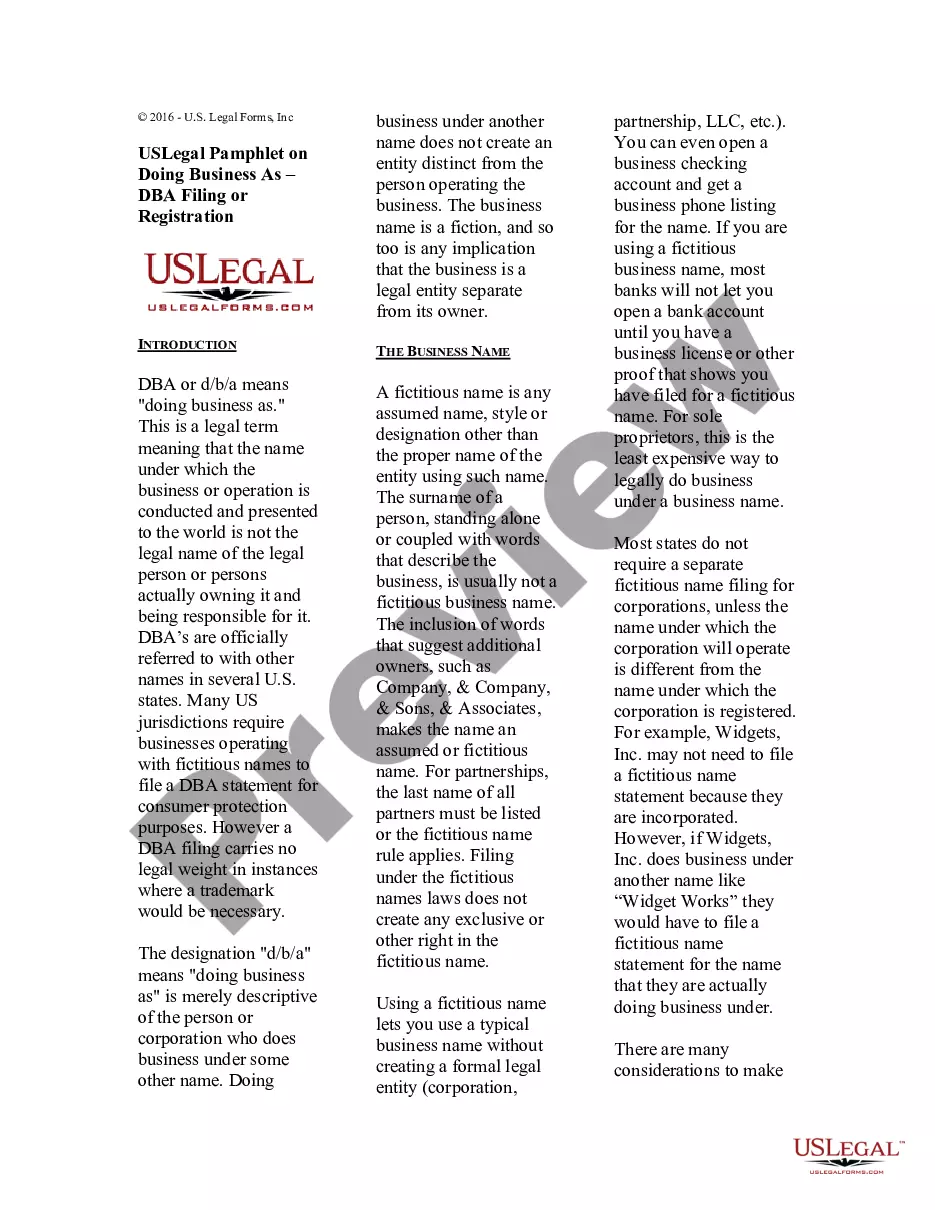
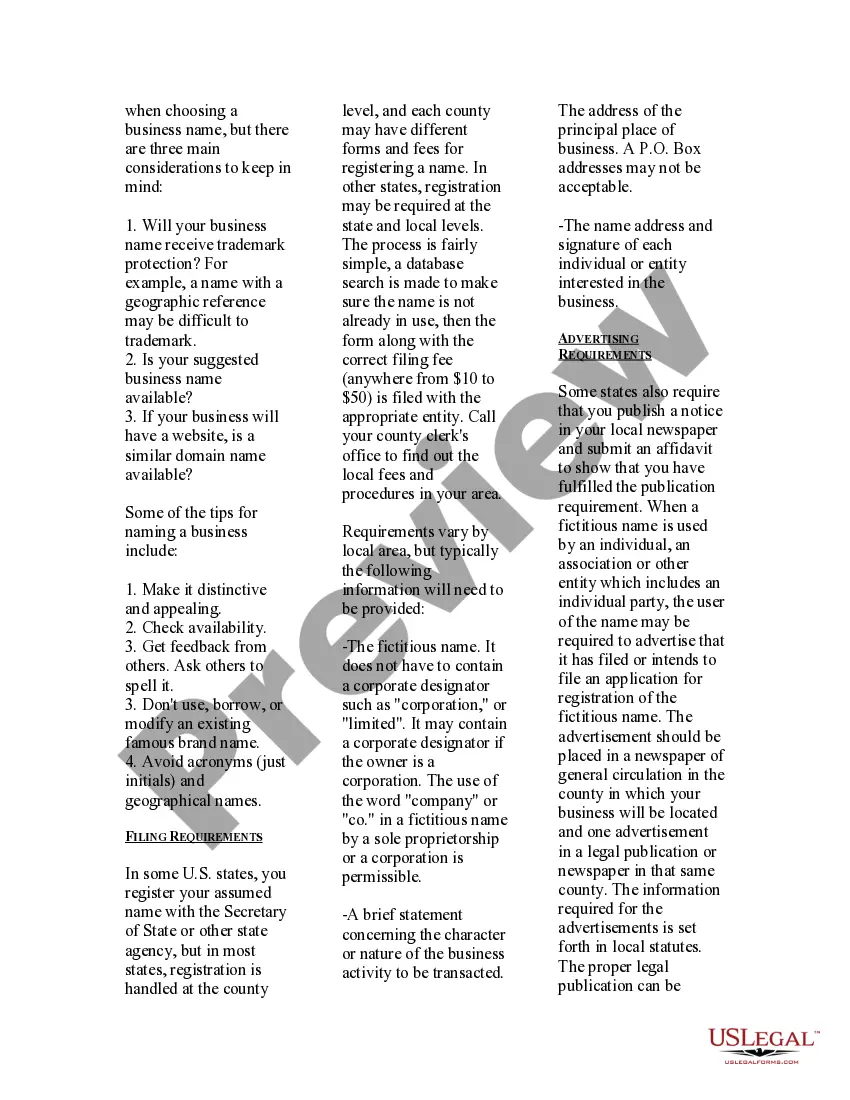
How to fill out USLegal Pamphlet On Doing Business As DBA Filing Or Registration?
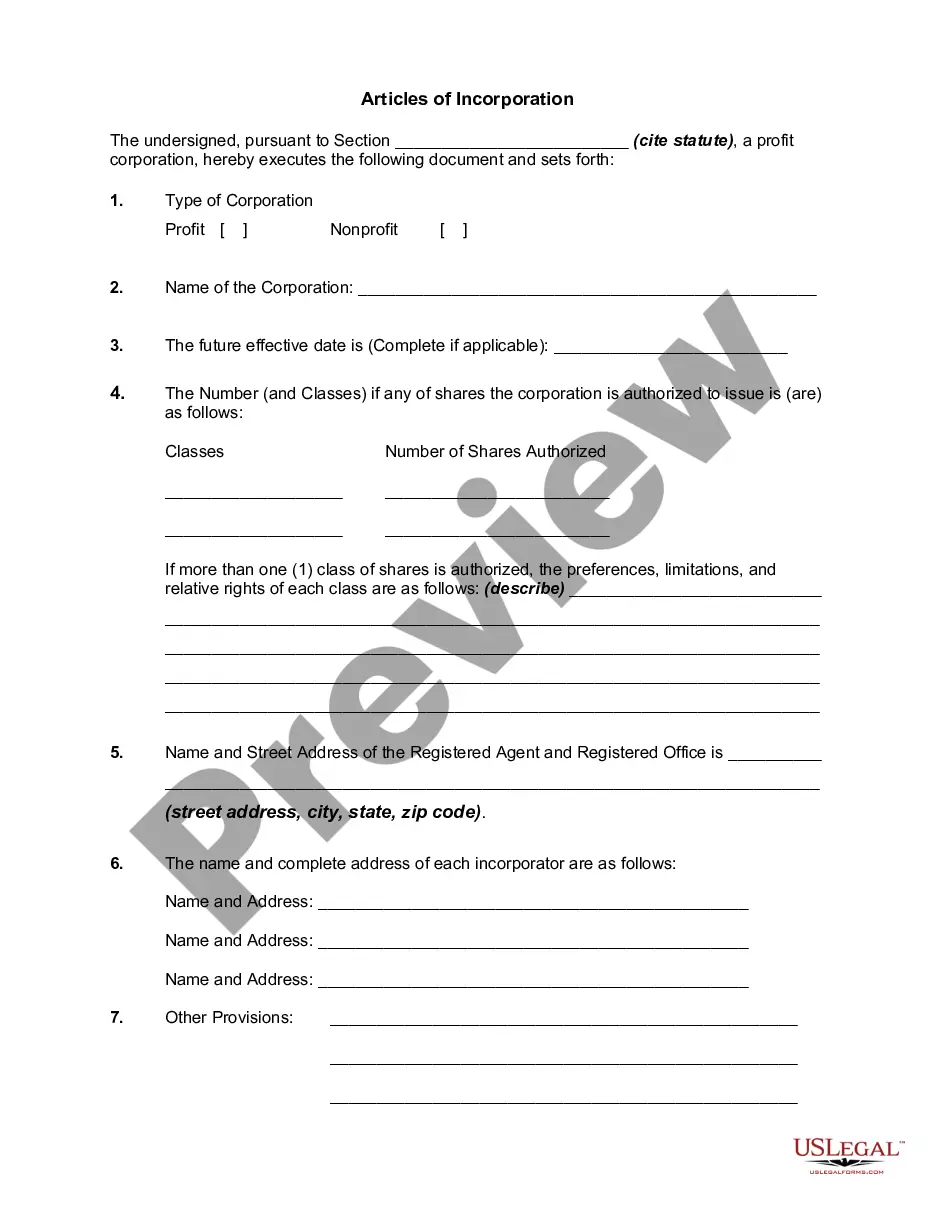
The Filing Business In Texas displayed on this page is a reusable formal template crafted by qualified attorneys in accordance with federal and local regulations.
For over 25 years, US Legal Forms has delivered individuals, organizations, and legal specialists with more than 85,000 verified, state-specific documents for any business and personal situation. It’s the quickest, simplest, and most trustworthy way to secure the paperwork you require, as the service ensures bank-grade data protection and anti-malware safeguards.
Select the format you prefer for your Filing Business In Texas (PDF, Word, RTF) and save the document onto your device.
- Search for the document you require and examine it.
- Review the file you searched for and preview it or verify the form description to confirm it meets your requirements. If it doesn’t, utilize the search feature to find the correct one. Click Buy Now once you locate the template you need.
- Register and Log In.
- Choose the payment plan that suits you and create an account. Use PayPal or a credit card for swift payment. If you already possess an account, Log In and check your subscription to proceed.
- Acquire the editable template.
Form popularity
FAQ
5 Steps to Register Your Business in Texas Determine your business structure. ... Choose a business name. ... Obtain an EIN (employer identification number) ... Apply for business licenses and permits. ... Consider additional requirements.
The Texas Certificate of Formation will request several pieces of information about your LLC, such as: Entity type and name. Registered agent and registered office. Governing authority (stating whether the LLC is member-managed or manager-managed) Purpose of the business. Initial mailing address.
Form 205 (Revised 12/21)Certificate of Formation Limited Liability CompanyThis space reserved for office use.Submit in duplicate to: Secretary of State P.O. Box 13697 Austin, TX 78711-3697 512 463-5555Filing Fee: $300
Start a Business in Texas Step 1 - Write Your Business Plan. ... Step 2 - Choose Your Business Location. ... Step 3 - Finance Your Business. ... Step 4 - Business Structure & Registration. ... Step 5 - Business Tax Responsibilities. ... Step 6 - Business Licenses and Permits by Business Type. ... Step 7 - Business Employer Requirements.
The LLC needs to file a 1065 Partnership Return and issue a Schedule K-1 to the LLC owners. The K-1s report each owner's distributive share of profits. And the K-1 income ?flows through? to the owners. The income taxes are then paid by each owner on their personal income tax return (Form 1040).