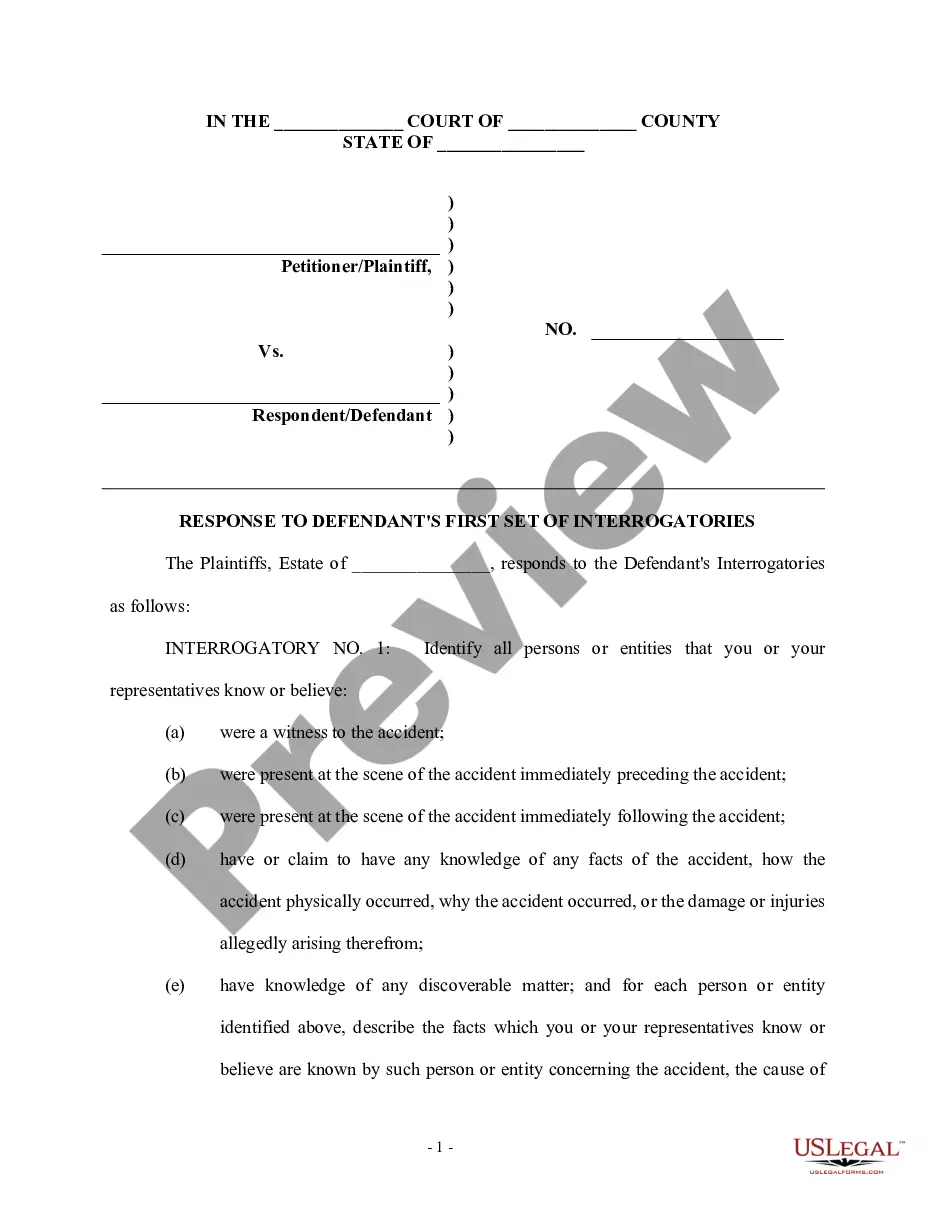
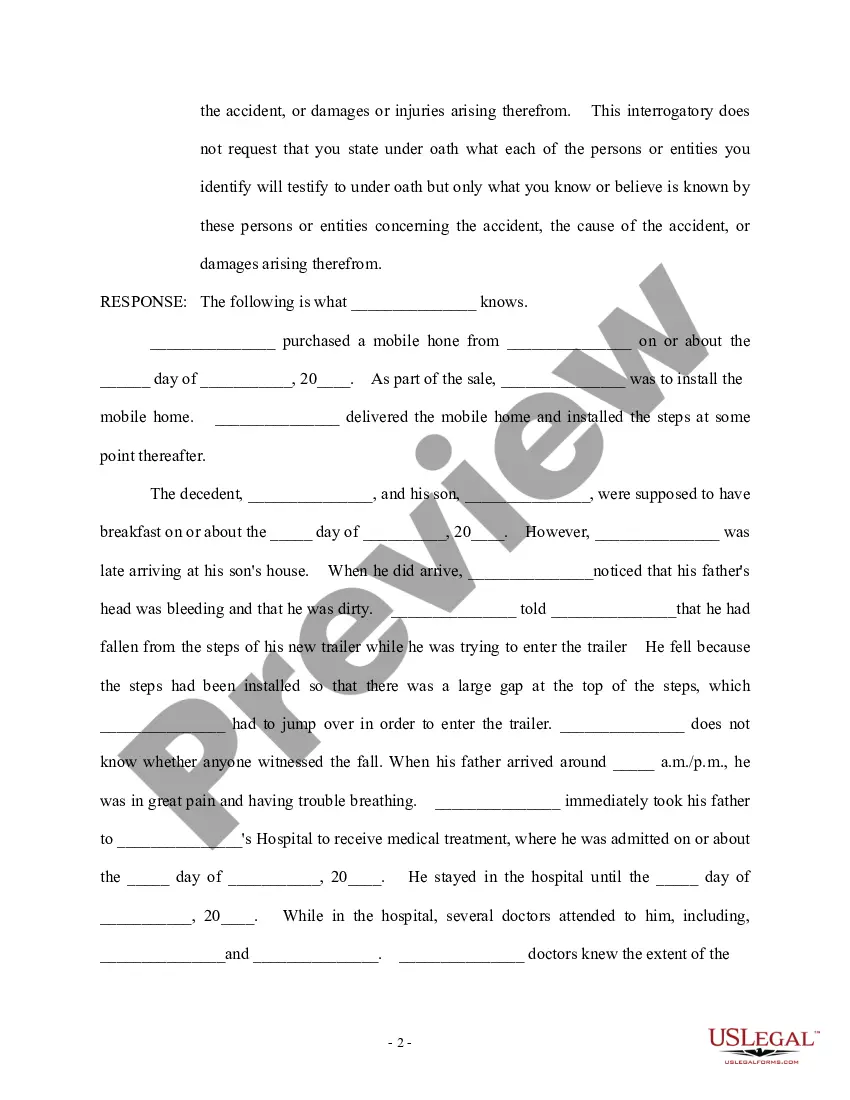
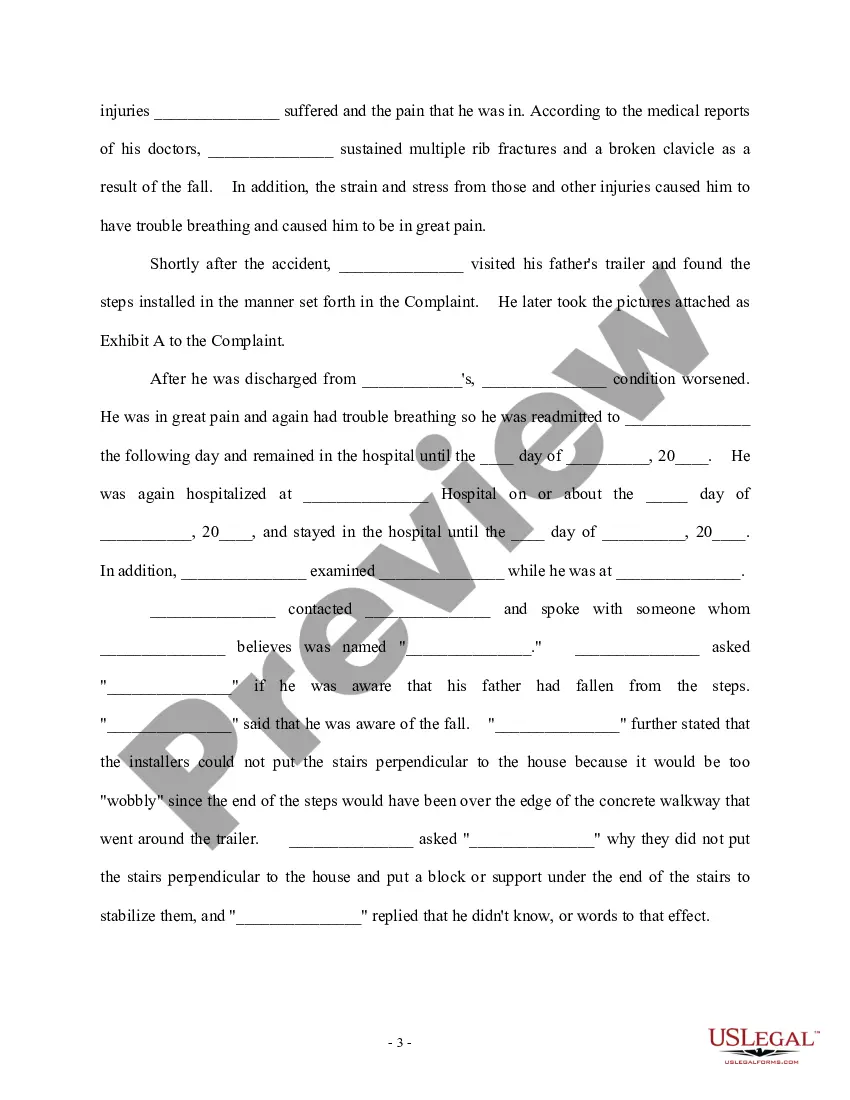
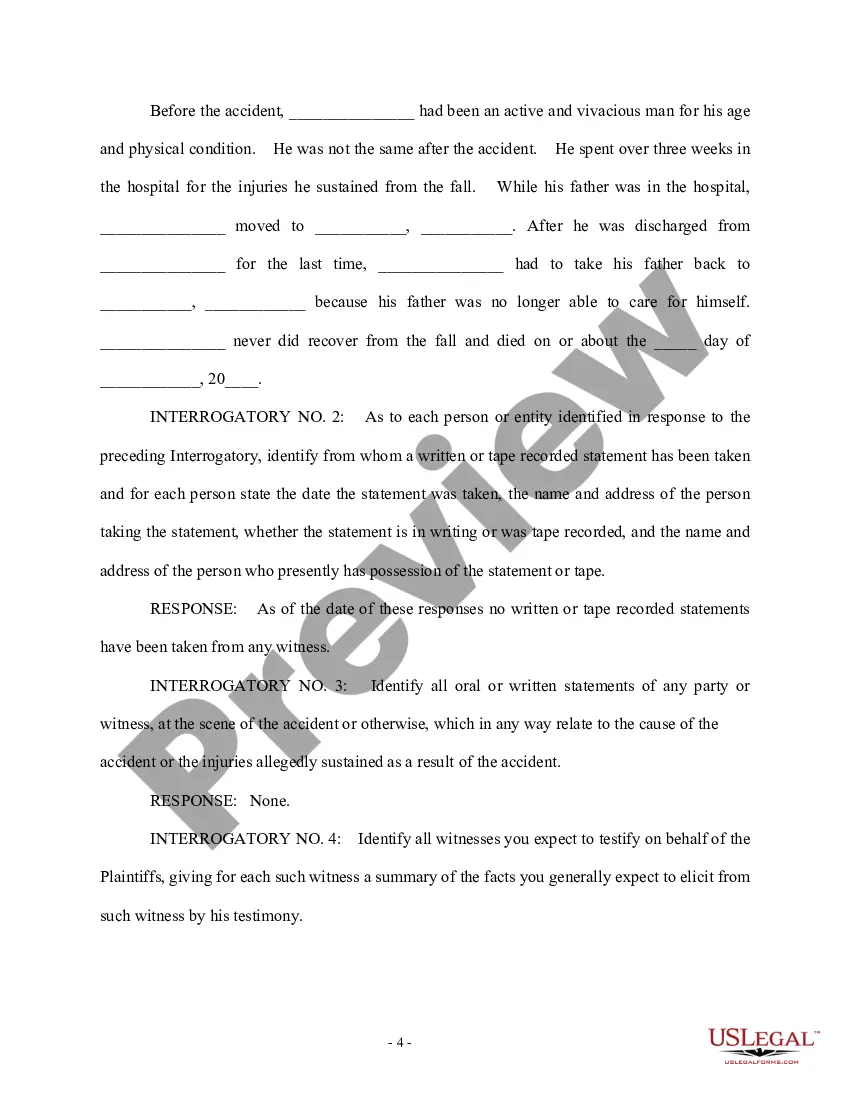
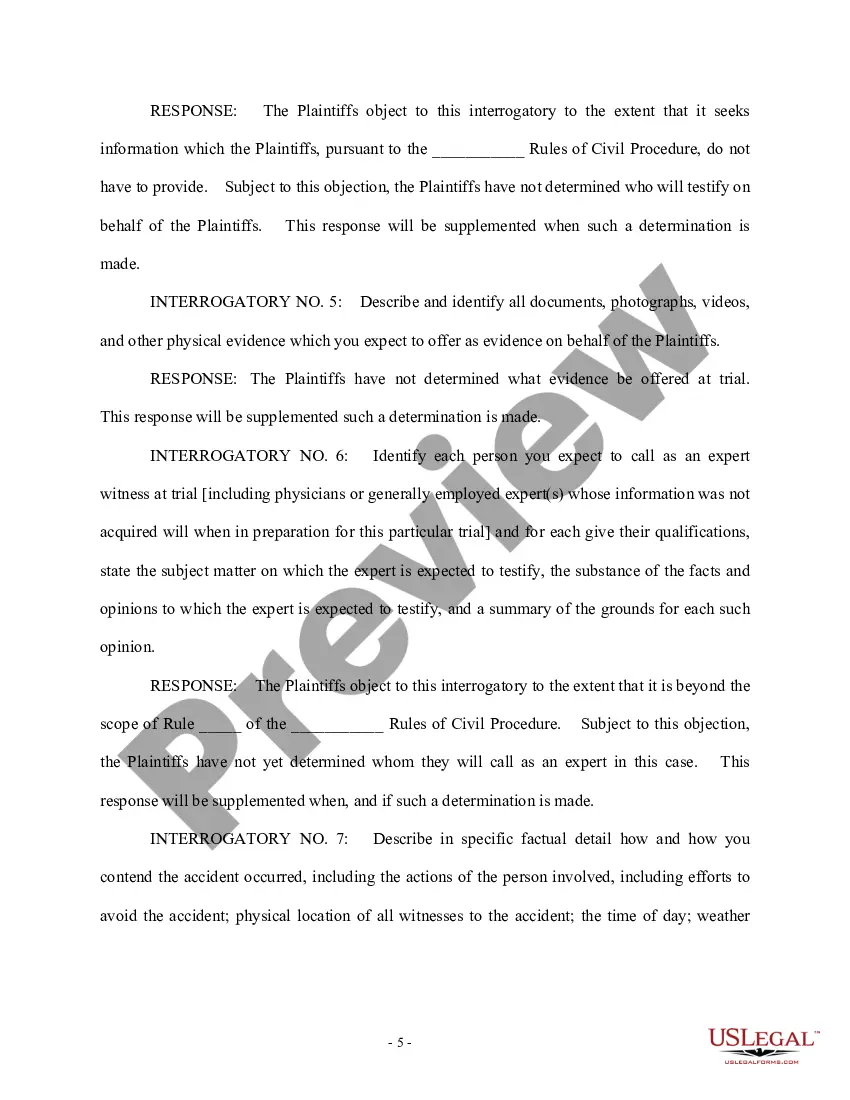
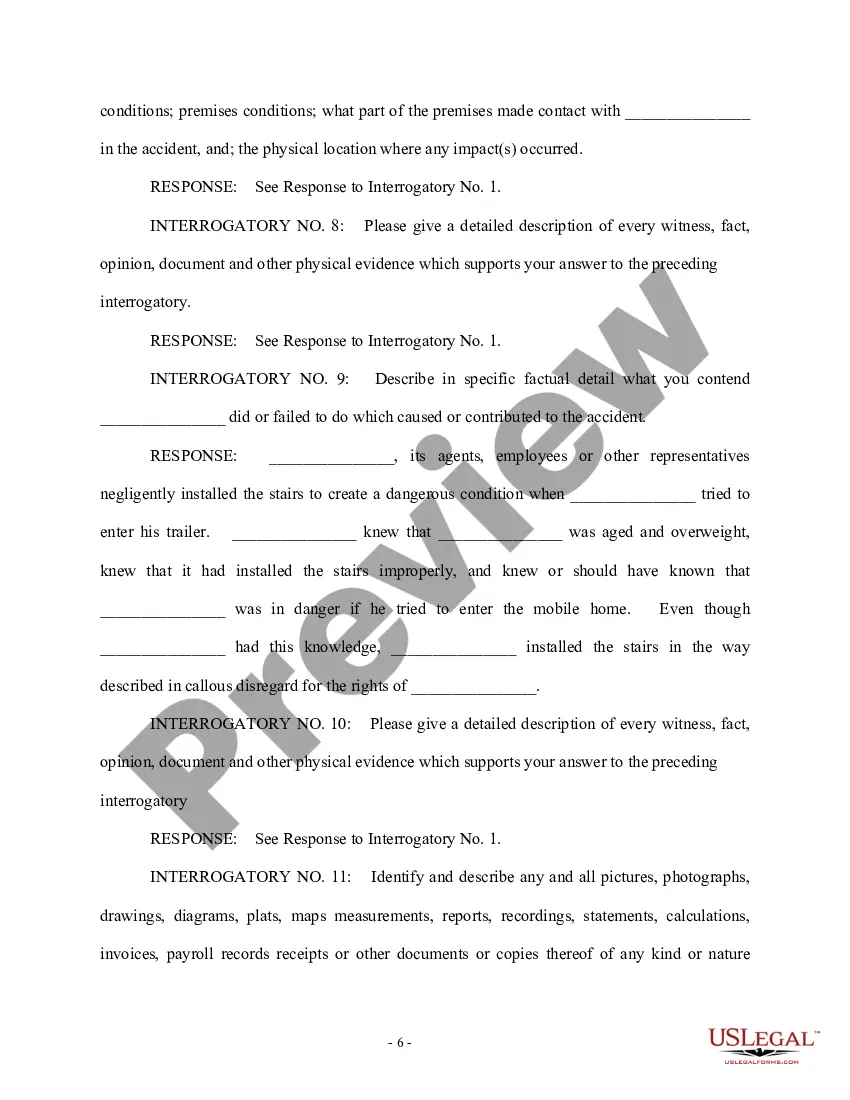
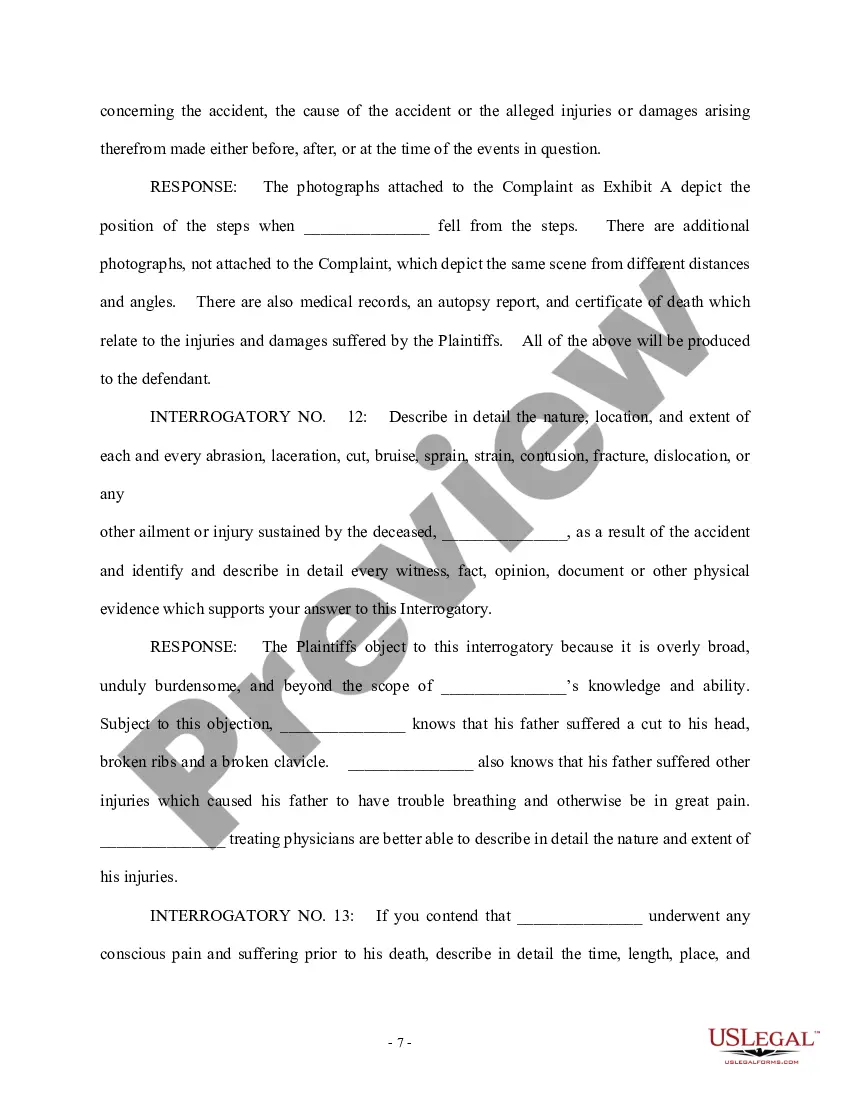
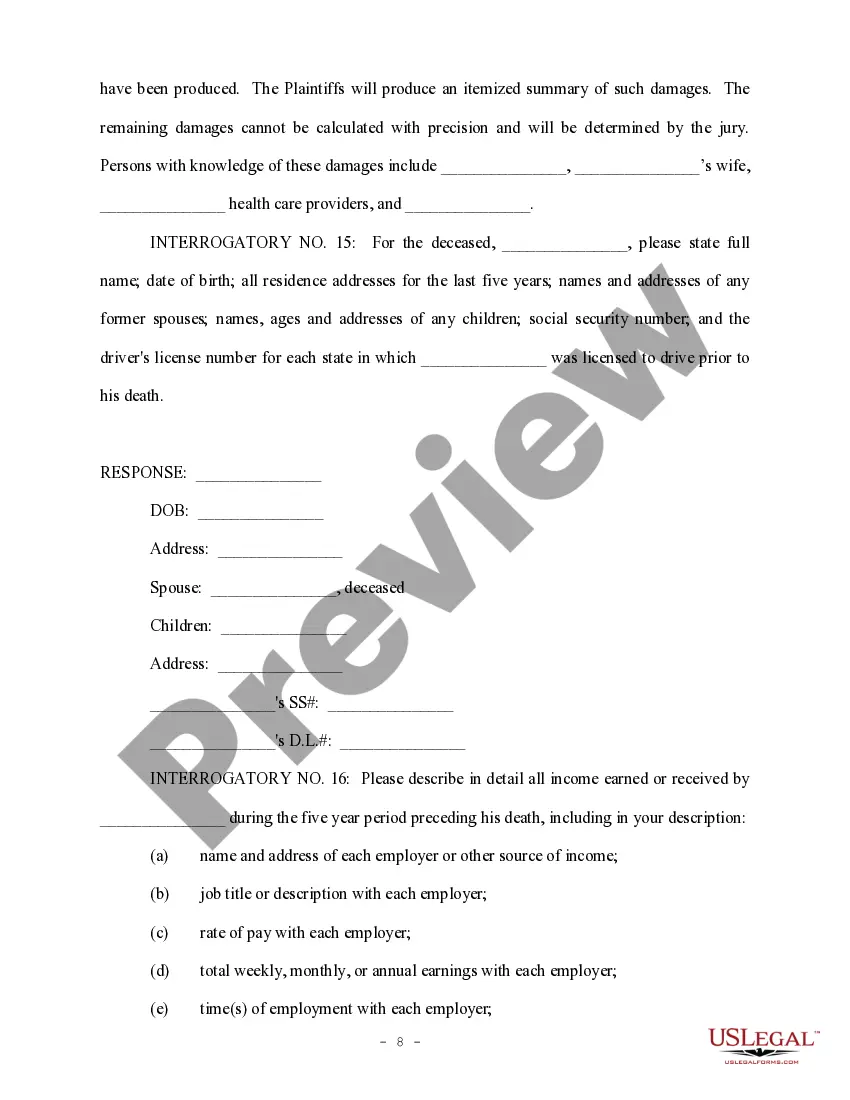
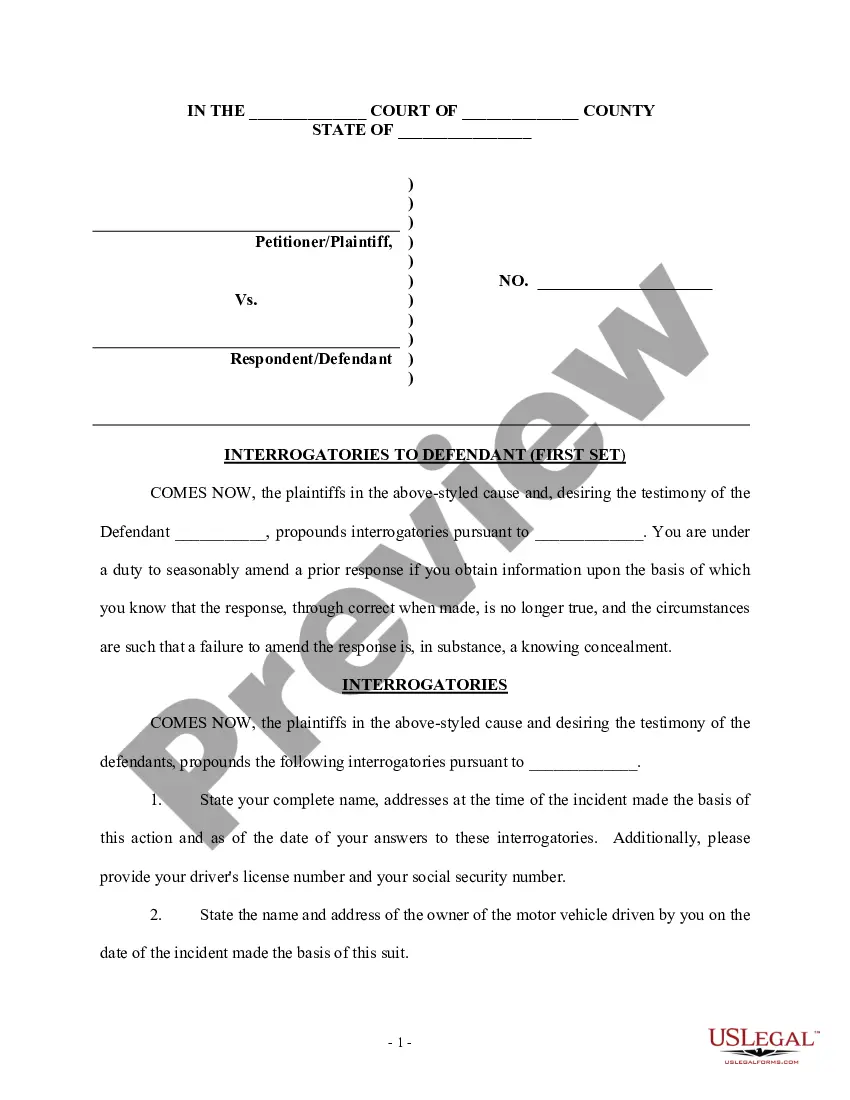
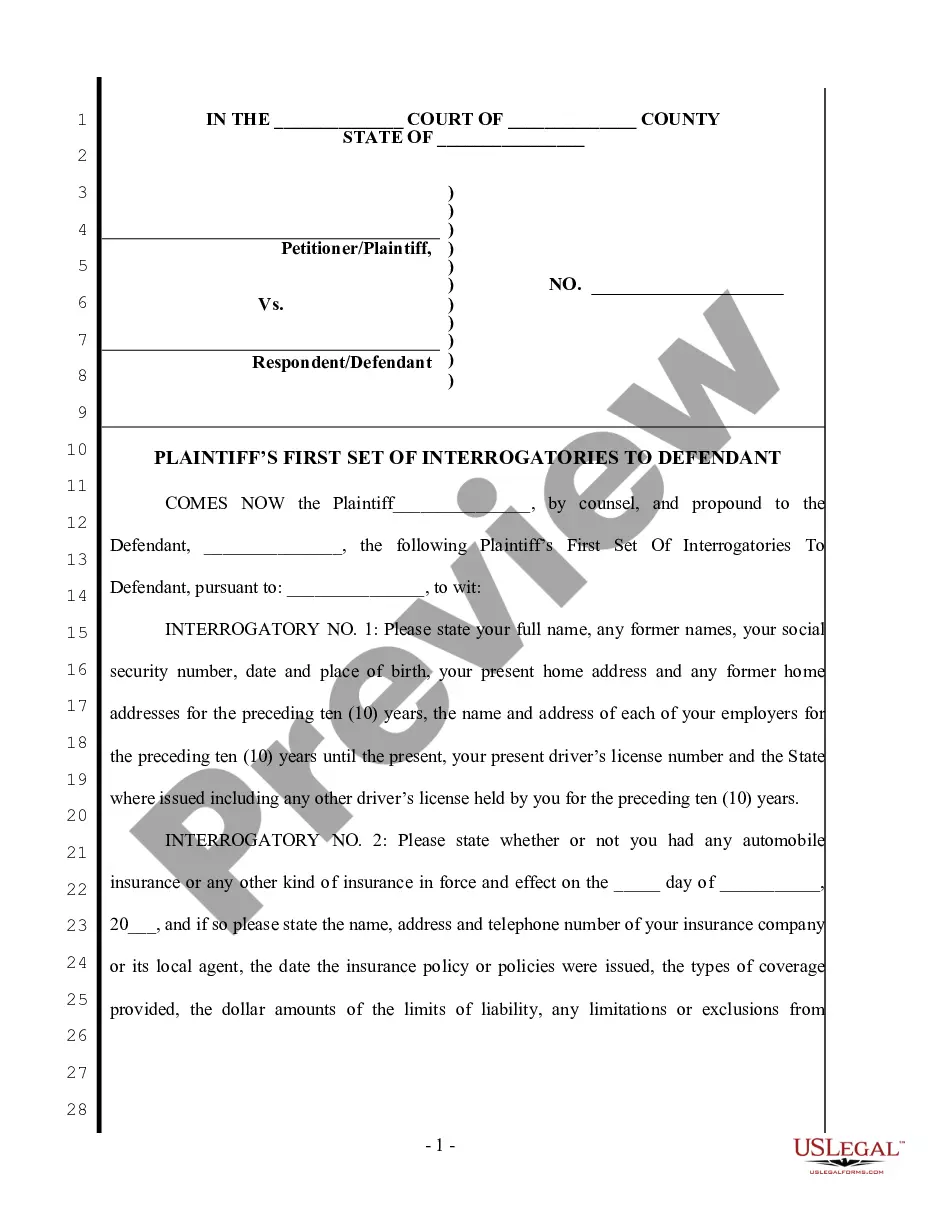
Response To Interrogatories Sample
Description

Get your form ready online
Our built-in tools help you complete, sign, share, and store your documents in one place.
Make edits, fill in missing information, and update formatting in US Legal Forms—just like you would in MS Word.
Download a copy, print it, send it by email, or mail it via USPS—whatever works best for your next step.
Sign and collect signatures with our SignNow integration. Send to multiple recipients, set reminders, and more. Go Premium to unlock E-Sign.
If this form requires notarization, complete it online through a secure video call—no need to meet a notary in person or wait for an appointment.
We protect your documents and personal data by following strict security and privacy standards.

Make edits, fill in missing information, and update formatting in US Legal Forms—just like you would in MS Word.

Download a copy, print it, send it by email, or mail it via USPS—whatever works best for your next step.

Sign and collect signatures with our SignNow integration. Send to multiple recipients, set reminders, and more. Go Premium to unlock E-Sign.

If this form requires notarization, complete it online through a secure video call—no need to meet a notary in person or wait for an appointment.

We protect your documents and personal data by following strict security and privacy standards.
Looking for another form?
How to fill out Response To First Set Of Interrogatories - Personal Injury?
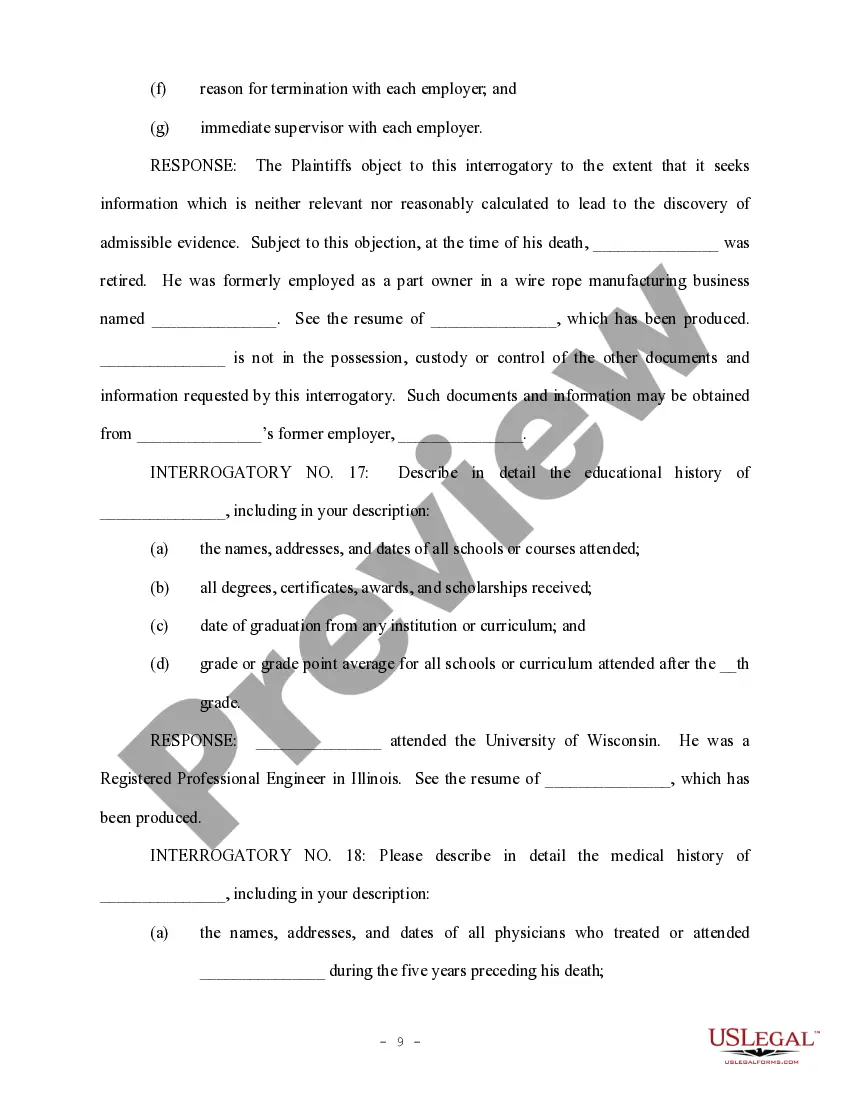
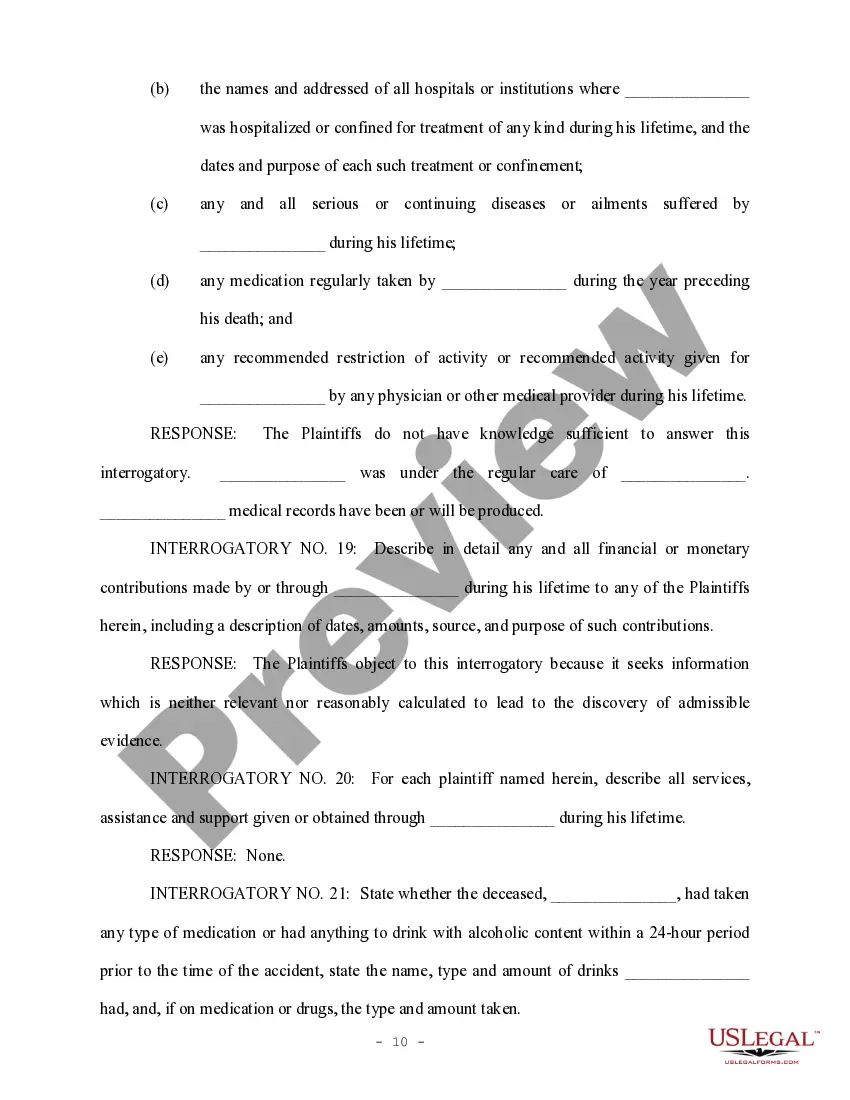
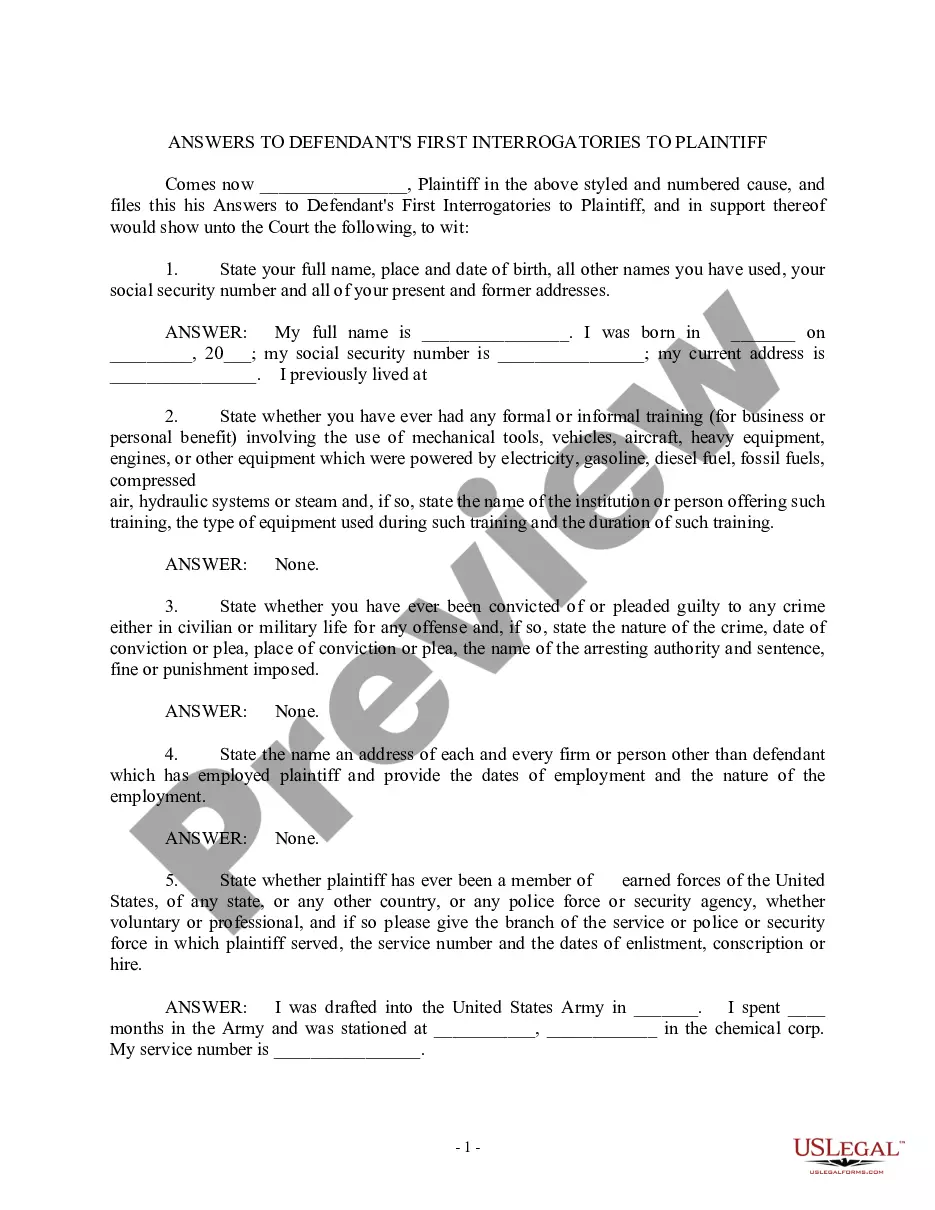
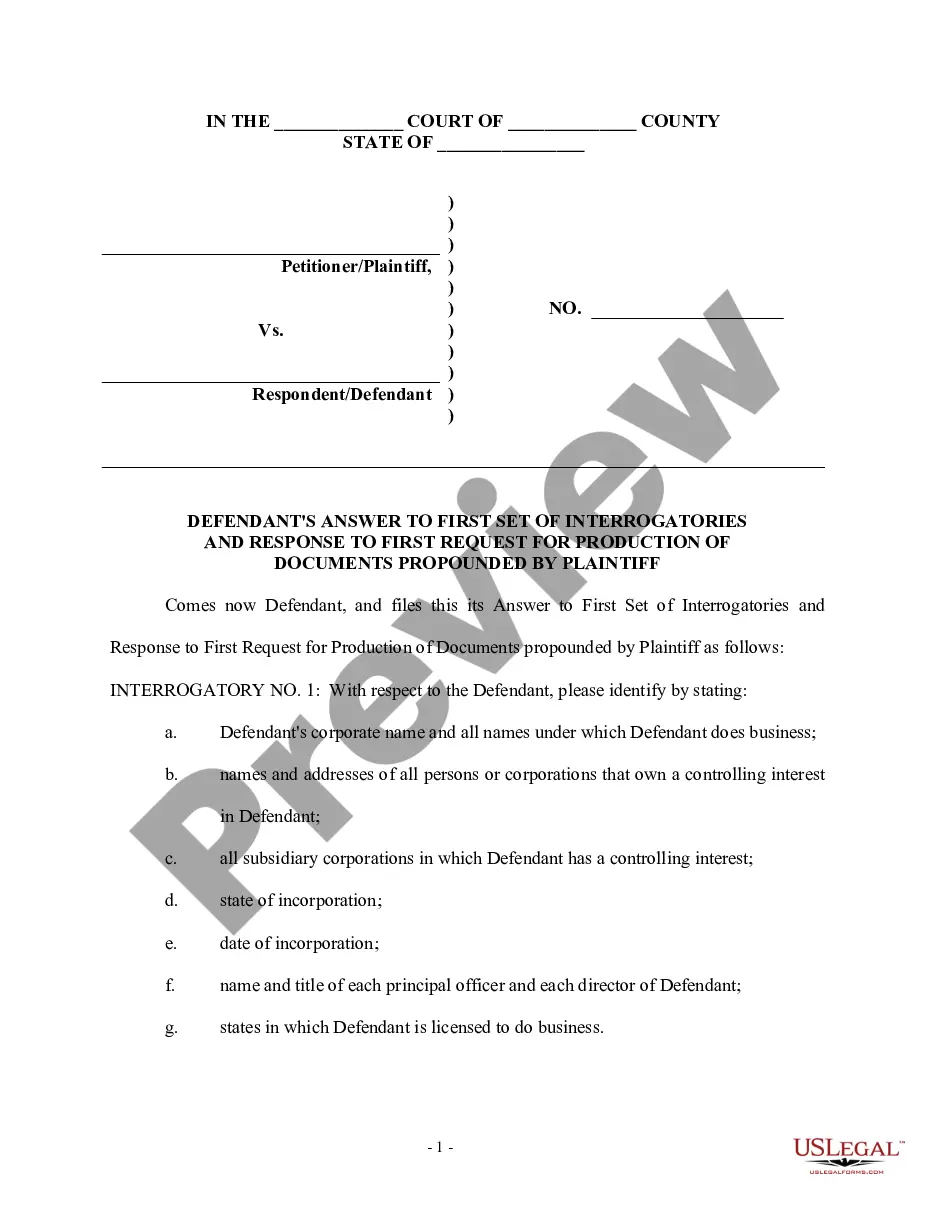
The Sample Response To Interrogatories you observe on this webpage is a reusable legal framework crafted by expert attorneys in accordance with federal and regional regulations.
For over 25 years, US Legal Forms has offered individuals, organizations, and lawyers more than 85,000 confirmed, state-specific documents for any business and personal situation. It’s the fastest, simplest, and most dependable method to secure the paperwork you require, as the service ensures the utmost level of data protection and malware security.
Subscribe to US Legal Forms to have validated legal templates for all of life’s situations readily available.
- Search for the document you require and examine it.
- Choose the suitable pricing plan and set up an account. Utilize PayPal or a credit card for swift payment. If you already possess an account, Log In and verify your subscription to proceed.
- Select the format you desire for your Response To Interrogatories Sample (PDF, DOCX, RTF) and download the sample onto your device.
- Print the template to complete it by hand. Alternatively, use an online versatile PDF editor to swiftly and accurately fill in and sign your document with a legally-recognized electronic signature.
- Utilize the same document again whenever required. Access the My documents section in your profile to redownload any previously downloaded forms.
Form popularity
FAQ
You can use interrogatories to find out facts about a case but they cannot be used for questions that draw a legal conclusion.
There is no form for your answer, but you typically have to respond in a specified format, using paper with numbers down the left-hand side, with your name and address at the top left, the name of the court and of the case, and the case number.
You must answer the questions or file objections to certain questions or the entire set of interrogatories. For example, you might not want to answer a question because it contains incorrect information like asking you to state who treated your broken leg, but you did not break your leg.
There is no form for your answer, but you typically have to respond in a specified format, using paper with numbers down the left-hand side, with your name and address at the top left, the name of the court and of the case, and the case number.
If you are unable to answer a specific question because you don't know or don't have access to the appropriate information, you must indicate the reasons. You may refer to a previous response when responding to an interrogatory providing the previous response sufficiently answers the later interrogatory.