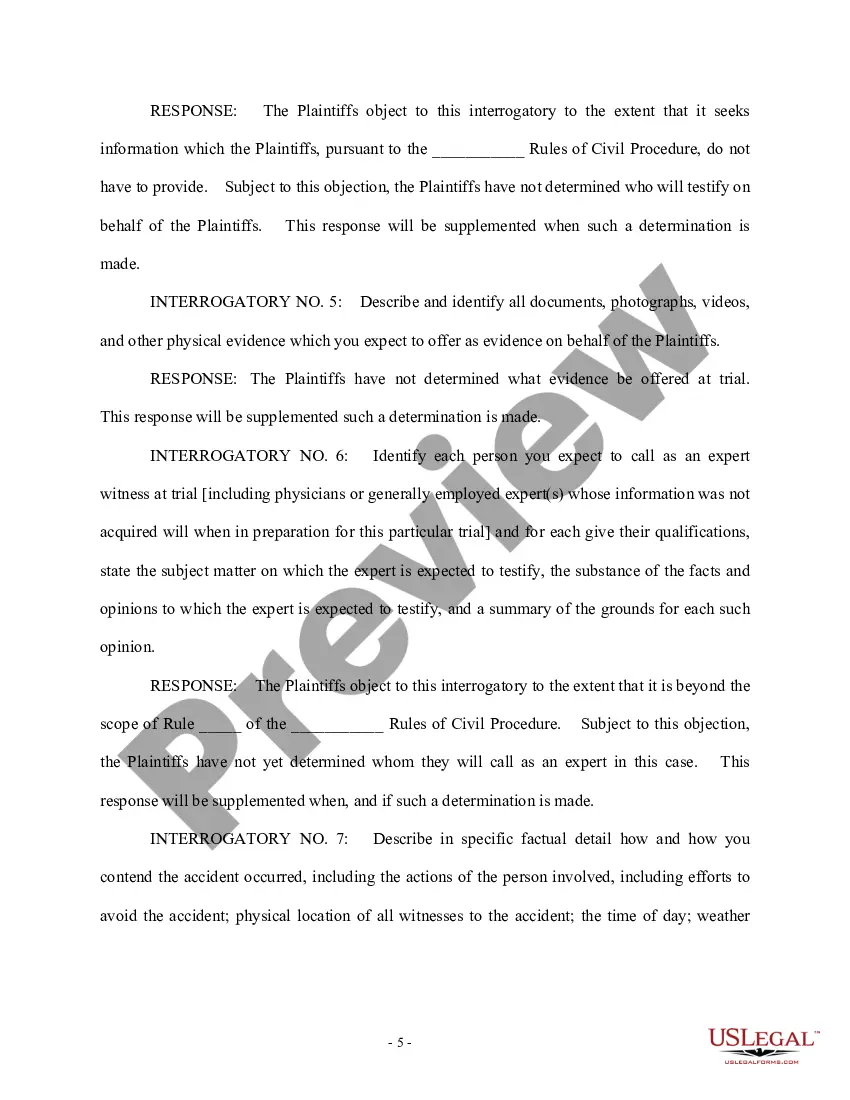
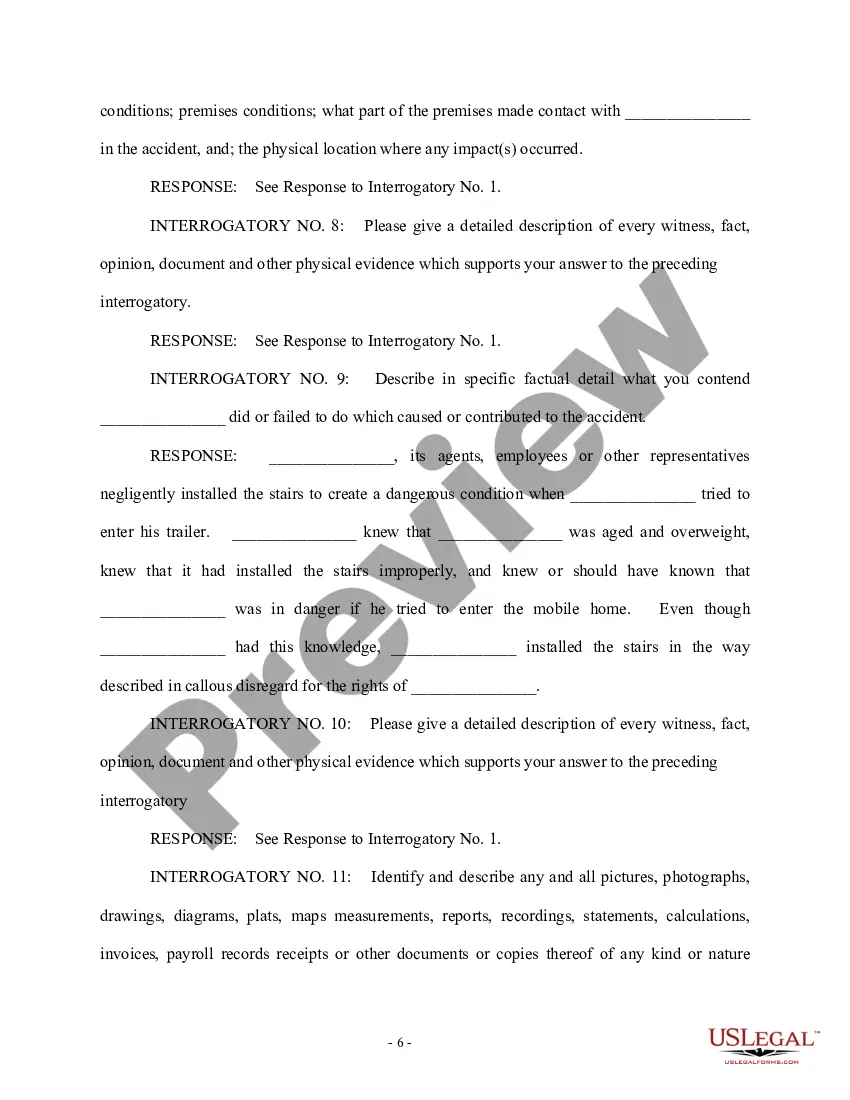
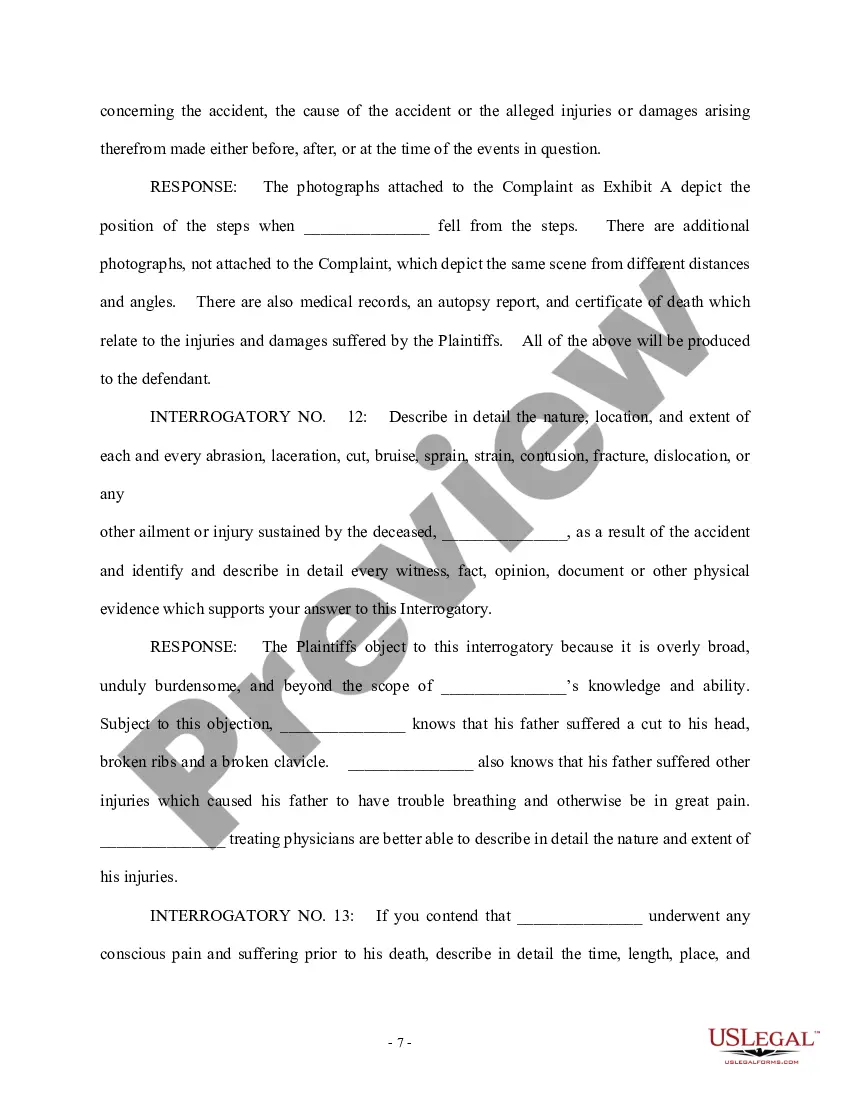
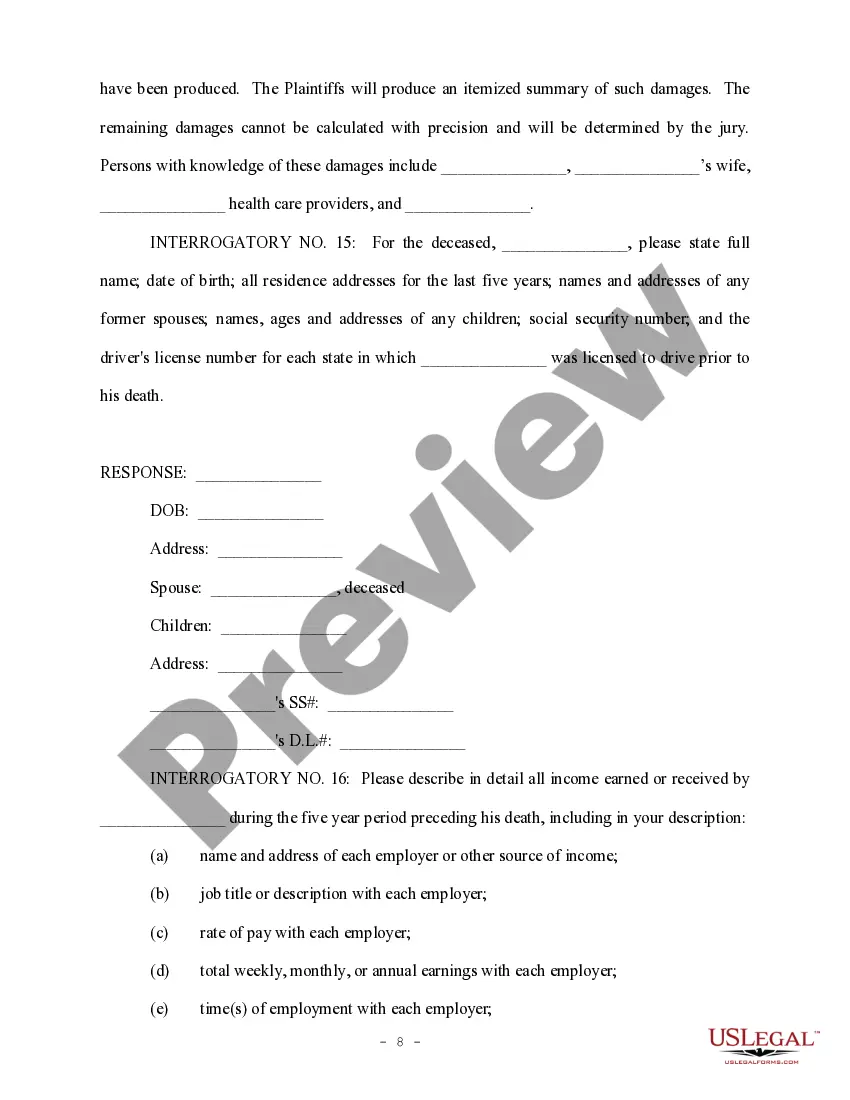
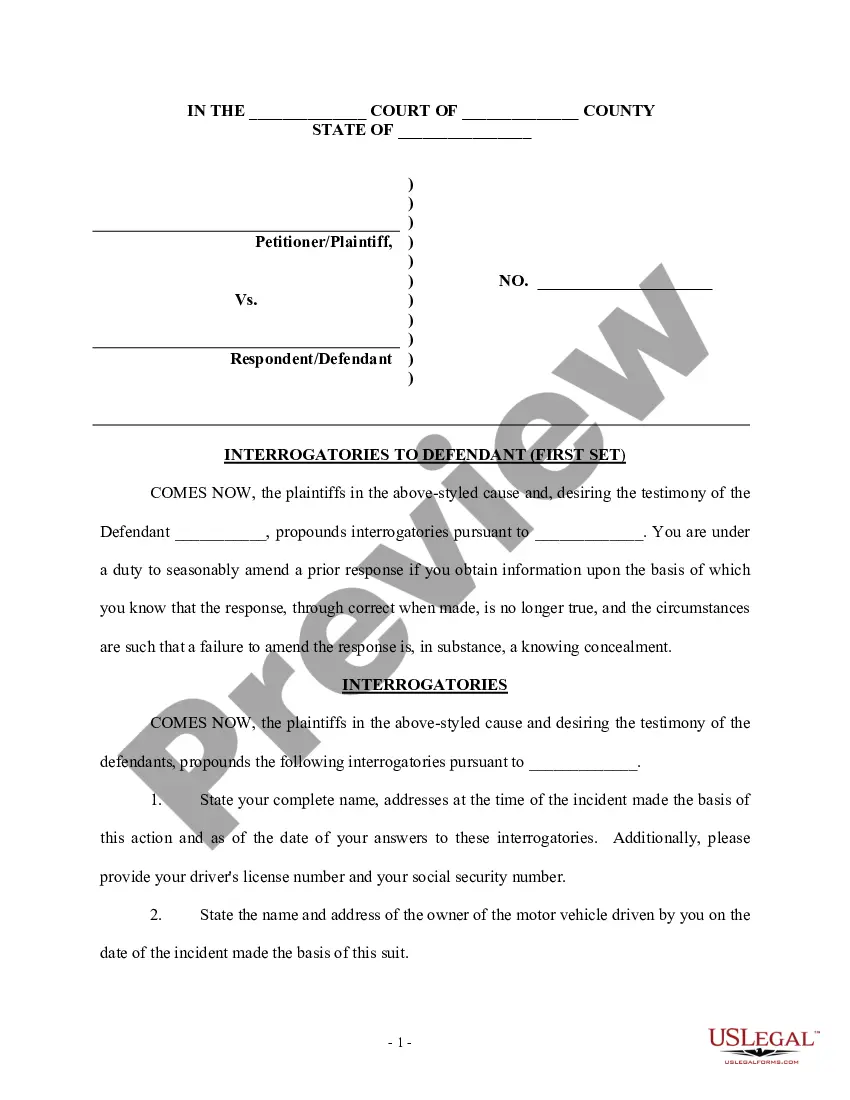
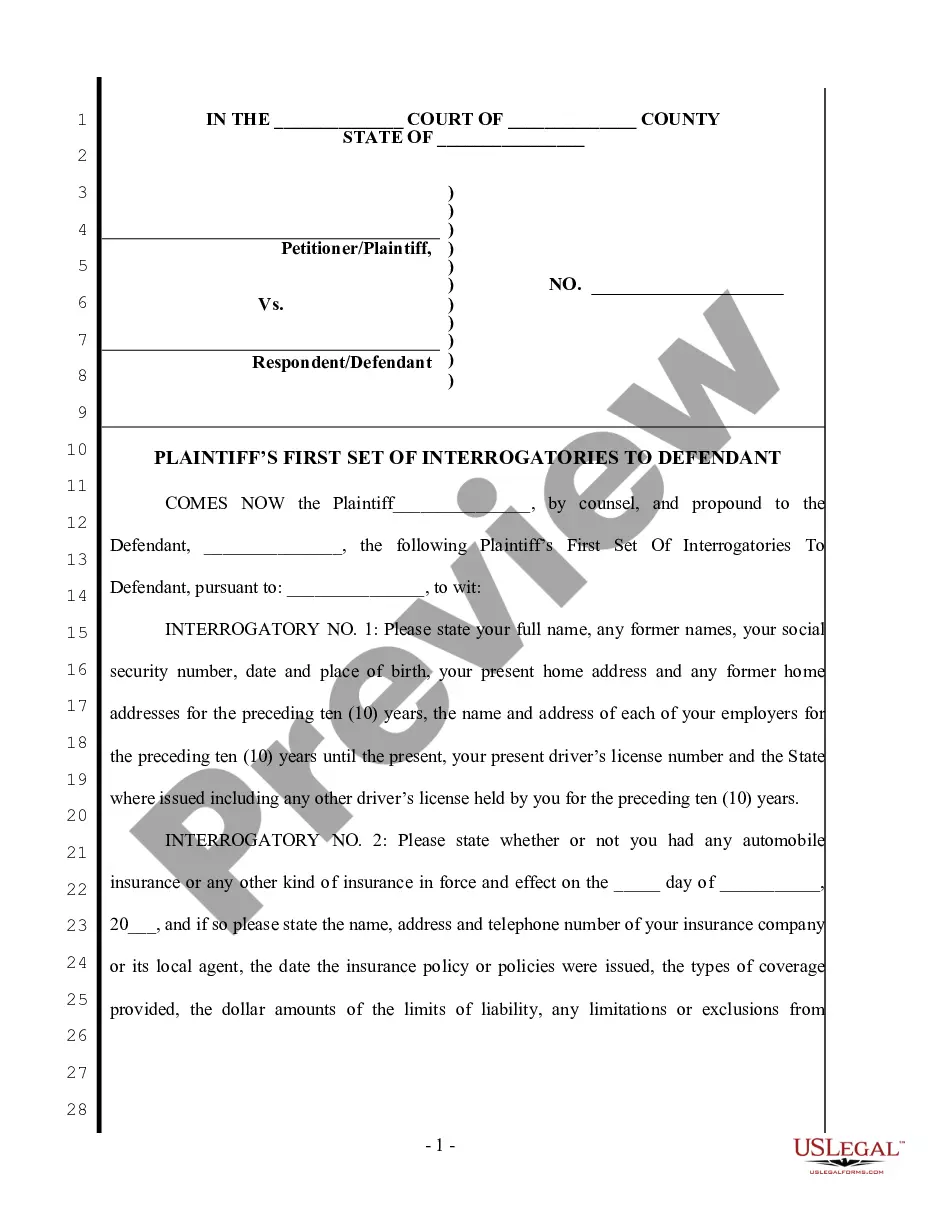
Response Interrogatories Sample With Answers
Description
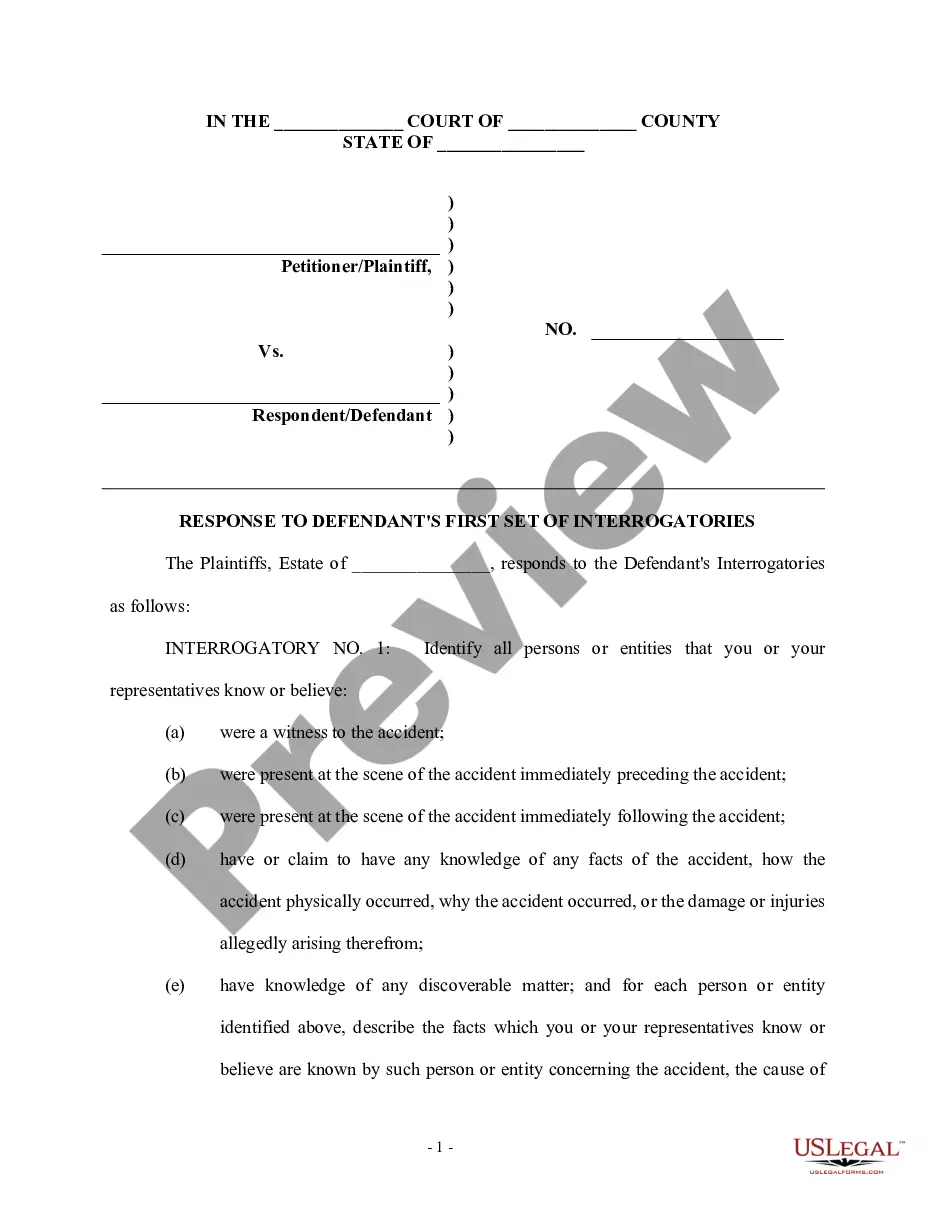
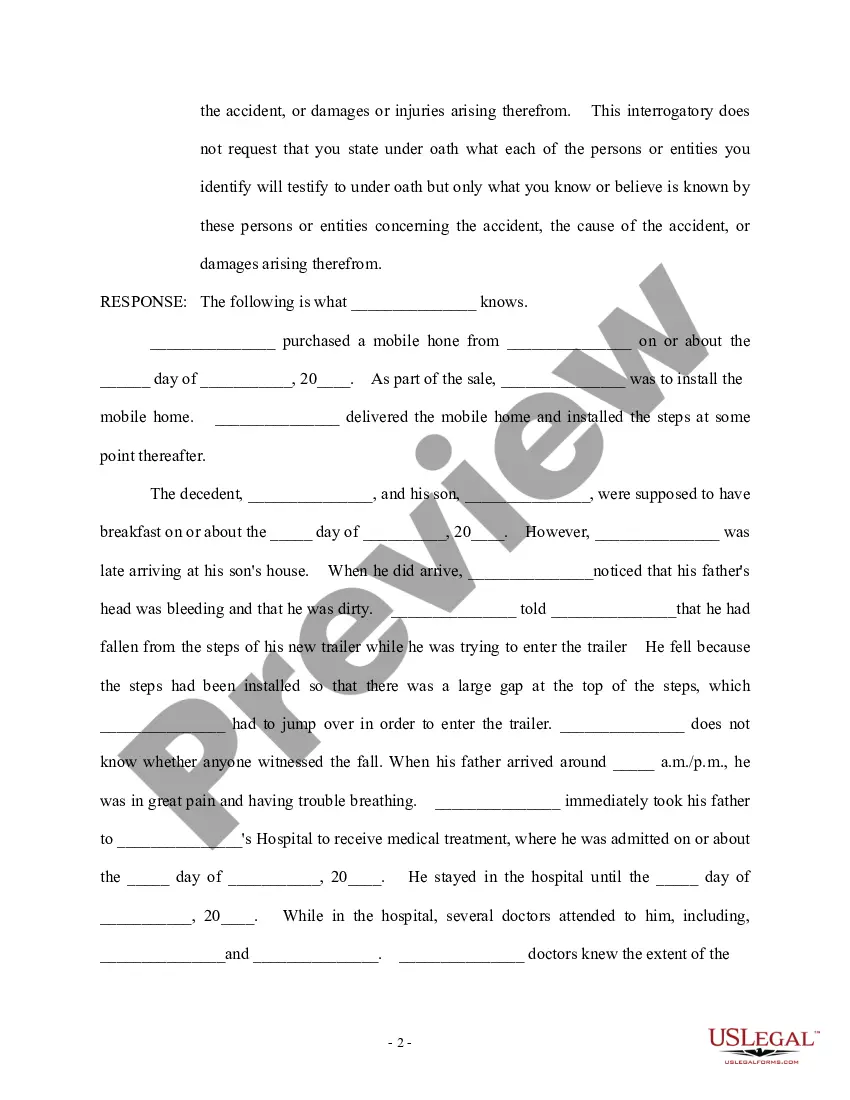
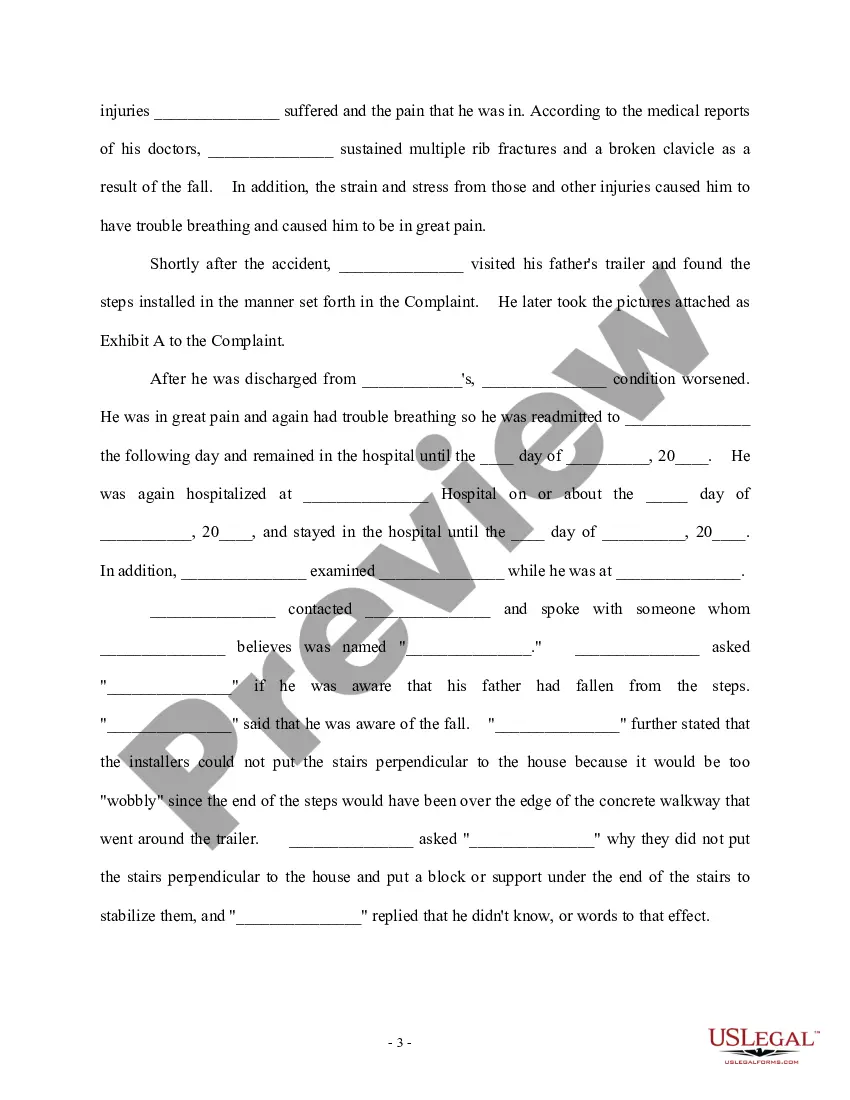
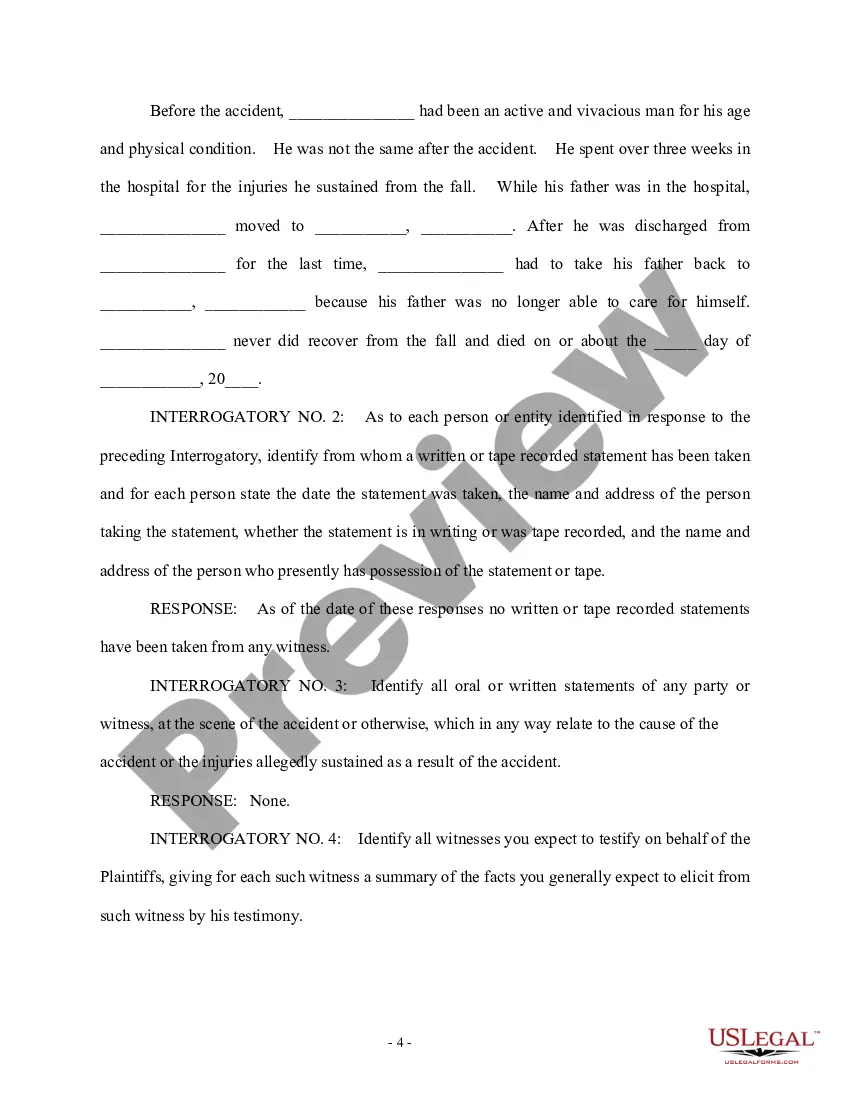
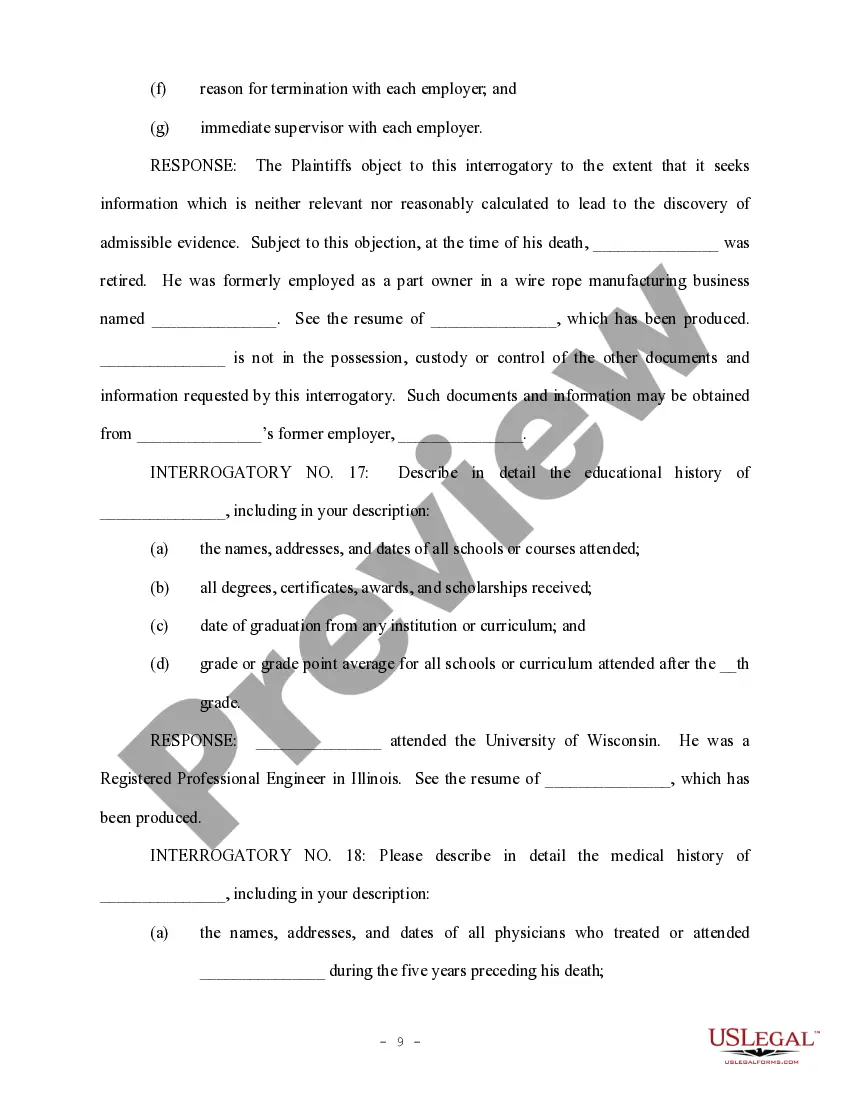
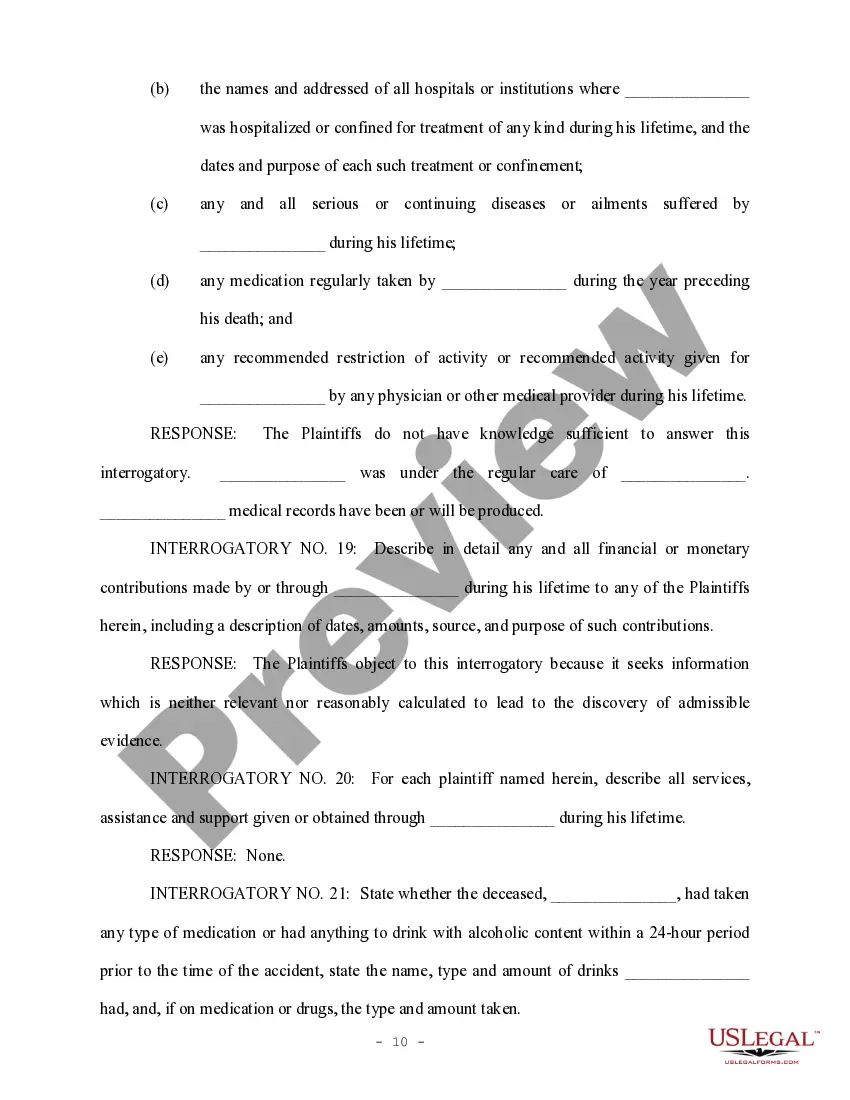

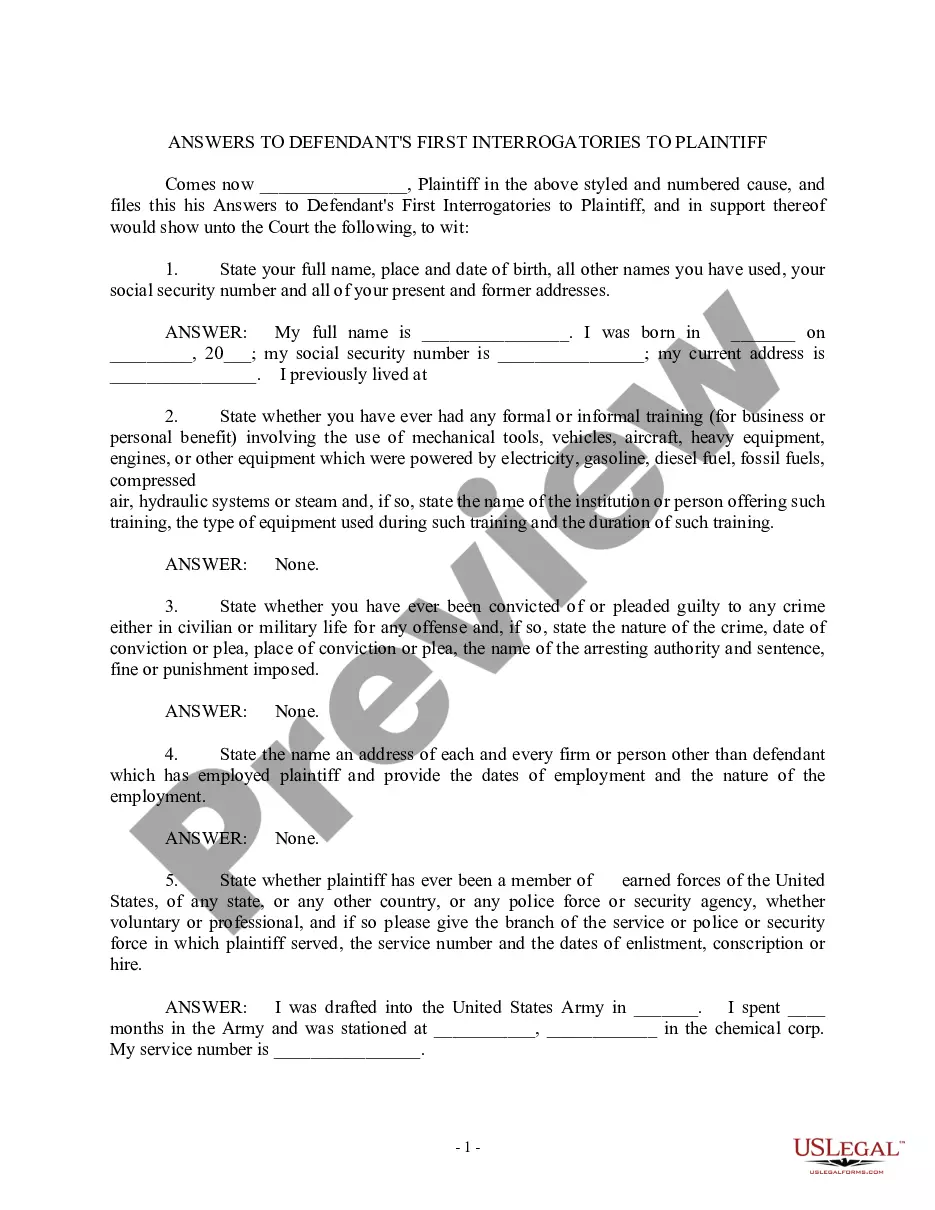
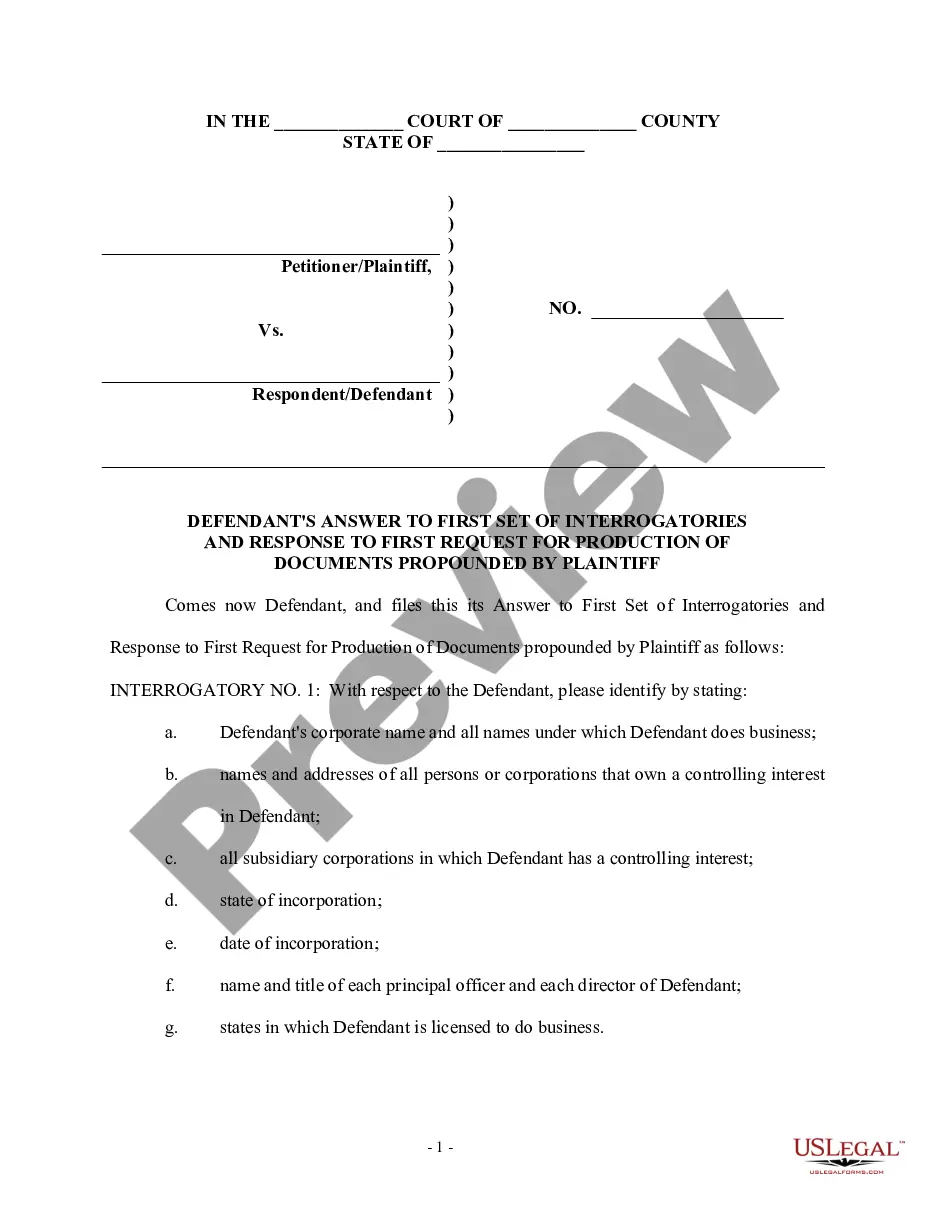
Get your form ready online
Our built-in tools help you complete, sign, share, and store your documents in one place.
Make edits, fill in missing information, and update formatting in US Legal Forms—just like you would in MS Word.
Download a copy, print it, send it by email, or mail it via USPS—whatever works best for your next step.
Sign and collect signatures with our SignNow integration. Send to multiple recipients, set reminders, and more. Go Premium to unlock E-Sign.
If this form requires notarization, complete it online through a secure video call—no need to meet a notary in person or wait for an appointment.
We protect your documents and personal data by following strict security and privacy standards.

Make edits, fill in missing information, and update formatting in US Legal Forms—just like you would in MS Word.

Download a copy, print it, send it by email, or mail it via USPS—whatever works best for your next step.

Sign and collect signatures with our SignNow integration. Send to multiple recipients, set reminders, and more. Go Premium to unlock E-Sign.

If this form requires notarization, complete it online through a secure video call—no need to meet a notary in person or wait for an appointment.

We protect your documents and personal data by following strict security and privacy standards.
Looking for another form?
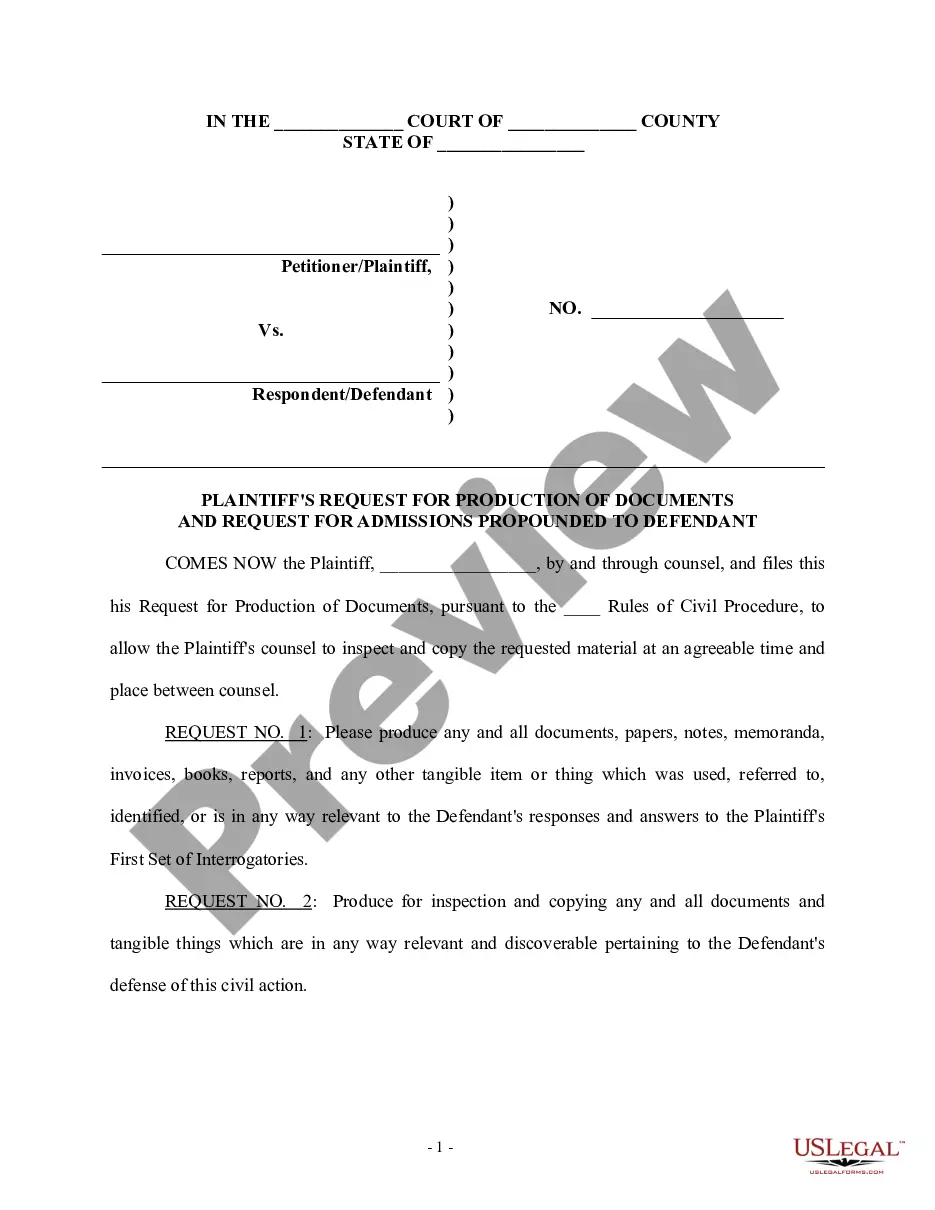
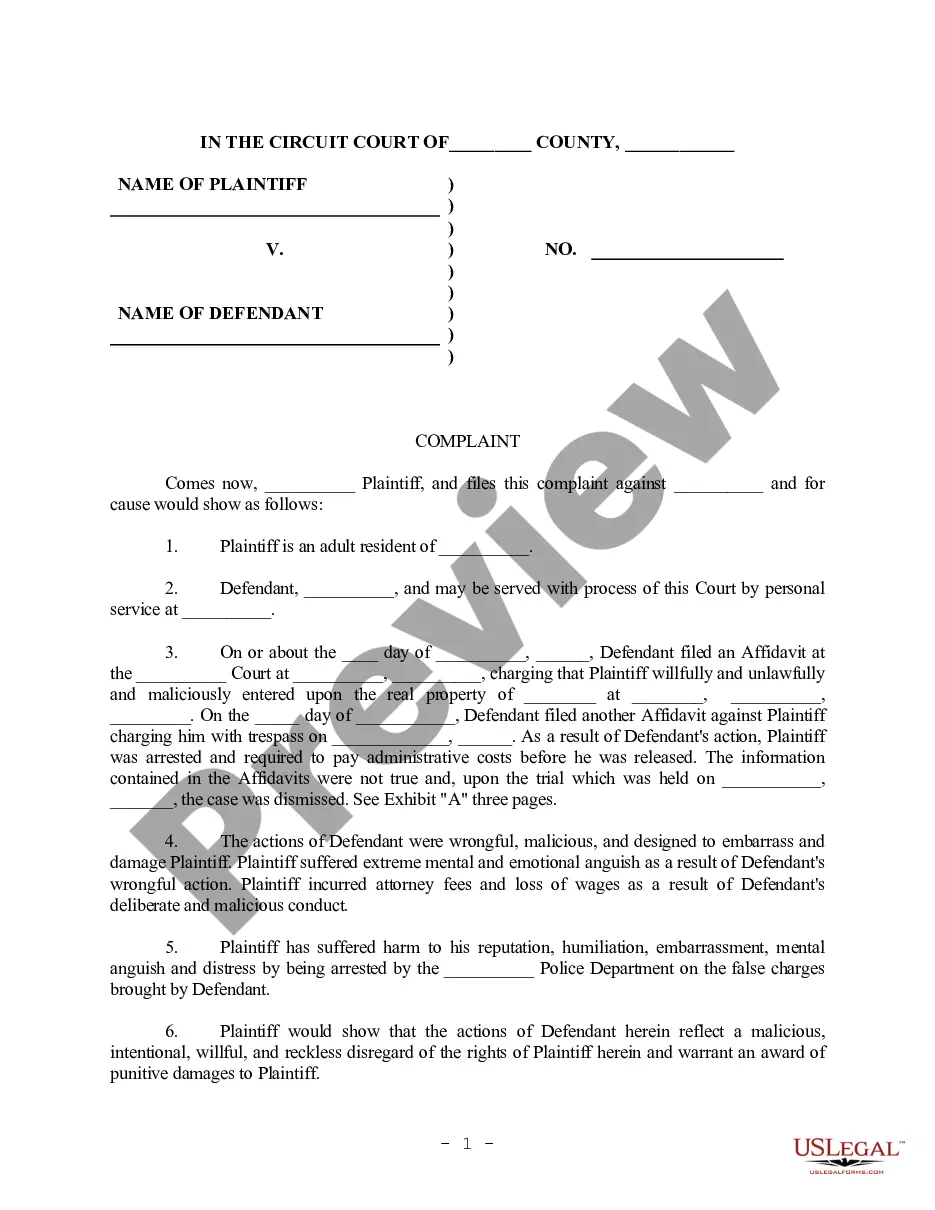
How to fill out Response To First Set Of Interrogatories - Personal Injury?
Creating legal documents from scratch can occasionally be daunting.
Specific situations may require extensive research and substantial financial investment.
If you’re looking for a simpler and more cost-effective approach to preparing Response Interrogatories Sample With Answers or any other documents without unnecessary complications, US Legal Forms is always within reach.
Our online repository of more than 85,000 current legal documents encompasses nearly every area of your financial, legal, and personal affairs.
- With just a few clicks, you can rapidly access state- and county-specific forms meticulously crafted for you by our legal professionals.
- Utilize our website whenever you need dependable and trustworthy services to efficiently find and download the Response Interrogatories Sample With Answers.
- If you’re familiar with our services and have previously established an account with us, simply Log In to your account, find the form, and download it or re-download it anytime later from the My documents tab.
- Don’t have an account? No worries. Registering takes just a few minutes, allowing you to explore the library.
Form popularity
FAQ
You can use interrogatories to find out facts about a case but they cannot be used for questions that draw a legal conclusion.
If you are unable to answer a specific question because you don't know or don't have access to the appropriate information, you must indicate the reasons. You may refer to a previous response when responding to an interrogatory providing the previous response sufficiently answers the later interrogatory.
You must answer the questions or file objections to certain questions or the entire set of interrogatories. For example, you might not want to answer a question because it contains incorrect information like asking you to state who treated your broken leg, but you did not break your leg.
A shorter or longer time may be stipulated to under Rule 29 or be ordered by the court. (3) Answering Each Interrogatory. Each interrogatory must, to the extent it is not objected to, be answered separately and fully in writing under oath.
They are provided for your information. There is no form for your answer, but you typically have to respond in a specified format, using paper with numbers down the left-hand side, with your name and address at the top left, the name of the court and of the case, and the case number.