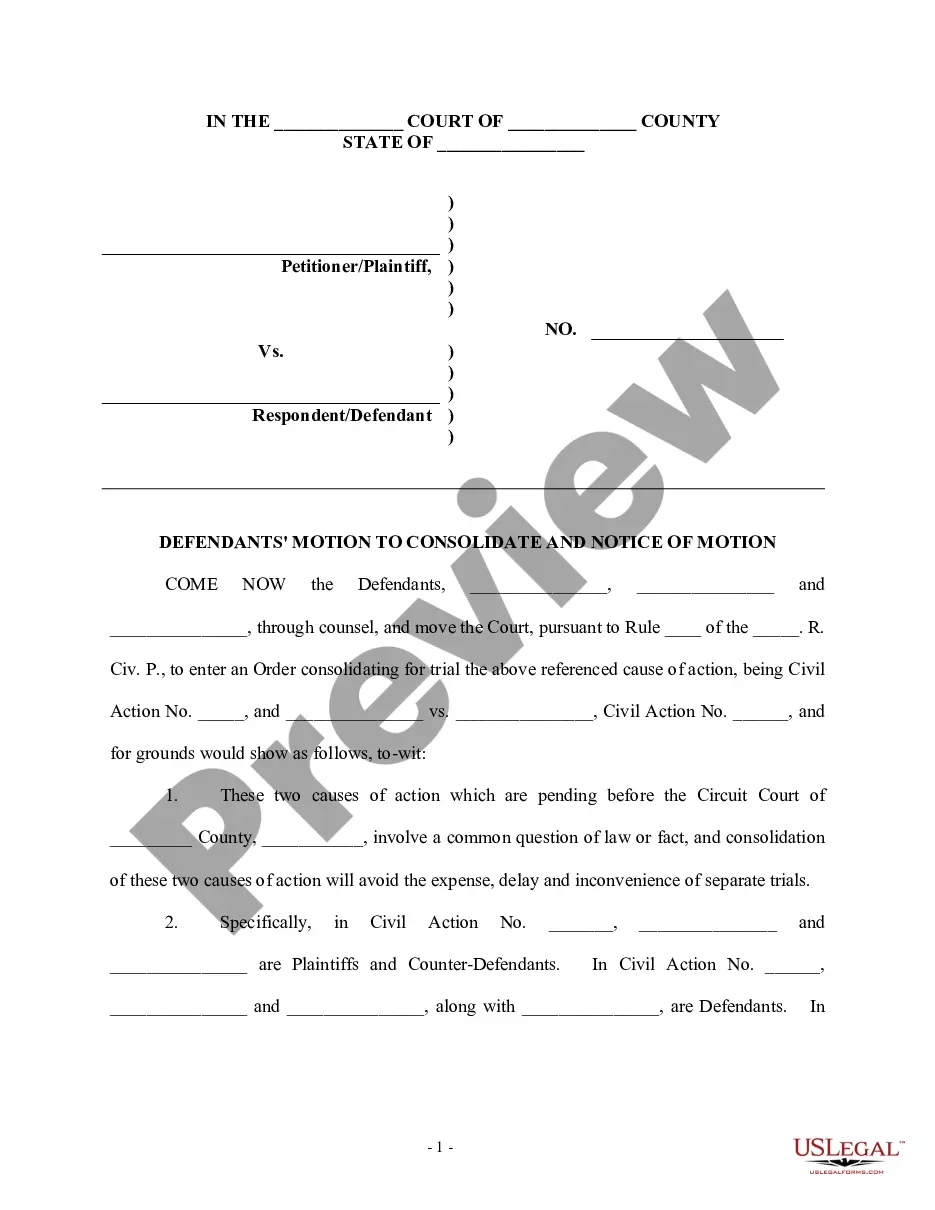
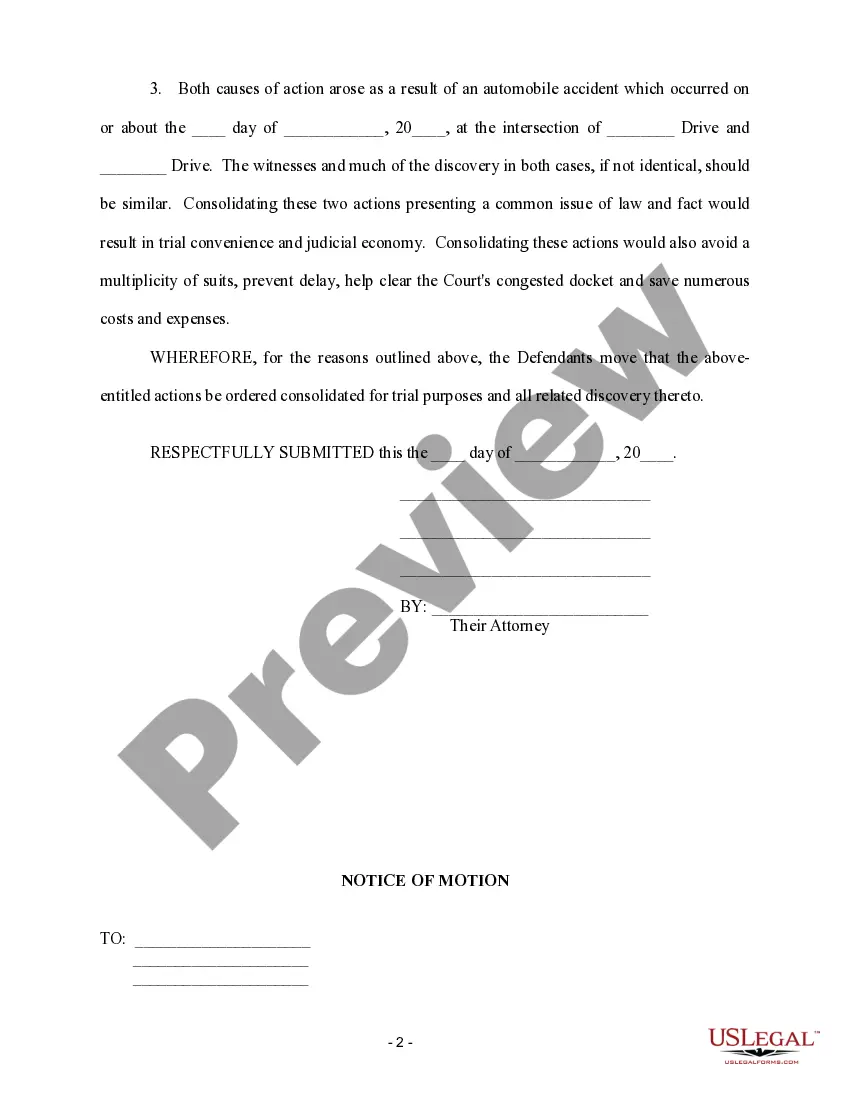
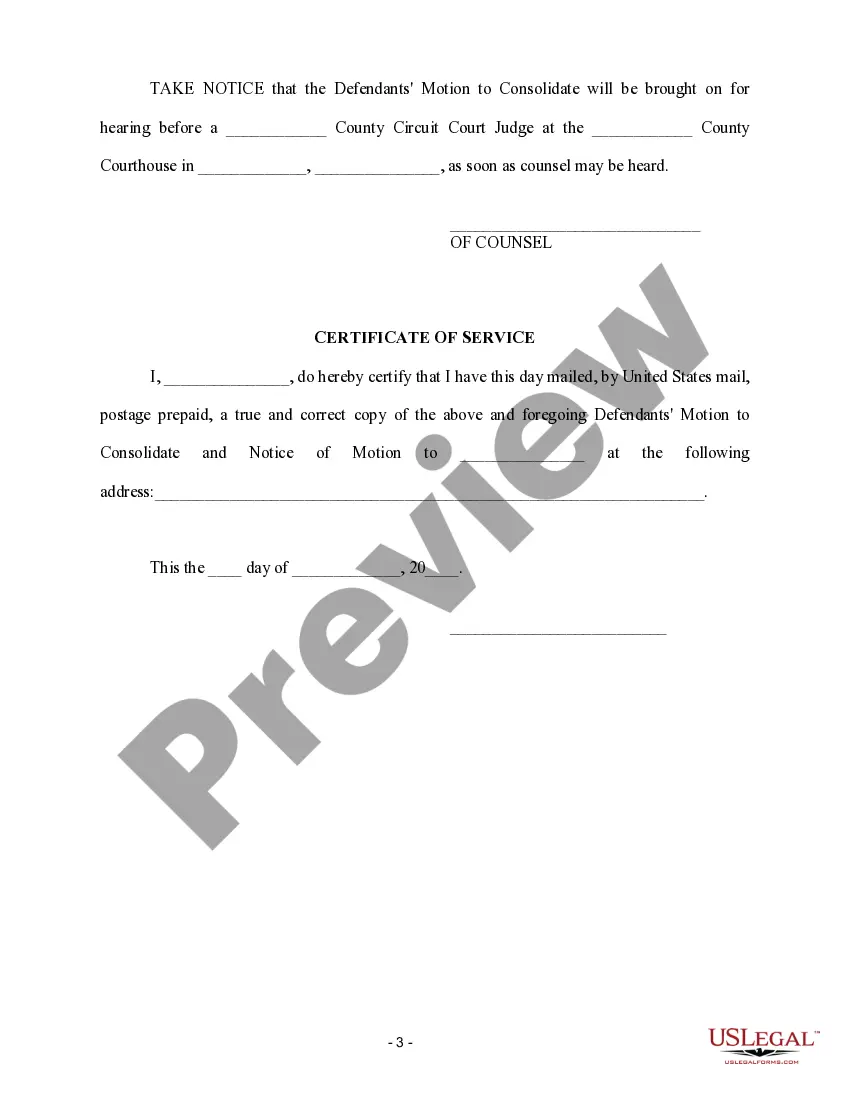
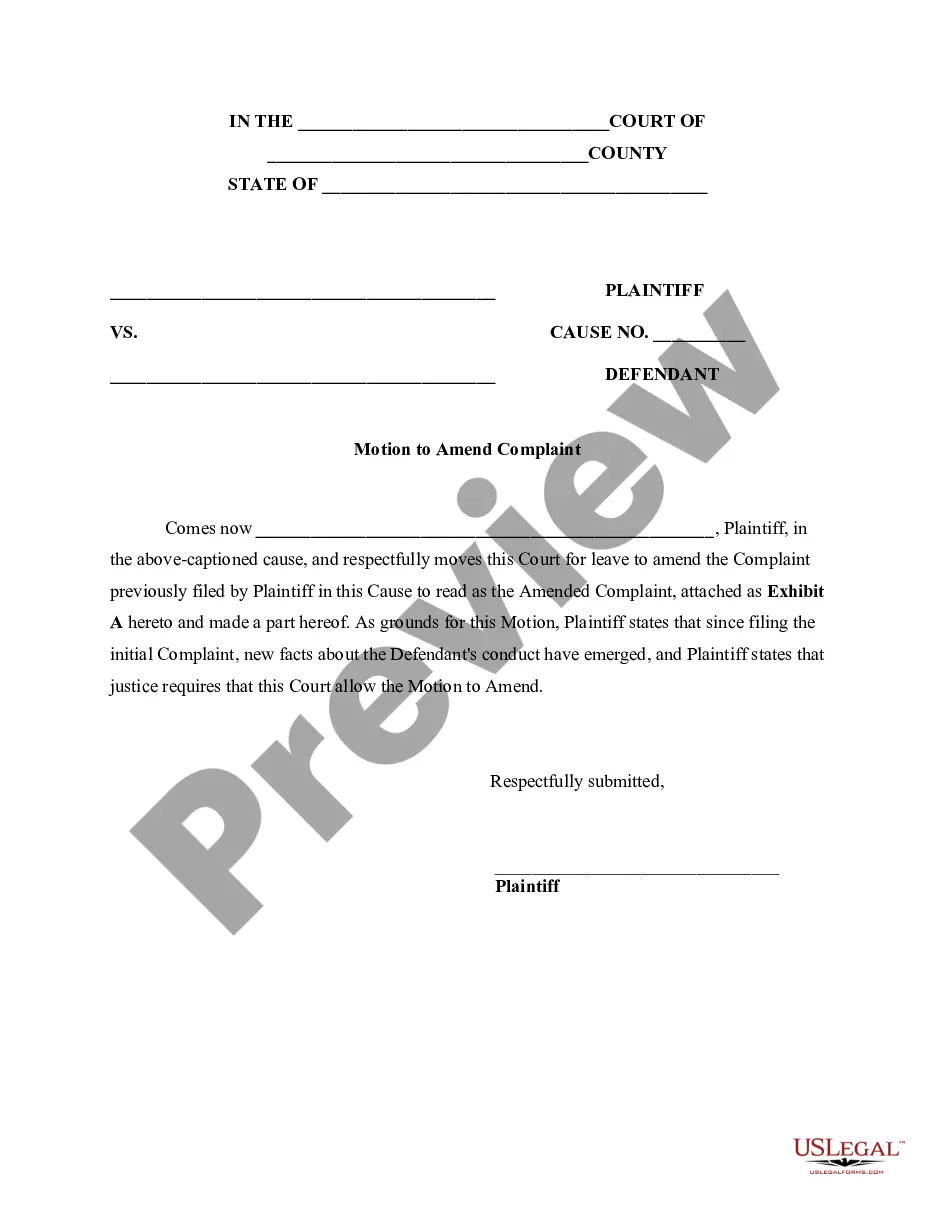
Motion To Consolidate Cases Form For California
Description

Get your form ready online
Our built-in tools help you complete, sign, share, and store your documents in one place.
Make edits, fill in missing information, and update formatting in US Legal Forms—just like you would in MS Word.
Download a copy, print it, send it by email, or mail it via USPS—whatever works best for your next step.
Sign and collect signatures with our SignNow integration. Send to multiple recipients, set reminders, and more. Go Premium to unlock E-Sign.
If this form requires notarization, complete it online through a secure video call—no need to meet a notary in person or wait for an appointment.
We protect your documents and personal data by following strict security and privacy standards.
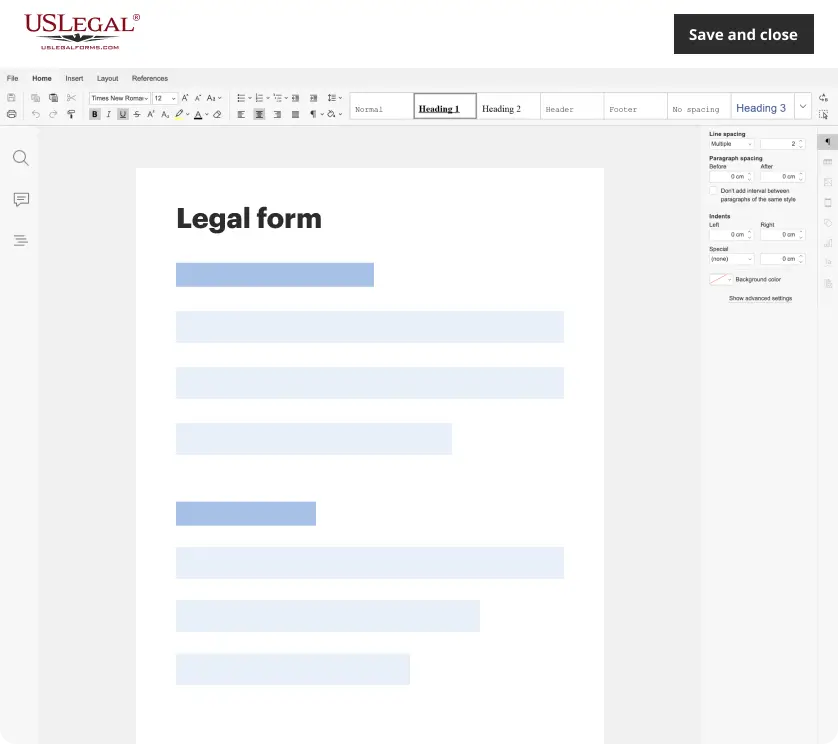
Make edits, fill in missing information, and update formatting in US Legal Forms—just like you would in MS Word.
Download a copy, print it, send it by email, or mail it via USPS—whatever works best for your next step.
Sign and collect signatures with our SignNow integration. Send to multiple recipients, set reminders, and more. Go Premium to unlock E-Sign.

If this form requires notarization, complete it online through a secure video call—no need to meet a notary in person or wait for an appointment.

We protect your documents and personal data by following strict security and privacy standards.
Looking for another form?
How to fill out Motion To Consolidate - Personal Injury?
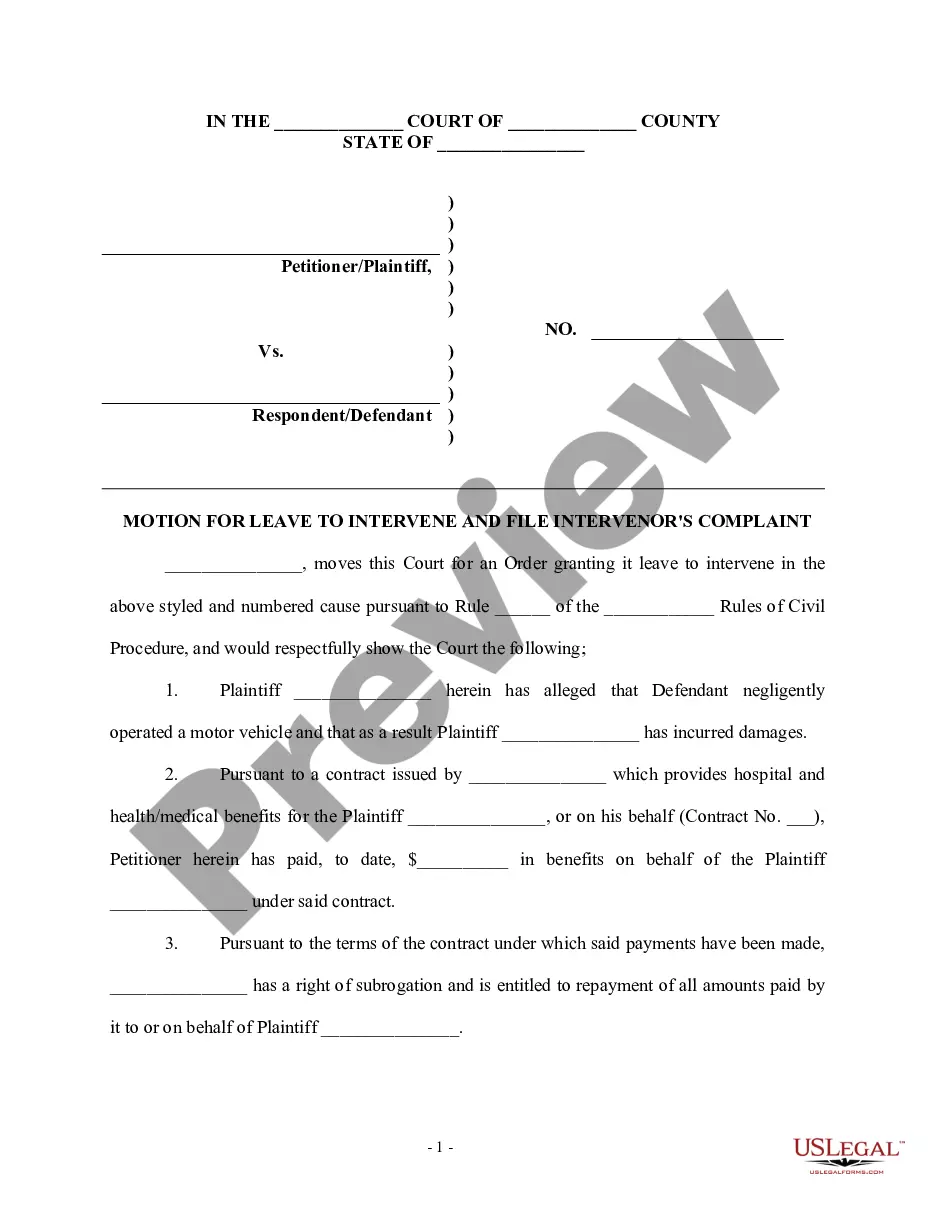
The Motion To Consolidate Cases Form for California displayed on this site is a versatile legal template prepared by expert attorneys in alignment with federal and state laws.
For over 25 years, US Legal Forms has supplied individuals, organizations, and legal practitioners with more than 85,000 validated, state-specific documents suitable for any business or personal scenario. It’s the swiftest, most uncomplicated, and most reliable method to acquire the documents you require, as the service guarantees optimal data security and protection against malware.
Sign up for US Legal Forms to access verified legal templates for all of life's situations at your fingertips.
- Search for the document you require and review it.
- Browse the sample you looked for and preview it or review the description to verify it meets your requirements. If it doesn’t, utilize the search bar to locate the appropriate one. Click Buy Now once you’ve found the template you need.
- Register and Log In.
- Choose the pricing plan that is ideal for you and create an account. Pay using PayPal or a credit card for a quick transaction. If you already possess an account, Log In and check your subscription to proceed.
- Retrieve the editable template.
- Select the format you desire for your Motion To Consolidate Cases Form for California (PDF, Word, RTF) and download the document to your device.
- Complete and sign the document.
- Print the template to fill it in manually. Alternatively, employ an online multi-functional PDF editor to swiftly and accurately complete and sign your form with a legally-binding electronic signature.
- Download your document again.
- Reuse the same document whenever necessary. Access the My documents tab in your profile to redownload any forms you have previously obtained.
Form popularity
FAQ
A Motion to Consolidate is a request to combine the assets and liabilities of two or more debtors, which is in contrast to a Motion for Joint Administration which merely seeks to procedurally administer two or more cases together.
Rule 4.03 (FRCP 42) Motions to Consolidate. A party desiring the consolidation of related cases shall file a motion in the case bearing the lowest cause number. The movant shall file in each related case a notice of the motion, to which a copy of the motion shall be attached.
Consolidation must be sought through the filing of a written motion that states the reasons for requesting consolidation. Such motion should include a cover page labeled ?MOTION FOR CONSOLIDATION? and comply with the deadlines and requirements for filing.
In a consolidation for trial, ?the pleadings, verdicts, findings and judgments are kept separate; the actions are simply tried together for the sake of convenience and judicial economy.? (See Sanchez v. Superior Court, (1988) 203 Cal.
The motion is used by a party who is requesting that a Court consolidate two or more cases on the grounds that consolidation of the cases is warranted in that all of the cases arise out of the same set of operative facts and contain common issues and further that consolidation of all of the cases will avoid unnecessary ...