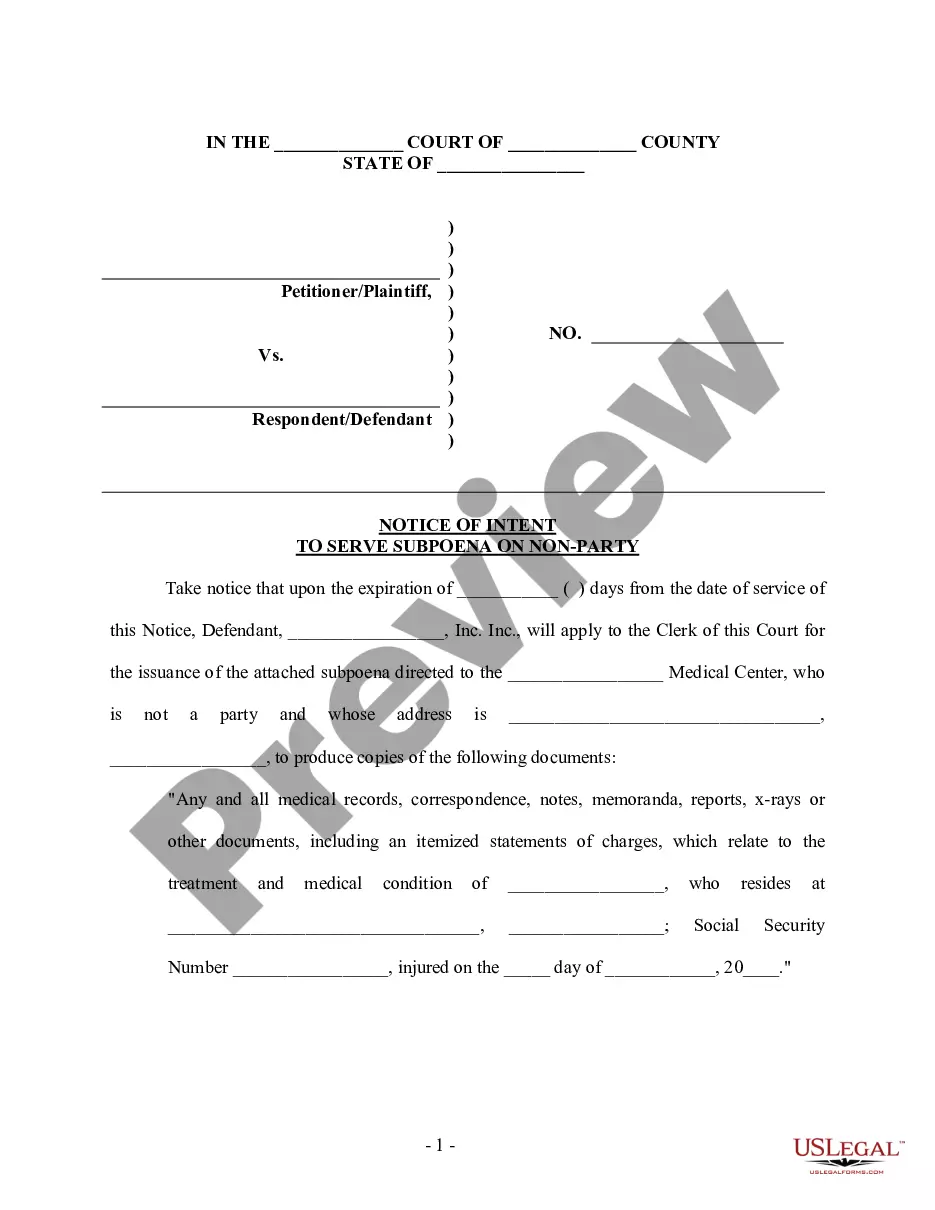
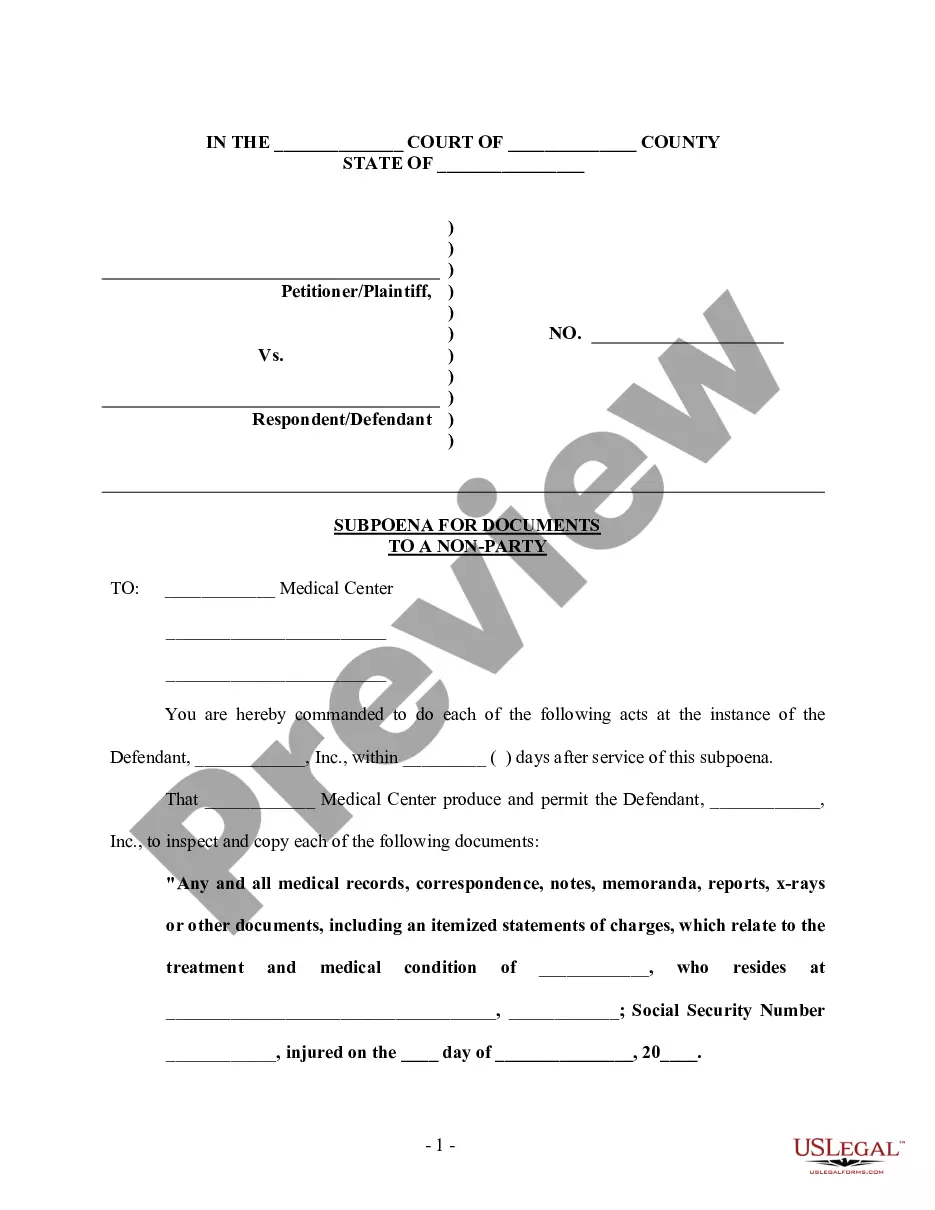
Cross Notice Deposition With Production Of Documents
Description
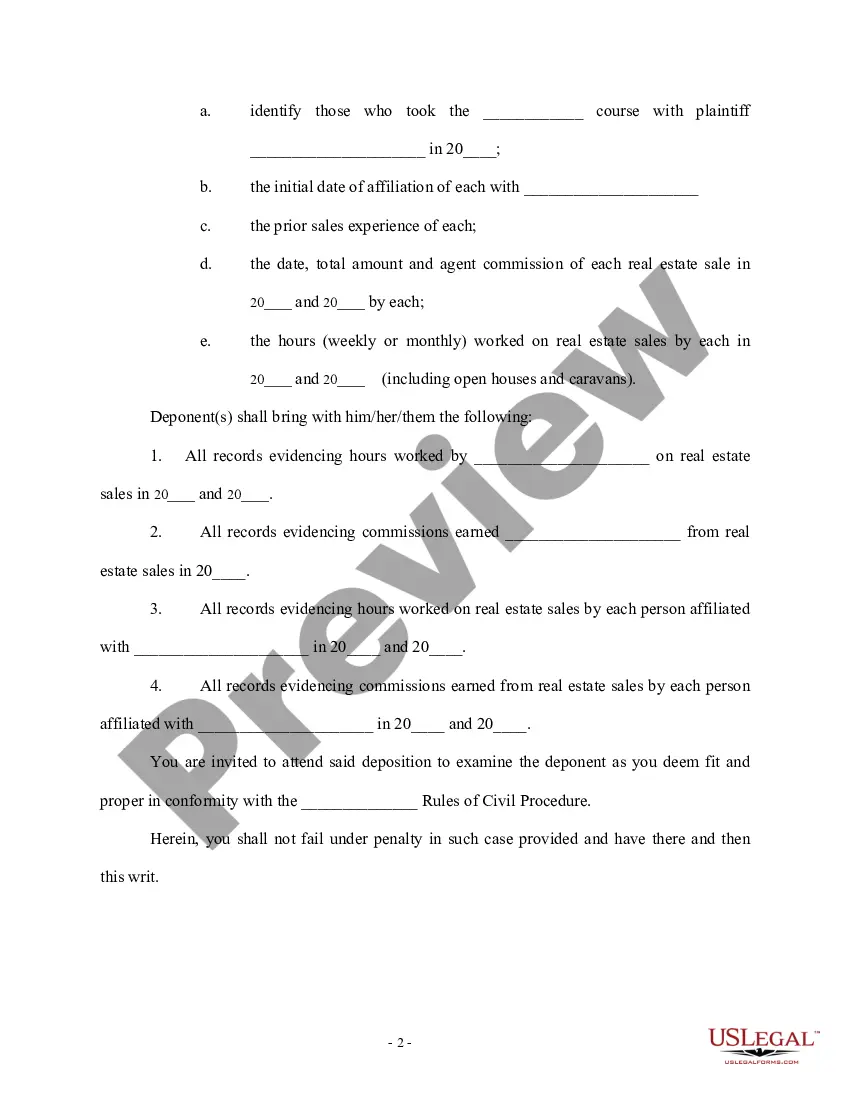
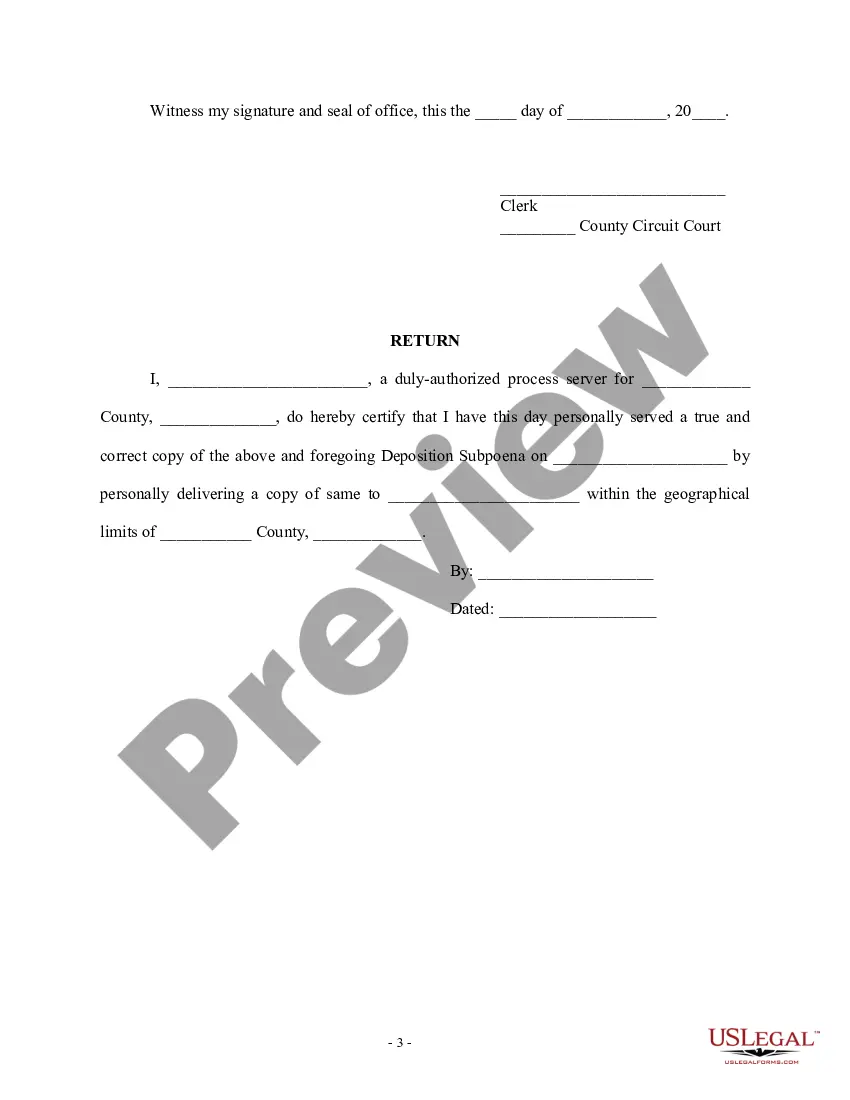
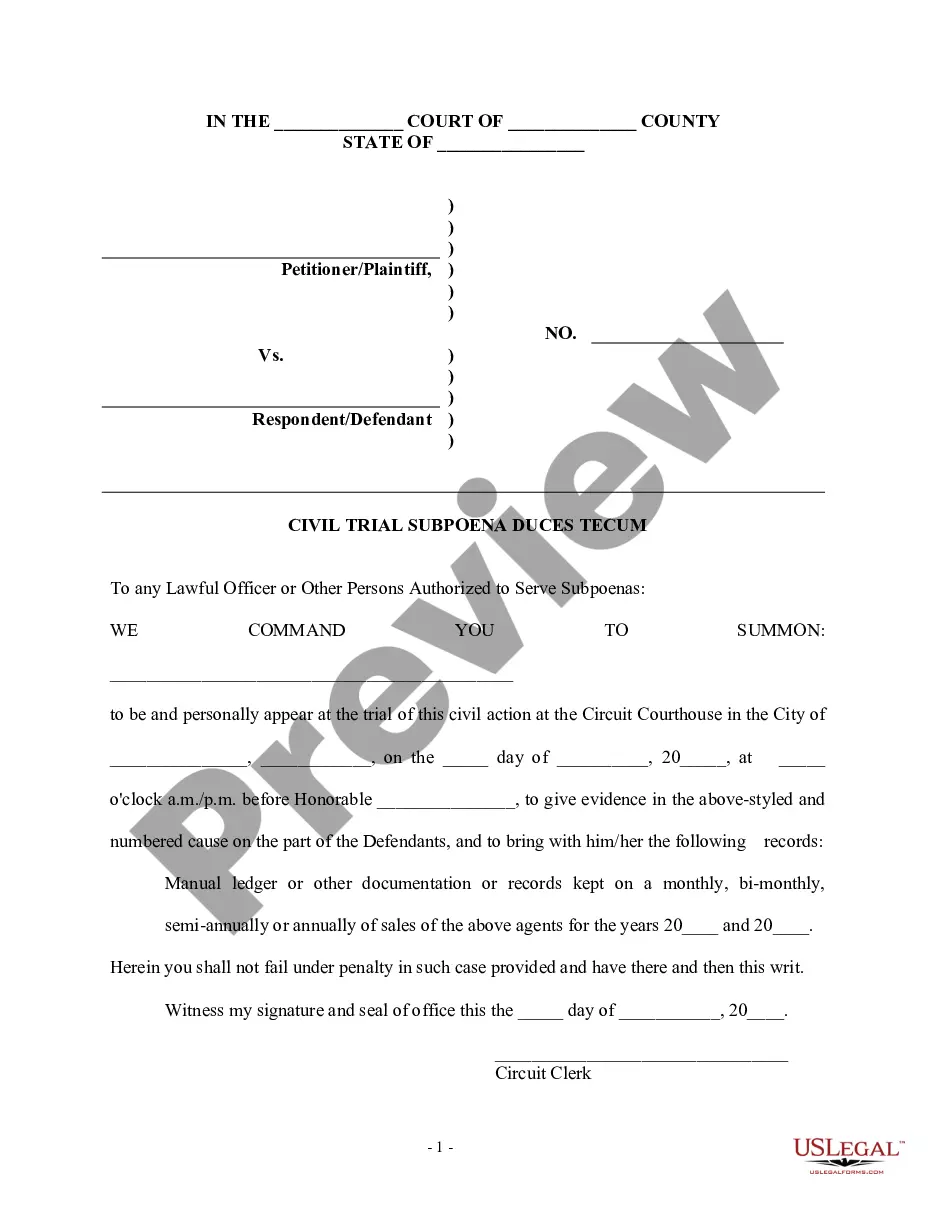
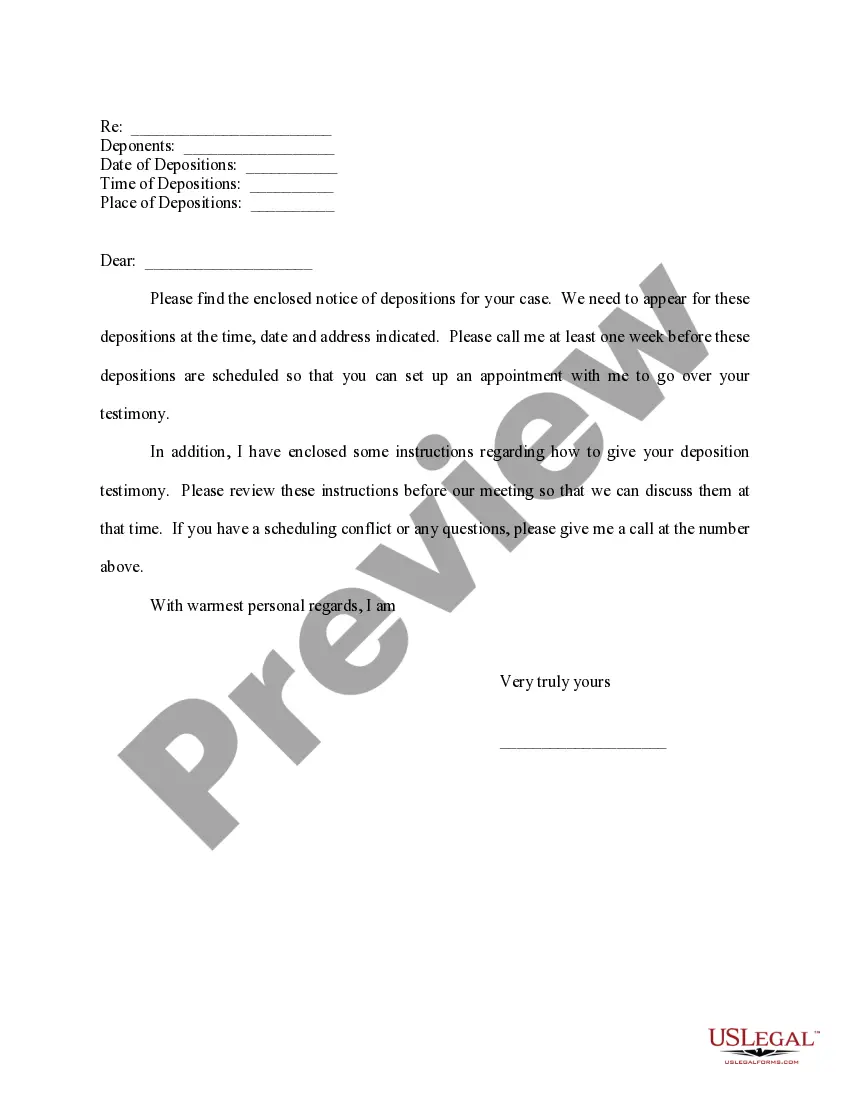
Get your form ready online
Our built-in tools help you complete, sign, share, and store your documents in one place.
Make edits, fill in missing information, and update formatting in US Legal Forms—just like you would in MS Word.
Download a copy, print it, send it by email, or mail it via USPS—whatever works best for your next step.
Sign and collect signatures with our SignNow integration. Send to multiple recipients, set reminders, and more. Go Premium to unlock E-Sign.
If this form requires notarization, complete it online through a secure video call—no need to meet a notary in person or wait for an appointment.
We protect your documents and personal data by following strict security and privacy standards.

Make edits, fill in missing information, and update formatting in US Legal Forms—just like you would in MS Word.

Download a copy, print it, send it by email, or mail it via USPS—whatever works best for your next step.

Sign and collect signatures with our SignNow integration. Send to multiple recipients, set reminders, and more. Go Premium to unlock E-Sign.

If this form requires notarization, complete it online through a secure video call—no need to meet a notary in person or wait for an appointment.

We protect your documents and personal data by following strict security and privacy standards.
Looking for another form?

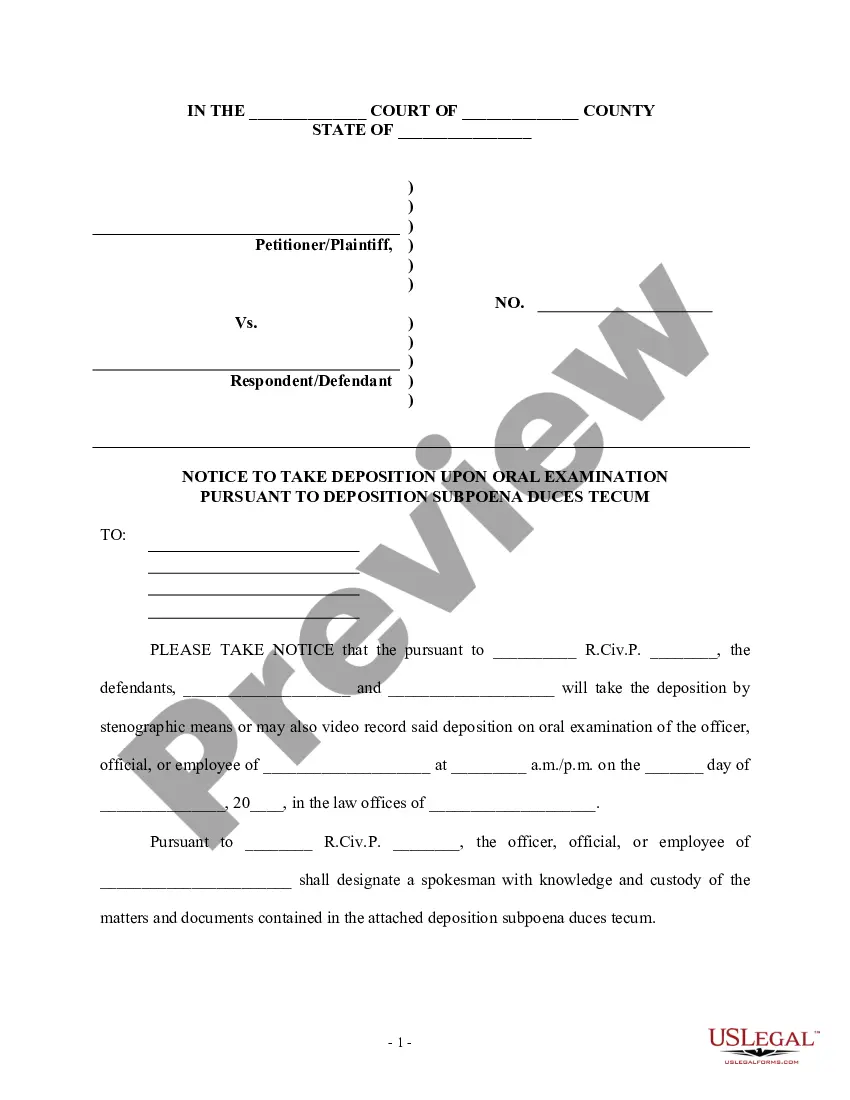
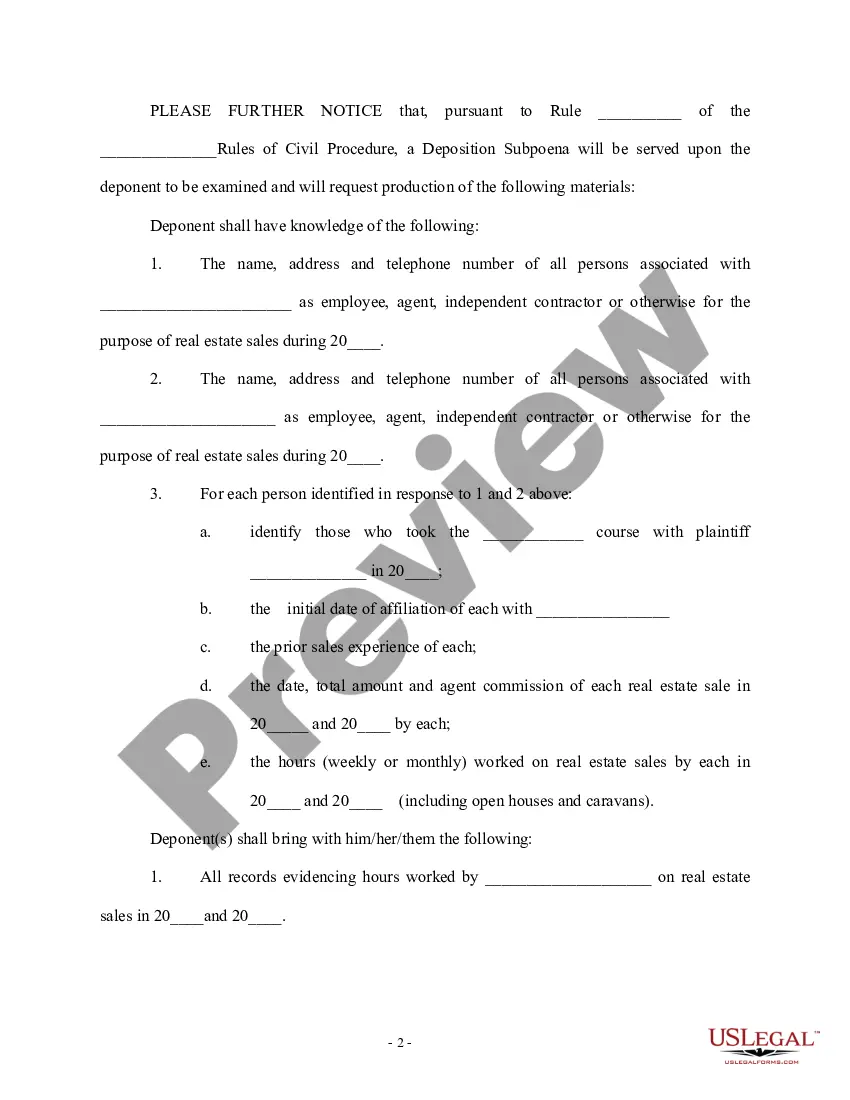
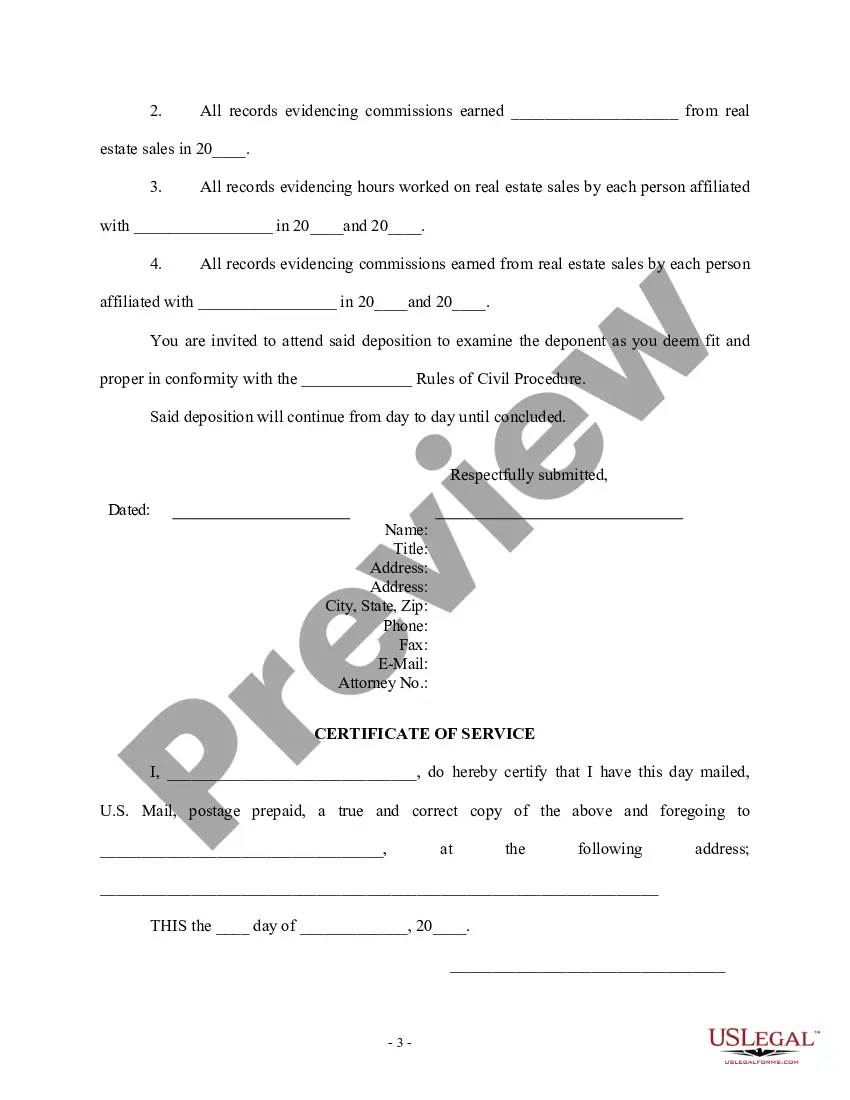
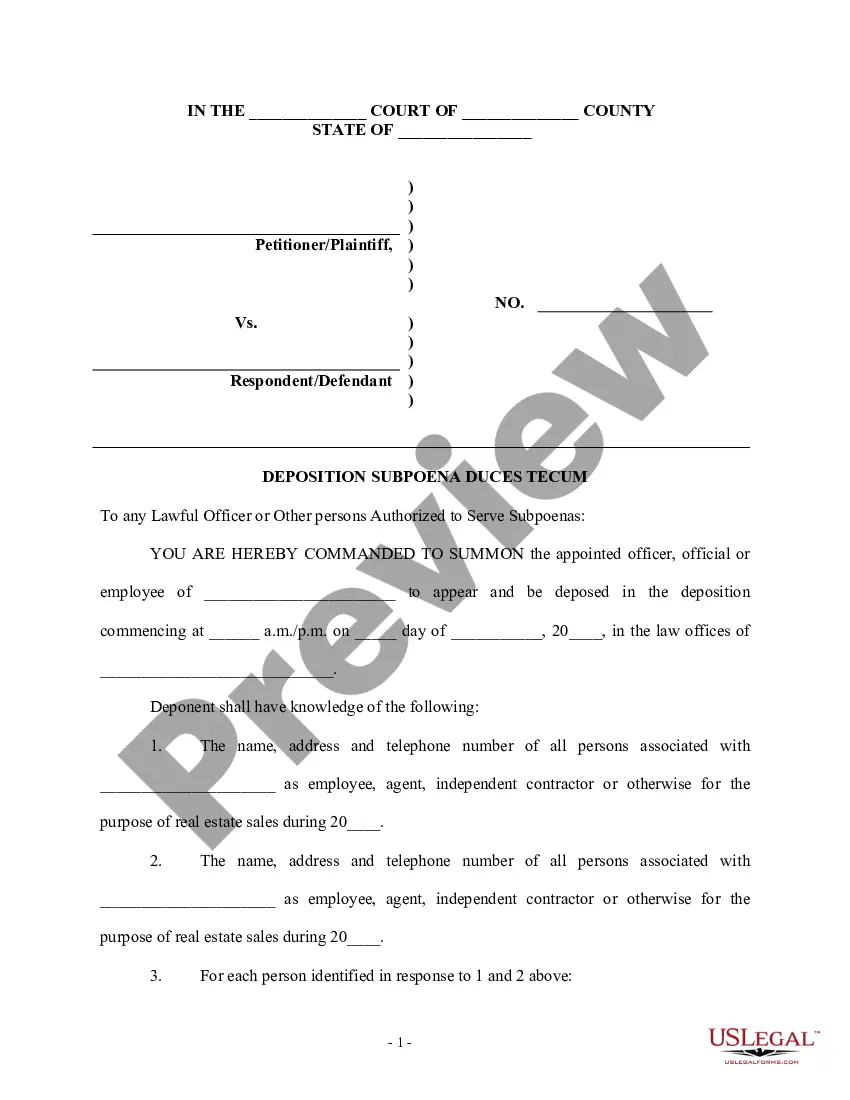
How to fill out Notice To Take Deposition Subpoena Duces Tecum?
Managing legal documents can be perplexing, even for experienced professionals.
When you are looking for a Cross Notice Deposition With Production Of Documents and lack the time to invest in finding the suitable and updated version, the process can be overwhelming.
With US Legal Forms, you can.
Retrieve state- or county-specific legal and business documents. US Legal Forms addresses all potential needs, ranging from personal to business papers, all consolidated in one place.
If this is your initial experience with US Legal Forms, create a free account and gain unlimited access to all the platform's benefits. Below are the steps to follow after downloading the desired form.
Ensure it is the correct form by previewing it and reviewing its details.
Confirm that the template is accepted in your state or county.
- Utilize cutting-edge tools to complete and manage your Cross Notice Deposition With Production Of Documents.
- Access a library of articles, guides, and resources pertinent to your situation and needs.
- Save time and energy searching for the documents you require, and leverage US Legal Forms’ sophisticated search and Review function to find and download Cross Notice Deposition With Production Of Documents.
- If you possess a membership, sign in to your US Legal Forms account, search for the form, and download it.
- Visit the My documents section to view the documents you have previously downloaded and to organize your folders as needed.
Select Buy Now when you are prepared.
Choose a subscription option.
Select the file format you prefer, and Download, fill out, sign, print, and send your documents.
Take advantage of the US Legal Forms online library, supported by 25 years of experience and reliability. Streamline your daily document management into a straightforward and user-friendly process today.
- A comprehensive online form repository could be transformative for anyone aiming to handle these situations effectively.
- US Legal Forms is a frontrunner in digital legal documents, boasting more than 85,000 state-specific legal forms accessible at any time.
Form popularity
FAQ
In Arkansas, you have three years from the date of the accident to file a claim. An exception to that is if you are a minor.
All wrongful death lawsuits must be filed within a certain period of time, set by a law called a statute of limitations. The statute of limitations for most wrongful death claims in Arkansas is three years from the date of the person's death.
What is the personal injury statute of limitations in Arkansas? ing to Arkansas Code § 16-56-105, the statute of limitations for personal injury lawsuits is three years from the date of the injury. That is, the clock starts running from the day you were injured.
Each district court in Arkansas has a division known as Small Claims Court. These courts are designed to allow individuals to settle certain disputes that are less than $5,000, while under relaxed rules of procedure and without attorneys.
Most claims must be filed within three years in Arkansas, including personal injury, injury to property, and libel. However, slander carries a one-year statute of limitations, written contracts have a five-year limit, and there is a ten-year statute of limitations for judgments.
Multiplier Method This approach uses a whole number, typically between 1 and 5, to multiply the total economic damages. For example, if you have $100,000 in economic damages and your attorney assigns a multiplier of three, your pain and suffering damages would be $300,000.
In Arkansas, misdemeanors generally carry a 1-year statute of limitations. Felonies are more varied, with no time limit for many felonies. There is a 6-year limit for Class Y and A felonies, and a 3-year limit for Class B, C, D, and unclassified felonies.
Purpose. The DCO-702 is used by facilities to report to the DHS county office all Medicaid-related admissions, discharges, and transfers.