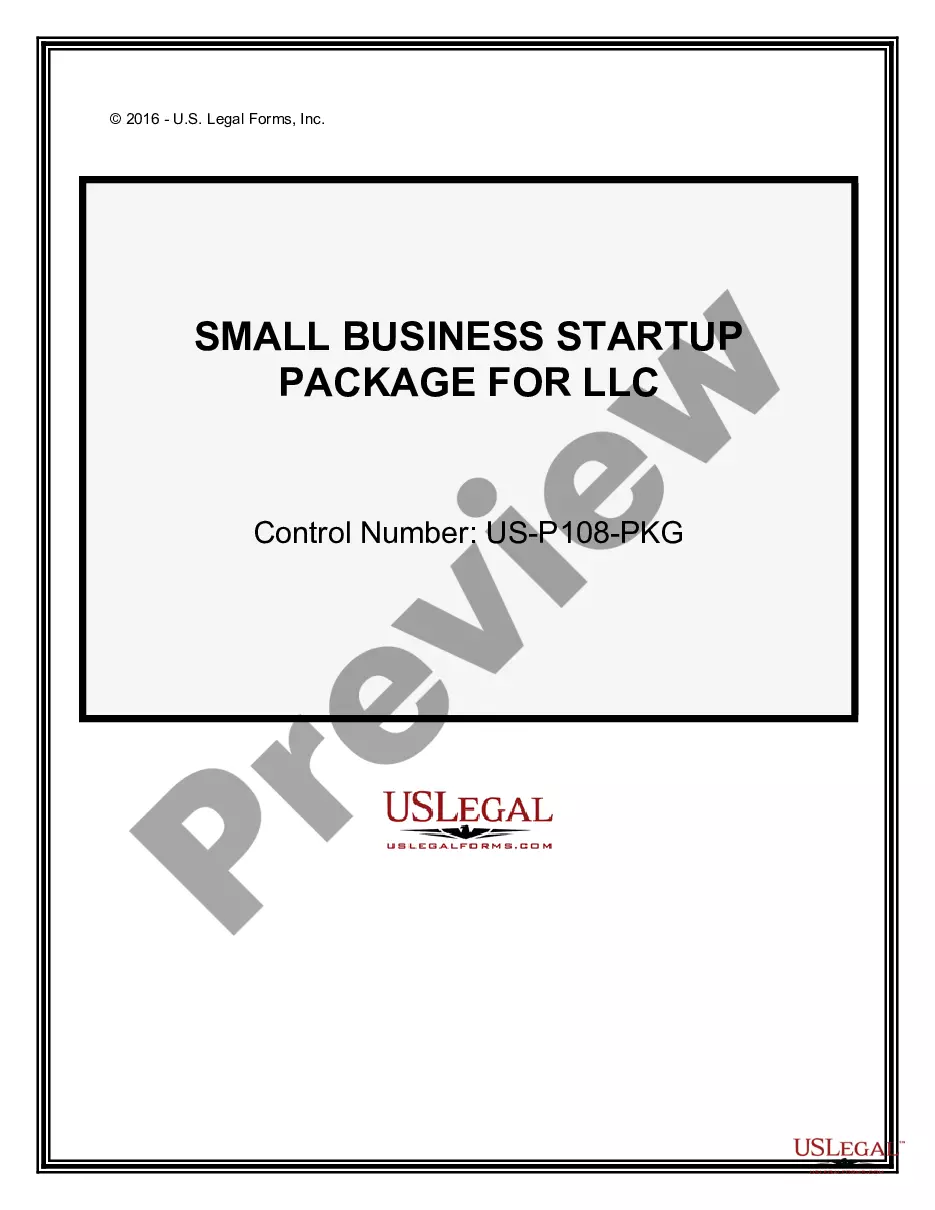
Purpose Of S Corp
Description

Get your form ready online
Our built-in tools help you complete, sign, share, and store your documents in one place.
Make edits, fill in missing information, and update formatting in US Legal Forms—just like you would in MS Word.
Download a copy, print it, send it by email, or mail it via USPS—whatever works best for your next step.
Sign and collect signatures with our SignNow integration. Send to multiple recipients, set reminders, and more. Go Premium to unlock E-Sign.
If this form requires notarization, complete it online through a secure video call—no need to meet a notary in person or wait for an appointment.
We protect your documents and personal data by following strict security and privacy standards.

Make edits, fill in missing information, and update formatting in US Legal Forms—just like you would in MS Word.

Download a copy, print it, send it by email, or mail it via USPS—whatever works best for your next step.

Sign and collect signatures with our SignNow integration. Send to multiple recipients, set reminders, and more. Go Premium to unlock E-Sign.

If this form requires notarization, complete it online through a secure video call—no need to meet a notary in person or wait for an appointment.

We protect your documents and personal data by following strict security and privacy standards.
Looking for another form?


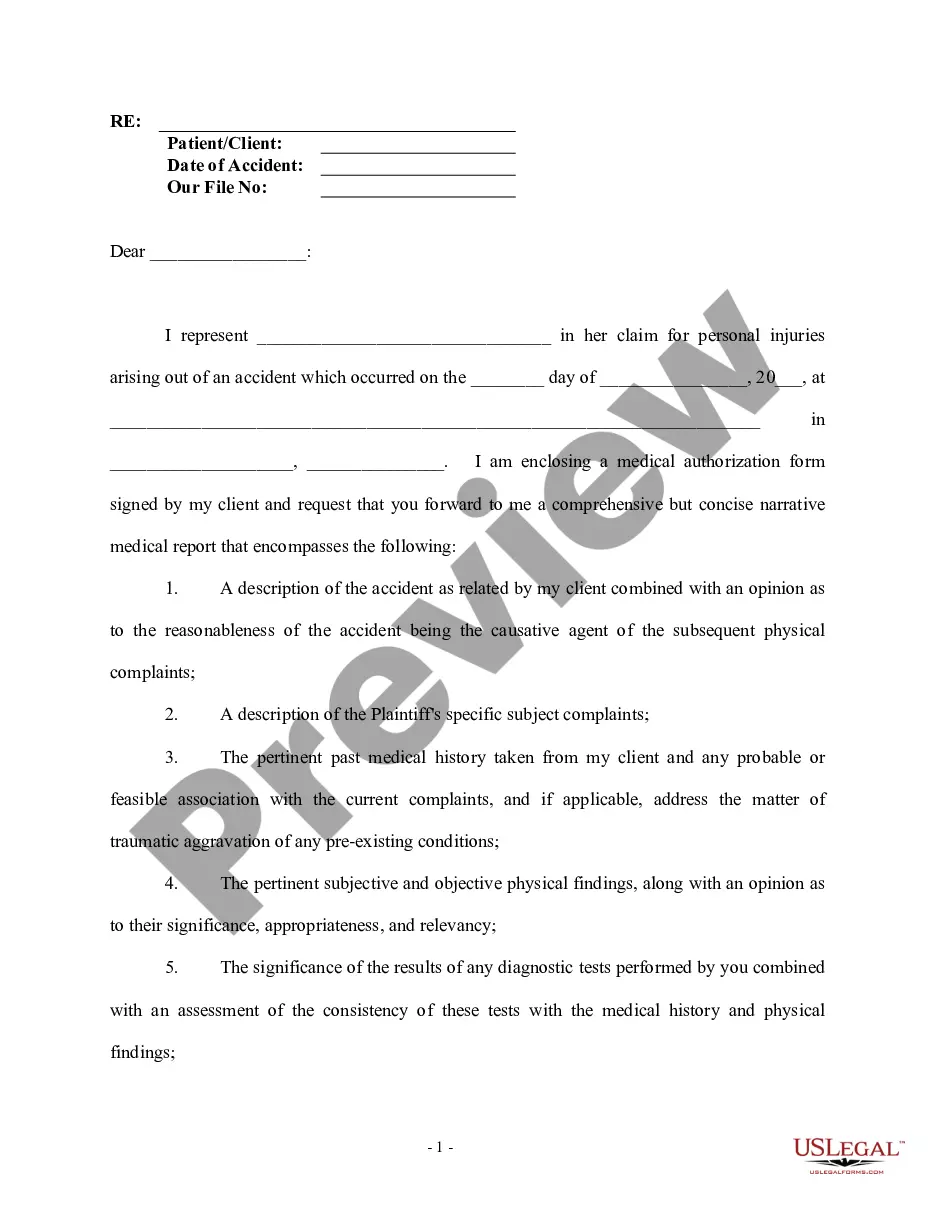






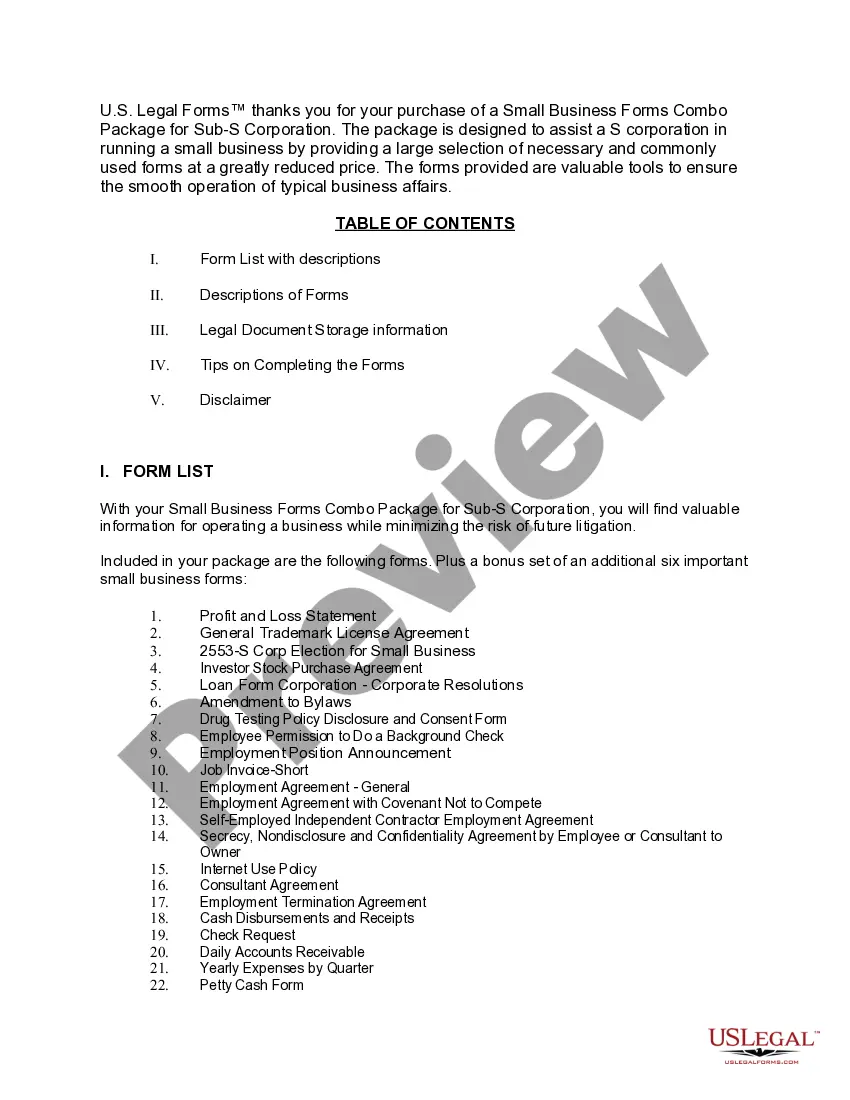
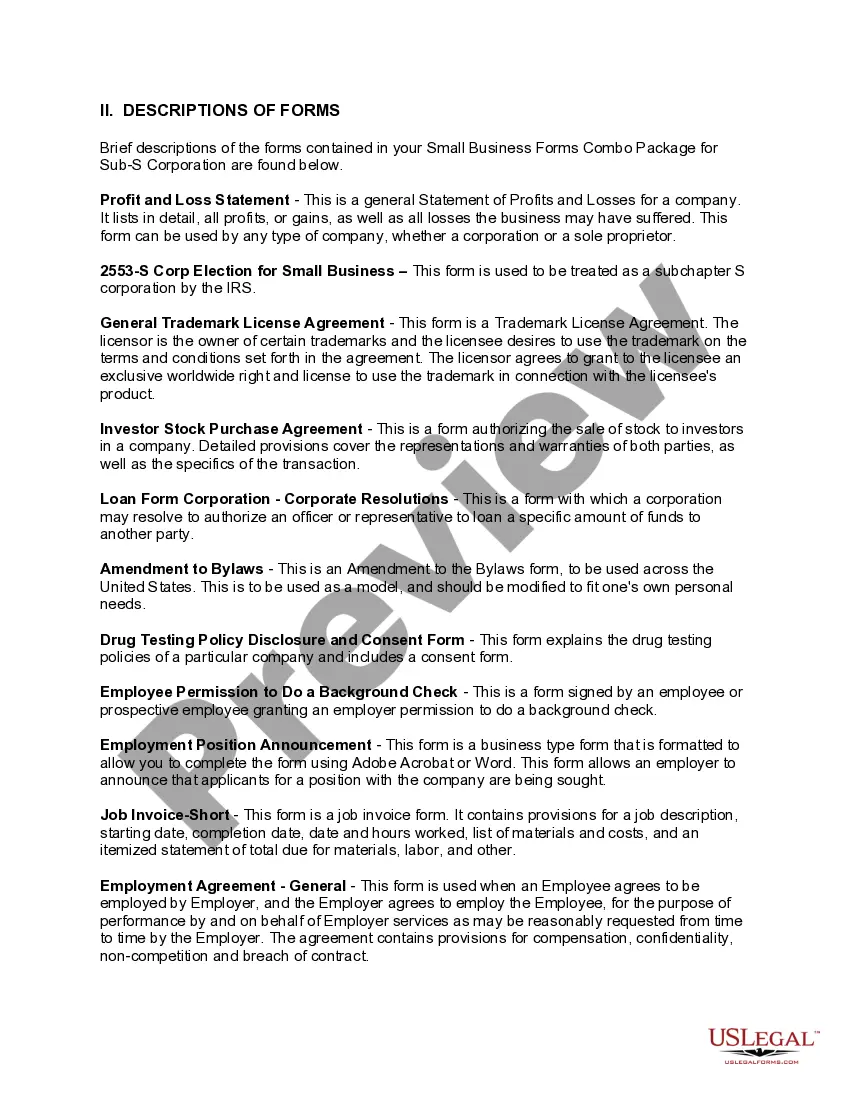
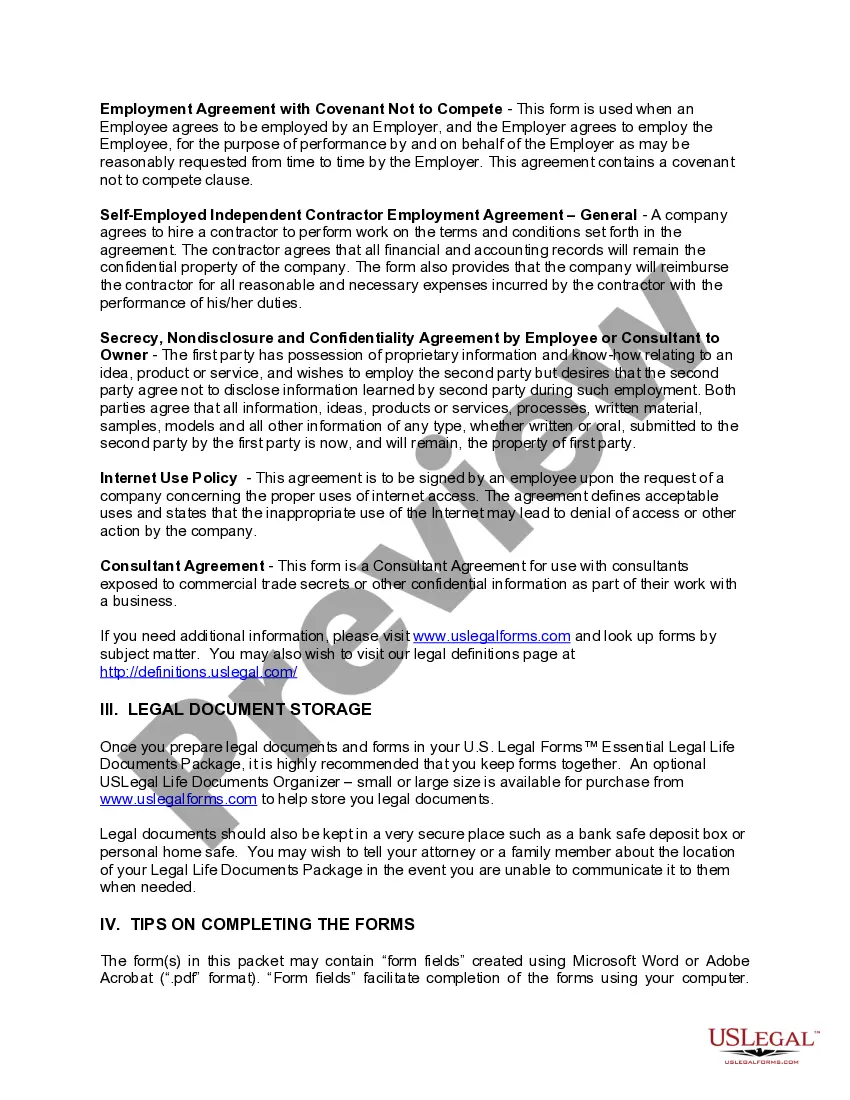
How to fill out Small Business Startup Package For S-Corporation?
Managing legal paperwork and processes can be a lengthy addition to your entire day.
Purpose Of S Corp and similar forms often necessitate that you search for them and comprehend how to fill them out accurately.
Thus, whether you are addressing financial, legal, or personal issues, utilizing a comprehensive and user-friendly online directory of forms readily available will be very beneficial.
US Legal Forms stands as the premier online resource for legal templates, offering over 85,000 state-specific forms and a variety of tools to help you complete your documents effortlessly.
Is this your first time using US Legal Forms? Sign up and create a free account in a matter of minutes, granting you access to the form catalog and Purpose Of S Corp. Then, follow the outlined steps to complete your form: Ensure you have the correct form by utilizing the Review feature and examining the form description. Choose Buy Now when prepared, and pick the subscription plan that fits your needs. Click Download then fill out, sign, and print the form. US Legal Forms has twenty-five years of experience assisting consumers in managing their legal documents. Locate the form you need today and simplify any process effortlessly.
- Uncover the collection of relevant documents available to you with just one click.
- US Legal Forms provides state- and county-specific forms accessible at any time for download.
- Protect your document management processes by using top-tier services that enable you to create any form in minutes without extra or hidden costs.
- Simply Log In to your account, locate Purpose Of S Corp and download it instantly within the My documents section.
- You can also retrieve previously downloaded forms.
Form popularity
FAQ
Mortgages are assigned using a document called an assignment of mortgage. This legally transfers the original lender's interest in the loan to the new company. After doing this, the original lender will no longer receive the payments of principal and interest.
Assignment fees are calculated by taking the difference between what the seller was promised and what the buyer is paying. For example, if a wholesaler has a contract to purchase a property for $100,000 and they assign that contract to a cash buyer for $120,000, then their assignment fee would be $20,000.
In real estate wholesaling, an assignment fee is a financial obligation from one party (the ?assignor?) who agrees to transfer their contractual obligations to another party (the ?assignee.?) In layman's terms, the assignment fee is the fee paid by the end buyer to the real estate wholesaler.
The most common example of an Assignment of Mortgage is when a mortgage lender transfers/sells the mortgage to another lender. This can be done more than once until the balance is paid. The lender does not have to inform the borrower that the mortgage is being assigned to another party.
The difference between assignment and transfer is that assign means it's legal to transfer property or a legal right from one person to another, while transfer means it's legal to arrange for something to be controlled by or officially belong to another person.
In a mortgage assignment, your original lender or servicer transfers your mortgage account to another loan servicer. When this occurs, the original mortgagee or lender's interests go to the next lender. Even if your mortgage gets transferred or assigned, your mortgage's terms should remain the same.
An assignment transfers all the original mortgagee's interest under the mortgage or deed of trust to the new bank. Generally, the mortgage or deed of trust is recorded shortly after the mortgagors sign it, and, if the mortgage is subsequently transferred, each assignment is recorded in the county land records.
The most common example of an Assignment of Mortgage is when a mortgage lender transfers/sells the mortgage to another lender. This can be done more than once until the balance is paid. The lender does not have to inform the borrower that the mortgage is being assigned to another party.