Trade Secret Sample For Drugs
Description
Get your form ready online
Our built-in tools help you complete, sign, share, and store your documents in one place.
Make edits, fill in missing information, and update formatting in US Legal Forms—just like you would in MS Word.
Download a copy, print it, send it by email, or mail it via USPS—whatever works best for your next step.
Sign and collect signatures with our SignNow integration. Send to multiple recipients, set reminders, and more. Go Premium to unlock E-Sign.
If this form requires notarization, complete it online through a secure video call—no need to meet a notary in person or wait for an appointment.
We protect your documents and personal data by following strict security and privacy standards.

Make edits, fill in missing information, and update formatting in US Legal Forms—just like you would in MS Word.

Download a copy, print it, send it by email, or mail it via USPS—whatever works best for your next step.

Sign and collect signatures with our SignNow integration. Send to multiple recipients, set reminders, and more. Go Premium to unlock E-Sign.

If this form requires notarization, complete it online through a secure video call—no need to meet a notary in person or wait for an appointment.

We protect your documents and personal data by following strict security and privacy standards.
Looking for another form?
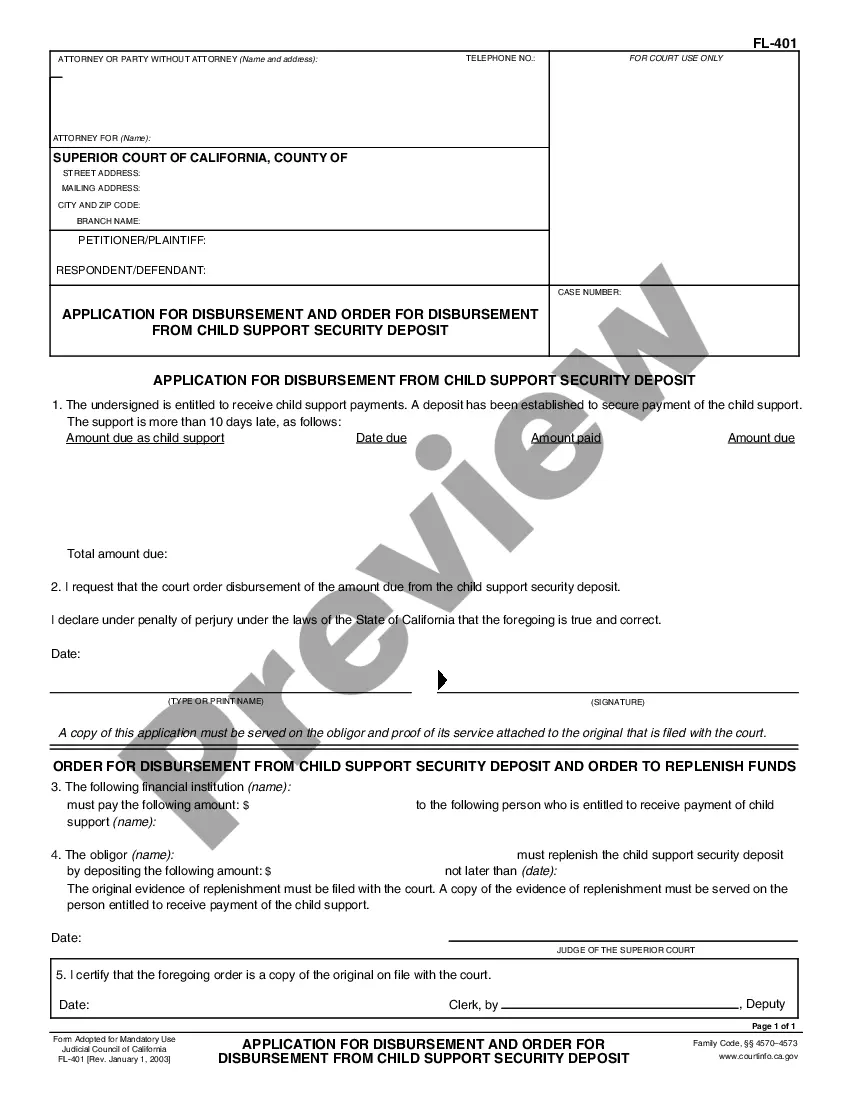
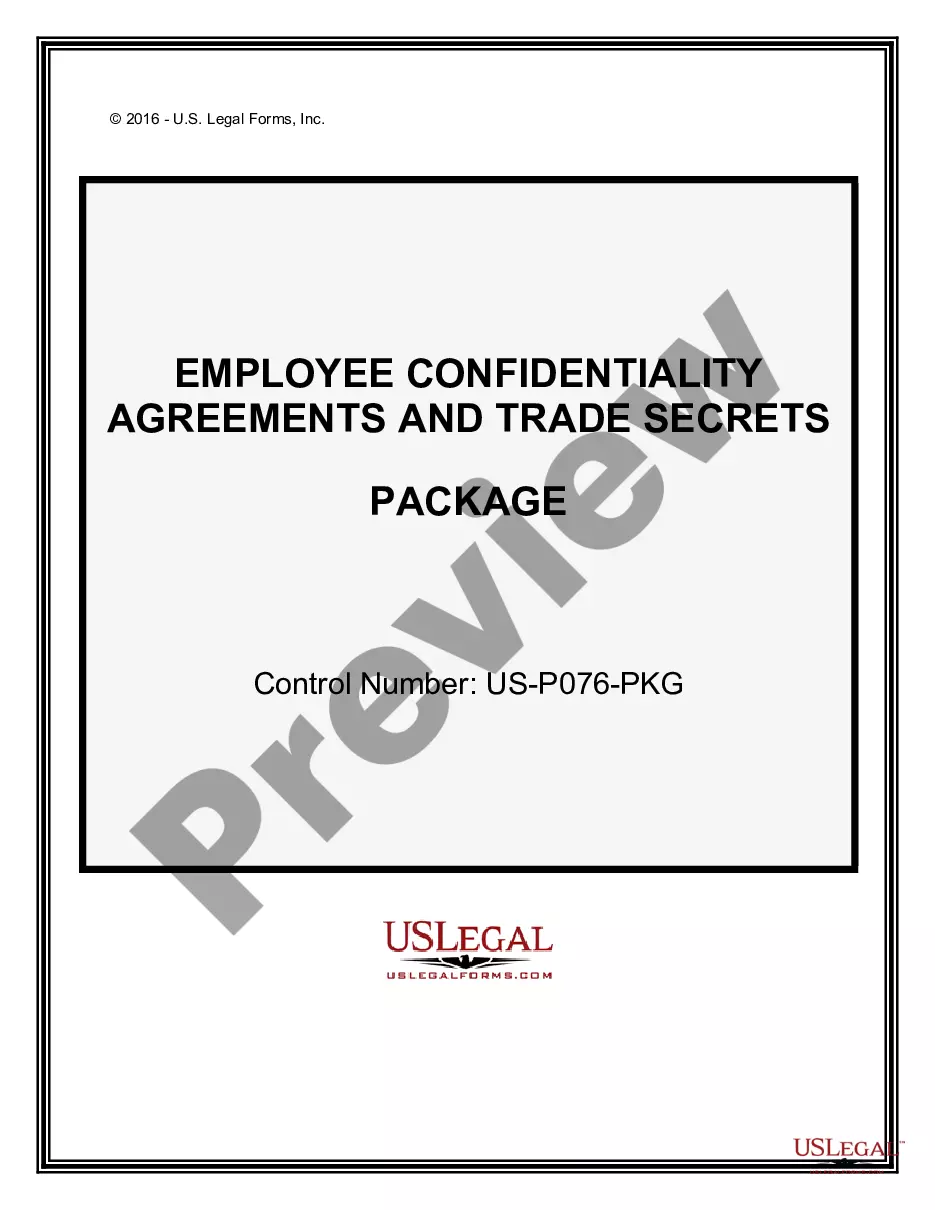
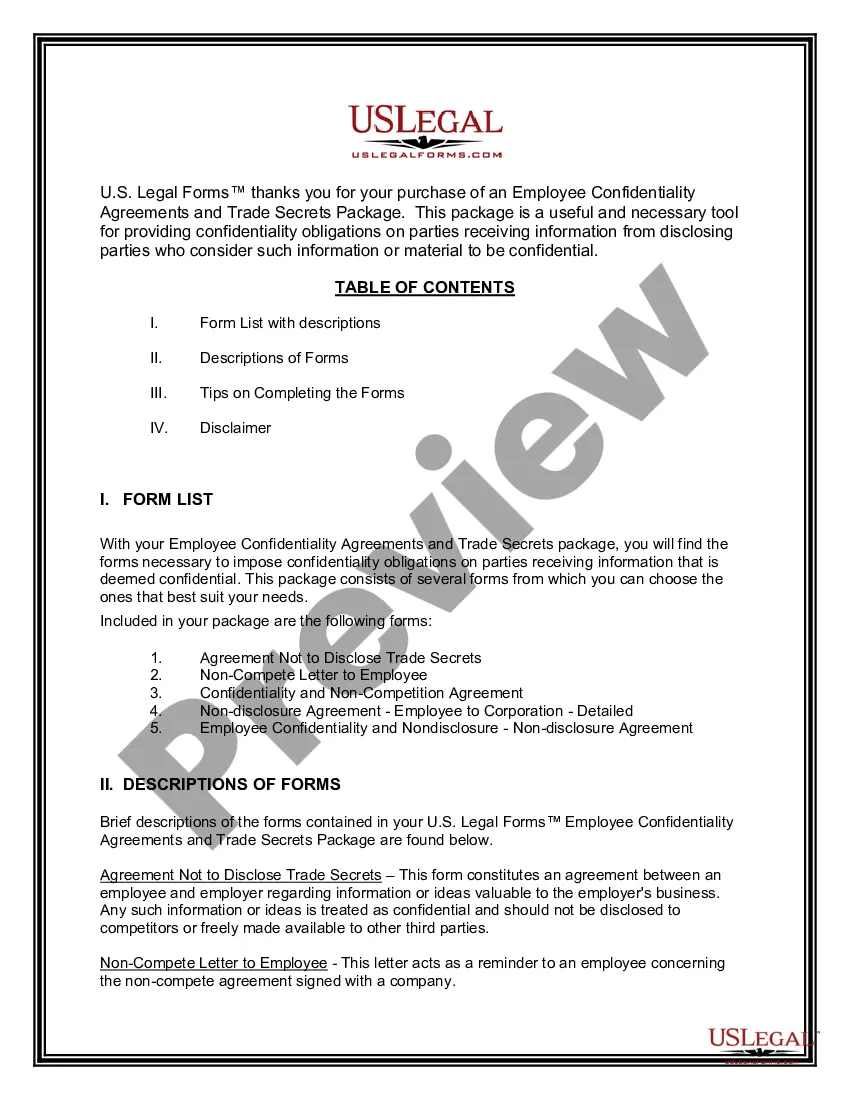
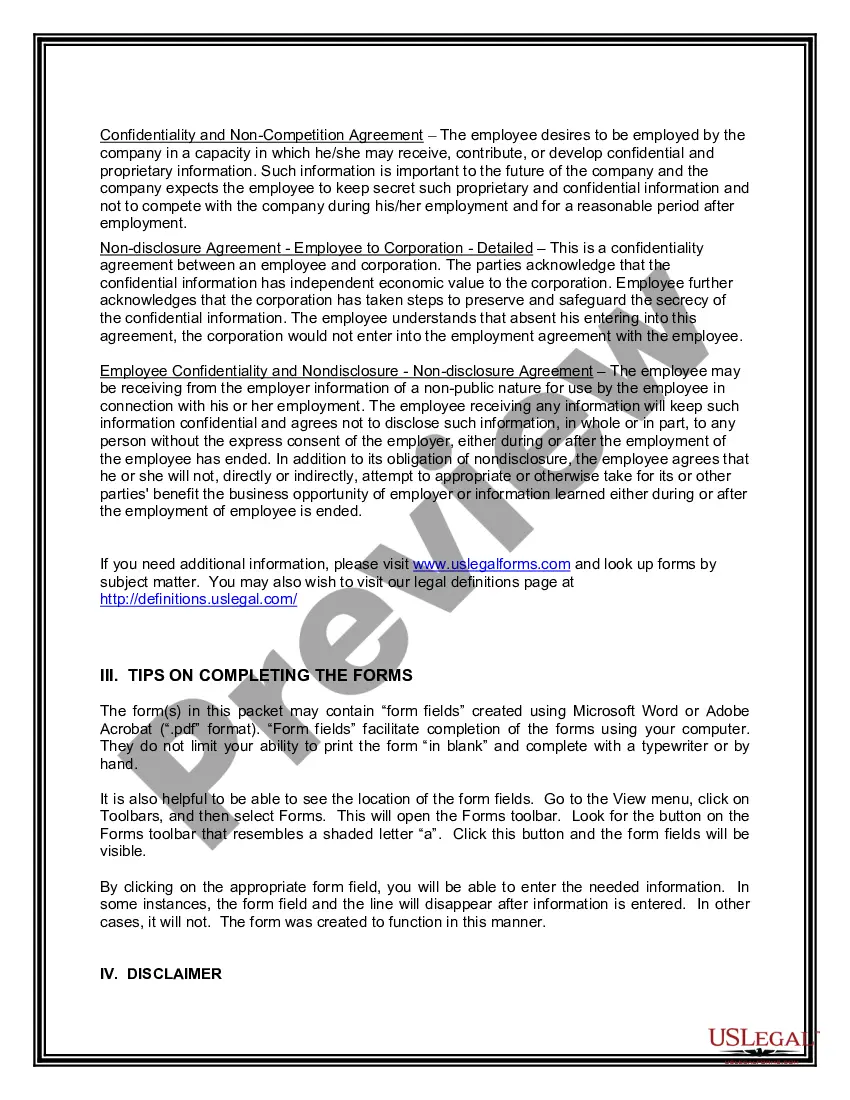
How to fill out Employee Confidentiality Agreements And Trade Secrets Package?
The Trade Secret Sample For Drugs displayed here is a reusable formal outline created by expert attorneys in accordance with federal and state laws.
For over 25 years, US Legal Forms has supplied individuals, businesses, and lawyers with more than 85,000 confirmed, state-specific documents for any professional and personal situation. It’s the quickest, easiest, and most dependable method to obtain the files you require, as the service ensures the utmost level of data security and anti-virus protection.
Opt for the format you want for your Trade Secret Sample For Drugs (PDF, DOCX, RTF) and store the template on your device.
- Search for the document you require and examine it.
- Browse through the file you've searched and see a preview or read the form description to verify it meets your needs. If it does not, use the search function to find the correct one. Click Buy Now once you locate the template you need.
- Choose a subscription and Log Into your account.
- Select the pricing option that suits you and create an account. Use PayPal or a credit card for a swift transaction. If you are already registered, Log In and review your subscription to continue.
- Obtain the editable template.
Form popularity
FAQ
In order for information to be protected as trade secret, it shall meet the following criteria. The information must be secret (i.e., it is not generally known among, or readily accessible, to circles that normally deal with the kind of information in question). Absolute secrecy is not required.
Examples of trade secrets can include engineering information; methods, processes, and know-how; tolerances and formulas; business and financial information; computer programs (particularly source code) and related information; pending, unpublished patent applications; business plans; budgets; methods of calculating ...
Trade secrets encompass both technical information, such as information concerning manufacturing processes, pharmaceutical test data, designs and drawings of computer programs, and commercial information, such as distribution methods, list of suppliers and clients, and advertising strategies.
Information generally known to one's competitors is not a trade secret. Trade secret protection can be lost through publishing the secrets. Be careful in disclosing information if secrecy of the information is important. Trade secrets are often lost through disclosures in the absence of a confidentiality agreement.
Engineering and manufacturing data Even after patent and data exclusivity periods for drugs expire, trade secret protections permit pharmaceutical companies to keep the precise composition or manufacturing process for medications confidential.