Agreement Former Employee Withholding Passwords
Description
Get your form ready online
Our built-in tools help you complete, sign, share, and store your documents in one place.
Make edits, fill in missing information, and update formatting in US Legal Forms—just like you would in MS Word.
Download a copy, print it, send it by email, or mail it via USPS—whatever works best for your next step.
Sign and collect signatures with our SignNow integration. Send to multiple recipients, set reminders, and more. Go Premium to unlock E-Sign.
If this form requires notarization, complete it online through a secure video call—no need to meet a notary in person or wait for an appointment.
We protect your documents and personal data by following strict security and privacy standards.

Make edits, fill in missing information, and update formatting in US Legal Forms—just like you would in MS Word.

Download a copy, print it, send it by email, or mail it via USPS—whatever works best for your next step.

Sign and collect signatures with our SignNow integration. Send to multiple recipients, set reminders, and more. Go Premium to unlock E-Sign.

If this form requires notarization, complete it online through a secure video call—no need to meet a notary in person or wait for an appointment.

We protect your documents and personal data by following strict security and privacy standards.
Looking for another form?








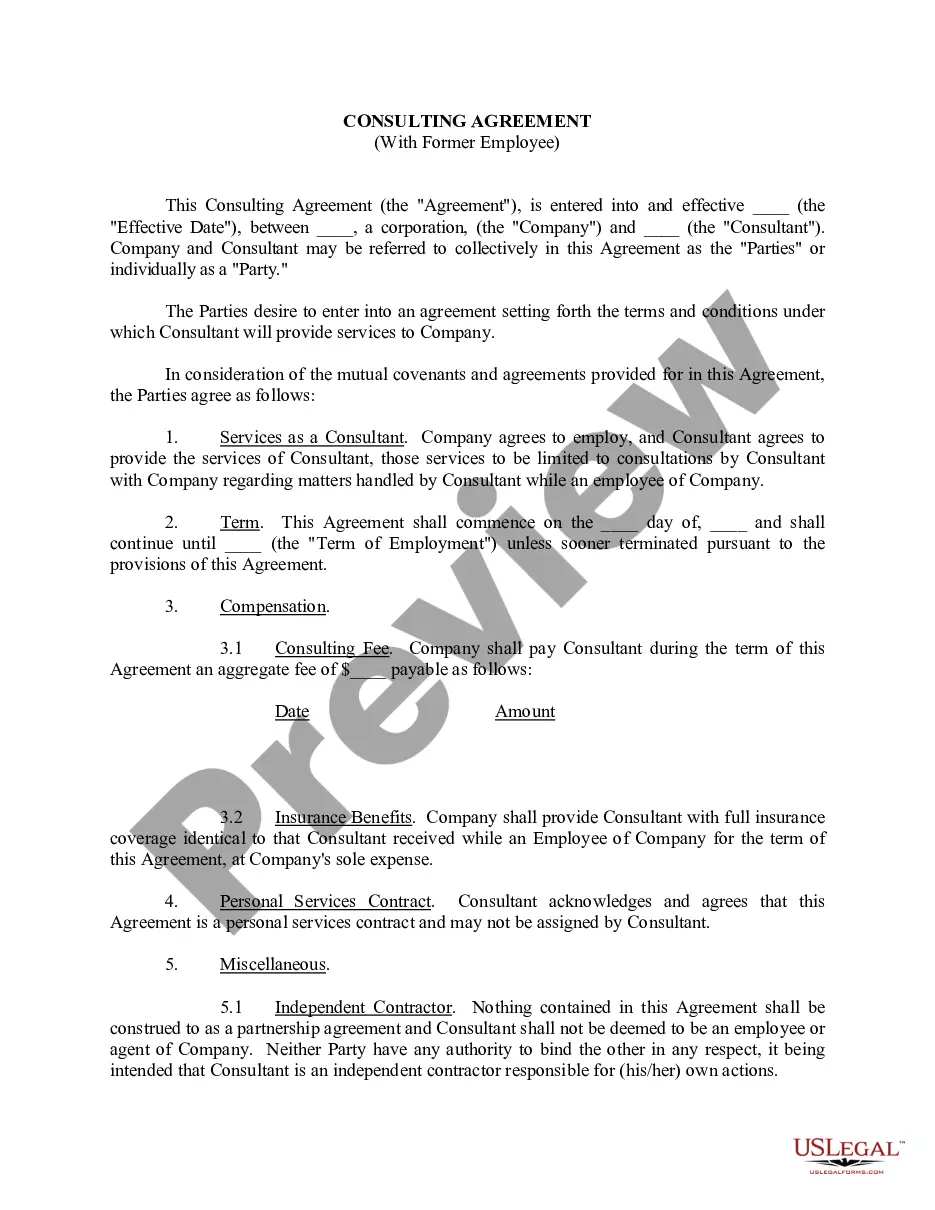
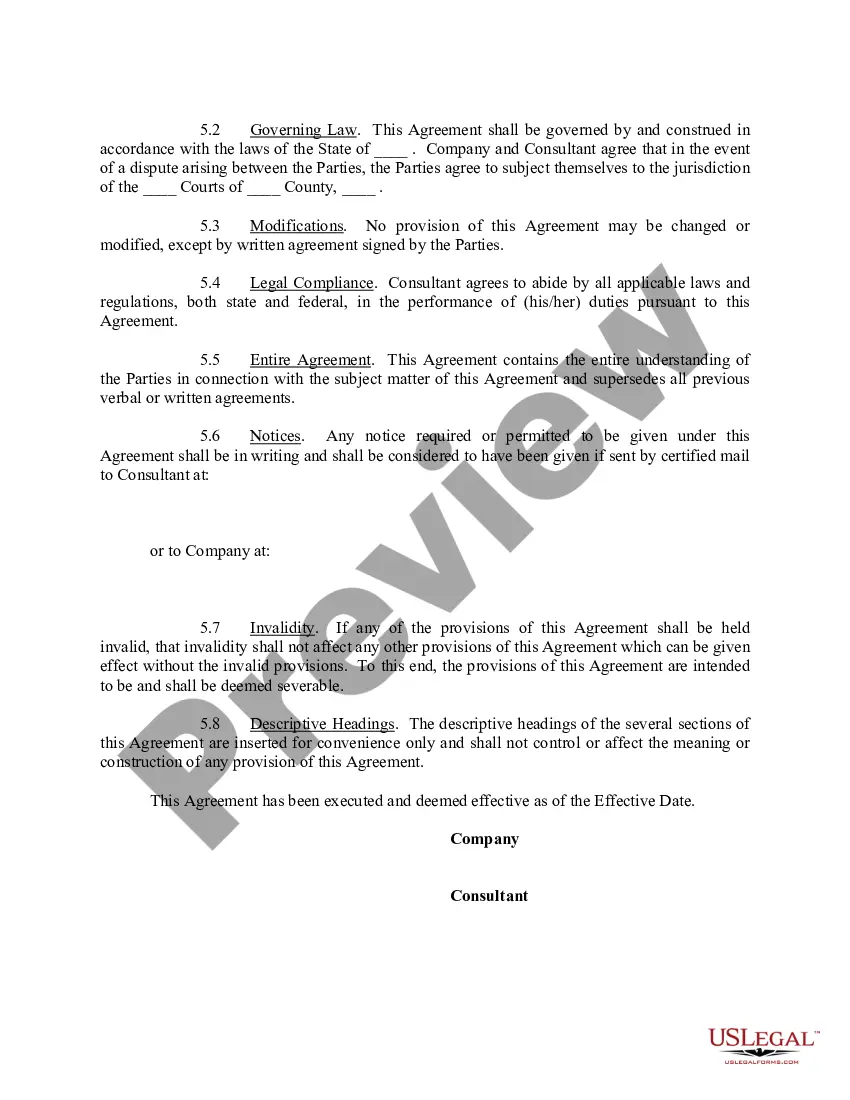
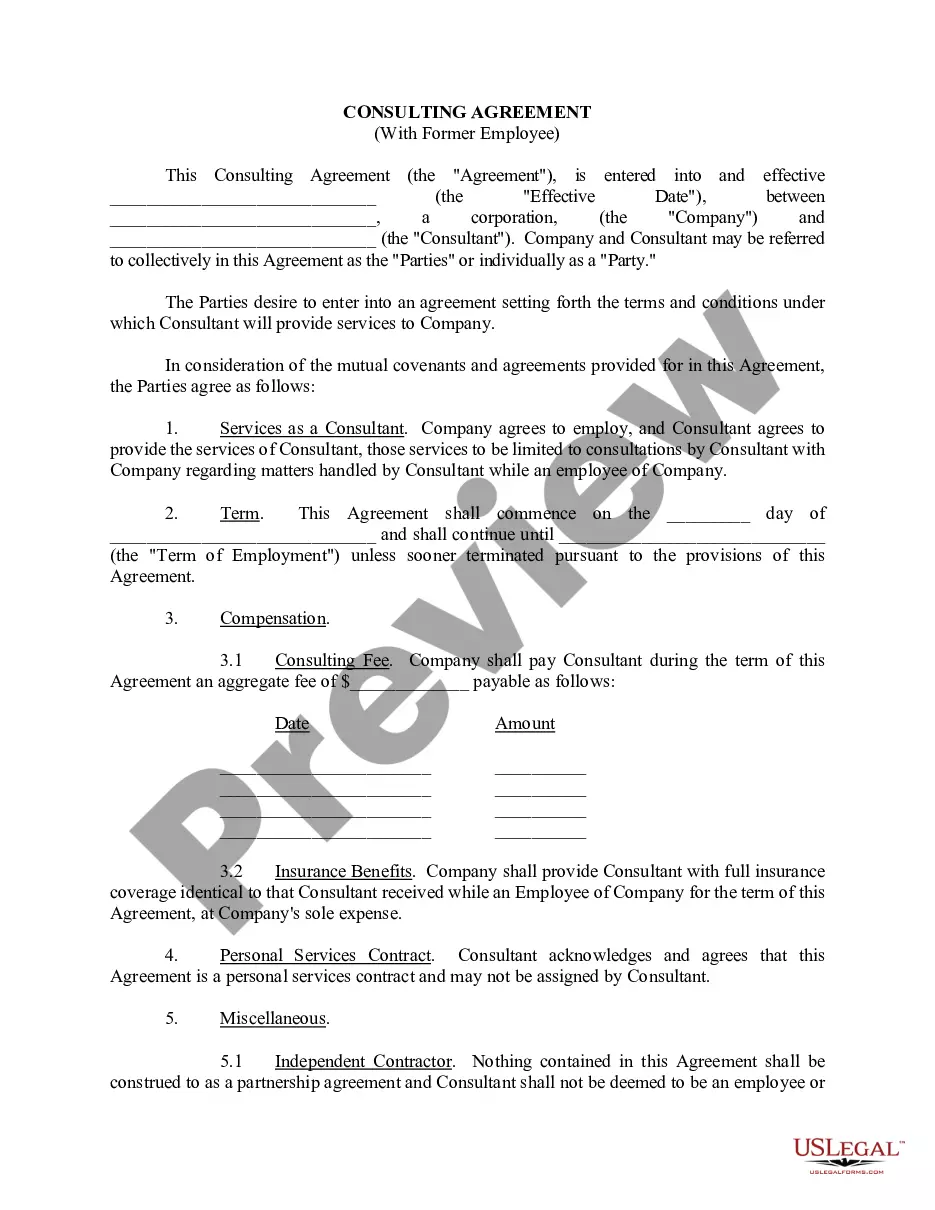
How to fill out Consulting Agreement With Former Employee?
Administration necessitates exactness and meticulousness.
Unless you handle completing documents like Agreement Former Employee Withholding Passwords daily, it might lead to some misunderstanding.
Selecting the appropriate example from the beginning will ensure that your document submission proceeds seamlessly and avert any hassles of resending a form or performing the same task from scratch.
Review the descriptions of the forms and download the ones you need at any time. If you are not a registered user, finding the necessary template involves a few extra steps.
- Discover the appropriate form for your documentation in US Legal Forms.
- US Legal Forms is the largest online repository of forms that provides over 85 thousand examples across various subject categories.
- You can obtain the latest and most applicable version of the Agreement Former Employee Withholding Passwords by simply searching it on the platform.
- Locate, save, and download templates in your profile or consult the description to ensure you have the correct one available.
- With an account at US Legal Forms, you can collect, archive in one location, and browse through the templates you preserve to access them with just a few clicks.
- When on the site, click the Log In button to authenticate.
- Then, navigate to the My documents section, where the history of your documents is stored.
Form popularity
FAQ
There is no federal law explicitly preventing potential employers from asking for Facebook passwords. Employers may even be able to ask for passwords of current employees. Some say that employers ask for passwords simply because they can.
Legally, you can ask for the username or password from an employee when it comes to accessing work issued equipment, but under no circumstance are you allowed to ask for their personal usernames and passwords even if they use work-related computers and wireless devices.
Employers may not request, require, or coerce employees or applicants to: disclose user names or passwords or otherwise provide access to personal online accounts, or authenticate or access personal online accounts in the presence of the employer.
The entity that owns the software likely owns the passwords protecting the software. The case law in Oregon is sparse, but suggests that the owner of the system or software also owns the password that gives access to that system or software.
Your company would file a criminal complaint against you for theft if you do not return the laptop belonging to the company. It's advisable that you serve a legal notice to them asking them to pay your full and final settlement amount and also take the laptop from you.