Jointly Owned Property And Medicaid
Description
Get your form ready online
Our built-in tools help you complete, sign, share, and store your documents in one place.
Make edits, fill in missing information, and update formatting in US Legal Forms—just like you would in MS Word.
Download a copy, print it, send it by email, or mail it via USPS—whatever works best for your next step.
Sign and collect signatures with our SignNow integration. Send to multiple recipients, set reminders, and more. Go Premium to unlock E-Sign.
If this form requires notarization, complete it online through a secure video call—no need to meet a notary in person or wait for an appointment.
We protect your documents and personal data by following strict security and privacy standards.

Make edits, fill in missing information, and update formatting in US Legal Forms—just like you would in MS Word.

Download a copy, print it, send it by email, or mail it via USPS—whatever works best for your next step.

Sign and collect signatures with our SignNow integration. Send to multiple recipients, set reminders, and more. Go Premium to unlock E-Sign.

If this form requires notarization, complete it online through a secure video call—no need to meet a notary in person or wait for an appointment.

We protect your documents and personal data by following strict security and privacy standards.
Looking for another form?

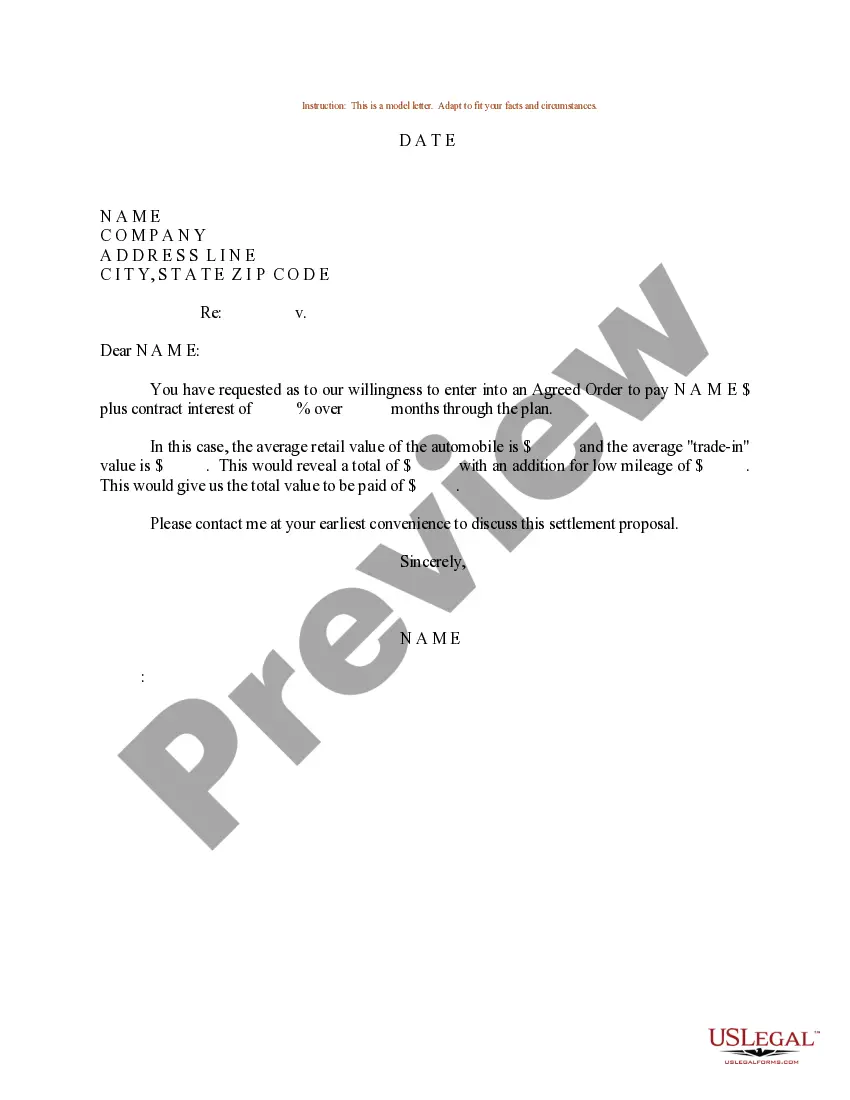
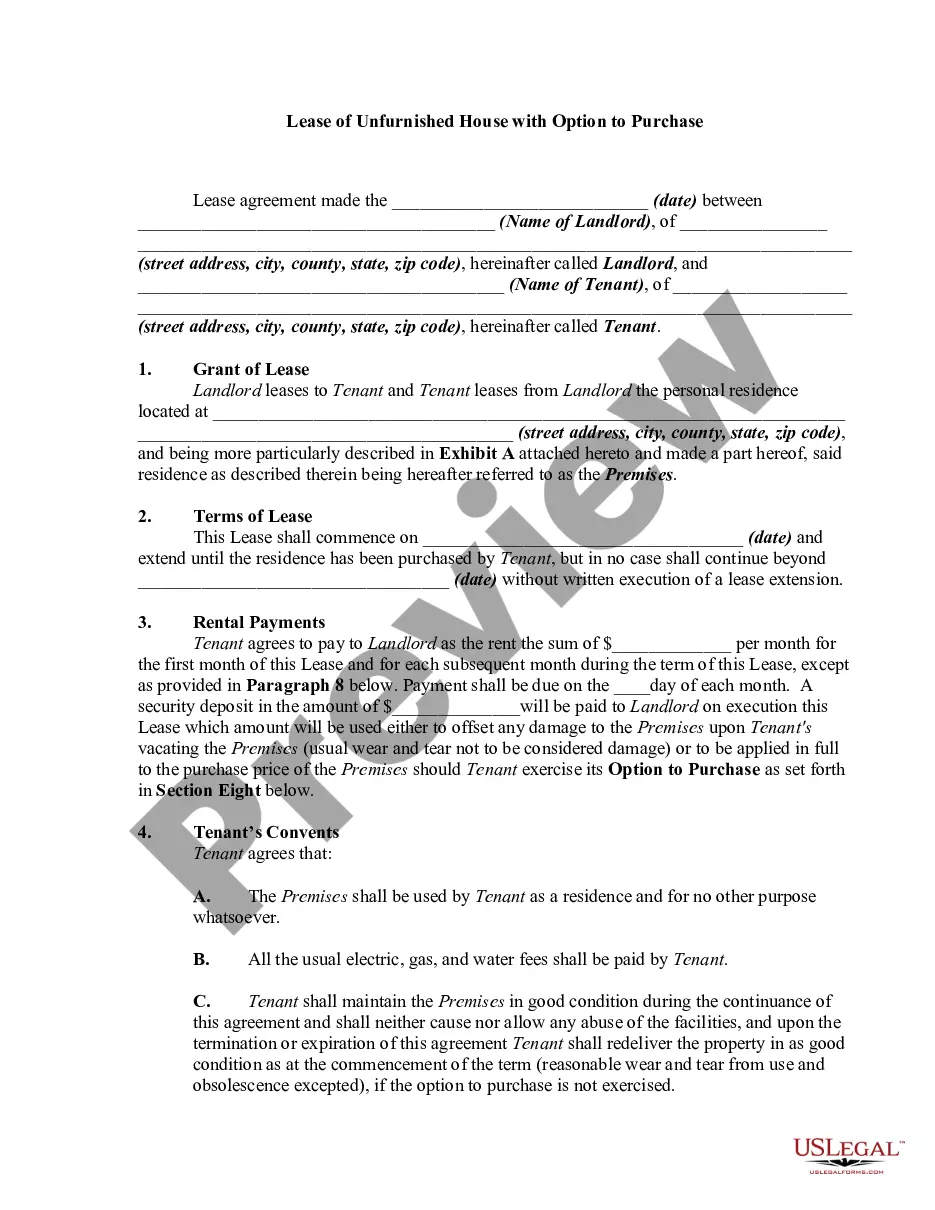
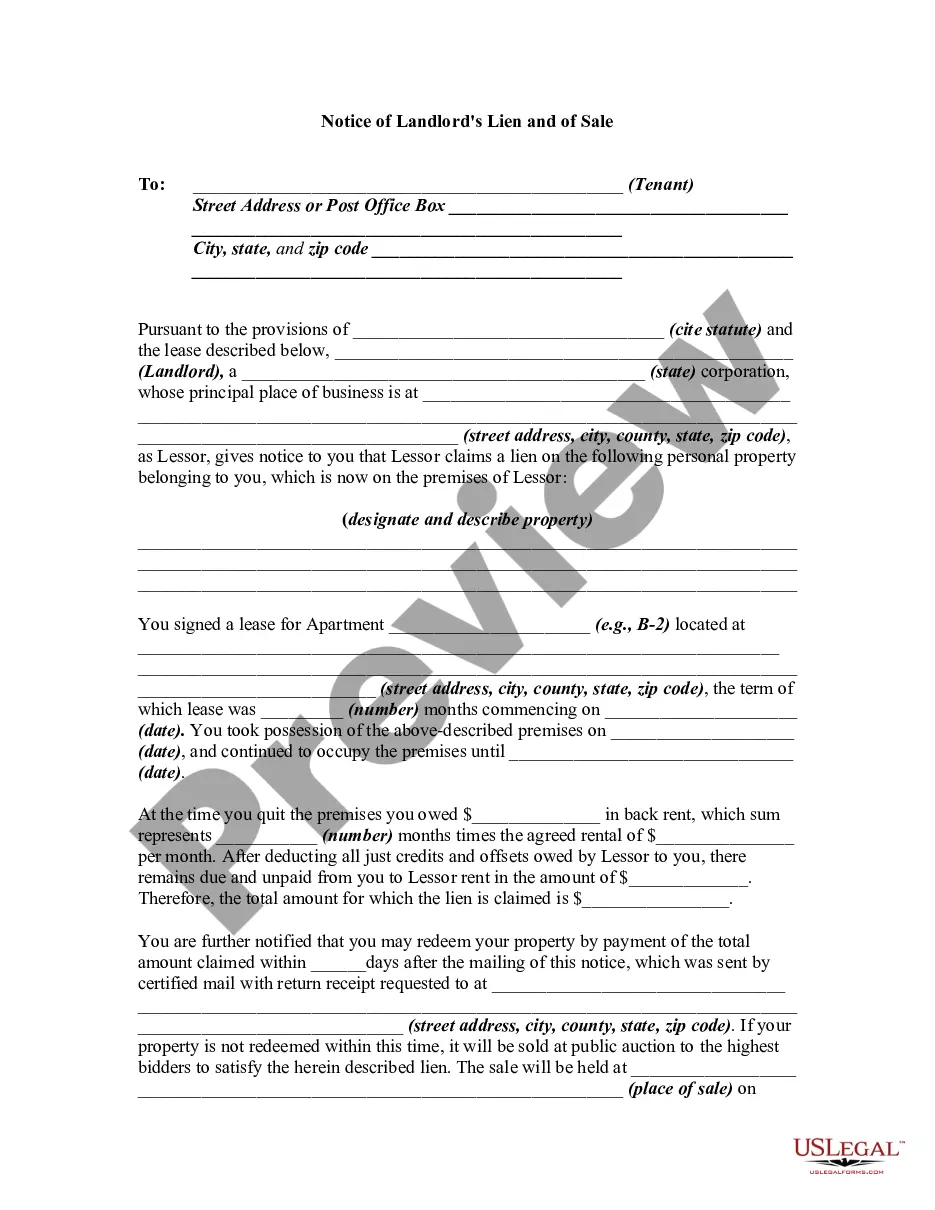
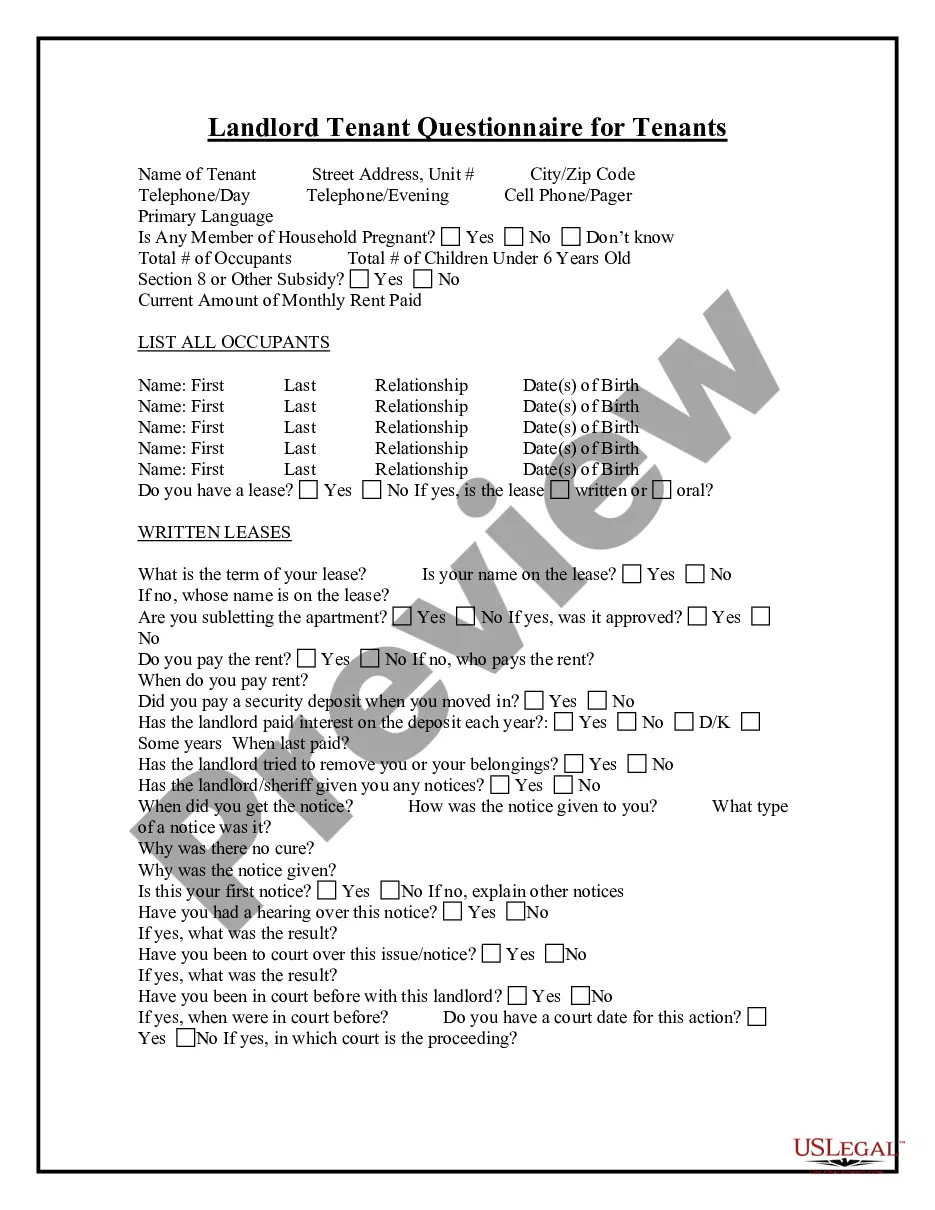
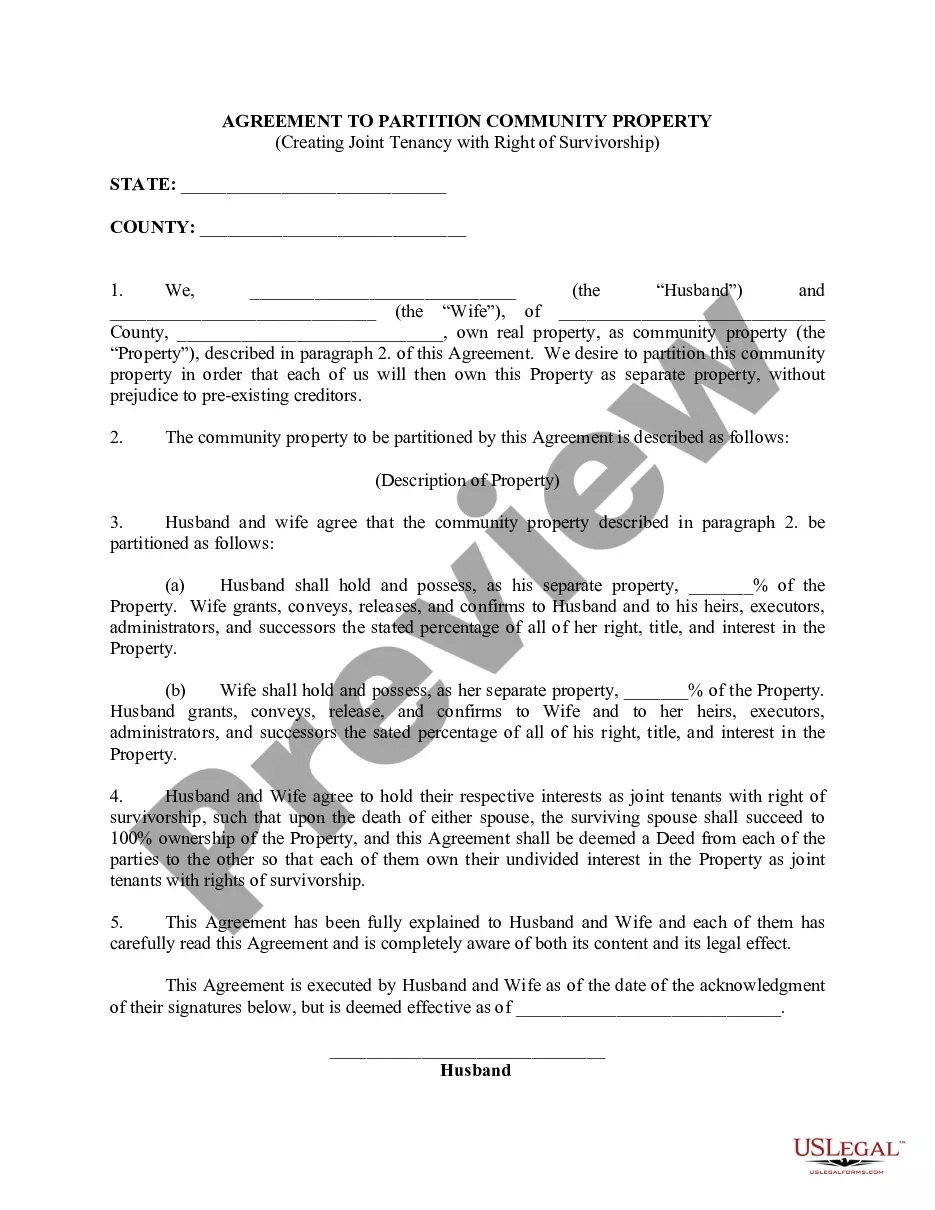
How to fill out Agreement To Partition Community Property Creating Joint Tenancy With Right Of Survivorship?
Locating a dependable location to acquire the latest and suitable legal templates is a significant part of navigating red tape.
Selecting the correct legal documents demands accuracy and meticulousness, which is why it is essential to obtain samples of Jointly Owned Property And Medicaid solely from trustworthy providers, such as US Legal Forms.
Once you have the document on your device, you can modify it using the editor or print it out and fill it out by hand. Alleviate the hassle that comes with your legal documentation. Browse the extensive US Legal Forms library to discover legal templates, verify their relevance to your situation, and download them instantly.
- Make use of the library navigation or search bar to find your document.
- Examine the form’s details to verify if it meets the criteria of your state and locality.
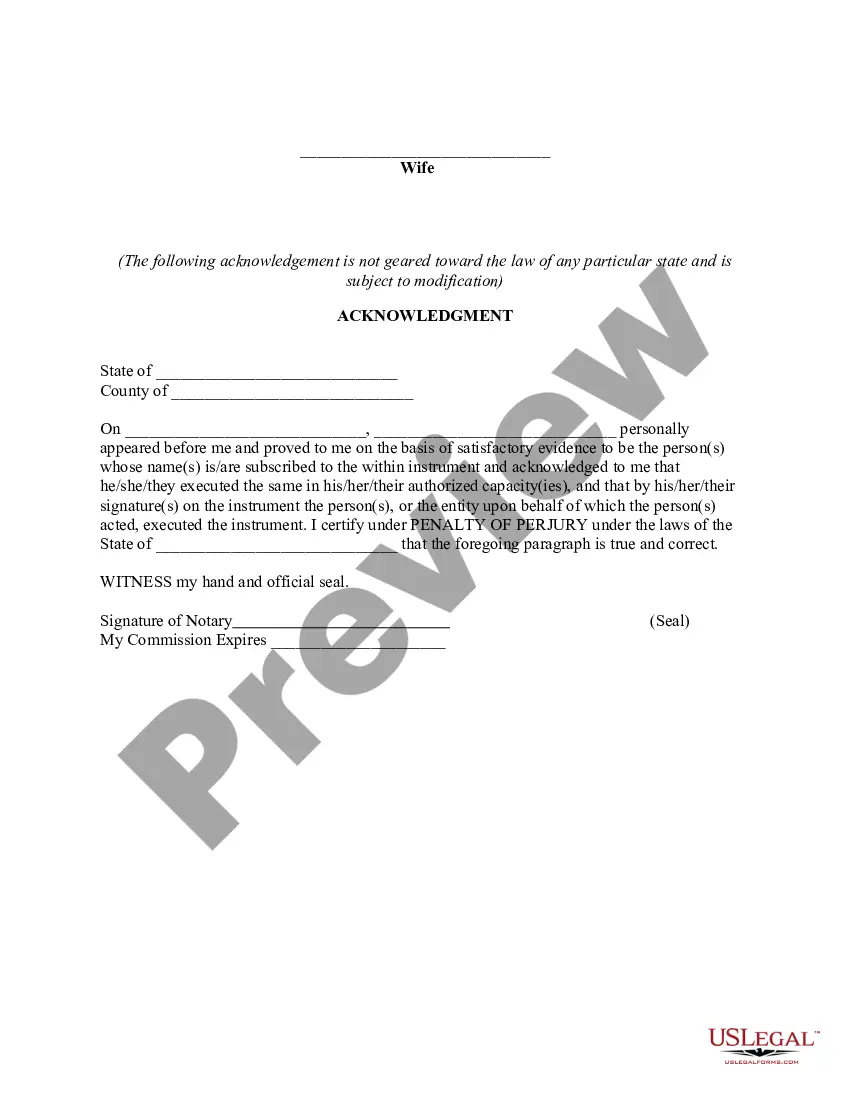
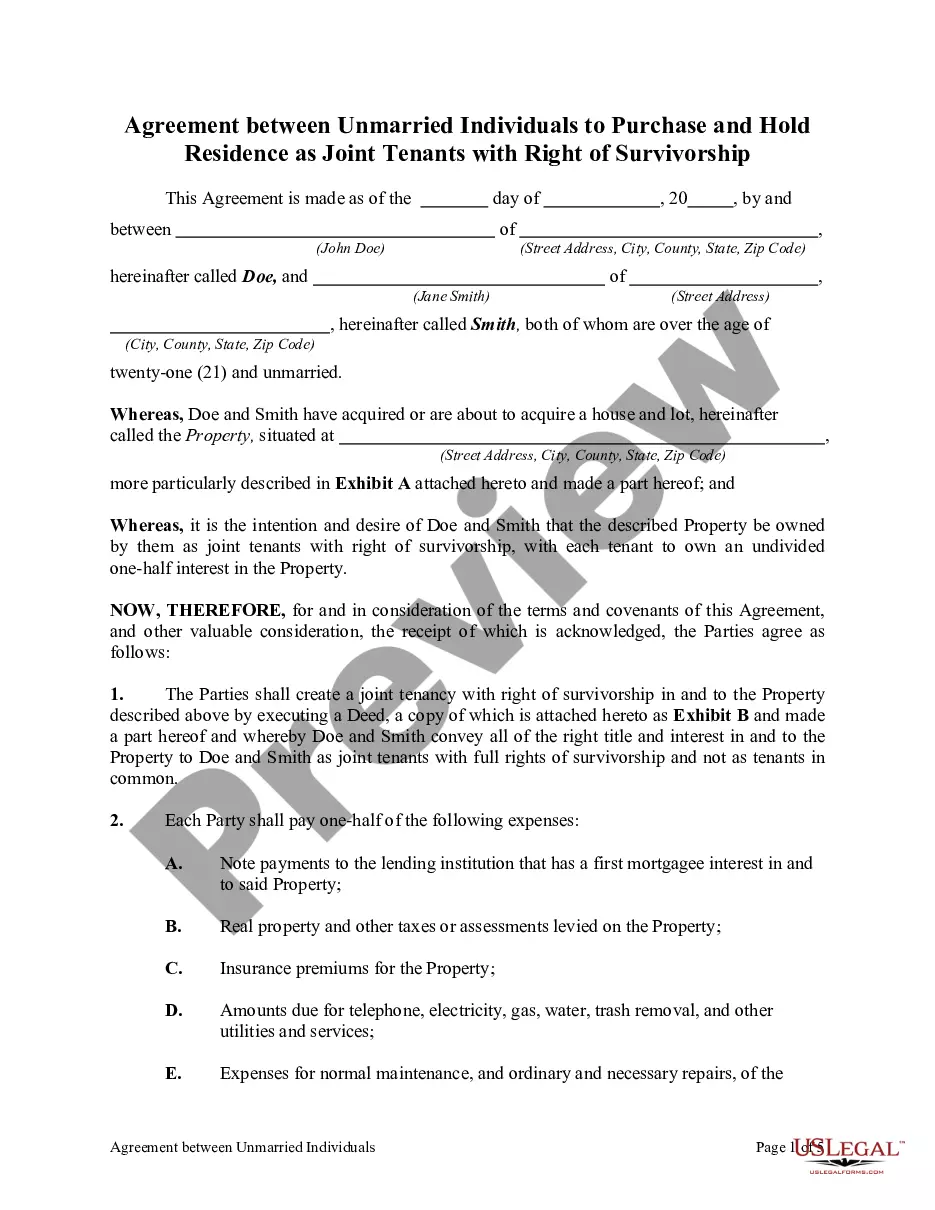
- Check the form preview, if available, to ensure the document is indeed the one you seek.
- Return to the search and find the correct document if the Jointly Owned Property And Medicaid does not satisfy your needs.
- When you are confident about the form’s applicability, download it.
- If you are a registered user, click Log in to verify and access your selected documents in My documents.
- If you lack an account, click Buy now to acquire the document.
- Select the pricing option that aligns with your needs.
- Proceed to the registration to complete your acquisition.
- Complete your purchase by selecting a payment method (credit card or PayPal).
- Choose the file format for downloading Jointly Owned Property And Medicaid.
Form popularity
FAQ
In New York, certain assets are exempt from Medicaid claims, including your primary residence under specific conditions, personal belongings, and retirement accounts. Additionally, jointly owned property may have some protections. Understanding what qualifies as exempt is crucial when considering the intersection of jointly owned property and Medicaid, and US Legal Forms can provide helpful resources for this.
A Simple Answer: As long as the Medicaid beneficiary or their spouse is living, Medicaid cannot take one's home or force a sale. However, there are many complexities and nuances.
Funds are recovered from the member's estate after his/her death for the cost of these services. The total gross value of the estate must be valued over $25,000 for estate recovery to apply. An estate includes all real and personal property (homes, land, vehicles, cash, bank accounts) held individually or jointly.
For Regular Medicaid applicants, there is no home equity limit. Furthermore, the home is also exempt, regardless of any other circumstances, if the applicant has a spouse living in it. All assets of a married couple are considered jointly owned.
The primary pitfalls are the need for agreement, the potential for assets to be frozen, and loss of control over the distribution of assets after death. Tenancy in common is an alternative to joint tenancy that avoids some of its drawbacks.
The state never ?takes? your home. However, ownership without proper planning may result in a forced sale if Medicaid demands reimbursement after death. Medicaid may also impose a lien during your lifetime if it is paying for nursing home care.