Joint Tenancy Agreement Example
Description
Get your form ready online
Our built-in tools help you complete, sign, share, and store your documents in one place.
Make edits, fill in missing information, and update formatting in US Legal Forms—just like you would in MS Word.
Download a copy, print it, send it by email, or mail it via USPS—whatever works best for your next step.
Sign and collect signatures with our SignNow integration. Send to multiple recipients, set reminders, and more. Go Premium to unlock E-Sign.
If this form requires notarization, complete it online through a secure video call—no need to meet a notary in person or wait for an appointment.
We protect your documents and personal data by following strict security and privacy standards.

Make edits, fill in missing information, and update formatting in US Legal Forms—just like you would in MS Word.

Download a copy, print it, send it by email, or mail it via USPS—whatever works best for your next step.

Sign and collect signatures with our SignNow integration. Send to multiple recipients, set reminders, and more. Go Premium to unlock E-Sign.

If this form requires notarization, complete it online through a secure video call—no need to meet a notary in person or wait for an appointment.

We protect your documents and personal data by following strict security and privacy standards.
Looking for another form?
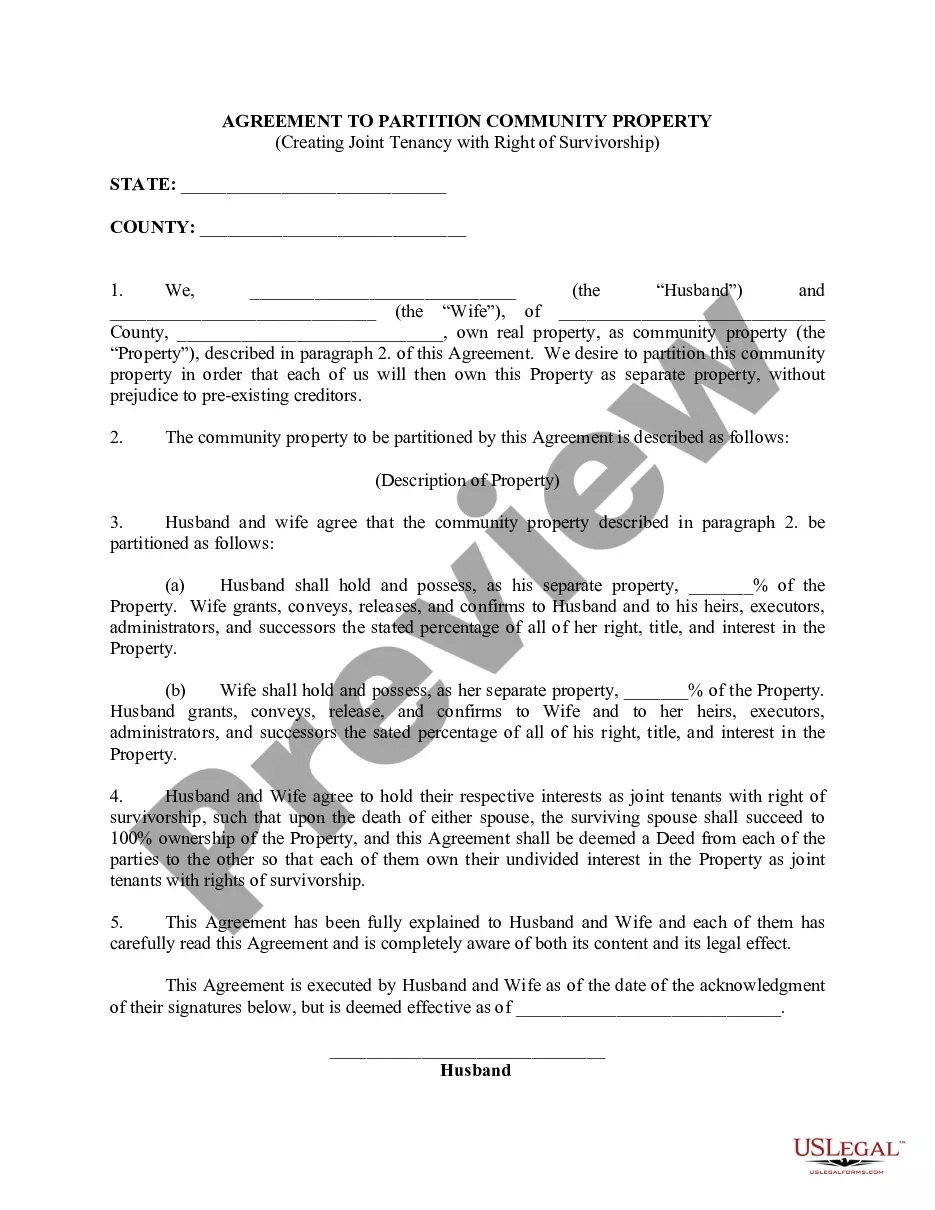
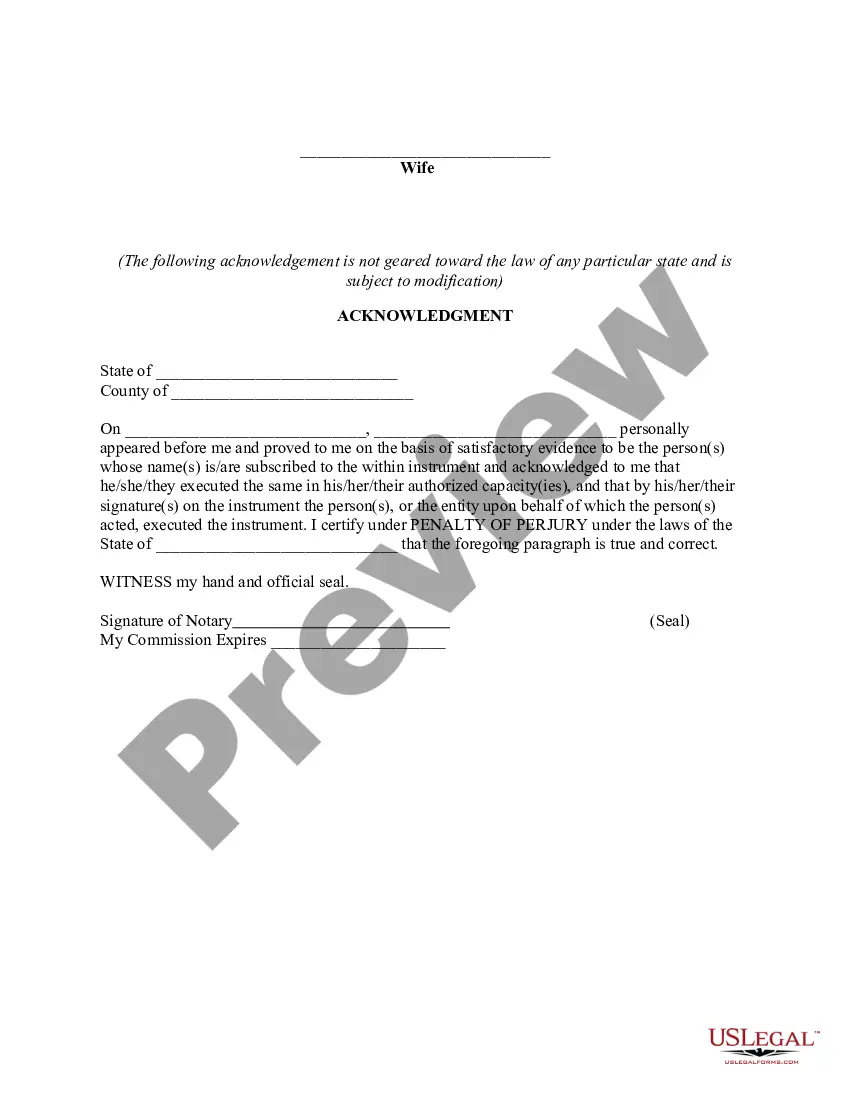
How to fill out Agreement To Partition Community Property Creating Joint Tenancy With Right Of Survivorship?
It’s no secret that you can’t become a legal expert immediately, nor can you figure out how to quickly draft Joint Tenancy Agreement Example without having a specialized background. Putting together legal documents is a time-consuming process requiring a particular education and skills. So why not leave the creation of the Joint Tenancy Agreement Example to the specialists?
With US Legal Forms, one of the most comprehensive legal template libraries, you can find anything from court papers to templates for internal corporate communication. We understand how important compliance and adherence to federal and state laws are. That’s why, on our platform, all templates are location specific and up to date.
Here’s how you can get started with our website and obtain the form you need in mere minutes:
- Discover the document you need by using the search bar at the top of the page.
- Preview it (if this option available) and read the supporting description to figure out whether Joint Tenancy Agreement Example is what you’re looking for.
- Begin your search again if you need any other template.
- Set up a free account and select a subscription plan to buy the form.
- Choose Buy now. Once the transaction is through, you can download the Joint Tenancy Agreement Example, complete it, print it, and send or mail it to the necessary people or entities.
You can re-gain access to your forms from the My Forms tab at any time. If you’re an existing client, you can simply log in, and locate and download the template from the same tab.
Regardless of the purpose of your forms-whether it’s financial and legal, or personal-our website has you covered. Try US Legal Forms now!
Form popularity
FAQ
Key Takeaways. Some of the main benefits of joint tenancy include avoiding probate courts, sharing responsibility, and maintaining continuity. The primary pitfalls are the need for agreement, the potential for assets to be frozen, and loss of control over the distribution of assets after death.
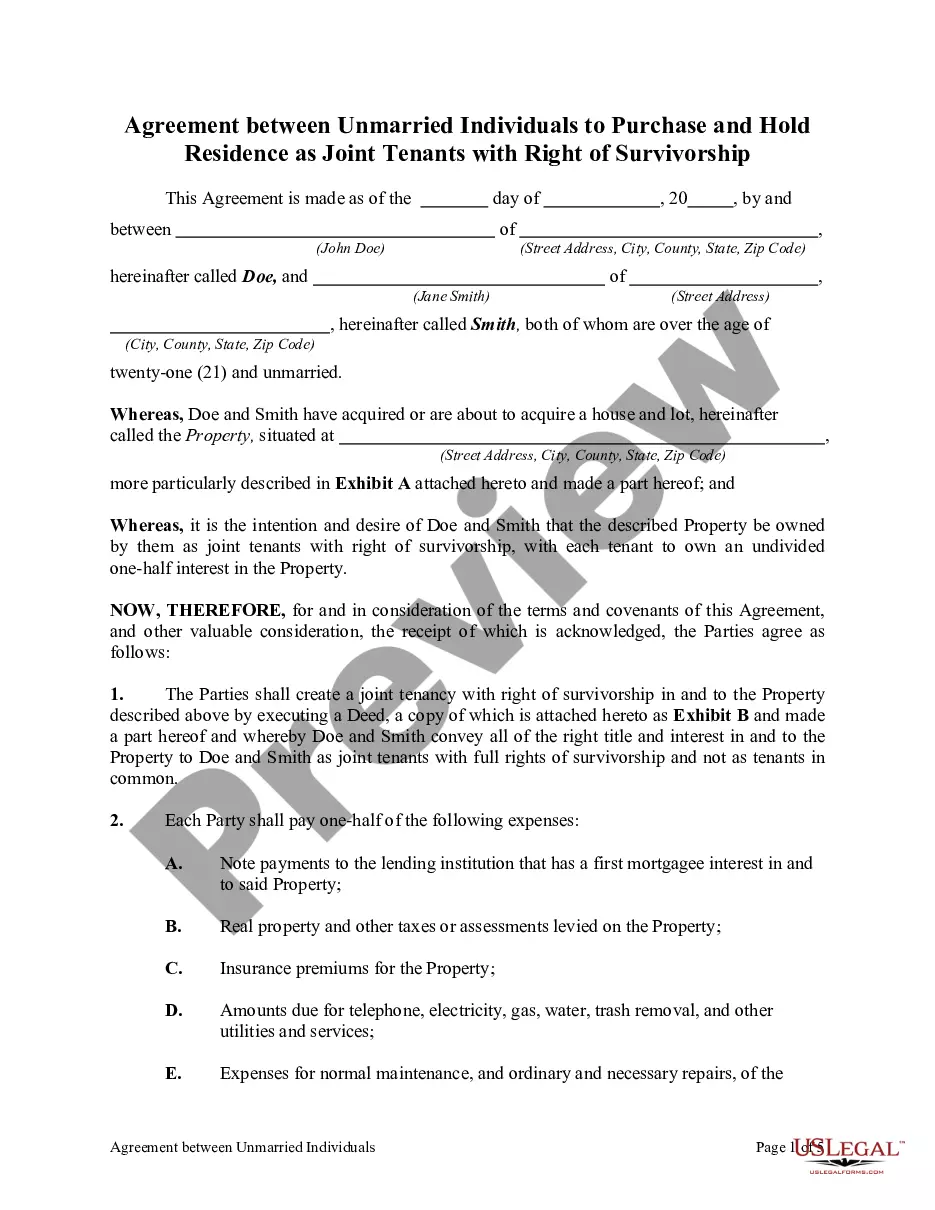
If Sellers title is held in joint tenancy this Agreement shall not sever such joint tenancy. Therefore all Owners must sign this Agreement. If Buyer(s) are husband and wife, their interest hereunder shall be held in joint tenancy with rights of survivorship unless otherwise specifically indicated in this Agreement.
Joint Tenancy Has Some Disadvantages They include: Control Issues. Since every owner has a co-equal share of the asset, any decision must be mutual. You might not be able to sell or mortgage a home if your co-owner does not agree.
Depending on the jurisdiction, the following phrases will create a joint tenancy: "As joint tenants" "As joint tenants with rights of survivorship" "As joint tenants with rights of survivorship and not as tenants in common" "As husband and wife" (unless otherwise stated).
The four unities can be thought of as four requirements that need to exist simultaneously for a true joint tenancy estate to be created. Those four requirements are interest, time, title, and possession.