Motion To Compel Timeline
Description
Get your form ready online
Our built-in tools help you complete, sign, share, and store your documents in one place.
Make edits, fill in missing information, and update formatting in US Legal Forms—just like you would in MS Word.
Download a copy, print it, send it by email, or mail it via USPS—whatever works best for your next step.
Sign and collect signatures with our SignNow integration. Send to multiple recipients, set reminders, and more. Go Premium to unlock E-Sign.
If this form requires notarization, complete it online through a secure video call—no need to meet a notary in person or wait for an appointment.
We protect your documents and personal data by following strict security and privacy standards.

Make edits, fill in missing information, and update formatting in US Legal Forms—just like you would in MS Word.

Download a copy, print it, send it by email, or mail it via USPS—whatever works best for your next step.

Sign and collect signatures with our SignNow integration. Send to multiple recipients, set reminders, and more. Go Premium to unlock E-Sign.

If this form requires notarization, complete it online through a secure video call—no need to meet a notary in person or wait for an appointment.

We protect your documents and personal data by following strict security and privacy standards.
Looking for another form?
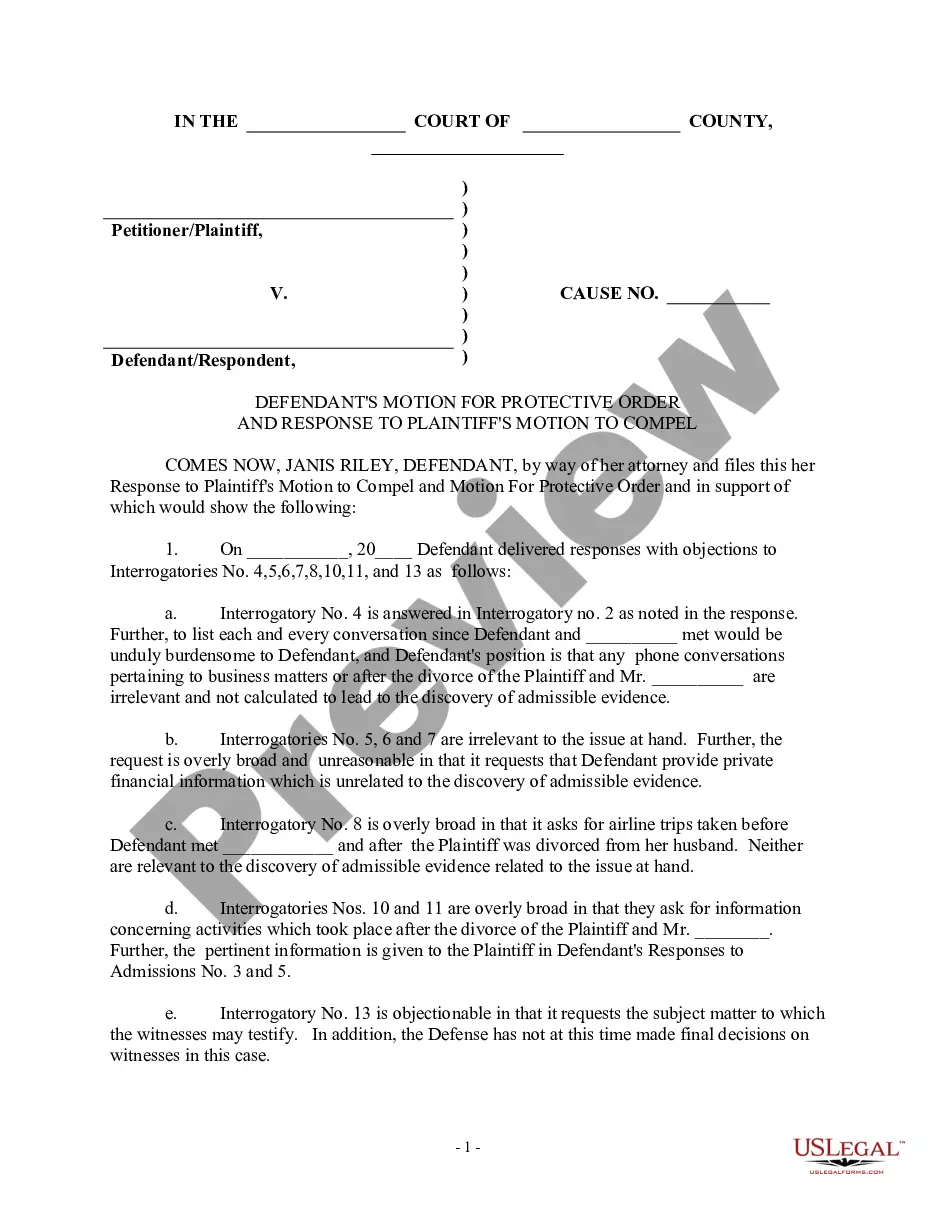
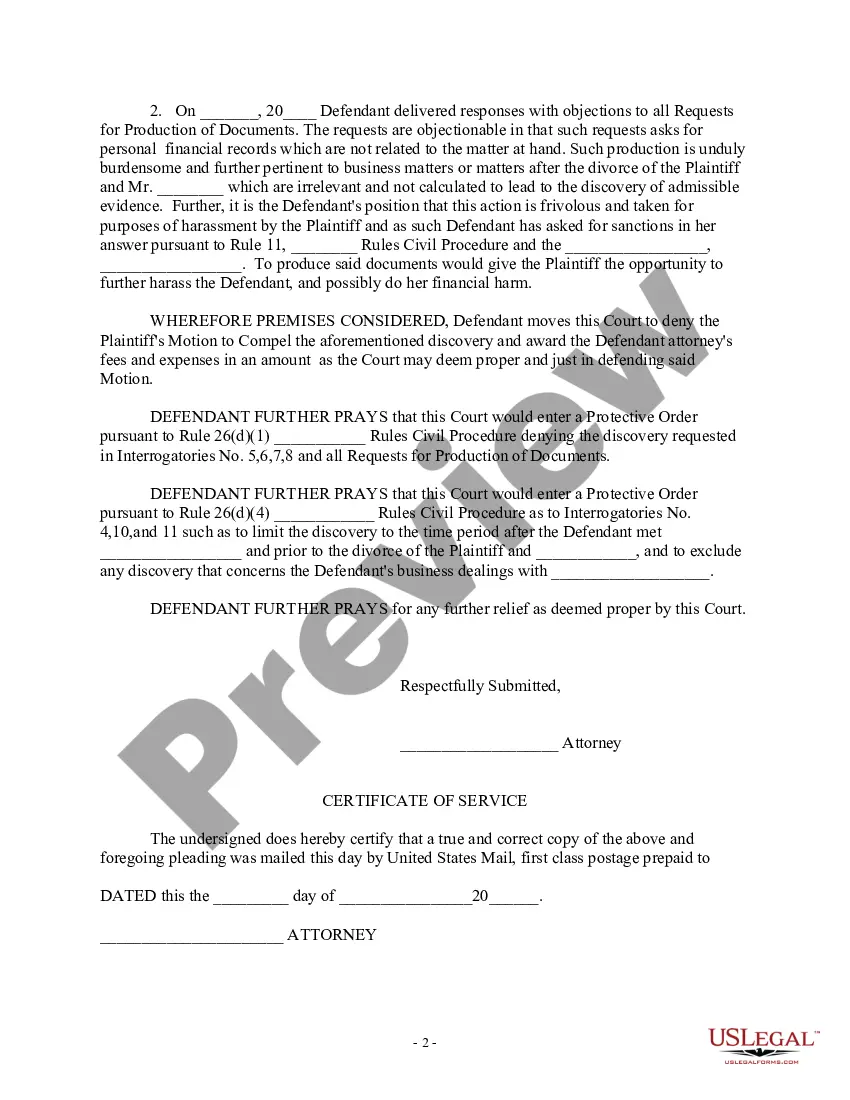
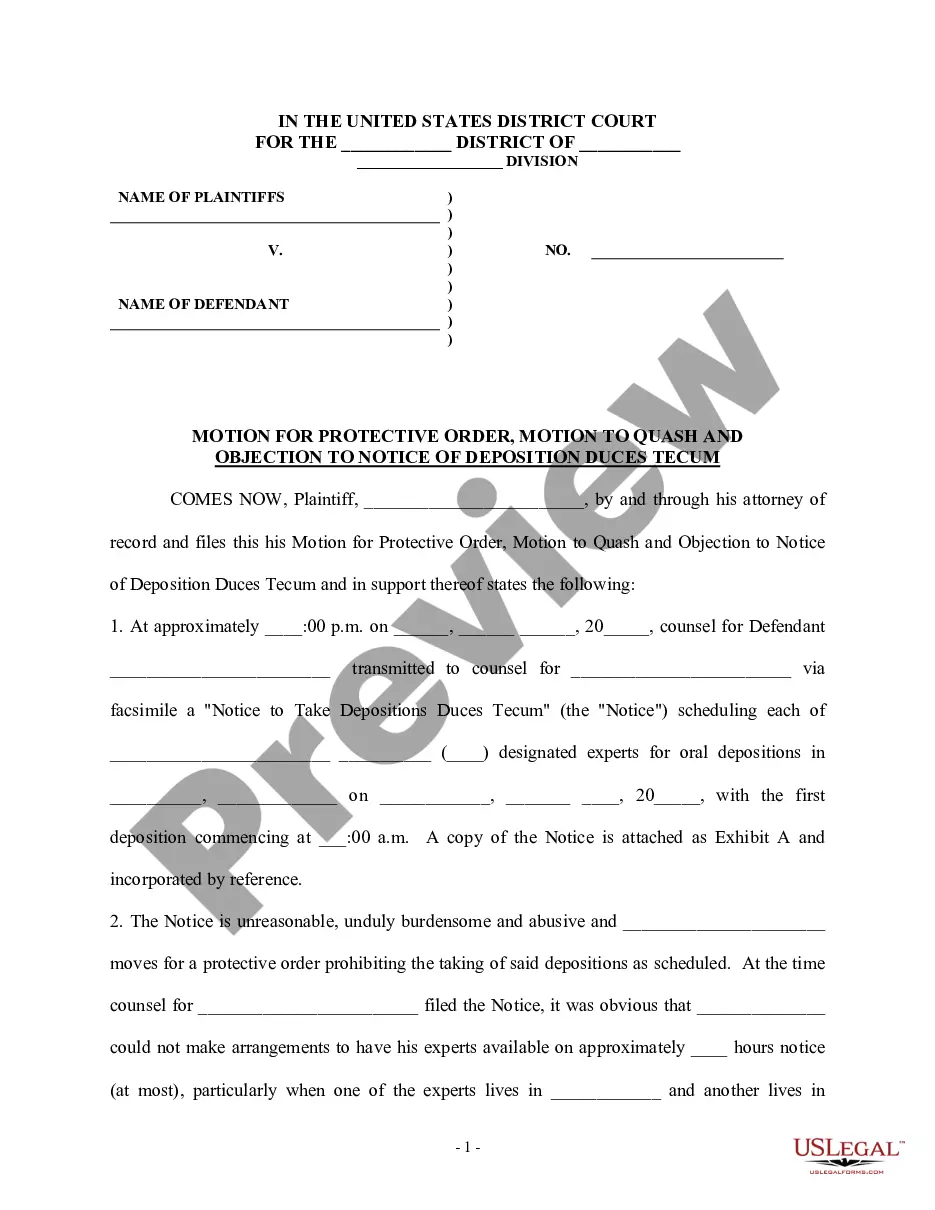
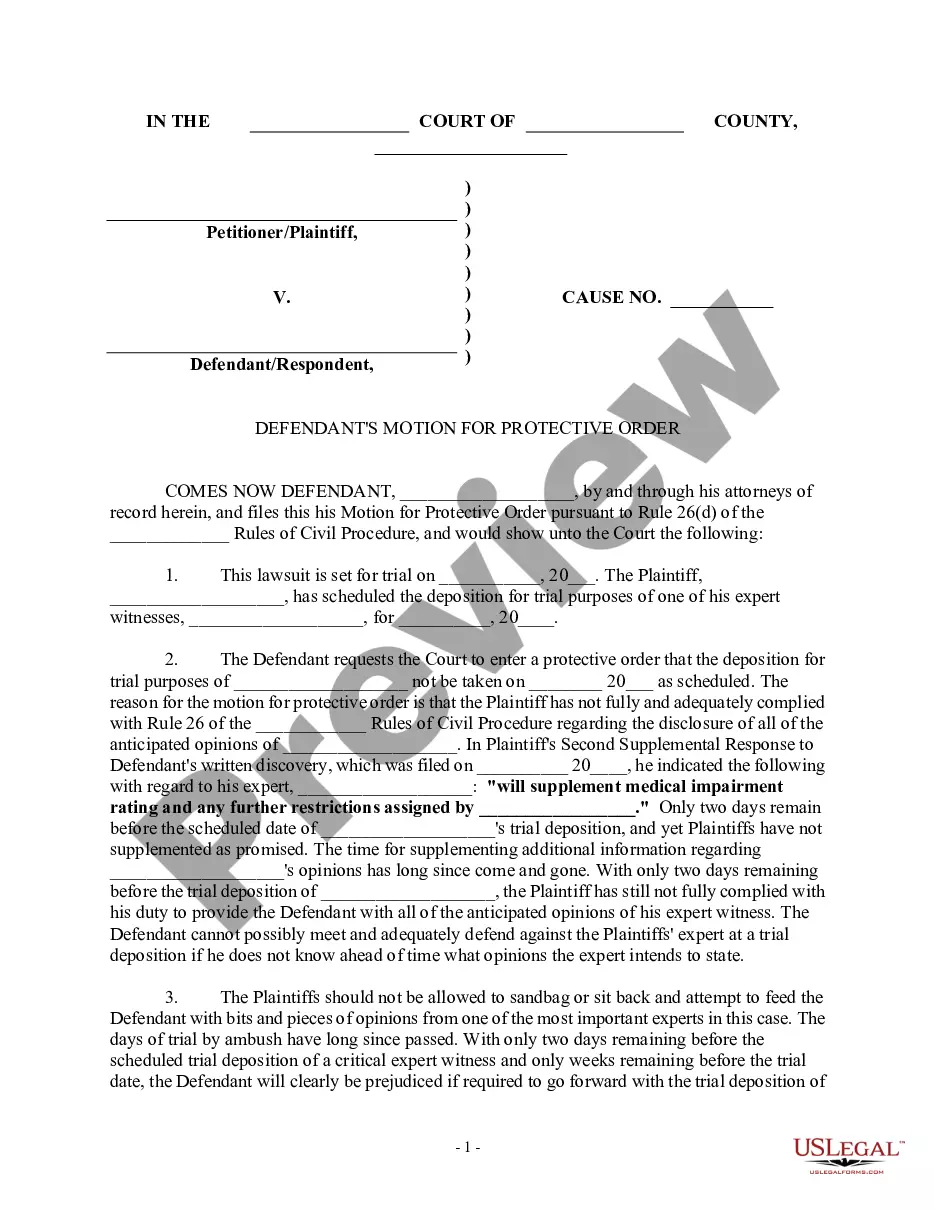
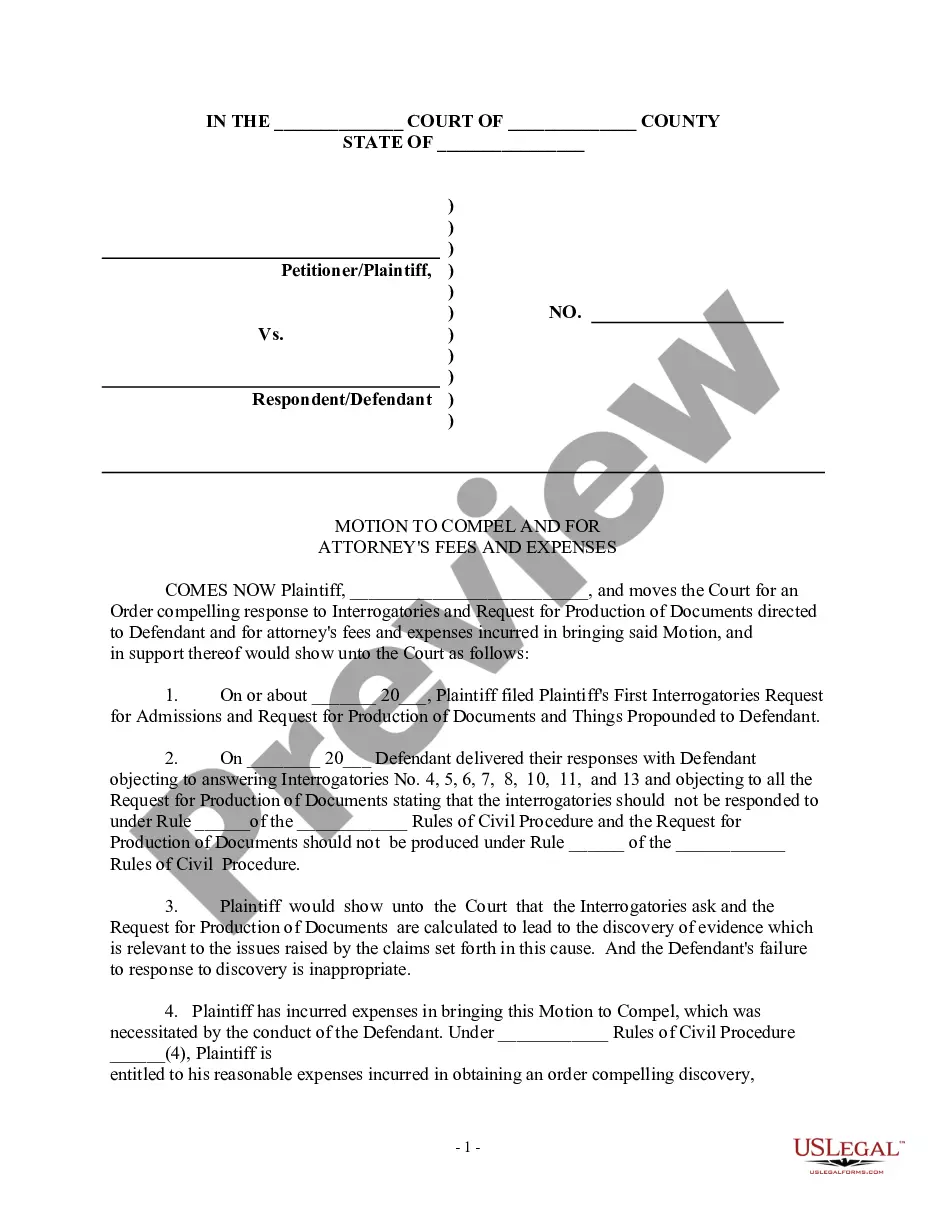
How to fill out Defendant's Motion For Protective Order And Response To Plaintiff's Motion To Compel?
Creating legal documents from scratch can frequently be overwhelming.
Certain situations may require extensive research and considerable financial investment.
If you’re looking for a more straightforward and budget-friendly approach to drafting Motion To Compel Timeline or any other documentation without excessive hassle, US Legal Forms is always accessible.
Our online library of over 85,000 current legal documents covers nearly every facet of your financial, legal, and personal matters. With just a few clicks, you can promptly acquire state- and county-specific forms carefully prepared for you by our legal professionals.
Review the form preview and descriptions to ensure you have located the form you need. Confirm that the template you select adheres to your state and county's regulations and laws. Choose the most appropriate subscription option to obtain the Motion To Compel Timeline. Download the document, then complete, sign, and print it out. US Legal Forms has a strong reputation and over 25 years of experience. Join us today and make form completion a simple and efficient process!
- Utilize our website whenever you need dependable and trustworthy services that allow you to quickly find and download the Motion To Compel Timeline.
- If you're familiar with our website and have previously created an account, simply Log In, choose the form, and download it immediately or re-download it at any time through the My documents section.
- Not a member yet? No worries. Setting it up and exploring the library takes just a few minutes.
- Before proceeding to download the Motion To Compel Timeline, keep these recommendations in mind.
Form popularity
FAQ
The burden of a motion to compel falls on the party filing the motion. You must demonstrate that the opposing party has not complied with their discovery obligations or failed to respond appropriately. Understanding the burden helps you prepare a solid argument, which is crucial for the success of your motion. Keeping track of the motion to compel timeline can also enhance your effectiveness in these situations.
Filling out a motion to compel requires careful attention to detail. Start by identifying the specific issues you are addressing, then gather relevant evidence to support your motion. Next, use clear language to outline the reasons for your request and how it relates to the motion to compel timeline. Platforms like US Legal Forms can guide you through the process, making it easier for you to prepare accurate documents.
A motion to compel serves various purposes in legal proceedings. Typically, you may need to file one when a party fails to respond to discovery requests or does not provide adequate information. This legal tool helps ensure compliance with court orders and assists in maintaining fairness during litigation. By understanding the motion to compel timeline, you can better navigate the legal process.
The time it takes to file a motion to compel varies depending on court schedules and local rules. Generally, after you decide to proceed, you should file it as soon as possible to adhere to the motion to compel timeline. However, conducting thorough research and preparing your documentation will impact the overall time. For efficient filing, check out the resources available at US Legal Forms to streamline the process.
To file a motion to compel, you need to gather all relevant documentation and evidence supporting your request. This typically includes a copy of the original request and any correspondence that illustrates the opposing party's lack of compliance. Additionally, a clear outline in line with the motion to compel timeline is essential. US Legal Forms offers templates and resources to help you prepare effectively.
A motion to compel can be denied for several reasons, including inadequate justification for the request or failure to follow proper procedures. If the court believes that the requested information is not relevant or privileged, it may reject your motion. Ensuring compliance with the motion to compel timeline can help mitigate the chances of denial. For thorough guidance, explore the tools available at US Legal Forms.
Winning a motion to compel requires demonstrating the necessity of the requested information for your case. Clearly outline how the information pertains to the issues at hand and show the court how the opposing party's delay affects your ability to prepare. Following the correct motion to compel timeline is crucial for success. Utilize resources from US Legal Forms to ensure you submit a strong motion.
A good cause for a motion to compel arises when one party fails to provide requested information or documents that are relevant to a case. This can include not responding to discovery requests or withholding evidence. Establishing good cause strengthens your motion to compel and helps maintain the motion to compel timeline. If you face challenges, consider using our platform, US Legal Forms, to guide you through the process.
To prepare a motion to compel, begin by gathering all relevant documents and evidence showing that the other party has failed to respond adequately or in a timely manner. Clearly outline the requests you made, how they were not followed, and the justification for compelling the responses. Following a structured motion to compel timeline will assist in maintaining clarity and effectiveness in your preparation, ensuring that your motion is compelling and persuasive.
In federal court, you generally have 14 days after the close of discovery to file a motion to compel. However, you should always check the local rules of the court, as they may have specific requirements regarding the timing. Being mindful of the motion to compel timeline in federal court is vital for successfully obtaining the needed information or documents.