Motion For Protective Order In Federal Court
Description
Get your form ready online
Our built-in tools help you complete, sign, share, and store your documents in one place.
Make edits, fill in missing information, and update formatting in US Legal Forms—just like you would in MS Word.
Download a copy, print it, send it by email, or mail it via USPS—whatever works best for your next step.
Sign and collect signatures with our SignNow integration. Send to multiple recipients, set reminders, and more. Go Premium to unlock E-Sign.
If this form requires notarization, complete it online through a secure video call—no need to meet a notary in person or wait for an appointment.
We protect your documents and personal data by following strict security and privacy standards.

Make edits, fill in missing information, and update formatting in US Legal Forms—just like you would in MS Word.

Download a copy, print it, send it by email, or mail it via USPS—whatever works best for your next step.

Sign and collect signatures with our SignNow integration. Send to multiple recipients, set reminders, and more. Go Premium to unlock E-Sign.

If this form requires notarization, complete it online through a secure video call—no need to meet a notary in person or wait for an appointment.

We protect your documents and personal data by following strict security and privacy standards.
Looking for another form?
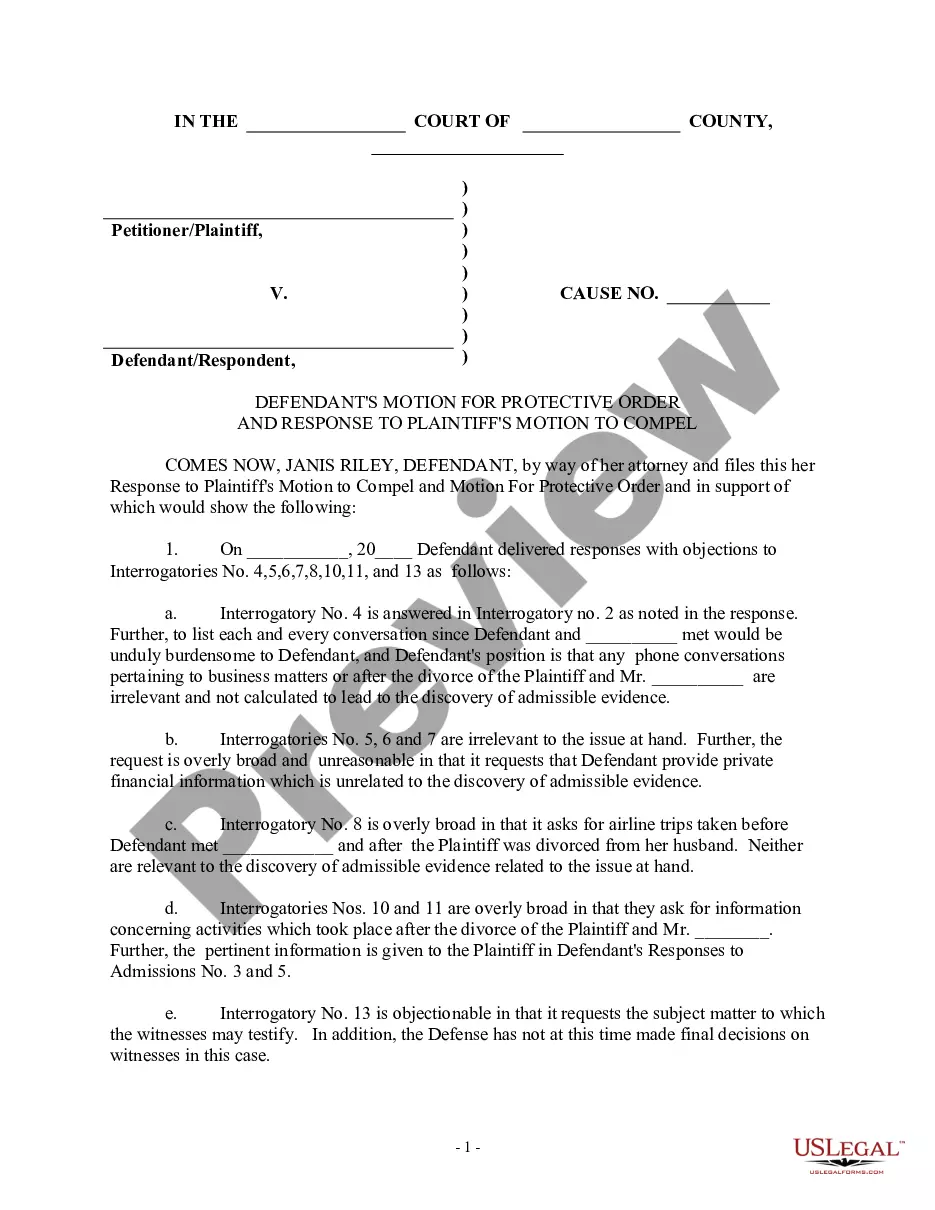
How to fill out Defendant's Motion For Protective Order And Response To Plaintiff's Motion To Compel?
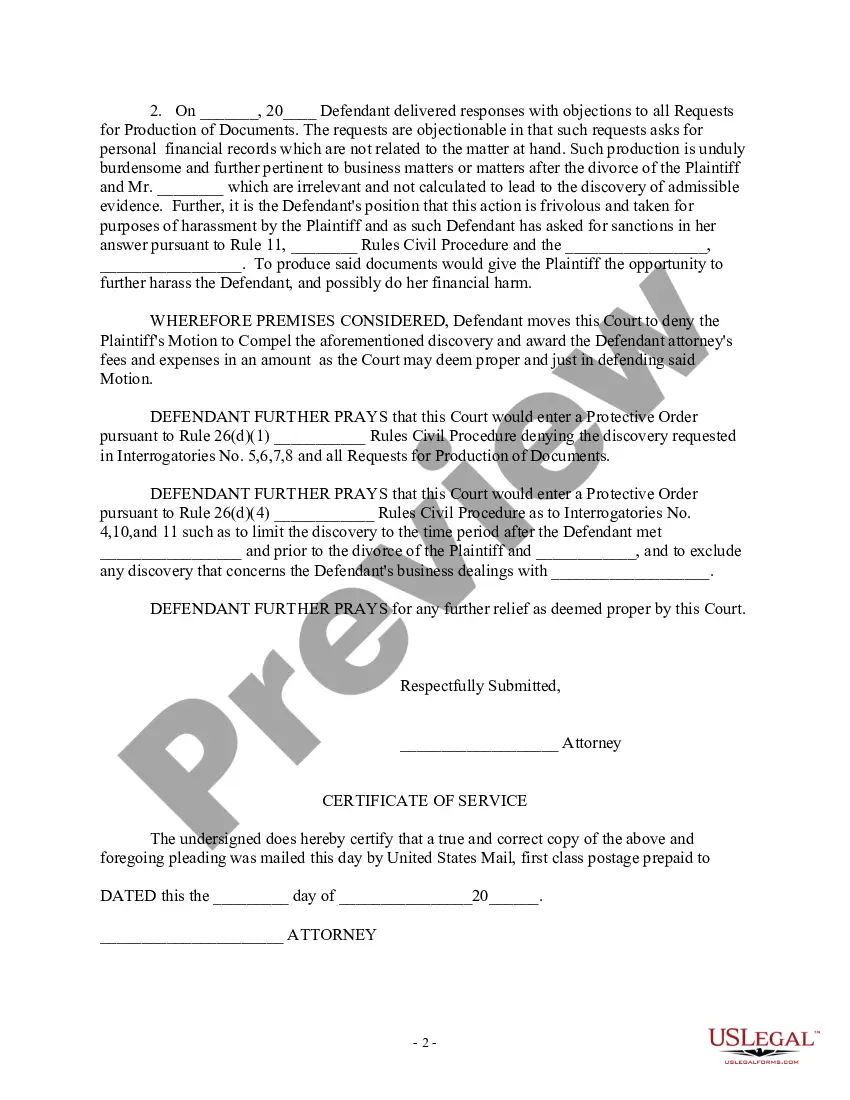
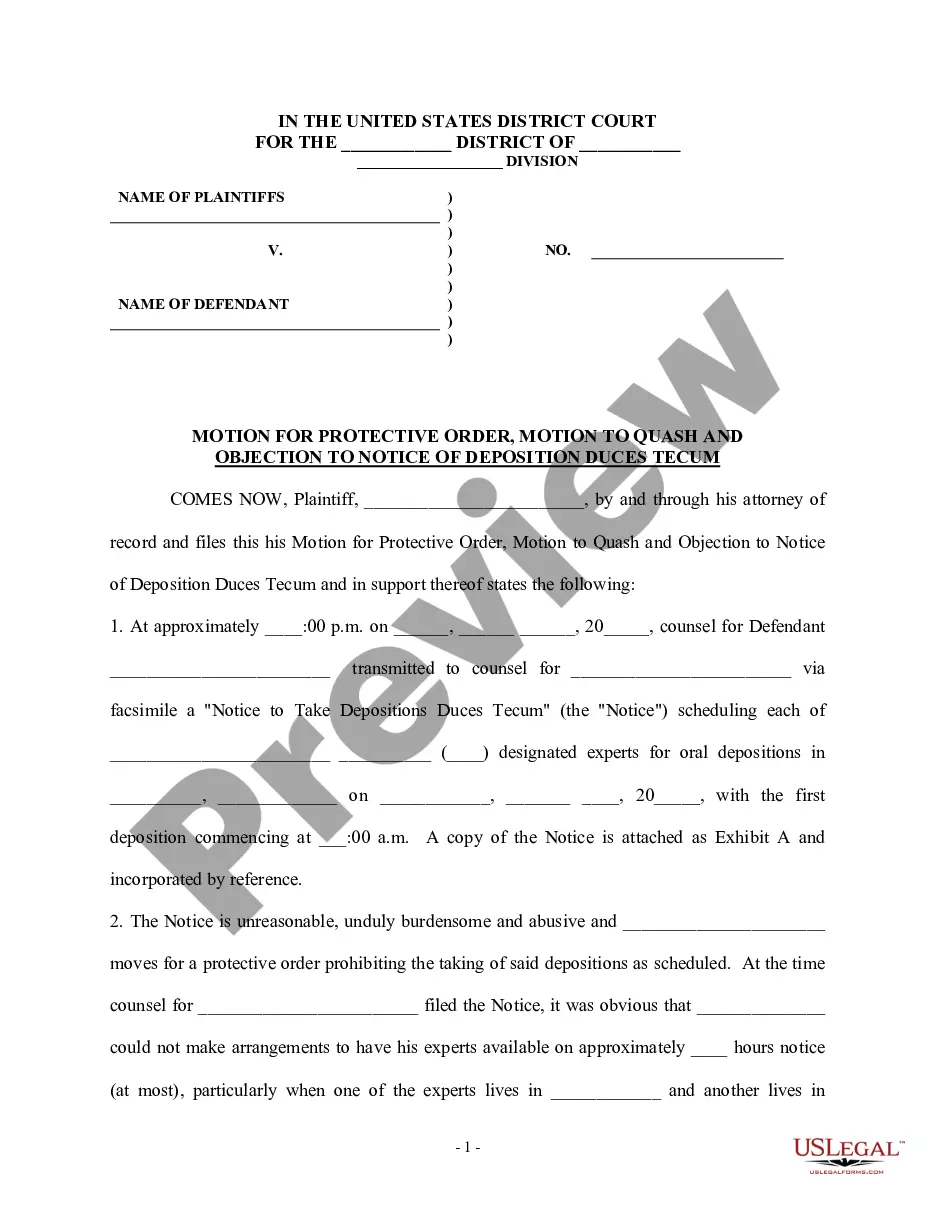
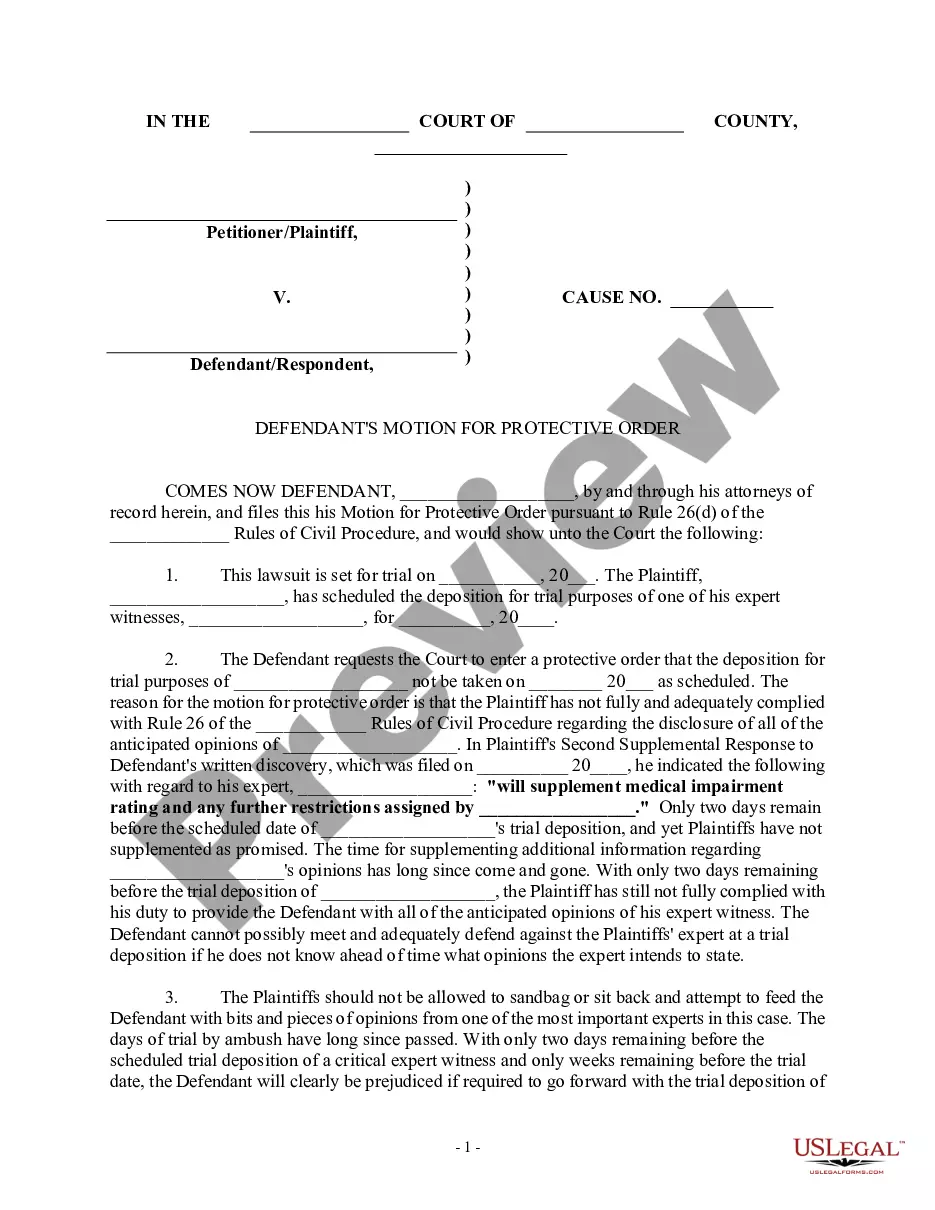
The Request For Protective Order In Federal Court that you encounter on this page is a reusable official template prepared by experienced attorneys in line with federal and local statutes and regulations.
For over 25 years, US Legal Forms has offered individuals, businesses, and lawyers more than 85,000 authenticated, state-specific documents for all business and personal needs. It’s the quickest, simplest, and most trustworthy method to acquire the forms you require, as the service ensures bank-level data security and anti-malware safeguards.
Redownload your documents anytime you need them. Access the My documents section in your profile to retrieve any previously downloaded documents.
- Search for the document you require and review it.
- Examine the sample you searched for and preview or read the form description to verify it meets your needs. If it doesn’t, use the search feature to find the correct one. Click Buy Now once you have found the template you are looking for.
- Choose a subscription and Log In. Select the pricing plan that fits you and create an account. Use PayPal or a credit card for a swift payment. If you already have an account, Log In and review your subscription to continue.
- Obtain the editable template. Select the format you prefer for your Request For Protective Order In Federal Court (PDF, Word, RTF) and download the document onto your device.
- Complete and sign the document. Print the template for manual completion. Alternatively, use an online versatile PDF editor to efficiently and accurately fill out and sign your form with an electronic signature.
Form popularity
FAQ
Rule 37 deals with the failure to make disclosures or cooperate in discovery, outlining the sanctions the court may impose. If you are involved in a case that includes a motion for protective order in federal court, it is crucial to understand the implications of Rule 37 for compliance and cooperation with discovery processes. This rule encourages parties to engage sincerely in the discovery phase, and failure to adhere might negatively impact your position. Consulting professional legal resources can help mitigate risks associated with this rule.
Federal Rule of Procedure 65 pertains to injunctions and restraining orders, providing the court with the authority to issue such orders in appropriate circumstances. This rule is essential if you need immediate relief while your case is pending. If you are considering a motion for protective order in federal court, understanding Rule 65 could be relevant, especially if your case involves urgency and the need for immediate action. It’s advisable to consult resources or platforms like US Legal Forms for guidance on how to proceed.
The response to a motion is generally addressed under Rule 6 of the Federal Rules of Civil Procedure. This rule provides guidance on the timing and requirements for responding to motions made in federal court. When you file a motion for protective order in federal court, it's vital to follow these procedures to ensure your response is timely and adheres to court expectations. Doing so can enhance the chances of a favorable outcome in your case.
Yes, you are required to file Rule 26 disclosures with federal court. These disclosures help the court understand the relevant facts and evidence necessary for your case. If you are dealing with a motion for protective order in federal court, these disclosures can be crucial for establishing the basis of your motion. It's essential to comply with the local rules and ensure that all necessary documents are submitted accurately.
A motion for protective order in Texas is a legal request made to a court to limit the disclosure of sensitive information or protect a party from harassment. This motion is similar to those filed in federal courts, aimed at safeguarding individuals during legal proceedings. Understanding the specific procedures in Texas can ensure that your rights are upheld. If you need help with this process, consider exploring USLegalForms for templates and guidance tailored to your needs.
An example of a protective order is a temporary restraining order issued to protect a victim from an abuser. This protective order restricts the abuser's contact with the victim and may require them to stay a certain distance away. When filing a motion for protective order in federal court, such examples can help clarify your needs and expectations. USLegalForms offers resources to help you draft and file these essential documents.
A protection order may be denied for various reasons, including lack of evidence or insufficient legal grounds to warrant such an order. The court evaluates the evidence presented in the motion for protective order in federal court to determine if it meets the necessary criteria. Additionally, if the situation does not meet federal or state definitions of harassment or abuse, the motion may also be rejected. Understanding these reasons helps in preparing a stronger case.
Yes, there are federal protective orders designed to provide relief from certain forms of harassment or abuse. In federal court, a motion for protective order in federal court can help prevent parties from disclosing sensitive information or to shield a party from undue burden. Federal protective orders are vital in maintaining the integrity of the legal process. If you're unsure about how to navigate this, USLegalForms can guide you through the process.
An order on motion for protective order is the court's decision after reviewing the motion you filed. This order outlines the scope of protection granted and the conditions or limitations set by the court. It's essential to follow the stipulations in this order; violations can lead to further legal consequences.
The federal rules governing a motion for protective order focus on ensuring the privacy and safety of parties involved in litigation. These rules provide a framework for filing, opposing, and granting such motions, ensuring that the process follows due legal procedures. When seeking a protective order, understanding these rules helps you navigate the legal system more effectively.