Motion For Protective Order Example
Description
Get your form ready online
Our built-in tools help you complete, sign, share, and store your documents in one place.
Make edits, fill in missing information, and update formatting in US Legal Forms—just like you would in MS Word.
Download a copy, print it, send it by email, or mail it via USPS—whatever works best for your next step.
Sign and collect signatures with our SignNow integration. Send to multiple recipients, set reminders, and more. Go Premium to unlock E-Sign.
If this form requires notarization, complete it online through a secure video call—no need to meet a notary in person or wait for an appointment.
We protect your documents and personal data by following strict security and privacy standards.

Make edits, fill in missing information, and update formatting in US Legal Forms—just like you would in MS Word.

Download a copy, print it, send it by email, or mail it via USPS—whatever works best for your next step.

Sign and collect signatures with our SignNow integration. Send to multiple recipients, set reminders, and more. Go Premium to unlock E-Sign.

If this form requires notarization, complete it online through a secure video call—no need to meet a notary in person or wait for an appointment.

We protect your documents and personal data by following strict security and privacy standards.
Looking for another form?

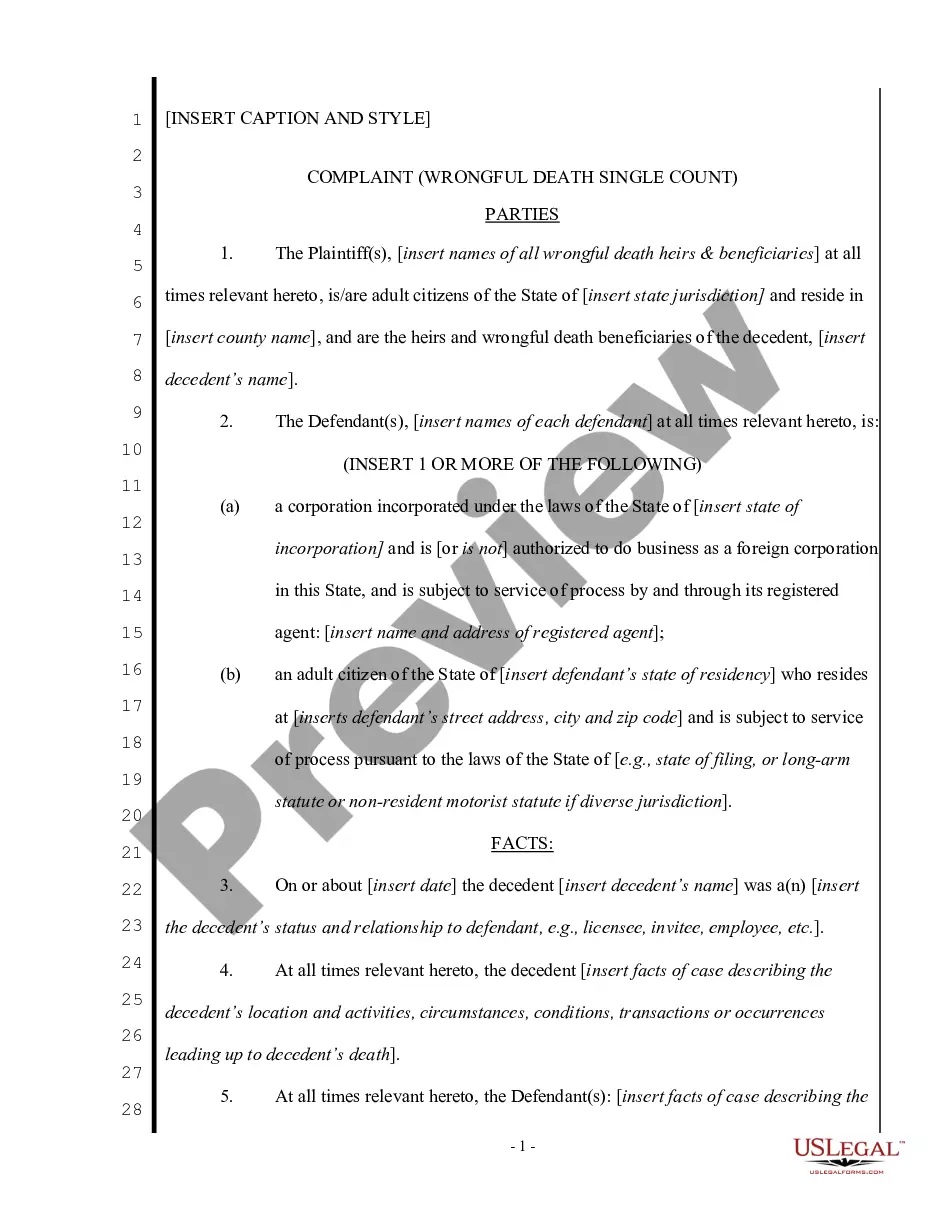




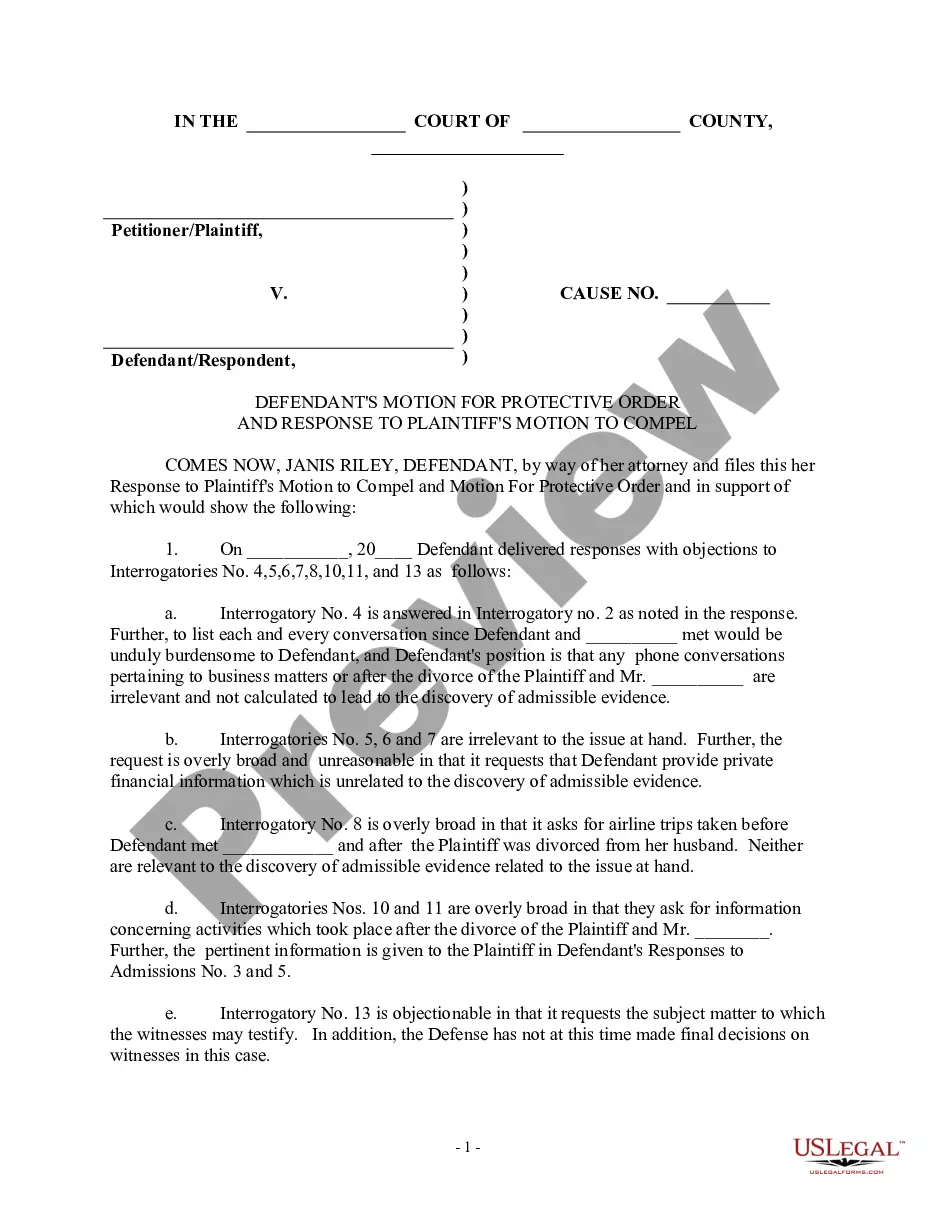
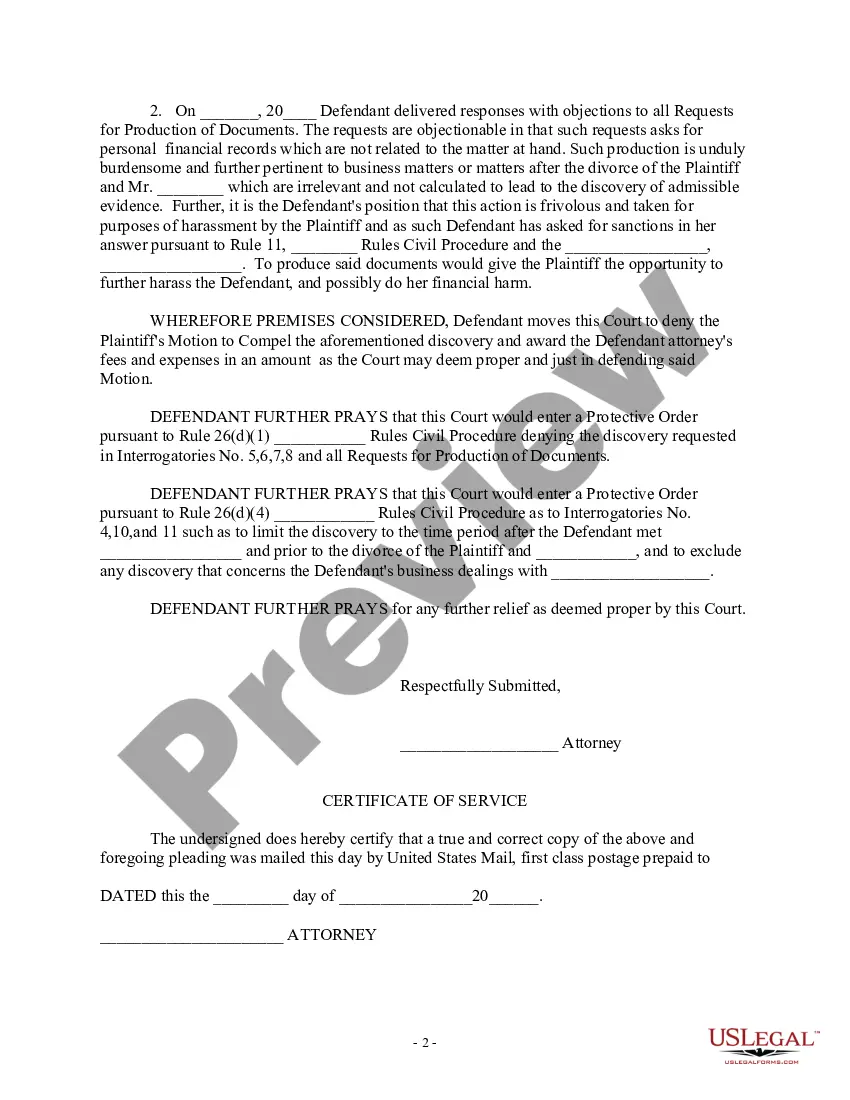
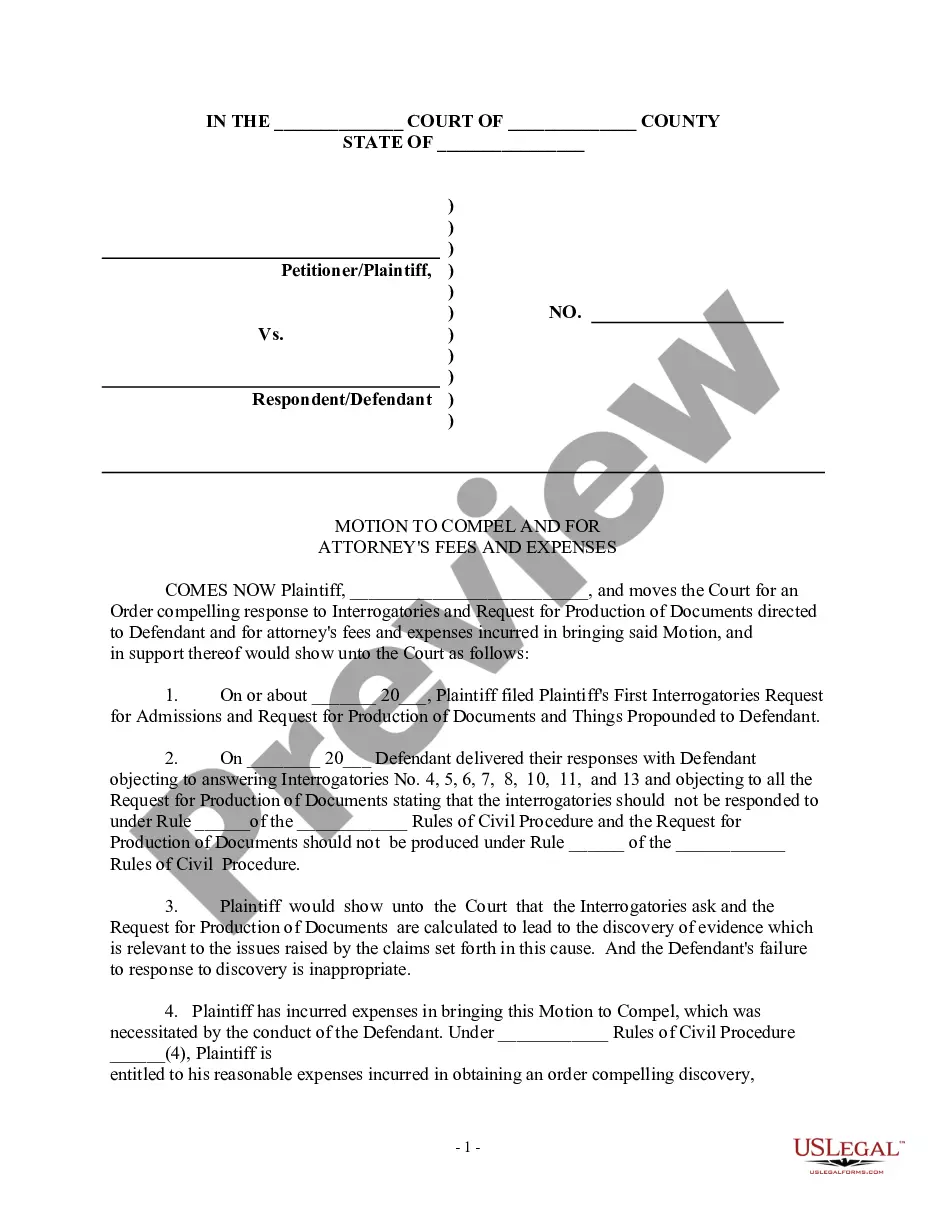
How to fill out Defendant's Motion For Protective Order And Response To Plaintiff's Motion To Compel?
It's well-known that you can't instantly qualify as a legal expert, nor can you swiftly master how to prepare a Motion For Protective Order Example without a unique skill set.
Assembling legal documents is a lengthy process that demands specific training and expertise. So, why not entrust the creation of the Motion For Protective Order Example to the professionals.
With US Legal Forms, one of the most extensive legal document collections, you can discover everything from judicial paperwork to templates for internal communication.
Select Buy now. Once your payment is processed, you'll receive the Motion For Protective Order Example, which you can complete, print, and send or mail to the required parties or organizations.
You can access your forms at any time from the My documents section. If you are a returning customer, simply Log In to find and download the template from that same section.
- Begin by visiting our website to obtain the document you require in just a few minutes.
- Utilize the search bar located at the top of the page to find the form you need.
- Preview the form (if this option is available) and review the supporting description to determine if Motion For Protective Order Example is what you're looking for.
- If you need another template, restart your search.
- Create a free account and select a subscription plan to purchase the template.
Form popularity
FAQ
To keep someone away from you, you can seek a restraining order, commonly known as a protective order. This legal order prohibits specified individuals from contacting, approaching, or coming near you. Crafting a convincing motion for protective order example plays a vital role in demonstrating the need for this legal safeguard, helping to ensure your safety and security.
It is crucial to file for a protective order as soon as possible to ensure your safety and secure immediate legal protections. Delays could increase the risk of harm or retaliation from the individual you seek protection from. Therefore, preparing and submitting a motion for protective order example promptly can provide the quick relief and peace of mind you need during a challenging period.
A protection order should include essential details such as your name, the name of the person you're seeking protection from, and specific findings of fact that justify the order. Additionally, you should include any incidents of fear or harm, as well as requests for specific protections like no contact or exclusion from shared spaces. Consulting a motion for protective order example can guide you in crafting a comprehensive and effective order.
A motion for protection is a formal request submitted to a court to obtain legal protection from potential harm, harassment, or stalking. This motion outlines the reasons for seeking protection and must provide sufficient evidence or justification. Utilizing a clear motion for protective order example can significantly enhance your chances of approval, ensuring necessary protections are enforced swiftly.
The most common restraining order is the domestic violence restraining order, which protects individuals from threats or acts of violence from an intimate partner or family member. This type of order helps to ensure the safety of people facing domestic situations. When faced with such circumstances, individuals often seek a motion for protective order example to help navigate the legal processes involved.
No, a motion for protective order is not classified as a discovery motion. Instead, it is a legal request aimed at restricting or prohibiting certain actions that could be harmful. Typically, these motions address issues of safety and security rather than information exchange during litigation, making it important to consult legal resources for a solid motion for protective order example.
There are generally three types of protection orders: domestic violence protection orders, civil harassment restraining orders, and elder or vulnerable adult abuse restraining orders. Each type serves to protect individuals from different forms of harm, whether related to domestic situations or other forms of harassment. By understanding these categories, you can determine the appropriate motion for protective order example that fits your situation.
The purpose of a motion for discovery is to request the court to compel the other party to provide information or documents relevant to the case. This motion helps both sides prepare their arguments by ensuring all pertinent evidence is accessible. It is essential as it enhances transparency and promotes fairness in legal proceedings. For practical examples of motions, including motion for protective order example, refer to the user-friendly templates on US Legal Forms.
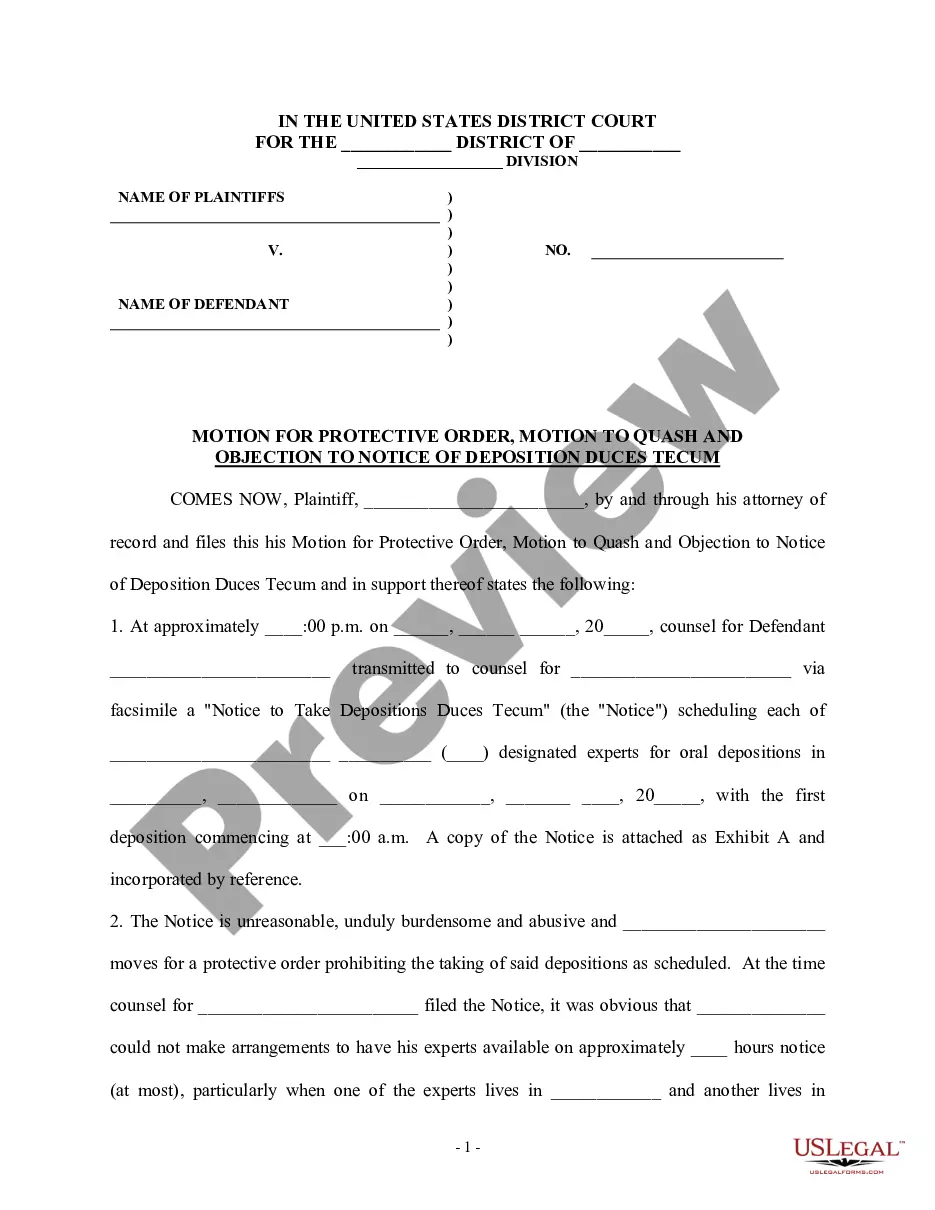
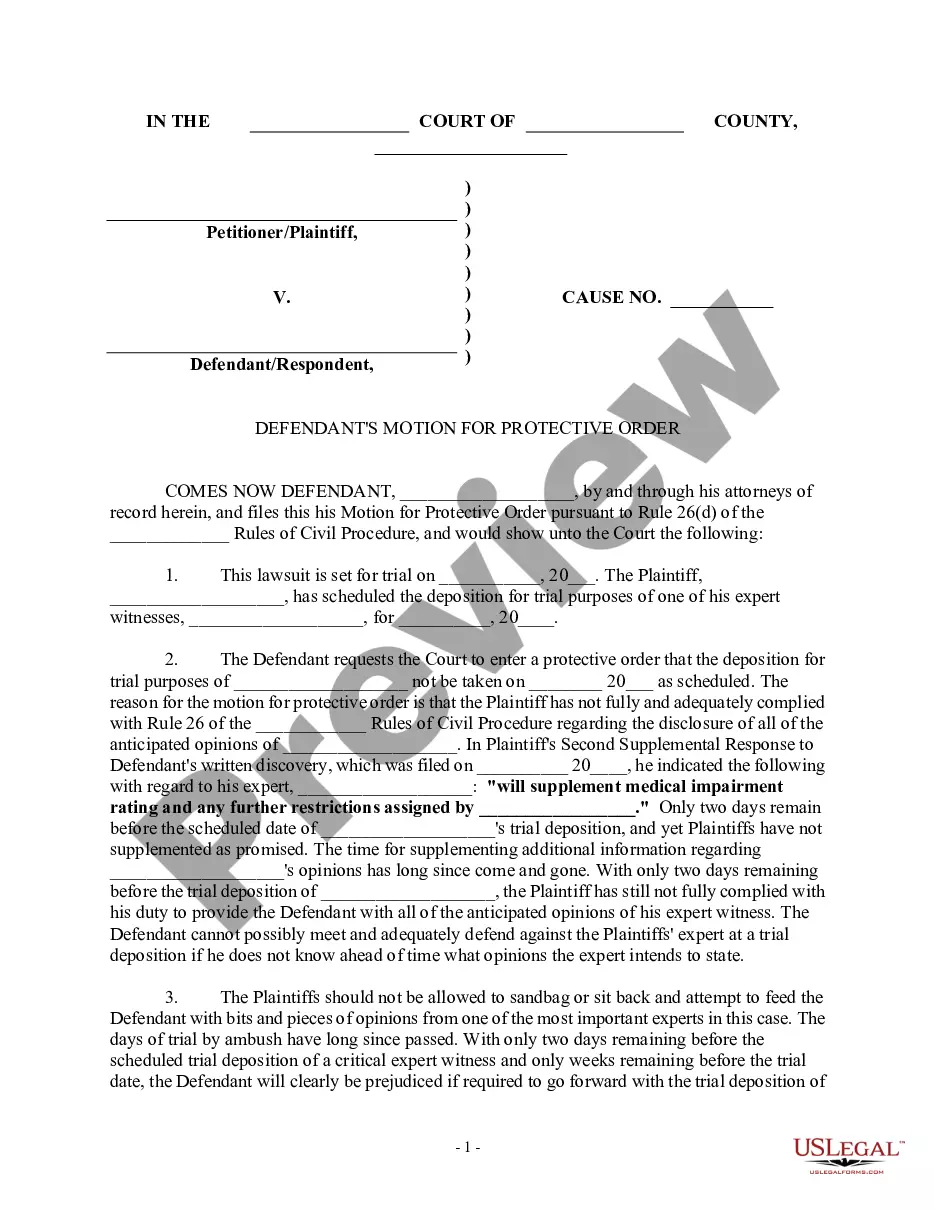
A motion for protective order in discovery requests that the court limit the discovery process to protect certain information from being disclosed. This motion can address a wide range of concerns, such as confidentiality or protecting privileged information. By filing this motion, you can navigate the complexities of discovery with greater assurance. US Legal Forms provides various motion for protective order examples that can guide you through the procedure.
A protective order in discovery is a court-issued directive that safeguards sensitive information during the discovery phase of litigation. This order typically restricts the disclosure of trade secrets, proprietary information, or personal data that could cause harm if exposed. It enables parties to share necessary information while ensuring confidentiality. To see a motion for protective order example, explore resources available through US Legal Forms.